The Grow Awards 2026 🏆 








Likes
Comments
Share
@theVotanaGarden
Follow
Cutting this plant down around day 67/68. Starting to let the plant dry back every other day. I’ve had to lower the light intensity the last few weeks of flower because of temperatures but it still looks pretty good!


Likes
28
Share
@MadeInGermany
Follow
Hey everyone 😃.
This week she has done great 👍.
It was done again on all the drifted topping and sprayed one last time with neem oil so that the last trips are finally gone 😁.
We haven't had any pests for so many years and all of a sudden we have such little shit parts 😅.
This week it was poured twice with 1.2 l of water.
GHSC enhancer was added during a pouring (1 g per l)
The tent was cleaned every day this week and the plants were checked for health.
The humidifier is filled once a day.
Next week I will decide how I will continue the training because I have space again in the flower tent 😀.
Until then, I wish you and your families a good start into the new year 2021 🙏🏻.
Stay healthy and let it grow 🍀
You can buy this Strain at :
https://www.royalqueenseeds.de/feminisierte-hanfsamen/115-amnesia-haze.html
Type:
Amnesia Haze
☝️🏼
Genetics:
Original Amnesia Haze
👍
Vega lamp:
2 x Todogrow Led
Quantum Board 100 W
💡
Bloom Lamp :
2 x Todogrow Led
Cxb 3590 COB 3500 K 205W
💡💡☝️🏼
Soil :
Canna Coco Professional +
☝️🏼
Fertilizer:
Green House Powder Feeding
☝️🏼🌱
Water:
Osmosis water mixed with normal water (24 hours stale that the chlorine evaporates) to 0.2 EC. Add Cal / Mag to 0.4 Ec Ph with Organic Ph - to 5.5 - 5.8 .
Likes
8
Share
@Rabidreject
Follow
This weeks been hectic! Iv had a lot of training to do and a fair amount of defoliation - all only done until my plant had no feed left.
Iv signed up to a couple of patreon accounts : ‘Willymyco’ and ‘DGC - dude grows podcast’s. Another great podcast.
However, over the past week there’s been a heatwave and I accidentally pulled the red on/off plastic valve from the res for a second , it’s all good and just went on insulated wires…so I just mopped it up.
I changed it to a mars hydro ts-1000w, and then the ts-600.
Glad the dimmer works though or temps will be insane! I am still thinking of putting in the fc-e3000 but if I do that I’m going to have to take out the stoppers from the ends and hacksaw some off. It’s only cheap aluminium and then I’m going to think about removing one of the light strips if I can. Then I’ll just keep it low. It’s still weird working with a plant they suggested, un-topped— this is the first time i have done this in my life - I have literally always - HST’d, using the early veg stage and making used of the time for it to heal.

Likes
13
Share
@Kenpowarrior
Follow
This week she got the works.😎👍 going for max buds.
Had to put sand in so i could kill of the little black fly's that lived in her soil...and the soil of the other plants.
Got rid of them for 80%!
I water her from the bottom now.
The sand gives it a nice looking pot😎👍.
This week will LST the tops too.
Going for big!😉😎
9/5/21 : new LST for the queen.😎👍
Likes
3
Share
@Unculti_responsable
Follow
Esta semana hicimos la última poda de bajos y alicales , es una de las últimas podas q hacemos! Después de esto la vamos a pasas a 10 litros y ya la mandamos a florecer creo q esta más q lista para arrancar el proceso de floración

Processing
Likes
9
Share
@Kushizlez
Follow
Day 69 (March 6th)
Just gave everyone their last watering. I’m going to harvest and wash everything tomorrow night on day 70. I‘m not going to do that whole 48 hours of darkness thing because I didn’t see a difference last time I did it. In fact, it made my plant under watered before drying which caused it to dry too fast. Slurricane and cheese will be washed with h2o2 and the rest will just be rinsed off in warm RO water and hung up. Before and after washing I’m going to go over each branch with a flashlight and make sure there is no dog hair or debris in or on the buds. I will be drying in my spare bathroom (that no one uses!) from hangers. Aiming to keep it around 60-62F and 50-60 RH. Hoping for that 10-12 day dry. I wanted to do a full plant hang but the tent got pretty dirty and I would feel more comfortable just cutting and rinsing everything off branch by branch. I’m going to try my best to keep the full plant intact. Got my humidifier hooked up and running RO water because with tap water it deposits calcium and lime all over the buds and walls. For air flow I’m just indirectly running a small usb fan. I’m not worried about air flow in the bathroom honestly. It stays nice and breezy down there anyway.
Got the food grade peroxide and RO water to wash up the slurricane and cheese. Everything except for the cheese and garlic#1 is looking more than done. Trichomes all look pretty well done. Some of them have even burst open. Smells are all super ripe and mature too. Can’t wait to smell each individually in jars.
Next week I will recap what went wrong and what I will do differently next time to keep it from happening again.
(Day 70F) Just got everything chopped, washed and hanging. The vast majority of the PM was washed out but I can still see very small amounts. When they dry out I can shake the branches a bit to get the rest off. At very least it’s sterile now. There is no question I lost some potency while washing but the amount is negligible for a much cleaner product.
I could see lots of dirt and other debris float to the surface of the water after being washed. And no those are not trichomes, those sink to the bottom. I could put that nasty water through a bubble bag and wouldn’t get all that much. Although it probably does remove a lot of the actual trichomes heads. I’ll have to check with the microscope.
Everything is rigged up for a nice slow dry. Temp is sitting at 64 and RH is at a nice 60%.

Likes
16
Share


Likes
93
Share
@PEAKYPLANTERS
Follow
Wo wo wo....stop everyone, friends! Stop for a second and admire my central zkittez that seems to be turning into a Christmas tree 😋
Very satisfied with this flowering start
Many greetings and good harvests for all
Likes
Comments
Share
@Dargaville_Dukes
Follow
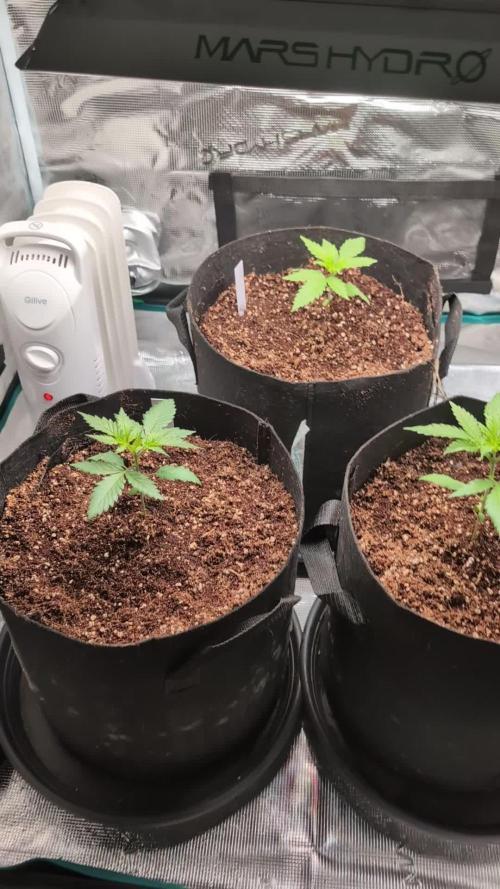
Transplanted the plants on day 20. Everything is going great and the plants are growing very quickly. They are almost ready for their first topping.


Likes
12
Share
@cherokee
Follow
На етой неделе я сделал ошибку, растение стояло без воды 3 дня. Автоцветы получили стрес, листья начали желтеть и показывать пятна на листьях. Надеюсь не много потеряю в качестве урожая из за этой ошибки.

Processing
Likes
13
Share
@Luv2Grow
Follow
Day 58 - Into week 9 now and she’s really budding up nicely but something is definitely a bit off with her. Most leaves on the top are starting to yellow quite a bit and I’m thinking she might be getting a bit of light burn because I had moved the lights pretty close. Was trying something new with this one and don’t think it’s working so backed the lights up to the normal height and hopefully she’ll be ok. Other than that, looking good and should be ready for more water in a couple days.
Day 59 - Buds are starting to swell a bit in certain areas and getting nice and frosty. Her smell is starting to get a bit stronger too. Still have quite a bit of time left with her and she’ll be ready for water tomorrow then the watering after that, she’ll get a dose of nutes.
Day 61 - Still going good and fattening up nicely. The soil was pretty dry so gave her about a gallon and a half of plain pH’d water today, next watering will be with nutes. So far it doesn’t look like any of the yellowing is getting any worse so I’m thinking it was light burn.
Day 63 - Ending week 9 and nothing major going on right now. Flowers are looking great and seems the bit of yellowing has slowed down or stopped but did remove a couple lower yellow and dead ones today. She’s already ready for water so tomorrow she’ll get a feeding of nutes.
Likes
9
Share
@DeepRootsGrowTrees
Follow
KICKASS AUTO by KANNABIA
Week #8 May 21st-28th
Week # Flower
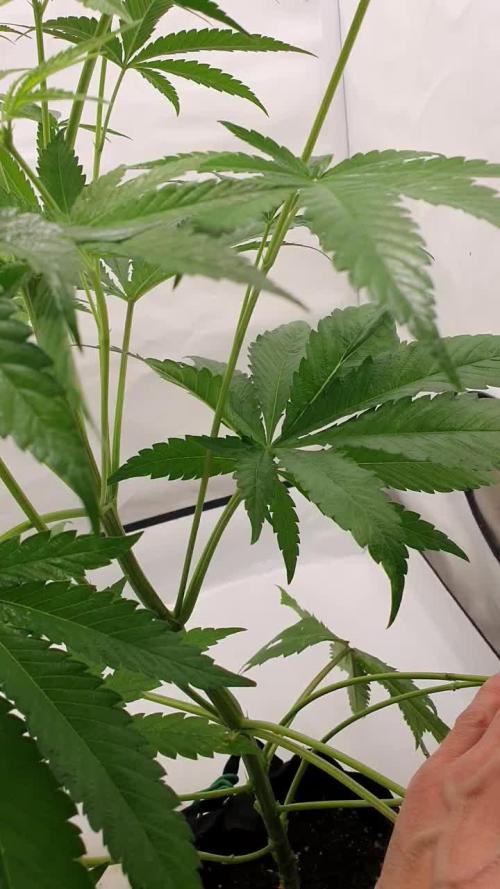
This week she continues to fill in her where it counts her bud sites are getting thick and her trichomes are like sugar dust and she getting a nice little arouma about her. She's got evenly spaced bud sites that run down the stem she's in a AC INFINTY 3 gallon cloth pot feeding her nuts twice a week until run off then water every other day. Thank you for stopping by!! Stay Growing!!
Kannabia.com Kickass Auto

Likes
8
Share
@GREENPHOENIX6262
Follow
02/15 (M) - Prepping her to flip into flower within the next week or two - Weaved her under net for better light coverage - Running 8 drip emitters with a 5 gallon res - 45 sec feed every 8hrs.
02/15 (C) - Thus far all 15 are still kicking but they did take a hit - starter roots for all 15 have begun - I will update with pics within the next 2 weeks - Running high temps and high humidity during lights on.

Likes
8
Share
@TheGreenLeopard
Follow
paper towel and into a peat pellet. worked fine. have put them all in a 20 liter pot to see how it goes. these are in a perma auto flower tent. 20/4 off, in good company. this week we launch the unit. first leaves then new diary.. enojoy and take care


Processing
Likes
93
Share
@Ferenc
Follow
Week 10, so from today I stopped watering the Gelato Cookie D'ohpe and on Saturday no more light as well. Sunday is harvest day finally. Not much changed, I raised up the water with 25ml so the Purple Punch gets 200ml 2 x a day. That's all, since last week I started giving 13 hours darkness and 11 hours light and from Monday will be 12/12 after I harvested the Gelato Cookie D'ohpe and I can use the tent only for her. Fertilization will happen on the same days. Sunday fun day, Gelato Cookie D'ohpe is harvested. Purple Punch left alone. From tomorrow I will switch the light schedule 12/12. End of the week Purple Punch is 43 cm.

Likes
13
Share
@HeavyHead
Follow
Good week so far. Was away for a couple days and came home and they’re getting big :)) will be upping my nutrients slowly this week and possibly start some LST depending on how everything goes.
If anyone has questions or advice please feel free :)