


Likes
Comments
Share


@JamieKnolliver
Follow
Grüßt euch Freunde,
Langsam kommen wir ans Ende der 5 Woche!
Habe in dieser Woche keinen Bio grow zugeführt und eine Verbesserung festgestellt.
Dafür wurde top Max angehoben und Bio Bloom.
Fahre im weiteren Verlauf nun wieder nach Düngeschema fort.
Viele der Blätter verfärben sich rötlich und die Blattspitzen der sugarleafs sind lila.
Hoffe dass, das dann später auch im Produkt sichtbar ist.
Sind also noch einige Wochen zu gehen,
Bis dahin euch allen eine gute Woche !💚

Likes
3
Share


@Mr_nugs_lover_David
Follow
Big tops! She's got a lot of rocket colas thanks to the training techniques that were applied, she smells exactly like her sisters, very sweet and floral, I'm starting to feel the cherry 🍒 notes on the smell of the buds, very good strain to grow, only 2 of the 5 phenos are 100% percent purple but tje other ones show purple on the leafs like this one because of the cold temperatures


Likes
10
Share


Likes
11
Share


@Chubbs
Follow
420 Fastbuds
FBT2304 Week 5
These two girls are starting to transition into flower very nice. Don't mind the dropping in the leafs my lights just came on. Over all haven't done really much besides another defoliation and lollipoped them taking off the lower 3 nodes. Should allow them plenty of light through flower and air to prevent moisture build up at pot level. All in all Happy Growing

Likes
Comments
Share


@Kevin_grows_hard
Follow
Honestly it feels to me like they took a couple finos of one plant and that's what they sold you. Couple of the plants came out a real fruity smell a couple of them came out a real dark gassy smell, what's crazy is I did the animal cookies and kept them separate and then I did the space cookies and kept those separate and one of the animal cookies and one of the space cookies turned out fruity and then one of the space cookies and one of the animal cookies turned out dark gassy smelling. That's why I think they just threw in a handful of phenos and called them whatever. Ordered from cookies/ lemonade for next crop. Better genetics better crop. I used LED for all of this made by Vipar Spectra the xs1500. This grow had nutrient lock out at one point hence the weird colors had to flush. Happy growing everybody!
Also anyone looking into emerald harvest I highly suggest it It's the closest thing to all natural while still providing all nutrients. This was all grown in soil so I would advise not to use as much and don't mix brands, Stick with one whole solution and try using coco, much better results in my opinion faster nutrient uptake. Coco is the closest to hydroponics without having to water constantly.

Likes
10
Share


@KcKoolaidMan
Follow
Getting close to that time! Prob just a week or so out letting the trichromes darken up a bit more and going to chop em down! They look amd smell beautiful and I can’t wait to try them!

Likes
13
Share


@Crazy_zx10r
Follow
Growing nice so far. Still only fed with RO water . Next feed will be with 1-2ml of calmag, Touch of molasses to 4l water. Just to top up whats left in the soil.
600 w MH
Tent temp is 21-23 degrees Celsius
Humidity is 39-43%
Ladies are loving it. 2 left plants are of peyote cookies

Likes
55
Share


@Hempface86
Follow
Today's day 50 everything is going well.. she spread out pretty good especially with what I had to work with I don't know if any of these bud sides are going to get any real good size to them or not but time will tell.. will be cool to pull off a little monster! 😤💪 Happy growing ✌️😎
ps... I have two fan leaves showing calcium deficiency but everything else looks great so I'm not too worried about it

Likes
4
Share


@Zugzug
Follow
No food just Water.
Flower 12/12 on 9-12-24 = (44 days) or (6 weeks 2 days)
Likes
6
Share


@Mr_Prawn
Follow
Algunas plantas empiezan a tener hojas amrillas, son 3-4, son siempre las de la derecha de la pareja easy2grow, aplico cannaflush 4ml/L 10 litros en depósito, lo beben en 2 dias. El dia 16 cambio el tanque a solución nutritiva.

Likes
3
Share

@Fank0
Follow
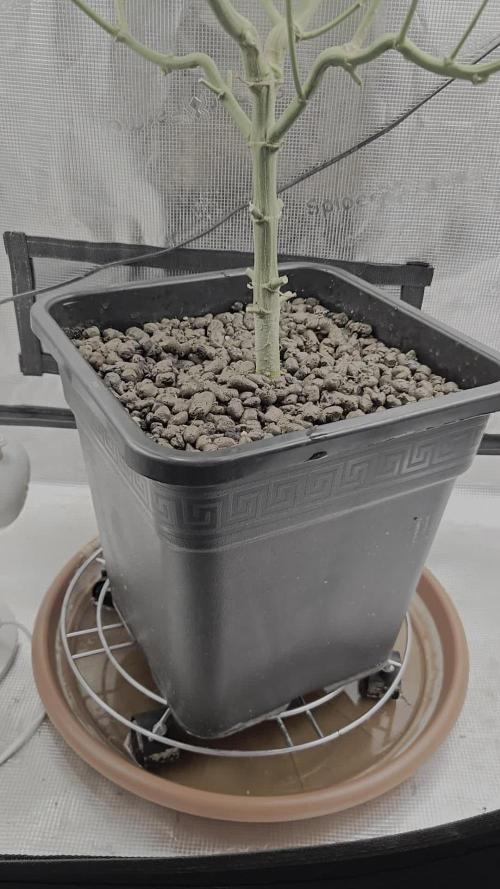
Amnesia ešte nevečerala, je hladová. Krásne rozvoniava a naberá cukor do palic.

Likes
16
Share


@Rando1314
Follow
I’m quite surprised as to how well these girls are looking and smelling!! They’re quality genetics but i also believe every strain will provide pros and cons during the grow. This one particularity has been quite the learning experience. Cannabis is quite the resilient plant and I definitely like growing them. As far as this week goes they’re definitely producing more trichomes and resin glands and appears there’s no more stretch from the plant. No more new growth even small amounts hidden within the canopy. I did a little flush earlier this week and it made the tips of what fan leaves turn yellowish so it def means we’re getting close to the end. Prob got another 2 weeks before I fully flush for Atleast a week then pulling them down. The trichs will be the ultimate deciding factor. I’ll pull when i see the first sign as I like more of a heady high than a couch-lock with little to none clear. Well till next week y’all happy growin and hopefully ya had a good thanksgiving
Likes
32
Share


@BigBadLion
Follow
Hey everyone! Week 10 is here! (or 5th of flower) 😁
Both of my girls look like they are really close to being ready! (or they are already ready!) 😍 and I could chop them right now but I want to wait a bit more so buds can get a little bigger. This is because I forgot flower is shorter in autos and I delayed the doses a bit too much 😞. I hope this week's full dosage will help my babies to get her buds a little bigger 🙏 and next time I'll be more aware of this as I completely missed it.
My goal is 70%/30% amber trichomes and I believe I still have some time for that!
Besides what I mentioned earlier, this strain is amazing. They've responded quite well for all the defoliation I've done to them which is no small feat on an auto! 💪
Anyway, that's all for now. See you all really soon in my next update! It should be up soon!
Bye! ;D


Likes
21
Share


@hyphen420
Follow
Die Letzte Woche der Blüte mit zufügung von Dünger für die 3 Red Hot Cookies, ab jetzt werden die Mädels nurnoch mit ordentlich viel Wasser gegossen bis zur Ernte.
El Patron und Strawberry Lemonade bekommen noch 1-2 Wochen mehr, jenachdem wie gut sie den zusätzlichen Platz ausnutzen sobald die 3 Red Hot Cookies das Zelt verlassen haben.
👍 😁😍

Likes
13
Share


@SzkolaZiola
Follow
Third week of flowering - stretch is real. I had to move the light up to escape from the growth.
All are doing fine, Strawberry is still meh/weird but 3/5 are fabulous, rest is alive and flowering, tent is full - I'm content.
Due to Easter I did not had time for them - I need to catch up with defoliation, lollipopping and ScrOGging them.
More on that in the next update, cheers 😎


Likes
20
Share

@TrickzGrowz
Follow
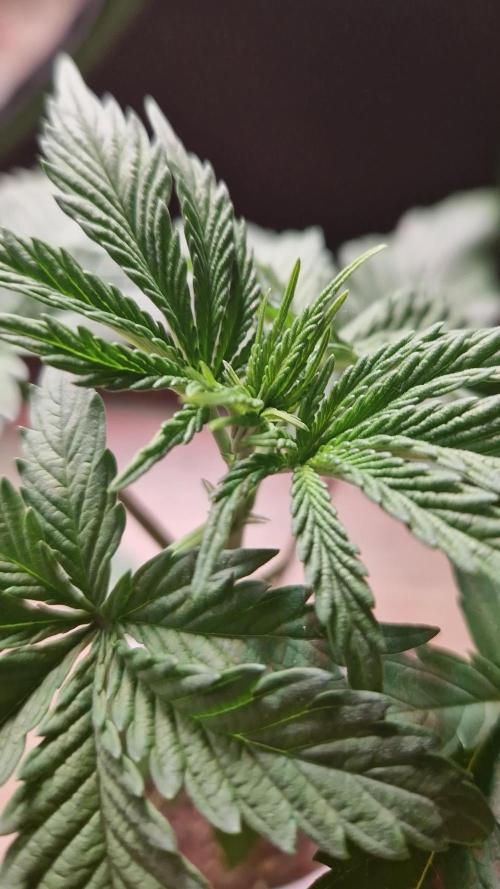
Sie wird langsam echt zu groß und deshalb wird sie heute getoppt, damit auch die unteren Triebe zoch ziehen können. Ich möchte mich auf 4 Haupttriebe konzentrieren.
Likes
13
Share


@DeepRootsGrowTrees
Follow
PABLO ESCOBAR / DIVINE SEEDS
WEEK #3 OVERALL
WEEK #2 VEG
This week has been a good week she's vibrant and growing good.
Stay Growing!!
Thank you for stopping by and taking a look it's much appreciated!!
Thank you DIVINE SEEDS!!
PABLO ESCOBAR / DIVINE SEEDS
Likes
10
Share


@speedsakillerfk7
Follow
Week was a bit more of a pain than some.of my other grows. Working on getting the sprout to stretch a little. Also feeding some PH water while adding a bit of additional dirt to fill void around sprout.
Likes
38
Share


@Aedaone
Follow
This week started of good except for ph and iron. I'm phing feed and water to 6 but my naturally 7.6 ph water is raising ph. I've realized my water and organic soil don't have iron in them. It's keeping these from greening up properly. I do have blood meal in the soil but not enough. I'll be adding an iron supplement next week when it arrives. Until then I'm going to feed a little masses and blood meal with the ph water. I've had a difficult learning curve switching from coco and salts to organic and soil. #2 got topped on day 1. I'm going to clone this top so I'll have this plant for the future.