


Likes
Comments
Share


@NikoRussia
Follow
Очередное посещение. Высокий куст 100см, другой 80см, остальные 60см. Внёс на 10литров воды 2гр МФК и 2гр сульфат магния (Буйские удобрения). Опрыскал от насекомых вредителей. Нижние листья едят улитки и слизни. Следующая неделя 30-32 градуса, если не будет дождей пойду поливать.

Likes
32
Share


Likes
2
Share


@outdoor_grow_420
Follow
I really like create this budzai auto plant. Don't grow as I expect. But a really beautiful plant. And create two nice buds.
The smoke is amazing.

Likes
65
Share


@Dendegrow
Follow
Week 2 of the flowering phase flew by 🌱💨. Unfortunately, I may have overdone it with potassium or kept the water level too high – the classic signs of clawing leaves were evident. Thankfully, they seem to be recovering now and are back under control 💪🍃.
My IR night experiment is showing clear results 🌌: The plants exposed to infrared radiation at night stretched significantly more. This might be especially beneficial for this indica-dominant strain as it leads to better canopy distribution, improved airflow, and reduced risks of mold and disease. Plus, the light distribution is much more efficient now, which I’m excited to see pay off.
On the downside, my Orange Sherbert turned hermaphroditic 😔. It’s hard to pinpoint the cause – overfertilization seems unlikely since I’m using only organic nutrients. I suspect it might be linked to an E-field experiment I’ve been running. To confirm this theory, I’ll conduct a new grow with a similar strain next year to see if the electric field negatively impacts cannabis development.
Stay tuned for updates! Drop a like and follow along for more grow insights 🌿✨. See you next week!
Woche 2 der Blütephase ist wie im Flug vergangen 🌱💨. Leider habe ich wohl etwas zu viel Kalium gegeben oder den Wasserstand zu hoch gehalten – die typischen Anzeichen von Adlerkrallen waren sichtbar. Zum Glück scheinen sich diese jetzt zurückzubilden und sind wieder unter Kontrolle 💪🍃.
Mein IR-Nachtexperiment zeigt bereits deutliche Ergebnisse 🌌: Die Pflanzen, die nachts mit Infrarotstrahlung bestrahlt wurden, haben deutlich stärker gestretcht. Das ist besonders bei dieser indica-dominanten Sorte wahrscheinlich von Vorteil, da es zu einer besseren Verteilung des Blätterdachs führt. Dadurch verbessert sich die Luftzirkulation, das Risiko von Schimmel und Krankheiten wird minimiert, und die Lichtverteilung wird effizienter. Ich bin gespannt, wie sich das weiter auswirkt!
Leider hat meine Orange Sherbert gezwittert 😔. Woran das genau liegt, kann ich schwer sagen. Eine Überdüngung halte ich für unwahrscheinlich, da ich nur biologischen Dünger verwendet habe. Ich vermute, dass mein E-Feld-Experiment eine Rolle spielt. Um das zu bestätigen, werde ich nächstes Jahr einen neuen Durchlauf mit einer ähnlichen Sorte machen und prüfen, ob das elektrische Feld tatsächlich eine ungünstige Rückentwicklung der Pflanze verursacht.
Bleibt dran, lasst ein Like da und folgt mir für weitere Updates 🌿✨. Bis nächste Woche!


Likes
6
Share


@DRO420
Follow
About 3 days until harvest . Looking fat and frosty . The tri-combs are mostly a milky color with a few amber .

Likes
5
Share


@CannaIGrow
Follow
Did some heavy defoilation this week and more training. Started seeing some white hairs first appear, just showing female. Today is day 30 and this is supposed to be a 60 plant, we will see.


Likes
8
Share

@CalGonJim
Follow
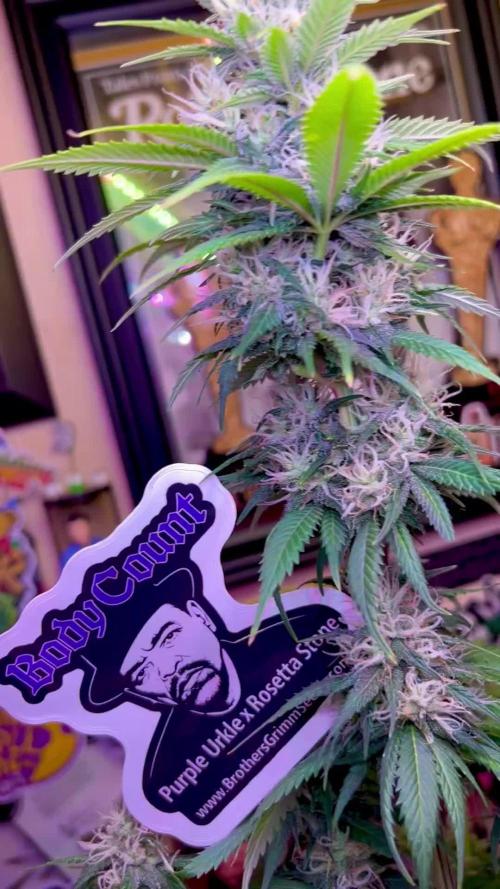
3/16 324AM PRETTY GOOD
⚡️ 3/16 2:41PM nside the Genetics: How Ice-T & Montel’s Strain Was Born
Seedsman Seeds https://www.youtube.com/watch?v=q5eMAVat60M
3/19 330AM 👨🔬⚡️**Adding L-Proline (the amino acid supplement growers use) to plants on soft water can provide some helpful support against the stresses you're dealing with, but it's not a full fix—think of it as a stress-buffer rather than a mineral replacement.**
Soft water (low in calcium and magnesium) often triggers **Ca/Mg deficiencies** in bloom stage (especially with Cha Ching or MaxiBloom, which don't supply much Ca/Mg on their own). This leads to issues like tip burn, leaf curl, weak cell walls, nutrient lockouts, oxidative damage (ROS buildup), and overall plant stress that feels like "the plant is struggling to hold it together." Proline steps in here as an **osmoprotectant**—it's one of the compounds plants naturally ramp up under stress.
### What Proline Actually Does in This Situation
- **Helps with osmotic/water balance** — Soft water can disrupt turgor pressure and water movement inside cells (similar to mild drought or salinity stress). Proline stabilizes cell membranes and helps the plant retain water better, reducing wilting or limpness.
- **Reduces oxidative stress** — Ca/Mg shortages cause free radical damage. Proline acts as an antioxidant and protects proteins/enzymes, so deficiency symptoms (yellowing, spotting, slowed bud development) don't spiral as fast.
- **Improves overall resilience** — In cannabis and general hydro/soil grows, L-proline (or full amino acid mixes containing it) has been shown to boost stress tolerance, speed recovery, and even support better nutrient uptake indirectly. Studies and grower reports note it helps under nutrient imbalance, drought-like conditions, and environmental swings—exactly the secondary stresses soft water creates.
- **Bloom-stage bonus** — Since you're already in late flower with Cha Ching/MaxiBloom, proline can support resin/terpene production and bud density without pushing excessive veg growth.
It won't magically add the missing Ca or Mg (those are still critical—soft water + high-P bloom nutes often screams for CalMag), but it can make the plant more tolerant while you correct the root issue.
### How Much Effect to Expect Right Now
- **Positive but moderate** — Many hydro/RO growers add amino acids (including proline) specifically for soft water setups and report less burn, better leaf health, and stronger finishes. It won't turn a severe deficiency around overnight, but it can slow the damage and give your plants a fighting chance in the final weeks.
- **No downside at proper doses** — It's very safe and plants use it quickly.
### How to Add It (Practical Dosing)
- **Source**: Pure L-Proline powder (available cheap online—make sure it's the plant-grade L-form, not human supplements).
- **Root feed** (with your Cha Ching/MaxiBloom): Start at 0.5–1 g per gallon (about 100–200 ppm). Mix into your res or feed water once a week. pH as normal.
- **Foliar spray** (often more effective for quick stress relief): 0.25–0.5 g per gallon + a drop of surfactant. Spray lightly every 5–7 days in the dark period.
- **With your current nutes**: Yes, it layers fine—reduce if you see any tip burn. Many run it alongside MaxiBloom + Cha Ching in soft water without issues.
- **Best timing**: Now through harvest is perfect, especially if you're noticing stress signs already.
**Real talk**: The biggest win will still come from adding a proper CalMag supplement (like Botanicare or General Hydro's) at 0.5–1 ml/gal or whatever your PPM tests call for. Proline + CalMag together is a strong combo for soft water grows. If you're running pure RO/soft, most experienced growers treat this as standard.
3/19 445am BKO Blueberry KnockOut!! (Gelato 44 by RQS & Bubbles Blueberry F4 by Grimm Brothers Seeds) my own creation!!👨🔬
A spoonful of butter helps the sugar go down, Im helping.
3/19 10:42PM mmm butter and sugar are just a few ingredients shy of cookie dough, good enough.
Now ICE-T BODYCOUNT Grows efficiently in a one gallon with very little effort No real LST, lower than normal lighting, so cheaper to grow. MONTEL: growing great in such a small container!! Should have topped, she is tall. Colors are coming in now, very strong also growing great at low watt so very efficient as well!!!


Likes
4
Share


@Rko41
Follow
Température 14-28 degré stretching de 5 cm cette semaine mais sa doit être la fin ! La Flo commence bien malgré ce manque de soleil! Jolie buisson!

Likes
67
Share


@BarneyRumble420
Follow
Welcome back guys 💪💪 this week has been astounding in the trichome production and bud production absolutely blown away with the frost this gorilla cookies auto is producing, and a smell that can back that up holy cookies 🍪🍪🦍, very impressed with this strain, thankyou again to everyone that stopped by 💪 happy growing ✌️
www.2fast4buds.com
Likes
5
Share


Likes
19
Share


@luvurgarden
Follow
Final week, I think she will be harvested at the end of the coming week. Looking just about done. PH’d water only for the rest of the way.
Likes
6
Share


@KarlOlga
Follow
Heute (01.04) noch mal entlaubt und alle Triebe auf gleiche Höhe gebracht bei der Mango. Die bloody skunk holt auf und ist aber direkt nach dem Topping in die Blüte gegangen.
Bin gespannt!
04.04- paar Blätter entfernt
06.04 - LST und paar Blätter weg!

Likes
29
Share


@Spliffing_Around
Follow
Now they are a bit bigger , this is the start of week 2 , now day 19 in real time from germination.
I would appreciate any help to maximise the yield.
I feed around 500-600 ppm. How much should the drain be ? I have to plants struggling, one had 500 run off , should I give nutes or flush them more ?

Likes
1
Share


@bigsmoke42069
Follow
Week 4 of flowering 10/9/24
Defoliated plants.
Watering 4 times a day (with 10%-20% runoff)
hand watering to full saturation of the media with 20% runoff at the end of the week.
Checking runoff EC every 3 days.
Lights now at max height and 90% power.
Cheap AliExpress exhaust fan timer broke.
Humidity rose up to 99% inside the grow tent, but fans kept circulating the air.
After noticing, immediately turned on the dehumidifier to 40% RH with extra fan pointing on the canopy to max.
hopefully no herm problems and mold issues.
Adding 2.5ml/gal of H2O2 (35%) to the reservoir to keep bacteria away.


Likes
290
Share


@Ferenc
Follow
Beautiful.... a lot of LST made her like a snake. She would be very tall otherwise. Crazy...... a lot of rain by the way the temperature is getting low.... but it seems to be good all the things :)
I am not sure about her height may be even 100 cm over 🤪
Day 111: She looks like kind a strated the flowering cycle I mean the greenish tops I need to force her to flower shit weather UK it will be too late so I decided to do it manually covering her first 36 hours and then every day to get less than 12 hours light or smthg like that l. 🙄 So in case she started it helps her to go on if not then she will. I am sure she started 🙃

Likes
8
Share


@Santica_Garden
Follow
So this is how things are looking for the ladies at the end of Week 2 from Seed, I have uploaded a video for you guys with all the information you, any questions just ask away guys 👍🏾🔥😎
Likes
11
Share


@Barbagrows
Follow
Day 86 -
Major training session on both ladies today. Things were getting too crowded with 4 photos (80+ days veg) and 2 autoflowers that both seem to have around a month left in them.
Topped all upper branches and stripped most of the undergrowth, leaving only 2-3 nodes on every branch. Took me over an hour to do all four plants but in the end tings look much better in the tent. Now onto a hopefully short recovery on all plants.
Day 89 -
Maria is showing signs of recovery from last training session. All new growth is lush and green. She takes training very well and always recovered relatively fast from anything done on her. Loving this pheno.
Juanita is a complete different story. She does not like topping, she does not like leaf stripping, she does not like node stripping. Pushing new growth but not as nice as I would like her to be...
Likes
12
Share

@MuckmanMelts
Follow
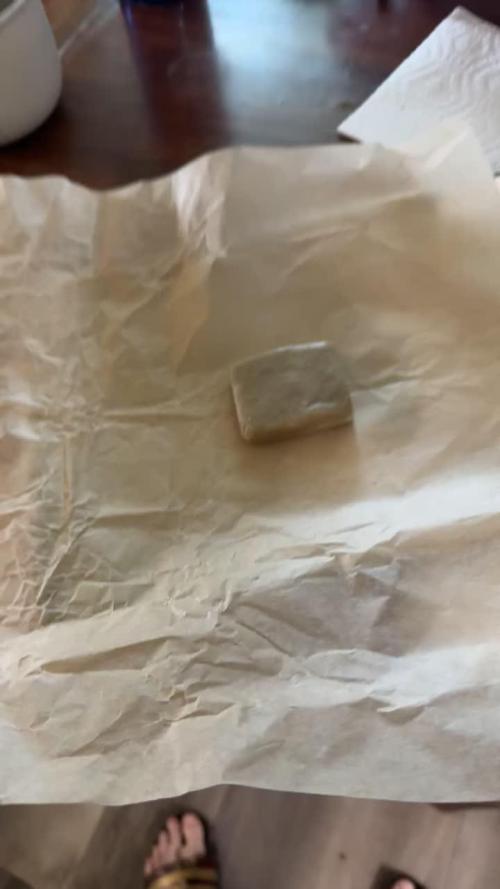
24hr in freezer before starting to batch, about 50 gram total rosin yield from this 1 plant. Cheers everyone been a great time growing just a single plant!
