The Grow Awards 2026 🏆
Likes
Comments
Share
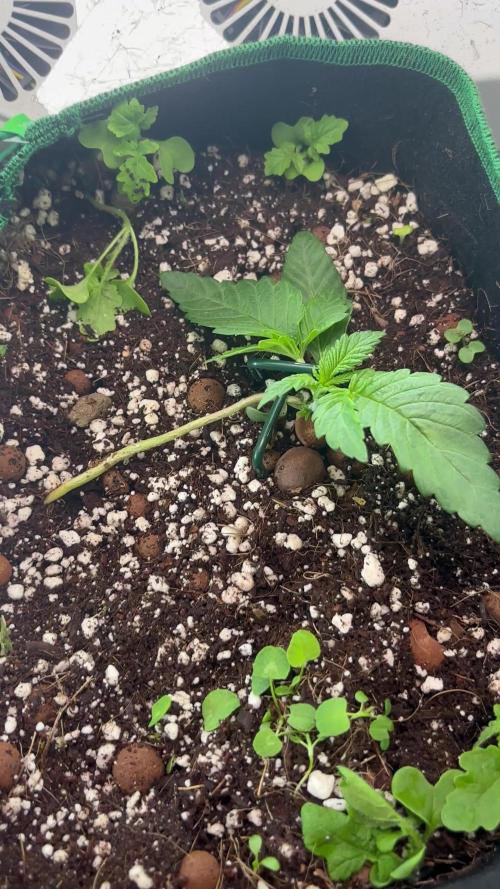
Everything is good so far...more roots
Likes
11
Share
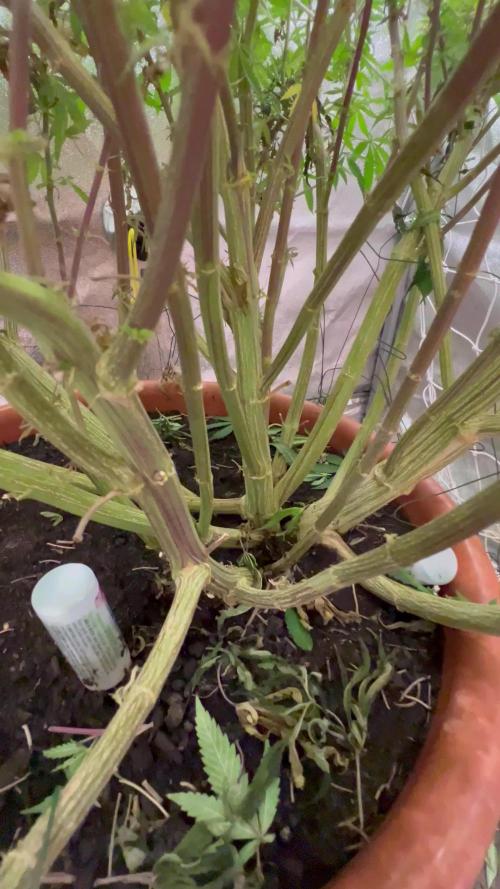
Nearly time for harvest, 2 weeks to go roughly
Likes
62
Share
@MeaCulpa
Follow
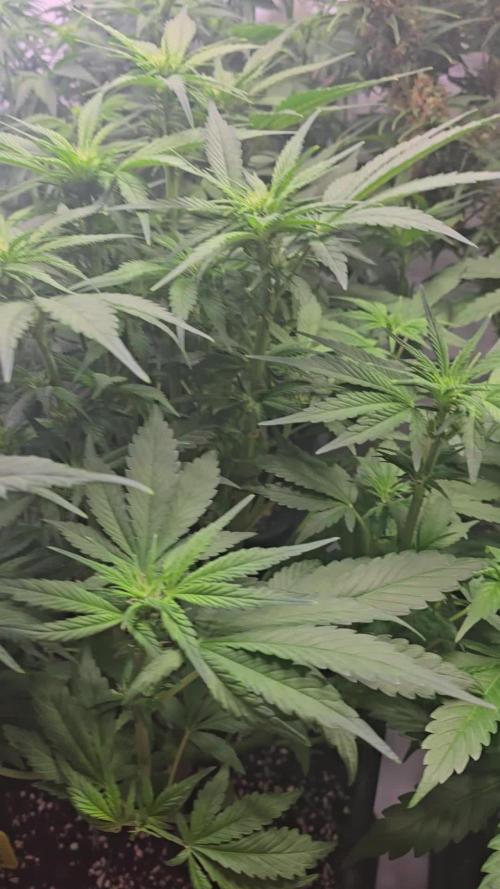
Third week in bloom. Everything is going well. My only concern is that I have defoliated too much and my humidity is too high. Difficult to get it down when it's just raining outside. I'll see what happens... 19.12.2023 I've made some space and flanged my old 60x60x120cm tent on the right site and switched on another PC fan. I hope I haven't made a serious mistake. All fans repositioned. And everything is taped off so that no light comes in. That was too crowded. Next time 4 or 5 will be enough for me.
Likes
1
Share
Day 43-49 A lot of them are showing signs of going into bloom. Doing their stretch before bloom, so they need more nitrogen before they're done stretching. My own unbiased opinions about deep water culture.I love it.It's got the precision I need and control. If you like something more relaxed, living soil is your thing, but this is mine.I'm enjoying it.Everything's growing people have already done the research.I just gotta apply it.
Likes
2
Share
@Hypnogrow
Follow
I busted myself up so havent been able to get into the grow much for a couple weeks. They are definitely thirsty and not getting enough water so will water more deeply next time around a gallon per tote a day.
Likes
2
Share
@Enki_Weed
Follow
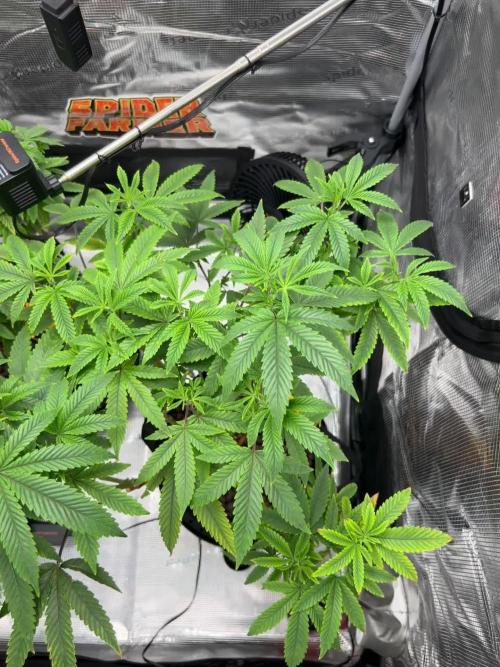
Heute ist ein aufregender Tag im Zelt! Meine beiden Hybriden Brain Damage und High Mars scheinen sich unter den Mars Hydro FC 1500 Lampen pudelwohl zu fühlen. Die Blätter sind sattgrün und kräftig, ein Zeichen für die optimale Nährstoffversorgung durch das Hesi Hydro Zuchtschema. Der pH-Wert liegt bei perfekten 6,2 und der EC-Wert bei 1,7. Die Temperatur im Zelt ist mit 25 Grad etwas höher als ideal, aber die Klimaanlage läuft auf Hochtouren, um sie zu senken. Auch die Luftfeuchtigkeit von 65 % ist noch etwas zu hoch, aber der Luftentfeuchter ist bereits aktiv. Die beiden Ventilatoren sorgen für eine gute Luftzirkulation im Zelt. Heute Abend wird es dann noch mal spannend, wenn der Chiller für die Wassertemperatur eintrifft. Ich bin gespannt, wie sich die beiden Damen in den nächsten Tagen entwickeln werden!
Likes
4
Share
It’s been a real pleasure to watch them grow☮️💨..
Likes
5
Share
@gerrypom
Follow
just add more nutrients
Likes
14
Share
@simps
Follow
Really impressed with this strain from dinafem seeds it's a great plant to grow super ez growth is fast have a lot of fun with this one
Likes
6
Share
I haven't done anything with her this week. Things are really speeding up now.
Likes
86
Share
@Roberts
Follow
This is the last weekly update on Larry lemon og. Plant has been fading slowly. Planning to cut and hang at some point this week. Will update video here of harvest as always💯. She is a short and thick chick. Lol lots of lemony smelling buds full of trichromes. Should be a great smoke 💨. Been pulling badly faded leaves off during the week as well. So a update will be coming soon. Thanks again seedsman 💯💯💯 Update 3 days after this diary post plant was harvested. Was a total of 94 days from seed. My count was off sorry about that. Should go off plant size for the lst training not days. Harvest video now updated 🍋🌱. Will post harvest week when dry. 🤤 Thank you grow diaries community. I greatly appreciate the like, follows, and subscriptions on my YouTube channel. Wish everyone best of luck In your grows, and adventures. 🌱🌱🌱
Processing
Likes
43
Share
week 2 of flower, been able to line up compost teas with feeds so they get nutes, nutes, RO+TEA, Repeat. foliar last times this week, I stop spraying anything on week 3! showed how i like to shake them up with the scrog a bit in last vid. I do that to essentially simulate a wind storm, strengthen stalks and roots, also helps reorganizing the canopy as you sorta shake things into place that were bunched up next to neighboring leaves. next week will do a fairly heavy defoliation to allow better airflow around colas
Likes
21
Share
@MG2009
Follow
03/06/2022 #6 is (2 others 1 week behind) 43 days today hopefully go to 63-70 days. Seed are looking good on #6 should be good amount to play with.
Likes
16
Share
Likes
55
Share
High UV-B radiation can necessitate increased magnesium because it plays a crucial role in mitigating the stress and damage caused by UV-B exposure. High UV-B can lead to the production of harmful reactive oxygen species, and magnesium helps the plant's antioxidant systems and chlorophyll function to cope with this stress, making adequate magnesium supply essential for plant health under such conditions. Why UV? To do with the way anthocyanin is different from other pigmentations in that its colouration is not attached to the cell itself, it's a pH thing, if you force the color through high dose, as soon as she stops being in that environment, it will begin to revert back to chlorophyll, nitrogen deficiency causes anthocyanin to be produced in the first place, and nitrogen is needed to create new chlorophyll. When plants have a nitrogen deficiency, they produce anthocyanins to protect the leaves from stress while they try to salvage remaining nutrients, like nitrogen, before leaf drop. 24:1 C:N carbon&nitrogen ratio in medium will trigger autophagy, which will begin the dumping of nitrogen into the soil to feed micros as they FEED on nitrogen to convert carbon sugars into chemical energy via cellular root respiration (calcium/phosphorous VITAL for sugar processing). Couple the UV with a nitrogen dump for all the colors of the rainbow, and remove the possibility of allowing the conversion back to chlorophyll. 10/14 mimics late autumn, winter is coming, maximizing genetic expressions of desired purple genes if they do exist, I have seen no indications that I'd expect from previous grows. Oxygen is the oxidizer; if a soil cannot breathe, nothing good will EVER happen. Raised UV to lower the dosage. The leaves begin producing a protein hormone called florigen (produced via the Flowering Locus T gene). DELLA proteins. The plant measures the duration of the night by monitoring the amount of Pfr that has reverted to Pr. I imagine it like an egg timer with sand. You can speed up the flow of sand one way or another, determined by what type of red light and the ratio overall. The standard flowering cycle for many indoor plants is 12 hours of light and 12 hours of darkness. By applying a short pulse of far-red light at the very beginning of the dark cycle, a grower can trick the plant's internal clock. Forcing the conversion: A pulse of far-red light (730 nm) rapidly converts the active (P_{fr}) back into the inactive (P_{r}) form, simulating several hours of dark reversion. This amplified "sleep" signal causes the plant to believe the night started hours earlier than it actually did. For a short-day plant, this rapid reset means it can perceive a 14-hour night even though it only received 10 hours of darkness. This allows growers to use a 14/10 light cycle (14 hours of light, 10 hours of dark) without disrupting the flowering of short-day plants, as the far-red pulse makes the night effectively "long enough". This provides plants with more light for photosynthesis and can speed up the flowering process. What about all night? Or a pulse (15-30min)? High Pfr (Far-Red) overnight mimics a short night:If you maintain a high Pfr:Pr ratio overnight, the plant never receives the signal that a sufficient dark period has occurred. This mimics the conditions of a short night, during which Pfr levels remain high. Flowering is inhibited: As a result, the plant will not flower. This is the same effect that is observed when a flash of red light interrupts a long night, which instantly converts any Pr back to Pfr and resets the dark-reversion clock. But it's not that simple, I do not necessarily want a 14/10 for the entirety of the flower. Suppose you give a 12/12 with the pr/pfr conversion to make her more of a 10/14. It may not be the best option for the entirety of flower. A photoperiod cannabis plant will develop differently under a 14/10 light cycle compared to a 10/14 cycle during the flowering phase. The differing lengths of light and darkness trigger different hormonal responses, influencing the plant's growth, final yield, potency, and maturation time. A faster maturation time in flowering cannabis offers quicker harvests and lower potential risk, but can result in diminished potency, lower yields, and a less complex flavor and aroma profile comparatively. The trade-offs depend on the grower's priorities and the specific cannabis genetics. 14/10 physical light cycle with pr/pfr conversion for optimal yield to make the plant think it's on a 12/12. After the first 4/5 weeks of flower, when trichomes ramp up, I will change it to 12/12, keeping the pr/pfr conversion. I should switch her to a more 10/14. Although this is stressful, make sure she is not suffering from undue stress from other areas. If enough stress accumulates, there is a chance the increased levels of jasmonic acid will make her pop a few seeds. Be aware, play it by how she is at the time. If you want to make the 10/14 make sure one also applies a second pulse of far-red light (15-30min) two hours into the dark period. This mimics an even longer night, causing the plant to perceive a very short day of 10 hours and a long night of 14 hours. A pulse of only far-red light during a short-day plant's dark period will not disrupt its sleep. Unlike a pulse of red light, which would actively interrupt the dark period and inhibit flowering, far-red light promotes the biochemical state that signals a long, uninterrupted night. This simulates the shortening days of late autumn/winter and can stress the plant, triggering a defensive response. Some growers report that this low, controlled stress can increase resin and trichome production as the plant works to protect its flowers. This mimics a natural outdoor harvest cycle where days get progressively shorter and nights longer. Reduce relative humidity during the late flowering stage to around 30%. This is another controlled stressor that can boost trichome production while reducing the risk of mold. Unlock the full genetic potential and allow for maximal expression of desired genes during critical times. Autoflowers contain genetics from the Cannabis ruderalis subspecies, which evolved to flower automatically based on a predetermined internal clock, or age that flowers based on age rather than light triggers, red and far-red light do not play a role in initiating the flowering stage. However, they significantly affect other aspects of the plant's growth and morphology. The premise that autoflowers do not use phytochrome red (Pr) to phytochrome far-red (Pfr) conversion for any function is incorrect. Like other plants, autoflowers utilize the phytochrome system to sense their light environment and manage processes like germination, shade avoidance, and vegetative growth, even if the phytochrome system isn't what signals them to flower. Thank you 🙏 Almost time. Sound the horn! Maintaining 12-1600ppm by the morning's compensation point alone. She is consistently experiencing noticeable growth every day. Sulfur is in prior to flower, medium loaded with abundance, CEC charged, as the plant grows, so does its respiratory footprint. The exhaust fan starts to flare up at night far more often. The pH is unlocking hydrogen, allowing the plant to cycle CEC for its needs, which is optimal for soil microorganisms. It is charged with controlled doses of sucrose at optimal uptake temperatures. Full negative pressure diffusion setup linked to RH for nights, with negative pressure linked to daytime heat extraction. Just need to throw in the second net, switch spectral ratio and enjoy the show. The struggle of the butterfly to escape through its caterpillar sac strengthens its wings; without this struggle, it would not be able to fly.
Likes
1
Share
@BIXXIE
Follow
🔥🔥this project & phenotype was scrapped due to some personal things that came up. However, im growing these exact plants again, a very good phenotype found!! check out my recent uploads! 🔥🔥
Likes
2
Share