


Likes
Comments
Share


@BettaMushroom420
Follow
The Mandarine Cream is entering its third week of flowering, and the aroma is becoming increasingly potent. The plant is looking beautiful and vigorous, with the buds showing significant daily growth. The smell is evolving into a strong, citrusy scent, reminiscent of grapefruit.
Environment: This week began with a cold front, bringing temperatures down to a minimum of 5°C and a maximum of 15°C. A light rain has helped increase the humidity, which could boost resin production, although the cooler temperatures may also slow down the flowering process, just as they did during the vegetative stage.
Fertilizing: I've stopped fertilizing as the plant now has everything it needs from the substrate.
Watering: Sparse, around once a week, to maintain the right moisture levels without over-saturating.
Pest Control: Beauveria applications have been reduced to once weekly, and the garden remains completely free of pests, which is a pleasant surprise.
Training: The main cola top remains tied down. I haven't done any further defoliation or additional training. The focus is now on letting the plant continue its natural growth as it transitions deeper into flowering.

Likes
5
Share


@Capzinator
Follow
I want to start LST on Day 23. I will just bend her down and tie the leaves to the side.
Every Strain is doing really good, im watering them all 3 days adding the nutritions above. But i also see some strains that didnt like the overwatering at the start. And i burned my strawberry gorilla a bit with waterdrops on the leaves. but she seems to be unimpressed by that. Today i also noticed a very little smell when i opened my tent. im curious which one is making this scent, it was really sweet.
i raised the light intensity from 70% to 85%, leavin the rest for bloom.
Day 24: i watered them yesterday with about half a litre of water. i included lacalva stress treatment before making the LST. i kind of feeling like im a bit too late, but we will see.
Day 26: we had a blackout, because a constructionworker hitted the main cable. 2,5 hours less light, im so glad that these are automatics!
Day 27: Damn guys, i think i did bad on this LST stuff. all of them are really bushy and very strong showing upward. in my first grow, i never had these issues. but all of the stems are so huge. they are close to be bigger than the final stem of my first grow. i think i need to defoliate them soon. i removed the wire and let them do what they want, until they get to know the net.


Likes
5
Share


@S_herby
Follow
Today my Gorilla Cookies entered her 8th week overall, while the Orange Sherbet entered her 5th week of flowering, we're almost there 🍪 I'm continuing with regular sun exposure, cooler temperatures at night, everything is going well, this experiment has literally blown my mind


Likes
Comments
Share


@bluecake
Follow
Today (Mon. 17. June) she is 11 weeks old, and still barely showing any signs of aging. Some buds have more orange pistils, other less, but the majority of buds just grew a little bit fatter, without much visual difference otherwise. Maybe a bit more frosty. I think the flowers still look much to young, to start checking trichomes (please comment if you think otherwise), but lets see what happens till the end of the week.
Her fragrance is more fruity now. Still not a very strong smell. Not that we need to worry about this too much in Germany anymore, but we also don't want to piss off the neighbors with pungant smell. But so far that is not really an issue.
Likes
152
Share


@EBxAH
Follow
Well week 19 and week 9 of flower did start Monday 10/11 but because of my delay in update last week I waited a bit to start the week. The smell is freaking AMAZING!!! Got to sample some more cured stuff and I absolutely love it!!! Still bummed the Black Widow never made it but hopefully next time. The mothers are all flushed, the temps are down, the humidity is down. I'm thinking about dimming the light a bit to see if it helps with ripening. In truth, this grow was all an experiment, lol. Mistakes were made but learned from. But the most important thing is I had alot of fun this time around. There was minimal stress/pressure which I believe is a major part in growing. I feel I really connected with the universe with this! My ultimate goal is quality first, then quantity. Quality will always be one of the pillars of life! I can't get a good pic of the trichomes but there's a decent amount of amber and will be ready for harvest on 10/20 🌕
That's pretty much it, just a waiting, lol.
Happy growing everyone ✌️🍀✌️


Likes
107
Share


@Afterglow
Follow
Всем привет!
Эта неделя началась с того, что мне пришлось удалить штук 20 веерных листьев, потому что растение перестало вмещаться в бокс. Правда к концу недели все вернулось на круги своя.
Полностью перешли на питание во время цветения.
Ко всему прочему начали болеть листья. Пока не разбирался что к чему, но есть подозрения на нехватку кальция и магния, так как я перестал их давать. Сегодня полил обильно Cal-Mag, посмотрим будет или не будет прогрессировать.
Стретч замедлился, но все еще продолжается. Даю 50000 люксов на верхушки растения, это примерно 90 ватт.
Та мутация о которой рассказывал ранее, где шишка начала расти прям из устья листа - все почти также, прогресса нет. Но вот обнаружилась другая мутация - полиплоидия.
Одни из основных веток, в самом начале, была не аккуратно загнута и получила легкий надлом. Этот самый надлом и запустил полиплоидную мутация. Я видел до этого, что листья и боковые ветки растут как-то не симметрично, но особого внимания не обращал. Единственное, что давно заметил, так интересный нарост у одной из больших веток - он какой-то продолговатый и сверху, а не по всему периметру. И вот вчера заметил, что одна из шишек растет не вверх, а вширь.
Стал внимательно изучать всю ветку и понял, что она сама по себе какая-то не симметричная: у основания ветки 3 листа, при чем расположены они на разных уровнях, шишки тоже растут не симметрично, ствол со странным не симметричным узором, а наверху шишка двойная. Кажется дальше шишка будет расширяться все больше и больше.
В общем каждый гровер рано или поздно сталкивается с какой-либо мутация. Я вот за раз столкнулся с двумя. Интересно будет понаблюдать что будет дальше.
Спасибо что заглянули.
Всем большой большой удачи и везения!

Likes
46
Share


@Crwfz1
Follow
This plant is a monster idk what else to say 🤣 I'm stoked as hell and can garentee it will have best yield iv had indoor to date off one plant I can't believe how well it takes to training it is slow coming into flower and all the nodes are crazy close together these nugs are gonna be massive and heavy the roots on this plant are so robust you can't stick in a probe it's solid roots as u can see in the video the soil is straight roots not even a half inch under surface she's inhaling tons of water stay tuned it's gonna be worth it !!

Likes
1
Share


@BigDawg127
Follow
Drying in cardboard box hopefully it dries well and I'll be curing in mason jars

Likes
33
Share


@Darksoul
Follow
One more week in vegetatitve. This week I will put the scrog screen.
They are growing well and my LST keep them very small =)
Im really curious to know how they will flower =)
Likes
11
Share


@wiz4rd
Follow
The plants look really happy, with a rich and vibrant color. They are now growing taller more slowly, but the side branches are getting thicker. The buds are becoming really fat and are completely iced out with trichomes. The calyxes continue to swell, and more trichomes are visible, starting to turn slightly milky. Some of the white hairs are slowly turning brown. I estimate about 2-4 weeks until harvest. The scent is simply delicious, with a pleasant creamy berry aroma. The buds are also incredibly resinous, making your fingers sticky as soon as you touch them.
The plants are only lightly defoliated, with dead leaves selectively removed and small shoots trimmed only at the bottom of the plant.
The ladies are also extremely thirsty. Besides the regular fertilized watering, they also receive tap water from the bottom, which they usually absorb within a few minutes.
I also made an extra video to better show the size of the buds, and using the flash at night highlights the trichomes even more.
Likes
8
Share


@GrowingABushWithButch
Follow
It's Day 54 Week 08 0f Flower For My 02 Kombucha Cream by atlasseed . And For My Snow White and SpliffStrawberry by Spliff Seeds Amsterdam . So Today I Started My Day By Checking My Tricomes On My 2 Kombucha Cream. The 02 Where Looking Fully Milky So My 02 Kombucha Cream Got Flushed TODAY with Some Flawless Finish by Advanced Nutrients . The 2 Received 80ml of Flawless Finish mix with 1OGallons Of Water Ph at 6.0. Tomorrow they will get Rinse off with ph balance water. Yesterday I watered my Snow White and SpliffStrawberry Ppm where down to 100ppm. All 4 Plants will get a nice ice bath in a few days. My plan is to check the Tricomes on the SpliffStrawberry In a few more days she was still Milky when I check her yesterday. I will chop her down next weekend. And the rest will get the chop at 30%Amber Tricomes.
Happy Growing Growmies 🤘🏻


Likes
10
Share


@BR1CK_SANCHEZ
Follow
Eventful week for the girls... threw in another 95w LED to finish out flower and to grow an extra plant or two next run. Checked the trics on the leftmost plant and they were almost all cloudy and even starting to turn amber in a couple spots, so I decided it was time to chop her. Probably gonna take the other smaller plant down soon as well. The tallest plant is still looking larfy as hell but I'm hoping she'll thicken up a little over the next week or two.
Likes
19
Share


@MaxGrowCanada
Follow
Weirdo is at it again.
Seems to me like she is in her final phase. Most of the leaves dying back buds starting to fall over but still a little immature🤷♂️ the other girl has a few weeks it seems but weirdo could be within the week. Ambers are starting to appear on the lower flowers. I am a little underwhelmed with her progress this week.
I took a lower sample to evaluate things a little better.
Plant two is moving along.
Both plants cut their water demand down🤷♂️
After inspecting the sample, i notice alot of amber, mostly cloudy, with a few still clear, trichomes. I dont think she is ready as the buds are still developping new bracts. Hold out for a day or two, and go from there

Likes
24
Share


@Mr_Awesome_Badass
Follow
Well still on auto pilot for the most part.
Giving her a daily feeding till run off of the nutes my other girls are using. Other than that I'm just checking on her daily.
The main cola is big, fat and pretty dense. Not the hardest but everything considering I'm really happy. It's about the look anyway when it comes to cannabonsi plants.
Finished the roll of butt wipe so that looks pretty cool. Hope to harvest next weekend but we will see.
Thanks for following this has been a fun grow.

Likes
22
Share


@RDWCGrowing
Follow
12/25/2023-Germination Day 1
Merry X-mas 2023 I decided to start a run of SolFIre Gardens Hoodz Candyz S1. I am going to do a cup filled with RO water a touch of Hydrogen peroxide and let it sit for 24-48 hours until I see tap root then I am going to put it into a rapid rooter.. Tap root Down and put it about 1/4 of the say down the Rapid rooter.
I made some modifications to my basket on this run.. I have taken a few Pods that I use for my cloning machine and decided that I am going to try and use them as sure plants, so that I can take my water right up to the bottom of the basket this time and see if these can make my planting more consistent.
12/26/2023-Germination Day 2
Tap root achieved Planting Commencing
12/27/2023-Germination Day 3
Misted the dome lightly misted the rapid rooter and added a little water to the bottom of the pan to encourage root growth to the pan.
12/28/2023-Germination Day 4
Ground Hogs day
12/29/2023- Germination Day 5
She is up, she has broken surface, I misted the root riot, and around the bottom of the tray to try and entice root growth down rapidly.
12/31/2023- Germination Day 6
Ground Hogs Day
1/1/2024-Germination Day 7
HAPPY NEW YEARS!!.. I did it I planned it out so my planting day would fall on New Years and it worked.. Yay!!!
1/2/2024- Germination Day 8
Since the roots are not to the water yet, I am pouring one cup of water lightly on the hydroton around the lady to try and encourage root growth down to the water..
1/3/2024- Germination Day 9
Ground Hogs day, will continue until roots hit the water.
1/4/2024- Germination Day 10
Ground Hogs day, will continue until roots hit the water. I will just continue to top feed until roots are in the water.. Shouldn't be more than a few more days.
1/5/2024- Germination Day 11
Ground Hogs day, will continue until roots hit the water. I am going to change the water Sunday and kick off Week 1, I will just continue to top feed until roots are in the water.. Shouldn't be more than a few more days.
1/6/2024- Germination Day 12
Ground Hogs day, will continue until roots hit the water. I will just continue to top feed until roots are in the water.. Shouldn't be more than a few more days.
1/6/2024- Germination Day 13
Ground Hogs day, will continue until roots hit the water.
1/7/2024- Germination Day 14
Ground Hogs day, will continue until roots hit the water.

Likes
29
Share


@Jjthejetplane79
Follow
Fastbuds with the heavy weight autos! Holy crap I thought she was a photoperiod
Likes
13
Share

@eldruida_lamota
Follow
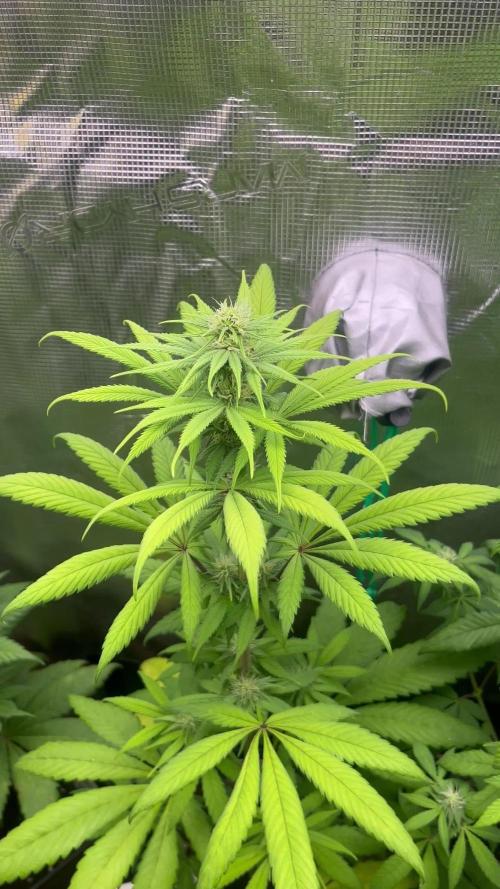
Que pasa familia, vamos con la tercera semana de floración de estas Green Gelato feminizadas de RoyalQueenSeeds.
Vamos al lío ,se trasplantaron en macetas de 7 litros definitivamente.
El ph se controla en 6.0 , la temperatura la tenemos entre 24/20 grados y la humedad ronda el 50%.
El ciclo de floración puse 12h de luz, el foco está al 80% de potencia.
De momento van creciendo a buen ritmo y tienen un buen color, estaban muy bien enraizadas al realizarle el trasplante se notaba la abundancia radicular.
Agradecer Agrobeta por el envío del kit gold series en cuestión, unos maestros 🙏
- os dejo por aquí un CÓDIGO: Eldruida
Descuento para la tienda de MARS HYDRO.
https://www.mars-hydro.com
Hasta aquí todo, Buenos humos 💨💨💨
Likes
18
Share


@CampaCavallo
Follow
È stata una bella esperienza cannabica far crescere la bella RUNTZ assieme a tutti i fratelli growers di GROWDIARIES.COM!
La RUNTZ è una dolce ragazza che ci affascina con i suoi bei colori e ci conquista con i suoi dolci sapori💓😋