


Likes
Comments
Share


@gr3g4l
Follow
Semana de lluvias y cuando llueve a resguardo y así llevo mejor controlado el tema de los riegos, de dejar que se mojen con el agua de lluvia me descontrola bastante la alimentación y me limpia el preventivo de las hojas..
Con 70 dias una altura de 166 ctms, la nº1 y 138 ctms la nº4
Siguen floreciendo a buen ritmo al igual que también siguen creciendo. Están en plena jauria y empiezan a deshacerse de las hojas más viejunas. Partes bajas.

Likes
10
Share


@extraterrestrial1
Follow
-------------------------------------------------
Day 22
Water: N/A
Humidifier: 45% (LOW-MIST)
Fan Speed: High
Light on @ 19:00 (26.4° celsius @ 48% RH)
Light off @ 13:00 (22.8° celsius @ 56% RH)
-------------------------------------------------
Day 23
Water: N/A
Humidifier: 45% (LOW-MIST)
Dehumidifier: On
Fan Speed: High
Light on @ 19:00 (27.6° celsius @ 46% RH)
Light off @ 13:00 (27.1° celsius @ 51% RH)
-------------------------------------------------
Day 24
Water: N/A
Humidifier: 45% (LOW-MIST)
Dehumidifier: On
Fan Speed: High
Light on @ 19:00 (26.2° celsius @ 51% RH)
Light off @ 13:00 (22.7° celsius @ 40% RH)
-------------------------------------------------
Day 25 (Feed day: 15 tbsp Worm castings + 5 tbsp 2-8-4 Gaia Green Power Bloom)
Water: 0.5 Gallon RO water + 5ml Remo VeloKelp
Humidifier: 50% (LOW-MIST)
Dehumidifier: On
Fan Speed: High
Light on @ 19:00 (27.1° celsius @ 48% RH)
Light off @ 13:00 (23.0° celsius @ 50% RH)
-------------------------------------------------
Day 26
**LST**
Water: N/A
Humidifier: 50% (LOW-MIST)
Dehumidifier: On
Fan Speed: High
Light on @ 19:00 (26.8° celsius @ 48% RH)
Light off @ 13:00 (23.5° celsius @ 50% RH)
-------------------------------------------------
Day 27
Water: N/A
Humidifier: 50% (LOW-MIST)
Dehumidifier: On
Fan Speed: High
Light on @ 19:00 (27.7° celsius @ 48% RH)
Light off @ 13:00 (23.4° celsius @ 50% RH)
-------------------------------------------------
Day 28
Water: N/A
Humidifier: 50% (LOW-MIST)
Dehumidifier: On
Fan Speed: High
Light on @ 19:00 (26.7° celsius @ 50% RH)
Light off @ 13:00 (23.2° celsius @ 50% RH)
-------------------------------------------------
Likes
47
Share


@BloodBath
Follow
Sour Wiz is still in veg. 7 weeks. Looking fantastic. EAsiest strain to grow so far. 0 issues and respond so everything well. Once I can sex I’ll separate and start planning to flower. Skywalker OG is still going great in week 9 of flower. STARTING to see a lot of bud structure and white hairs. Northern Lights is still surprising because it was so mutated and now its thriving.

Likes
3
Share


@Krautbauern
Follow
papaya cookies has now completed her stretch. typical for papaya, she develops purple/pink pistils. such a beauty. hopefully the weather will stay good enough for her bulk.

Likes
20
Share


@caliEskimo5
Follow
After exfoliation, leaf spot has virtually disappeared and main cola has really put on weight. Flowers are also growing much more densely than with my dwc grow but the blueberry pine diesel smell isn't there this time around.
I have also been fertilizing quite high this week, double strength because soil gets completely dry in under 24hrs and I'm not seeing any lockout or toxic signs.
9/15
Started flushing despite last dwc with Jack grow went 12 weeks. Bud was potent but lacked odor.

Likes
10
Share


@DisTentAint4Campin
Follow
What can I say hats off to you again fastbuds this smoke reminds me of some old school stuff I used to smoke in the early 2000s it's super sour smelling tastes just like it smells gives you that space out high like you jus daydreaming forever I definitely fuck up alot when I smoke it lol motor skills wise I'm like a super clutz after a couple bong hits of this
Likes
5
Share


@84ruk
Follow
La planta ya tiene al rededor de 76 días mientras el banco sugiere cosechar de 70-74 días, estamos atentos a que los tricomas comiencen a tornearse cafés, el 10% para cosechar, al parecer está a menos de una semana.

Likes
25
Share


@eldruida_lamota
Follow
Vamos familia, actualizamos estas Runtz de Seedstockers, octava semana de floración.
Tienen un porte y están cogiendo un color espectacular, se ve que están completamente sanas, hasta el momento genial.
La humedad está en su punto, y la temperatura al final lo solucionamos ya está estable en 24 grados.
Empiezan a oler ya que alimenta, tienen toques muy dulces y el aroma ya es bastante fuerte.
Ya estamos en la recta final si no es una puede que 2 pero dudo que sean 2 semanas lo que queda, solo terminar de madurar.
Llevan 1 semana ya solo con agua controlando igualmente el Ph.
Mars hydro:
Code discount: EL420
https://www.mars-hydro.com/
Agrobeta:
https://www.agrobeta.com/agrobetatiendaonline/36-abonos-canamo
Hasta aquí todo, Buenos humos 💨💨💨
Likes
7
Share


@TheGreenLeopard
Follow
Cannot wait to try these - pics were limited Cos I was super busy this week. What you see are some lovely buds that came out of really small pots - I have one going in a 20 liter - will report on that later. But really try pev out. Seriously great seeds

Likes
27
Share


@Smokepurple137
Follow
All doing perfect not alot to say, defoliated on 18/1/21 and tied a few branches where I could to make a little more room. Maybe 3weeks then ripen +flush Daily updates

Processing
Likes
84
Share


@Silverback_Guerilla
Follow
SATURDAY 8/11:
It's late Friday night..early Saturday morning..might as well start week 8!
All systems are 'GO', and it's looking like I'm about 10-14 days away from starting the flush on WW#1 and maybe EM#1. I'm salivating 😍
I just gotta get these temperatures down a bit more..
SUNDAY 8/12:
Yesterday I ordered a couple of 15.0 UVB 26w CFL bulbs to suspend over the girls that are the closest to finished..try to get them to ooze some more THC for me.
Today I started germinating 7 more White White Autos from CKS and 4 more Candy Cane Autos from CKS. They will also be planted in 5gal fabric pots. They will be grown in the veg tent and moved into the main tent as space becomes available. The current crop will be harvested in waves, so I'll just employ stools for the new arrivals until everybody's been harvested from the current crop and I can lower the light again.
MONDAY:
I'm really starting to see the effects of the heat stress from this past week. So many dead or dying leaves. Temperatures are staying below 90 at the canopy and closer to 80 at the floor during the day..varying between 83 and 87 for most of the day and climbing to about 89 by sunset. It drops to 78-80 for 5 hours of nighttime. That's a shitload better than the mid to high 90's of last week, but the damage, I'm afraid, has been done.😢
EM#1 and WW#1 aren't gonna have enough vegetation left to do much else and I want to trim away the necrotic shit before it reaches the sugary stuff. There might be enough lower leaves left alive that I can just harvest the main colas and let the lower regions be for another week of swelling and flushing, but if not, they will get one more dose of tiger bloom and cha ching in 2 days, then two days later I will flush them really well and trim off all the dead shit. Let them dry for another day or two and flush them one more time really well and put them in the dark for a day before harvesting.
EM#2 still has a good bit of green in her big fan leaves and will probably perk up and show me some more bud development.🙏
EM#3 hates anything above 85 degrees, so I'll probably never make her happy..😟
WW#2 and EM#4 don't seem to have been bothered by the heat near as much.👍
CC#1 and CC#2 don't like the heat at all..but they are killer dwarves and will pull through just fine.👌
I mixed up 7 gallons of ph'd water with calmag, bud candy, big bloom (no nitrogen), and a very heavy dose of boomerang and douched everybody really well.
TUESDAY:
The crispy girls got a big haircut today. I cut away most of the necrotic stuff on EM#1, EM#2, and WW#1. Buds should stay pretty for another few days...and wow are they pretty! The 3 plants still have enough foliage that I've decided to let them bask under the UVB lights for a day or two between flushes...see if I can't get them to ooze a little more of the good stuff. I moved them into the areas in the garden with less PAR..mainly 660nm reds and the UVBs. I also raised the lights about 2 inches. Pretty sure that EM#4 and WW#2 are within a week of finishing as well.
So far, I have 3 new WW and 2 new CC sprouts planted. One WW has emerged thus far. She shall be called "WW#3" unless she earns a nickname.
New photos and video clips were taken today.
WEDNESDAY:
I had a 100% germination success rate with the 7 new WW's and 4 new CC's!
They all got planted today, but I ran out of soil (still waiting on Amazon shipment) so I had to plant several of them in smaller pots and will have to transplant them to 5 gal pots when the Happy Frog and Coco Loco arrives. They are in the veg tent for now, but it looks like I'll have plenty of room for them all in the big tent within a week or two.
WW#1 and EM#1 got flushed with 6 gallons of ph'd spring water today and will have another day/night to bask in the UVB and deep red lights, then I'll put them in the dark for another day before lovingly hacking them to bits. 😜
EM#2 isn't quite ready yet..various up-close looks at her 14" cola told me that she still has time..probably only about 20-30% cloudy trichromes now, so more Cha Ching for her tomorrow!
EM#4 is in a hurry to finish..betting tomorrow will be her last nutrient dose.
EM#3 is a slow-poke..maybe two more weeks or more to fully fatten her up.
CC#1 is gonna be a quick one for sure..maybe another week or 10 days at most.
CC#2 might be 2 more weeks.
THURSDAY:
Mixed up a 2 gallon batch of early flowering nutes for the CC's and Bush Bitch, 2.5 gallons of late flowering nutes for WW#2, EM#4.. and I decided that EM#2 just isn't ready yet, so she got late flowering nutes as well.
The pots on WW#1 and EM#1 were still very heavy, so they were allowed to soak up the reds and UV's for another day to hopefully dry out a little more.
FRIDAY:
WW#1 and EM#1 are still hoping for a reprieve from the Governor, but it's not looking good for them...their sentences are set to be carried out at dawn. Last night they were stripped down and taken into lights-out solitary confinement to await their execution. They were given no last meal and when asked if they had any final requests, they asked only that they be cremated in a series of small fires spanning a couple of months. 😏


Likes
8
Share


@AutoCrazy
Follow
This girl is really starting to thicken up! She smells so damn good!!! The buds have loads of trichomes. The buds almost look as good as ones grown indoor.
🤞 the weather stays nice. Although I built her a shelter that I can put poly over 😏
😎🍿

Likes
29
Share


@yvet_te
Follow
Finally was able to get my humidity down! I had to leave the door open to the room since it wasn’t exhausting outside. Cracking the window wasn’t enough. Also added a small dehumidifier inside the tent.
Plants seem to be doing well with the nutes right in the AC Infinity watering bases. I manually fed Big Bloom since it’s full of sediment and I was worried it wouldn’t work with the wicks. They’re pretty handy so far, but I’m worried I’ll have to clean them out before the grow finishes.
Had to move my oscillating fan to where my camera was, so my timelapse is going to be screwed up. Oops.
One plant is super close to my light, hoping she will stop stretching soon…
Excited to see those frosty sugar leaves coming in!

Likes
2
Share


@Huckleberry39
Follow
This is about the start of her 4th week or so. I can't remember the day she popped out of the soil. I topped about a week ago and she is doing awesome.
Processing
Likes
11
Share


@DesDeGrower
Follow
Pow pow and welcome in Week10 - official start of Week4 of flower 🙌
There would be no week without a struggle. After sorting out humidity levels and investing in pro dehumidifier we are now under extremely hot weather hitting 30 degrees Celsius every day.
Trying to cool down tent as much as I can throwing ice inside every few hours and hoping that high temps will not effect in any stress that could follow with hermaphroditism - for now all good 😅
Noticed some burned tips on leafs so for next couple days watering with only pH’d water to let those girls use any extra nutrients.
Keep it locked and check for daily photo updates 🙌
Day 5 Photo Update.
- Those buds are getting bigger every day 😍


Likes
10
Share

@GERGrowDesigns
Follow
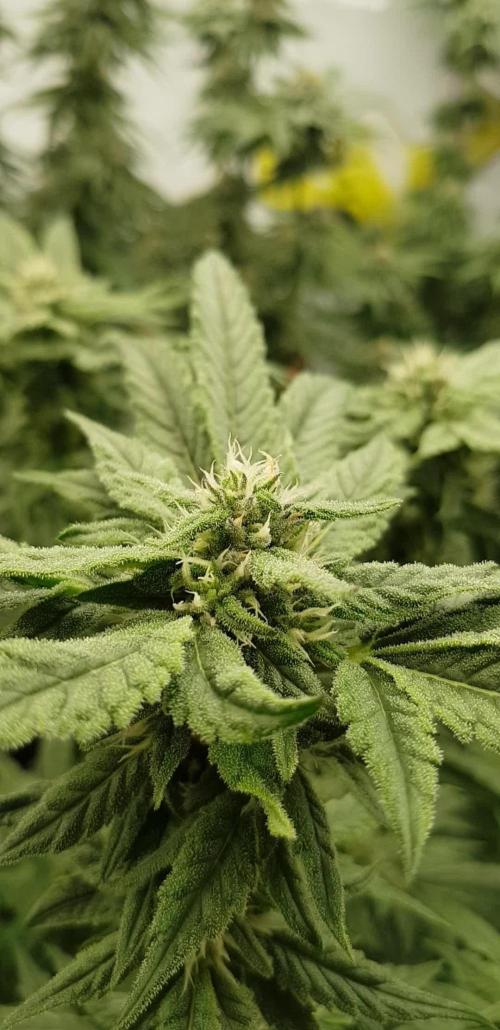
Welcome to Flower Week 5 of Fast Buds Papaya Sherbet
I'm excited to share my grow journey with you from my
FastBuds Project . It's going to be an incredible ride, full of learning, growing, and connecting with fellow growers from all around the world!
For this Project , I’ve chosen the Feminized Photo strain Papaya Sherbet :
Here’s what I’m working with:
• 🌱 Tent: 120x60x80
• 🧑🌾 Breeder Company: Fast buds
• 💧 Humidity Range: 50
• ⏳ Flowering Time: 58 Days
• Strain Info: 30%THC
• 🌡️ Temperature: 26
• 🍵 Pot Size: 16l
• Nutrient Brand: Narcos
• ⚡ Lights : 600W x 2
A huge thank you to Fast Buds for allowing me to try my Best with this amazing collection from Automatic and Photo Strains they managed to Sponsore . Big thanks for supporting the grower community worldwide! Your genetics and passion speak for themselves!
I would truly appreciate every bit of feedback, help, questions, or discussions – and of course, your likes and interactions mean the world to me as I try to stand out in this exciting competition!
Let’s grow together – and don’t forget to stop by again to see the latest updates!
Happy growing!
Stay lifted and stay curious!
Peace & Buds!


Processing
Likes
2
Share


@BigGGrows
Follow
Well i figured i would try some different this week. I main lined her and topped her on day 9. Lets watch and see how she responds. I feel as though doing this early in veg will allow her more time to adjust before flower. Towards the end of the week 2, four days after the HST....we see 2 new main top braches coming in, as well as some action at the internodal cut point which is indicating a "Fimm" job rather my prior presumption of topping the plant. None the less i am excited to see her grow, and i intend on letting her grow naturally beyond this point....just to see the results.

Likes
23
Share


@ChachoGreenCrown
Follow
Buenas a todos compañeros cultivetas! Seguimos trabajando las Critical Purple de GeaSeeds y decir que llevan un ritmo brutal ! Aquí en la tercera semana de la etapa de flora... las he guiando un poquito con la malla y la verdad pinta fantastico. Soportan el peso de la rama muy bien.
Seguimos abonando con línea orgánica grotek y bueno los resultados pintan bien
En cuanto a la iluminación.. estamos con un Lec 315W solux selecta a pena potencia de w jejeje. He instalado unas trampas para insectos por si algún polizonte le da por aparecer. De momento todo limpio
Destacar que las temperaturas vuelven a bajar.. han rondado entre 17 y 19°C en apagado y unos 22°C en encendido. Hemos conseguido vencer las temperaturas del exterior , aún así les falta un pelin de calor Jajaja
HE COLGADO UN VIDEO DONDE APARECEN RECIEN ENCECIDO EL ARMARIO Y BUENO AHI SE VE QUE LA TEMPERATURA ES BASTANTE BAJA. Aún así la raíz se mantiene calentita y la canopia no peligra.
la humedad relativa en torno al 65% osea que genial. En breves volvemos con más contenido. Un saludo a todos compañeros

Likes
30
Share


@VanTheMan
Follow
Start of week 5. - She has not started flowering just yet but i expect her to bloom late in this week or early in the next. - Height=20 cm - Width=42cm
30/01-2024 - Day 29 - Watered 2l ( mixed 4ml of grow-bloom-top & calmag with 2l water)
01/02-2024 - Day 31 - She has started getting taller and have reached about 25 cm today.
03/02-2024 - Day 33 - Watered 1,5L (mixed 3ml of grow bloom top with 1.5 l water ) - Height= 28 cm - Width=45cm - 8 "floors"-16 side branches. Her stem and bottom branches look thick, able to carry water and nutrients to the future buds. Gotta love them thick fertile hips 😍
04/02-2024 - Day 34 - Pre-flower has sprung out all over the plant now and she looks like she just started flowering - i went through all her side branches gently bending the lower big leaves below the bud carrying branches, making sure no budcarrying branches would be held down by other branches.
05/02-2024 - Day 35 - Last day of the week. she has grown a couple of centimeters the past couple of days and have reached 31 cm height. She looks a little crispy on the tips so i might give her a light dosage og fertilizer tomorrow instead of the expected dosage.