


Likes
Comments
Share


@DeepRootsGrowTrees
Follow
JOANNE'S CBD / ROYAL QUEEN SEEDS
WEEK #13 OVERALL
WEEK #1 FLOWER
This week she was flipped to 12/12
starting her first week of flower she's almost caught up to the other plants she's still a little smaller but doing her thing!! Stay Growing!!
Thank you for stopping by and taking a look it's much appreciated!!
THANK YOU ROYAL QUEEN SEEDS!!
BUDTRAINER.COM BUD CLIPS
ROYAL QUEEN SEEDS / JOANNE'S CBD


Likes
53
Share


@SolitudeCorners
Follow
For dozdos expert seed. the feeling I got from the smoke is really smooth, I can't smell much terpenes due to disease during the last flowering stage but the effect is giving me a sleepy mood during the day time also with the night time. you might get couch-lock if underestimate her.

Likes
16
Share


@willertex
Follow
📅 D36 - 06/11
📜 Applied Defolation, LST and SCROG techniques
✍️ 1,5 EC
♒ 6 pH
🌊 10 L
📏 30 cm
📅 D37 - 07/11
📜 Raised EC
✍️ 1,6 EC
♒ 6 pH
🌊 10 L
📏 30 cm
Likes
6
Share
@Wizardgreen317
Follow
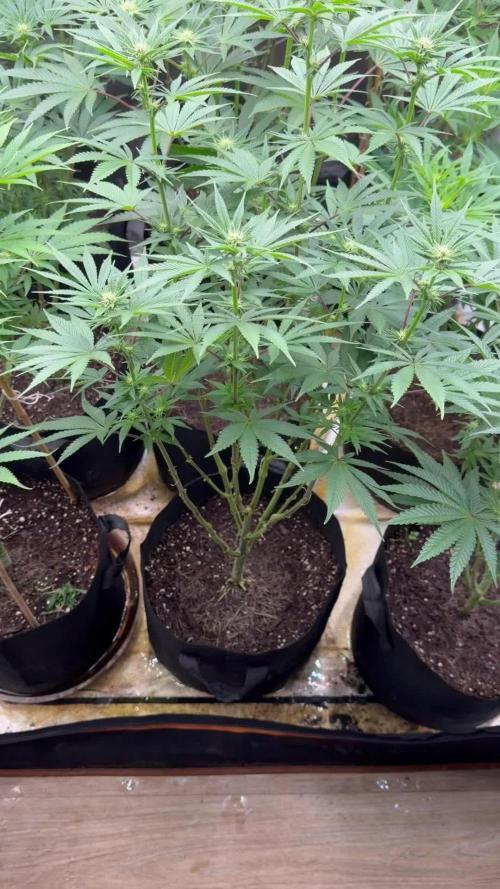
Basically I apologize for loosing my phone that was an awful time but we back . Umm so let talk the girl did a big jump two time there size that like a lot food lol but yes every has been going well all four plants seem to be honest okay not problem other than height difference.. great plant they throw these beautiful purple and pink nodes it super cool .. other than that been given sweet water to them with molasses and fruit juice . They like to be water about four to five time a week lol so they drink .. other than that I’ll be checking in week after week. Keep up the growing guys

Likes
10
Share


@GreenTHC
Follow
Day 62, harvest day. I will update after the drying and curing process. Wish I could've let them go a little longer but had to harvest slightly early. For my first attempt I'm happy with how the ladies turned out! Nice gassy smell, big sticky dense buds, great colours and 81g altogether wet trimmed. Lost one due to growers error but I've learnt a lot for next run. I will be growing one Auto Chem OG along side one Auto NL x BB from Oasis Genetics. Have a great day and happy toking! 🍃💨

Likes
32
Share


@Ganjagrandaddy
Follow
Day 42 flowering: What a start to this update with the #3 Mango cream being ready for harvest NOW!!!. She has been maturing very quickly during the last few weeks and I have been concerned that she was somehow going towards a toxicity issue. Her buds began darkening really early in flower and I thought it looked very different to the others. As the last week has passed I have been looking at her trichrones with the microscope as they oustils had all gone majority brown too. They had mostly clouded and a couple of odd amber spheres were visible too. as the week went on I saw more begin to amber so took her out a day ago too have a dark period before trimmed for drying . She is the first I have ever had this quick in decades of growing !. The video shows her colours off well and her maturity to harvest too. @exoticseeds have a winner here. lol she smells amazing too with a really nice icky sticky feel . I will update her progress once trimmed.
#1 is the smaller of the 3 remaining ladies now ansneven with the #4 beingna week behind her she is still the smallest in height. Her buds are nice and chunky and just as we hit the budswell period too , so shebshould finish with some nice sized colas.
#2 Mango is a beast of a plant and by far the largest. Her main is a beast of a cola already with the side branching really picking up some size now too. A brilliant example of the strain I think. Her main is really tacky to touch and the nice smell it leaves all over my fingers is mouth-watering now. She should yield very well.
#4Mango at day 35 looks very like the #3 plant for her bud appearance. slightly different pheno i think. More like a wedding cake strain but still very nice and colourful. She has been using pellets in the soil mix and just waterings but they are not good in my opinion and I have had to add megacrop to keepnher growing well now I waited as long as I dare to see if the pellets helped in flower but even using the second part of the feed has not helped. The megacrop has already begun to colour them back up to a more healthy green so i am hoping I can keep her happy until harvest now. She is pushing out a very nice fruity smell now too.
I am looking forward to trying the photoperiod strains I have from exotic now and will be germinating Herz Og and Quick sherbet in a couple of weeks time for the summer run.
Top genetics from a great breeder . Thank you Exotic.
###UPDATE###UPDATE###UPDATE###
The Mango cream #3 has been in the dark for the past 48hrs and has now been trimmed and is hanging to dry. She will be dried low and slow now for approx 10-14 days at around 15-17°C in a large cardboard box with a steady air exchange. She has a surprising size and weight to her for such a short time from seed and is as finished as any plant i have harvested before . What an amazing little lady she has been to grow She looked a little stunted initially and soon filled the pot she was in. 20L was way too small for these genetics to flourish and at least a 30L would be my advice. Happy days , let's see what she yields dried while we wait for her sisters to join her. Be well Growmies

Likes
3
Share

@Thedibber
Follow
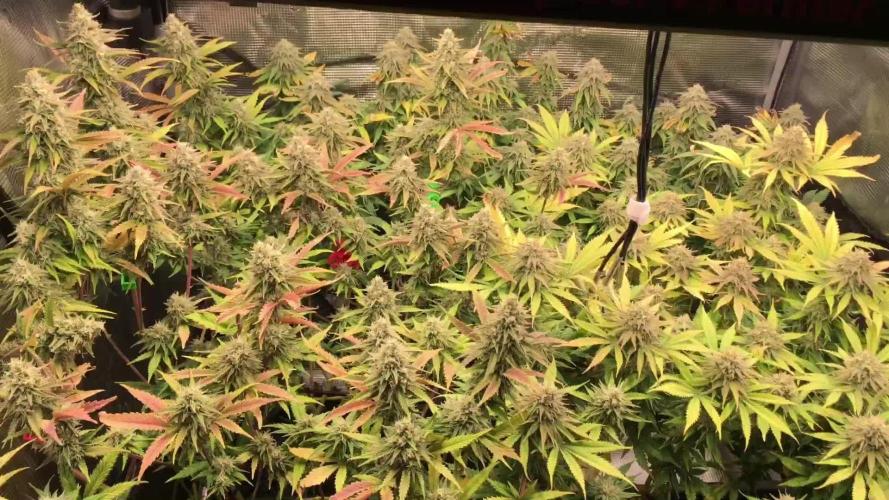
31/10/25 - Not long now until the 2x Bubba cheesecake can move into the 3x3 and flip to flower under a scrog. 2x bubba cheesecake + 1x Badazz OG cheese going into the 3x3.

Likes
7
Share


@Lowpak
Follow
Hello, this is my first grow diary (series of 3).
You can check out My other currently running grows!
Lowpak's Malasana Cookies: https://growdiaries.com/diaries/171937-grow-journal-by-lowpak
Lowpak's Kimbo Kush: https://growdiaries.com/diaries/171990-grow-journal-by-lowpak
Flowering week 9:
Last week. Flush. Daily check for mold. I think it is quite possible that they will go down earlier than 63 days, because of huge dense buds.
Flo56 - Watered with clean water, pH 6.3
Temp.: 29 °C.
Light: 100%
SETUP:
10x The Original Bruce Banner #3 - Dark Horse Genetics
Nutrients:
Gold Label
Medium:
NARCOS Organic Pro Mix
Pots:
15L Fabric
Lights:
Migro Aray 4 250W
Migro Aray 8 500W
Tent:
Mammoth Pro 240L 120x240x200cm
Ventilation:
PK125WHSP-ECTC
PK K4602-150
2x Oscilating Clip Fan - 25cm
EC Meter/PH Meter/Hygrometer/Thermometer

Likes
14
Share


@MasterKush714
Follow
Yoooo!!! What's brackin fam!!! Update!!!
Soo! She stretched almost an inch in 6 days maybe more it's truly amazing and this cropsalt stuff is no joke I'll literally challenge anyone to use it by direction and not see why it's the best!!! PERIOD!!
other then that she is drinking alot more and eating steadily more as well, I am going to cut clones by this week or next and then start that GD foenthe large tent, this girl is fairing really well considering the home conditions I have with her but otherwise she has been absolutely a breeze to grow!!! Thanks for stopping by will update as this week goes on thanks!!!

Processing
Likes
9
Share


Processing
Likes
13
Share


@Beast5650
Follow
Water Day (half strength)
- [ ] Kangaroots, Microbe Brew, Grow Big, Distilled Water, Ph-6.8, PPM-890).
- [ ] Lessons Learned - Ph Up/Down from fox farms is super strong, huge upswing in 500ml distilled water with only 0.25ml of pH Up.
- [ ] I think I need to pH water before adding nutrients. Can anyone verify this please?
- [ ] Will transplant to recirculating dwc soon, until then probably watering every 3-5 days with current nutrient mix. Can’t wait to get it under better lights!
- [ ] Most likely going to mainline if it all works out ok.
6/10/19, DAY 26, UPDATE:
Water day due to transplant
Decided to change plans a bit. Transferred to big fabric pot and fox farms ocean forest soil. Will grow plant out and cut clones. Will then put clones immediately into DWC setup. This mother plant will then be moved outdoors to flower. Hopefully it all pays off!
Day 29
6/14/19
Decided to clear all fan leaves that had less than five fingers then top at the 4th node and LST the remaining fan leaves. The goal is to eventually cut two clones off of the the 3rd node and mainline everything else starting at the 4th node. At least 8 colas is the goal, ideally 16. We’ll see tho,
Very surprised at how quickly the leaves pointed back up toward the light and recovered from the lollipopping/topping/LST.
Any and all suggestions are welcome! Lofty goals for my first grow ever, hopefully it all works out.


Likes
24
Share


@KarlOlga
Follow
Vielleicht die letzte Woche?
Gibt nur ph neutralisiertes Wasser , keine Düngung mehr!
05.02 viele bernsteinfarbene Trichome, nächste Woche wird geerntet
09.02 Die Farben werden intensiver
Likes
3
Share

@ElCapitol
Follow
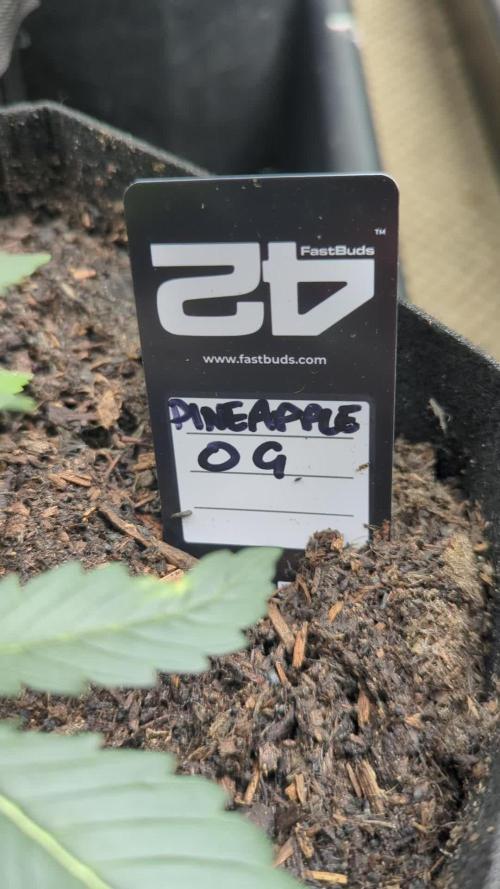
Doubled in size in a week, nice shape to her and deep green leaves. Only thing to note is she has put pistols out already, I thought it would be in vegetive stage longer. She needs to fill out some before flowering. This could be normal for autos I don't know, perhaps someone can say?
Nice strong genetics.

Likes
35
Share


@MadeInGermany
Follow
Info:
Unfortunately, I had to find out that my account is used for fake pages in social media.
I am only active here on growdiaries.
I am not on facebook instagram twitter etc All accounts except this one are fake.
Flowering day 8
since time change
to 12/12 h.
Hey guys :-) .
The lady develops incredibly beautifully with GreenBuzzLiquids .
Fast Plant and Bio Bloom were added this week.
This week it was poured twice with 1.2 l each (nutrients see table above).
The lady was checked for her health and it seems as if the last trips in the tent have also disappeared 🙏🏻.
The entire tent was cleaned.
For the next two weeks I filled canisters with fresh osmosis water.
Otherwise, as always, she was watched for a while every day as she blows in the wind 😊👍.
I wish you all a nice start to the week.
Stay healthy 🙏🏻
You can buy this Nutrients at :
https://greenbuzzliquids.com/en/shop/
With the discount code: Made_in_Germany you get a discount of 15% on all products from an order value of 100 euros.
You can buy this Strain at :
https://greenhouseseeds.nl/
☝️🏼☝️🏼☝️🏼☝️🏼☝️🏼☝️🏼☝️🏼☝️🏼☝️🏼☝️🏼☝️🏼☝️🏼
Green House Seeds Company Cup Clone 🏆
Type:
Wonder Pie
☝️🏼
Genetics:
Wedding Cake x OG Kush
👍😍
Vega lamp: 2 x Todogrow Led
Quantum Board 100 W
💡
Flower Lamp : 2 x Todogrow Led
Cxb 3590 COB 3500 K 205 W
💡💡☝️🏼
Earth: Canna Coco Professional +
☝️🏼
Nutrients :
Green Buzz Liquids :
Organic Grow Liquid
Organic Bloom Liquid
Organic more PK
More Roots
Fast Buds
Humic Acid Plus
Growzyme Big Fruits
Clean Fruits
Cal / Mag
Organic Ph - Pulver
☝️🏼🌱
Water: Osmosis water mixed with normal water (24 hours stale that the chlorine evaporates) to 0.2 EC. Add Cal / Mag to 0.4 Ec Ph with Organic Ph - to 5.8

Likes
3
Share


@velouria
Follow
Week 8! I defoliated this plant finally. It took quite a while to even go into flowering (wasn't until the 7th week), so I'm hoping I didn't defoliate too soon. Ton of little bud sites now visible. I'm so curious how it's going to mature.
Mix of thunderstorms and bright sun here. It's probably getting less light than it should because I'm keeping it under the roof a lot of the day.

Likes
3
Share


@DivineIndependence
Follow
This week shows a lot of stem growth as well as the presence of some clones! Too excited about how big the girls are getting have a feeling they are going to be getting bigger at a fast rate at this point. I am still keeping them on the same nutrient and light schedule at the moment. I have a lot more pictures and videos this week because lets be honest I am still getting the hang of this thang!


Likes
3
Share


@BR1CK_SANCHEZ
Follow
Like clockwork, all three of these girls sprouted in about 3 days. I've had %100 germination with all my 42 auto beans so far. Didn't feel like any nutes were necessary. Soil mix is about 50/50 Happy Frog and Recipe 420 Bhang. Gonna run Dirty Dozen this time around with a Co2 Dispersal Canister and see if we can grow sum thiccersonz!
Likes
11
Share


@kauilmayel1996
Follow
Me siento muy contento con estás auto...
Fast buds sorprendiendo con unos cogollos hermosos y un olor increíble...
No hice el mejor trabajo pero estoy feliz de haber hecho esto...
estoy enamorado con las ruderalis!
Auto de Fast buds un súper 10!