


Likes
Comments
Share


@Takeaims
Follow
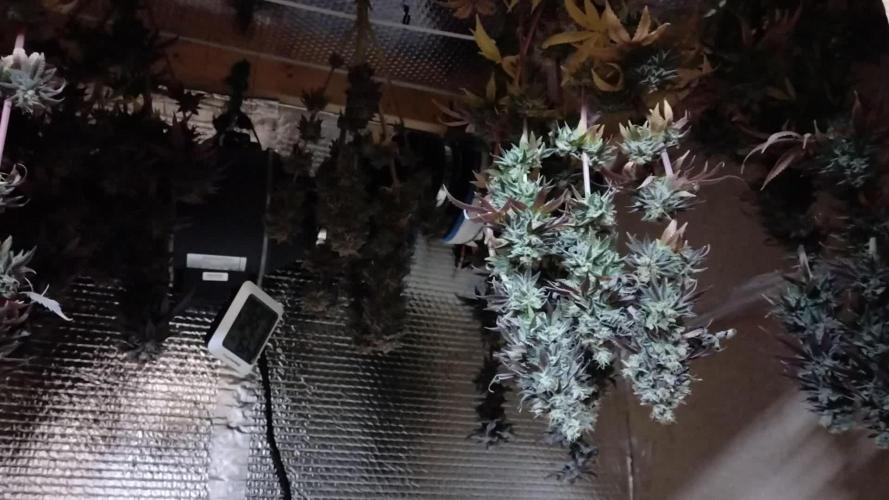
Going Into week 3 hopefully going to top by end of week and will update then



Likes
6
Share


@MrPipi
Follow
Mr. Pipi doesn´t want to wait any longer.
Day 124
07.04.24 Mr. Pipi is on the hunt for the Trichomes. The amber ones occure more often. It´s gettin milky...few more Days then Mr. Pipi´s patience will end :D

Likes
3
Share


@Rumyn88
Follow
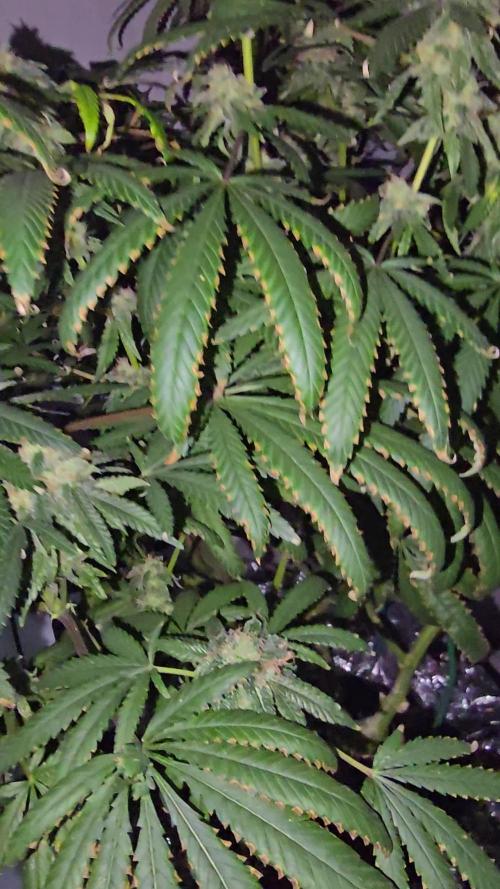
Hey all, its our 2nd week after casing drop. Facing some issues with Night temp, sometimes it could fall to +12C, thinking about how to improve it. Also concerned about slow growth because of that. Using just 1/3 of Plagron recommended dose.
Modified a bit my tank, made some technical window. Also set up automatic irrigation, because wool started to dry up during the day
Upd Sunday 10.12.2023, Decided to put Babys finally to Seramis.
Washing ceramics is some kind of hell:
-First, I decided to sift all the dust through a sieve, stood in a half-bent position with bags of Seramis for 30m (my back didnt like it), but there was a lot of dust.
-then I decided to check the Ph and rinse thoroughly. Although the package says 5.5-5.7 Ph, after the first flush with a balanced solution at 5.5 Ph, there was 6.5 in the drainage.
- I was concerned by the very muddy brick colour water, then got tired of mixing 5.5 in a bucket for flushing and decided to rinse it with tap water from shower and then balance it back to 5.5 Ph . As a result, I poured from the hose for another 30 minutes until the water became more or less transparent.
-I also tested FloraFlex discs, they drip great and, although round, fit perfectly into my square grow bags.
-Meanwhile, the Milwaukee Ph meter broke down, even the readings of the calibration buffer were changing from 4-6 Ph within one minute. In the end, I spent another 30min and half a bottle of buffer on this too. It’s good that i had yellow Chinese Ph meter, which even after 3 years of rest in the box showed accurate buffer readings.
-Finally, the Ph of the drainage was 5.5-5.7 and it was transparent, so I began to move it into the growbox. I sprinkled it as much as I could, it was impossible to dig deeper. The plants do not yet reach the matrix disk, so for now they will grow with the usual felt.
-The cap of the tank is very thin and cannot withstand the weight of 2 grow bags, I’ll have to come up with something else, maybe I’ll put some kind of drainage grid.
Watering will be from a tank with a mixed solution of 5.8 Ph and 1.1 EC.



Likes
9
Share


@Wicked_Stix
Follow
We are at 21 days from these girls breaking the surface and they are making progress. I noticed at the beginning of the week that they were a little overdosed on nitrogen so I added 2 gallons of tap water to the reservoir and adjusted the ph to 6. They are still looking a little heavy on N but their growth rate is going great so I think it should balance out by the end of next week. I dont plan on doing a water change until I flower them. I left the plants alone most of the week. Tied most of them down to spread them out and defoliated a few lower leaves on day 20. The branches on most of these plants are thick and solid already. They don't budge easily. Bananasicle is looking pretty funky with uneven branch and node growth but we are just going to push forward. Still pumping nutrients and beaming light 24 hours a day. I'm thinking day 28 we will switch them to flower and see if any of these ladies can bring some❄️🔥💨


Likes
17
Share


@Hawkbo
Follow
Gave it some water yesterday with some herculean harvest, clean fruits, terpinator and grozyme and kinda flushed it out just to try and prevent build up. It's starting to fatten up a little bit now. All the purples are Putang crosses or mandarin cookies R1V2 #2.

Likes
6
Share


@CannaReaper
Follow
3-30-20
Yummy! That's all I can say when I open up the tent. Will up their feed strength next res change since I think they could use a bit more nutrients.
4-4-20
Week 5 coming to an end and things are looking good and smelling better! Frost is starting to pile on these girls nicely. One thing I did notice on one of the Cali Sunsets is that some of the top most leaves are starting to turn purple from the backside. Don't know if its the strain or maybe a P Def? We'll have to wait and see I guess
Likes
5
Share


@DRunKenMONkey271
Follow
I'm super impressed with this beauty. This one is going back in the garden next year.


Likes
12
Share


@MOSS_FIGURE
Follow
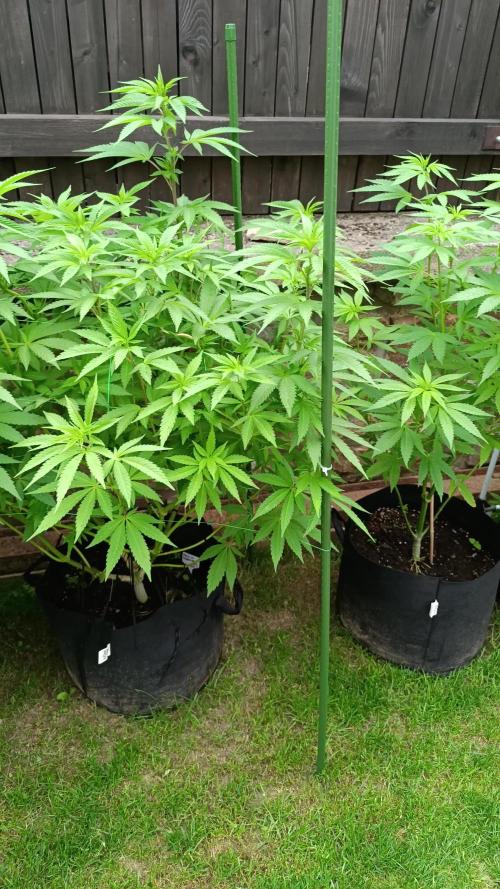
This week i flushing a plant 7-10days and use ice burn then close a light before hardvest 2days.


Likes
4
Share

@PhinolaGreen
Follow
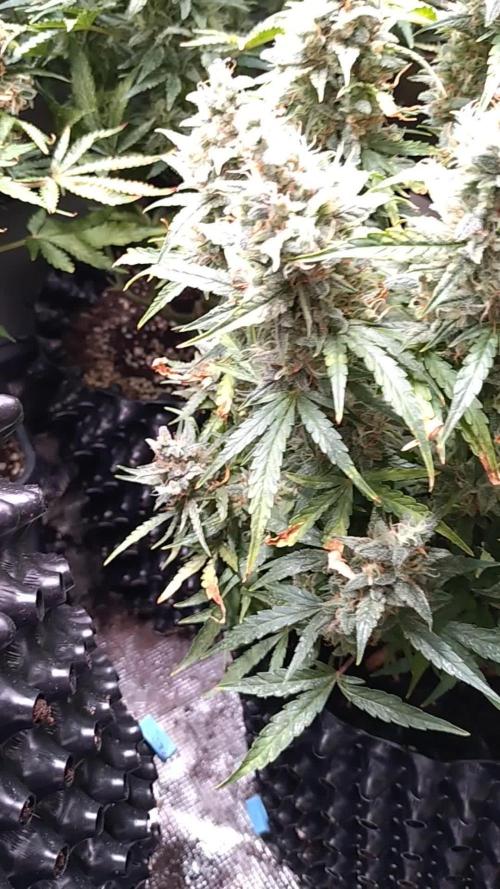
12. Woche
Hab sie jetzt mit 30L Wasser gespült und Flawles Finish ran gemacht. Paar Tage noch, dann ist Harvest 😍 ist sehr schön geworden und werde sie vermissen, war ein tolles Erlebnis mit der Sorte 😊


Likes
16
Share


@ButterfliesLittleFarm
Follow
Hello Diary,
Cherry Pie has completed the second week of flowering.
The flowers are forming nicely, the areas around the flowers are a lighter green color, so it looks like it has Christmas lights on it.
Cherry Pie has started to stagnate in growth, this week only 9 cm, now the plant will direct most of its energy into the flowers.
The leaves are a healthy green color and so far they do not show me any signs that the plant is missing anything.
Watering was every three days, I continued to add CalMg and Bio-Bloom Fertilizer.
The conditions in the grow box are now much better.
The temperature is around 28 degrees and the humidity is below 50%.
Overall I am very happy with the growth and progress so far.
Here is a quick overview of the week.
24/08/2024 - Day 31.
Watering.
I prepared 9 liters of water. I added CalMg 1 ml/lit, Bio-Bloom Fertiliser 1.5 ml/lit and then lowered the p.H. to 6.0.
With this amount I watered all three plants evenly.
27/08/2024 - Day 34.
Watering.
I repeated the same procedure as three days earlier.
28/08/2024 - Day 35.
End of the second week of flowering, or the fifth week from the beginning of vegetation.
Photographing and measuring the height of the plants.
Cherry Pie - Day 35. - 69 cm
That's all from me for this week, see you soon.


Likes
86
Share


@DogDoctorOfficial
Follow
Greetings, fellow growers and cosmic adventurers! As we bid farewell to Week 10, we find ourselves at the culmination of an extraordinary journey with our beloved Apolo F1. Join me as we embark on a retrospective voyage through the highs and lows, the triumphs and challenges, of this cosmic odyssey.
Our journey with Apolo F1 began ten weeks ago, a small seedling filled with potential and promise. From those humble beginnings, she grew and flourished under our watchful gaze, unfurling her leaves and reaching for the stars with each passing day. Through meticulous care and nurturing attention, we witnessed her transformation into a true botanical queen.
Throughout her growth cycle, we employed various techniques to coax the best from our cosmic companion. From LST to topping, we shaped and sculpted her canopy, encouraging lateral growth and maximizing light penetration. As a result, Apolo F1 flourished, her branches reaching skyward in a testament to the power of cultivation and the wonders of nature.
Central to Apolo F1's journey was the nourishment provided by Aptus Holland, our steadfast companion and sponsor. With their nutrient lineup, we crafted a symphony of minerals and organic compounds, tailored to her specific needs at each stage of growth. From seedling to harvest, Aptus Holland's nutrients fueled her cosmic voyage, ensuring robust health and abundant yields.
And now, the moment we've all been waiting for: the harvest. With bated breath and eager hands, we carefully snipped each bud from the canopy, marveling at their dense, resinous beauty. Apolo F1 had exceeded our wildest expectations, her compact stature yielding a bounty of cosmic goodness. As she hangs upside-down, her buds curing in the cool darkness, we reflect on the journey that brought us here—a journey filled with wonder, growth, and boundless possibility.
Before we bid adieu, let us extend heartfelt thanks to Royal Queen Seeds for crafting the genetic marvel that is Apolo F1. Their dedication to excellence has brought joy and inspiration to growers around the world, and we are grateful for their contributions to our green adventures. Likewise, a shoutout to Grow Diaries and the entire community for their unwavering support and camaraderie. Together, we have cultivated a garden of dreams, and the harvest is sweeter for it.
As we gaze upon Apolo F1, our cosmic queen, we are filled with a sense of pride and accomplishment. She is more than just a plant—she is a testament to the power of cultivation, the wonders of nature, and the boundless potential of the human spirit. Until we meet again, may your gardens flourish and your green adventures be ever cosmic.
Genetics -Apolo F1 @rqs_esp @royalqueenseedssp @rqsglobal
Food - @aptusholland @aptus_world @aptus_es @aptus_portugal @aptusbrasil @aptusplanttechaus @aptus_thailand @aptusplanttechnz @aptususa_official
LES @lumatekeu
Controls - @trolmaster.eu @trolmaster.agro @trolmaster.support
As always thank you all for stopping by, for the love and for it all , this journey of mine wold just not be the same without you guys, the love and support is very much appreciated and i fell honored and blessed with you all in my life
With true love comes happiness , Always believe in your self and always do things expecting nothing and with an open heart , be a giver the universe will give back to you in ways you could not even imagine so
#aptus #aptusplanttech #aptusgang #aptusfamily #aptustrueplantscience #inbalancewithnature #trueplantscience #rqs #ApoloMission #MoonHarvestAdventure #playwithlego #lego #legotime #legovideo #tothemoonandback
More info and complete updates from all my adventures can be found Link in the profile description
Friendly reminder all you see here is pure research and for educational purposes only
Growers Love To you All