


Likes
Comments
Share


@VallasDiaries
Follow
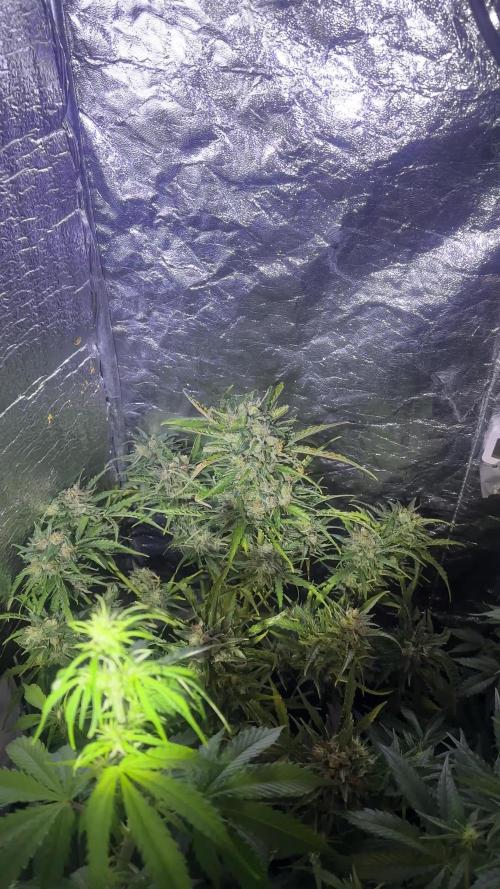
Week no.13
The Ice Cream Cake auto grows good.
She build her Buds day for day...
Bigger and Bigger.
She is already so sticky , i never had any Strain what whas so sticky like she is actually.
I am sure it is because i use the "Supplement" Lights ( I give more per Day )
And because i give her more P-K and the Nutrients from @xpertnutrients.
Lets see when she will be finaly finish
18.11.2024: Is it time to chop?
17.11:
Die Lady wächst immer noch.. Baut ihre Buds immer dichter und breiter!
Ist deutlich mehr "sticky" geworden. Der Duft ist wie eine Sinfonie von einer verbotenen Liebe

Likes
2
Share

@Manball
Follow
This adoptee has been growing nicely, although she suffered from stress because she wasn’t taken care off very well (she & other had a to find new
Homes).
But after having it for 4 weeks, now entering the 5th week (of flowering, I Guess)
We are getting closer and closer to harvest.
Today’s pictures are from Sunday, we are maturing well :3 there will be only 3 more feeds with nutrients, then flush, an wait for the ideal time to harvest.

Likes
25
Share


@Mr_ZAF_Budz
Follow
Hello CannaFam,
So the end of week 6 of flower has arrived the things are on cruise control. Started feeding less with just a few ph’d water feeds alternating.
How you all enjoy the update.✌️🏼


Processing
Likes
6
Share


@Ferenc
Follow
No more fertilization. They will be harvested in 2 weeks very stinky ones.... Alll good just keep flushing them and removing upcoming yellow leaves. :) They are quote wet so just giving them 200ml.of water a day to.not to over water them.


Likes
23
Share


@accela_resonance
Follow
Did a lot of defoliation, there were just too many leaves. Set up an auto watering system which is in manual mode right now
Plant is very happy! Trichomes starting to form

Likes
13
Share


@BB_UK
Follow
#beast she has absolutely took over! She’s spread her branches through the scrog had to space her past other plants in order for her to get the full potential of the lights 😊 the colors are already coming through the next few weeks are going to be interesting to watch the magic happen! Fastbuds I cannot say this enough! Alongside my mars hydro just ww such a Combination of excellence! Best lights best auto genetics 💯💯💯💯💯💯🙏
Likes
9
Share


@Atom_x_Andromeda
Follow
Growing strong cut 13clones today and transplanted the two biguns loving how they are turning out


Likes
4
Share

@Bobaloo
Follow
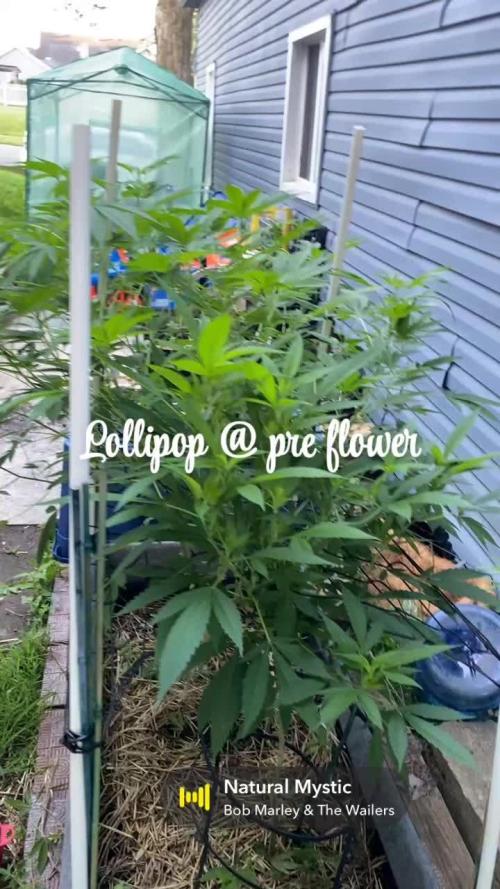
Lollipoped had some wind damage up top also, overall I’m learning a lot and wanting to keep learning more tomorrow I’m doing more ipm with captain jacks dead bug


Likes
85
Share


@Tropicannibis_Todd
Follow
Start of day 35 ...... Nov 13 Start of week 2 of Flowering
Check out the full grow video on latest weekly update
Super Exceptional Growth Daily
Still adjusting LST when needed and leaf tucking.......
Water Only when needed but its drinking more every otherday and adjusting lights when needed......
Rain Water Only .......
( DAY 39 AND IT SHOWS ZERO DEFICIENCIES ) IM ALSO DOING VERY LITTLE, SLIGHT DEFOLIATION
This is more of a personal note
So this is my first Autoflower grow , now the one advantage of an auto is the speed to which its life span will go , so in doing my homework on the Auto's life span the pros and cons , I choose to keep her short at the start and not add any stress and maximize her cycles and in doing this I was surprised at how fast she went into Flowering, NL 2 day 21 and NL 1 on day 26 , I will say this, i really am liking the speed and vigorous growth of this northernlights autoflower in general and becoming a huge fan....
I hope you enjoy my growlog...
Sidenote : I don't have anyone or a community to bounce ideas or share growing tips with so if there's any growers out there wanna , hit me up.......

Likes
8
Share


@Mr_nugs_lover_David
Follow
Very good smell so far, exact fragrance that the other 2 phenos plants Ak420, hoping the best for a good sativa happy energetic high with that sweetness in flavor and aroma, let's see how she perfoms! 👨🌾💚🧡


Likes
2
Share


@Ultraviolet_
Follow
Topped once, turned off IR @ nights, slowed vertical growth back down, and took off both of the very lowest internodes on each plant.
Eisenia fetida
Stratiolaelaps scimitus
Armadillidium vulgare
Red wigglers (Eisenia fetida) are highly beneficial. They are considered an ideal choice for "no-till" or container-based organic growing because they live in the upper layers of soil, feeding on organic mulch rather than the plant's root system. Red wigglers accelerate the breakdown of organic amendments and produce high-quality, nutrient-dense worm castings directly in the root zone. Clover is another exceptional component of an organic rhizosphere, offering a sustainable, self-sustaining alternative to synthetic nitrogen fertilizers produced via the energy-intensive Haber-Bosch process. By forming a symbiotic relationship with Rhizobia bacteria, clover converts atmospheric nitrogen N2 into ammonium NH4, providing a steady, slow-release nutrient source that enhances soil health and reduces environmental impacts. Red clover offers superior nitrogen fixation and biomass production compared to white or yellow clover, making it the premier choice for maximum soil vitality, particularly for improving soil structure and providing a high-volume nitrogen credit for subsequent crops.
If it is fully functional and efficient soil, the rhizophagy cycle is superior long-term than any synthetic delivery when it comes to preventing deficiencies, not because it's "better," per se. The medium will require a very high CEC to make it to harvest without re-fertilization. The rhizosphere acts as a dynamic, interactive exchange where plants and soil microbes trade resources based on immediate needs. When a plant lacks a specific nutrient, it changes its physiology and releases specialized chemical cocktails—root exudates—into the surrounding soil. These exudates, which include sugars, amino acids, and organic acids, serve as a "shopping list" to attract specific microorganisms, which in turn return higher levels of desired nutrients. There is nothing in comparison when using synthetic delivery, which can cause plants to stop producing exudates, effectively "starving" the beneficial soil life, over time turning the soil barren and void of microbial life. Responsible use, applying the right amount at the right time, can minimize these negative effects. Relying solely on synthetic fertilizers without replenishing organic matter is what typically leads to exhausted soil. The use of synthetic fertilizers can utilize the Cation Exchange Capacity (CEC) of the soil, but without a robust rhizosphere and active microorganisms, the efficiency of this process is significantly reduced. This makes synthetic growing more difficult to prevent deficiencies overall compared to an efficient organic living soil with a robust rhizophagy cycle, as there is no "one size, fits all" when it comes to different nutrient profiles of strains/genetics, making it trickier to "guess" and prevent creeping deficiencies.
CEC does not contribute towards EC. Add more CEC using biochar, problem solved. If you keep pH between 6.3 and 6.7, hydrogen is exudated to cycle the medium's CEC for its needs. Keeping the pH between 6.3 and 6.7 creates an environment where plants release H+ to displace positively charged nutrients (like Ca2+, Mg2+, K+ held on soil particles or within artificial media this cycle through nutrients via the medium's Cation Exchange Capacity (CEC)
Microorganisms generate a stable potential of approximately 0.5 V EC. The rhizosphere creates its own food, similarly to chelation, using 1000's of varying combinations to create its own food.
Start to finish, just add water. Eventually, more materials will need to be added at the beginning of each new grow, but very attainable to go from seed to harvest without ever fertilizing.
ATP is important when it comes to biomass accumulation. Cellular root respiration and cellular respiration are essentially the same biological process, the breakdown of glucose to create usable energy (ATP) in the presence of oxygen, just taking place in different parts of the plant. Synthetic (salt-based) grows have significantly lower levels of total rhizosphere respiration, often referred to as root-zone activity, compared to organic living soil grows. While the plant roots themselves may respire in both systems, the surrounding soil ecosystem in a living soil setup is vastly more active, teeming with bacteria, fungi, and beneficial microorganisms.
2 pools of ATP, it won't double in growth buuuut, but improving root respiration by ensuring high oxygen in the soil is crucial. Good aeration ensures roots can fully utilize glucose to generate the ATP necessary for nutrient uptake, leading to healthier and more productive plants, even if growth isn't exactly doubled. The ATP created using root respiration is dedicated to rootzone growth; the ATP created using regular cellular respiration in a synthetic system would have to dedicate a lot of ATP to the roots when there is little or no root respiration. It's true that there is less of an initial ATP cost in breakdown when nutrients are already in their final form (synthetic), but you lose a solid chunk of ATP when the entire plant is reliant on cellular respiration alone; a large portion of ATP is dedicated to root zones for "forced" nutrient uptake rather than traded. Making it overall less efficient, even if the initial cost of breakdown is higher. Not sure if I butchered that but one can hope It makes sense.
Oxygen is of critical importance when growing in living soil compared to synthetic soil because it supports the metabolic needs of the microbial, fungal, and insect ecosystem, rather than just the root respiration required by the plant itself. While synthetic grows can survive in lower-oxygen environments with precise mineral feeding, living soil systems rely on aerobic microbes to decompose organic matter (microbial mineralization) to create plant-available nutrients, which is an oxygen-intensive process. While a specific fair percentage is difficult to guess, my experience points to a massive, compound difference between the two methods and the amount of oxygen required. All the ATP spared is used on more biomass, not only that, but the extra root respiration can achieve a much higher CO2 compensation point naturally than you could with synthetic and atmospheric CO2 alone.
As a plant grows faster and increases in size, its demand for nutrients to support that growth increases, requiring a higher rate of nutrient uptake. As plants enter phases of rapid vegetative/floral growth, their metabolic demand for nutrients increases exponentially. Without a robust buffer zone—whether in the soil (cation exchange capacity) or in a hydroponic reservoir—deficiencies will occur rapidly because the instantaneous demand for specific nutrients can quickly exceed the rate of supply.
A growing body of evidence suggests that organic living soil provides superior long-term soil health and environmental benefits compared to synthetic fertilizers, which are often criticized for promoting a cycle of dependency and degradation. While synthetic fertilizers offer short-term convenience and high yields, they often come at the expense of long-term soil health, sustainability, and increased corporate control over growers/ farmers. Organic living soil, while slower and requiring more care to establish, creates a sustainable, resilient, and, ultimately, more fertile environment.
We don't really grow; we facilitate energy conversions, and energy is just numbers. Because the universe works the same way today as it did yesterday, there is a single, fundamental mathematical quantity that remains constant. We call this quantity energy. You cannot put "energy" under a microscope. You observe matter and forces (like heat, motion, or light), but energy is just a scalar number calculated to help predict how these things will change and interact. When an object falls, or when a battery powers your phone, matter shifts and changes form. Through it all, the universe ensures the "total score" of the numbers remains exactly the same.
Once all water is removed, approximately 95% to 97% of a plant’s dry matter consists of carbon, oxygen, and hydrogen. These three elements form the structural backbone of all plants. NPK & all the rest 3-5%.
Indigenous Amazonians created, or at least significantly enhanced, the fertile, dark soil known as Terra Preta de Índio (Portuguese for "Indian Black Earth") by incorporating biochar and other organic materials into the soil. This anthropogenic (human-made) soil technique, which dates back roughly 2,500 to 8,000 years, allowed ancient civilizations to flourish in regions with naturally poor, acidic, and nutrient-poor tropical soils.

Likes
8
Share


@MG2009
Follow
02/01/2022
Girls looking good potting up this weekend I hope.
I wish I labeled them better but I'll be surprised at harvest I think tallest one is jillybean we will see.

Likes
8
Share


@GigglePickle
Follow
This run went a lot better than expected. There were lots of problems while in a rush to get the new grow going. But once everything was dialed in, everything started booming! The next run should even put this one to shame with the much healthier plants in the veg room.
Likes
9
Share


@NeoCat
Follow
I think Triple G could have been a really good grow, if conditions were right.
The plant looks great but the extreme heat definitely had a negative impact on the final product. It's very airy and light but I still got a lot of bud!
I think it'll end up being hash but I'll see how it smokes with a little longer in a jar.
My new batch of seeds has arrived from RQS, next up will be either Mimosa, Tropicana cookies purple or NYC Sour Diesel 😎


Processing
Likes
2
Share


@Cultiv8or
Follow
Week 1 rough start , I transplanted into final 3 gallon pot so I might have shocked her for a bit.
Humidity and temperature is fluctuating a lot ..... worst part of having the tent on the balcony.
Using a spray bottle twice a day 10-20 ml each time
Growing in Pro-mix HP with Toronto tap water
Likes
4
Share


@AustinRon
Follow
El Diablo Week 11 - Flower 9
[Twenty20Mendocino]
(X-Factor X Whiskey Zulu)
Overview -
- We’ve lowered Lighting to 50%, in an attempt to to lower overall temperature through end of grow.
- Full Watering every 4 - 7 days (If not harvested)
Objective
- Trained Plant - @3Nodes - Bend apical meristem to Node 1 Height, 7 STEMS . . .
Week 11 : [ Fri
Apr 11, 2025, ED 1Q25 78:F:11:1]
[ Thu Apr 17, 2025, ED 1Q25 84:F:11:7]
24/0 @ Germination through 24 Hour Open Cotyledons (then 18/6)
Germination: 25 Jan 2025
#3A Earliest Harvest Date: Thu Apr 10 2025
#3B Latest Harvest Date:
Mon April 21, 2025
__
Fri Apr 11, 2025
ED 1Q25 78:F:11:1
Observation:
We’re wrapping up - but see clear signs of More NITROGEN than I’d like …
We’re STILL pushing fresh Pistils.
Would like to have a few more days of High Potassium (RLA - Resin Bloom) in hopes of hastening senescence.
Pre-Lights Out
1L - Resin Bloom @8ml/gal, 2 to go
Full Watering
2 Liters
- [x] Photosynthesis Plus: [ 4.5, ml] # [ 6, ml, gal]
- [x] Resin Bloom: [ 7, ml] # [ 8, ml, gal]
Then, for each Liter Delivered
- Quillaja 60 Powder: [scant]
__
Sat Apr 12, 2025
# First Harvest Oppty
ED 1Q25 79:F:11:2
No Water Today
__
Sun Apr 13, 2025
ED 1Q25 80:F:11:3
No Water Today
__
Mon Apr 14, 2025
ED 1Q25 81:F:11:4
No Water Today
__
Tue Apr 15, 2025
ED 1Q25 82:F:11:5
No Water Today
__
Wed Apr 16, 2025
ED 1Q25 83:F:11:6

No Water Today
__
Thu Apr 17, 2025
ED 1Q25 84:F:11:7
Watering Today (If No Harvest Yet) : 2 Liters
- [x] Photosynthesis Plus: [ 4.5, ml] # [ 6, ml, gal]
- [x] Resin Bloom: [ 7, ml] # [ 8, ml, gal]
- [x] Quillaja 60 Powder: [scant]

Likes
8
Share

@eldruida_lamota
Follow
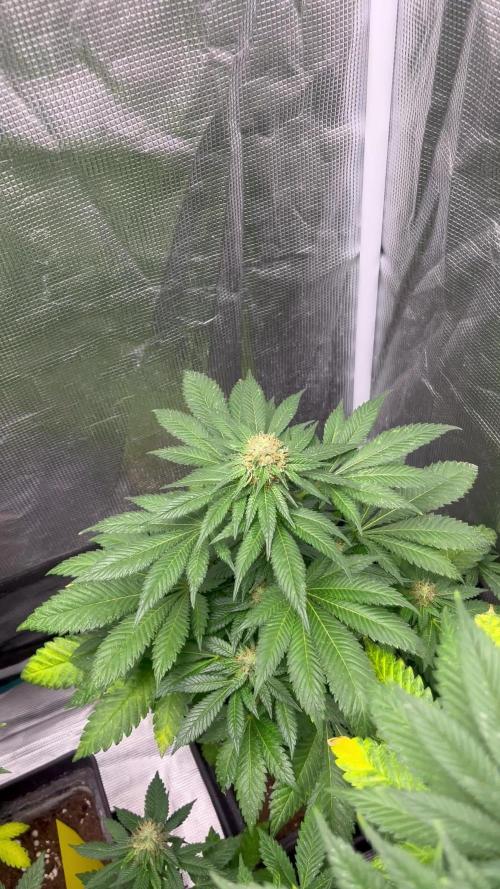
Que pasa familia, vamos con la sexta semana de floración de estas Monster Maker feminizadas de Sweetseeds.
Vamos al lío, las plantas se trasplantaron a macetas de 7 litros.
El ph se controla en 6.5, la temperatura la tenemos entre 24/21 grados y la humedad ronda el 50%.
El ciclo de crecimiento puse 12h de luz, el foco está al 100% de potencia.
Tengo visitantes, trips que combatiremos con control biológico.
Me gustaría estar más encima este cultivo pero la salud me está impidiendo un poco este 100% con el proyecto.
- os dejo por aquí un CÓDIGO: Eldruida
Descuento para la tienda de MARS HYDRO.
https://www.mars-hydro.com
Hasta aquí todo, Buenos humos 💨💨💨
