


Likes
Comments
Share


@420Undergrow
Follow
Noch keine Ideen. Es gibt aber einige Gedanken und Erfahrungswerte, die definitiv folgen werden.
Einige Dinge haben mich sehr enttäuscht und in zwischen weiß ich auch warum.


Likes
4
Share


@Weedhi_75
Follow
Hola, tengo esta SLH que una parte de la planta comenzó su floración a mediados de diciembre (hemisferio sur)y la otra a mediados de enero 🤷♂️🏽, después voy a poner una foto más actualizada

Likes
36
Share


@Cannabis_King
Follow
This week was great this is supposed to be an autoflower but here we are at 8 weeks and I've seen one pistol per bud site I'm wondering if I was accidently sent photoperiods? I'm not sure if anyone has ideas is this normal for this auto or is it a photo

Likes
18
Share

@THcHunteR23
Follow
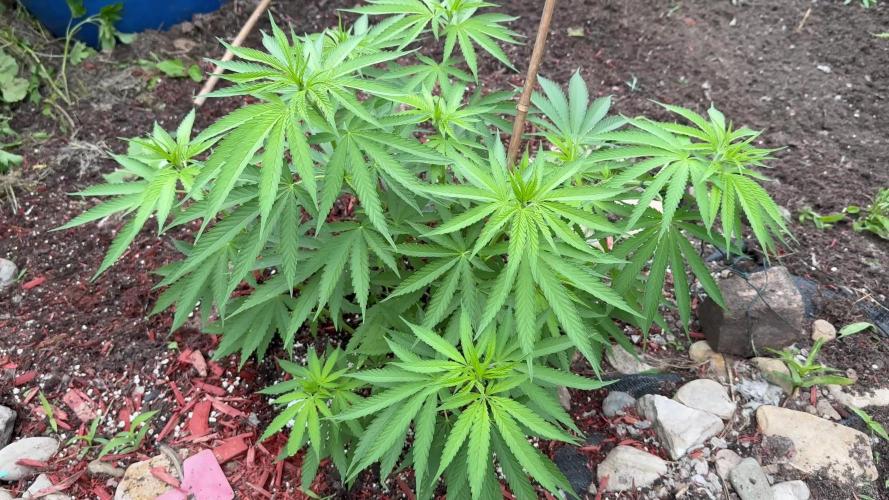
Rien à dire rien à faire juste admirer la croissance jusqu’à la fleuraison



Likes
90
Share


@DreamIT
Follow
🍊🏵️ Red Mandarine x9 SoG X ViparSpectra XS1000🍊🏵️
🏵️8.6 ...
🏵️9.6 Last day before harvest, yeah !!!!! It is really gorgeous !!!
🏵️10.6 ...
🏵️11.6 ...
🏵️12.6 ...
🏵️13.6 ...
🏵️14.6 Latest photos of the plants still in pots, they are already hanging ready to be cleaned
_________________________________________________________________________________________
❓ Are you new to the world of the cultivation and don't know where to safely buy your seeds?
😮From SweetSeeds you can find award-winning, sweet, fast, fragrant, beautiful, and delicious genetics !!!
✅http: //bit.ly/SweetSeeds_
______________________________________________
👀 Are you looking for a good lamp to start with? 👀
🌞Viparspectra has something more than the others, take a look at their site.
⏩ Use "GDVIP" for an extra discount or "ViparDreamIT" for an extra 5 %% discount
👀 Search for it on Amazon
✅Amazon US: https://amzn.to/30xSTVq
✅Amazon Canada: https://amzn.to/38udUVe
✅Viparspectra UE: bit.ly/ViparspectraUE
👀 Watch my ViparSpectra XS1000 unboxing on YouTube, leave a like and write to the channel 🦄
✅http://bit.ly/UnboxingViparSpectraDreamIT
______________________________________________
📷🥇 Follow the best photos on Instagram 🥇📷
https://www.instagram.com/dreamit420/
🔻🔻Leave a comment with your opinion if you pass by here🔻🔻
🤟🦄💚 Thank you and enjoy the growth 💚🦄🤟

Likes
14
Share


@Phurlax
Follow
Day 78: watering 2 gal of ph water a few amber trichomes on some buds extended night cycle to 20/4
Day 82: trimmed off most fan leafs hung up to dry have a humidifier to keep it 50-60% and the temp will be 50-70°F smells super good again.
Day 88: put into jars havent trimmed yet about 12 to 15 grams in each jar and there 12 jars so im guessing about 4 oz total after trimming
Finished trimming finally have been curing for 8 days dank smell more and more everyday.
Ended up with a dry weight of: 4.39 Oz
Smoked 1 test joint and tasted alot like a dryer sheet.
31.45 grams of trim I will make into wax
Likes
3
Share


@SpotWeed420Original
Follow
Como podemos observar estamos en brecha final ! Ya solo nos quedan riegos con agua para limpiar las raíces y poder tener un mejor sabor


Likes
50
Share


@Lazuli
Follow
Maaaaybe 2 more weeks ?
Maybe 3 this thing is huge
Turned the feed down a bit from 800ppm to 550 tips got burned a bit she seems to like it now
Likes
21
Share


@Grey_Wolf
Follow
ACE Seeds Malawi x Northern Lights Auto
4 weeks of flowering completed
29th March 2020
Welcome back to my first ACE seeds grow.
She is growing as well as can be expected for a sativa dominant variety. The buds are covered in nice healthy white pistils but no real noticeable smell yet.
Ive been feeding aprox 5 Litres every two days with either Monsta bud or liquid potassium and mollasses.
No more sunny days here for the time being so she stays inside the grow tent all day.
Ph is stable @ 6.5 and other than that nothing else to report so i'll see you all next week.
Thanks for Reading 👍


Processing
Likes
39
Share


@Belverde
Follow
Ola 🙂... the two sisters grow up very well ... first time I try them.. the seeds were given to me by the boy from the grow shop, after buy some Barney's seeds ..
With them, under the 205 BD LED light, there is also the sister, who can actually find in the diary SUPER SOIL LED (if you want to see the differences) 😉...
5th week started by giving him a nice lunch based on banana macerate (10 days to macerate), about 0.5 in 1.5l h2o ..
pH I never check it when I am using a ready-made soil .. the water I use is quite good and does not contain chlorine (fundamental in organic) .. it has a pH always around 6.5 / 7.5 and is ok ... afterwards I only gave h2o to drink for once, again without letting it come out of the bottom of the vase .. two days after treacle-based sweet like the past week .. this time I gave 1 teaspoon apiece (they will be about 5ml, I think, but that's okay) in 1.5l h2o ... time after still water .. and today, Friday 27th, I finely chopped a bit of barley malt and I made a top dressing, wetting with water in mix with 3ml topmax for 3l h2o, to increase the malt action ..
I see just one or two thrips every now and then, but I'm under control .. I have not used anything to drive them out .. only the fan always on and the humidity left slightly higher ... They start to smell good and very sticky too ..
I don't know how to describe the aroma at the moment .. sweet .. but complex .. we'll see .. hi, thanks for the time 🙏 and tell me if you like it ... See you next week😉✌️

Likes
4
Share

@he110adm1n
Follow
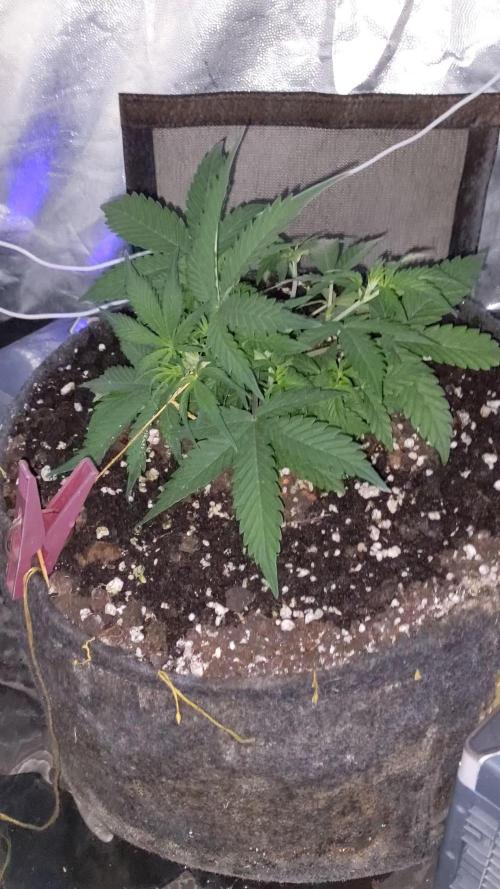
The sixth week has begun. Its color and leaf turgor are perfect; there are no signs of stress, and everything is going well—it is simply lagging behind in size. I’ve started LST. I hope I’ll have the time to carry out the LST properly.
Likes
9
Share


@SSKNFbyHAZE
Follow
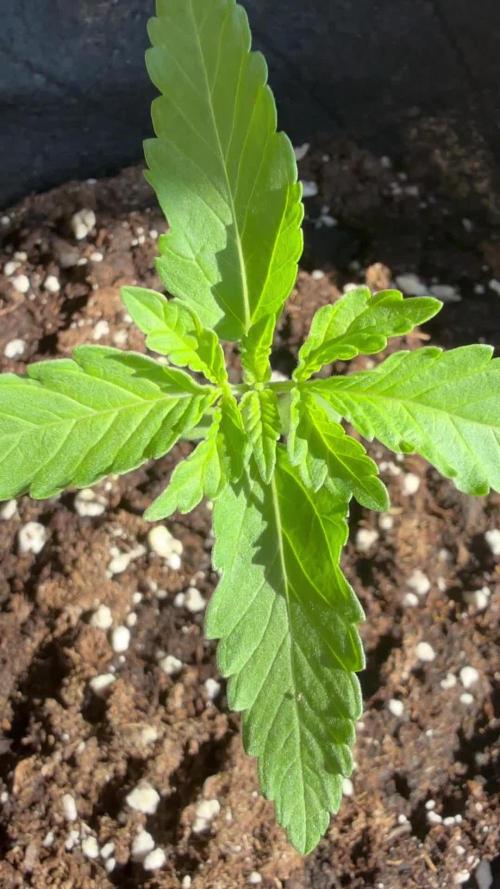
Throughout the week, I give compost tea, and fermented plant juice once each ^^
Hope you guys have a wonderful day today ^^v
*** Please Like, comment & share ***
Highly appreciated -----/-----<@

Likes
1
Share


@Leonardo_DaGrower
Follow
I cleaned up the bottom a little. I’m pretty happy with first week switching to 12/12. Pistils are just showing on the end of the week.


Likes
5
Share


@Mr_nugs_lover_David
Follow
This week is starting phenomenal for this lady as well, she's growing veery fast under my tsl2000 by mars hydro and she has developed big leafs man, it's just a blessing to see this lady every morning, her sisters are phenomenal as well and so this isngonna be a beautiful 2x4 run with different flavors! Let's keep on working and please stay tuned to see how she keeps developing every day!! 💛❤️💚

Likes
7
Share

@JeyGanesha
Follow
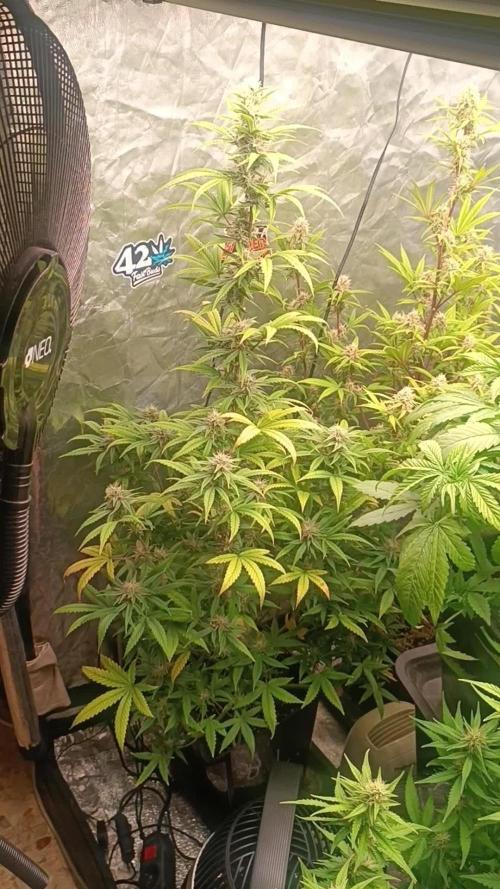
Questa frostbanger sta crescendo super forte... Dopo il blocco che ha avuto la prima settimana. Adesso sta buttando fuori tanta Massa vegetale😂💪👍forza bella piantina mia continua così🤣🤣