The Grow Awards 2026 🏆 















Likes
Comments
Share
@eldruida_lamota
Follow
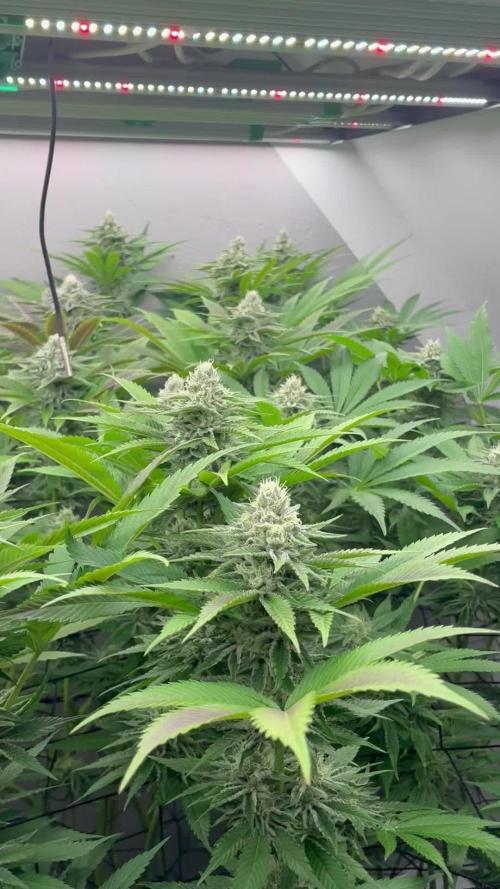
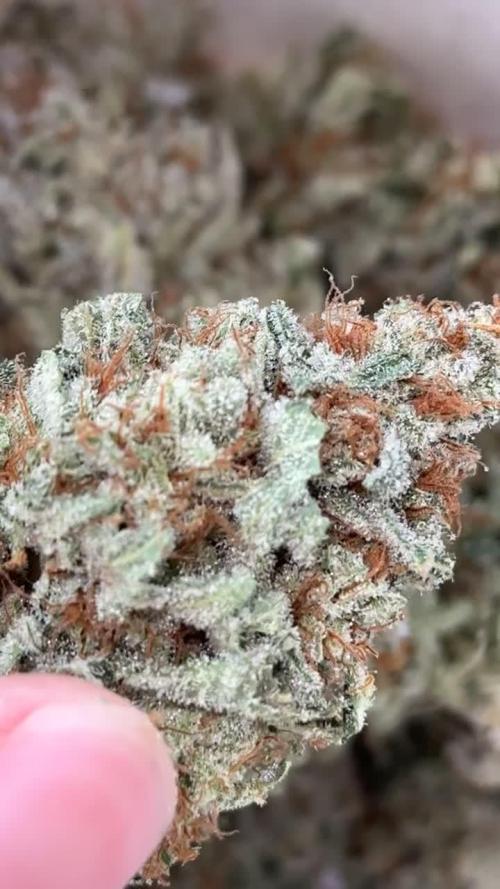
Que pasa familia, vamos con la octava semana de floración de estas Gorilla Cookies Fast Flowering, de FastBuds.
Agradezco a Agrobeta todos los kits obtenidos de ellos 🙏.
Hasta aquí veis que llevan buen progreso y el color que se marcan es espectacular.
Vamos al lío, el ph se controla en 6.2 , la temperatura la tenemos entre 22/24 grados y la humedad ronda el 50%. El fotoperiodo a 12-12. Estás próximas semanas veremos cómo avanzan.
Agrobeta:
https://www.agrobeta.com/agrobetatiendaonline/36-abonos-canamo
Hasta aquí todo, Buenos humos 💨💨💨


Likes
3
Share

As you can see I had some trouble with pests. It is very hard to find this green worms that eat the leafs. A tip I could give you is to search for them early in the morning or when it gets dark, because they eat at those times.
Como pueden ver tuve unos problemas con plagas. Las orugas masticadoras siempre han sido un problema por lo difícil que es encontrarlas. Un tip que podría dar es buscarlas por las mañanas o por las noches, ya que comen a esas horas.

Likes
Comments
Share
@Waxipad
Follow
This week went well, delt with a little calcium deficiency due to having a water softener installed in my home without thinking lol


Likes
20
Share
@DrGanj
Follow
Still swelling nice. Nice even spread between buds which is allowing all bud sites to grow nicely.

Likes
8
Share
@HavelGrower
Follow
This week I had to remove my red light (sad because red leds are the most efficient one in terms of pffd per wattage) the reason for that is bleaching of the tips. Scientists found out that cultivars start bleaching if u hit 600 umol/m2/s red light (just red photons and not every strain bleaches). Besides that I did nothing to them.
From now on I will try to keep the temps low but with a pretty small day/night temp difference.
Now preservation of terps and maturing are my points of interests.
Some nice colours are getting through … that was supported by some nitrogen deficiency. This was Not on purpose but better than burning them with nutrients. (Nitrogen is required to produce chlorophyll, which is Green. If u reduce the nitrogen towards the end you can support other pigments to come through.)
Conditions of the Grow:
💡 PPFD: 1000 umol/m2/s
☀️ DLI: 43 mol/day
🌓 Lightcycle: 12/12 h
💨 Humidity: 45-50 %
🌡️ 🌞Daytime Temp.: 23-24*C
🌡️ 🌙Nighttime Temp.: 21-22 *C
🌡️🌱Leaf Temperature: 21 *C
🌡️💧Water Temperature: 19-21 *C
Water TDS: 1000ppm | EC: 2000us/cm
🚰Watersource: Rainwater (TDS: 15ppm | EC: 0.03 us/cm
Flowering Equipment:
🔦 Lamp: Mars Hydro FC-E6500
📤Container: 3x DIY 63L Euro-Box with lid
Pot: Netpot 2 inch
💦Pump: M.R.S. Ultimate Whisper Powerpump 22 bar
🚿Nozzles: 12x 0.3mm
🫧Waterfilter: 150 microns
🌬️Fan: 3x Clipfan
🌪️Duct-Fan: AC Infinity 200 mm with Controller and Carbon Filter
🍶Nutrient Brand: Terra Aquatica
🔬Sensors: Waterstation (EC, TDS, Temp, PH, Salt), CO2, Air Temp. & Humidity (VPD), Temperature-Sensor Root Container
Likes
32
Share
@GrowingTime
Follow
here we are Guys, 11th week, 6th into flower, the girl is recovering nicely.
she started to put some size buds and pistils are started back to grow white.
the Led is working perfectly and the buds are really frosty as fuck.
I hope she will still give me some nice weight even with the past big mistake.
UPDATE: she's definitely recovering fast. at day 82 the buds are swelling, I apologise for all the colors shades but i changed lights in order to get the best shots.

Likes
15
Share
@DSKO88
Follow
She's looking great! Takes feedings well. Watered about every 3 days at this point. She drinks a lot. I call her Penelope 🌱💜

Likes
19
Share
@Sato_Growing
Follow
Week 5 has home and some of my plants are flowering already. With the lst i made a lot of good branches, i had some snaps but nothing that i need to worry about cauuse i fix it with electrical tape.
I added GuanoGalong Dry powder 1.10.1. and GuanoGalong Palm tree ash 1.30. I mixed those 2 powders and feed my plants with top dressing 100 g per plant
I Will lst my plants a little bit more and then i will add the sgroc net to help my plants later on .. :) <3
See you next week :3


Likes
Comments
Share
@Dr_Zauberer
Follow
So the result at the end as far as i can remember. Was 280g dry!! I dont know why i cannot chose dry weight, i dont weigh my plants wet. Let the plant hang for around 12 days. Middle plant was like 80 or smt, the both other plants were like 100. Due to the regulations of the state i grow in, i did in fact throw away everything past the allowed amount! What a shame but gotta do what we gotta do.

Likes
7
Share
@Kumba1190
Follow
Blüte würde eingeleitet.
Der Stretch beginnt.
KPA Wert= 1,3
PPFD Wert= 600

Likes
2
Share
@Smokwiri
Follow
Welcome to week 8 of my Northern Lights XL Auto diary
Did some LST, and she seems to like it very much.
Development did slow down a bit as it seems, but the plant is taking the training very well
the lower branches did grow quite a bit and are moving upwards to the light
overall performance is very good, no insects problems, also no problems with rain (yet)
Waiting for more bud development, let the plant take it's time

Likes
120
Share
@StarLorr
Follow
Welcome to my Strawberry Pie 🍓🥧diary.
In this Diary:
Seeds: [420 Fast Buds]from my growmie Tropicannibis_Todd 👊🏻😎
Media: Pro~Mix HP Open Top Grow Bag, Connect.
Nutrients: Green Planet Nutrients,
2 Part Dual Fuel starter kit.
RealGrowers: Recharge.
Diablo nutrients: Ripping.
Feeding :
Wed 13Mar: 3 1/3L Nutes/Recharge pH'd 6.5
Sat 16Mar: 2.6L Monster K,Blaster pH'd 6.5
___________________________
__________________________
She got some delicious looking buds!😋
___________________________
Thanks for stopping by, likes and comments are appreciated.👊🏻😎
Keep on growin!
Keep on tokin!!!
😙💨💨💨💨💨
Likes
56
Share
@Ultraviolet
Follow
What's in the soil? What's not in the soil would be an easier question to answer. 16-18 DLI @ the minute. +++ as she grows.
Probably not recommended, but to get to where it needs to be, I need to start now.
Vegetative @1400ppm 0.8–1.2 kPa 80–86°F (26.7–30°C) 65–75%, LST Day 10, Fim'd Day 11
CEC (Cation Exchange Capacity):
This is a measure of a soil's ability to hold and exchange positively charged nutrients, like calcium, magnesium, and potassium. Soils with high CEC (more clay and organic matter) have more negative charges that attract and hold these essential nutrients, preventing them from leaching away.
Biochar is highly efficient at increasing cation exchange capacity (CEC) compared to many other amendments. Biochar's high CEC potential stems from its negatively charged functional groups, and studies show it can increase CEC by over 90%. Amendments like compost also increase CEC but are often more prone to rapid biodegradation, which can make biochar's effect more long-lasting. biochar acts as a long-lasting Cation Exchange Capacity (CEC) enhancer because its porous, carbon-rich structure provides sites for nutrients to bind to, effectively improving nutrient retention in soil without relying on the short-term benefits of fresh organic matter like compost or manure. Biochar's stability means these benefits last much longer than those from traditional organic amendments, making it a sustainable way to improve soil fertility, water retention, and structure over time. Needs to be charged first, similar to Coco, or it will immobilize cations, but at a much higher ratio.
a high cation exchange capacity (CEC) results in a high buffer protection, meaning the soil can better resist changes in pH and nutrient availability. This is because a high CEC soil has more negatively charged sites to hold onto essential positively charged nutrients, like calcium and magnesium, and to buffer against acid ions, such as hydrogen.
EC (Electrical Conductivity):
This measures the amount of soluble salts in the soil. High EC levels indicate a high concentration of dissolved salts and can be a sign of potential salinity issues that can harm plants.
The stored cations associated with a medium's cation exchange capacity (CEC) do not directly contribute to a real-time electrical conductivity (EC) reading. A real-time EC measurement reflects only the concentration of free, dissolved salt ions in the water solution within the medium.
98% of a plants nutrients comes directly from the water solution.
2% come directly from soil particles.
CEC is a mediums storage capacity for cations. These stored cations do not contribute to a mediums EC directly.
Electrical Conductivity (EC) does not measure salt ions adsorbed (stored) onto a Cation Exchange Capacity (CEC) site, as EC measures the conductivity of ions in solution within a soil or water sample, not those held on soil particles.
A medium releases stored cations to water by ion exchange, where a new, more desirable ion from the water solution temporarily displaces the stored cation from the medium's surface, a process also seen in plants absorbing nutrients via mass flow. For example, in water softeners, sodium ions are released from resin beads to bond with the medium's surface, displacing calcium and magnesium ions which then enter the water. This same principle applies when plants take up nutrients from the soil solution: the cations are released from the soil particles into the water in response to a concentration equilibrium, and then moved to the root surface via mass flow.
An example of ion exchange within the context of Cation Exchange Capacity (CEC) is a soil particle with a negative charge attracting and holding positively charged nutrient ions, like potassium (K+) or calcium (Ca2+), and then exchanging them for other positive ions present in the soil solution. For instance, a negatively charged clay particle in soil can hold a K+ ion and later release it to a plant's roots when a different cation, such as calcium (Ca2+), is abundant and replaces the potassium. This process of holding and swapping positively charged ions is fundamental to soil fertility, as it provides plants with essential nutrients.
Negative charges on soil particles: Soil particles, particularly clay and organic matter, have negatively charged surfaces due to their chemical structure.
Attraction of cations: These negative charges attract and hold positively charged ions, or cations, such as:
Potassium (K+)
Calcium (Ca2+)
Magnesium (Mg2+)
Sodium (Na+)
Ammonium (NH4+)
Plant roots excrete hydrogen ions (H+) through the action of proton pumps embedded in the root cell membranes, which use ATP (energy) to actively transport H+ ions from inside the root cell into the surrounding soil. This process lowers the pH of the soil, which helps to make certain mineral nutrients, such as iron, more available for uptake by the plant.
Mechanism of H+ Excretion
Proton Pumps: Root cells contain specialized proteins called proton pumps (H+-ATPases) in their cell membranes.
Active Transport: These proton pumps use energy from ATP to actively move H+ ions from the cytoplasm of the root cell into the soil, against their concentration gradient.
Role in pH Regulation: This active excretion of H+ is a major way plants regulate their internal cytoplasmic pH.
Nutrient Availability: The resulting decrease in soil pH makes certain essential mineral nutrients, like iron, more soluble and available for the root cells to absorb.
Ion Exchange: The H+ ions also displace positively charged mineral cations from the soil particles, making them available for uptake.
Iron Uptake: In response to iron deficiency stress, plants enhance H+ excretion and reductant release to lower the pH and convert Fe3+ to the more available form Fe2+. The altered pH can influence the activity and composition of beneficial microbes in the soil. The H+ gradient created by the proton pumps can also be used for other vital cell functions, such as ATP synthesis and the transport of other solutes. The hydrogen ions (H+) excreted during photosynthesis come from the splitting of water molecules. This splitting, called photolysis, occurs in Photosystem II to replace the electrons used in the light-dependent reactions. The released hydrogen ions are then pumped into the thylakoid lumen, creating a proton gradient that drives ATP synthesis.
Plants release hydrogen ions (H+) from their roots into the soil, a process that occurs in conjunction with nutrient uptake and photosynthesis. These H+ ions compete with mineral cations for the negatively charged sites on soil particles, a phenomenon known as cation exchange. By displacing beneficial mineral cations, the excreted H+ ions make these nutrients available for the plant to absorb, which can also lower the soil pH and indirectly affect its Cation Exchange Capacity (CEC) by altering the pool of exchangeable cations in the soil solution.
Plants use proton (H+) exudation, driven by the H+-ATPase enzyme, to release H+ ions into the soil, creating a more acidic rhizosphere, which enhances nutrient availability and influences nutrient cycling processes. This acidification mobilizes insoluble nutrients like iron (Fe) by breaking them down, while also facilitating the activity of beneficial microbes involved in the nutrient cycle. Therefore, H+ exudation is a critical plant strategy for nutrient acquisition and management, allowing plants to improve their access to essential elements from the soil.
A lack of water splitting during photosynthesis can affect iron uptake because the resulting energy imbalance disrupts the plant's ability to produce ATP and NADPH, which are crucial for overall photosynthetic energy conversion and can trigger a deficiency in iron homeostasis pathways. While photosynthesis uses hydrogen ions produced from water splitting for the Calvin cycle, not to create a hydrogen gas deficiency, the overall process is sensitive to nutrient availability, and iron is essential for chloroplast function.
In photosynthesis, water is split to provide electrons to replace those lost in Photosystem II, which is triggered by light absorption. These electrons then travel along a transport chain to generate ATP (energy currency) and NADPH (reducing power). Carbon Fixation: The generated ATP and NADPH are then used to convert carbon dioxide into carbohydrates in the Calvin cycle. Impaired water splitting (via water in or out) breaks the chain reaction of photosynthesis. This leads to an imbalance in ATP and NADPH levels, which disrupts the Calvin cycle and overall energy production in the plant. Plants require a sufficient supply of essential mineral elements like iron for photosynthesis. Iron is vital for chlorophyll formation and plays a crucial role in electron transport within the chloroplasts. The complex relationship between nutrient status and photosynthesis is evident when iron deficiency can be reverted by depleting other micronutrients like manganese. This highlights how nutrient homeostasis influences photosynthetic function. A lack of adequate energy and reducing power from photosynthesis, which is directly linked to water splitting, can trigger complex adaptive responses in the plant's iron uptake and distribution systems.
Plants possess receptors called transceptors that can directly detect specific nutrient concentrations in the soil or within the plant's tissues. These receptors trigger signaling pathways, sometimes involving calcium influx or changes in protein complex activity, that then influence nutrient uptake by the roots. Plants use this information to make long-term adjustments, such as Increasing root biomass to explore more soil for nutrients. Modifying metabolic pathways to make better use of available resources. Adjusting the rate of nutrient transport into the roots. That's why I keep a high EC. Abundance resonates Abundance.
Likes
1
Share
@PalmaGrow
Follow
12 - 18 noviembre
Se realiza poda apical en el nodo 6 y poda de bajos y hojas

Likes
13
Share
@Sublyme_ness
Follow
Stocky plant, thick stem.
Mutations continue. Some looks like tobacco mosaic but I doubt it.
Thrips seem to avoid this plant comparative to my others at present.

Likes
5
Share
@Ganja_Victoria_Aus
Follow
She smells incredible. Super sticky.
Starting to lower the feeding.

Processing
Likes
88
Share
@Fergie
Follow
hey guys so we are getting very close now . i collect my new aircon unit tomo morning im going to throw straight in tent and drop down to 18 for last few weeks . I started flush begining of week on both girl looking so nice a d smell is just amazing . Til next week only a few more to go 😀


