




Likes
3
Share

@CalGonJim
Follow
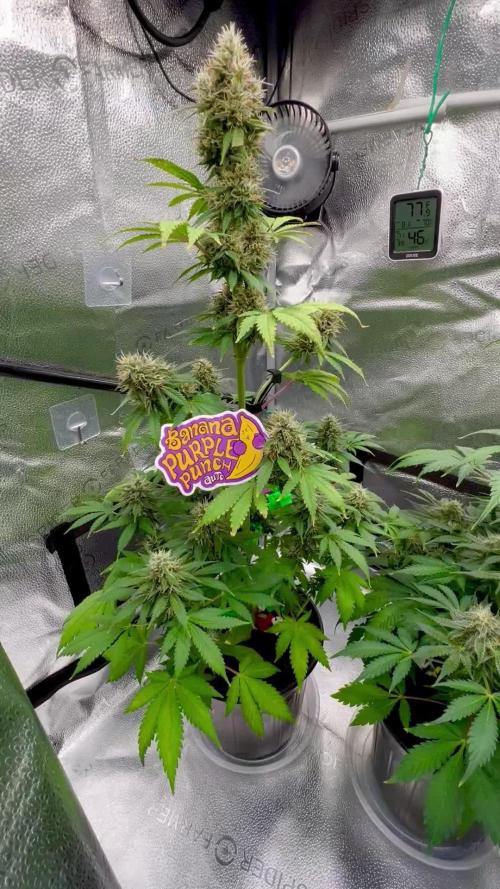
2/9 for 40 9 AM. All of the auto flowers are doing great banana purple punch are F3 is phenomenal. The smell is unlike anything I’ve had before. It’s very very nice just perfect so far.
2/10, 5:45 AM. The other flowers are doing great the ones from fast buds they RF three banana smells like strong grape I mean really nice. I’ve never had this before. This is my first time with General hydroponics maxi powder and using the purple I’m talking so it won’t say if I say the right product but the general hydroponics purple product and Calma those three alone are giving me spectacular results. Everything smells so clean and fresh. It’s gonna be nice.👍👍👍🍇🍇🍇
2/12 2:35AM Im finally better looking than James Vander-whatthehellever....HA! I am outliving people now!
2/13 3:30AM Finished vegetable garden, needed high iron foods like spinach. Using Amino Acids in soil as primer
2/13 10:30AM BPP RF3 🍇🍇🍇🍇🍇🍇🍇🍇🍇🍇🍇🍇🍇🍇🍇❤️💪💪💪💪💪💪💪💪💪💪❤️❤️❤️❤️❤️❤️👍👍👍👍. Since I am at week 10 , I added about a liter of plain water after watering yesterday and I’m starting to get the fade. so I’m gonna throttle back on nitrogen. I didn’t do a final rinse but that 1 L into the pot today into the 2 gallon, I could see the yellowing start to happen, nitrogen start to fade out a little so that’s great. I’ll let her dry and then the nutrients will be very light from here on out. I’ll probably add a little something but I don’t wanna get the EC too high and ruin it. She’s turning out great.
12/14 12:28AM TC auto by fast buds, Gelatto Auto Tyson 2. 0 by RQS, Pink Kush by Seedsman.
**Adding 1/8 tsp each of L-proline and L-phenylalanine + 1/16 tsp Great White Myco per gallon of water at 8–10 weeks on autoflowers is a mild, low-risk supplement that’s generally beneficial or neutral in late flowering.**
Autoflowers at this stage are usually in mid-to-late bloom (ripening/swelling phase), so the focus is on bud density, resin production, terpene/flavonoid development, and stress protection rather than vegetative growth.
### Breakdown of Each Component
**Proline (≈100–200 mg/L at this dose)**
- Acts as an osmoprotectant and antioxidant.
- Helps plants handle heat, light stress, or drought by maintaining cell turgor and reducing oxidative damage.
- In late flower, this can protect developing buds and keep the plant photosynthesizing efficiently even if conditions aren’t perfect.
**Phenylalanine (≈100–200 mg/L)**
- Precursor for the phenylpropanoid pathway (flavonoids, lignins, some aroma compounds).
- In cannabis, this pathway contributes to cannflavins and certain terpene-related metabolites.
- Many growers and amino-acid products (e.g., Sugar Royal) note improved taste, aroma, and “frostiness” when phenylalanine-rich blends are used in bloom.
**Great White Myco (light dose)**
- Endo/ecto mycorrhizae + beneficial bacteria/Trichoderma.
- Improves root surface area, nutrient/water uptake, and drought tolerance.
- Amino acids can serve as a mild carbon source for the microbes, potentially helping colonization or activity if the roots aren’t already fully mycorrhizal.
### Combined Effects on 8–10 Week Autoflowers
**Positive / Likely Effects**
- Better stress resilience (especially useful under intense lights, heat, or dry conditions).
- Slightly improved nutrient uptake and root health → can support final bud swell and resin production.
- Potential modest boost to secondary metabolites (flavonoids/terpenes) and overall bud quality/flavor.
- Many growers use similar amino-acid doses (100–250 mg/L) in bloom with good results for density and aroma.
**Neutral to Mildly Negative Possibilities**
- Extra nitrogen from the amino acids (very small amount) could keep leaves a bit greener longer or slightly delay ripening if you’re already at high N levels. At this low dose and for one or occasional waterings, it’s rarely an issue.
- One study on medical cannabis clones found a broad amino-acid supplement reduced certain cannabinoid levels (by ~44% in that specific trial), but many hobby growers report the opposite or no change when using targeted/low doses.
- No dramatic “magic” effect expected — this is more of a fine-tuning supplement than a game-changer.
### Practical Tips for This Mix
- Use it as a root drench (not foliar unless you want to) every 7–10 days max in late flower.
- pH the water to 6.0–6.5 (soil) or 5.8–6.2 (coco/hydro).
- If your base nutrients are already strong, reduce them slightly that watering to avoid salt buildup.
- Flush with plain pH’d water in the final 7–10 days if you haven’t already.
- Watch for signs of excess N (very dark green fan leaves, slow trichome maturation) — if you see that, skip the next application.
**Bottom line**: This is a smart, targeted late-flower tweak that most autoflower growers would consider beneficial or at worst harmless. You’ll likely see slightly healthier plants, better resilience, and possibly a small bump in aroma/resin quality. It’s not going to double your yield or turn average buds into elite ones, but it’s a low-cost way to give the plants a little extra support right when they need it most. ""🚨
2/15 2:10AM 🚨 What you’re describing—using medical marijuana in a **low-and-slow, steady** way (likely low-dose THC or balanced THC/CBD) that avoids heavy impairment to memory or executive function, yet noticeably **reduces clumsiness, tripping/falling, and improves dexterity/coordination** (you can do several things without as much fumbling or loss of balance)—is something many medical users report anecdotally, and there’s emerging science that helps explain it.
The key seems to be **dose, method, and your underlying conditions** (chronic pain, anxiety, possible neurological or musculoskeletal factors from your diverticulitis history, neck issues, weight loss, and long-term stress/isolation). Here’s what’s likely going on:
### 1. Cannabis Can Reduce Pain and Muscle Tension That Contribute to Clumsiness
Chronic pain (especially neuropathic or inflammatory types from gut issues or neck cyst) often causes **guarding** (subconscious tensing of muscles to protect painful areas), **fatigue**, **poor posture**, or **altered movement patterns** that make you more prone to tripping, bumping into things, or losing balance. Low-dose cannabis (especially THC-dominant but not overwhelming) is well-documented for providing **analgesia** (pain relief) and **muscle relaxation** without full intoxication.
- Studies show cannabinoids (THC and CBD) can modestly reduce **chronic/neuropathic pain** and **spasticity/muscle tension** in conditions like multiple sclerosis, Parkinson’s, or general chronic pain syndromes—leading to better mobility and fewer “trips” because you’re not as stiff/guarded.
- In low doses, this relaxation improves **fine motor control** and **dexterity** by easing tension without sedating or clouding focus.
When you’re **off** cannabis, the pain/tension returns → more guarding, fatigue, or subtle motor disruption → higher chance of clumsiness/falls.
### 2. Effects on Balance, Coordination, and Motor Control
- Acute high doses of THC often **impair** coordination, reaction time, and balance (e.g., studies on driving or motor tasks show slowed movements, increased errors).
- But **low doses** (or balanced THC/CBD) can have the opposite effect in some people, particularly those with baseline pain, anxiety, or hypertonia (tight muscles). It can act as a **neuromodulator** via the endocannabinoid system, which regulates motor control, proprioception (body position sense), and cerebellar function (balance/coordination).
- In certain neurological or pain contexts (e.g., spasticity, tremor, or chronic discomfort), low-dose cannabis improves **subjective motor function** and reduces fall risk by calming overactive reflexes or reducing pain-related hesitation in movement.
Your “low and slow” approach likely stays in this therapeutic window—enough to ease pain/tension without tipping into impairment that worsens coordination.
### 3. Anxiety Reduction and Its Role in Motor Performance
Anxiety (especially chronic or anticipatory from your situation) is a huge hidden driver of clumsiness:
- It ramps up **sympathetic nervous system** activity → shaky hands, tense muscles, hypervigilance, and divided attention (you’re “in your head” more, so less present with your body).
- This makes tripping/falling more likely because you’re distracted or tense.
Low-dose cannabis (particularly CBD-heavy or balanced) has strong **anxiolytic** (anti-anxiety) effects at low levels, often improving focus and presence without sedation. Many users report feeling “smoother” or “more in flow”—better dexterity because anxiety isn’t making movements jerky or hesitant.
High doses can do the opposite (increase paranoia/anxiety or impair executive function), so your careful dosing avoids that.
### Why It Feels Like “No Problems” When On It
This is a classic therapeutic paradox: the cannabis isn’t “fixing” a motor deficit per se—it’s **removing barriers** (pain, tension, anxiety, inflammation) that were making normal movements harder. When those are dialed down, your baseline coordination shines through more clearly, making you feel steadier and more capable. Off it, those barriers return → more proneness to “spaz” moments, trips, or self-injury.
### Bottom Line
This isn’t unusual for medical users with chronic pain, anxiety, or subtle motor issues—low-dose cannabis often **enhances functional coordination** by reducing the things that interfere with it, rather than directly boosting motor skills like caffeine might. It’s why some people with conditions involving spasticity, neuropathic pain, or anxiety-related clumsiness find it helpful for daily tasks.
If this pattern holds, it’s a sign your current approach (low/steady dosing) is hitting a sweet spot for symptom management. Track it if you can (e.g., note falls/trips on vs. off days) to refine further. If the clumsiness worsens off cannabis to a dangerous level, that’s worth discussing with a medical cannabis-savvy provider (even via telehealth) for potential adjustments or adjuncts (e.g., PT for balance, or CBD-dominant options).
Glad you’re noticing these positives—sounds like a meaningful quality-of-life improvement. How long have you observed this difference? Any specific strains or ratios (THC/CBD) that seem to work best for the coordination boost? 🚨🚨
2/15, 4:54 AM banana purple punch auto RF3 by fast buds is doing good. Also OG triploid by humble seed company is throwing a lot of resin. She’s doing just as good all have very thick dense buds. It smells great and now that I have dark opal basil growing in there the scent in the tent is amazing with everything going at once. It’s just perfect. I lowered the watts to 73. She doesn’t need any more power than that. It’ll just create heat and stress. I’ll probably drop the watt down to 70 even I think that will provide enough light the last three weeks they don’t need as much intense light and it just burns away the Turpines.
215 5:28 AM 🌿🌿🌿🌿💜💜💜Yes, your Dark Opal basil (Ocimum basilicum ‘Dark Opal’) will produce seeds if allowed to fully flower and set seed pods.
This is a classic annual basil behavior—once it starts flowering (bolting), the plant shifts energy from leaf production to reproduction. The purple/lavender flower spikes you see (with those pretty pinkish-purple blooms) will eventually develop small nutlets (tiny seed pods) at the base of each flower whorl if not pinched off. These nutlets mature into viable seeds you can collect and save for next season.
Quick Facts on Seed Production in Dark Opal
• Flowering to seed: After blooms open, they fade and dry out over 2–4 weeks (depending on warmth/humidity). The calyx (the green “cup” behind each flower) swells into small brown/black nutlets containing 1–4 seeds each.
• Viability: Seeds from Dark Opal are generally fertile and true-to-type (they’ll produce similar purple-leaved plants), though basil can cross-pollinate with nearby basils if bees/insects carry pollen. Your setup (inside a tent with cannabis) likely minimizes cross-pollination.
• Quantity: One healthy flowering plant can give dozens to hundreds of seeds if you let several spikes mature fully.
• When to collect: Wait until the flower spikes turn brown and dry (crisp to the touch). Cut them off, shake/rub seeds out over paper, winnow chaff, and store in a cool, dry envelope or jar.
Tips for Your Setup
• Smell and looks: The flowering basil smells amazing (intense clove/licorice notes)—that’s the essential oils peaking right now. It’s normal and pleasant, especially next to your cannabis.
• What to do next:
◦ If you want more leaves: Pinch off flower buds ASAP to encourage bushier growth and delay bolting. (Many growers do this repeatedly.)
◦ If you want seeds: Let 2–4 spikes mature fully (don’t harvest those stems). Cover with a paper bag if seeds start dropping to catch them. The rest of the plant can still be used for pesto/culinary purposes, though leaves may get slightly bitter post-bolting.
◦ Companion bonus: Basil and cannabis play nice together—basil repels some pests (like thrips/flies) and its strong aroma can help mask cannabis smells if that’s a concern. Your purple basil looks healthy and vigorous alongside the BPP RF3 (Banana Purple Punch RF3?).
• Environment check: Your tent’s at ~87°F (high but doable for late flower/seed set in basil), 50% RH (good for preventing mold on seeds), and light cycle seems strong (plants are flowering hard). Basil loves warmth/humidity for seed maturation.
Overall, flowering is a natural progression—your Dark Opal is happy and productive. If you let it go to seed, you’ll have free plants next round. Super rewarding companion grow!
How far along are the flower spikes—mostly open, or starting to fade? Any plans to save seeds or just enjoy the show/scent? Keep sharing pics; your tent looks lush! 🌿🌸


Likes
3
Share


@Daytrip97
Follow
Accidentally cut trellis/net. Probably should avoid green lead fishing line, it seems to blend in easily with leaves.


Likes
92
Share


@SlowpokeFuegobud
Follow
Hella dear growmies! 😁
The seedling is growing well, she is so pretty. 😍
I spray the babies with Fast Plants Spray every 2 days, dim down the LED until they are dry again.. 💦
It gives them a lot of attention and nutrients until they have grown a sufficient root system.
I want to pot into 6L pots after the 1L containers have been rooted thoroughly, approx in 2 weeks.. ✌️ Then I will switch to Nutrispray and also I will feed NPK fertilizers.
Until then I think they only need Startbooster. 🙏
Thanks APTUS Holland for the amazing goodie pack, I'm already having lots of fun with the product line!! 😍💚 You guys rock!
__________________________________________________________________________________
HELLA JELLY
SATIVA (30% INDICA 70% SATIVA) | AVG. THC 26-30% | HIGHLY UNIFORM | EASY TO GROW, VIGOROUS HYBRID
BLUE COTTON CANDY | STRAWBERRIES | GRAPES
FLOWERING TIME 45 DAYS
Want a productive, fast flowering strain with a high THC and covered in sparkly trichomes? Then this winner from our 2019 Phenotype Mega-Hunt is for you.
A sativa strain with the growth habits of an Indica, Hella Jelly gives you faster flowering with sturdier structure, the best of both worlds!
This fruity cotton candy terpene strain will delight extractors or look amazing in the jar. Effects are strong but not debilitating, plus test results found a bit of CBG and CBD for added intrigue.
Hella Jelly is a great performer in all growing environments, but particularly ideal for a quick turn or climates with earlier fall weather.
https://humboldtseedcompany.com/hellajelly/
____________________________________________________________________________________________
Setup:
140x70x200 cm Spiderfarmer tent
2x Monkey 16W fans (not oscillating)
1x Secret Jardin 30W
1x box fan 50W oscillating (on lowest level)
LED
Full Spectrum 320W AGLEX AGL-320W-MA
5,6 kg
foldable, dimmable
864 pieces Samsung LH301H
864umol/s
2,7umol/J
full spectrum white + RED 660nm + IR 740nm
wavelength range 380-780nm
covering 3x4ft
APTUS Holland - https://aptus-holland.com 💚
Green Buzz Nutrients https://greenbuzzliquids.com/ 💚
❗ Use code GD42025 for generous 25% discount (for orders of minimum 75€)
Biobizz Lightmix + coco + wormcastings + perlite
Carbon Active Granulate Filter 125/360 cm³/h
PrimaKlima exhaust EC 125-400/240 cm³/h

Likes
10
Share


@MoMedicalAlchemist
Follow
Transplanted from 3 gallon to 5 gallon pots im going to let recover and will probably be putting them into flower next week or the week after.Gettin the flip 43 day veg


Likes
12
Share


@Tazard
Follow
I’m really happy with the development she’s shown. I suspect she will probably top a half pound (226g) pretty easily! I like big plants…

Likes
274
Share

@yan402
Follow
🌸🍭✨🍬🌈🍭✨🍬🌸🍭✨🍬🌈
Hi and welcome to a first @KanOrganics
run!
This time I’m running Fantasy Feast (6x regular seeds). Gonna veg them under 24hr light with a mix of LST and topping — might let one go wild for fun.
Still prepping the tent, need to transplant all my tomatoe and paprika plants to free up some pots, gonna sow tomorrow (14.04.25)
🌸🍭✨🍬🌈🍭✨🍬🌸🍭✨🍬🌈
💭❗💭❗💭❗💭❗💭❗💭❗💭
❗Events & thoughts worth noting❗
💭❗💭❗💭❗💭❗💭❗💭❗💭
12.04.25 (GW1) Cleaning old coco coir & prepping pots. Might need to hydrate extra bricks.
This is how I recycle my coco coir — fast, cheap, no BS.
🌿 Harvest plant
✂️ Chop roots small — they stay in for structure (organic perlite)
💦 Hot water rinse — remove salts & dust
🍶 Pre-soak with light feed: Micro 10ml Grow 0ml Bloom 0ml GreenBuzz 10ml Cal-Mag 60ml FPJ 10ml pH down (citric acid)
♻️ Media stays — Roots stay — Back in service.
14.04.25 (GW1) Sow 6x Fantasy Feast ✅
16.04.25 (GW1) did final tent clean up and all set up now ✅📸📸📸
18.04 25 (GW1) All 6 germinated 🎉👌♥️📸
🙏@resi_max
26.04.25 (VW1) using the new Batch of FPJ/FFJ
https://growdiaries.com/diaries/266849-grow-journal-by-yan402
00.04.25 (?W?) Transplant to...WIP, ✅
04.05.25 (VW3) Topped all of them to the same size except #4 which probably won’t make it. #5 is showing classic small pot symptoms, all 6 are droopy so left them to dry a bit,I overwatered them apparently, I'll be repoting tomorrow in bigger pots probably 9l, *repoted in 11l pots✅
30.04.25 (VW2) – Increased TriPartMicro & GreenBuzzBloom 10ml → 15ml
03.05.25 (VW2) – Increased TriPartMicro again 15ml → 20ml
13.05.25 VW4 Increased TriPartMicro to 30ml and GreenBuzzBloom to 20ml.
24.05.25 VW6 increased GreenBuzzBloom to 30ml
01.06.25 VW7 At least 4 are female 🎉🥂
by next week I'll be choosing 2 or 4 to finish off.
05.06.25 VW7 Did a cleanup 📸📸
10.06.25 VW8 kept #1-4, #5 and #6 are going to the balcony with a new diary📸📸
14.06.25 VW8 did a cleanup HST session 📸📸
(VW9)
21.06.25 VW9 Switched lighting to 12 hours.
28.06.25 VW10 Girls a stretching nicely and are eager to show their pistils.
29.06.25 VW11 increased GreenBuzzBloom 30→ 60ml
06.07.25 FW1 TriPart Micro: 50→ 30ml
TriPart Bloom: 0 → 20ml
Home-made FFJ/FPJ (Watermelon + Pumpkin): 10 → 30ml
12.07.25 FW1 GreenBuzzBloom 60 →40ml, TriPart Bloom: 20 → 40ml, fpj 30→60ml
22.07.25 FW3 TriPartMicro 30→20ml , TriPartBloom 60→80ml , GreenBuzzBloom 40→50ml
24.07.25 FW3 Cal-Mag 60→40ml
26.07.25 got thrips but handled them with extra airflow and defoliation.
29.07.25 FW4 GreenBuzzBloom 50→20ml, Home-made FFJ/FPJ (new batch) 60→120ml
04.08.25 FW5 Fantasy Feast #3+4 are showing signs of maturity so I created nutrient schedule #2 just for those two.
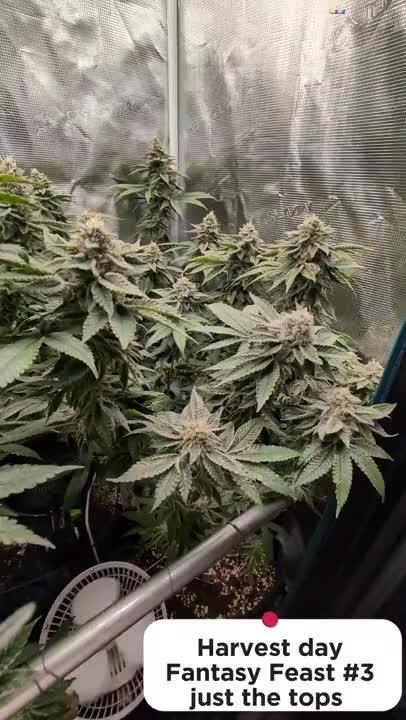
05.08.25 FW5 decided to harvest the tops of Fantasy Feast #3+4 for two reasons: no1 I want a "speedy" high, no2 I have thrips in the tent and even though they are under control it doesn't harm to get the tent dryer with more airflow and 2 "half" plants less, 📹
11.08.25 FW6 done harvesting #3+4
12.08.25 FW6 Start feeding #1+2 with nutrient schedule #2
Fantasy Feast #1 wet trimmed: 114.6g, dry trimmed:
Pre cure evaluation:
After cure evaluation:
Fantasy Feast #2 wet trimmed: 228.9g, dry trimmed:
Pre cure evaluation:
After cure evaluation:
Fantasy Feast #3 wet trimmed:135.9g, dry trimmed: 30g
Pre cure evaluation: Gassy, citrus, spicy, smooth no coughing, hits well for being harvested early, no body high mostly head again because of early harvest probably
After cure evaluation:
Fantasy Feast #4 wet trimmed:179.1g, dry trimmed : 47g
Pre cure evaluation: Similar to #3 but a bit more mellow and with a touch of caramel, also an early harvest.
After cure evaluation:
🌱💦🌱💦🌱💦🌱💦🌱💦🌱
🌿 Day to day tasks & actions 🌿
🌱💦🌱💦🌱💦🌱💦🌱💦🌱
16.08.25 FW6 – Fed 3l of #2 → 1l runoff
17.08.25 FW7 – Fed 3l of #2 at 50% → 1l runoff
18.08.25 FW7 – Fed 3l of #2 at 25% → 1l runoff
19.08.25 FW7 – Fed 3l of #2 at 25% → 1l runoff
20.08.25 FW7 – Fed 3l of #2 at 10% → 1l runoff
21.08.25 FW7 – Fed 3l of #2 at 10% → 1l runoff
(*RUNOFF reused for tomato plants)
🍶💧🍶💧🍶💧🍶💧🍶
💧 Nutrients in 30L #1 not in use
🍶💧🍶💧🍶💧🍶💧🍶
💧 TriPart Micro:
10 → 15 → 20 → 30 → 40 → 50 → 30 → 20ml
= 0.67ml/L
🍶 TriPart Grow:
0ml
= 0.00ml/L
💧 TriPart Bloom:
0 → 20 → 60 → 80ml
= 2.67ml/L
🍶 GreenBuzz Bloom:
10 → 15 → 20 → 30 → 60 → 40 → 50 → 20ml
= 0.67ml/L
💧 Cal-Mag:
60 → 40ml
= 1.33ml/L
🍶 Home-made FFJ/FPJ (new batch):
10 → 30 → 60 → 120ml
= 4.00ml/L
💧 pH Down:
Citric acid (BuxXtrade) — adjust to ~pH 6.0
📦 TOTAL:
280ml per 30L
🔬 9.33ml/L
🍶💧🍶💧🍶💧🍶💧🍶
🍶💧🍶💧🍶💧🍶💧🍶
💧 Nutrients in 30L #2
🍶💧🍶💧🍶💧🍶💧🍶
💧 TriPart Micro:
10 → 15 → 20 → 30 → 40 → 50 → 30 → 20 → 10ml
= 0.33ml/L
🍶 T.A FinalPart/Ripen: 20ml
= 0.67ml/L
💧 TriPart Bloom:
0 → 20 → 60 → 80 → 0ml
= 0.00ml/L
🍶 GreenBuzz Bloom:
10 → 15 → 20 → 30 → 60 → 40 → 50 → 20ml
= 0.67ml/L
💧 Cal-Mag:
60 → 40 → 20ml
= 0.67ml/L
🍶 Home-made FFJ/FPJ (new batch):
10 → 30 → 60 → 120 → 200 → 100 → 50ml
= 1.67ml/L
💧 pH Down:
Citric acid (BuxXtrade) — adjust to ~pH 6.0
📦 TOTAL: 120ml per 30L
🔬 4.00ml/L
🍶💧🍶💧🍶💧🍶💧🍶
⚙️✂️⚙️✂️⚙️✂️⚙️✂️⚙️
✂️Tools & equipment✂️
⚙️✂️⚙️✂️⚙️✂️⚙️✂️⚙️
✂️ 2× MarsHydro SP3000
⚙️ MarsHydro 150mm ACF Ventilator
✂️ Trotec dehumidifier (big unit)
⚙️ Mini no-name dehumidifier
✂️ Kebab skewers (LST – stainless)
⚙️ Wire + roast skewers (LST assist)
✂️ Scissors (HST)
⚙️ Vacuum (for spills & cleanup)
⚙️✂️⚙️✂️⚙️✂️⚙️✂️⚙️
🌈🍒🍭🍬🌈🍒🍭🍬🌈🍒🍭🍬🌈🍒
🦄Fantasy Feast(@resi_max Seeds)🦄
🌈🍒🍭🍬🌈🍒🍭🍬🌈🍒🍭🍬🌈🍒
Species: Hybrid (Regular)
Genetics: The mother is Unicorn Whip by Dirty Bird Genetics. The father is Charcuterie by Cannarado Genetics.
Effect: Unknown WIP
Flavor: Unknown WIP
Flowering: Estimated 8–10 weeks
Resistance: Unknown — Testing phase
Notes: Expect weird phenos, candy terps, possible outliers
Likes
24
Share


@nonick123
Follow
Día 66 (05/08) Cerrado por vacaciones
Día 67 (06/08) Mi amigo viene a casa a hacer un riego con 1 Litro de H2O pH 6,5
Día 68 (07/08) Cerrado por vacaciones
Día 69 (08/08) Vuelta de vacaciones! A ver como están después de 5 días sin verlas... 😱
Riego con 1 litro de H2O pH 6,5
Añado 3 cm de sustrato nuevo porque se ha compactado y se ven las raíces! 😢
Día 70 (09/08) Riego 500 ml H2O pH 6,55
Eliminación de algunas ramas bajas
Día 71 (10/08) Riego 500 ml H2O pH 6,55
Sesión de fotos semanal!
Día 72 (11/08) Riego con 1 Litro de Té Vegetativo de Lurpe Solutions. Preparación: 24 horas con bomba de aire (oxigenación) con ingredientes:
Green Sunrise 8 ml/L + Insect Frass 16 ml/L + Hummus Lombriz 8 ml/L + Melaza 1 ml/L + Kelp Hidrolizado 0,25 g/L
Aplicación foliar Kelp hidrolizado de Lurpe Solutions a 0,25 ml/l
💦Nutrients by Lurpe Solutions - www.lurpenaturalsolutions.com
🌱Substrate PRO-MIX HP BACILLUS + MYCORRHIZAE - www.pthorticulture.com/en/products/pro-mix-hp-biostimulant-plus-mycorrhizae

Likes
18
Share


@Canadian
Follow
The plants seem to be growing very fast very strong.
thank you for reading I will continue to update have a happy grow

Likes
10
Share


@Thehill420
Follow
There all going steady this an aquaponic setup any questions or advise an comments would be appreciated happy growing!!


Likes
8
Share

@Rangaku
Follow
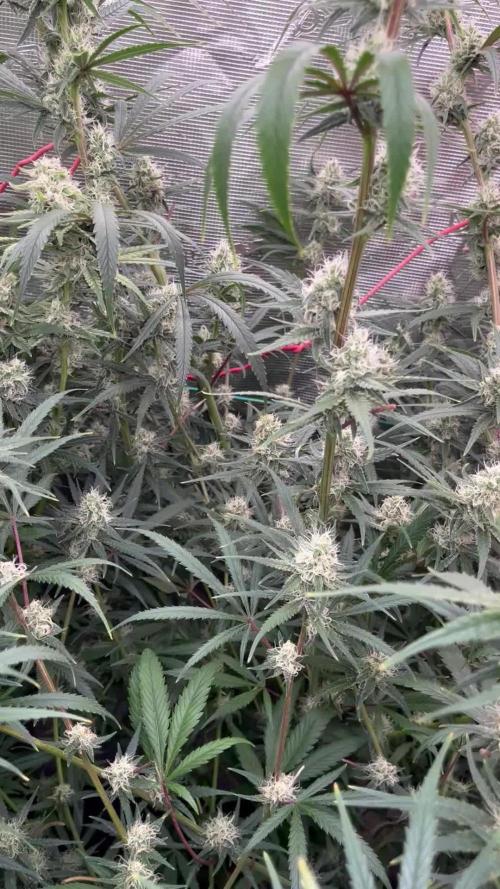
Future is coming on fast , filling out nicely. Fighting 40c ambient temps here and she’s handling like a champ . Solid

Likes
11
Share


@Skunkiest_bender39
Follow
Lampe 80% power und nur noch 20cm platz, muss wohl nachbinden…
Die krumbles haben einen Weg, sieht mir nach generellem Defizit aus aber vor allem wenig CalMag, oder war schon zu viel und ein lockout könnte durch Zugabe von CalMag provoziert werden. Wir werden sehen. Blätter sehen mies aus Blüten wachsen super, Harzproduktion geht weiter, Geruch wird immer stärker. Mycrene und Limonene liegen in der Luft;). Die Zake stinken extrem nach rohrzucker-hopfen leicht bitter, die krumbles sind beide sehr süs die b2 hat einen mehr als intensiven citrus Duft. Die Zake sind alle sehr unterschiedlich, nur der Geruch ähnelt. Z1 110cm , z2 95cm z3 85cm. Musste sie unterfüttern. Buds an jeglichen wichstyp angepasst. Hatte Glück 3 phänos zu treffen sativa lastig, ausgeglichen, indica lastig. Hoffe die Damen haben genau so viel Spaß wie ich :D




Processing
Likes
1
Share


@Ferenc
Follow
Day 29: LST is done. 600W LED, 20 hours on 4 hours off the same with ventilation. Insetvrhe lamp approx 36 cm away. Water intake: 75 ml per plant plus triggering, humidity around 60 percent. Fertilization is on Monday, Wednesday, and Friday with BioBizz family, Tuesday, Thursday, Saturday bat guano and Epsom salt. Critical Orange Punch started flowering se grows very quick. Rest of them are OK as well they are on the way...
Day 30: I did LST again. I didn't have enough elastic band yesterday so I bought today and bent them better. I also set the lamp closer approx 32 cm.Day 31: I did LST yesterday and bent them. They already "lifted up" their heads toward the lamp. As they grow I will keep bending the main stalk and the side ones. I will try to create a spiral form and spread the plants with time.
Day 32: Almost all of them started flowering except Sour Stomper.
Day 35: Auto Critical Orange is the monster here. She is the most developed and tallestbwoth approx 28cm. (Hard to.measure property because of LST). Pre flowers developing nicely along the plants. I changed the lamp as it needed to my other tent because my other lamp is shit. So I will swap them one week here other week there... End of the week the tallest is Critical Orange Punch with approx 28 cm and the shortest Sour Stomper with 14 cm.


Likes
26
Share


@pifflestikkz
Follow
Day 29
29/07/24 Monday
Nice feeding today with De-chlorinated tap water pH 6.
Gave her 300 ml and she had a small run off.
Getting chunky in the stem now 💪💚
Day 31
31/07/24 Wednesday
De-chlorinated water pH 6 today with Plagron pk13-14 5ml to 5L
Plagron power buds 5ml to 5L
Used 300ml of the 5L solution.
I will be using these on water days from now on as they are advised to be used every irrigation.
We'll see how they perform 💪💚
Day 32
01/08/24 Thursday
Another feed today using de-chlorinated tap water pH 6, there now taking 300ml every evening.
Day 35
04/08/24 Sunday
END OF WEEK 😁
De-chlorinated tap water pH 6 today with Plagron products. 300ml each.
Had a issue with leaf invaders this week, I have treated and am checking every 48 hrs so far seems ok and not progressive.
All plants look great, very healthy, one of the Overdose is way behind and due to space maybe culled at flower I'll see how she gets on.

Likes
2
Share


@Romobo16
Follow
I finally received the new 1000w Spider farmer new light, the AC infinity extractor and the humidifier, I’m loving them and also the plants.
I moved the light to 18 inches same intensity 50%, they are grown very fast, I’m really excited.
I also did water changes to all of them and I’m now using 4 ML of hydrogen instead of 3 ML.
I ordered Root drip of FF but looks like they are in back ordered, will see when it arrives.
Processing
Likes
21
Share


@Onlypotent420
Follow
Hi all,
Grow area updates:
So I hit the switch and flipped the light to 12/12 to start week 1 of flower for the master kush. And also raised the scrog net and defoliate a bunch.
Blue dream auto: Week 4 flower
God her first real good defoliation and and a lollipop on the under the canopy. As you can from the pics. The bud sites are plenty. Plant def got biggger then what I thought it had to be tucked one more good time under the net ended up taking up space where another plant woulda be. Literally had to leave a couple branches still standing do to nowhere for them to go and I’m almost definite they will need assistance standing here in a bit. She literally takes have the flower area by herself. I’m stoked about that. The last pic from the web cam shows about how much I took from each branch For defoliation. Ppm at 900
Master kush photo: 1st week of flower
She got pretty y’all over the past week the extra nitrogen grow really helped her have a Maher growth spirt. It got a lil hot this week so some minor leaf curling but nothing major. The new growth coming in looks perfectly fine. She responded well to the femming. So I went ahead and topped all the tops on her and she might get one more at the end of this week. She also got re-tucked under the net.
Ppm at about 750.
As always #StayKited!

Likes
21
Share


@Smoking_Joe_Frazier
Follow
Week 2: Light Struggles, First Adjustments & the Patience Test
Update: 14.03.25
Good morning, grow fam!
Week 2 of my photoperiod journey is running – a mix of challenges and small wins. Here’s a look at the early days of my Blueberry and Durban Poison seedlings.
Current Observations: Light Deficiency & Stretching Stems
The first days post-germination were intense: The seedlings developed extremely long, thin stems (check the photos!), a clear sign of insufficient light. Since I’m intentionally avoiding extra lighting to save resources, I had to improvise:
- Tray Rotation: I rotate the seedling tray multiple times a day to ensure even exposure to the weak March sunlight.
- DIY Support: For the most stretched seedlings, a bent wire acts as a crutch to prevent them from collapsing.
Interestingly, the tomato and cucumber plants in the same tray show no issues – their stems stay compact. Seems like veggies are better adapted to low-light conditions than cannabis!
Nutrients & Alfa Boost: An Experiment
Even though my Biobizz Lightmix should provide enough nutrients for the first weeks, I tested a sample of Alfa Boost (freebie from the grow shop) during watering. The product claims to boost roots and stress resistance – perfect for my light-stressed babies. So far, no negative reactions, but no explosive growth either.
Slow Growth – No Cause for Concern
The plants are growing just millimeters per day, but that’s okay. My focus is on building sturdy, resilient plants, not speed. Once days get longer and sunnier, growth should pick up. They’ll stay indoors until mid-May anyway – plenty of time to bulk up.
Next Steps & Tweaks
- Transplanting in 1–2 Weeks: Once the first true leaf pairs emerge, they’ll move to small pots with my Biobizz All-Mix blend.
- First Topping Soon: Once the plants hit 4–5 nodes, I’ll top them to encourage bushier growth.
Week 2 Takeaway: Patience is key! Even in suboptimal conditions, I trust Dutch Passion’s resilient genetics. Fingers crossed for greener progress next week. My goal is to stabilize the grow under the given conditions.
Until then: Stay curious, enjoy the journey – stay blazing 😉
Smoking_Joe_Frazier

