


Likes
Comments
Share


@GrowFunMD
Follow
Harvested Pineapple Upside Down Cake. The two (2) others have a week to go.

Likes
23
Share


@Cannabar
Follow
Great week, more growth and the girl scout cookies is looking f*cking frosty! The Purple Lemonade is packing on the weight. The Zkittlez is almost ready and the Orange Sherbet is definitely getting there slowly.
Zkittlez - Flushed for the last 2 days and will be for the rest of the week
Purple Lemonade - Flushed for the last 2 days and will be for the rest of the week
Orange Sherbet - Usual feed (still a couple more weeks to go)
Girl Scout Cookies - Usual feed (still a couple more weeks to go)
I will update weights, pics, reports for the two I harvest sometime in the next couple of weeks.
Onto next week!
25.01.21 - UPDATE
The Zkittlez got the chop on Saturday evening (23.01.21). Currently drying in another tent.
The Purple Lemonade was chopped earlier tonight.
Also bought a Mars Hydro TS1000 on Saturday for the next grow 😁 can't wait to use it!!! Still deciding which strains to grow next 🤔


Processing
Likes
18
Share


@UKauto
Follow
Still steady away with her, no growth to get exited about really.
Finished with all the topping and just keeping a level canopy while the growth on the second set of branches catches up. Especially the top branch on the pictures.
Seems to be really held back compared to the opposite branch.
I've defoliated quite a bit, just to clear some space and get light through to all the new growth.
Just waiting it out now and gonna flip lights when everything is caught up.
Collected plenty of pollen from the Mi5 to dust her with, going to try get one half pollinated and leave the other, probably get a few stray seeds on the other half but I don't mind really.

Likes
27
Share


@Hawkbo
Follow
This is what's left in the tent, the gelato is comin down tonight and maybe the 2 smaller lemon aks maybe tmm. The cream cookies and other lemon AK will come down soon too and then I can get some pics. The pineapple and blue dream get 1 more flush


Likes
11
Share


@merchandise91
Follow
Everything seems fine slight bit of defoliation.. temperature gone up and humidity come down
Ec testing the feed at 1.5 atm one feed then 1 water And they loving it 👌 if there’s anything I can do to improve let me know would be helpful


Likes
27
Share


@Herbinski
Follow
So the first week of a 12 on 12 light schedule is behind us.
As you can see she started to elongate very well, most of the branches grew out to the same hight without any LST or HST training.
The Bilberry Lamp is showing it's quality. You can see that both the spectrum and the power work great for the plant.
Nothing special happened this week. She showed her first "hairs". Fed her twice each time with the mentioned dosages from the BAC Organic line.
I try to keep na 9 degrees Celsius difference between night and day. Just trying to keep her happy and hope that all goes well.

Likes
18
Share


@Earthsower
Follow
She looks much better this week I have not gave her much to drink for the last two weeks. Will continue the draught to promote more co2 for the roots.


Likes
8
Share


@trichomhunter
Follow
After 48 hours of darkness, the time had come and the Purple Lemonade were ready for harvest. Since she reacted very well to the training and grew with enough space between the buds, I decided to dry upside down.
Dry weight and smoke report follow after curing. Stay tuned...
Likes
20
Share


@420DeepGrow
Follow
Gracias al equipo de MSNL y XpertNutrients sin ellos esto no sería posible.
💐🍁 Forbidden Fruit Auto:
Forbidden Fruit Autoflower, llamada así por sus deliciosos sabores, es un cruce entre Cherry Pie, Tangie y Siberian Ruderalis. Esta variedad ofrece efectos estimulantes y relajantes con un sabor afrutado, cítrico y a pino. Ideal para quienes buscan un dulce escape.
🚀🌻 Consigue aqui tus semillas:
💡TS-3000 + TS-1000: se usaran dos de las lámparas de la serie TS de Marshydro, para cubrir todas las necesidades de las plantas durante el ciclo de cultivo, uso las dos lámparas en floracion para llegar a toda la carpa de 1.50 x 1.50 x 1.80.
https://marshydro.eu/products/mars-hydro-ts-3000-led-grow-light/
🏠 : Marshydro 1.50 x 1.50 x 1.80, carpa 100% estanca con ventanas laterales para llegar a todos los lugares durante el grow
https://marshydro.eu/products/diy-150x150x200cm-grow-tent-kit
🌬️💨 Marshydro 6inch + filtro carbon para evitar olores indeseables.
https://marshydro.eu/products/ifresh-smart-6inch-filter-kits/
💻 Trolmaster Tent-X TCS-1 como controlador de luz, optimiza tu cultivo con la última tecnología del mercado, desde donde puedes controlar todos los parametros.
https://www.trolmaster.com/Products/Details/TCS-1
📆 Semana 2:
Fantástica semana, estan creciendo de una forma espectacular gracias a la ayuda de @marshydro, @xpertnutrients y @trolmaster.
Se puede apreciar un tercer nudo aunque la aplicación de cola de caballo y el estar en una maceta pequeña ha influido en el tamaño de ella, se recupera muy rápido 😁.
Esta semana se ha puesto en la maceta definitiva y se traslada a su lugar definitivo 😎
Potencia de la lámpara: 50%

Likes
2
Share

@RatmanJR
Follow
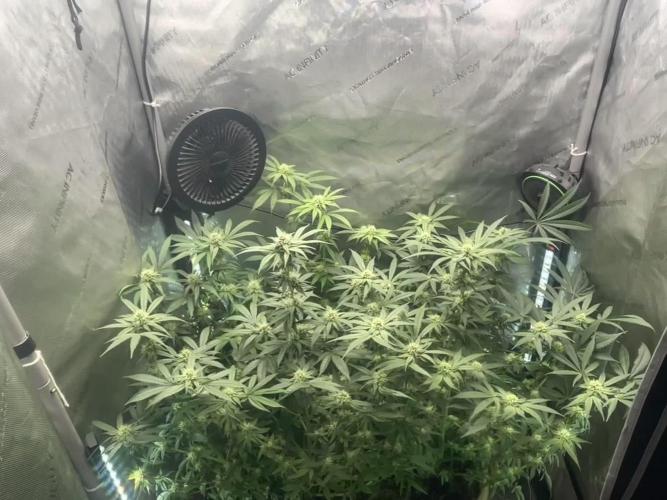
November 2nd. 33 days post flip.
Nothing crazy this week. Very light defoliation every couple days. At this point I am guaranteed no more defoliation to day 49. Along with this nothing but water this week. Plants should be able to get to the finish line with no added nutrients
I’m really happy with bud development so far. They are not the largest yet but they are very very healthy and plentiful. They should really fatten up over these next few weeks.
Temps have been running around 82 during the day. Because of this I’ll be adding two more small fans to the tent. One blowing on the medic grow, and one along the bottom of the canopy. I am doing this to ensure these buds stay compact.
Both of the clones of the purple marmalades could not be happier. Really happy in their pots growing away slowly. The trick to keeping them small is using small fabric pots so their roots air prune, 24h light to severely limit root development and heavy defoliations whenever they get too happy.
At this point in flower it is time to start giving more detailed descriptions of our 3 phenos so here we go.
Plant#1(cherry chunks):
27” tall. Musty almost earthy scent. Kinda similar to pine. Weak scent so far. Appears to have the most densely populated Trichomes out of these three plants.
Plant #2(Purple Marmalades):
30” tall. Smells absolutely insane. Like this is a terp monster. Very citrusy. Smells exactly like grapefruit. Very high concentration of valencene. Extremely strong scent. Also appears this one will have the largest buds of the three but only time can tell here. This one is my favorite one so far
Plant #3(Purple Marmalade):
28” tall. Light scent of pepper mixed with a tiny bit of lemon. This one is the least exciting so far but only time will tell how it will turn out.
As always guys. Thank you for following along and reading my updates. It’s a pleasure growing with you guys. God bless!

Likes
19
Share


@proud_to_grow_loud
Follow
Fun to grow and took to lst and supercropping very well. I am keeping a mother of the stinkiest pheno I got. I made some other seeds that I will be growing out after Jinxproof's pheno hunt. I will be doing a few grows coming up here and its going to be gnarly! Stay tuned in for modern genetics that have been tested and stabilized. These were bag seed from regular seed of LA confidential given to a friend that won them in a giveaway from DNA Genetics.


Likes
5
Share

@LivingSoilGrown
Follow
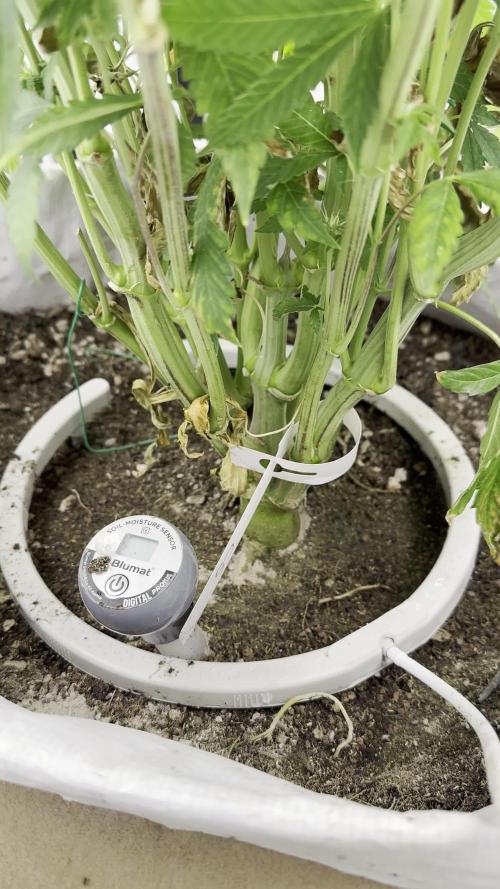
Everything looking good still with the Cherry Strudel. Not getting any strong cherry terps yet. I've started supplementing 40ppm of magnesium from MgSo4 to try and see if it helps with the slight fading out, i was suspecting it was from the intensity of the LED, although only 300w i was getting a DLI of around 50 which is way too high. I've raised the LED slightly and applied a light top dress of the Ecothrive Soil Food Bloom. I've added a small clip fan to circulate air around the upper canopy and I've got a 5 inch RVK fan circulating air underneath the canopy.


Likes
49
Share


@Grow06
Follow
Ciao a tutti questa settimana speriamo vada meglio della scorsa perché su due piante si sono formate delle bruciature nelle foglie dovute al troppo fertilizzante probabilmente 2ml/l di big Bud è stato troppo per una pianta 88% sativa !!!
I fiori vi sembra che si stiano ingrossando correttamente ?
Visto che adesso bagno con solo acqua e con degli anti stress (Rhino skin) per farle riprendere
Ho aggiunto oltre hai 400w hps 3x45w led
Likes
26
Share


@Bakeryguy420
Follow
Sorry guys havent updated in awile
Gg4 harvested
Tangiematic harvested
Ogesus #1,2 harvested
Gluebeerry just main cola harvested
White rrussian harvested
Sweet creme harvested
In.the run.left is rhino rryder, royal haze, amnesia gold , amensia haze , forgotten cookies and gluebeery and the new girls
Update on 3rd grow going Start a new diary for them today . My cat knocked down the seedlings 3 times zero stunt life which is shocking crazy crackhead ..
Quality is amazing for them all yield wasnt aa, much as I wanted believe emerald harvest is as garbage as foxfarm.

Glueberry Auto · Expert Seeds
Gorrila Glue #4 Auto (Expert Gorilla Auto) · Expert Seeds

Tangie Auto · Fast Buds
Sweet Cream Auto · Expert Seeds

Amnesia Haze Auto · Vision Seeds

Amnesia Gold · Pyramid Seeds
OGesus Auto · Expert Seeds

Royal Haze Automatic · Royal Queen Seeds

Caramella Auto · Custom Breeder & Strain
Rhino Ryder Auto · Fast Buds

Fugue State · Mephisto Genetics


