


Likes
Comments
Share


@lasonda
Follow
after this week I will check the status of the tricoms and accordingly I will start the flush with Advanced Nutrients product

Likes
18
Share


@MisterAeroponics
Follow
Ran into sulfur and phosphorus deficiency week 7. Added the small scoop beastie blooms and like an 1/8 tsp of silver bullet sulfur terp enhancer. Still running about 9ml per gallon at 5.8 possible hydrogen.. AC motor went out on one of the ac’s, will have it fixed by Wednesday been cooler temps and storms lately so been okay.

Likes
28
Share


@PEAKYPLANTERS
Follow
Hello everyone, brother gardeners.
welcome back to queen peaky's diaries
this week we saw how autoflowering plants reacted to the high stress technique
now the buds are re-emerging from under the scrog net
Likes
45
Share


@Ultraviolet
Follow
The cannabis strain Grape Guava can be a purple strain, depending on its specific phenotype and genetic makeup. While not all phenotypes of Grape Guava are purple, some variations, such as the Zatix Grape Guava, are noted for their striking purple appearance due to the genetic expression of anthocyanin pigments.
https://www.youtube.com/watch?v=cKdVmdoKJ5k
In a garden of green, Grape Guava gleams,
With its fruity aroma, enchanting dreams.
Clusters of grapes, guava's sweetness ignite,
A strain so divine, in purple and white.
Euphoria whispers, a lush fruity haze,
Grape Guava's embrace, a tranquil daze.
Off and away.@1400ppm. The increased CO2 allows plants to thrive at higher temperatures, which in turn necessitates higher humidity to maintain the ideal VPD for healthy growth and transpiration. 80F -5F = 75F LST with 70% RH = 0.72 kPa. Higher temperatures and humidity promote rapid growth, nutrient uptake, and photosynthesis while maintaining a lower stress level. Temperature influences the rate of enzymatic reactions involved in aerobic respiration. Enzymes, such as those involved in glycolysis, the Krebs cycle, and the electron transport chain, work most efficiently at an optimal temperature range. In low temperatures, enzymatic activity will slow down, thus reducing the rate of aerobic respiration. In high temperatures, enzymes can become denatured, thus impairing their function and stopping the process of aerobic respiration. Glucose is the primary fuel for aerobic respiration. The rate of aerobic respiration increases with the availability of glucose, as it is the starting point for glycolysis. If glucose levels are low, cells may rely on alternative energy sources such as fatty acids or amino acids , but these processes may yield less ATP or be less efficient. To determine this effect, carbon dioxide volume was measured (as carbon dioxide is an output of aerobic respiration)
18/6 with the 6 being IR. The near infrared (IR-a) borders around 700nm up to 1400nm @ photon par flux density of 1.8 instead of darkness, keeping temps overnight a neat 77F-80F.
Think of my tent as a lung. What goes in must come out. When the rate of air going out exceeds the amount of air coming in, it creates a negative pressure. Tent concaves (bends in). If set up correctly, your RH will begin to drop slowly to the desired level you set, and the extraction turns off when it reaches 50% RH. The plant, as it performs cellular respiration, will always be releasing more water into the air, so the RH% of the tent overnight will always increase, so long as oxidative phosphorylation is occurring. As soon as the RH% creeps back up to 55%, the extraction turns back on, over and over. This creates a strong pressure differential which will work wonders on your grow. Replicating high and low-pressure fronts in nature. Critical for oxygen diffusion at the critical time of peak cellular respiratory function..
Moisture will not transfer from a saturated atmosphere to another if that air is already at or above its saturation point, meaning the air can't hold any more water vapor. Once I understood that water is produced as a by product during cellular respiration, specifically at the very end of the electron transport chain (ETC) where electrons are finally transferred to molecular oxygen, the higher the RH of the air, the more resistance there is for more moisture to be added to that environment, and effects the ease with which it does so. But none of that water comes from the pot; it's pulled from the air. If you run high daytime RH, your medium/pot is 100% reliant on transpirational root pull to move water. ZERO evaporation happens across the atmosphere if the tent air has high RH%, the medium cannot release its water through evaporation. Once a canopy develops, light no longer slowly wicks and evaporates from the topsoil. The Soil-Plant-Atmosphere Continuum (SPAC) describes the continuous pathway and process of water movement, driven by a gradient in water potential, from the soil, through the plant's roots, stem, and leaves, and finally evaporating into the atmosphere through transpiration. There is evaporation, there is transpiration, and then there is evapotranspiration; Evapotranspiration (ET) is the combined total of two processes: evaporation (water lost directly from soil and surface water into the atmosphere) and transpiration (water released from plants to the atmosphere through their leaves). Evapotranspiration represents the total amount of water that moves from the medium into the air. There is no such thing as a medium with too much water, only a medium that retains too much for too long.
The water must always flow efficiently from one atmosphere(Medium) to another(Air) in a timely manner. Moisture is a critical factor for bacterial growth and decay. Dictating how long it's allowed to sit in any one location for any given period is a key preferred control. To ensure a net reduction in a bacterial population, the rate of removal (ET) must exceed the rate of bacterial growth (decay rate), which is often modeled as a growth rate for the specific bacterium under the given conditions. By optimizing daytime VPD, we also optimize conditions for bacterial growth to explode exponentially above 77°F.. If water is allowed to sit in a medium without an escape within a timeframe, nothing good will happen. IF High RH is maintained overnight as well as during the day, placing 100% of water movement at the behest of daytime transpiration, roots can only pull where they can reach, and if soil is compressed above a certain point, moisture will become trapped in a medium with no way of moving day or night. This will begin the countdown for decay to take hold. When water stagnates in a medium, it loses oxygen, creating anaerobic conditions that foster the growth of harmful microorganisms like bacteria and fungi, which can produce toxins and disease vectors.
Thigmomorphogenesis, the process by which plants respond to mechanical stimuli like touch by altering their growth and development, results in significant morphological changes to improve survival against mechanical perturbations. This complex response involves sensing touch and initiating physiological and genetic responses, leading to changes in form and structure over days or weeks. The process is triggered by physical forces such as wind, rain, or touch. Plants adapt to these stimuli by changing their shape and structure, which may include slower growth, thickened stems, or altered leaf development. Plants possess sophisticated mechanisms to detect even subtle mechanical stimuli and initiate responses. A variety of molecules, including calcium ions, jasmonates, ethylene, and nitric oxide, are involved in signaling these mechanical inputs. Touch can induce the expression of genes that encode proteins for calcium sensing, cell wall modification, and defense mechanisms. A plant exposed to constant wind may become shorter and sturdier. A plant that is touched frequently might grow more slowly to conserve energy and develop thicker cell walls. These changes increase a plant's resilience and ability to survive in harsh environments.
Let's get Thiggy with it.
Likes
52
Share


@UnorthadoxDude
Follow
Hello and welcome to week 2 of veg phase for these five Epsilon F1 Hybrid ladies.
Last week is now complete with daily updates and media so please check it out.
For this week well frankly I am expecting massive growth. I have taken 3 fingered leaves from Normani today and five fingered from Ally.
It takes more time to photo and diarise but it is rewarding to look back on! See you tomorrow!
Day 9: Nothing to report. Sorry for lazy photos. Oh... I joined twitter @UnorthadoxDude
Day 10: Fertigated 5l. Loving Ally's party hands 👈👉
Day 11: Normani has overtaken Ally as the tallest and largest plant. Dinah has overtaken Lauren in a similar fashion. All girls kooking good except for some odd marks here and there (see video). Today after the photos and video and when she was back in the tent. I took about 4 or 5 leaves off each girl. You'll see tomorrow.
If you're here from Twitter, where I am also @UnorthadoxDude, please say hello in the comments! I've just joined and want to gauge if it is worth the time.
Day 13: Heights: Ally 23cm Normani 28cm Lauren 24cm Dinah 19cm Camila 17cm The girls have begun stretching it seems.
Day 14: Fertigated 5l and performed LST and defoliation. Normani height was 32cm.
End of week summary: Huge week of growth and these ladies are only just getting started. The pheno difference of Dinah is stark but super interesting.

Likes
8
Share


@SoakingThePot
Follow
Big thank you to Fastbuds for sending me out their Gorilla Cookies, Banana Purple Punch and Strawberry Banana. I’ve always been a photo guy but I’m really excited to try out my first autos Can’t wait to see what they can do!!


Likes
29
Share


@nonick123
Follow
Día 27 (20/05) Riego con 250 ml de Té de Compost
Auto Northern Dragon Fuel está creciendo exponencialmente!
Día 28 (21/05) Vuelven a tener sed! Las riego con 250 ml sólo H20 pH 6.2
Auto Northern Dragon Fuel se ha recuperado muy bien de la deficiencia de Mg
Día 29 (22/05) Riego con 750 ml H2O+ Regulator 0,15 ml/l + CaMg-Boost 0,25 ml/l + Startbooster 0,25 ml/l + TopBooster 0,2 ml/l- pH 6.2
Día 30 (23/05) Lemon Cherry Cookies Auto está sedienta de nuevo!
500 ml de sólo H2O con el pH 6.3
Día 31 (24/05) Lemon Cherry Cookies Auto está sedienta de nuevo!
Riego con 750 ml H2O + Regulator 0,15 ml/l + TopBooster 0,2 ml/l- pH 6.2
Día 32 (25/05) Las plantas no paran de crecer! 😍
Día 33 (26/05) Riego con 750 ml H2O + Regulator 0,15 ml/l + CaMg-Boost 0,25 ml/l + TopBooster 0,2 ml/l- pH 6.2
Lemon Cherry Cookies Auto tiene un olor increíble 😍😍😍
💦Nutrients by Aptus Holland - www.aptus-holland.com
🌱Substrate PRO-MIX HP BACILLUS + MYCORRHIZAE - www.pthorticulture.com/en/products/pro-mix-hp-biostimulant-plus-mycorrhizae
Likes
2
Share

@Ninjabuds
Follow
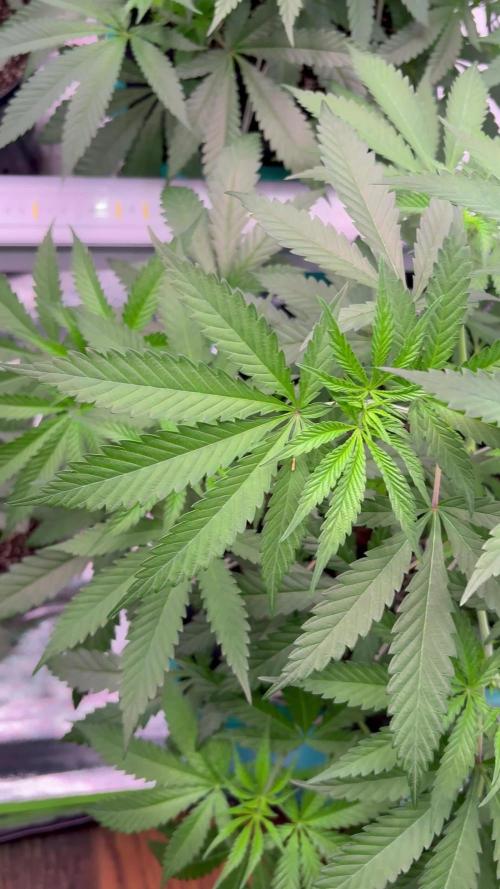
I like the structure of this plant it starting to look pretty healthy ima hook up the watering system soon and flip to flower soon aswell
Likes
14
Share


@Smile_gan
Follow
From website seed stocker they said this BCN need 75 days to harvest. So, at the end of week 11(77days) is very nearly to harvest day. Next trichrome check found almost 75-80% already cloudy. I thing if no any problem should be ready in next 1-2 week.


Likes
82
Share


@BigBadLion
Follow
Hey guys!
Sorry for the big delay since my previous grow! Right now I'm growing some babies from Royal Queen Seeds! Kali Dog! 😃
The first week was calm! The babies broke out from their shells rather fast and two babies grew out of their jiffy pods rather fast! Also, since the strain is Kali Dog I decided to name each of the plants with a different dog name! I'm still unsure about the names but the first two are called Roko and Max!
For the first time I also noticed the first buds looked... different? You'll be able to see them in the photos tho... and once again two of my babies are suffering from helmet head 😰 But eh, I'm used to it. Gladly it's an easy error to fix.
I'll try to make a longer timelapse (these were bad!) but I didn't know my camera battery wasn't enough for long sessions 😝
Anyway, thanks for reading! See you all next week! 👋
Likes
37
Share


@OrganicPower
Follow
Week 07 and the heat wave is behind us. Didn’t update last week but not much to report. Some serious damage was a result of the heat, causing the lights and everything else to become too much for the girls. #2 took it the best and is still growing nicely packing on weight and some serious frost! Finishing much faster then the others. I might re veg her the smell is so nice. The two larger #1 & 4 have been hungry forever awhile and I never applied anymore Gaia:(

Likes
46
Share

@BrediniGreeny
Follow
7/11/25
New week babieess😍😍!!!!
7/13/25
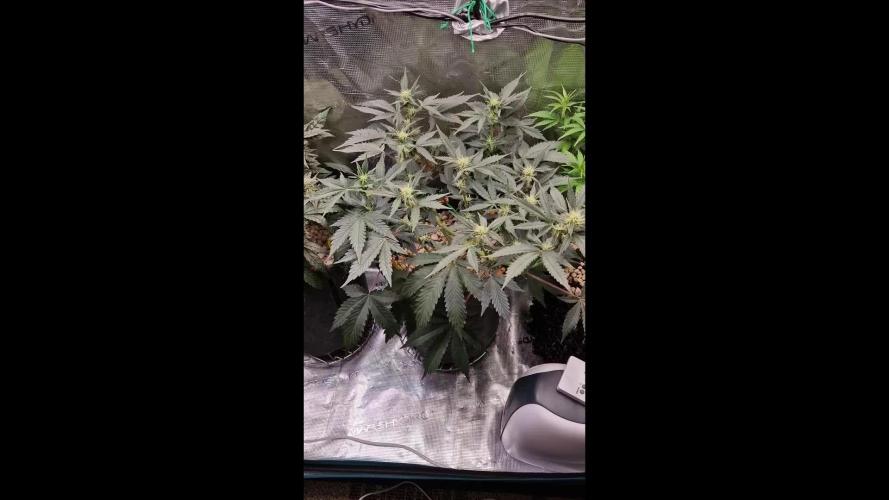
Ohhh baby, the Mephisto experiment is cooking so so good right now.
I’m actually kind of stunned at how things are evolving, especially with Forum Stomper, a.k.a. Stompy the Comeback Queen.
She had kind of a rocky start — I mean, cotyledons were looking funky, and she went all bush-mode on me: dense structure, super tight internodal spacing, real short-stack energy.
But oh no no, she wasn’t done. Fast forward to now... Stompy is a straight-up MONSTER. A chunky, thriving beast that just keeps getting bigger — and I know she’s not done yet.
She’s officially stretching into flower now. Not just hinting at it — nah, full flowering stretch is underway, and she’s reaching up like she just realized she’s got room to take over the whole tent. I love this part.
Today was watering day, and both girls got their special cocktails.
First up, Grapey.
She drank 4.4 liters of love, with her mix spiked up with BioBloom at 16 ml, Topmax at 12 ml, BioHeaven at 16 ml, Activera at 16 ml, Agamic at 12 ml, and a touch of CalMag at 3.5 ml.
She’s hitting flower hard now too, and this brew should set her up to swell up sweet and loud.
Going in: pH 6,23, PPM 510 Temp 22,5 °C
Runoff: pH 6,47, PPM 1350
Then we’ve got Stompy, the Comeback Queen.
She got 4 liters of her own nutrient-rich mix: BioBloom 12 ml, Topmax 10 ml, Activera 12 ml, BioHeaven 12 ml, Agamic 10 ml, CalMag 3.5 ml, and just a whisper of CicaMax at 0.3 ml to finesse that vigor.
Oh, and let’s not forget — she also got her guano top dress today. I scooped out one of my little measuring cups, sprinkled it in like fairy dust, and let nature do its thing.
This is going to kick the bloom engine into overdrive.
Going in: pH 6,22 PPM 485 Temp 22 °C
Runoff: pH 6,7 PPM 650
7/17/25
Today Grapey got 4.8 liters of water, going in pH at 6.0, PPM 88, temperature 21.2 degrees Celsius. Runoff was pH 6.8 and PPM 760.
Stompy got also 4.8 liters of water, pH going in at 6.0, PPM 106, temperature 21 degrees. Runoff came out pH 6.2 and PPM 2000. Goddamn 😅 but she seems okay with it.
I think the next watering will also be just plain water because she has enough there. I will see.😍



Likes
36
Share


@TheGreenLeopard
Follow
Another great week on this tent. Everyone playing to the tune. The kush is off the scale - everyone should try it. Upcoming week now all about ripener and then we look to flush after that. Hope everyone is ok out there.


Likes
47
Share

@Ultraviolet
Follow
The cannabis strain Grape Guava can be a purple strain, depending on its specific phenotype and genetic makeup. While not all phenotypes of Grape Guava are purple, some variations, such as the Zatix Grape Guava, are noted for their striking purple appearance due to the genetic expression of anthocyanin pigments.
https://www.youtube.com/watch?v=cKdVmdoKJ5k
In a garden of green, Grape Guava gleams,
With its fruity aroma, enchanting dreams.
Clusters of grapes, guava's sweetness ignite,
A strain so divine, in purple and white.
Euphoria whispers, a lush fruity haze,
Grape Guava's embrace, a tranquil daze.
Off and away.@1400ppm. The increased CO2 allows plants to thrive at higher temperatures, which in turn necessitates higher humidity to maintain the ideal VPD for healthy growth and transpiration. 80F -5F = 75F LST with 70% RH = 0.72 kPa. Higher temperatures and humidity promote rapid growth, nutrient uptake, and photosynthesis while maintaining a lower stress level. Temperature influences the rate of enzymatic reactions involved in aerobic respiration. Enzymes, such as those involved in glycolysis, the Krebs cycle, and the electron transport chain, work most efficiently at an optimal temperature range. In low temperatures, enzymatic activity will slow down, thus reducing the rate of aerobic respiration. In high temperatures, enzymes can become denatured, thus impairing their function and stopping the process of aerobic respiration. Glucose is the primary fuel for aerobic respiration. The rate of aerobic respiration increases with the availability of glucose, as it is the starting point for glycolysis. If glucose levels are low, cells may rely on alternative energy sources such as fatty acids or amino acids , but these processes may yield less ATP or be less efficient. To determine this effect, carbon dioxide volume was measured (as carbon dioxide is an output of aerobic respiration)
18/6 with the 6 being IR. The near infrared (IR-a) borders around 700nm up to 1400nm @ photon par flux density of 1.8 instead of darkness, keeping temps overnight a neat 77F-80F.
Think of my tent as a lung. What goes in must come out. When the rate of air going out exceeds the amount of air coming in, it creates a negative pressure. Tent concaves (bends in). If set up correctly, your RH will begin to drop slowly to the desired level you set, and the extraction turns off when it reaches desired% RH. The plant, as it performs cellular respiration, will always be releasing more water into the air, so the RH% of the tent overnight will always increase, so long as oxidative phosphorylation is occurring. As soon as the RH% creeps back up to 55%, the extraction turns back on, over and over. This creates a strong pressure differential which will work wonders on your grow. Replicating high and low-pressure fronts in nature. Critical for oxygen diffusion at the critical time of peak cellular respiratory function..
Moisture will not transfer from a saturated atmosphere to another if that air is already at or above its saturation point, meaning the air can't hold any more water vapor. Once I understood that water is produced as a by product during cellular respiration, specifically at the very end of the electron transport chain (ETC) where electrons are finally transferred to molecular oxygen, the higher the RH of the air, the more resistance there is for more moisture to be added to that environment, and effects the ease with which it does so. But none of that water comes from the pot; it's pulled from the air. If you run high daytime RH, your medium/pot is 100% reliant on transpirational root pull to move water. ZERO evaporation happens across the atmosphere if the tent air has high RH%, the medium cannot release its water through evaporation. Once a canopy develops, light no longer slowly wicks and evaporates from the topsoil. The Soil-Plant-Atmosphere Continuum (SPAC) describes the continuous pathway and process of water movement, driven by a gradient in water potential, from the soil, through the plant's roots, stem, and leaves, and finally evaporating into the atmosphere through transpiration. There is evaporation, there is transpiration, and then there is evapotranspiration; Evapotranspiration (ET) is the combined total of two processes: evaporation (water lost directly from soil and surface water into the atmosphere) and transpiration (water released from plants to the atmosphere through their leaves). Evapotranspiration represents the total amount of water that moves from the medium into the air. There is no such thing as a medium with too much water, only a medium that retains too much for too long.
The water must always flow efficiently from one atmosphere(Medium) to another(Air) in a timely manner. Moisture is a critical factor for bacterial growth and decay. Dictating how long it's allowed to sit in any one location for any given period is a key preferred control. To ensure a net reduction in a bacterial population, the rate of removal (ET) must exceed the rate of bacterial growth (decay rate), which is often modeled as a growth rate for the specific bacterium under the given conditions. By optimizing daytime VPD, we also optimize conditions for bacterial growth to explode exponentially above 77°F.. If water is allowed to sit in a medium without an escape within a timeframe, nothing good will happen. IF High RH is maintained overnight as well as during the day, placing 100% of water movement at the behest of daytime transpiration, roots can only pull where they can reach, and if soil is compressed above a certain point, moisture will become trapped in a medium with no way of moving day or night. This will begin the countdown for decay to take hold. When water stagnates in a medium, it loses oxygen, creating anaerobic conditions that foster the growth of harmful microorganisms like bacteria and fungi, which can produce toxins and disease vectors.
Thigmomorphogenesis, the process by which plants respond to mechanical stimuli like touch by altering their growth and development, results in significant morphological changes to improve survival against mechanical perturbations. This complex response involves sensing touch and initiating physiological and genetic responses, leading to changes in form and structure over days or weeks. The process is triggered by physical forces such as wind, rain, or touch. Plants adapt to these stimuli by changing their shape and structure, which may include slower growth, thickened stems, or altered leaf development. Plants possess sophisticated mechanisms to detect even subtle mechanical stimuli and initiate responses. A variety of molecules, including calcium ions, jasmonates, ethylene, and nitric oxide, are involved in signaling these mechanical inputs. Touch can induce the expression of genes that encode proteins for calcium sensing, cell wall modification, and defense mechanisms. A plant exposed to constant wind may become shorter and sturdier. A plant that is touched frequently might grow more slowly to conserve energy and develop thicker cell walls. These changes increase a plant's resilience and ability to survive in harsh environments.
Let's get Thiggy with it.
Likes
38
Share


@Danger90946
Follow
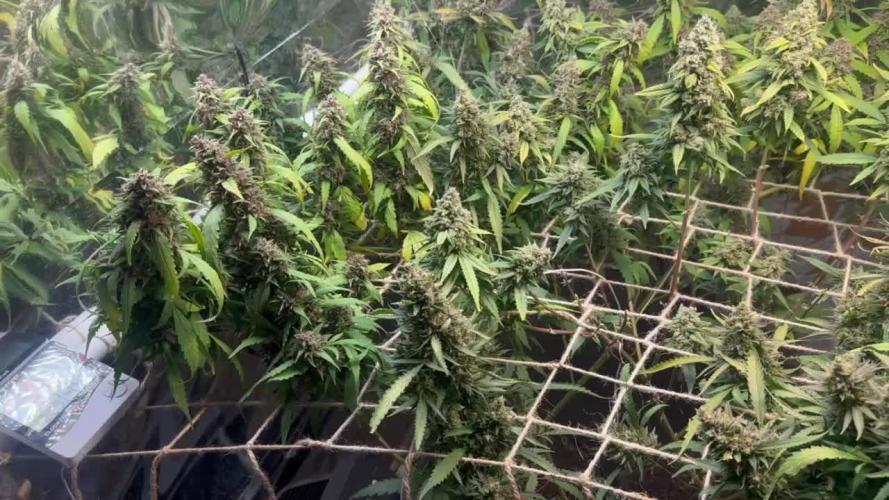
Here we are in week six of flower and not a lot has happen this week other than the usual watering and letting her do her thing. Only trouble this week was updating GoPro had to try a few times. Other than that we got some rain in my home town and collected about 60 gallons that I'm going to use to finish the rest of the grow. Also, got my new AC Infinity CLOUDLINE T4, Quiet Inline Duct Fan System with Temperature and Humidity Controller, 4-Inch. I was really hoping this two plants would finish before the year ended, however, it looks like they got others plans. See you guys next week.

Likes
37
Share


@Aedaone
Follow
The temperatures, humidity, height, and watering volume(if measured) in grow conditions are all averaged for the week. The pH is soil pH. Any watering done by me is well water which is 7.6 pH and 50° F. Any listed nutrients are ml/gallon of soil spread evenly across the top of the soil.
Day 1 we had plenty of rain this morning with partly to mostly cloudy skies. The high temperature was 86°F
Day 2 we had a high temperature of 91°F. Skies were clear but it was super humid. I defolated some more today. I watered 3-4 gallons from the hose.
Day 3 we had a high temperature of 94° with partly cloudy to clear skies. It was super hot and humid. I watered 3-4 gallons from the well. I'm defoliating a few leaves here and there and opening these girls up.
Day 4 we had a high temperature of 94 with average humidity of 94. Skies were cloudy and we had thunderstorms that produced high winds and heavy rainfall. Several of my 7 gallon pots that hadn't rooted into the ground were blown over.
Day 5 we had a high temperature of 83°F. It was super humid today and we had a very heavy fog this morning. I watered about 4 gallons of well water.
Day 6 we had cooler weather today with a high temperature of 78°F. Skies were partly cloudy and I watered about 3 gallons from the hose.
Day 7 we had cooler weather again oday with a high temperature of 79°F. Skies were mostly sunny and I watered about 3 gallons from the hose.
Overall this week was a success. Unfortunately all three plants have powdery mildew. They are being treated with a bio fungicide. I'm removing leaves a little at a time. I'm going to be more aggressive next week in trying to get this under control. This weather has not helped. We have had one of the wettest, most humid summer since I've been here. Powdery mildew is on several of the native plants along our tree line and yard. It's been an issue and typically fastbuds have had a lot of resistance. This weather has been brutal and I'll be doing what I can to keep this under control. I didn't feed any this week as the plants are showing signs of excess phosphorus and the feather meal breaks down to feed slowly.
Likes
6
Share


@eldruida_lamota
Follow
Que pasa familia, vamos con la segunda semana de floracion de estas Lemonpaya feminizadas de fastbuds.
Vamos al lío, de las 3 plantas, me quede con 2 por espacio, siempre pongo alguna semilla de más por si no abriese alguna por no perder ese hueco del indoor.
También se trasplantaron a su maceta definitiva, en este caso de 7 litros que además provocó un shock que también solucione.
El ph se controla en 6.2 , la temperatura la tenemos entre 20/22 grados y la humedad ronda el 50%.
Hasta aquí todo, Buenos humos 💨💨💨
Likes
13
Share


@KirbyFarm
Follow
Started giving them plain water to flush before harvest. Buds look like they are still chunking up though. They have like a lemon smell too i was not expecting. Great strain for sure