


Processing
Likes
Comments
Share


@mr_smooke
Follow
7 week is behind us. On day 45 i setting up net for holding buds and a bit more fullit up tent. There is past 3 day since she started flower. In this update i can not move out of grow room and some picture is not so perfect
Peace and love ✌️😁💜💚

Likes
22
Share


@Rap_a_cap
Follow
106 °F today and still these girls thrive while I got very low blood pressure and remains to me only the strength to water them, peppers and tomatoes.
Cookies Gelato is very happy and in a such way is adapting herself to extreme heat and still maintains a very short internode length with very thick branches.
MALEB is a girl. Borned from regular seed is a cross between a male lebanese "Black Gold" landrace and a female morroccan landrace. Lebanese seeds came from Majdaloun where a great friend of mine has served in a peacekeeping mission. Morroccan's came from Issaguen in the Rif. Both landraces at that latitudes show semi-automatic behaviour where are planted in early april and finish their short cycles in mid-august. My latitude is higher and usually photodependants start to preflower at 14.30 hours of light on July 15. Maleb starts to preflower on June 27 at 15.05 hours of light. A great result more than any "fast version" around. Her savages genetics are very clear, simply she don't care a fuck about heat and critters avoid her.
When temps will go down I'll take some cuttings trying to obtain some feminized seeds from them, under HPS
Cheers Bros


Likes
6
Share


@GoldenWeedGrower
Follow
Legend
Timestamp: 📅
EC - pH: ⚗️
Temp - Hum: 🌡️
Water: 🌊
Food: 🍗
pH Correction: 💧
Actions: 💼
Thoughts: 🧠
Events: 🚀
Media: 🎬
D: DAY, G: GERMINATION, V: VEGETATIVE, B: BLOOMING, R: RIPENING, D: DRYING, C: CURING
______________
📅 D29/V25 - 14/05/24
⚗️ EC: 1.0 pH: 5.2
🌡️ T: 20°C H: 50%
🌊
🍗
💧
💼
🧠
🚀 Back Home
🎬
______________
📅 D30/V26 - 15/05/24
⚗️ EC: 1.0 pH: 5.0
🌡️ T: 20°C H: 50%
🌊
🍗
💧
💼
🧠
🚀
🎬 1 TL video
______________
📅 D31/V27 - 16/05/24
⚗️ EC: 1.2 pH: 5.0
🌡️ T: 20°C H: 60%
🌊
🍗
💧
💼
🧠
🚀
🎬 1 TL video very short + 1 TL video of LST
______________
📅 D32/V28 - 17/05/24
⚗️ EC: 1.2 pH: 5.0
🌡️ T: 20°C H: 60%
🌊
🍗
💧
💼
🧠
🚀
🎬 1 TL video
______________
📅 D33/V29 - 18/05/24
⚗️ EC: 1.2 pH: 5.0
🌡️ T: 20°C H: 60%
🌊
🍗
💧
💼
🧠
🚀
🎬 1 TL video
______________
📅 D34/V30 - 19/05/24
⚗️ EC: 1.0 pH: 5.0
🌡️ T: 20°C H: 60%
🌊
🍗
💧
💼 Big work to prepare her new home
🧠
🚀
🎬
______________
📅 D35/V31 - 20/05/24
⚗️ EC: 1.0 pH: 6.0
🌡️ T: 20°C H: 70%
🌊 16 L
🍗 CalMag - Grow A-B, B-52, Bud Candy, Rhino Skin, Hydroguard
💧
💼
🧠
🚀 The new home for Rey in now ready
🎬

Likes
5
Share


@Deli_Weed
Follow
Esta semana fue solamente de flush 🚿 en esta ocasión decidí usar florakleen para ver con cual obtengo mejor resultado si con este o con flawless finish, lo hice así, primero hice un lavado con pura agua con ph de 6.2 lo hice desde el ultimo día de la semana anterior, fue lavado doble, uno en cuanto se encendio la luz y otro justo antes de apagarse, luego empezando esta semana regué dos dias usando el florakleen y ph de 6.2, el tercer día no regué y al final de ese día le di corte ✂️ y la colgué, actualmente ya la tengo curando, la tuve 10 días secándose con una humedad de entre 50 y 60% para un secado lento.

Likes
3
Share


@TickleToast
Follow
Time to Acclimate!
Small dose of nutrients & LEDs will go from 50 -75% over the course of the next week.
~~~~~~~~~~
Roots look good, transplanted and ready to explode through veg!
Nutrients will be on next week's post - the above is what I use to acclimate.

Likes
11
Share


@DeepRootsGrowTrees
Follow
FORBIDDEN 🚫 RUNTZ by FASTBUDS
WEEK #14 overall
Week #13 Veg
This week she's still in veg not sure why she hasn't started to flower yet 😕
Hopefully she starts to flower shortly.
Stay Growing!!
Fastbuds FORBIDDEN 🚫 RUNTZ
Likes
7
Share

@Canna-Community
Follow
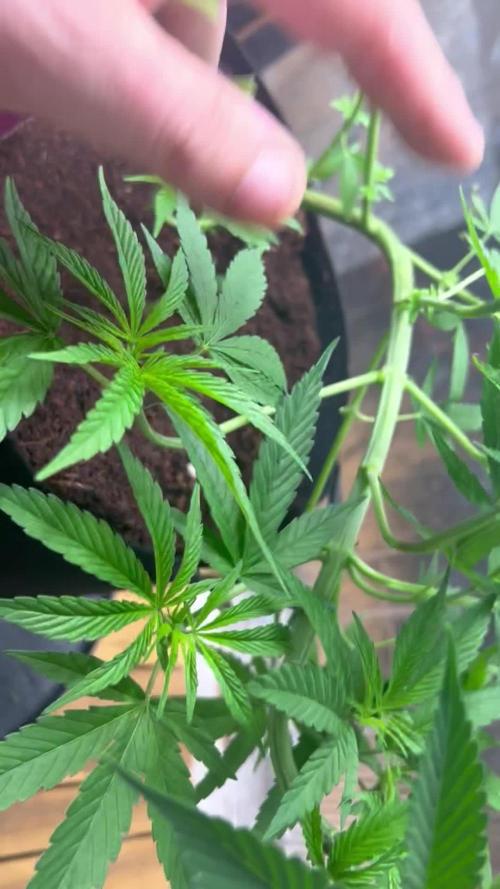
Pflanzen Train abgeschlossen ✔️ jetzt wachsen lassen und biegen 😎💪


Likes
6
Share


@traxxx
Follow
Monday the seeds came and I started 5 blueberry kush autoflower from Nirvana. The plan is to put the best 2 in the grow tent the rest outside in a fabric pot .

Likes
3
Share


@dushi_genetics
Follow
Week 5 Day 7 Flowering Stage.. All plants getting big but got into some stress because one of my AC went off so temperature was a bit high and humidity was also high. But looking nice😊🔥


Likes
14
Share


@Extreme
Follow
Растения продолжают развиваться. Начинаю mine-lining тренировки.
Для контроля влажности в гроубокс установлен увлажнитель воздуха. С автоматическим контролем влажности. Удаётся выдерживать влажность в пределах 30-70%.
Очень радует наблюдать за растениями удаленно через веб-камеру. Приложил видео, когда включается пар, выглядит просто потрясающе, наслаждайтесь со мной.
Наберётся 100 подписок, расшарю трансляцию:-)
Всем добра.

Likes
23
Share


@MadeInGermany
Follow
Hi everyone 🤗.
Welcome to a new diary.
Cuttings were cut and rooted last week 🙂.
Today they were placed in 11 pots in Canna Coco Proffesional +.
Green Buzz Liquids is used for the fertilizer 😀👍.
Made in Germany 🤗.
I looked at the compositions of the individual elements and I am very impressed and excited about him 😎.
Greetings go out to Green Buzz Liqudis, and a big thank you for the support 🙏🏻👍.
Which training methods I will use will be decided spontaneously each day 😃.
I wish you a lot of fun with the diary, stay healthy l and let it grow 🌱.
You can buy this Strain at
https://thecaliconnection.com/seeds/girls-scout-cookies-34.html
You can buy the fertilizer at
https://www.greenbuzzliquids.com/
Type:
Girls Scout Cookies
☝️🏼
Genetics:
GSC Tint Mint
👍
Vega lamp:
2 x Todogrow Led
Quantum Board 100 W
💡
Bloom Lamp :
2 x Todogrow Led
Cxb 3590 COB 3500 K 205W
💡💡☝️🏼
Soil :
Canna Coco Professional +
☝️🏼
Fertilizer:
Green Buzz Liquids :
Organic Grow Liquid
Organic Bloom Liquid
Organic more PK
More Roots
Fast Buds
Humic Acid Plus
Growzyme Big Fruits
Clean Fruits
Cal / Mag
Organic Ph - Pulver
☝️🏼🌱
Water:
Osmosis water mixed with normal water (24 hours stale that the chlorine evaporates) to 0.2 - 0.4 EC. Add Cal / Mag 2 ml per l water every 2 waterings . Ph with Organic Ph - Pulver to 5.8 .

Likes
4
Share


@cangrowz
Follow
Also bisher finde ich sie sehr klein, Aber denke die stecht sich vielleicht noch machen ja Autos im Regelfall dennoch bisher bin ich sehr zufrieden. Die Blütenstempel sind gut am Wachsen. Jetzt mal schon ob sie demnächst die Farbe ändert. 💜

Likes
1
Share

@Daidai
Follow
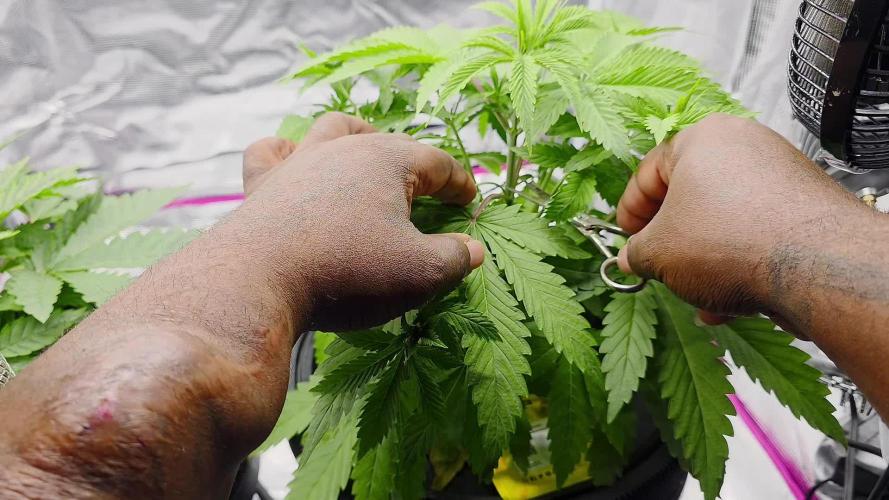
I didnt do a full water change but instead jus topped her off. Plant has been growing at a steady rate. Slowed down after topping. But gave it time added bud clips. 24 hours later plant back to it rappid steady growth.
Likes
46
Share


@MrJones
Follow
OSS Sherbet Moonrocks
🔹⊱╮🔹╰⊰🔹 GROW Started 03.10.24 INFORMATION 🔹╰⊰´🔹⊱╮🔹
🌞Environment - Maintaining 80F and 65%Humidity
🌾Training - The girls are recovering from last week's Pruning and Defoliation,
⚱️2-Gallon 📊6.2 PH
💧 Feeding - Using Horti Bloom and Horti Cal 12-0-0
🌞Medic Grow Smart 8 760 Watts
🕷️ IPM - CannControl from Mammoth and Mosquito Bits as needed
🔹⊱╮🔹╰⊰🔹 PLANT UPDATES 🔹╰⊰´🔹⊱╮🔹
📝 Notes - On 🗓️05.11.24, This week, we are on Auto-Pilot and just Fertigating as needed; the ladies are stacking up nicely, and the leaves have grown back. I am not sure if it is the genetics or the new nutrients; I would like to see less and will evaluate if more defoliation will be needed.
📝Fertigation injects fertilizers into an irrigation system to supply dissolved nutrients to crops.
🗓️05.11.24 Just feeding daily, sometimes twice; today, fed with Hort-Bloom @ 2.7 GRMS Per Gal and Horti-Cal @ 2.5 GRMS Per Gal.
🗓️05.12.24 Just feeding daily, sometimes twice; today, fed with Hort-Bloom @ 2.7 GRMS Per Gal and Horti-Cal @ 2.5 GRMS Per Gal.
🗓️05.13.24 Just feeding daily, sometimes twice; today, fed with Hort-Bloom @ 2.7 GRMS Per Gal and Horti-Cal @ 2.5 GRMS Per Gal.
🗓️05.14.24 Just feeding daily, sometimes twice; today, fed with Hort-Bloom @ 2.7 GRMS Per Gal and Horti-Cal @ 2.5 GRMS Per Gal.
🗓️05.15.24 Just feeding daily, sometimes twice; today, fed with Hort-Bloom @ 2.7 GRMS Per Gal and Horti-Cal @ 2.5 GRMS Per Gal.
🗓️05.16.24 Just feeding daily, sometimes twice; today, fed with Hort-Bloom @ 2.7 GRMS Per Gal and Horti-Cal @ 2.5 GRMS Per Gal.
🗓️05.17.24
╰⊰🔹╰⊰´🔹⊱╮🔹╰⊰🔹╰⊰🔹STRAIN INFORMATION🔹⊱╮🔹╰⊰🔹╰⊰🔹╰⊰🔹⊱╮
Introducing our latest powerhouse, Sherbet Moonrocks, one of our strongest weed strains to date, setting a new bar for potency and effect. A combination of US genetics, Sherbet Cake, and Purple Moonbow create this potent sedative with THC levels above 30% that will take you to celestial bliss.
An exquisite terpene profile offers a tempting treat of sensational fruity tastes, flavors, and aromas that will seduce your mind and body and take you to a serene place of pure tranquility. Ocimene, Caryophyllene, and Limonene are the predominant terpenes; they produce an incredible array of sugary berry fruit flavors with floral hints and spicy undertones.
Growing these feminized seeds is effortless and straightforward regardless of your growing skills, and at harvest time, you will be generously rewarded. Plants will mature to a manageable height with a flowering period of 65 - 70 days and will develop thick, dense buds glossed in thick layers of THC resin crystals packed with indica power that will lure into a deep relaxation. Expect an indoor yield of 600 - 700 gr m2 and outdoor production of over 1 kilo per plant.
Translate

Likes
14
Share


@eldruida_lamota
Follow
Que pasa familia, vamos con la primera semana de crecimiento de estas Gorilla Zkittlez Auto de FastBuds.
Tiene muy buenas reseñas y pues me animé a colocar 5 plantas.
Las 5 semillas una vez germinadas son plantadas directamente en macetas de 7 litros y salieron las 5, 100% de éxito en el ratio.
La tierra que utilizamos que está en la publicación anterior es top croo al mix, aparte alimentamos nuestras plantas con Agrobeta.
Por supuesto el ph se mide en cada riego y se mantiene en 6.2, regando cada 48 horas e intentando mantener la humedad un poco alta al principio.
Las próximas semanas vamos viendo cómo avanzan.
Mars hydro:
Code discount: EL420
https://www.mars-hydro.com/
Agrobeta:
https://www.agrobeta.com/agrobetatiendaonline/36-abonos-canamo
Hasta aquí todo, Buenos humos 💨💨💨


Likes
17
Share


@blazin_skywalker
Follow
Day 18 - This plant's leaves are just so fat and happy. I love how thick and healthy she looks! Trying to decide how I'm going to grow this one.... Maybe a top ✂️?
Day 20 - Gave 3ml of Veg A, Veg B and Coco Cal. Girl is fat and happy!
Likes
3
Share


@GanjaFarmer101
Follow
Smooth trim, last of the first wave of autos this summer - yields are very low but the bud looks great :)
Likes
10
Share


@Hbomb420
Follow
Harvested 1st plant at day 65 it could have gone longer but I needed smoke so it had to go lol!trichomes wer 95% milky with a few amber