


Likes
Comments
Share


@GhostByte
Follow
Buds growing nicely in size. Thrichomes forming on the sugar leaves. Looking nice and frosty!

Likes
5
Share


@BaumeisterBLN
Follow
Die Ladys haben sich hervorragend entwickelt 😄.
Die Lichtintensität wurde von 25 % auf 50 % erhöht, mit einem Abstand von etwa 60 cm zur Krone 👑.
💡PPFD ca. 500
Happy Growing 🙏👋


Likes
6
Share


@CeeJayy420
Follow
Woche 10
Day 64
BW: 5
4l water including:
3ml Bio Grow
3ml Sugar Royal
7ml Bio Bloom
4ml Power Buds
8ml Alga Bloom
3ml Green Sensation
3 ml CalMag

Likes
5
Share


@Jankky
Follow
Plants smell amazing, and seem too like the banana juice. Will continue to use stash blend as well for the next week or two.


Likes
21
Share

@TechDCo
Follow
---
## **The Teresa Palmer Experiments**
### **Week of 20–25 May 2025 | Vegetation Ends, Flower Begins**
---
### **20/05/2025 – Lights On**
**Last week of veg for MS and TF.** Lights
20/05/2025
Lights On!
Last week of vegetation for MS n TF fingers crossed lol
Lights dimmed back to 320watts, slite cannoing.
The Clones are in cynogentics; slowing things up! Opened up a few more air holes. Sprayed with a weak solution of HPFG 0.05%
All looks okay!
"Few more days and the "infection leakage/cancer" the infection literally runs away from Hydrogen Peroxide Food-Grade treatment and leaves the blood brain barrier"
Healing with no-scars!
Me and the plants are healing well! Segwaying!
Lights Off
MS is still looking saggy curly after the transplanting into fresh rockcubes. Turned light back down to 300watts.
The Clones are doing okay after the weak sprayed solution of 0.05% HPFG.
TF is looking vibrant in Quarantine and has recovered from Septoria tritici, she took 1 week longer than MS to show signs of recovery and the transplantion short. Maybe TF; her resilience or immune system isn't as strong: due to her breeders problems picking the best Genetics. Who knows!
Midday:
Great; here’s a **kombucha-based microbial tea recipe** specifically designed to benefit cannabis plants (especially during **veg and early flower**) while being safe and effective. This tea boosts root health, improves nutrient uptake, and strengthens the plant's immune system.
---
### **Kombucha Microbial Tea Recipe for Cannabis (Veg & Early Flower)**
#### **Ingredients:**
* **Non-flavored raw kombucha**: 30–50 ml (2–3 tbsp)
* **Unsulfured molasses (blackstrap)**: 1 tsp
* **Worm castings or high-quality compost**: 1 cup
* **Unchlorinated water**: 2–4 liters
* *(Optional: 1 tsp kelp meal or liquid seaweed for added minerals)*
#### **Instructions:**
1. **Fill a bucket** with 2–4 liters of dechlorinated water.
2. **Add the worm castings or compost** into a mesh bag or stocking and submerge it.
3. **Add the kombucha** and molasses to the water.
4. **Aerate the mixture** using an aquarium air pump and stone for **24 hours** (no more than 36 hours).
* This activates beneficial microbes and keeps anaerobic bacteria away.
5. **Strain and apply** immediately after brewing.
#### **How to Use:**
* **Soil or Coco Drench:** Use once every 1–2 weeks during veg or early flower.
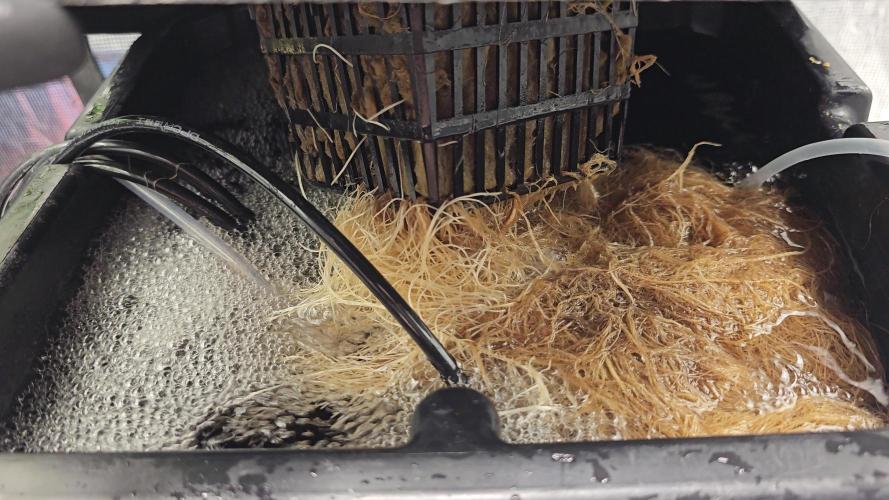
* **Hydroponic Drip/Reservoir:** Only use filtered tea (strain well) and **add at a 1:20 dilution** (e.g., 250 ml tea per 5L reservoir). Ensure high aeration.
* **Foliar Spray (Optional):** Dilute 1:30 and spray during early morning or lights-off time.
---
### **Tips:**
* Don't store the tea — use it fresh.
* Avoid using in late flower to prevent unwanted microbial growth on buds.
* Always monitor pH and reservoir cleanliness if used in hydro.
=
=
=
=
=
=
" I used 50ml of diluted mother juices from the SCOOBY
50ml to 15ltres?Will this be beneficial enough at that ratio? "
You're welcome! Using **50 ml of diluted mother liquid from a SCOBY (Symbiotic Culture Of Bacteria and Yeast)** into **15 liters** of hydroponic nutrient solution is a **gentle, safe starting point** — and yes, it can still offer **beneficial microbial effects** without overwhelming your system.
### Here's what you can expect at that ratio (1:300 dilution):
#### **Potential Benefits:**
* **Mild microbial boost**: Helps seed your root zone with beneficial bacteria and yeasts, supporting plant immunity and nutrient cycling.
* **Low risk**: Very unlikely to disturb pH or oxygen levels in hydro at that concentration.
* **Safe introduction**: Ideal for testing how your plants and system respond before increasing doses or brewing a full compost tea.
### A few tips for best results:
* **Add during veg or early flower** for best microbial integration.
* **Monitor water clarity and root color** over the next few days — healthy roots should remain white or light tan, and the water should stay mostly clear.
* **Smell test**: If the reservoir develops a strong sour or funky smell (like vinegar or yeast), it could indicate overgrowth. In that case, do a partial flush.
### Is it “beneficial enough”?
Yes — as a **microbial nudge**, it’s a great start. For stronger biological impact, you can brew a tea like the one I mentioned earlier, but what you did is safe and should offer mild support without disrupting the balance.
= = = = =
= = = =
= = =
= =
=
21/05/2025
TF and MS are responding beautifully to the 50ml kombucha infusion — their energy is shifting. I gave them a gentle foliar mist today, using a diluted H₂O₂ solution at 0.05%. The lights are on… and so are they. So am I.
"There is so much quiet power in the act of letting go."
I refused to abandon these plant experiments, even when the signs were uncertain, even when growth was slow. And now — they’re beginning to thrive. It’s humbling, and it’s deeply affirming.
When I got sick and chose to continue my healing journey, many people — even family — stepped back. Some gave up on me. But I didn’t.
I chose not to drown in pity. I chose to believe in the process. I chose to stay with myself — and now, just like my plants, I’m beginning to bloom.
It’s a good feeling. A quiet victory. A sacred one.
To be honest; i can't wait to smoke the "Jesus out of these. No chicken eggs to count. All is good amd all is swell!
---
**Sacred Grow Log – 21/05/2025**
**Lights Off – Silence Speaks**
Today, the garden sleeps — and so does the surface, while the unseen stirs beneath.
I’ve increased all nutrients to **veg-phase strength** — the plants have called for more, and I’ve answered. There’s a slight wilting in their posture, and whispers of calcium-magnesium imbalance, like a subtle signal from deep within their cells. It's a language you learn to read with time… like decoding ancient symphonies written in chlorophyll and veins.
I moved things around today. Shifted the layout. Rearranged not just space — but energy.
**TF’s branches have been folded inward** — a ritual of redirection, bending her into a **Freaky Bonsai form**, compact and deliberate. She's not broken — only reshaped. Like fate twisting its limbs to adapt, to survive, to transcend the ordinary.
There’s a strange beauty in distortion. Sometimes the most powerful growth is born through the unnatural — when chaos becomes art.
Nothing in this garden is random. Even the smallest change is a spell cast — and I'm both the scribe and the vessel.
---
Here’s your journal entry reworded for YouTube, keeping it reflective and engaging, while staying within community guidelines and adding a hint of poetic insight:
---
22/05/2025**
**Lights On The Garden Awakens**
The plants are responding beautifully to the kombucha; straight from the mother culture. It’s sharp, alive… almost like vinegar, full of life. There’s a distinct energy shift in the room: subtle but unmistakable.
I’ve considered building a simple setup to start brewing a living tea with worm castings and other natural inputs. But I’m holding off; we’re only about halfway through this grow cycles. Timing matters, and introducing live cultures too deep into the flowering stage could unsettle the balance, especially with pH fluctuations. It’s a delicate dance. Let's get it right now in small stages.
For now, I’ve added another **50ml dose** — just enough to stir the microbial world without tipping the scales.
The plants speak in posture and pulse: and today, their message is clear: *they’re grateful*.
---
**"I’m glad some people still read.
Really read.
Not just skim for a reaction or scroll for the drama.
But sit with the words
Feel the space between the lines
Catch the meaning that isn’t yelling for attention.
In a world where folks jump quick,
Where bandwagons fill fast,
Where opinions echo louder than understanding
It’s rare to find minds that pause.
Minds that ask, *'Is this truth? Or just noise dressed as truth?'*
Minds that don’t just follow faults…
But look for foundation.
So shout out to the ones who read before reacting,
Who think before typing,
Who question the easy answers.
Because awareness like that —
It ain’t loud,
But it’s powerful."**
When we are at our lowest;
We are often alone
that's where inner strength
the fight to keep pushing
When we are at our lowest;
We are alone 😔
The fight continues on;
The weather keeps thrashing
But in my blood the ions now fire
Recovery dwells as cancer expires!
The strength soloms to do the unthinkable.
" I don't think I've stunted them; give it time" - they've been through hell & back!
"What once was; will be againstthe"- not in this grow.
The E-book will beginethe; once we hit flower 🌼.
'Week 1' - will be 'Chapter 1'
I will unload all the information and evidence about;
'The Truth About HP' 🙌
Okay Steve 👍 - show us your plasma filliments!
When I switch MS to flower next week; during the refresh I'll give her the "Hydrogen Peroxide Foodgrade"; '12% 40ml to 5L' soak for only 2hrs this time not 4hrs.
---
**"Quick seguE-
Something unexpected happened during my hydrogen peroxide treatments…
Food-grade; through the ear, nose, even around the eyes and forehead.
I wasn’t aiming for it,
but the first thing to disappear?
Dandruff. Gone. Just like that.
See, most people don’t know;
Dandruff isn’t just dry skin.
It’s a dance of micro-parasites,
feeding off the mites that live on your skin —
a layered ecosystem most don’t see,
but I felt it. I lived it.
Some might call it a coincidence,
but when I brought oxygen into the equation,
those organisms couldn’t hold space anymore.
Modern academics might describe them
as cousins to scabies;
a miniature model of parasitic behavior.
But I call it a quiet cleanse.
Proof that healing works in layers —
the ones you see,
and the ones you don’t even know are there…
until they’re gone."**
It'll also be gone "Coldsaws" and herbbabies
-
_
______________________________________________
24/05/2025
*Teresa Palmer Enters Flower — Riding my Transition very hard* - winks!
**Medium:** Hydro (Recirculating)
**Treatments:** Hydrogen Peroxide Pre-Soak, Organic Feed Transition, Environmental Reset
Into a 27L JerryCan; i De'Eyed'Whied her with my plasma filliments!
''Whied for Business''
- Add your business to 'Whied' - so we can help the small guy flourish! DIY Entrepreneurs CHat together
Today marks the official switch to **flower**—and with it, a new rhythm begins. The ghost of HydroSal still lingers. Though the full flush helped ground the grow, the plants still bear the battle scars: leaf spots and faint signs of infection have begun creeping into the new growth.
But there's hope. We’re introducing **Canna’s Complete Organic Bloom Feed**—fresh, vibrant, and without the haunting murk of old stock solutions. The **HydroSal batch**, left sitting in the cupboard, may have turned rogue. Untreated, unpreserved—perhaps even a breeding ground for bacteria. The evidence is stacking up.
On **Tuesday**, we’ll hit the girls with another **12-hour hydrogen peroxide soak**—this time using a gentler 3% ratio. It’s a calculated play to reset the microbial balance without overwhelming them during this delicate transition.
The older fan leaves are still functional—still converting light, still standing guard. Removing them now could shock the system, stalling growth. For now, they stay.
**Observations:**
* Infection signs in newer growth
* Spotting and residual damage on older leaves
* Vigor returning, but shadowed by tension
**Strategy:**
Stay the course. No panic. No pruning for the sake of panic. Let the feed take hold. Let the hydrogen peroxide do its silent work. If things improve, we’ll stay organic. If not, a reevaluation of the root zone awaits.
---
**The Teresa Palmer Side Note:**
I too have entered a flowering phase. Not one of petals and pistils—but one of clarity. I’m still fighting. Still feeling the sting of past treatments and the ache of misunderstanding. But there’s growth beneath it. There’s renewal.
We don’t always get to start fresh—but we do get to begin again.
---
fresh, vibrant, and without the haunting murk of old stock solutions. The **HydroSal batch**, left sitting in the cupboard, may have turned rogue. Untreated, unpreserved—perhaps even a breeding ground for bacteria. The evidence is stacking up. Just like my body and my bad diet self cleaning routines. The Depressions of a forgotten summer i never had!
On **Tuesday**, we’ll hit the girls with another **12-hour hydrogen peroxide soak**—this time using a gentler 3% ratio. It’s a calculated play to reset the microbial balance without overwhelming them during this delicate transition.
The older fan leaves are still functional—still converting light, still standing guard. Removing them now could shock the system, stalling growth. For now, they stay.
**Observations:**
* Infection signs in newer growth
* Spotting and residual damage on older leaves
* Vigor returning, but shadowed by tension
**Strategy:**
Stay the course. No panic. No pruning for the sake of panic. Let the feed take hold. Let the hydrogen peroxide do its silent work. If things improve, we’ll stay organic. If not, a reevaluation of the root zone awaits.
**The Teresa Palmer Side Note:**
I too have entered a flowering phase. Not one of petals and pistils—but one of clarity. I’m still fighting. Still feeling the sting of past treatments and the ache of misunderstanding. But there’s growth beneath it. There’s renewal.
We don’t always get to start fresh—but we do get to begin again.
____
__
_
25/05/2025
:** *HydroSal’s Fall from Grace & the Bloom Transition.
**Medium:** Hydro (Recirculating)
**Treatments:** Flush, Advanced Nutrients Bloom A+B, Transitioning CalMag sources
---
**Diary Entry:**
Well... the honeymoon with HydroSal is officially over. She promised the world—balanced feeds, clean roots, whispers of a new era—but lately, she’s smelled a bit “off” (literally and metaphorically). Plants were talking. Leaves started showing those tell-tale chlorotic freckles—like a pixelated disease creeping across their emerald faces.
**CalMag? More like CalMaybe.**
I sniffed the stock bottle—yup, something fermented this way came. That bottle’s been shelf-sitting too long and probably died quietly while I was looking at trichomes. Poor thing.
So what did I do?
**Flushed the whole system**—cleansed the sinuses of the root zone with pH’d water like a hydro colonic—and gave them something they’ve been secretly craving: **Advanced Nutrients Bloom A+B**. The girls perked up like they'd just had their first espresso in weeks.
Now, here’s where it gets interesting:
This wasn’t just a feeding adjustment, it was a **nutrient resurrection**.
To tackle the mag deficiency, I’m planning a soft foliar CalMag mist (0.5ml/L) and possibly a micro dose of **Epsom salts** in the reservoir—keep it simple, sulfate sharp.
**Observations:**
* Interveinal yellowing? Present.
* Freckled spotting? Yup.
* New growth still pushing strong? Absolutely.
* Spirits? Weirdly high. Like a fog's lifted.
---
**The Teresa Palmer Side Note:**
Every flush I do, I imagine my own system being purged. The metaphor writes itself. Plants, like people, need time to detox and start over. And just like me, these girls are bouncing back stronger with a new protocol, clean lines, and renewed light.
---
**Side note: Teresa Palmer is now spread eagled - slite pruning of under growth to help her upper top shine - I love the smell of freshly cut leaves/flowers 💐 you know what I mean? Yeah; you know what I mean 😏
P.s all the running I've been doing lately; i need a plunge in a ice bath and some magnesium myself! Knots in my right thigh! Nothing worse!
'I have no monsters in my closet; just weed'
''It's got to be; one of the cleanist magnesium deficiencies i have ever seen; at least it has that going for it''
- Hey man; you seem slightly insecure today! - than normal!
I'm on my own dying!
- Dying of Laughter i bet; but that's also true; being on the edge of life; makes one crack-up. What if 'this is it' ? - suddenly anxiety doesn't exist anymore; just like' Michael Jackson - ''This is it''...... - here i stand...., i'm in the light of the world............................... i feel grand......and this hope......., that i feel......, yes i know, yes for-sure that is real............. I never told....... a real word... about you; to no-one, being in the light, isn't my plan....., but if this boat..... has to sink......, then who-cares what i do, never-mind what i think! .......- I'm spilling my heart out to help you........, but i don't see no-hands...........because i am alone,......but i am not lonely........i have me......... the good company, its just me.
- In This world isn't one of 'Harry Porter', no magic script to follow; i have to find my own way in health and healing and i sure do not trust the governments way of appealing, for money for healing, to make you ill again, while reeling, the money pit, they sit and print the money,...l. so ask yourself; what are they appealing? Booom! it have in constantly in the spot-light, everyday on the news, adverts, you see it everywhere? ...everywhere like bacteria and parasites jumping hitchhikes on fungicides that changes the molecule structure of DNA! The end is near!
////////////////////////////////// //////////////////////////____
**Entry Title:** *Teresa Palmer Enters Flower — Riding the Transition*
**Date:** 26/05/2025
**Grow Phase:** Early Flower (Transition)
**Medium:** Hydro (Recirculating)
**Treatments:** Hydrogen Peroxide Pre-Soak, Organic Feed Transition, Environmental Reset
---
**Diary Entry:**
**Lights On!**
The morning greeted a garden in recovery. The new **organic feed** is settling in well—plants are responding with signs of revival. The leaf stress is stabilizing, and new growth has a spring to it. Everything feels like it's leaning toward the light again.
**Monkey Slapz (MS):**
The light intensity has been nudged up to **420 watts**. MS is looking dense and bushy now. We’ve officially entered the **transition to flower**, though she’s taking her sweet time with the flip—deliberate, cautious. We’re helping the process along by **reducing light exposure by 1 hour daily**—a gentle nudge into bloom.
**The Clones:**
The baby clones are flashing fresh signs of growth. Once they gain a bit more strength, they’ll head back into **cyanogenics/propagation** for preservation. If all goes well, this cohort should be enough to fuel **next year’s entire grow cycle**. (Yes, we plan ahead—and we clone for a reason!)
**Observations:**
* Signs of feed uptake and bounce-back across all strains
* MS is bushy and stable; light reduction in effect
* Clones recovering well; root development expected next
---
**The Teresa Palmer Side Note:**
Reinvention doesn’t always look flashy—it’s often slow, hidden in the rhythm of light shifts and silent cell growth. We’re in transition. And like the plants, I’ve learned: the slow bloom is often the strongest.
Let’s grow.
---
26/05/2025
Just making it clear for people! Its Ai edited not Ai creativity!
タイザー = Tai-za - Tizer
My new dogs name!
///////////////////////////////////////////////
Some HIStory on TF:
Gorilla Glue #4 Marijuana Strain
4.6 356 votes| 238 reviews
Strain Information
Indica Dominant Hybrid Strain Indica Dominant Hybrid - 60% Indica / 40% Sativa
THC: 32%
Gorilla Glue #4, also known as “Original Glue,” “Gorilla Glue” or “GG#4,” is a slightly indica dominant hybrid strain (60% indica/40% sativa) created through crossing the infamous Chem's Sister X Sour Dubb X Chocolate Diesel strains. This celebrity strain is a favorite of patients and breeders around the world for its super heavy effects and long-lasting high that will totally knock you flat out. The high comes on with a building effect, slowly filling your mind with a lifted euphoria and light creative energy. As your mind lifts higher and higher into happiness, an almost glue-like sense will kick in, leaving you mentally stuck in this blissful state and without a care in the world. This effect will soon spread throughout the rest of your body, leaving you hopelessly couch-locked and immovable for hours on end. With these hard-hitting effects and its super high 18-32% average THC level, Gorilla Glue #4 is often said to be perfect for treating ADD or ADHD, Bipolar Disorder, chronic pain, depression, chronic fatigue, insomnia, appetite loss or nausea and migraines or headaches. This bud has a spicy chemical chocolate flavor with a heavily diesel exhale that turns slightly sweet the more that you toke. The aroma follows the same profile, although with a heavy peppery pungency to it, too. Gorilla Glue #4 buds have small rounded forest green nugs with furry amber hairs and a coating of tiny amber-tinted white crystal trichomes that are dripping with sweet sticky resin.
---
Conclusion: My anszwer
Much to my surprise, the first time I tried this strain, it *absolutely reeked* — duct tape, wood glue, and that unmistakable Gorilla Glue funk. It even left that tacky residue on my fingertips, like what you’d get after peeling off heavy-duty duct tape. The taste is just as intense: a peppery, chemical-laced chocolate diesel blast that clings to the throat, often leaving me coughing and a little phlegmy. The air it leaves behind is thick with that old-school, nose-wrinkling stank. It’s unapologetically loud.
This is *Back to the Future #2* by Tastebudz — a feminized strain created by going “back in time,” tracing the genetic lineage of *Future #1*, and selecting parent strains that expressed the most desirable traits: rich terpene profiles, potent effects, resilient structure, and heavy resin production. The result is a carefully bred evolution — forward-thinking, but deeply rooted in powerful old-school genetics.
But here’s the real story: *this is the only strain I’ve ever tried that actually helps me run*. And I mean that literally — I use it to aid my running routines. It’s become essential to my treatment plan for brain cancer. I live with chronic nerve pain, inflammation, and a heavy, oppressive mental fog that can make even walking feel like wading through static. This strain? It clears the storm. While it knocks most people out, for me, it *activates*. It doesn’t just dull pain — it opens up a space in my head where I can *move*. Without it, I honestly don’t think I could run at all. With it, I can lace up, breathe, and push through the haze.
Mentally, it flattens the chaos — that frantic, scattered, ADHD-like static that’s always buzzing. It gives me calm, clarity, and a softened edge on the pain. And physically, it lets me break through barriers I wouldn’t otherwise reach. In small to moderate amounts throughout the day, it doesn’t sedate — it *liberates*. I don’t use it to get high — I use it to *show up*, to train, to fight back against something that’s trying to slow me down.
It’s stony, yes. It’s intense. But for me, it’s also the cleanest clarity I’ve ever found in this battle — and easily one of the most important strains I’ve ever encountered. Not just a favorite — a lifeline.
Likes
28
Share


@OrganicPower
Follow
Week 6 flower, half way there! Buds are starting to fill in now and getting some decent frost. A couple of tops are getting more light than others, and fattening a bit more and looking real nice. It looks like there is some purple starting to come out at the tops. Also spotted some discolouration on a few leaves closest to the light, so I turned the one light down to 60-75%, no need to push it at this point and burn her up! She will go as fast as the soil and environmental conditions will allow her to. Hand watered in Gaia Green Soluble Seaweed Extract 0-0-17, otherwise water drip is running on same schedule. Just using straight tap water that sits in a 30 gallon reservoir with a submergible water pump running 24/7 breaking surface and aerating water. Water comes out the tap @ 7ph and less than 15ppm. So I don’t do nothing to it, I drink it:) Thanks for the view 🤜 Have a great week!

Likes
6
Share


@FloGrowGardens
Follow
This week was great I am looking forward to watching her continue to bloom until her harvest day getting closer
Likes
30
Share


@baddawgLLL
Follow
End of week 5
hello growers !!As you can see, the plants have grown so fast in the past two weeks,Perfect weather brings heat and plenty of light, Summer is really coming.
I was still full of novice caution for my first planting, I didn't let my plants rain, and whenever the weather forecast told me of possible rainfall, I put the plants under the canopy I had built, which also caused a small accident😅😅The canopy collapsed, and plastic film covered the top of the plant, suffocating the leaves at the top a little.But it didn't matter, the girls quickly recovered.
The pests seem to be suppressed, and this week I also noticed that the plants started to appear pistils, but very few, and I think I will start switching to the flowering period in the sixth week😍Yes! Blossoms!!!
Now as long as you are close to the plant, you can smell a strong smell, which is a delicate fragrance with a little bit of raw pineapple,I repeatedly recognized and sniffed this plant,then this pineapple flavor is indeed there😋(Help, I'll really smell the plants all the time😂)
The leaves were somewhat dense, obscuring the light for the side branches, and now there were five main bud spots, so I did some pruning and removed some of the bottom leaves and the middle leaves that were too big👌
OK got go
see you guys next weekend
Likes
10
Share


@DrPredictor
Follow
Harvested the first plant and let her dry. Now I'm trying to cure the buds (updates about taste and effects soon). I let the second plant still grow for another week and gave her 2 days of darkness update soon...
I'm really happy about the result of the first plant. Never thought I get so much gramm out of the first plant. Buds are really dense at the top and look really good. The strain could have a little bit more trichomes. But I'm not complaining, because it was easy to grow and I recommend this strain for every beginner, who want a stealth and easy to grow plant. I need to say, that after 2 weeks in flowering the plant isn't that stealth anymore 😅 so watch out what you doing.
Update: Plant 2 is now harvested. Got 45 gramm out of her. I had to hang her in another room, where the airhumidity is lower than my actual growing room, because on a view spots she was wet and rotten (I .threw the affected buds away). I trimmed her wet. I have noticed on one branch she got a view bananas., which I didn't see during the grow :(. So she also had a view seeds... But I'm happy about the result :D
For everyone who trys this strain --> good luck and happy growing.

Likes
6
Share


Likes
23
Share

@DE_BW
Follow
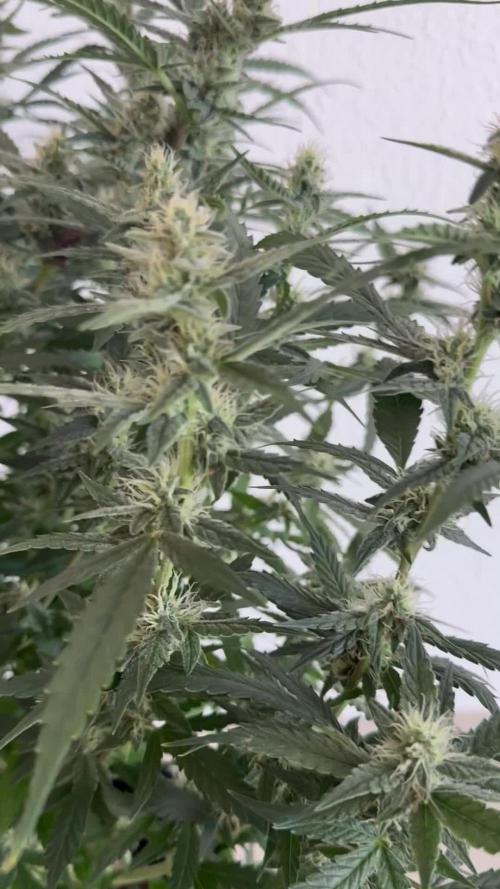
Week 4 of flowering and the plant is still building structure rather than real bulk — bud development looks a bit underwhelming so far, except for the main cola where Gorilla genetics are starting to show. The plant remains extremely healthy with a massive number of bud sites across the canopy. Planning a more aggressive defoliation this week to improve light penetration and prepare for proper bud stacking in the coming weeks.
Likes
13
Share

@ThatsmyGrow
Follow
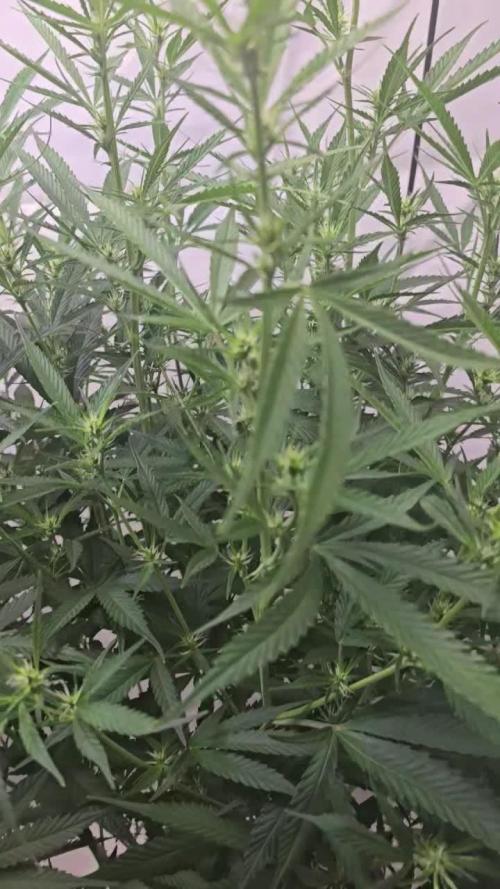
🌸 Week 7 – Gorilla Cookies Auto Pheno Hunt
Another week has passed and flowering is now in full swing across all 6 phenos 👀🔥
The differences between the plants continue to grow, and it’s becoming easier to see which phenos have the potential to become real standouts by harvest time.
📈 Current observations:
Pheno #1 and #6 have finally started to catch up and are now slowly building buds as well 🌸
Pheno #5 continues to dominate the tent and has stretched to an impressive 130 cm
The flower development on Pheno #5 is especially promising, with some bud sites already suggesting the potential for 25 cm+ colas if everything continues as planned 🔥
Pheno #2 and #6 are being overshadowed by the larger phenos and are clearly falling behind in overall size and vigor
The structural differences between the phenos are now more obvious than ever, with some focusing on height while others remain more compact and bushy
💡 Environment & setup:
The grow has now reached its current limits in terms of space and lighting:
Light fixture raised to its maximum height
Light intensity increased to 80%
Summer temperatures pushing the tent up to around 32°C ☀️
Relative humidity averaging around 67%
Despite the higher temperatures, the plants are still pushing forward and stacking flowers nicely. The next few weeks will be all about bud development, density, and resin production.
🏆 At the moment, Pheno #5 is definitely demanding attention, but there is still plenty of time for surprises. Sometimes the biggest plant doesn't end up being the best one, and that's exactly what makes a pheno hunt so exciting.
💬 Which pheno do you think will come out on top when harvest day arrives?


Likes
42
Share


@TerpTurtle
Follow
12 day dry @ 58-63RH & 60-66F in blacked out dry tent | Glass Jar Cure
LOUD N STANKY, opening a jar gives you the duck face funk face
Early taste test & this Bud KOs leaving you in major terp sweats! Hitting like a Sumo wrestler sitting on you tickling all over! Flower hits with overwhelming squeeze & flavor like drinking a smoothie!
Breaks down chunky, greasy & has a vivivd dark purple color.

Likes
144
Share


@roro_204
Follow
I received the clones from An out of province breeder.
It reached me after three days of driving on the road with no light. Their future was not certain.
I didn’t think I would need that many fans for the clones because they are so tiny, I figured they didn’t need that much maintenance.
I was 100% wrong when I’m working with this many plants.
I ended up getting mild mildew on top of the soil on the first week because there was barely any air circulation.
At this point I didn’t have any Ventilation put up yet. And one fan on the floor. I ended up installing three fans in one room. No issues
Likes
62
Share

@Hologram
Follow
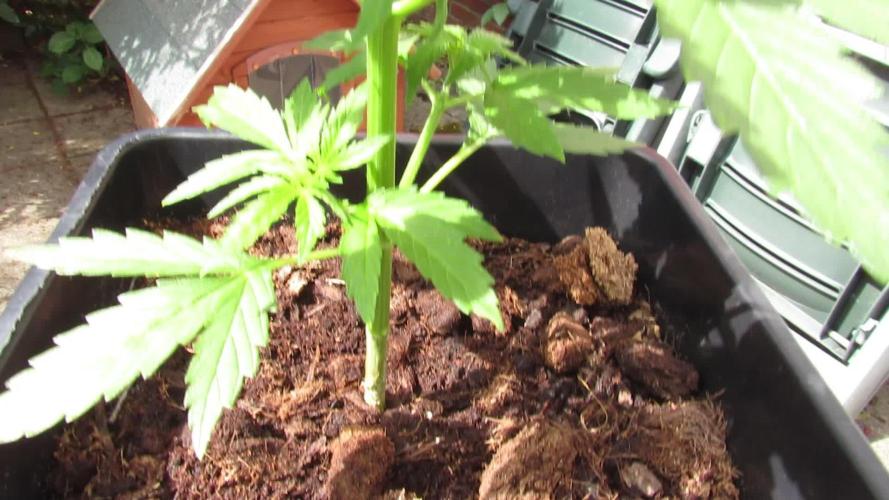
HELLFIRE AUTO is becoming a woman! 👏
I already see pistels..😍👌
So NOW you all can all safely 'catcall' her.. without being a pedo 😼👍 (girls are cute, women are beautiful, #justsaying 😸)
just kidding ofcourse, its not imp., sun is finally shining and so is my mood too..(just having a lil' heatstroke i guess )
I have given her some flower nutes yesterday (plagron powerbuds, biocannaflores, and boost)
I give her some nutes every other day.👍
This weekend was very cold for the fire to burn like she wanted...(14-15C.. so she was on windowsill in side this weekend when the winds started up..)
But she is still sizzling bc she has doubled in size!
she is now on garden table so the fire can turn up again🙌
I removed the lowest branch and leaves bc those are useless..
Happy growing for all ✊
***KISS!growtechnique: Keep It Simple, Stupid!
PS: Tip for everyone: use different browsers for GD (i use at least 3..)
some browsers dont play videos and some browsers dont show emoticons.. and some browsers are just wack!👊

Likes
16
Share


Likes
24
Share

@RealGrowDiary
Follow
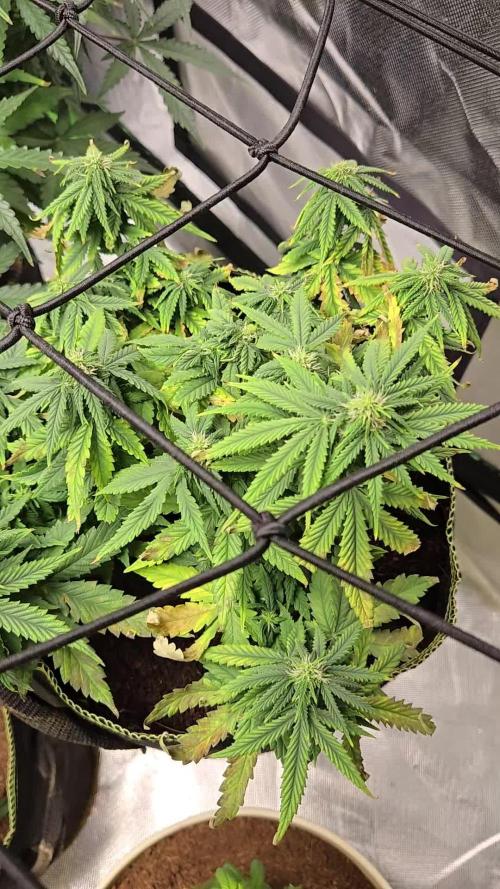
Day 56
This plant looks so small, because i High stressed them, im still giving them a Chance but they are so smalltalk that they need weeks to recover , and if in 2 weeks the plant dont Show any signs of getting flowery then i will cut her.
Some week or 2 stopped, because of The Training.
