The Grow Awards 2026 🏆
Processing
Likes
Comments
Share
Likes
43
Share
@Coopmc
Follow
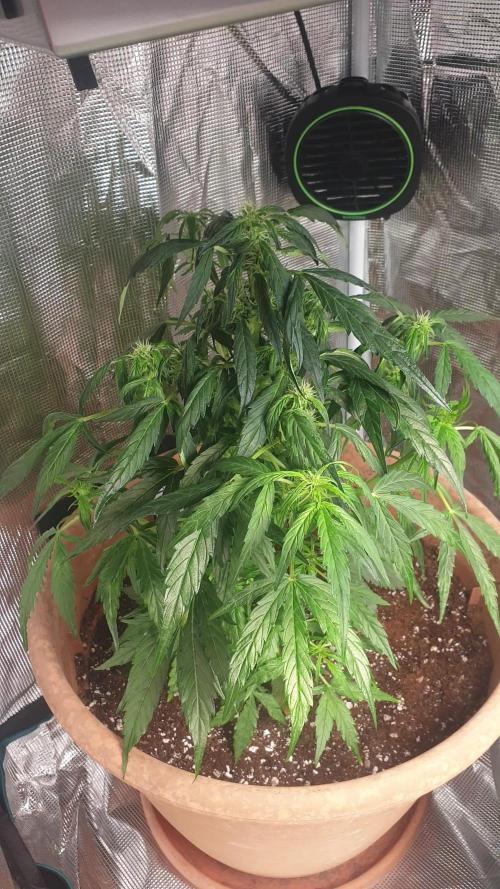
Man I’m so excited!! Oh yea ! A little fruitie and a bit Funky!!
Likes
4
Share
@Achim026
Follow
Pflanzen jetzt in der ersten Blüten woche bzw. In der vorblüte wachsen sehr schnell und gut bin sehr zufrieden. Auf dem Balkon ist es einfach anzubauen.
Likes
9
Share
She has performed very good with the lst method, nice plant, fast growth, quality flowers, it's a very good choice for everyone who's looking for a good quality strain at affordable prices. Very nice genetic, this phenotype concretely has a very sweet and floral terps. You can check the other 2 phenos of ak420 here at my page
Likes
12
Share
@gamberro
Follow
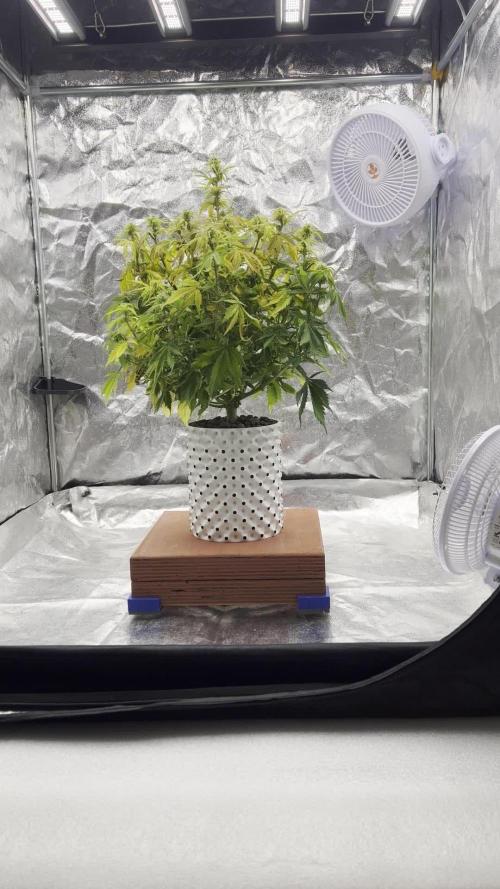
Things seem to be progressing well overall, buds are fattening up nicely and you can clearly see pistils gradually turning brown with more and more trichomes appearing. The smell situation is interesting: not much odor around the tent itself, but when I open it up you definitely get that classic Northern Lights smell, very piney and earthy. It's not overwhelming yet but it's there. Now the bad news: as you can see in the photos, she's self-pollinated. I'm seeing the first seeds forming in some calyxes. I'm hoping it's just a few and won't impact the harvest too much, but in the worst case I'll just use the whole crop for hash. The hermie issue from previous weeks finally caught up with me. Environment has been pretty stable this week. Temps sitting around 21-24°C during lights on, dropping to high teens at night (sometimes hitting 17°C). Not ideal but the NL genetics are handling it fine. Humidity has been bouncing between low 40s and mid 60s with one spike to 66%, probably from watering and humidifier refill. VPD has been in the 1.0-2.0 kPa range most of the week, which is acceptable for mid-late flower. PPFD stayed steady around 640 during lights on, and CO2 is just ambient as usual with the typical spikes here and there. Feeding this week was a bit all over the place as I'm trying to find the right balance. On Mon 13th I gave her 1.5L with full bloom feed: Bio-Bloom, Bio-Grow, Top-Max, CalMag, SUPERthrive and Acti-Vera at pH 6.30 and EC 0.95 mS/cm going in. Runoff came out at EC 0.93 mS/cm and pH 6.11, so pretty clean. On Fri 16th I went lighter with just 1.5L of Alg-A-Mic (3 ml/L) and CalMag (0.3 ml/L) at pH 6.16 and EC 0.26 mS/cm, didn't get any runoff that time. Then today (Sun 19th) I ramped it back up with 1.5L of the full mix: Bio-Bloom (4 ml/L), Bio-Grow (4 ml/L), Top-Max (4 ml/L), CalMag (0.5 ml/L), SUPERthrive (0.27 ml/L), Acti-Vera and Alg-A-Mic at pH 6.20 and EC 1.60 mS/cm. Runoff came back at EC 1.70 mS/cm and pH 6.20, so the medium is holding a bit more salts than what I'm putting in but nothing crazy. Visually she looks healthy apart from the seed situation. Leaves are a nice green with no signs of deficiencies or burn. The buds are stacking well and frost is definitely coming in on the sugar leaves and bud tops. Structure is still tight and compact with all the main tops sitting at roughly the same height. Overall I'm cautiously optimistic. The hermie/seed issue is a bummer but as long as it doesn't get out of control I should still get a decent harvest. She's bulking up, staying healthy, and handling the cold temps without drama. Winter is here but she's not impressed, just keeps on growing.
Likes
18
Share
Green light is radiation with wavelengths between 520 and 560 nm and it affects photosynthesis, plant height, and flowering. Plants reflect green light and this is why they appear green to our eyes. As a result, some growers think that plants don’t use green wavelengths, but they actually do! In fact, only around 5 – 10% of green light is reflected from leaves and the rest (90 – 95 %) is absorbed or transmitted to lower leaves [1]. Green wavelengths get used in photosynthesis. Chlorophyll pigments absorb small amounts of green wavelengths. Light that doesn’t get absorbed is transmitted to leaves that are shaded out from direct light. This means that leaves at the bottom of the canopy get more green light than leaves at the top. A high proportion of green wavelengths compared to other colors tells lower leaves that they are being shaded out, so they are able to react accordingly. Lower leaves may react by opening or closing their stomata or growing longer stems that help the leaves reach brighter light [1, 2, 3]. When it comes to growing cannabis, many cultivators are interested in the quality of light used for the flowering stage. In many plants, flowering is regulated by two main photoreceptors: cryptochrome and phytochrome. Both photoreceptors primarily respond to blue light but can also respond to green, although to a lesser extent. Green can accelerate the start of flowering in several species (although cannabis has yet to be tested) [1, 4, 5]. However, once flowering has begun, it’s important to provide plants with a “full spectrum” light that has high amounts of blue and red light, and moderate amounts of green, in order for photosynthesis to be optimized. Green light mediates seed germination in some species. Seeds use green wavelengths to decide whether the environment is good for germination. Shade environments are enriched in green relative to red and blue light, so a plant can tell if it is shady or sunny. A seed that senses a shaded environment may stay dormant to avoid poor growing conditions [1]. Some examples of plant species where researchers have documented this response are: ryegrass (a grass that grows in tufts) and Chondrilla (a plant related to dandelion) [1, 6]. Although green wavelengths generally tell plants NOT to germinate, there are some exceptions! Surprisingly, green wavelengths can stimulate seed germination in some species like Aeschynomene, Tephrosia, Solidago, Cyrtopodium, and Atriplex [1, 6, 7]. Of course, light is not the only factor affecting seed germination – it’s a combination of many factors, such as soil moisture, soil type, temperature, photoperiod, and light quality. When combined with red and blue light, green can really enhance plant growth [1, 8]. However, too much green light (more than 50% of the total light) can actually reduce plant growth [8]. Based on the most current research, the ideal ratio of green, red, and blue light is thought to be around 1:2:1 for green:blue:red [9]. When choosing a horticultural light, choose one that has high amounts of blue and red light and moderate amounts of green and other colors of light. Not many studies can be found about the effect of green light on cannabis growth or metabolism. However, if one reads carefully, there are clues and data available even from the very early papers. Mahlberg and Hemphill (1983) used colored filters in their study to alter the sunlight spectrum and study green light among others. They concluded that the green filter, which makes the environment green by cutting other wavelengths out, reduced the THC concentration significantly compared to the daylight control treatment. It has been demonstrated that green color can reduce secondary metabolite activity with other species as well. For example, the addition of green to a light spectrum decreases anthocyanin concentration in lettuce (Zhang and Folta 2012). If green light only reverses the biosynthesis of some secondary metabolites, then why put green light into a growth spectrum at all? Well, there are a couple of good reasons. One is that green penetrates leaf layers effectively. Conversely red and blue light is almost completely absorbed by the first leaf layer. Green travels through the first, second, and even third layers effectively (Figure 2). Lower leaf layers can utilize green light in photosynthesis and therefore produce yields as well. Even though a green light-specific photoreceptor has not yet been found, it is known that green light has effects independent from the cryptochrome but then again, also cryptochrome-dependent ones, just like blue light. It is known that green light in low light intensity conditions can enhance far red stimulating secondary metabolite production in microgreens and then again, counteracts the production of these compounds in high-intensity light conditions (Kim et al. 2004). In many cases, green light promoted physiological changes in plants that are opposite to the actions of blue light. In the study by Kim et al. blue light-induced anthocyanin accumulation was inhibited by green light. In another study it has been found that blue light promotes stomatal opening whereas green light promotes stomatal closure (Frechilla et al. 2000). Blue light inhibits the early stem elongation in the seedling stage whereas green light promotes it (Folta 2004). Also, blue light results in flowering induction, and green light inhibits it (Banerjee et al., 2007). As you can see, green light works very closely with blue light, and therefore not only the amount of these two wavelengths separately is important but also the ratio (Blue: Green) between these two in the designed spectrum. Furthermore, green light has been found to affect the elongation of petioles and upward leaf reorientation with the model plant Arabidopsis thaliana both of which are a sign of shade avoidance symptoms (Zhang et al. 2011) and also gene expression in the same plant (Dhingra et al. 2006). As mentioned before, green light produces shade avoidance symptoms which are quite intuitive if you consider the natural conditions where the plants grow. Not all the green light is reflected from the highest canopy leaves in nature but a lot of it (50-90%) has been estimated to penetrate the upper leaves at the plant level ((Terashima et al., 2009; Nishio, 2000). For the plant growing in the understory of the forest green light is a signal for the plant of being in the shade of a bigger plant. Then again, the plants growing under unobstructed sunlight can take advantage of the green photons that can more easily penetrate the upper leaves than the red and blue photons. From the photosynthetic pigments in higher plants, chlorophyll is crucial for plant growth. Dissolved chlorophyll and absorb maximally in the red (λ600–700 nm) and blue (λ400–500 nm) regions of the spectrum and not as easily in the green (λ500–600 nm) regions. Up to 80% of all green light is thought to be transmitted through the chloroplast (Terashima et al., 2009) and this allows more green photons to pass deeper into the leaf mesophyll layer than red and blue photons. When the green light is scattered in the vertical leaf profile its journey is lengthened and therefore photons have a higher chance of hitting and being absorbed by chloroplasts on their passage through the leaf to the lower leaves of the plant. Photons of PPFD (photosynthetic photon flux density) are captured by chlorophyll causing an excitation of an electron to enter a higher energy state in which the energy is immediately passed on to the neighboring chlorophyll molecule by resonance transfer or released to the electron transport chain (PSII and PSI). Despite the low extinction coefficient of chlorophyll in the green 500–600 nm region it needs to be noted that the absorbance can be significant if the pigment (chlorophyll) concentration in the leaf is high enough. The research available clearly shows that plants use green wavelengths to promote higher biomass and yield (photosynthetic activity), and that it is a crucial signal for long-term developmental and short-term dynamic acclimation (Blue:Green ratio) to the environment. It should not be dismissed but studied more because it brings more opportunities to control plant gene expression and physiology in plant production. REFERENCES Banerjee R., Schleicher E., Meier S. Viana R. M., Pokorny R., Ahmad M., Bittl R., Batschauer. 2007. The signaling state of Arabidopsis cryptochrome 2 contains flavin semiquinone. The Journal of Biological Chemistry 282, 14916–14922. Dhingra, A., Bies, D. H., Lehner, K. R., and Folta, K. M. 2006. Green light adjusts the plastic transcriptome during early photomorphogenic development. Plant Physiol. 142, 1256-1266. Folta, K. M. 2004. Green light stimulates early stem elongation, antagonizing light-mediated growth inhibition. Plant Physiol. 135, 1407-1416. Frechilla, S., Talbott, L. D., Bogomolmi, R. A., and Zeiger, E. 2000. Reversal of blue light -stimulated stomatal opening by green light. Plant Cell Physiol. 41, 171-176. Kim, H.H., Goins, G. D., Wheeler, R. M., and Sager, J. C. 2004.Green-light supplementation for enhanced lettuce growth under red- and blue-light emitting diodes. HortScience 39, 1617-1622. Nishio, J.N. 2000. Why are higher plants green? Evolution of the higher plant photosynthetic pigment complement. Plant Cell and Environment 23, 539–548. Terashima I., Fujita T., Inoue T., Chow W.S., Oguchi R. 2009. Green light drives leaf photosynthesis more efficiently than red light in strong white light: revisiting the enigmatic question of why leaves are green. Plant & Cell Physiology 50, 684–697. Zhang, T., Maruhnich, S. A., and Folta, K. M. 2011. Green light induces shade avoidance symptoms. Plant Physiol. 157, 1528-156. Wang, Y. & Folta, K. M. Contributions of green light to plant growth and development. Am. J. Bot. 100, 70–78 (2013). Zhang, T. & Folta, K. M. Green light signaling and adaptive response. Plant Signal. Behav. 7, 75–78 (2012). Johkan, M. et al. Blue light-emitting diode light irradiation of seedlings improves seedling quality and growth after transplanting in red leaf lettuce. HortScience 45, 1809–1814 (2010). Kasajima, S., et al. Effect of Light Quality on Developmental Rate of Wheat under Continuous Light at a Constant Temperature. Plant Prod. Sci. 10, 286–291 (2007). Banerjee, R. et al. The signaling state of Arabidopsis cryptochrome 2 contains flavin semiquinone. J. Biol. Chem. 282, 14916–14922 (2007). Goggin, D. E. & Steadman, K. J. Blue and green are frequently seen: responses of seeds to short- and mid-wavelength light. Seed Sci. Res. 22, 27–35 (2012). Mandák, B. & Pyšek, P. The effects of light quality, nitrate concentration and presence of bracteoles on germination of different fruit types in the heterocarpous Atriplex sagittata. J. Ecol. 89, 149–158 (2001). Darko, E. et al. Photosynthesis under artificial light: the shift in primary and secondary metabolism. Philos. Trans. R. Soc. B Biol. Sci. 369 (2014). Lu, N. et al. Effects of Supplemental Lighting with Light-Emitting Diodes (LEDs) on Tomato Yield and Quality of Single-Truss Tomato Plants Grown at High Planting Density. Environ. Control Biol. 50, 63–74 (2012).
Likes
Comments
Share
The grow was smooth, employed some new techniques when growing and they performed well! Nice bush plants
Likes
151
Share
@BioBuds
Follow
This Xtrakush keeps surprising. What a vigorous plant it's a pleasure to grow. All week we've seen huge bud formation and shes filling out. Only the last day growth has stunted a little. I think it was heat and I was pushing the light to its max. She seems to recover and I might have lost a day or two of growth. Her roommate, the Orange Hill Special, outperformed her a little in bud development. It was my mistake and this sort is made to grow outdoors in N European conditions. When we push for the limit, it's logical we find or sometimes go over the edge. Thank you for checking in this week, Im getting more and more impatient to see these plants develop and the harvest. Hug Bud
Likes
209
Share
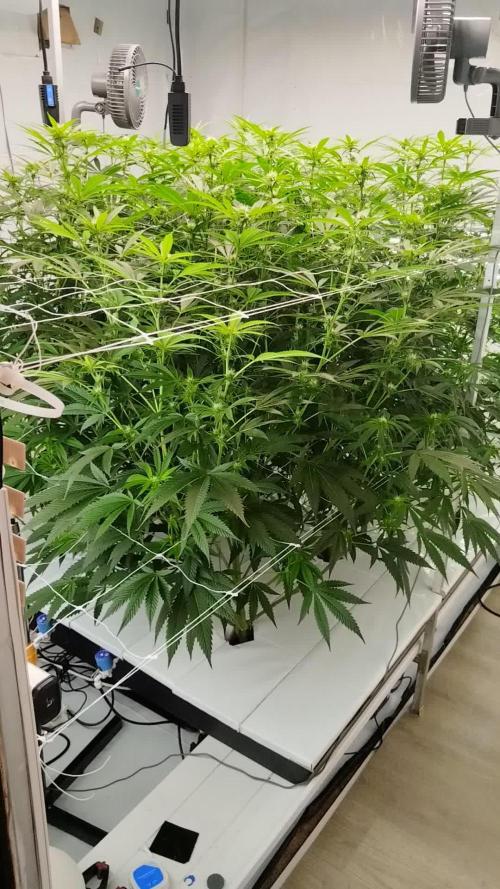
Day 60 for the 54 plant grow. 42 different strains of photoperiods and 12 different autoflower strains in the: 1680D THICK CANVAS MATERIAL AND DIAMOND DESIGN MYLAR MARS HYDRO 8X8 GROW TENT WITH THE NEW MARS HYDRO FC-E6500, MARS HYDRO FC4800 AND MARS HYDRO TSW2000 and green buzz all organic/vegan fertilizers🤘 The girls are loving their home and everything is doing good and looking pretty nice and getting bigger👍 BREEDERS AND SEEDS: DIVINE SEEDS: MAZAR, OPIUM, WHITE WIDOW, OG KUSH, PABLO ESCOBAR, DIVINE INDICA. AUTO WHITE WIDOW AUTO PABLO ESCOBAR AUTO WHITE RUSSIAN AUTO FRACTAL AUTO MONTREAL AUTO OPIUM AUTO KABUL AUTO MAZAR. WEEDSEED EXPRESS: GREEN CRACK, GHOST TRAIN HAZE, LITHIUM OG, CHEESE. DOCTORS CHOICE: DC KUSH, AUTO NIAGARA, AUTO ROCK MACHINE. EXOTIC SEEDS: HIPPIE BERRY, MALASANA GELATO, EXOTIC ANIMAL. GENE/MEME SEEDS: BLACK HELL. ORIGINAL SENSIBLE SEEDS: PURPLE PUNCH COOKIES, WEDDING CAKE, PURE KUSH, GORILLA COOKIES. SWEET SEEDS: BLACK JACK, GORILLA GIRL, SWEET ZKITTLES. EMERALD TRIANGLE SEEDS: GORILLA GLUE, MASTODON KUSH. SEEDSMAN SEEDS: BLACK SUGAR, PEYOTE FORUM, PEYOTE WIFI, BADAZZ COOKIES OG, PURPLE GHOST CANDY, STRAWBERRY BANANA GRAPE, L.A. PEYOTE KUSH, PEYOTE WIFI CBD, FUEL DOG, CRITICAL PURPLE KUSH. AMSTERDAM MARIJUANA SEEDS: GIRL SCOUT COOKIES EXTREME, GREEN CRACK. QUEBEC CANNABIS SEEDS: BRUCE BANNER, GREEN CRACK, QUEBEC CBD 20:1. I 💚 GROWING MARIJUANA: SKYWALKER OG, BANANA KUSH, BLUEBERRY CBD. FOR EVERYTHING MARS HYDRO VISIT: www.mars-hydro.com PROMO CODE: rocknroll VISIT THE ALIEXPRESS STORE: @marshydro_aliexpress2 Instagram: @marshydropenny https://youtube.com/channel/UChU5ZWwNi-DvnO3oWVU3ceA https://greenbuzzliquids.com/ #greenbuzzliquids @GreenBuzzLiquids https://greenbuzzliquids.com/en/shop/ PROMO CODE: rocknroll https://www.youtube.com/watch?v=8hEqyS1jPpI https://growdiaries.com/diaries/112437-grow-journal-by-rock-n-roll-randy/week/593118 Thanks for taking the time to read and check out my shit🤜🤛 New FC-E6500 Led Grow Light-FC-E6500 grow light with 3978pcs OSRAM BridgeLux Diodes & Moso Driver, market-leading PPF 2.7 µmol/J, Max 2.5g yield/watt with 30% higher Average PPE, more cost-effective compared with other same type lights.Only consumes 650W, perfectly cover 5x5ft (personal), 4x4ft (commercial) grow space.Innovative Precise Uniform Lighting-Built-in removable bars interval & dimmability enable the exact & dynamic PPFD control over each of the plant growing stages, FC-E6500 detachable bars deliverSuperior Heat Dissipation: Real Aluminum heatsink together with 6 slim profile passive cooled bars (THINNER & LARGER surface) and detachable Meanwell Driver, create less heat, save 50% energy than other old grow lights! Driver can be mounted remotely on the side of a grow tent/rack or on an adjacent wall to remove heat from grow space.Full Spectrum UV IR LED: With Yield Max spectrum (660nm Osram enhanced Deep Red,2800k-5000k,730-740nm IR,380-410nm UV LEDs), Average PPFD FC-E6500 LED grow lamp enable cultivators to produce Density Buds, perfect for full-cycle hydroponic,soil,grow tent/room growing. Dimmable Commercial Grow Light: Cost-efficient,easy dimming & daisy chain max up to 20 lights, IP65 Waterproof, master light easily controlled for commercial & home horticulture. GET THE MAX FROM MARS👍: Welcome one of  the newest members of the Mars Hydro family🤜🤛🤘. The Mars Hydro FC 4800 480W LED Grow Light can accommodate up to a 4' x 4' area for flowering. It has OVER 2000 LED chips consisting of the best selling Samsung LM301B diodes which has a Luminous Efficacy of: 220 lm/W 0.2 W, 3 V mid power, Osram 660nm Diodes, Infrared light and UV LIGHT👍. It boasts the incredible efficiency of 2.8 µmol/J, maximum 2.5gram yield per watt with 30% higher Average PPFD. This High-intensity spectrum is beneficial for plants at all stages - from veg to bloom, and creates Big dense Buds👍. achieve 50% higher yields & quality compared with the old lights! Only consumes 480W for 4x4ft personal grows, and 3x3ft for commerical grow. It comes with a dimmer and daisy chain function with a  maximum of up to 15 lights, the master light controls the rest👍. Wide 6-bar design offers even & wide canopy coverage and can maximizes your grow space. slim 180° FOLDABLE DESIGN... YES I SAID FOLDABLE🤘🤣 , making it compact and easy to install, it's IP65 WATERPROOF and will give you no worries while growing in a humid environment and makes it a flexible high performance commercial grow light for enormous  SUPER FROSTY yields.😛😛😛. MARS GETS EM FROSTY BOYS👍 AWESOME HEAT DISSIPATION: The Low energy consumption FC4800 growing light has 6 passive-cooled bars and an aluminum heat-sink a removable driver  you can upgrade later or have it outside your tent. with zero noise  you can save up to 50% in your electricity bill compared to HID's or HPS lights! It also has a removable driver so you can upgrade it in the future or have it outside your grow space for better heat control in your growroom👍 UPGRADED FULL SPECTRUM: Yield Max Spectrum with enhanced red (Top-Bin Samsung 3000k-5000knm, Osram 660nm Deep Red), speed up blooming & fruiting, perfectly suited for full-cycle growing. The FC4800 LED grow lamp was born for Big Buds, perfect for commercial, grow tent, grow room, hydroponics, and all soil grows.👍 THE BEST SAMSUNG DIODES: THE FC4800 has Top Bin genuine Samsung Osram Diodes, combined with remarkable 2.8 µmol/J Efficacy, 30% higher Average PPFD, 50% less energy consumption, to maximize your yields. They give you a TRUSTED 3 years warranty 100% Satisfactory guaranteed!!! The MARS HYDRO 8x8 Grow Tent interior is made of a unique diamond design mylar which is highly reflective. (Other companies mylar and reflective rate is as low as 50%, and it won't provide efficient light. They use thick 1680D oxford canvas, and being double stitched, it is tear proof and perfect for locking in the light. Their grow tent keeps 100% of the light inside the tent and helps your plants absorb more light. EXTRA-THICK material means No light leaks or rips at all.👍 Strong Stable metal corner adapters and poles are the trustful supporters of the tent. It's very sturdy, neither rusting or paint flaking off. quick and easy tool-free setup. They use heavy-duty metal zippers, with double layer black lining, by far the best on the market which creates a light-proof seal. The Easy observation windows are made by double layers of cloth. Observe the growing conditions of your plants without opening the tent and avoid disturbing your plants. The observation windows also serves to dissipate heat and ventilate the air. The tent includes 2 removable waterproof floor trays to hold soil and water. The removable tray can be taken out to wash easily. They guarantee the grow tents are easy to install even if you've never done something like this before. Clear Instructions and no tools needed! They also offer 30-day unconditional refunds for quality problems. Just contact their friendly 24 hours customer service 👍    
Likes
21
Share
@BlaKX
Follow
SIE BLÜHT Liebe Growmies! Seit 1 Woche ist sie definitiv in der Blüte 💚💚💚 Habe mich aufgrund der Umstellung auf organischen Dünger und der Guano von Compo ist so gut wie aufgebraucht. Deswegen werde ich BioCanna Vega und Flores benutzen weshalb ich diese Woche noch mit Vega düngen und ab nächster Woche auf Flores. Bin gespannt wie der dünger performed für outdoor erscheint mir das einfach praktischer und bin gespannt ob man noch besseren Geschmack erreicht damit. Wenn Sie noch 7 Wochen Blüte vorzubereiten sich hat ist sie Ende September fertig was optimal wäre! Mit 2,5cm Stamm durchmesser geht schon was💜🤜🏻🤛🏻💚
Likes
9
Share
@Nebula
Follow
Continuing LST and FIMING, was gone for a week so they were hungry. Alternated a few days later with boogie brew. Topped a few times ans really getting a flat bushy canopy. Excited to see the yield on this pretty lady.
Likes
17
Share
We’re in the second week of flowering, and the plants are really starting to stretch! 🌿 They’ve gained good height, especially the one without LST, which has grown tall very quickly. It’s been exciting to watch them reach upward as they prepare for the bud development phase. Everything is looking good overall, and I’m happy with the progress so far. I’m really looking forward to seeing how the buds will start forming in the next few weeks! 😁✨
Likes
9
Share
So meine kleine Kofferprinzessin befindet sich nun in der zweiten Blütewoche (im Video sage ich Growwoche, das ist natürlich quatsch) und ich glaub alles ist soweit gut. Ich habe die kleine ein bisschen mit Draht von der Lampe weggebogen und hoffe das hilft irgendwie. PS Ich benutz nie wieder so n whackn Growkoffer :/
Likes
22
Share
@Prof_Weed
Follow
Still needs 1 week.. Give her a scrog net again..
Likes
110
Share
!!!!!!!!!!!!!!!!!!!!!!!!!!!!!!!!!!!!!!!!!!!!!!guckt euch letzen Report an !!!!!!!!!!!!!!!!!!!!!!!!!!!!!!!!!!!!!!!!!!!!!!!!!!!!!! Blüte hat begonnen: Edit:11.05 Die Pflanzen sind innerhalb von 2 Tagen explodiert. Ich habe das Licht nun auf 75 Prozent gestellt und noch einmal Cal-Mag nachgegeben, da die letzte Gabe nur eine halbe war. Die beiden Titan sehen fast identisch aus. Die beiden Epsilon sind circa 3 Tage unterschiedlich, eine ist etwa 5 cm kleiner als die andere und hat noch kaum Blüten. Ich denke, in 3 Tagen wird das der Fall sein. Die Cosmos F1 ist im Umfang circa 50-50 cm, kaum Blüten bisher. Ich hoffe, sie wird nicht noch viel größer, da der Platz langsam eng wird. Ich bin von dem Wachstum dieser Pflanze absolut begeistert. Mal gucken, was die Blüte bringt. Edit ende Ich habe alle Blüten entfernt, die nicht im direkten Licht sind, und alle Blätter, die die Blüten bedecken. Die Pflanzen weisen einen Cal-Mag-Mangel auf, was bei der Blüte normal ist, gerade bei diesem Licht. Ich habe dem Gießwasser etwas Cal-Mag hinzugefügt. Die Pflanzen sind drei Tage älter als im letzten Report. letzte Woche : Die Pflanzen sind seit der Keimung auf diesen Fotos genau 30 Tage alt. Ich habe eine Pflanze ausgetauscht, da es sich um eine Epsilon F1 handelte, die vermutlich Mutationen aufwies. Sie hatte verkümmerte Blätter, die nicht wie die ihrer Artgenossen aussahen, und wuchs deutlich langsamer. Daher habe ich sie nach 2,5 Wochen ausgetauscht. Der kleine Mann(die ausgetauschte Pflanze) leidet natürlich jetzt ein bisschen unter Lichtstress, deswegen werde ich wohl nur eine sehr gestauchte Pflanze erhalten. Aber besser, als die Fläche leer zu lassen. So viel zu dem, was nicht funktioniert hat: Die Sanlight stand die ersten 2 Wochen auf 20 Prozent. Dann habe ich sie teilweise mit dem Dimmer höher gestellt: 2 Stunden auf 25 Prozent. Eine Woche später bin ich auf 30 Prozent und 2 Stunden mit 35 Prozent gegangen. Für Woche 4 habe ich 40 Prozent und 2 Stunden auf 45 Prozent gewählt. Ich erhoffe mir, die Pflanzen so schneller an die starken Lampen zu gewöhnen. Im Nächsten grow soll bei jeder Pflanze die TDS per Infrarot gemessen werden. Da werde ich dann ein Experiment zu machen, wie die Lichtsteigerung am besten umzusetzen ist. Zu den Lampen kann ich bis jetzt nur Positives sagen. Im Gegensatz zur dazugehörigen App, diese ist wirklich nicht sehr gut umgesetzt. Das Menü und die Einstellungen sind teilweise irreführend und nicht sehr durchdacht. Ich muss mir immer wieder die Tutorials in der App ansehen, da diese immer wieder angezeigt werden. Noch dazu hätte ich gerne die Möglichkeit, mehr Einstellungen treffen zu können. Das ist aber Meckern auf hohem Niveau, weil auch die App das macht, was sie soll, nur eben meiner Meinung nach nicht sehr gut umgesetzt. Die Pflanzen wurden von mir mit Klipsen aus dem 3D-Drucker gestützt. Diese Klips kann man Stück für Stück im Winkel verstellen, so dass man die Triebe damit neigen kann. Das habe ich von Tag zu Tag im Winkel verstellt, so dass ich am Ende einen 45-Grad-Winkel habe. Das habe ich insgesamt über 6 Tage gemacht. Die Pflanzen haben an sich ein sehr gleichmäßiges Wachstum. Die Cosmos F1 wächst so optimal, dass kein LST mit den Klipsen nötig ist. Ich habe an den Pflanzen keine Mängel entdecken können und auch keine Anzeichen von Mutationen. Die Pflanzen haben im Durchschnitt eine Höhe von 35 cm, wobei eine etwas stärker abweicht mit 22 cm (wieder eine Epsilon F1). Der Umfang mit LST bei der Cosmos F1 liegt ohne LST bei 20 cm im Durchschnitt, wo wir wieder die Epsilon im Negativen haben mit 14 cm. Die Pflanzen wurden alle entlaubt, das eine Woche vor der Blüte. Morgen werden die Pflanzen erneut entlaubt und ge-lollipoppt. !!!!!!!!!!!!!!!zusätliche infos werden morgen ergänzt + Fotos !!!!!!!!!!!!!!!!!!!!!!!!!!!!!!!! *1. Foto Mutation: Dieses Foto wurde nur 5 Minuten nach dem Umtopfen der Pflanze aufgenommen. Vorher stand sie in einem größeren Topf, in dem sie genauso aussah. Ich habe sie umgetopft, weil ich den Topf brauchte, aber die Pflanze nicht wegwerfen wollte. Der Pflanze geht es gut, aber sie sieht im Moment etwas mitgenommen aus. Bilder folgen