





Processing
Likes
34
Share


@SavTheGrower
Follow
Finished my first grow. Now able to put these girls in the main tent. The light above is a Fluence Bioengineering Sypdr 2 LED (648 watts approx.).
Moved the girls into 5 gallon equivalent airpots. Using Roots Organics Orginal Soil for the whole grow.
Newberry was a male plant, so he was terminated.
Neem oil is used as a foliar spray for possible pest.
Topped all the girls, as they seem to be bouncing back nicely from the supercropping. Won’t be doing anymore major stressing, going to let them veg a couple more weeks.
Stay tune


Likes
45
Share


@masterofsmeagol
Follow
8/1 This wad the most fucked up morning ever. Didn't get much time with the girls. I was able to take a few pics when I got back amd a video this morning. Pillars are still around. I killed a couple but I probably should spray BT. I think we got rain last night. Bags are heavy. I defoliated a little bit more on the interior and found some small yellow leaves. Event horizon is still on point to flower first. I NEED to lst and add supports for flower bit I've got a lot of other things going on too. I'm going to TRY to spray BT tonight if weather permits and I should have the supports up this weekend. At least that's what I'm hoping.
8/2 Quickly watered as I had to fix a flat tire to get my wife to the doctor. Gave most a gallon but closer to 3/4 on one event horizon and the sherb pie. Half g for the 10 and I gave the 5 and the 50 a little water. I didn't give the 50 much. That holds water far longer. I'm glad I got it done. It was 90°+ and sunny all day. Earlier everything looked great. I think I'm gonna go check them and maybe add a few pictures.
WENT OVER AND FOUND THE EVENT HORIZON I GAVE A LUTTLE LESS WATER TO, IN THE BACK COMPLETELY DEOOPED OVER AND DRY. I QUICKLY WATERED A GALLON. I CHECKED THE OTHER PLANTS AND SAW A COUPLE THAT "MIGHT'VE STARTED DROOPING BUT WERE LIGHT SO I GAVE ALL THE GMO'S HALF A GALLON. I WATERED THE CONTAINER PLANTS AND THE ONE IN THE 50. BETTER SAFE THAN SORRY. THEY WERE SUPER LIGHT. SOME ARE SHOWING SOME HEAT STRESS BUT I DONT BLAME THEM WHEN ITS PUSHING 100° OUT. I HOPE THIS PLANT WILL PICK UP BUT ILL HAVE TO WAIT UNTIL MORNING TO SEE. I GOTTA GO EAT DINNER AND IT WAS IN ROUGH SHAPE. CANT BELIEVE THIS. ITS THE FURYHEST IN FLOWER TOO. INTERNET TOO SLOW TO UPLOAD
8/3 This morning it was "maineing" out. Basically like raining but more of an alternating mist. The event horizon that looked DEAD is completely recovered! I'm so stoked. I've had a really rough few days but at least I've still got my girls. After this little bit of rain I'll do the supports and a spray of BT for the pillars. I'm noticing more damage and I don't want them arpund when they can burrow into buds.
WENT BACK AT LIKE FIVE. THE 5 GAL WAS DROOPING AND THE 10 WAS DRY AF. OTHERS WERE ALSO LIGHT. I USED 5 GALLONS ON THE GARDEN AS SOME STILL "LOOKED GOOD" BUT WERE DUSTY AND DRY. I ONLY GAVE THE GMO IN THE 30 A HALF GALLON. DIDNT WATER THE ECENT HORIZON IN THE BACK AND THE GMO IN THE FRONT BY THE DOOR ASXTHE LOOKED GOOD AND STILL HAD SOME WEIGHT TO THEM. THIS WAS ANOTHER DAY IN THE 90s THAT WAS SUPPOSED TO HAVE RAINED. LUCKILY IVE GOT THAT INTUITION AND I CAN CHECK. CAMS HELP WITH THAT BUT ITS BEST TO CHECK A FEW TIMES A DAY IN WEATHER LIKE THIS. FAR TO HOT TO SPRAY ANYTHING.
8/4 Chose not to water as we were supposed to get an inch of rain, then a half in and now it says .1in. I'm going to go over and check on the garden and see what they look like. I took pictures but I'll have to wait to upload them.
WENT BACK OVER IN THE AFTERNOON AROUND 2ISH. GMO IN THE FRONT WAS DROOPY. WATERED THAT A GALLON AND IT WAS UP BY THE TIME I LEFT. THE GMO ON THE END (MY CANARY) WAS SUPER LIGHT SO SHE GOT A GALLON. THE EVENT HORIZON I DIDNT WATER YESTERDAY GOT ABOUT 3/4 OF A GALLON AND I WATERED THE ONE IN THE 10 1/2 GALLON. SHOWERS ARE IN THE FORECAST AND EVERYTHING ELSE LOOKED PRETTY GOOD AND WASNT DEAD LIGHT. AS OF 3 EVERYTHING IS GOOD. I IMAGINE ILL PROBABLY NEED TO WATER SOMETHING TOMORROW. IT SUCKS HAVING TO DO THIS SEPERATELY BUT SOMETIMES THATS HOW IT GOES. I DONT EXPECT THESE 90 TEMPS WILL CONTINUE. ALSO NOTICING SOME FADING AS THEY TURN TO FLOWER. DEF NEED NUTES. AND ONCE THE TEMPS GO DOWN I NEED TO SPRAY EITHER BT OR SPINOSID.
8/5 It Rained last night so I didn't need to water. Everything was nice and heavy. Beautiful day today. Hopfully I can do an app of bt tonight. Weather man needs to get things right. It says we got .005in last night but I heard it and it was way more than that. This is a tiny town.
WENT BACK OVER AND FED. EVERYTHING GOT 1.75 PINTS. THE 10 GOT HALF THAT. THE FIVE A LITTLE LESS. I DEFINATELY NEED TO SPRAY FOR PILLARS. I ALSO HAVE A BIT OF DEFOLIATING ON A COUPLE PLANTS THAT I NEED TO DO. USUALLY I'VE LOST TONS OF LEAVES BY NOW. I JUST NEED TO IMPROVE AIRFLOW. THE TRELLIS WILL HELP WITH THAT PLUS SUPPORT. I THINK I MAY BE ABLE TO SPRAY PISSIBLY TONIGHT (DEPENDING ON WEATHER) AND SUPPORTS AND DEFOLIATION THE NEXT FEW DAYS.

Likes
2
Share


@el_cultivito_colombia
Follow
Semana 1 (18/7/22 - 24/7/22)
Se preparo una solucion de Mills Start R:
- PPM : 100
-pH : 5.8
Se submergio cubos de roca de lana dentro de la soulcion.
Cada semilla que se germinara se paso a un cubo de roca de lana y se mantuvo sin luz.
Cuando las plantulas salian del cubo, se pasaron a otra bandeja de germinacion con domo de humedad bajo una luz T5.
Likes
7
Share


@Naujas
Follow
well, it's exactly 12 weeks :) and my house is full of lemon aroma :) the girl endured really difficult growth, but she coped with everything perfectly :) who followed the growth, you saw that she grew on the balcony for 10 weeks, and she spent the last 2 in the grow tent :) 500 gr wet weight !!!!:) , before putting it in the ground I expected less than 10 g dry yield :D then this growth turned out super well, if it wasn't for my vacation I would have let it grow for about 2 weeks I think. but everything is still very good, I'll go home, fix it and do a smoke review :).

Likes
19
Share


@Ninjabuds
Follow
My Blackberry Moon Rocks plant is looking fantastic! I chopped down the first one a few days ago, and it's almost dry. Can't wait to try it out. The other plant still has about a week to go. It's got these huge buds, and they're starting to get this awesome purple color. I'm really excited to see how it smokes.
The past week has been awesome for drying my plants. The weather's been perfect – nice and dry, with just enough breeze to keep things moving. I finally got around to chopping down those two big plants I've been meaning to trim. They're almost ready, just need a little more time to dry out completely. I can't wait to see how they turned out.

Likes
20
Share


@GrowinHome
Follow
The buds are growing nicely, but the fanleaves look like SH*T!
I cant figure out what exactly is going on with the plants. Especially the middle plant is showing much more signs of (something I cant figure out)🤷♂️🏽

Likes
3
Share


@mquintero7
Follow
Everything went according to plan. From germination the plant displayed a very good development. With no training I believe she gave a very good yield. She always looked very strong with no signs of any risk.

Likes
101
Share


@Mrs_Larimar
Follow
March, 30th
Iam so Impressed by the Purple Queen, she is such a Darling
Pictures tell more than Words.
Super Plantstructure, nice soliid branches and stems, wonderful Leaves
and in the end stuffed with Flowers.
Holy Guercamoly
They smell very Deliciouus, fruity Flowery,,,, like oriental perfume
Absolutely in😍 Love

Likes
3
Share

@Phytosopher
Follow
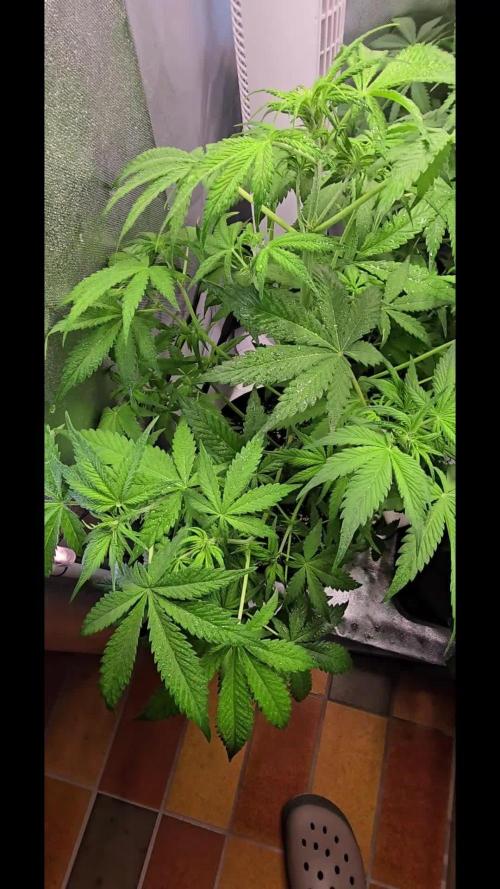
The plants are beginning to show terpene development, with that "sweet" aroma continuing to emanate. One phenotype is already displaying notes of mango and "artificial" orange juice, something sharp. Another phenotype remains true to toothpaste, while others are more refined—mint, lavender, spearmint. There's one that is showing hints of dark chocolate, incense, and an herbal background. This testing will be one of the most interesting ones.
Regarding flower development, the pistils remain upright and white, with no signs of self-fertilization, which allows me to continue fertilizing with homemade PK.
I've been using native bacteria, fungi, and yeasts to pre-digest my banana teas, enabling accelerated absorption despite being 100% organic. This is an important step at this stage—we don’t want to waste anything, as these are among the last fertilized waterings we'll do. After this week, I will stop feeding the more indica-dominant phenotypes to begin their living flush (flushing the substrate using bacteria, aloe water, and then just water, avoiding runoff).
The more sativa-dominant phenotypes will get a bit more time. Even though it's not clearly visible in the photos, they are "re-flowering," meaning they are undergoing a second push of floral growth toward the apex. This is a tremendous sign of good nutrient management and optimal genetic response.
I’ve ordered an experimental cross from my geneticist for the next round—I’ll keep you posted. Good smokes.

Likes
8
Share


@LokalGrenz
Follow
April 4th 2024
Went on vacation for few days and came back to lil disappointment with one I was using the acinfinity bottom watering pot and one plant didn’t even drink from its water reservoir I have no clue why not and other did came back to empty pot so hopefully the water I watered with from top works that’s only problem I came back to other plant is going did some defoliation
Welp today April 7th I messed around and found out what to much LST can do if ya to rough I cracked one plant right down the middle but with quick thinking got some tape and taped that hoe right up so hopefully I’m good besides that feed recharge today bout half gal each to scared to go full gallon don’t want to drown them
Processing
Likes
77
Share


@BipolarHellas
Follow
Hello world,
🇬🇷
The previous week had a lot of growth and stretching...Angie is almost 50 cm while the other two girls have stretched their side shoots...Two days ago Lucy and Michelle started to stay in the dark for 13 hours...I put them inside a closet during the night...Angie is too tall for the closet so she will just stay outside and follow nature's schedule...
=====================================
WEEK 7:"BIPOLAR DISORDER"
☠️Day 43...when I took them out of the closet their leaves were a bit clawing...I think because of temperature and humidity...anyway after a few hours in the sun they came back to normal..I have to LST Lucy more as her shoots are getting taller every day... The new growth in all girls is a bit yellowish, so I am thinking of top dressing them with some Bio Grow from GHF...
☠️Day 44...Lucy is too tall for the closet...I will just have Michelle to flower in there...her LST is keeping her short enough to stretch and flower in the small kitchen closet..finally the weather is sunny and warm here,summer has come...I top dressed them with Bio Grow,as from the colour of the new growth I can tell they need Nitrogen...From tonight on Angie and Lucy will be sleeping outdoors,no more Leds during the night...they will be there until their end...
☠️Day 45...💧first night on the balcony...everything is OK...Michelle is under 12/12 and waiting for those first pistils to show up...I watered today...they seem to be thirsty more often as the temps outside rise...I give them 2 L instead of 1,5 L...
☠️Day 46...Angie has reached 55 cm...Michelle has started showing sex and Lucy is just growing...
☠️Day 47...Angie is becoming a beast...I love her natural shape...Michelle on the other hand has not shown any flowers yet...I hope there is no light leak in the closet she is spending 12 hours...probably needs her time...
☠️Day 48...Michelle shows tiny pistils...I am not sure yet though if they are flower pistils or sex ones...Angie has reached 65 cm...their soil gets dry fast due to the otdoor temps which are at 32°-34° C...
☠️Day 49..💧had to water again...this time I gave them 3 L each...with less than that there is no runoff... I think I see pistils on Michelle,real ones...it's kind of windy and I have to be careful with them...I have a safe spot but its not sunny throughout the day,so I am moving them around...
Another week is over,we head on to the 8th...thank you all for watching,stay safe and happy growing☠️

Likes
2
Share

@MindFlowers68
Follow
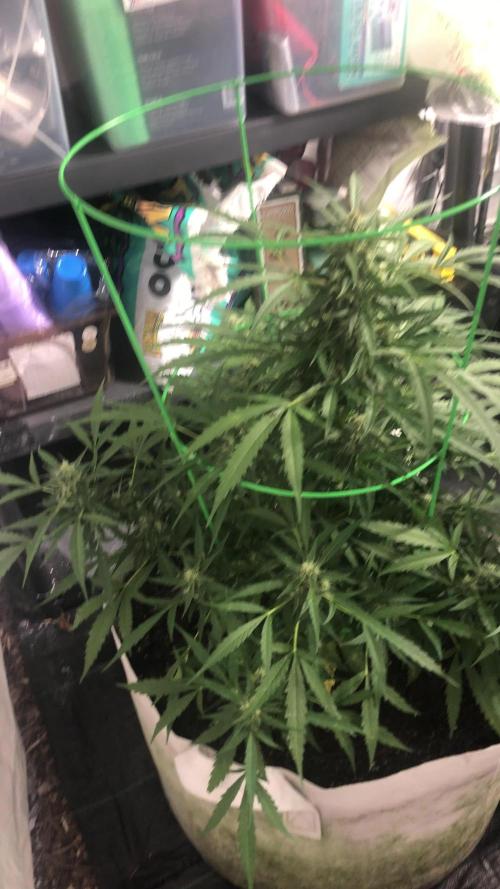
Shes doing really nice and smelling soo good. Buds are really dense and look like they were dipped in sugar. She still has another week or two for sure. We got some bad weather early in week and brought inside for a night followed by several days if sunny weather then had to drag her out to my greenhouse because another round of storms and stinking up the whole house.
Likes
41
Share


@Growing88
Follow
For now I'm happy with the germination,Even the transplant in the organic coco hydro growth modules all right yesterday✌️🏿


Likes
13
Share
@Naujas
Follow
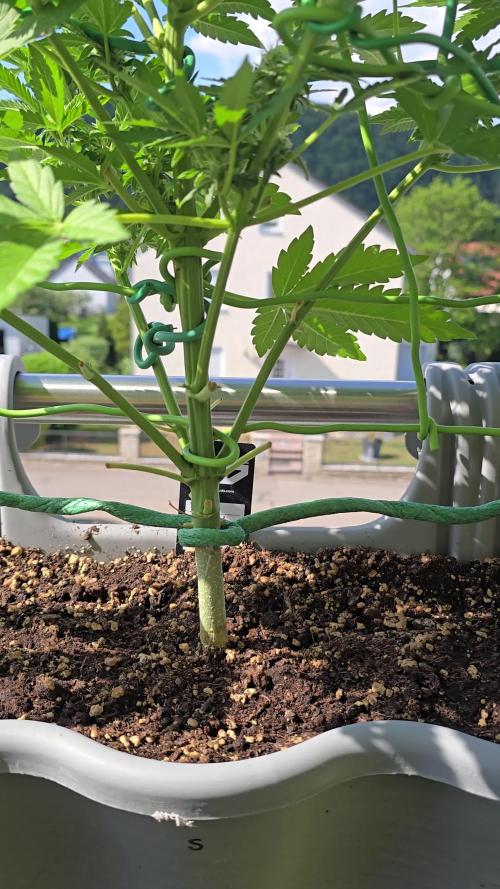
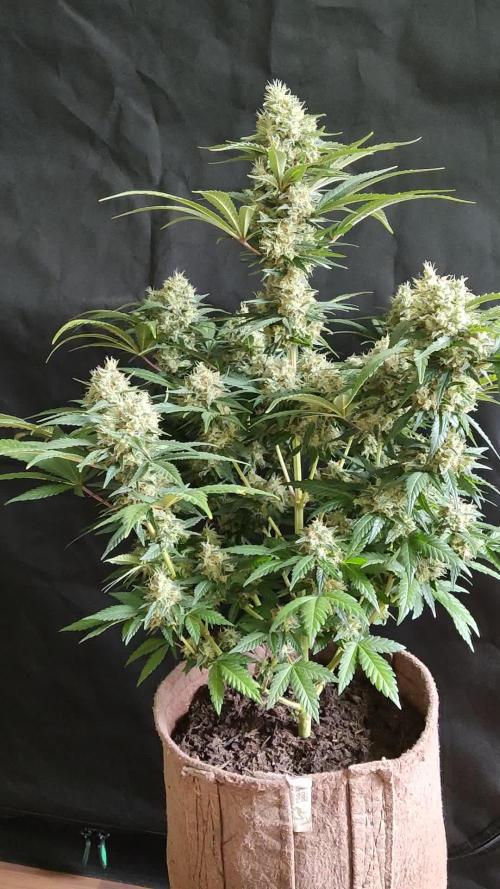
63 dienos!!!! Mergaitė atrodo fantastiškai gražiai :) šią savaitę nustojo lyti, dabar čia labai karšta, 36°, kitą savaitę manęs nebus, išvykstu 9 dienų atostogų, tad mergaitę paliksiu prižiūrėti draugei :) Tikiuosi, kad viskas bus gerai :) sėkmės visiems.

Likes
8
Share


@Black_Widow
Follow
Привет садоводы -наркоманы !
Началась новая неделя
растение стоит на ripen и чувствует себя хорошо
активно пьет , а цветки становятся все более липкими
я решил не срезать его в субботу
подержу еще пол недели на Ripen и пол недели на воде
куст вырос больше среднего размера , такой из палатки вытащить не просто
но Harvest уже близок
Всем удачи!

Likes
22
Share


@ShowsWorld
Follow
Starting flush tomorrow. Everything looks very frosty but the buds haven’t begun to swell just yet I’m hoping they pack on some weight in the last two weeks.

Likes
1
Share


