


Processing
Likes
Comments
Share


@c3llular
Follow
I dumped the water and added new today with nutrients. Two plants are looking really healthy. I'll focus on these now and let the others slowly grow on the side.
The one I transplanted late is dead.
Will update more as it develops.
UPDATE: Largest plant is drooping a lot. I'm assuming the auto-waterer over-watered again. Avoid this flower pot. I emptied the water and am letting it dry out a bit before watering again.
UPDATE: The auto-waterer soaked the large plant. I've poked holes in the medium and lowered the light to just above the plants to hopefully help dry it out quickly. Also have a fan on it.
UPDATE: The plant dried out enough that it's looking healthy again. Yay!

Likes
3
Share


@CaliJ
Follow
fast eddy measures 60 cm, the 3 gelato cookies between 70 and 80 cm, the 3 northern light from 90 cm to 1 meter 20, the smell is stronger when the tent is opened, major heat problem solved thanks to a portable air conditioning🍀

Likes
14
Share


@Chedderbob112
Follow
Av had a good week been busy dunno exactly wot a want tae dae hear feel like a constantly want mere paitience is the key Rome essential built in a day

Likes
278
Share


@Metatronix
Follow
A big hello to all the cannabis growing gardeners...and all the other visitors that came across my grow journal.
This week i need to change the reservoir again, the plants drink solution just as I add fresh water the EC stays at 2.7 and i need to add PK and Calmag so that's why.
The weather outside is very cold this whole week around -18 degree Celsius at night...this made my reservoir water go under 15 degree Celsius.
Since i ran the Spider Farmer UV lights i noticed some purples on my cannabis plants i think it's their doing....i run it now for two weeks the UVs
----------------------------------------------------------------------------------
The SE 7000 is hanged at 28 cm. over the canopy and runs at 520W.
This whole grow's main sponsor is Spider Farmer. You can easily obtain all the great grow equipment we use at: spider-farmer.com
A big thank you to Jessie and the whole Spider Farmer crew for supporting me with the newest technological advancements in horticulture. Thanks to them what i do here is possible.
Thank you Seeds Mafia for giving me the opportunity to try out your stock.
seedsmafia.com/en/feminized-cannabis-seeds/moby-dick-feminized.html
Plagron did send us their Contest package for the Power Buds competition .
Thank you for your visit, please leave a like and hope to see you beck here in about a week.

Likes
31
Share


@The_Bearded_Grower
Follow
welcome to 📅Day 29 transition has started 4/12/2021. as she moves into transition she is looking and growing very well but she does have some rusting and I'm not sure why I just hope it does not get to bad. Other then that she is very strong and healthy.
I have turned the Mars hydro TS 1000 up to 68% putting out around 32,000 LUX💡 so far I'm very happy with this light
that's it for todays update so happy growing and as always keep your stick on the ice 🏒
update 📅4/14/2021 she is looking good and I'm starting some lolly popping. the canopy looks very even and that's what I like to see I'm going to up the water in the res as they are drinking lots now💧
update 📅Day 33 transition 4/16/2021 ok all lollipping is done and so is defoliation not all that's left is to make sure the tops all stay at the same height and I have increased the amount of water to 5 gal from 2.5 gal💦. I am thinking about a new air pump the has 4 outlets instead of 2 so I can also put air stones in the res at the base of the auto pots as the nute water just sits there for the most part and just films over and I don't like that.

Likes
18
Share


@Pokan187
Follow
The buds look very good, not the most dense but it's to be expected with this strain, they have the classic foxtail structure
Looking forward to tasting in a few weeks

Likes
48
Share


@Truro
Follow
25/12/18 Week 5 Flower
Merry Xmas! All 4 plants are doing well, growth seems to have slowed down so I think the next few weeks are just packing on weight and then ripening. Gonna give them all some pk 13/14 on Friday - had a small problem with fungus gnats in my bathroom which eventually led them into my grow tent. Been waiting extra long between waterings to minimize the chance of them spreading - I know they love wet, mouldy coco. Got some peroxide just incase they become a problem any way. Looking to chop 15th-22nd Jan, depending on how the trichomes are looking. Lots of users commenting on how much weight GZ packs on, really hoping to get some nice dense golf-balls. My previous grow, which was two plants yielded just under 1.5oz, would really love to see a yield around 2.5oz with my current 4 plant set-up. Merry Christmas - more updates in the new year!
Likes
7
Share


@NCgrower252
Follow
The plants are ranging from 36”-38”….
We just purchased Flower Fuel for the buds. And pruned all the plants this week. Lastly we gave the plants pH balanced water with loranne flavor extract and unsulfured molasses.


Likes
3
Share

@AKGorillaGrow
Follow
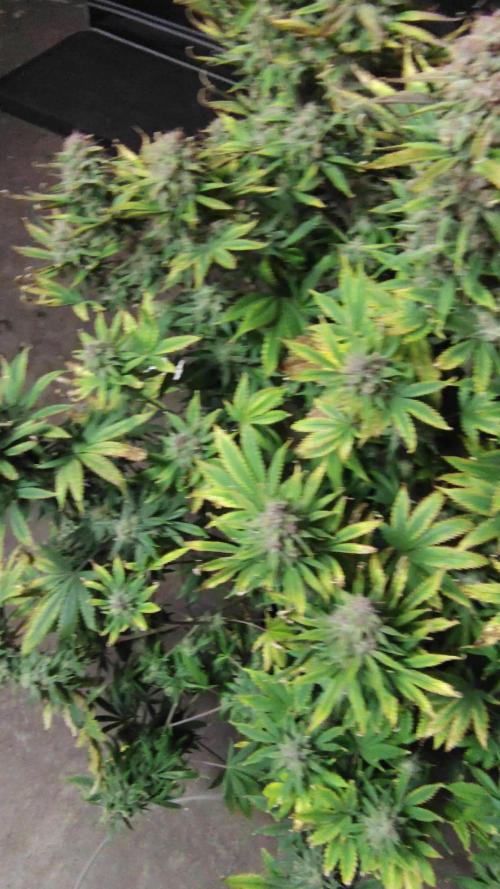
Well it is time to see what all my work will produce dry. 10 days in dry room then into the mason jars with a vivi cure can't wait. This grow I changed a lot from my water source from fox Alaska natural water to RO. Man was this a challenge. Not a single person I watched said anything about how unstable it is. To some research and problem solving to figure out how to stabilize it. Well if your wondering I added air to my AC infinity self wicking basin and set a timer to run 5 minutes on and 10 minutes off. I also went constant feed after week three. Will need to do some adjustments but it seems to be viable. More to come. See you next post

Likes
77
Share


@klimfish
Follow
10/1 - Happy as ever. Basically on autopilot.
10/2 - Had a fun photo shoot today. Plants are looking thirsty, will likely water tomorrow.
10/3 - Watered today with the usual. Plants are starting to "stack" the nugs!
10/4 - They loved that watering. I'm loving life right now, so are the plants. I did some minor defoliation today to prevent some bud sites from being covered.
10/5 - Another great day for a photo shoot :)

Likes
6
Share


@Mr_nugs_lover_David
Follow
The all 5 seedlings are looking fantastic and very healthy, onenof them its a little too small I think but let's see what happens, stay tuned to see how this 5 dina cookies perform! 💛💚❤️🔝👨🌾

Likes
79
Share


@Silasbotwin
Follow
Week 8 : Last week before harvest 😋
Hi guys ! So today is the last week before harvest, im very happy with the results i have got from these seeds. Not to sure about the stability of mandala genetics though.. But i must say that the Fruitylicious sativa pheno is a keeper ! As could also be the Cream Caramel, i will be running this strain again on a larger scale to find the perfect phenotype. The flush is going well, most of the plants are nice and yellow with the TDS at 350 ppm. The plants are smelling great, the Fruitylicious has now gone from lemon to lemon and berrys, with the sativa pheno smelling like hash and pine. The Master kush very strong floral and hash aroma, the Cream Caramel is very sweet with one pheno giving off a strong chemical smell that i love 😄 Thanks for coming by 😊


Processing
Likes
13
Share


@Silverback_Guerilla
Follow
SUNDAY 4/28:
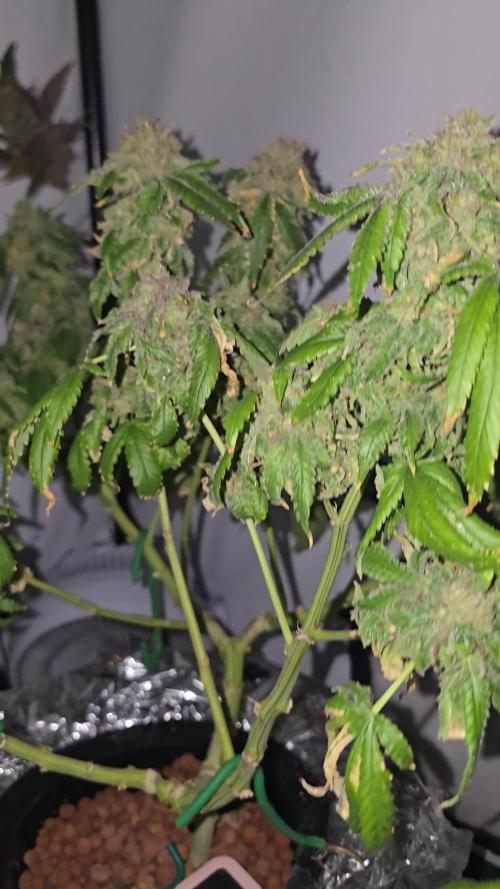
I plucked off some dead leaves and did some leaf-tucking and a little more training. I have high hopes for these F1's. When I had to remove a bunch of branches that would have produced a quarter pound of bud, it nearly broke my heart, but it looks like I'll still have a good cross-section of the potential genetics resulting from this hybridization.👍
I haven't seen any more nanners in several days now.😷
Daytime temps are still hovering around 87-90f, but I've got them sitting in 70-72f temps for 6 hours of darkness now.😁
I did a little video today and I'll take a few "glamour shots" tomorrow.
MONDAY:
Today I see a bunch of crispy leaves on several of them..guess I phuktup the PH again because they are getting fed everything they need. I douched everybody with 1/3 gallon including some boomerang, calimag, bembe, bud candy, and terpinator. No time for glamour shots...
TUESDAY:
Not much time today..just checked timers and temps, and changed out carbon filters.
WEDNESDAY:
Finally took some photos today after doing a little training. My best plant's leaves got all crispy, but only one one side of the plant..as if it was sprayed with something bad...buds still look yummy. What's really weird is that a Candy Cane, adjacent to that plant also developed the same problem, at the same time...but only on the branches nearest to this plant..(contagion?)
THURSDAY:
The 'contagion' seems to be spreading through the garden...
I'm thinking maybe I completely PHuktup the ph when I added silica last time and didn't correct it?? Not sure...but it's sad..they're all gonna be less than photogenic for the finish...
FRIDAY:
I plucked some dead leaves and misted everybody with perfectly PH adjusted spring water and increased airflow in the tent. Also decreased the dehumidifier to 45% RH.




Likes
2
Share

@GERGrowDesigns
Follow
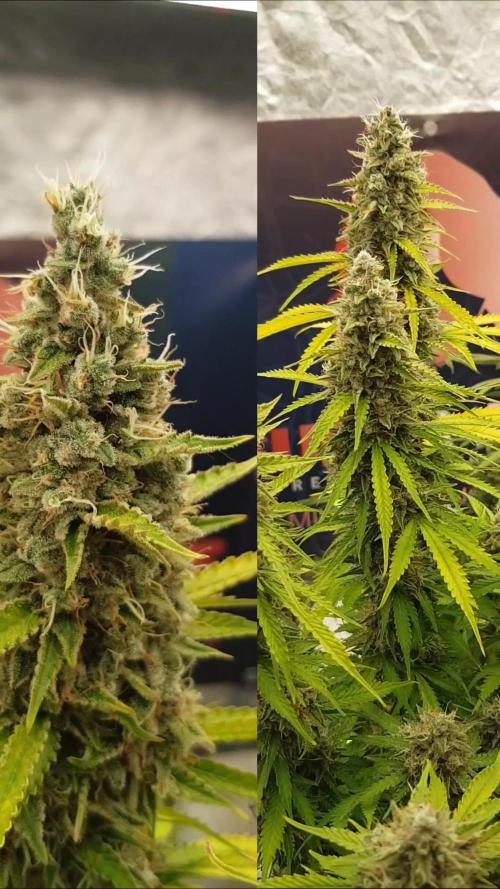
Welcome to Flower Week 10 and harvest of Divine Seeds Auto White Widow
For this competition, I’ve chosen the Feminized Automatic strain: Auto White Widow
Here’s what I’m working with:
• 🌱 Tent: 120x60x80
• 🧑🌾 Breeder Company: Divine Seeds
• 💧 Humidity Range: 50
• ⏳ Flowering Time: 58 Days
• Strain Info: 20%THC
• 🌡️ Temperature: 26
• 🍵 Pot Size: 3
• Nutrient Brand: Narcos
• ⚡ Lights : 200W x 2
A huge thank you to Divine Seeds for allowing me to be a part of this amazing competition and Sponsoring the Strains. Big thanks for supporting the grower community worldwide! Your genetics and passion speak for themselves!
Let’s grow together – and don’t forget to stop by again to see the latest updates!
Happy growing!
Stay lifted and stay curious!
Peace & Buds!

Likes
11
Share


@jonesy_grows
Follow
Terps are definitely starting to come through, gassy and fruity. Buds directly under the light are hard as rocks.
Pistils are starting to show what kind of colas I can expect.
The back 2 plants are receiving an extra qt of hand-fertigation per day, as they dry out quicker than the front 2.
Happy growing!
Likes
11
Share


@Socal6pak
Follow
KINDA DISPPOINTING THIS TIME. REALLY TOUGH TO GROW OUTDOORS. JUST SO MANY VARIABLES NOT UNDER MY CONTROL. ALL THE GALS WERE GROWING AT DIFFERENT PACE. ALSO I USED A DIFFERENT SOIL THIS TIME. SO THAT COULD HAVE EFFECT THE GROW. I SHOULD REALLY JUST GROW AUTOS INDOORS WHICH IS WHAT IM USED TO.
I TEND TO VEG PHOTOS OUTDOORS THEN BRING INSIDE TO FLOWER. SAVE MORE ENERGY. BUT THE PROBLEM IS JUST BRING PEST INSIDE THE TENT.
ALWAYS SOMETHING TO BATTLE. MORE I DO THE MORE I LEARN. STILL FAR FROM FINISH. NOT A GOOD HARVEST THIS TIME.
I'LL SAVE THE REST AUTOS INDOORS NEXT TIME.
Processing
Likes
2
Share


@The_Chef_420
Follow
Haven't seen too much calyx formation yet, just a lot of stretching. Waiting on the purple too🧐 I've been pruning out lower branches and leaves hanging close to the ground to help keep air flowing and humidity down, especially near her stalk.