Likes
Comments
Share
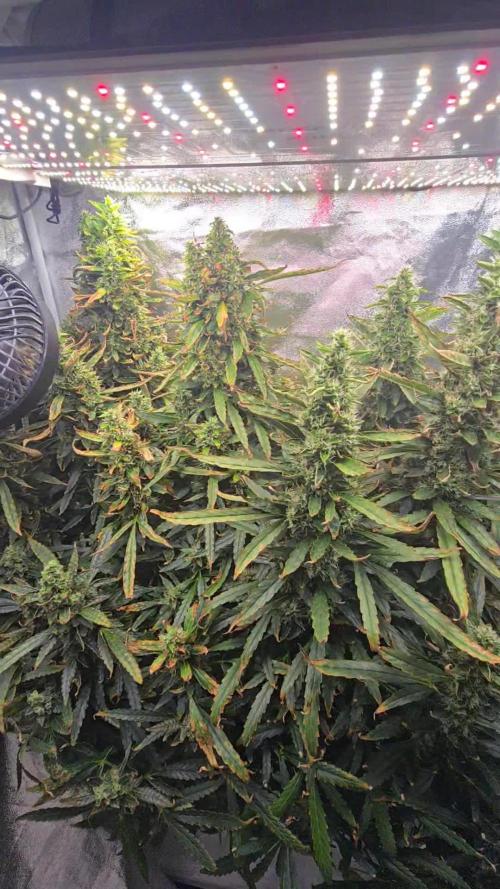
Our friends at Zamnesia have always been an asset to the world of cannabis, lately in case you haven't noticed they've been unleashed with the production of new strains of the highest quality. White truffle is a novelty of these last times, go and read the description it will make your mouth water. In this diary you will find the plant worked with the techniques in this case the first topping was carried out, we cleaned everything else creating the Mainfold and we are going to work everything with the main lining. We are at the first topping and we have two mini branches growing. Topping 1t 2nd internode here to stay low and parallel to the soil. The other can be found in the adjacent diary worked without the application of techniques that involve cuts to preserve its speed. Comparison is the spice of experience. We have started the Plagron fertilization program, we are in 100% organic configuration, the soil is recycled Promix + 1/3 fresh soil + 10% Perlite + RQS Mycorrhiza Mix (4gr in the mix, 1 gr under the small fiber pot). We are administering // 1 ml/l of Power Roots - 1 ml/l of Pure Zym - 1 ml/l of Sugar Royal - 3 ml/l of Alga Grow I have doubts about the compatibility of Pure Zym with mycorrhizae. If in doubt, ask the experts, don't mix too much at random. https://plagron.com/en Doubts about Pure Zym / Mycorrhizae compatibility have been dispelled, they can go well together according to Plagron experts. If someone tells you that enzymes eat mycorrhizae, which in principle may seem possible, explain to them that it is not true. https://www.royalqueenseeds.it/growing/452-easy-roots-mix-di-micorrhize.html Give this strain a try, it is an autumnal delicacy ---- // https://www.zamnesia.io/en/11184-zamnesia-seeds-white-truffle.html Brief description of Zamnesia // Enhance your cannabis grows with the latest US genetics. The result of crossing GG with Peanut Butter Breath, White Truffle boasts a first-rate lineage, taking the best of some of America's finest cultivars. And as you'd expect, she has a lot to offer: a high THC content, irresistible flavors and a relaxing, carefree high. Oh, and let's not forget that she's incredibly easy to grow too! Buy your seeds today and enjoy easy harvests of delicious, USA-made bud. The whole world of growing and more can be found at Zamnesia, just take a look around the site and you'll find "the best that nature has to offer" in all shapes and colours. And as you'd expect, she has a lot to offer: a high THC content, irresistible flavors and a relaxing, carefree high. Oh, and let's not forget that she's incredibly easy to grow too! Buy your seeds today and enjoy easy harvests of delicious, USA-made bud. The whole world of growing and more can be found at Zamnesia, just take a look around the site and you'll find "the best that nature has to offer" in all shapes and colours. The new strains are fantastic and the old ones are no exception... p.s. no hermaphrodites so far, can you growers say the same? ---- // www.zamnesia.com

Likes
10
Share
Some bad news... Had pollen sac explode in the tent (two actually). I'm going to finish the grow, might lose some yield and have some seeds but better then nothing. I new this might happen from the sacs I found earlier in the grow. I did mist the tent down to minimize the pollen spread hopefully not to many flowers compromised.
Likes
12
Share
I'm hoping this one is a female, I'm in need of some BBOG flower. I topped and defoliated every plant. I'm trying to form them into canna-bushes. Hopefully I'm doing the correct training procedures to make them all grow that way both indoors and out.
Likes
16
Share
@valiotoro
Follow
Hello everyone 😎 Week 2 for my girl it’s time for Topping & some LST She is doing very well,growing at fast pace and with a beautiful green colour on the leaves. Have a nice day 😎
Likes
1
Share
Overall for now I'm already pretty smashed by the outcome for my first indoor grow attempt so far! 😎
Likes
15
Share
@vibealive
Follow
Just started this one off... Not much to say so far. This is a coco grow. I started off with an amended Coco using Gaia Green 4-4-4 and power bloom 2-8-4.
Likes
4
Share
Eccoci di nuovo qui!!! Super eccitato per questa nuova collab con Sweet Seeds, team davvero al top, che mi ha dato l’opportunità di testare questa nuova genetica e di condividere i progressi con tutti voi!!! Come sempre partiamo nei bicchieri per poi travasare.. Questa volta verrà svolto tutto sotto la Lumatek Zeus 465 ProC, mi aspetto molto da questo ciclo!! Settimana WOW!!! Grazie a tutti per il supporto ❤️🍀🔥
Likes
3
Share
Está semana la HellfireOG de Kannabiaseeds va creciendo muy bien, lo que se me está volviendo un poco amarilla. Para solucionar eso le he estado echando fertilizantes de crecimiento que tienen bastante nitrógeno asique espero que vuelva ha tener un color bueno 💪
Likes
19
Share
The three are now on 12/12 since 3 days and begin to stretch now. I‘m very exited to see how big they will be going in the next 10 days of so. So far everthing looking fine and very healthy on the plants.
Likes
54
Share
@Coopmc
Follow
M1 looking good going to only follow her for the remainder of this Diary Looks like easy light suggestions for training from heat on out !! I love how the branches are evening out !! Good heavy watering push out ild stale air and draw in some new! Looking nice about ready to lash the tops down 6 nice snake heads! Started tying the top two down
Likes
51
Share
La cosecha de Smashberry Fumez ha sido un éxito rotundo! 🎉🍇 Los cogollos son simplemente impresionantes, densos, resinosos y con un aroma delicioso que promete mucho. 😍💨 No podría estar más contento con los resultados, todo gracias al gran trabajo de @XpertNutrients para mantener a las plantas sanas y fuertes. Y, por supuesto, las luces de @MarsHydro hicieron su parte para maximizar el rendimiento y la calidad 🌟💡 ¡Gracias a todos los que hicieron posible esta cosecha increíble 🔥🙌 .
Likes
11
Share
Likes
52
Share
Its time to prepare for war. *Blows bagpipe* FISH SH!T THE ORGANIC SOIL CONDITIONER (used twice before and always noticed instantly) Fish Shit is a living product! It provides a complex Microbial profile that includes thousands of different species of bacteria, fungi, and protozoa. This profile is closer to a natural ecosystem than anything you will find on the market. Fish Shit helps release essential oils and terpenes which contribute to the building of a myriad of flavonoids. Flavanoids play a key role in the development of the most potent aromas and tasteful flavors of a plant and its fruit. Fish Shit contains beneficial microorganisms that help plants maximize nutrient uptake. It does this by transforming nutrients into more usable forms and keeping these nutrients in the soil longer. During photosynthesis plants naturally produce exudates (chemicals that are secreted through their roots). Through these exudates, plants can attract the types of good bacteria that are beneficial to them at different points in their growing cycle. These good bacteria cover the roots and act as a barrier to the invasion of disease-causing organisms that may harm the plant. What Are Enzymes? Before we dive headfirst into how, exactly, enzymes can benefit cannabis plants, it helps to understand a little about what these microscopic proteins do. Essentially, enzymes facilitate chemical reactions. They do so by binding with a substrate and forming or breaking molecular bonds. In this context, the substrate is the molecule upon which an enzyme acts to boost the efficiency of a reaction. •substrate /sŭb′strāt″/ •noun •The material or substance on which an enzyme acts. A surface on which an organism grows or is attached. An underlying layer; a substratum. Enzymes are proteins with complex 3D shapes that feature regions called active sites. When the substrate binds to these active sites, it forms an enzyme-substrate complex that causes a chemical reaction to take place, temporarily changing the structure of the enzyme and ultimately causing molecules to either come together or break apart. As a result, molecular products are released, and the enzyme returns to its original shape. Specific enzymes are capable of binding with certain substrates, as the substrate fits into the active site more or less via a lock-and-key principle. Although, new research suggests a more accurate theory of "induced fit", in which enzymes and substrates undergo structural changes to facilitate the reaction. If you take the human body as an example, we have an abundance of enzymes in our saliva and digestive system. These molecules bind with substrates in these regions (food particles), working to break down the food we eat into usable parts before converting them to energy. Enzymes in cannabis work in a similar way to the example highlighted above. Typically, enzymes occur in soil naturally, but if your soil mix is lacking organic material, or you're growing hydroponically, then adding enzymes directly to the substrate is crucial. By using them in cannabis growing, enzymes not only help break down essential nutrients into smaller, more readily available pieces, but they also support the digestion of dead root cells, clearing a direct path for nutrients. Overall, enzymes make it easier for your cannabis plants to absorb all the elements they need to reach their full potential. For growers, a plant that reaches its full potential means a bucketload of juicy buds come harvest. This is essential if you want to reuse a pot with old systems left over like mine. Common plant enzymes include: •Cellulase •Xylanase •Beta-glucosidase •Hemicellulase •Amidase Amino acids are a crucial, yet basic unit of protein, and they contain an amino group and a carboxylic group. They play an extensive role in the gene expression process, which includes an adjustment of protein functions that facilitate messenger RNA Nitrogen, phosphorus, and potassium are the three main pillars of nutrient solutions and fertilizers, but there are countless other nutrients that your cannabis plants need to produce the best possible harvest. Amino acids are one of them. You may have noticed that amino acids get a lot of attention from bodybuilders and other athletes. That’s because they play a key role in the synthesis of protein, which, as you probably know, is super important for sports recovery and muscle growth. Amino acids are the building blocks of protein and the foundation of both plant and animal life. But what do amino acids do for cannabis? WHY IS PROTEIN IMPORTANT FOR CANNABIS? Just like proteins are important for the human body, they are equally important for the growth and development of plants. For example, proteins help plants: •Facilitate the growth of intracellular plant structures •Promote energy generation •Stimulate metabolic processes •Facilitate the absorption and transportation of nutrients So, where do plants get these vital proteins from? Well, unlike humans, plants can’t source proteins or amino acids from other organisms. Instead, they need to create their own amino acids, and then use these to build protein. That's why gardeners, much like athletes, go wild for amino acid supplements. Amino acids help plants by… • Increasing their production of chlorophyll, which ultimately improves their ability to photosynthesize • Serving as an easily absorbable form of nitrogen • Stimulating the synthesis of key vitamins • Improving their resistance to pests and diseases • Boosting the strength of their cells Amino acids also serve as the precursors to auxins, a group of plant hormones produced in the meristems—the apex of the stems where new leaves and stems are born. Auxins play a key role in the plant, activating genes for plant growth and development by triggering a multitude of vital plant functions. In other words, they determine what its size and architecture will look like. Auxins influence the development of branches, flowers, and roots, and even help to regulate the photoperiod response of the plant. Some amino acids, like cysteine, also work together with antioxidants like glutathione to help cannabis plants deal with oxidative stress, which can be caused by high-intensity lighting, some nutrient solutions, and high levels of CO₂. Unlike humans, plants can synthesize all the amino acids they need to survive and develop properly. Unfortunately, however, amino acid synthesis is a really high-energy process, and plants may struggle to produce enough amino acids when exposed to stress. WHAT FACTORS AFFECT A PLANT’S ABILITY TO SYNTHESISE AMINO ACIDS? Any kind of stress can affect a plant’s ability to produce enough amino acids. This includes: • Drought • Temperature extremes • Poor soil health • Pests • Diseases • Poor lighting • Lack of space • Poor root health WHAT DOES ALL OF THIS MEAN FOR WEED PLANTS? If you want to push your plants to their extreme in terms of floral growth and resin production, you should look into amino acid fertilizers. By making amino acids readily available to your plants, they’ll be able to use crucial energy to grow and bloom, rather than focusing on synthesizing amino acids themselves. Game of Inches, this is another Plants can absorb amino acids via their roots and leaves. They can also benefit from amino acids during both their vegetative and flowering phases. The fastest way for plants to absorb amino acids is via their leaves. The foliar application of amino acids is believed to improve the transportation of nutrients, increase transpiration, and boost photosynthesis. Hence, I recommend feeding your plants with foliar amino acid fertilizers. When doing so, however, carefully measure the amount of fertilizer you use, as—like with any nutrient—overfeeding can damage your plants. FOLIAR FEED AND SOIL SOAK • 1 crushed queen anne carrot • Add 2 tbsp of NPK Raw powdered water-soluble cane molasses • 20ml h2o2 • 1 crushed radish • 0.25 tsp NPK Enzymes • 0.25 tsp NPK Amino Acids • 50ml coconut water ( nature's own amniotic fluid packed with amino, enzymes ) + The sound of songbirds. Onto the predators 1250 -Green Lacewings Lacewings are extremely voracious predatory insects that feed on several pests. In adulthood, it feeds on pollen and nectar. In the larval stage, it feeds on aphids, thrips, and mealybugs at all stages of growth. It can also attack spider mites in moderate quantities. It is initially an aphid predator, but very effectively controls thrips and mealybugs infestations. It is so voracious that in the absence of prey, it will feed on its congeners. Lacewings are cannibalistic if there is no food available for them. It is therefore important to introduce them into an infestation situation, and not just preventively. •congener /kŏn′jə-nər/ •noun •A member of the same kind, class, or group. •An organism belonging to the same taxonomic genus as another organism. •A thing of the same kind as. or nearly allied to, another; specifically, in botany and zoology, a plant or an animal belonging to the same genus as another or to one nearly allied. Ideal temperature 20°C – 26°C Ideal humidity 60% – 70% Predatory stage life cycle 21 days Introduction rate 4 weeks Storage Refrigerator Use Immediately Are there any specific instructions on how to use this predator? Lacewings are available on small paper cards that you can hang to plant stems. On the cards are dozens of eggs ready to hatch. There are also sterile eggs they can feed on once they have hatched before they are ready to disperse in the foliage. It is important to use them quickly upon receipt to avoid cannibalism. If you don't use them right away, you can store the cards in the refrigerator for 24 to 48 hours to prevent the eggs from hatching too quickly. Avoid storing them for longer than this or you risk losing eggs. 1250 eggs are divided into 7.5 cards, 2500 eggs on 15 cards, and 5000 on 30 cards. The application rate is one card per square meter of growing surface. Is this predator best used for preventive or curative treatments? Lacewings are used as a curative solution. Anything else I should know? Lacewing eggs hatch approximately 24-72 hours after the cards are exposed to room temperature. When they emerge, the lacewings are just 1.5-2 mm long. They are very small so they are difficult to see. Once hatched, they will stay on the cards for a few hours and then disperse in the foliage. You quickly lose sight of them if you have not witnessed the hatching. They then live in the foliage for about 3 weeks. Often, you will see them towards the end of their larval cycle. After feeding for 3 weeks, they will triple and even quadruple in size. At that point, they are easier to see. But they remain very discreet insects, it is not abnormal not to see them. Egg carcasses left behind on the cards do not disappear after the hatching has happened. It's normal to see eggs still on the cards. Visually it is very similar before and after hatching. Also, on the boxes, there are sterile ephestia eggs which are used to feed the lacewings once hatched. Not all lacewing eggs are viable either. Only a certain percentage of lacewing eggs will hatch. Once hatched, the eggs are white. You can observe this using a magnifying glass. With, 5000 Stratiolaelaps Scimitus It is used to prevent or control thrips pupae, fungus gnats larvae, and root mealybugs in the soil. It can also be used for red mites in bird farms or hen houses. The adult is about 1 mm long and is medium brown with a beige triangle on its back. Another fun fact about them is they can survive without prey. They can eat algae and plant debris. This is why they can reproduce and stay in plants for long periods. Ideal temperature 15°C – 23°C Predatory stage life cycle 18 days Introduction rate 2 weeks Storage Room temperature Use Within one week Are there any specific instructions on how to use this predator? Sprinkle directly on the growing media. They can live in all types of substrates like potting soil, coconut fiber, rock wool, cedar mulch, etc. Stratiolaelaps establish easily so they are permanently fighting pests. One introduction is generally enough unless you have an infestation. In this case, introduce them at least twice at a 2-week interval for best results. If you grow your plants in a 100% mineral substrate, it will have to be released more often since there is less organic matter than in traditional soil. Do I need to take any specific precautions? Stratiolaelaps breed in the top layer of the soil. So it is important not to disturb them in the first days following their introduction. They don't like temperatures below 8 ° C. So be sure not to introduce them in a water-saturated or cold environment. Release them 24-48 hours after your last watering. They are very sensitive to chemical acaricides and diatomaceous earth. These methods are incompatible with their use.
Likes
6
Share
En fin...como todo lo que empieza, también se termina y casi estamos recogiendo el fruto de todo el amor, la dedicación y cariño inmenso que le ponemos a la más bella planta del universo. Tengo amigos a quien les digo que he tenido veces que en lo más hondo de mi alma, mi primera y última voluntad sería no cortar mis grows. Casi como si fuera en mi íntimo, lo que más deseaba, seria tenerlas preciosas para siempre y ver sus colores, sus aromas...quién no le gusta llegar a casa y la primera cosa es caminar hacia la habitación donde está el armario de grow...ver como los LED se proyectan en los colores verdes...si en mi temporada de verano tenía los colores naranjas de la Russian Auto de FastBuds...ahora con las temperaturas más bajas de finales de otoño, la Strawberry Cheesecake de Barney's...ay, que trabajos me ha dado esta señorita, eh!! Como me dejó llevar por sus colores morados y estos cogollos con la explosión de naranjas y rosados y ámbar (que no necesitamos tan solo admirarlas con el Photoshop en las páginas de los catálogos de los bancos...si!!! Que las fotos que sacó en casa no llevan filtros y los cogollos salen aún más preciosos que en las fotos de los amigos de Barney's). Hace poco "luchaba" con ella, poniéndole ScroG, trelizas, pin plásticos para hacerle Low Stress intentando controlar una "señorita" para la cual tenía pensado no más que un metro de alto y que cuando me seguía subiendo al casi metro y medio en floración sin detener su crecimiento...a esta "señorita" por la primera vez en mi vida, tuve que hacerle un supercropping encima de otro supercropping haciéndole un callo del grosor de un puño en su cola por que de otra manera no hubiera tenido techo de armario donde me cupiera el estirón de sus ramas. Me anunciaban en Barney's que su genética habría de salir una Indica en su aspecto arbustivo, pero no...la naturaleza no se equivoca en sus caprichos y en su "sopa" genética, sus ramas de Sativa se impusieron...hay que aceptar con tranquilidad lo que se nos viene encima y como no...pese a que en su final las hojas largas nos dijeron "Indica presente"...hemos tenido una Sativa...en todo, su tiempo de hacerse y desarrollarse en 13 semanas y la forma como con la red de ScroG se pudo conseguir que las luces llegaran donde no habrían de tener llegado. La pequeñita Strawberry que el 12 de septiembre despuntaba del jiffy, tímida y delicada...hoy es una "señora" y su paso por el mundo subirá en rollos de humo dulce y por el medio de sonrisas y por que no, "cabezones" por qué su "Indica" también hablará en su híbrida expresión, se recordará como una verdadera belleza...y si...por qué si miráis a las fotos, es también y mucho una belleza. Dejando la poesía de la vida aparte, esta semana ha sido semana que empezó con el flush el Domingo...agua corriente para que se lavara lo que le hemos dado en estas 13 semanas. Como no le hemos dado demasiado, donde le habríamos de dar lo justo, con el flush, muy rápido pudimos ver que el agua marrón se sustituía por água Clara, dando la señal que la hemos limpiado como se merecía...y seguro que tendremos humos suaves y aromáticos y no esa cosa que a veces nos toca cuando compramos alguna hierba a un amiguete que sea más apresurado y que a veces con la saña del negocio (y siempre el cabrón del dinero y los que hacen negocio de esto y que con esa "filosofía" tanto se les dá un flush bien echo, un secado como mandan las reglas o el curado de primera, para que el humo sea un "culto" y si unos pocos les dá la gana...para mi, esa cosa de ganarme la vida con esto, nones lo mío...y lo mío si es que cuando me fumo unos con los amigos, todos disfrutemos y que la gente me diga "anda!!! que esta es de las mejores que he fumado en la vida" y eso sí, es ganarme la vida...ganarme el gusto de perfeccionarme a cada grow, a cada variable nueva que introduzco en mis cosechas, a cada experimento que me trae conocimiento y buen hacer, a cada cepa que logró sacarle el mejor rendimiento no solo en gramos, pero mucho en sabor y en aroma. Joder...que esto de la "plantita mágica" es de las cosas más bellas y que más te recompensan en la vida y como os digo...mi "zen" en esto del "grow" no está en el humo y en lo "colocado" que me pueda dejar...lo que me deja, en verdad, "colocado" me quedo por lo que me relaja esto de la botánica y del amor, cariño y dedicación diaria al "grow". Sobre la "enana" ...la Critical Jack Herer... pues pese a una genética muy incompleta (y por que como ya os he dicho, que trifolios "ruderalis" incluso en la floración, lo que deja entender que Delicious Seeds mucho tendrá que trabajar en estabilizar esta cepa) camina también para su final...una cosecha mucho más pequeña en cantidad, pero por su olor y resina en sus cogollos más modestos y menos exuberantes en los colores, promete al menos, una hierba que "pongo mis fichas a juego sin limites" en la calidad que tendrá. Haré el flush el viernes y será un flush más específico, pues no pretendo darle un corrido de água alocado y si usaré el producto Canna Flush, pues también hay que aprovechar el sustrato que es de calidad superior y si el corrido de un montón de agua tiende a lavar los fungos y bactérias benéficas del suelo, con el Canna Flush se logra limpiar el exceso de nutrientes sin con ello hacer que el agua se lleve también lo bueno que hemos integrado en el sustrato a lo largo del "grow". Otra de las cosas que siempre contribuye a que tengamos un sustrato que después del flush nos sirva cara al futuro, es no solo el uso de las micorrizas que para mí son obligatorias, bien como el uso de "enhacers" enzimáticos que en mucho tienen la tremenda misión de convertir excesos de N-P-K en metabolitos de azúcares y coloides que las plantas absorben, sin que con ello, el humo quede agresivo en su paso por la garganta. Así...en los próximos diez días, tendremos terminada la temporada de otoño. Haremos el pesado de la cantidad, haremos los registos en la bitácora sobre lo que ha ido bien y menos bien y empezaremos a programar para mediados/finales de enero, el comienzo de la temporada Primavera 2023. Ya tenemos la "comida" de la próxima temporada y tendremos orgánico con calidad...tendremos más dos TLED 26 w, estos de 6500K para Crecimiento y tendremos ya la configuración LED completa que he diseñado en mi mente, que será el LED central de 192W, y sobre cada esquina del armario de "grow" alternados TLEDs de 26W, unos de Crecimiento y otros de Floración... Y "colorín, colorado, este grow se ha terminado..." Hasta la vista con fé y sabiduría y confianza infinita en el Dios Jah, sembrando la semilla de la concordia y paz entre Hombres y dándonos la gracia de la más hermosa planta del mundo... Fuí...ONE LOVE
Likes
59
Share
Ho portato le mie piccole amiche che mi ripuliranno la mia terapia .forza belle coccinelle 🐞 mie mangiate tutti. Ragni e uova... gnam gnam gnam 😋🤤
Likes
20
Share
@Tracie67
Follow
Pretty quiet week. Seeing some yellowing leaves which is a big indicator of a nitrogen issue but I’m hoping that it’s just because I’m in mid flower and not a bigger problem. Mantis Nutrients walked me through my issues and I have flushed the plant. Will now start giving lower doses of nutrients and will slowly increase the amount. The buds themselves are getting really sticky and stinky. Love watching them grow!
Likes
15
Share
@valiotoro
Follow
Hello everyone😎 Week 6 of flower for the LCC🍋🍒🍪 All the top buds harvested✂️ I had a lot of fun growing this strain🤩 The smell is absolutely out of this world…the colors…💜 I have 3 different pheno,all purple,some smells more citrus and the others more ripe cherries! One more week for the lower buds and finito I already feel nostalgic😜 *what’s coming out of the yuzu is essentials oil,every year I make Yuzucello feel free to ask me the recipe🍸🍋
Processing
Likes
10
Share
Bueno entramos en semana 3 de flora... pasaremos usar pl booster y esperemos poder pasar led antes que acabe esté cultivo. El calor lo hace insoportable para las plantas están bastante resentidas a ver que tal sale! Salut y força al canut farmers!🔥
Likes
2
Share
Looks like a lot of top sights. Afraid stretching too much. Hopefully it fills in.