The Grow Awards 2026 🏆
Processing
Likes
47
Share
@rhodes68
Follow
11/3 Week 6 Watered roughly one gal each @6.5PH, Fish Sh!t 5ml - Karo 1 tps /gal Flower Girl still in the pot, no deficiencies I can see, well new ones :) Mag-Sulfur Foliar spray (Epsom Salt 1tbs/gal) on all as leaving cal-mag out this time Moved the two healthy plants to the center of the light, they can use it, the others might respond well to lower levels. 11/4 Better pics uploaded Placed Brandy on a block of coco coir to bring her canopy up to Layla's level. Moved Maggie to the corner she has a stretch going that I HOPE is ending and I dont want to set the lights to her. Watching that plant carefully Considering a PK boost watching only Layla for that as the other two ... well hell what can they tell me? 11/5 Working to getting the canopy under control with one stunted plant and another stretching like crazy. Put a block under Brandy to move her up level with Layla. Trained down Maggie this growth needs to end, it was already stressed. Still giving light pref to healthy plants. 11/6 Raised lights three clicks, increased extraction, showing some heat stress in those edges. 11/7 Good results on the heat stress curling has ended. Noticed some improvement also in the tops of Brandy and Maggie, so raised lights another couple of clicks. See if it continues, coming up on a make or break feeding in couple of days. update Foliar Feed All - Epsom Salt 1tbs/gal Well Maggie's came today - To runoff- 1% peroxide - 5ml CalMag - PH 6.8 Hitting Sulfur as hard as I can. Before pics posted Brandy not dry enough waiting Layla just got fed but she got pics too as there are signs of Mag deficiency 1 gal 6.5 PH - CalMag 5ml - Fish Sh!t 5ml - Bio_Bloom 5ml as a PK booster JIC 11/8 Video of plants 24hrs after giving Maggie the h2o2 1% , think she looks better lets see how it goes 11/9 48 hrs after treatment and Maggie is showing great improvement, serious improvement in leaf structure and coloring. Pics at lights out tomorrow new week anyway. Brandy showing some improvement but its early. Canopy is level now so lights set to Maggie being slightly taller ***Last update before the new week.*** May have found ONE of my problems,certainly not THE problem, but one. I have been using lemon juice as a PH UP since we went organic late last spring. Because of all the problems I have been looking into a lot of things further and found that lemon juice begins to degrade as a PH up after as little as an hour. A 6.0 PH water gallon can go to 6.5ish in 24 hours simply sitting in a dark corner in a jug. One can imagine the variances in soil. Why I dont know but I am going back to chemical PH additives post haste in fact its already done.
Likes
55
Share
What's in the soil? What's not in the soil would be an easier question to answer. 16-18 DLI @ the minute. +++ as she grows. Probably not recommended, but to get to where it needs to be, I need to start now. Vegetative @1400ppm 0.8–1.2 kPa 80–86°F (26.7–30°C) 65–75%, LST Day 10, Fim'd Day 11 CEC (Cation Exchange Capacity): This is a measure of a soil's ability to hold and exchange positively charged nutrients, like calcium, magnesium, and potassium. Soils with high CEC (more clay and organic matter) have more negative charges that attract and hold these essential nutrients, preventing them from leaching away. Biochar is highly efficient at increasing cation exchange capacity (CEC) compared to many other amendments. Biochar's high CEC potential stems from its negatively charged functional groups, and studies show it can increase CEC by over 90%. Amendments like compost also increase CEC but are often more prone to rapid biodegradation, which can make biochar's effect more long-lasting. biochar acts as a long-lasting Cation Exchange Capacity (CEC) enhancer because its porous, carbon-rich structure provides sites for nutrients to bind to, effectively improving nutrient retention in soil without relying on the short-term benefits of fresh organic matter like compost or manure. Biochar's stability means these benefits last much longer than those from traditional organic amendments, making it a sustainable way to improve soil fertility, water retention, and structure over time. Needs to be charged first, similar to Coco, or it will immobilize cations, but at a much higher ratio. a high cation exchange capacity (CEC) results in a high buffer protection, meaning the soil can better resist changes in pH and nutrient availability. This is because a high CEC soil has more negatively charged sites to hold onto essential positively charged nutrients, like calcium and magnesium, and to buffer against acid ions, such as hydrogen. EC (Electrical Conductivity): This measures the amount of soluble salts in the soil. High EC levels indicate a high concentration of dissolved salts and can be a sign of potential salinity issues that can harm plants. The stored cations associated with a medium's cation exchange capacity (CEC) do not directly contribute to a real-time electrical conductivity (EC) reading. A real-time EC measurement reflects only the concentration of free, dissolved salt ions in the water solution within the medium. 98% of a plants nutrients comes directly from the water solution. 2% come directly from soil particles. CEC is a mediums storage capacity for cations. These stored cations do not contribute to a mediums EC directly. Electrical Conductivity (EC) does not measure salt ions adsorbed (stored) onto a Cation Exchange Capacity (CEC) site, as EC measures the conductivity of ions in solution within a soil or water sample, not those held on soil particles. A medium releases stored cations to water by ion exchange, where a new, more desirable ion from the water solution temporarily displaces the stored cation from the medium's surface, a process also seen in plants absorbing nutrients via mass flow. For example, in water softeners, sodium ions are released from resin beads to bond with the medium's surface, displacing calcium and magnesium ions which then enter the water. This same principle applies when plants take up nutrients from the soil solution: the cations are released from the soil particles into the water in response to a concentration equilibrium, and then moved to the root surface via mass flow. An example of ion exchange within the context of Cation Exchange Capacity (CEC) is a soil particle with a negative charge attracting and holding positively charged nutrient ions, like potassium (K+) or calcium (Ca2+), and then exchanging them for other positive ions present in the soil solution. For instance, a negatively charged clay particle in soil can hold a K+ ion and later release it to a plant's roots when a different cation, such as calcium (Ca2+), is abundant and replaces the potassium. This process of holding and swapping positively charged ions is fundamental to soil fertility, as it provides plants with essential nutrients. Negative charges on soil particles: Soil particles, particularly clay and organic matter, have negatively charged surfaces due to their chemical structure. Attraction of cations: These negative charges attract and hold positively charged ions, or cations, such as: Potassium (K+) Calcium (Ca2+) Magnesium (Mg2+) Sodium (Na+) Ammonium (NH4+) Plant roots excrete hydrogen ions (H+) through the action of proton pumps embedded in the root cell membranes, which use ATP (energy) to actively transport H+ ions from inside the root cell into the surrounding soil. This process lowers the pH of the soil, which helps to make certain mineral nutrients, such as iron, more available for uptake by the plant. Mechanism of H+ Excretion Proton Pumps: Root cells contain specialized proteins called proton pumps (H+-ATPases) in their cell membranes. Active Transport: These proton pumps use energy from ATP to actively move H+ ions from the cytoplasm of the root cell into the soil, against their concentration gradient. Role in pH Regulation: This active excretion of H+ is a major way plants regulate their internal cytoplasmic pH. Nutrient Availability: The resulting decrease in soil pH makes certain essential mineral nutrients, like iron, more soluble and available for the root cells to absorb. Ion Exchange: The H+ ions also displace positively charged mineral cations from the soil particles, making them available for uptake. Iron Uptake: In response to iron deficiency stress, plants enhance H+ excretion and reductant release to lower the pH and convert Fe3+ to the more available form Fe2+. The altered pH can influence the activity and composition of beneficial microbes in the soil. The H+ gradient created by the proton pumps can also be used for other vital cell functions, such as ATP synthesis and the transport of other solutes. The hydrogen ions (H+) excreted during photosynthesis come from the splitting of water molecules. This splitting, called photolysis, occurs in Photosystem II to replace the electrons used in the light-dependent reactions. The released hydrogen ions are then pumped into the thylakoid lumen, creating a proton gradient that drives ATP synthesis. Plants release hydrogen ions (H+) from their roots into the soil, a process that occurs in conjunction with nutrient uptake and photosynthesis. These H+ ions compete with mineral cations for the negatively charged sites on soil particles, a phenomenon known as cation exchange. By displacing beneficial mineral cations, the excreted H+ ions make these nutrients available for the plant to absorb, which can also lower the soil pH and indirectly affect its Cation Exchange Capacity (CEC) by altering the pool of exchangeable cations in the soil solution. Plants use proton (H+) exudation, driven by the H+-ATPase enzyme, to release H+ ions into the soil, creating a more acidic rhizosphere, which enhances nutrient availability and influences nutrient cycling processes. This acidification mobilizes insoluble nutrients like iron (Fe) by breaking them down, while also facilitating the activity of beneficial microbes involved in the nutrient cycle. Therefore, H+ exudation is a critical plant strategy for nutrient acquisition and management, allowing plants to improve their access to essential elements from the soil. A lack of water splitting during photosynthesis can affect iron uptake because the resulting energy imbalance disrupts the plant's ability to produce ATP and NADPH, which are crucial for overall photosynthetic energy conversion and can trigger a deficiency in iron homeostasis pathways. While photosynthesis uses hydrogen ions produced from water splitting for the Calvin cycle, not to create a hydrogen gas deficiency, the overall process is sensitive to nutrient availability, and iron is essential for chloroplast function. In photosynthesis, water is split to provide electrons to replace those lost in Photosystem II, which is triggered by light absorption. These electrons then travel along a transport chain to generate ATP (energy currency) and NADPH (reducing power). Carbon Fixation: The generated ATP and NADPH are then used to convert carbon dioxide into carbohydrates in the Calvin cycle. Impaired water splitting (via water in or out) breaks the chain reaction of photosynthesis. This leads to an imbalance in ATP and NADPH levels, which disrupts the Calvin cycle and overall energy production in the plant. Plants require a sufficient supply of essential mineral elements like iron for photosynthesis. Iron is vital for chlorophyll formation and plays a crucial role in electron transport within the chloroplasts. The complex relationship between nutrient status and photosynthesis is evident when iron deficiency can be reverted by depleting other micronutrients like manganese. This highlights how nutrient homeostasis influences photosynthetic function. A lack of adequate energy and reducing power from photosynthesis, which is directly linked to water splitting, can trigger complex adaptive responses in the plant's iron uptake and distribution systems. Plants possess receptors called transceptors that can directly detect specific nutrient concentrations in the soil or within the plant's tissues. These receptors trigger signaling pathways, sometimes involving calcium influx or changes in protein complex activity, that then influence nutrient uptake by the roots. Plants use this information to make long-term adjustments, such as Increasing root biomass to explore more soil for nutrients. Modifying metabolic pathways to make better use of available resources. Adjusting the rate of nutrient transport into the roots. That's why I keep a high EC. Abundance resonates Abundance.
Likes
Comments
Share
@Cmccart
Follow
The fifth one got moved outside
Likes
3
Share
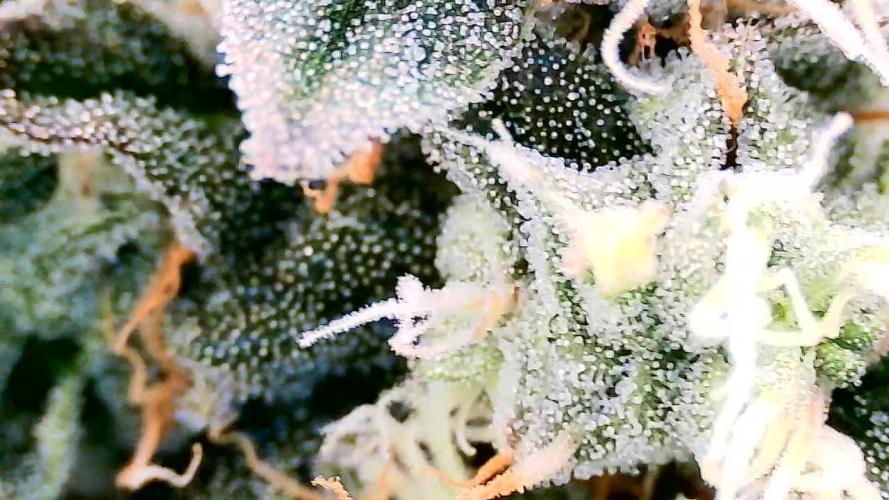
The plant's buds are showing more pistils, and the aroma has become quite fragrant, a creamy scent. Trichomes are now visible on the leaves. There hasn't been any significant increase in fertilizer this week; I've only doubled the amount of fermented banana peel liquid. I also did some foliar feeding with a light spray of fermented banana peel liquid. The daytime temperatures are very hot, and the humidity is low. I've noticed a few whiteflies, but the plant's strength is good, so it's not a major issue. Airflow is also good, being outdoors. The UV index has been between 7 and 8 this week.
Likes
6
Share
@PoshGrow
Follow
Welcome to Auto Alaskan Purple Grow by PoshGrow! 🍀 Week #2 2020 July 30th - August 6th General Info: When planted: 2020 July 23th. Week: 2 Days: 7 - 14 Last Update Day: 2020 August 6th. Plants: 5 Alaskan Purple Auto. Equipment: Tent: MarsHydro 1mx1mx2m or 39"x39"x72". Light: HLG 260w V2 Rspec QB Kit. Exhaust: 4" 322 CFM fan + Viper Carbon Filter. Intake: 4" 100 CFM Inline Fan. Oscillating Fan: Lower: 4" Ram Fan. Upper: 16" Oscillating Ram Fan. Humidifier: Taotronics TT-AH001. Dehumidifier: Pavlit MD750. Soil: NPK soil 40% Compost, 50% Peat Moss, 10% Agroperlite. Pot: 7 gallon Fabric Pot x 5pcs. Nutriens: Fox Farm Trio. PH Correcton: Chemoform pH-Minus Granulat. PH Pen: Cheap Chinese one, I callibrate it every time I use it. Comment:
Likes
1
Share
Estamos en la semana de transición del periodo vegetativo al periodo de floración. Nuestras plantas ya tienen un tamaño correcto para poder pasar de 18h de luz a 12h... De esta forma iniciamos dicho periodo. Hemos conectado tres equipos led LazerLite Pro 720w ajustados al 50% de su potencia. Repartimos bien todas las plantas para que reciban luz de forma homogénea. Regamos, esta vez solo con agua, para no tener exceso de fertilización, ya que nuestro sustrato es muy rico en nutrientes.
Likes
24
Share
@Grow_yyz
Follow
The plant looks healthy. Start to pre-flower this week. I’m trying keep the plant as lower as possible.
Likes
23
Share
@deFharo
Follow
Bienvenidos cultivadores de marihuana clandestinos, y también a los que tienen la fortuna de no serlo! 👨‍🌾💦💡🌞🌲 - Purple Shot es el resultado del cruce entre Purple punch, Do-si-dos y Exotic colors (75% Indica /25% Sativa). Variedad de floración rápida, terminando en 8 semanas, de porte robusto y flores muy densas, repletas de resina... completamente de acuerdo! 😋 3M Ω Ʈիҽ Ңɑppỿ ƓrѳωԵի, es una deuda que tenía con esta cepa, un cultivo predestinado al éxito, un diario de cultivo minimalista, no exento de ironía, pero también un auto tributo, porque no tengo abuela, al esfuerzo y concentración de mis 3 años de experiencias orgánicas, donde no faltaron enormes fracasos, y donde hoy, la inseguridad ha dado paso al sosiego... y todo esto, sin soltar el porro de la mano!😈✌️ Bienaventurada la quinta semana de floración, dichosas las diez semanas desde semilla, ella bebe mucho y yo le doy todo lo que necesita, estamos en la misma onda!... que suene la música!! Y nada más... SALUDOS A TODOS!!🖐️👨‍🌾💧💦🌞💡 =================================
Likes
49
Share
@Roberts
Follow
RSV11 is growing great. The pest have been eliminated as far as I can tell. I defoliated her top side to open her up more. I will be switching to flowering in a week. She should be hitting maturity at any moment now. Thank you Terpyz Mutant Genetics, and Spider Farmer. 🤜🏻🤛🏻🌱🌱🌱 Thank you grow diaries community for the 👇likes👇, follows, comments, and subscriptions on my YouTube channel👇. ❄️🌱🍻 Happy Growing 🌱🌱🌱 https://youtube.com/channel/UCAhN7yRzWLpcaRHhMIQ7X4g
Likes
14
Share
Week 6 Update – Stretch Madness! 🌿 Things are going really well—maybe a little too well! 😅 The stretch has been insane, with the plants reaching 80cm in height and still growing. Honestly, they can stop anytime now! I’m currently watering 3.5L every 36 hours to keep up with their needs. BioBizz#1 – BT15 Everything looks good so far, but I checked the runoff and noticed a pH of 7.5. Not exactly ideal, considering my feed water has a pH of 6.7 without adjustments. Something to keep an eye on. AN#4 – BT15 I’ve reached 100% of the feeding schedule with an EC of 2.5, and she’s handling it like a champ. Since bumping up the nutrients, she’s taken off and even overtaken BioBizz#1 in growth. AN#3 – BT11 She’s been getting an EC of 2.1 for the past few days and seems to love it. At this rate, she’s going to outgrow my tent soon! 🙂
Likes
10
Share
@Gokou4OG
Follow
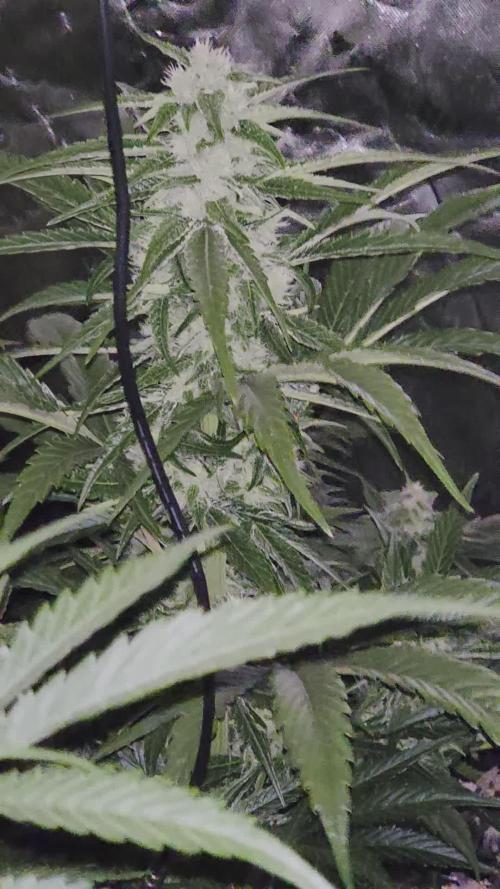
These girls are on fire , super dense heavy nugs . Smells incredible and can’t wait . Harvest is expected before the end of the month . Btw this is actually my first grow … I’ve been studying a lot and have certs from thc university.
Likes
34
Share
@Dunk_Junk
Follow
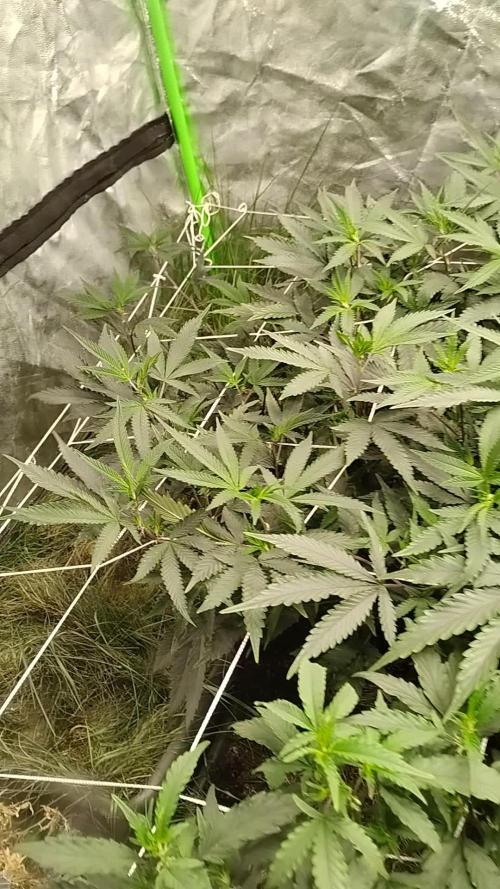
I cannot believe how much growth this week!!! I think she has doubled in size!! For the first time I've had to higher the light fixture. It is now almost as high as I can put it. I'm kinda regretting not FIMing her now...... I hope she does not grow much more in height!
Likes
5
Share
Will add more individual pictures but this was my spin on a Pringles can grow, little bit more space then a prringles can would. So I'm not expecting insane yields. It was purely something to run on the outside of the grow bc I had space! So far it's been a little rocky start, as they really were thirsty feeders for Magnesium, but I believe I corrected all issues and it's been smooth sailing into first week of flower!
Likes
37
Share
@yan420
Follow
FERMAKOR BARREL MIX – BASE IN USE (Testing on the Fantasy Feast girl we pulled out of another diary https://growdiaries.com/diaries/274722-grow-journal-by-yan402 ) (FERMAKOR BASE SYSTEM KOH VERSION diary https://growdiaries.com/diaries/278391-grow-journal-by-yan402) (Urea & Micros on the way — first week running without them) 🍶💧🍶💧🍶💧🍶💧🍶 💧 30 L Barrel – Current Working Mix 🍶💧🍶💧🍶💧🍶💧🍶 Step 1 – Calcium Nitrate (Part A) 7 L warm water (~35–40 °C) → added 45 g Calcinit, stirred until fully clear. That’s the calcium + nitrogen backbone for the feed. Step 2 – FERMAKOR PK Base (Part B) 15 L water in the main barrel → added 30 ml FERMAKOR PK Concentrate, mixed well. This forms the main P + K part of the formula. Step 3 – Combine Solutions Slowly poured the Calcinit mix into the barrel while stirring — no reaction, still crystal clear. That confirms the mix is stable and precipitation-free. 🌿 Step 4 – FPJ / FFJ Batch Added 30 ml homemade FPJ (fish + veg batch) ≈ 1 ml/L. Color shifted to a light-amber tone — looks alive and active. 🍋 Step 5 – Citric Acid Balance Added 1 tsp citric acid after everything was blended to fine-tune pH and help chelate micros later on. 📦 Step 6 – Top Up & Check Filled to the 30 L mark with plain water → pH tested with drops, showing yellow-green — roughly 5.8 – 6.0 range. Nice clean look, stable smell, no residue. 💧 Current Base Ingredients (Active Mix) Warm Water ≈ 22 L total Calcinit 45 g → N + Ca foundation FERMAKOR PK Base 30 ml → P + K support Citric Acid 1 tsp → Chelation + pH balance FPJ / Fish Emulsion 30 ml → Organic enzyme booster Result: clean amber mix, mild and balanced. I’ll let this version run for a week before adding anything. 👀👀👀👀👀👀 Observations and changes 👀👀👀👀👀👀 27.10.25 VW27 noticed some min burnt tips so I decreased Calcium Nitrate 45 to → 40g, decided to add two more elements micros and Epsom salts just to make sure they got everything, Fetrilon Combi 1 (Micros): 0.5 g, Epsom salts: 8 g 28.10.25 VW27 she seems devoid of any deficiencies, seems ready for the flip to 12/12 02.11.25 VW27 girl is looking good so I decided to stop making daily videos and do a standard once a week update. 09.11.25 aVW28 7 days since flip,stretch in full swing, first pistils showing, leaf color deep and healthy. Slight tip burn early week → gone after pH stabilized. Feed stayed clear, no residue, roots clean and sweet-smelling, did what I hope is a last cleanup and pruning🎥 10.11.25 VW29 added Phosphoric acid pH down to the schedule for flowering stage. 14.11.25 FW1 FERMAKOR PK Micros 40 → 50 ml 🌱💦🌱💦🌱💦🌱💦🌱💦🌱 🌿Day to day tasks & actions 🌿 🌱💦🌱💦🌱💦🌱💦🌱💦🌱 16.11.25 VW29 – no feed no water 17.11.25 FW1 – Fed 3l of #1 → 1l runoff 18.11.25 FW1 – Fed 3l of #1 → 1l runoff 19.11.25 FW1 – Fed 3l of #1 → 1l runoff 20.11.25 FW1 – Fed 3l of #1 → 1l runoff 21.11.25 FW1 – Fed 3l of #1 → 1l runoff 22.11.25 FW1 – Fed 3l of #1 → 1l runoff 23.11.25 FW1 – Fed 3l of #1 → 1l runoff 🍶💧🍶💧🍶💧🍶💧🍶 💧 Nutrients in 30 L #1 Veg — FERMAKOR 🍶💧🍶💧🍶💧🍶💧🍶 💧 Calcium Nitrate (Calcinit / Nitcal): 45 g → 40 g → 35 g = 1.33 g/L → 207 ppm N + 253 ppm Ca = 1.17 g/L → 183 ppm N + 224 ppm Ca (current) 💧 PK Concentrate (FERMAKOR Base): 30 ml → 40 ml → 50 ml = 1.00 → 1.33 → 1.66 ml/L → balanced 1:1 P:K + light micros (from extract) 💧 Home-made FFJ/FPJ (Fish + Veg): 30 ml = 1.00 ml/L Epsom Salt (MgSO₄·7H₂O): 8 g = 0.27 g/L → 26 ppm Mg + 35 ppm S 💧 Fetrilon Combi 1 (Micros): 0.5 g = 0.017 g/L → Fe 0.7 ppm • Mn 0.7 ppm • Zn 0.3 ppm • Cu 0.3 ppm • B 0.1 ppm • Mo 0.02 ppm Phosphoric Acid (pH down) + Citric Acid (chelation): → First set pH with phosphoric acid → Add a little citric only if extra chelation is needed 💧 Target pH: 5.8 – 6.0 (drop test yellow-green) 📦 TOTAL Inputs: 60 ml → 70 ml → 80 ml / 48.5 g per 30 L = 2.00 → 2.33 → 2.66 ml/L + 1.62 g/L (current) YouTube Link: https://youtube.com/-m8h?si=A7x4Zlr2kj-_ga31
Likes
10
Share
@BodyByVio
Follow
This week I Supercrop all the plants and spred them out over both lights. One more week of Veg and they are ready to explode Check me out on Instagram @growmorestressless