


Likes
Comments
Share


Likes
10
Share


@StoneJackson
Follow
They took a long time to grow and mature 10 months in all. They produced amazing flowers with a genuine high. Left a lot to be desired in flavour profile however not awful to smoke. Would grow again for sure as they were a high yielding, ‘set and forget’ type of strain easy and resilient enough to grow and highly impressive to see grown outdoor.
Likes
6
Share


@Mr_nugs_lover_David
Follow
This lady has been Transplanted on day 39 since she was planted and she will be grown with the complete biotabs organic line, I have applied for this 50L pot: 25g of startrex for every 5L of soil so I've used 250g of startrex in total, then I've dropped a spoon of mycotrex in the planting hole and when I finished I finally added 5 slow release tabs for this 50L pot, and then I watered right after the transplant with 1g of bactrex per liter of water and 1ml/L of orgatrex, this is gonna be a fun season, stay tuned everybody!!

Likes
9
Share


@pascal_dop
Follow
Das Umtopfen war erfolgreich und die Pflanzen wächst und wächst und wächst .... und das obwohl ich sie ein paar Tage nicht gießen konnte 👏

Likes
7
Share

@NoProbation4Weed
Follow
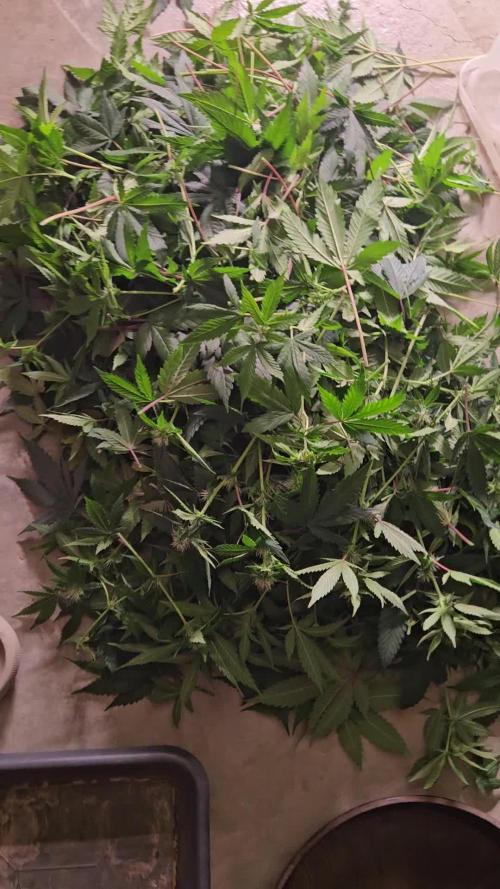
on day 21 of flower the 2 lady have got a new Haircut.
Also some composttea on day 22 of flower.
Light hits the plants with around 850 PPFD.
Both plants look very similar (same leaf shape and structure), but one is about 15% larger than her sister.
They both look healthy and vigorous.

Likes
13
Share


@Rangaku
Follow
Looking great , smelling fruity , sticky as and chunking up nicely.
One more week of food then it’s flush time .

Likes
11
Share


@Skunkiest_bender39
Follow
Shame on me… habe den taupunkt am morgen deutlich unterschätzt. Täglich steigt die LF phasenweise bis auf 95%. Solar ist praktisch, Zelt darf aber nicht draußen stehen!
Der grow hat sehr viel Spaß gemacht, trotz einiger kleiner Fehler und Unachtsamkeiten meinerseits! Die Damen sind super und werden wieder in den Stock zurückkehren, konnte sie leider nicht voll bis zum Ende bringen ca 2 Wochen zu früh. Nächste mal weniger Pflanzen oder mehr entlauben und mehr umlauft dazu. Komme vom outdoor Growen und habe enorm viel Neues kennengelernt!
Banana’s & painkiller XL sind noch im Spiel ohne jeglichen Schaden oder Betroffene stellen von Schimmel. 🐝


Likes
1
Share


@Kusemono
Follow
2ml grow soldier
3ml flowa bloom
2ml green mystic
1l water
Sorted 1 male out until now the other six seems to be females

Likes
3
Share


@tontodedoverdee
Follow
So finally this week the plan was looking strong enough to be trained, initially I've lift the plant from his seedling bed, i moved her more on the side of the tent to have more space to bend her and give more open space to the lowest branch, after just 12 hours the plant was already fighting the training pointing the top cola to the closest source of light

Likes
38
Share


@DaddyPrime
Follow
6/29 we had 3 super hot days in a row. 112, 115, and then 118 degrees. This is the only plant that didnt end up with heat damage/burns from the extreme temperatures. Top dressed with a cup of one shot.
7/3 watered with slf-100 and recharge

Likes
52
Share


@DogDoctorOfficial
Follow
Let's realign our cosmic compass and embark on a harvest report for our magnificent Cosmos F1, a pure CBD strain that has taken us on an extraordinary journey. Brace yourself for cosmic revelations and interstellar delights!
After an impressive 11 weeks from seed and 7 weeks of flowering, the time has come to witness the cosmic culmination of our efforts. I carefully hung the entire Cosmos F1 plant to dry, allowing the cosmic energy to infuse every inch of this botanical marvel. It's a sight to behold, with majestic branches reaching for the cosmos, reminiscent of a cosmic dancer frozen in time.
As our cosmic queen gracefully dries, her vibrant hues continue to amaze. The shades of green, intertwined with delicate hints of purple and gold, are a testament to her genetic splendor. It's as if she has absorbed the cosmic essence of the universe, transforming it into a visually stunning spectacle.
Now, let's talk about the cosmic power of CBD. Our pure CBD strain holds the key to a transformative experience. With minimal psychoactive effects, this cosmic treasure offers a realm of therapeutic benefits. It's like a cosmic massage for the mind and body, soothing and relaxing, allowing us to explore the depths of cosmic tranquility.
The decision to hang the entire plant for drying is a testament to our dedication to preserving the cosmic integrity of our harvest. By allowing the branches to hang freely, we encourage a slow and controlled drying process, ensuring that the cosmic essence remains intact. It's a ritual that honors the plant's journey, preserving its cosmic magic for us to enjoy.
As we eagerly await the cosmic transformation, let us express our gratitude to the celestial forces that have guided us on this cosmic odyssey. The cosmos has aligned to bring us the extraordinary Cosmos F1, a gift from the cosmic garden gods themselves. We extend our heartfelt appreciation to the cosmic harmony orchestrated by @James and Royal Queen Seeds.
In the coming days, our dried cosmic buds will be ready for the next stage of our journey. From cosmic concoctions to cosmic culinary delights, the possibilities are infinite. Imagine infusing the cosmic power of CBD into soothing teas, cosmic creams, or cosmic confections. The universe is our canvas, and with our cosmic harvest, we can create cosmic masterpieces.
As we bid farewell to our Cosmos F1, let us cherish the cosmic memories we've shared. The vibrant colors, the pure CBD power, and the cosmic connection we've established with the universe. May our future endeavors be as cosmic and awe-inspiring as this one.
Until we meet again, my cosmic friends, lets keep exploring the cosmic wonders, nurturing our cosmic gardens, and let the cosmic energy guide our cosmic creations. May our harvest be abundant, our cosmic experiences be enlightening, and our cosmic journey be filled with celestial blessings.
As always thank you all for stopping by and for supporting me on this journey, i am super passion about growing and fell blessed to have you all with me on

Likes
55
Share


@w33dhawk
Follow
12.04.21 heute is Anfang der 4. Woche nach dem flip bin begeistert von den Ladys sie sind obwohl sie so viel stress mit machen mussten fleißig am blutenstände produzieren die trichom Produktion hat auch gut eingesetzt jedes mal wenn ich die Blätter unters netz schiebe und wenn ich gegen die Blüten komme kleben meine Hände und wenn das passiert verströmt sie einen angenehm cremigen Duft nach zitrone fast schon limoncello artig.......
13.04.21 hab heute mal wieder gegossen und wie immer jeden morgen Blätter unten halten sonnst war nix weiter....
14.04.21 moin leute der trottel des Tages ist wieder da hab mir heute (2 Tage nach dem gießen) meine gedanken gemacht bezüglich des absetzen der dünge Zusätze aufgrund von Green Sensation hab gedacht 4 in eins dann kann der rest ja weg und bin heute mal zufällig drauf gekommen beim Hersteller auf der Homepage zu gucken und siehe da ich trottel hätte sugar royal ganz normal weiter laufen lassen können werde es dann beim nächsten Guss wieder mit einschieben. Hab heute den Reflektor auf ganz weit gestellt damit ich mit der Lampe weiter runter komme bin jetzt heute auf 30cm an die spitzen gegangen und werde am Freitag weitere 5 cm nach unten gehen also auf 25 cm an die spitzen ran fahren da ich bei offenem wing und 30 cm nur 23,5 Grad an den spitzen habe solange die Pflanzen keine Stress Erscheinungen auf 25cm erleiden und die Temperatur stimmt bleib es dann auch auf 25 cm bis zur Spülung...
15.04.21 habe doch heute schon die Lampe auf 25 cm gesetzt bin wieder zu ungeduldig 24std hat der Tag das ist einfach zu lang für meine Geduld 😁 hab sonnst nur wie immer dafür gesorgt das alles an blattwerk sich unterm netzt hält....
16.04.21 hab es heute mal nur laufen lassen und beobachtet was die Blätter so machen muss morgen eindeutig wieder ran und unters netz stopfen 😒😒....
17.04.21 hab heute wieder die Blätter unters netz gestopft sonnst weiter nix los gewesen. Die Ladys halten die 25cm Lampen Abstand ganz gut aus bis jetzt, Temperatur liegt bei 25,4 Grad also noch vertretbar denke ich. Mal gucken was die Ladys bis Montag zum Licht druck sagen, wenn die spitzen heller werden geh ich zur not lieber wieder nen Stück hoch mit der Lampe.....
18.04.21 hab heut das gleiche wie jeden Tag gemacht, ich hab versucht die Welt-Herrschaft an mich zu reißen 😁😁, ne spass bei seite wie immer Blätter drücken und giessen war heut auch dran. Die Woche lief auch wieder erstaunlich gut hab zwar noch ne ganze ecke vor mir mit den Ladys aber ich bin zuversichtlich......


Likes
9
Share


@GYOweed
Follow
Clockwise from bottom left:
GDP fem bulk sees, Bubba Diagonal (pre98 bubba x Triangle Kush) from grassroots, Juicy Gushers from Atrium cultivation, and Kush mints bottom right.
Juicy Gushers is the loudest and sweetest in veg by far..like cardamom, read it is won award for 30% outdoor thc. Great sturdy stems.
Bubba d is most bushy by stems snap easily.
The gdp rub is great and nice serration leaves. Kush mints is pretty good indica structure.
I got clones off all.

Likes
24
Share


@Dingle
Follow
🌸
Signs of flowering showing now as pistils begin to develop on all four plants after changing the light cycle to 12/12.
I decided to add a scrog net this week to help even out the canopy as they begin to stretch over the next couple of weeks.
✌️
Likes
15
Share


@XperencdGmanXG
Follow
Well this grow went well up till the end where i managed to get spider mites yet again. Caught it early and at the end of the cycle so there was not a large impact. Now time to scrub the tent and everything in it with bleach.


Likes
Comments
Share
@Wierie
Follow
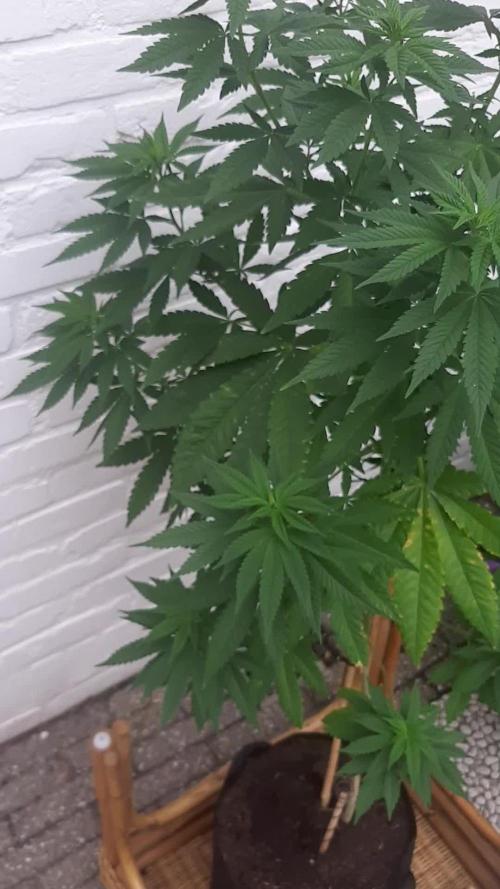
Day 66
I have not givin her any nutes last week just ph'd water (6.5)
Still white hairs here and there...
Seen milky trichomes but no brown ones on the buds yet..
Im goin for a couch lock kind of high...
I want some milky cloudy and brown trichomes..
Upcoming days she wil get just water 6.5 and we see what happens..
Almost forgot... been givin her les water.. tryin to water stress her a bit and dry her out a bit
Im very happy with how the buds look..
Outdoor super lemon haze growing fine aswel..
Not much to say chek her out 👍
Peaceeeee 🌴
Likes
9
Share


@blasterw32
Follow
Buds and sugar leaves started to get more and more trichomes. Some pistils are turning amber/brown, mostly in the tallest colas. I'm slightly worried about the distance between lights / flowers (~16-17"), but so far they don't present any symptoms of light burning. There's no vertical room left to bring the lights up, so I really can't do anything in that matter, just hope they have stopped growing lol.
I'm also about a bit worried about the amount of leaves. Not sure if I should do some prunning or leave as it is.


Likes
19
Share


@jst4kicks420
Follow
2day of week slacked on the light causes about of light burn to the tips of my colas not much by enough to make me sad lol not much activity just wait around watching bud get bigger colas getting fuller pushing leaves down here and there (I gotta show the back some love it’s just to far aha ) was busy pushing and threading when I noticed that first ugly picture looks like powdery mildew almost had a panic attack till hit it with some light and realized I’m just way to high didn’t even see how beautiful they are getting ahah so far so good maybe about half way or so I’m just guessing branches i crimped still alive and growing bt I can’t say it made the buds blow up or anything just help make more even canopy my smallest girl is making the biggest more fuller buds so far stay safe everyone my bad been a few day not much to tell just watching everything grow turns out my light problem was a bit more serious then I though slacked abit bt not to much damage still just the tips only bt it’s should be all worked out now don’t have many pictures my phone broke bt here’s what I have light on in about two hours start of the next week
