




Likes
18
Share


@raulmoat123
Follow
Quick update week 3 flower these girls are putting on weight very very quickly. The blue gelato buds are already becoming dense like stones . Watermelon punch literally is the most satisfying smell I have smelt in a while . Wedding cake is the biggest in my tent and most gassiest plant. The terple inhouse genetics are also massive will show the inhouse section next week , just takes to long to take them out of tent


Likes
34
Share


@Short_N_stockY
Follow
What's up Grow Diaries family, super excited to have another grow in addition to the Gelatos. This time is a little different since it will be a new experience for me. First time growing an auto flower strain, first time using Bio Tabs, and first time using the quantum board for the full cycle. I usually use the QB304 for vegging, but since I got a 2'x2' tent. It'll be dedicated for that space.
I finally got a hold of some FastBuds seeds but I've been losing sleep contemplating on which strain to grow. I have some LSD-25 and Blackberry, which are fantastic strains (based on what i've seen). It came down to a coin toss and LSD-25 was chosen.
Come and join me in this new journey. I've read up on how to grow autos and all that but I know there are plenty of seasoned veterans out there that could share some knowledge.
Week 1 - Prepped Fox Farms Ocean Forest soil by mixings BioTabs Startrex and Mycotrex. I know there's been a lot of debate about using 3 gal vs 5 gal for autos but I'm using a 5 gal. fabric pot since that's what I have and probably would still buy a 5 gal instead of a 3. But who am I, I'm another first time auto grower. Hahaha! Let me know your thoughts on this.
Light cycle is set to 20 hours instead of the usual 12/12, 18/6, 24. I was debating on running the lights 24/7 but wanted to have period when the plant rest. Not too sure if autos need it but my electric bill could use a break.
Soaked the seed overnight and sown into soil approximately 1/2 in. Placed a humidity dome (solo cups 😉) over the site to keep humidity up. Humidity in the room is around 45% which is pretty low for germination. Temperature at 78°F which is good.
Within the next day or so, we should have this sprouting out of the soil. Once that happens, an update will soon to follow.
UPDATE: 11/9/2018 Day 1 LSD-25 finally sprouted 😃. Relative humidity has been low at 35ish%, keeping a humidity dome/spraying Ph'd water to keep her happy until she gets a little bit bigger. If the humidity levels stay this low, I'll be putting in the humidifier until conditions get better. Enjoy the new pictures and stay tuned for the next update!
Day 3 - RH has been going down to the teens so I added the humidifier for now. Conditions are a lot better and is now in the 70's. Increased the blower speed to kinda balance out the incoming dry air.
Day 4 - Dialed in the incoming air by adjusting the blower and vent. Humidifier doing it's thing getting RH at 72%. Saturated the soil with regular tap water + Bactrex + Orgatrex + Cal-Mag. We'll see how this goes since no PH or EC readings required with BioTabs. I do plan on using Real Growers Recharge once she gets out of the seedling stage. Once she starts flowering, Mammoth P will be used 😉
Day 5 - Leaves are pointing up, this could be a bad thing right? I think it's due to the low humidity and possibly light burn. Humidifier was setup yesterday so maybe she just needs to get reacclimatized to her new environment. I also increased the light distance a couple of inched just in case.
Day 6 - Seems like the leaves are starting to level out and color is starting to look better 😀
Day 7 - End of week 1! Nothing to report other than new pictures are up. See you on the next update.


Likes
7
Share

@Skynets_Growing
Follow
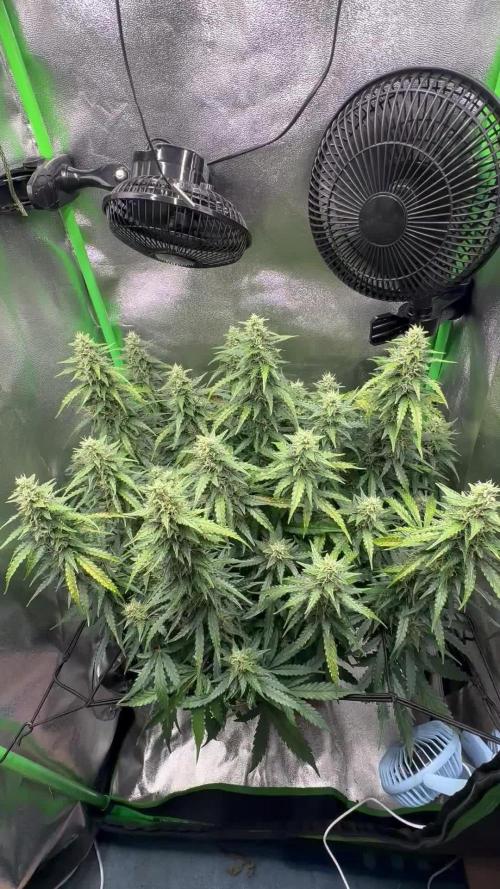
Tamara her 10th week is quite but we have some looks at her buds and I will say, the Trainings and the scrog net have done a Great Job… what are you thinking ? I don’t know when Tamara will harvest, but she have time …Time she needs she will become… ;-)
Likes
91
Share


@Salokin
Follow
Hi Growmies,
Not much to report, other than that her buds are coming along very nicely, filling the colas and starting to cover herself in trichomes. She is extremely thirsty, finishing up to 1.8—2l a day. I fed her the last tester of rokzbastic and will afterwards go down with the nutes. Still defoliated slightly as I wanted to get the colas a bit separated for aeration and light penetration.
I have also added a pic of the orca bottle I use, just in case ;)
Thanks for stepping by and hope to see you next week.


Likes
18
Share


@Budhunter
Follow
Week 5 started well, plants looking good and time for some defoliation and lollipoping on low branches.. probably gonna flip to flower next week… let’s goooo
Likes
12
Share


@Krissci
Follow
Day 1 - topped FR1
Day 2 - topped FR2
Day 3 - 2nd topping of FR1
Day 5 watering ,light LST for initial main stems on FR2
Likes
32
Share


@GrowingTime
Follow
here we are guys in the middle of week 8.
the grow has been pretty good lately, just messed up some refilling but corrected immediately.
as you can see from the pictures i did some mild defoliation to expose the lower buds.
what do you guys think?
to be honest I am pretty proud of the grow the girl looks beautiful.
I am thinking about getting a 600w led and probably a bigger tent (100x100x200, 3"x3"x6")
as always guys, advices are always welcomed
keep growing 👍
Likes
12
Share


@BrainStorm22
Follow
Nota:
La primers mitad de las imagenes corresponde al principio y la otra mitad al final respectivamente
En esta semana comenzamos a aplicar fertilizantes de engorde y se logro notar una diferencia al aplicar monster bloom el viernes hoy domingo ya se vio una diferencia de tamaño las plantas lucen bien y an empesado a adquirir resina y bellos colores
Martes : solo tek bloom , heavy bud pro (1600 Ec)
Viernes: monster bloom , vitamax , cal mag (800 Ec )
Ph 6.5


Likes
100
Share

@squalino
Follow
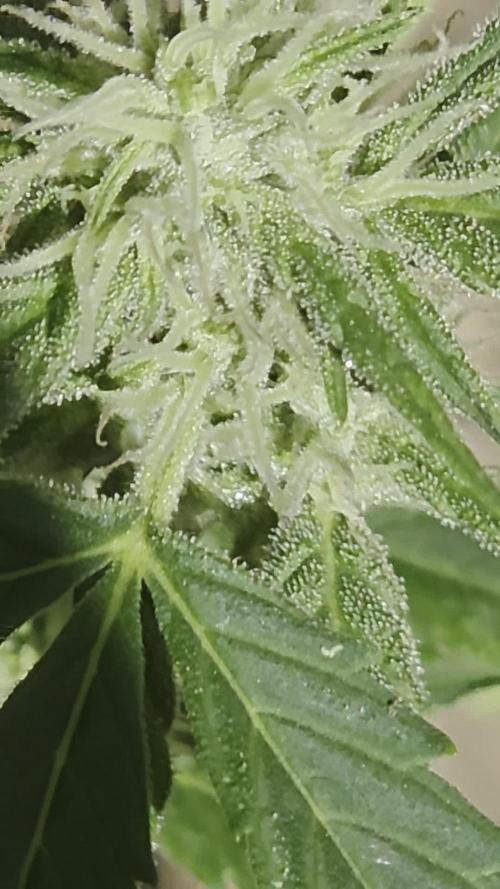
elle fait ça vie malheureusement pour elle se sera sa dernière semaine.
ma femme est strict que 4 plantes.
et j'ai planté mes 4 plantes hier .alors le temps qu'elle germe se sera sa fin
mais elle a commencé a faire un beau glaçage domage 🤣🤣☺️☺️🤩🤩 mais elle ne m'apporterais rien a la garder pour sa petite récolte.
merci a tous d'avoir suivi sa misérable petite vie .
unà bientôt pour mes nouvelles plantes.
qque de bonne chose a découvrir ❤️❤️❤️
Likes
10
Share


@Liamp1603
Follow
I've now topped the majority of these .... still no signs of sex tho just waiting to pot up they're gna be going in air pots the yellow ones ..... when they show I'll remove makes pot up give two weeks in the new planters and flick to flower should be around 7 weeks of good veg then to develop a good root system ..... plants are doing well still receiving 2ml a and b 2ml cal mag per litre and receiving water multiple times a day like an auto pot system but hand watering and not perfect frequency all plants are growing and happy tho ..... happy growing


Processing
Likes
17
Share


@Bigonet
Follow
What do you think of this 21-day-old plant? Please leave me a comment. Thank you dear friends.

Likes
6
Share
@kevxyn
Follow
Let’s go 🔥🔥🔥
Lampe auf 12/12 bei 60% 💡
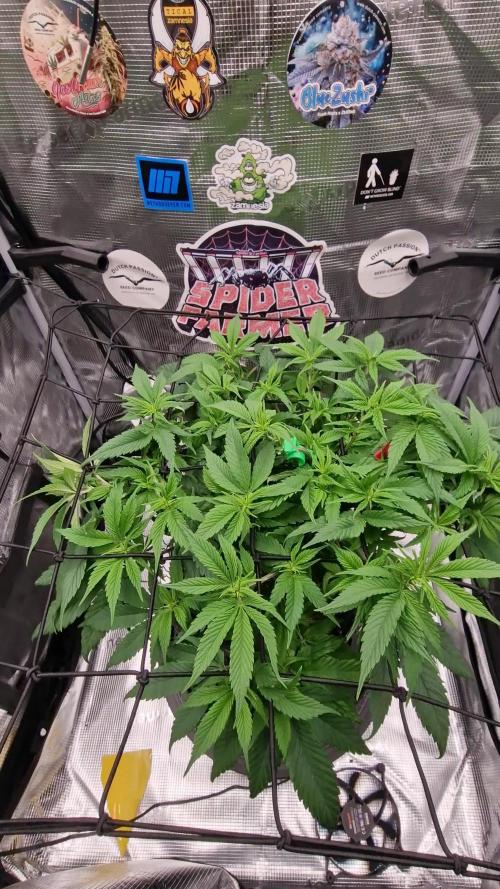
Der Wassertank ist wieder am Start! 🌊 Sie scheint es jetzt viel besser zu vertragen. Gegossen wird nur noch ganz dezent, um die Living Soil im oberen Bereich leicht feucht zu halten. Ab und zu gibt’s ein bisschen Komposttee – alles andere holt sie sich direkt aus der Erde. 🌱
Blüte seit dem 5.11 am Start und bisher läuft alles nach Plan 😎🍁