Likes
Comments
Share
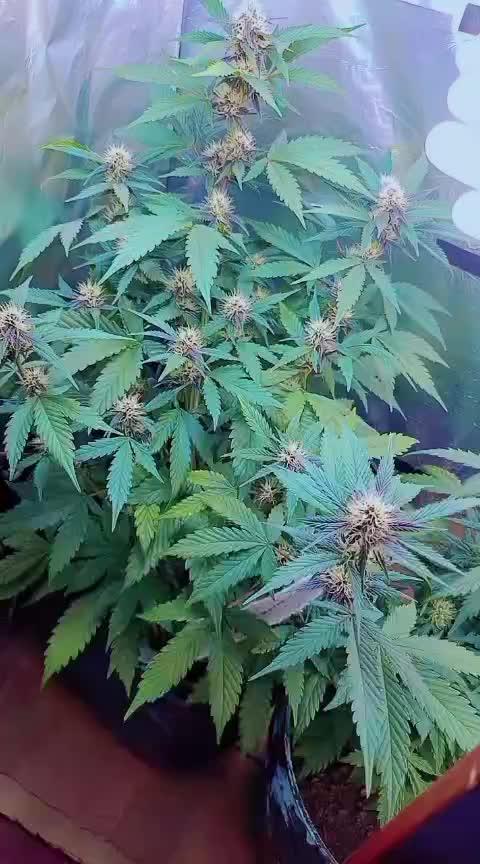
The flowers have started to swell and increase in size nicely. She's not stretching much, so I guess, these 18cm will be it. She's getting a really shimmery purple colour. I tried capturing it in a video. I removed some of the older leaves to optimize for light and optimized fertilizer for bud size (Hi PLAGRON Alga Bloom!). Give us all your CBD goodness, purple lady!
Likes
9
Share
@Colo420
Follow
17/12 se realiza fertiriego. 19/12 se podan los 2 primeros nudos, se hace poda apical y se transplanta de 1 a 3L con aplicacion de micorrizas
Likes
92
Share
🌱 Week 1: The Journey Begins! 🌟 Hey Grow Fam! 🙌 We’re off to an epic start with our TrolMaster adventure, and I’m already feeling the love for the setup, the seeds, and the growth happening in the room! So, let’s dive right in and get into the details of this exciting week! 🌿 Germination Update: Our first Gorilla Melon seed from Fast Buds didn’t sprout, but no worries—round two was a success! 🦍🍈 The second seed has germinated and is looking full of potential. I’m throwing in a Sweet Seeds Papaya Zoap into the germination station too, so we’re keeping this exciting lineup going strong! Germination is such a key part of the journey, and having a healthy start is what it’s all about. 🔧 Room Build & TrolMaster Setup: The build is coming along beautifully, and I gotta say, the TrolMaster system is blowing my mind! Everything’s under control like magic 🎩✨, and the TM+ app? Wow, just wow. I mean, I can literally be in the bathroom and still keep an eye on the plants—check all the metrics, adjust settings, and fine-tune what I need, all from my phone! 😂💧 This level of control is next level. I’m loving how smooth and seamless it makes managing the room. The gear is just unreal, and seeing it all come together is truly something special. 🌱 Nutrition Talk: As for feeding, we’re starting light but smart! I’ve begun with 0.15ml of Regulator and 0.25ml of Startbooster per liter for now. I always believe in starting easy and ramping up as the plants develop. These early stages are crucial—balance is everything. For the time being, I feel this is more than enough to keep the babies happy and healthy. 🌿💧 The Regulator is working wonders in maintaining plant structure and health, while the Startbooster is fueling the early root and vegetative growth, laying down a solid foundation for the weeks to come. It’s about getting it right from the start—too much too early can be a killer. Keeping it steady with precision, that’s the goal! Big Shout-Outs: To the amazing team at @TrolMaster, @Fast_Buds, @Sweet_Seeds, @AptusHolland, and all the incredible sponsors—I’m beyond grateful for the support! 💚 And to my GrowDiaries fam and followers, you guys make this journey what it is—thank you for the love, and I’m so honored to have you along for this ride. 🙏 We’re just getting started, and I can’t wait to show you what’s next. Stay tuned for more updates, epic builds, gear reviews, and plenty of insight. Don’t forget to follow me on GrowDiaries, YouTube, and IG for exclusive content, and let’s make this grow the best one yet! 🌿🔥 Growers Love to All 💚💚💚 P.S.- A deep dive into the Full Spectrum Quantum Sensor (MBS-PAR): The Full Spectrum Quantum Sensor (MBS-PAR) is an essential tool for any serious grower looking to optimize their light environment. This sensor measures photosynthetically active radiation (PAR), which refers to the spectrum of light that plants actually use for photosynthesis—typically between 400 and 700 nanometers and more depending . What makes the MBS-PAR sensor special is its full spectrum capability, meaning it accurately detects not just visible light but also far-red and UV light—which are crucial for maximizing plant growth, development, and flowering. With this tool, I can monitor the exact intensity of light my plants are receiving, making sure they’re getting the optimal levels for every stage of growth. By using this sensor in my grow room, I’ll be able to ensure that the light distribution is uniform across the canopy. Plus, it allows me to fine-tune the light output from my ThinkGrow LED setup, ensuring my plants are thriving under the best conditions. Whether it’s increasing light during the vegetative phase or fine-tuning it for flowering, the MBS-PAR sensor helps me keep everything on point. And the best part? I can monitor it all through the TrolMaster app, ensuring I can make adjustments whenever needed—even if I’m not in the grow room! This level of precision means healthier plants, better yields, and maximum efficiency. It’s a game-changer for taking the guesswork out of lighting and getting closer to growing perfection! 🌱💡 Growers Love to All 💚💚💚
Likes
8
Share
@pzwags420
Follow
Started off week 6 off by adding 5ml of Flying Skull Z7 to reservoir and adjusted reservoir PH to 6.0. I've got the blumats nearly dialed in and keep making small adjustments every 24 hours. I am holding off a few days on the nutrients to see what the plant tells me. The clawing seems to have improved(combo of over watering and not getting runoff on hand watered nutrients I believe). When I apply nutrients going forward I will make sure there is plenty of runoff so I don't repeat the same mistakes. 😬 on day 2 I applied 1 gal of nutrients and watered until runoff. On day 3 I defoliated the bottom of my plants to improve the air flow. On day 6 I added 5ml of flying skull Z7 to the reservoir. I noticed a possible calcium deficiency on one plant so on day 7 I applied my 1 gal of nutrients with the addition of calmag and silica. Ive only used calmag once growing in coco and it burned my plants...so I assumed there was enough from my tap water and nutrients. I know this goes against all advice.. I think it finally caught up with me LOL.LIve and learn to buffer your coco. Next grow I will buy buffered coco and use a calmag product 😅 I defoliated the center of my plants to increase airflow and expose light deeper into the canopy.
Likes
19
Share
Yellow butterfly came to see me the other day; that was nice. Starting to show signs of stress on the odd leaf, localized isolated blips, blemishes, who said growing up was going to be easy! Smaller leaves have less surface area for stomata to occupy, so the stomata are packed more densely to maintain adequate gas exchange. Smaller leaves might have higher stomatal density to compensate for their smaller size, potentially maximizing carbon uptake and minimizing water loss. Environmental conditions like light intensity and water availability can influence stomatal density, and these factors can affect leaf size as well. Leaf development involves cell division and expansion, and stomatal differentiation is sensitive to these processes. In essence, the smaller leaf size can lead to a higher stomatal density due to the constraints of available space and the need to optimize gas exchange for photosynthesis and transpiration. In the long term, UV-B radiation can lead to more complex changes in stomatal morphology, including effects on both stomatal density and size, potentially impacting carbon sequestration and water use. In essence, UV-B can be a double-edged sword for stomata: It can induce stomatal closure and potentially reduce stomatal size, but it may also trigger an increase in stomatal density as a compensatory mechanism. It is generally more efficient for gas exchange to have smaller leaves with a higher stomatal density, rather than large leaves with lower stomatal density. This is because smaller stomata can facilitate faster gas exchange due to shorter diffusion pathways, even though they may have the same total pore area as fewer, larger stomata. Leaf size tends to decrease in colder climates to reduce heat loss, while larger leaves are more common in warmer, humid environments. Plants in arid regions often develop smaller leaves with a thicker cuticle and/or hairs to minimize water loss through transpiration. Conversely, plants in wet environments may have larger leaves and drip tips to facilitate water runoff. Leaf size and shape can vary based on light availability. For example, leaves in shaded areas may be larger and thinner to maximize light absorption. Leaf mass per area (LMA) can be higher in stressful environments with limited nutrients, indicating a greater investment in structural components for protection and critical resource conservation. Wind speed, humidity, and soil conditions can also influence leaf morphology, leading to variations in leaf shape, size, and surface characteristics. Small leaves: Reduce water loss in arid or cold climates. Environmental conditions significantly affect gene expression in plants. Plants are sessile organisms, meaning they cannot move to escape unfavorable conditions, so they rely on gene expression to adapt to their surroundings. Environmental factors like light, temperature, water, and nutrient availability can trigger changes in gene expression, allowing plants to respond to and survive in diverse environments. Depending on the environment a young seedling encounters, the developmental program following seed germination could be skotomorphogenesis in the dark or photomorphogenesis in the light. Light signals are interpreted by a repertoire of photoreceptors followed by sophisticated gene expression networks, eventually resulting in developmental changes. The expression and functions of photoreceptors and key signaling molecules are highly coordinated and regulated at multiple levels of the central dogma in molecular biology. Light activates gene expression through the actions of positive transcriptional regulators and the relaxation of chromatin by histone acetylation. Small regulatory RNAs help attenuate the expression of light-responsive genes. Alternative splicing, protein phosphorylation/dephosphorylation, the formation of diverse transcriptional complexes, and selective protein degradation all contribute to proteome diversity and change the functions of individual proteins. Photomorphogenesis, the light-driven developmental changes in plants, significantly impacts gene expression. It involves a cascade of events where light signals, perceived by photoreceptors, trigger changes in gene expression patterns, ultimately leading to the development of a plant in response to its light environment. Genes are expressed, not dictated! While having the potential to encode proteins, genes are not automatically and constantly active. Instead, their expression (the process of turning them into proteins) is carefully regulated by the cell, responding to internal and external signals. This means that genes can be "turned on" or "turned off," and the level of expression can be adjusted, depending on the cell's needs and the surrounding environment. In plants, genes are not simply "on" or "off" but rather their expression is carefully regulated based on various factors, including the cell type, developmental stage, and environmental conditions. This means that while all cells in a plant contain the same genetic information (the same genes), different cells will express different subsets of those genes at different times. This regulation is crucial for the proper functioning and development of the plant. When a green plant is exposed to red light, much of the red light is absorbed, but some is also reflected back. The reflected red light, along with any blue light reflected from other parts of the plant, can be perceived by our eyes as purple. Carotenoids absorb light in blue-green region of the visible spectrum, complementing chlorophyll's absorption in the red region. They safeguard the photosynthetic machinery from excessive light by activating singlet oxygen, an oxidant formed during photosynthesis. Carotenoids also quench triplet chlorophyll, which can negatively affect photosynthesis, and scavenge reactive oxygen species (ROS) that can damage cellular proteins. Additionally, carotenoid derivatives signal plant development and responses to environmental cues. They serve as precursors for the biosynthesis of phytohormones such as abscisic acid () and strigolactones (SLs). These pigments are responsible for the orange, red, and yellow hues of fruits and vegetables, while acting as free scavengers to protect plants during photosynthesis. Singlet oxygen (¹O₂) is an electronically excited state of molecular oxygen (O₂). Singlet oxygen is produced as a byproduct during photosynthesis, primarily within the photosystem II (PSII) reaction center and light-harvesting antenna complex. This occurs when excess energy from excited chlorophyll molecules is transferred to molecular oxygen. While singlet oxygen can cause oxidative damage, plants have mechanisms to manage its production and mitigate its harmful effects. Singlet oxygen (¹O₂) is considered a reactive oxygen species (ROS). It's a form of oxygen with higher energy and reactivity compared to the more common triplet oxygen found in its ground state. Singlet oxygen is generated both in biological systems, such as during photosynthesis in plants, and in cellular processes, and through chemical and photochemical reactions. While singlet oxygen is a ROS, it's important to note that it differs from other ROS like superoxide (O₂⁻), hydrogen peroxide (H₂O₂), and hydroxyl radicals (OH) in its formation, reactivity, and specific biological roles. Non-photochemical quenching (NPQ) protects plants from damage caused by reactive oxygen species (ROS) by dissipating excess light energy as heat. This process reduces the overexcitation of photosynthetic pigments, which can lead to the production of ROS, thus mitigating the potential for photodamage. Zeaxanthin, a carotenoid pigment, plays a crucial role in photoprotection in plants by both enhancing non-photochemical quenching (NPQ) and scavenging reactive oxygen species (ROS). In high-light conditions, zeaxanthin is synthesized from violaxanthin through the xanthophyll cycle, and this zeaxanthin then facilitates heat dissipation of excess light energy (NPQ) and quenches harmful ROS. The Issue of Singlet Oxygen!! ROS Formation: Blue light, with its higher energy photons, can promote the formation of reactive oxygen species (ROS), including singlet oxygen, within the plant. Potential Damage: High levels of ROS can damage cellular components, including proteins, lipids, and DNA, potentially impacting plant health and productivity. Balancing Act: A balanced spectrum of light, including both blue and red light, is crucial for mitigating the harmful effects of excessive blue light and promoting optimal plant growth and stress tolerance. The Importance of Red Light: Red light (especially far-red) can help to mitigate the negative effects of excessive blue light by: Balancing the Photoreceptor Response: Red light can influence the activity of photoreceptors like phytochrome, which are involved in regulating plant responses to different light wavelengths. Enhancing Antioxidant Production: Red and blue light can stimulate the production of antioxidants, which help to neutralize ROS and protect the plant from oxidative damage. Optimizing Photosynthesis: Red light is efficiently used in photosynthesis, and its combination with blue light can lead to increased photosynthetic efficiency and biomass production. In controlled environments like greenhouses and vertical farms, optimizing the ratio of blue and red light is a key strategy for promoting healthy plant growth and yield. Understanding the interplay between blue light signaling, ROS production, and antioxidant defense mechanisms can inform breeding programs and biotechnological interventions aimed at improving plant stress resistance. In summary, while blue light is essential for plant development and photosynthesis, it's crucial to balance it with other light wavelengths, particularly red light, to prevent excessive ROS formation and promote overall plant health. Oxidative damage in plants occurs when there's an imbalance between the production of reactive oxygen species (ROS) and the plant's ability to neutralize them, leading to cellular damage. This imbalance, known as oxidative stress, can result from various environmental stressors, affecting plant growth, development, and overall productivity. Causes of Oxidative Damage: Abiotic stresses: These include extreme temperatures (heat and cold), drought, salinity, heavy metal toxicity, and excessive light. Biotic stresses: Pathogen attacks and insect infestations can also trigger oxidative stress. Metabolic processes: Normal cellular activities, particularly in chloroplasts, mitochondria, and peroxisomes, can generate ROS as byproducts. Certain chlorophyll biosynthesis intermediates can produce singlet oxygen (1O2), a potent ROS, leading to oxidative damage. ROS can damage lipids (lipid peroxidation), proteins, carbohydrates, and nucleic acids (DNA). Oxidative stress can compromise the integrity of cell membranes, affecting their function and permeability. Oxidative damage can interfere with essential cellular functions, including photosynthesis, respiration, and signal transduction. In severe cases, oxidative stress can trigger programmed cell death (apoptosis). Oxidative damage can lead to stunted growth, reduced biomass, and lower crop yields. Plants have evolved intricate antioxidant defense systems to counteract oxidative stress. These include: Enzymes like superoxide dismutase (SOD), catalase (CAT), and various peroxidases scavenge ROS and neutralize their damaging effects. Antioxidant molecules like glutathione, ascorbic acid (vitamin C), C60 fullerene, and carotenoids directly neutralize ROS. Developing plant varieties with gene expression focused on enhanced antioxidant capacity and stress tolerance is crucial. Optimizing irrigation, fertilization, and other management practices can help minimize stress and oxidative damage. Applying antioxidant compounds or elicitors can help plants cope with oxidative stress. Introducing genes for enhanced antioxidant enzymes or stress-related proteins over generations. Phytohormones, also known as plant hormones, are a group of naturally occurring organic compounds that regulate plant growth, development, and various physiological processes. The five major classes of phytohormones are: auxins, gibberellins, cytokinins, ethylene, and abscisic acid. In addition to these, other phytohormones like brassinosteroids, jasmonates, and salicylates also play significant roles. Here's a breakdown of the key phytohormones: Auxins: Primarily involved in cell elongation, root initiation, and apical dominance. Gibberellins: Promote stem elongation, seed germination, and flowering. Cytokinins: Stimulate cell division and differentiation, and delay leaf senescence. Ethylene: Regulates fruit ripening, leaf abscission, and senescence. Abscisic acid (ABA): Plays a role in seed dormancy, stomatal closure, and stress responses. Brassinosteroids: Involved in cell elongation, division, and stress responses. Jasmonates: Regulate plant defense against pathogens and herbivores, as well as other processes. Salicylic acid: Plays a role in plant defense against pathogens. 1. Red and Far-Red Light (Phytochromes): Red light: Primarily activates the phytochrome system, converting it to its active form (Pfr), which promotes processes like stem elongation and flowering. Far-red light: Inhibits the phytochrome system by converting the active Pfr form back to the inactive Pr form. This can trigger shade avoidance responses and inhibit germination. Phytohormones: Red and far-red light regulate phytohormones like auxin and gibberellins, which are involved in stem elongation and other growth processes. 2. Blue Light (Cryptochromes and Phototropins): Blue light: Activates cryptochromes and phototropins, which are involved in various processes like stomatal opening, seedling de-etiolation, and phototropism (growth towards light). Phytohormones: Blue light affects auxin levels, influencing stem growth, and also impacts other phytohormones involved in these processes. Example: Blue light can promote vegetative growth and can interact with red light to promote flowering. 3. UV-B Light (UV-B Receptors): UV-B light: Perceived by UVR8 receptors, it can affect plant growth and development and has roles in stress responses, like UV protection. Phytohormones: UV-B light can influence phytohormones involved in stress responses, potentially affecting growth and development. 4. Other Colors: Green light: Plants are generally less sensitive to green light, as chlorophyll reflects it. Other wavelengths: While less studied, other wavelengths can also influence plant growth and development through interactions with different photoreceptors and phytohormones. Key Points: Cross-Signaling: Plants often experience a mix of light wavelengths, leading to complex interactions between different photoreceptors and phytohormones. Species Variability: The precise effects of light color on phytohormones can vary between different plant species. Hormonal Interactions: Phytohormones don't act in isolation; their interactions and interplay with other phytohormones and environmental signals are critical for plant responses. The spectral ratio of light (the composition of different colors of light) significantly influences a plant's hormonal balance. Different wavelengths of light are perceived by specific photoreceptors in plants, which in turn regulate the production and activity of various plant hormones (phytohormones). These hormones then control a wide range of developmental processes.
Processing
Likes
17
Share
@greennug
Follow
grow room adjustments this week. plants are now more spread out under a total of 5 600w HPS lights. 3 fastbuds plants have an additional 45w LED light. by week 3/4 they will occupy my whole grow space and an additional 3 600w HPS lights will be added. Plants are looking healthy and 10 or so have been topped for the first time on day 8. dinafem cookies are looking very good in structure. will upload pics every day until harvest! thanks for looking. UPDATE day 12 veg, they are looking beautiful better than i expected. there are 36 in 15litre pots now and i cant wait to make my final grow room upgrage next week and for my room to be looking like a forest! im hoping for 2-3kg off these girls and only time will tell. i will keep doing daily updates until harvest
Likes
27
Share
well this lady has been a gem too work with , she really stretched out at flower growing from a rose into too a sun flower lol but not quiet as tall as her sister the cali snow , she has been no trouble at all so far no deficiency's at all , also her bud structure is forming nicely and again not too far behind the cali snow , but both plants have almost identical structures too each other until you rub your fingers on those sugar leaves and they tell you they are doing there own thing by the lush sent they leave you sniffing your fingers in delight , the cali snow has much more of a friuty smell than the GSC but they both smell delicious thats for sure
Likes
5
Share
So this is what she looks like... I am very impressed so far with the results...the smell and size of her buds are fabulous, skunky and chunky.. Will definitely have another run with more training and so forth...better nutes too.. But I enjoyed this run...no complications what's so ever..
Likes
6
Share
@GuyPablo
Follow
Had concerns over damping off towards start of the week as seedlings tall leggy and leaning over, reduced light height to 8 inches and increased power to 60%. Last time I grew autos the light was a lot lower and whilst good yield nice smoke they were very bushy and short and stocky so experimenting a little with light height this time to increase spacing between nodes, 20 inches was way too far, being careful though as lights 450w, brill light spider farmer but gotta watch power a bit. The drop in light height and introduction of small fan making the plants wobble slightly has dramatically improved their strength and thankfully no damping off. Extraction fan on permanently set to 1 or two so low settings, nice air flow. Also sealed a couple light leaks so plants are getting their restorative darkness for 6 hours a day and overall touch wood looking fit and healthy. Pleased with the amount of growth after two weeks. Very light touch with nutes and watering at mo, .4 litre daily with root juice and bio heaven promote healthy organic soil. Fingers crossed so far so good. Happy growing all. :)
Likes
152
Share
🍪 🍒 🍰🍩 🎀🍪 🍒 🍰🍩 🎀🍪 🍒 🍰🍩 🎀🍪 🍒 🍰🍩 🎀🍪 🍒 🍰🍩 🎀 Welcome to week 12, dear growmies!! 😘 I'm back and everyone survived haha! 😎 From now on only boosters. 💧 Thanks for showing up and supporting me and the girls, bless you, growmies!! 😘 ❤️ Shouts go out to my sponsors @GreenBuzzNutrients, thanks so much for your support!! 💚 💚 💚 If anyone would like to try their amazing organic products, you can find a generous discount code of 25% in my weekly comments! 😜 🙏 If you want a recommendation which product to get first.. BIGFRUITS!! 😍 I love the tasty terps with this one!! https://greenbuzznutrients.com/ Thanks also of course @Kannabia, for the beautiful genetics!! 🧡🧡🧡 Pouring all my love into this grow, thank you for joining in, growmies!! 💚 💚 💚 😘 ❤️ ❤️ ❤️ Wishing you all the best for your beautiful gardens!🌱 🙏 Grower love!! 💚 _________________________________________________________ Strain Info: https://www.kannabia.com/en/feminized-cannabis-seeds/break-up-cake We need to talk You’ve got to celebrate everything in this life, and that includes love and heartbreak. Since you’re all familiar with Wedding Cake feminised marijuana seeds, we’ve put a Break-up Cake in the oven at the Kannabia Seed Company – because things don’t always go well, and we sometimes need a friendly seed to lean on. Break-Up Cake has a base of Girl Scout Cookies, one of North America’s best-known strains, which is earthy with a very potent indica effect. And we top it off with a delicious Cherry Pie which, in addition to giving it an elegant dark attire, adds a silky, deeply sweet flavour of cherries and berries. Look no further – it’s the perfect cake. This seed will be celebrated for its ease of cultivation and abundant production. It’s one of the best investments you’ll make this year. But if it’s going to be memorable for one thing, it’s for its sweet complex flavour that’s full of contrasts. If we have to break up, let’s do it sweetly and amicably, right? How to: Break-Up Cake Break-Up Cake is an “all-terrain” marijuana seed, which will adapt to the place you allocate to it. An ode to independence, it’s a plant with only the most basic needs that knows how to grow by itself. It’s a pale branching plant with tremendous dark green leaves, purple tips, and an icing sugar coating of trichomes. Its immense buds are some of the stickiest ones we’ve found in our seed bank recently. Indoors, it needs 60 days of flowering to give no less than 600 grams per square metre. Use a Screen of Green method without hesitation, or plant it using hydroponics if you want to obtain the full benefit of its potency. Outdoors, it reaches two metres in height with a harvest of 800 grams per plant, which is reason enough to give it a go. Like a good break-up cake, this plant doesn’t need to live with a partner, and knows how to live well in a Guerrilla plot. Between 25th and 10th October is its moment. Taste and effect of Break-up Cake Very relaxing but not causing lethargy, it’s a good indica-dominant plant. Its effect is mellow (we’re too old for childish games). It calms the consumer but it also gives rise to creative moments. Head on up to the top floor, later to make your way, little by little, down to the kitchen later (where you might want to give in to temptation if you need to stimulate your hunger). The flavour is full of nuances. It will remind you of a vanilla sponge or cheese cake: you’ll notice a cherry topping, something sweet that you can’t quite distinguish, and an earthy undertone on a biscuit base… You’ve got to sample it to know it. _____________________________________________________________________ SETUP: 80x80x180 cm Zelsius 240W Full Spectrum LED IR UV dimmable DW240H-A6-HS Heatsink color red LED Chips: 512pcs SAMSUNG LM301H + 24pcs Osram 660nm + 8pcs Osram IR 730nm + 8pcs UV 385nm Color mix: 2700K + 4000K 2,8umol/J Driver HLG-240H-C2100B Coverage: veg 5x3ft / flower 4x2ft Product size: 628x205x68mm Green Buzz Nutrients Shouts go out to my sponsors @GreenBuzzNutrients, thanks so much for your support! 💚 💚 💚 If anyone would like to try their amazing organic products, use code GD42025 for generous 25% discount (for orders of minimum 75€) ✨ https://greenbuzznutrients.com/ Biobizz Lightmix custom exhaust fan 320/270cm³/h Carbon Active Granulate 240cm³/h tab water pH 8 - EC 0,25 with Calmag to 0,5 Advanced Hydroponics pH minus Grow + Bloom to pH 6.2 🍪 🍒 🍰🍩 🎀🍪 🍒 🍰🍩 🎀🍪 🍒 🍰🍩 🎀🍪 🍒 🍰🍩 🎀🍪 🍒 🍰🍩 🎀
Likes
11
Share
Yeesh, what a ball drop Circuit Breaker kept tripping. Using 3 450w, co2, exhaust fan, 3 fans. I unplugged the Co2 after 3 days of troubleshooting. Vpd got totally screwed, plants didnt get watered and messed up the steer. Irrigation system clogged(probably from stagnating) Reservoir has buildup of organic material. Think it was caused from Kelp, and microbes being added to the tank A bubbler didn’t help, covering it didn’t help. I did not try “hydrogaurd” I will stop adding organic nutes. I am now watering by dubbing a bucket into the tank and gand waterin Also, no more than 1000w of lighting in a room. I prefer to use a full quality setup with less plants. No Co2 is ridiculous. Each test ive done has shown that co2 gets me heavier yields.
Likes
8
Share
È stata una settimana bellissima e calda. Tutte le varietà sono vicine alla fase finale della fioritura e ognuna ha il suo forte aroma particolare. Tutte quasi piene di infiorescenze dure e molto appiccicose ormai stanno completando il loro processo di fioritura in maniera impeccabile. Come sempre queste varietà dutchfem seeds autofiorenti sono una soddisfazione! Alcune sono di tipo XXL mentre altre di taglia media ma sono tutte piene di infiorescenze e continuano a riempirsi quindi verrà applicata una raccolta graduale tra una settimana o due al massimo. Sparito ogni insetto nelle piante a causa della resina appiccicosa. Sono felice un abbraccio a tutti.
Likes
3
Share
@Joaka
Follow
se ve un crecimiento rapido de ambas cepas, se espera que antes de terminar la 3ra semana se aplique el apical a cada una.
Likes
17
Share
@JonnyKush
Follow
hello growmies! day 51 finally the pre-flowers begin to appear. I apologize for the few photos but unfortunately they really filled the box and I find it difficult. overall I have to say they look in perfect shape! I will keep you updated thanks for passing by. like and comment! good day and beautiful growth to you 🌳🌱
Likes
7
Share
@Nikkov
Follow
well, another week goes by and it's growing not like I expected hehehe but that's ok, living and learning, and for now I'll just wait for this cycle to end to start a new one and post it here and I'll tell you right away that I ordered a kit advanced nutrients starter and will test it on the new cycle. =D
Likes
43
Share
Hi everyone 🤗 Today I cleaned the entire system thoroughly and rebuilt it :-). 8 cuttings were cut by the Gelato mother. I do not yet know how many I am going to do this time, the last time I went with the Blue Gelato 41 I had topped 4 cuttings at the end :-) I will decide spontaneously as soon as the time comes 👍. Why the gelato? because it had an incredible taste the last 2 times on soil and I want to know how it tastes on aero 😍. As always, a new update will follow every week 👍. I wish you all a nice week, stay healthy 🙏🏻 and let it grow 🌱 You can buy this Strain at : www.Zamnesia.com Strain Gelato clone from mother (Zamnesia ) ☝️ Genetics: Wedding Cake x Gelato x Gelato 33 👍 Vega lamp: 2 x Todogrow LED CXB3590 COB 55 W 1 x Sanlight S2W 62 W 💡 Flower lamp : 2 x Todogrow LED CXB3590 COB 55 W 1 x Sanlight S2W 62 W 💡 ☝️ Grow Aero System : Growtool 0.8 ☝️ Fertilizer: Canna Aqua Vega A + B , Canna Aqua Flores A + B , Rizotonic, Cannazym, CANNA Boost, Pk 13/14, Canna Cal / Mag, Canna Ph - Grow, Canna Ph-Bloom ☝️🌱 Water: Osmosis water mixed with normal water (24 hours stale that the chlorine evaporates) to 0.2 EG. Add Cal / Mag to 0.4 Ec Ph with ph- to 5.5 - 5.8 💦 💧
Likes
35
Share
Slipped up with ph fluctuation - nutes was 2 high - adjusted daily last 4days. Very happy with the girls recovery!! WILL ONLY KEEP 4 OF THE BEST Im documenting all of this. 1xnew critical orange punch cracked will place in sponge tonight.. Will hopefully be a perfect run with info I'm gathering from other 6..WATCH THIS SPACE.. PLANNING NG ON SPINNING HEADS
Likes
22
Share
@Stork
Follow
Day 79 Mon PH 6.0 EC 0.2 DLI /11h/ PPFD/ Water 21c Day 80 Tue PH 6.1 EC 0.2 DLI /11h/ PPFD/ Water 18c Day 81 Wed PH 6.1 EC 0.2 DLI /11h/ PPFD/ Water 18c Day 82 Thu PH 6.0 EC 0.2 DLI /11h/ PPFD/ Water 20c Day 84 Sat Add big bud and overdrive 5ml PH 6.1/5.9 EC 0.2 DLI /11h/ PPFD/ Water 20c Day 85 Sun PH 5.8 EC 0.2 DLI /11h/ PPFD/ Water 20c
Likes
Comments
Share
@BigScarr
Follow
Scuffed ahh microscope but very cheap and doing its job. Cant really see the trichome heads but at least a closeup view. I will get a better one soon
Likes
8
Share
@Igrowan88
Follow
The fourth week started and it is the first time the lady’s are not welcoming me with a wonderful green color… instead all of them have some nutrients deficiency. On top of that I found leave septoria on the euphoria#1 yesterday. I defoliated every leave with signs of the fungus. Today I just had to remove one extra leaf. Let’s hope I’m lucky 🍀 The RH is not possible to control, because of the weather in 🇩🇪. I forgot to make pictures about the fungus… sorry for that. The problem with the nutrients deficiency is a little bit annoying, because I did the grow with GreenHouseFeeding. Marketing told me that it gives enough nutrients for 8 weeks. After 2 weeks signs of N deficiency is not what I hoped to see. So I had to decide to go with GHF again or switch to BioBizz nutrients. I choose the Biobizz option. I changed the Ca/Mg in the water to 100/33. Day 4 I added a support net, because some of the upper bud sites are not looking very stabel. Better safe than sorry