


Likes
Comments
Share


@LittleBigTrees
Follow
I've defoliated a little as I go.
One of the watermelon candy has a flat stem (Fasciation) I've been trimming the leaves as they are growing in abundance on the affected branches.
The black orchid smells so good it's very pungent and captivating, I'm really looking forward to trying it now.

Likes
40
Share


@Secretflower
Follow
Hello my friends,
...June 24, 2022..Day N°94..
...Flowering day N°48...
My 2 Feminized Runtz Gum, 2 Feminized zkittzy Gorilla and 2 Feminized Banana Sherbet are fine. The buds are very sticky, hard and very smelly, wow !
I gave them water with some Hybrid and Booster powder from Green House Feeding and some Cal-Green from Metrop.
My babys are under a Mars-Hydro SP 3000 at 80% of power and at 30 cm of the canopy.
www.originalsensible.com
www.mars-hydro.com
That's all for now my friends, thx for passing through here.
Wish you the best with your green projects.
See you soon..💨💨💨

Likes
10
Share


@Kosta_boy16
Follow
Day 78 from seed
This week was a big learning curve as may have dodged a bullet and improved yield .
Finally changed res after 3-4 weeks thinking I could get through to harvest
I was wrong ppm was spiking to 2200 after multiple water top ups
Figured plant wasn’t up taking nutes and had some sort of lockout , ph dropping aswell 5.5 ish
Res was salty all over , was way over due , note to self add nutes gradually to reach desired ppm, I gave her what little nutes I had left ( could have more )
Settled around 1000 , seemed to uptake them in two days to settle around 750 , ph at recommended 6.3 , buds changed within a day ! Had to tie her up as she was leaning badly after res change, may invest in a pump to make things easier.
Look to be ripening , putting on weight ; pistils browning :)

Likes
33
Share


@GreenAutoConsumo
Follow
Como ya he dicho, siempre ofrece resultados increíbles, la he cultivado tanto en interior como en exterior y siempre sale increíble


Likes
8
Share


@Tonysmile
Follow
Watering as usual and feeding the ladies nutrients on the same schedule. I may up the nutrient dosage next week as they continue to flower

Likes
11
Share


@Krissci
Follow
Last few weeks...should be ready to flush now...
Full nuts feed - day 1
Onwarrd will be sugar based water and flush only

Likes
20
Share


@SKUDUDUBAW
Follow
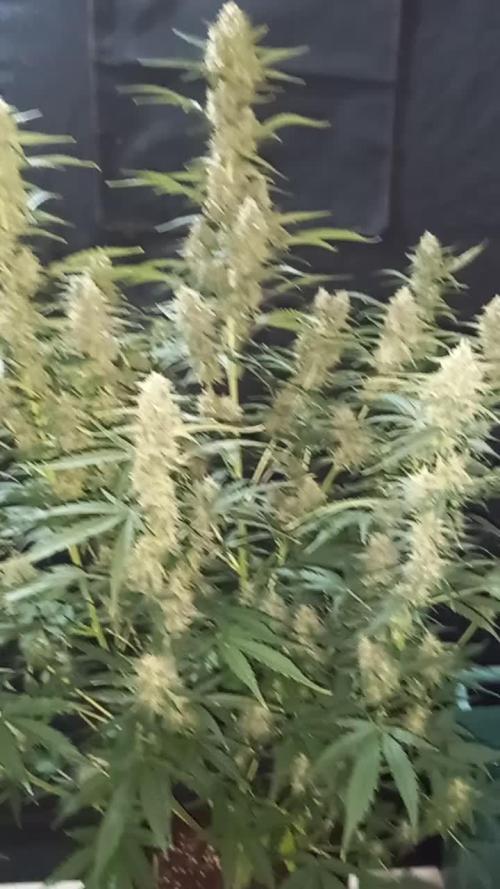
End of Week 1 of flower
Plants drill looking healthy
They’re growing really well even if the temperature is getting pretty low during night time
Merry christmas and Happy growing 🎄💚💚


Likes
2
Share


Likes
21
Share


@FlavoursUk
Follow
Great grow from start to finish, very resilient plant and would of given her some more TLC if I was to grow her again.
Processing
Likes
8
Share


@Energie111
Follow
it was a super week, the girls grew nicely, the full moon is always effective. :) I like to grow cannabis.


Likes
2
Share

@TheFamilyShire
Follow
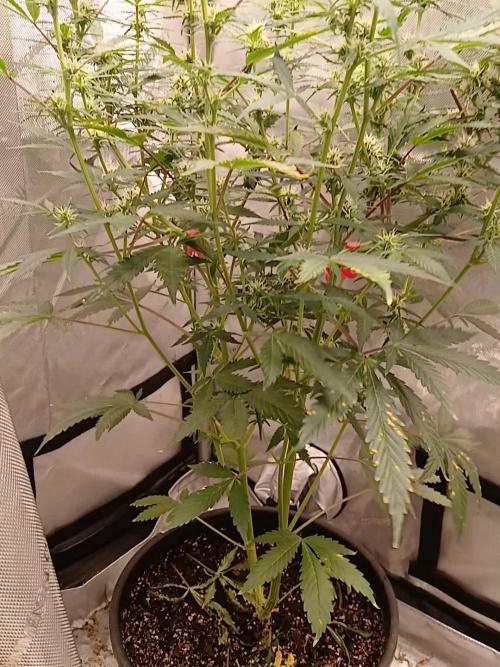
Right now the plant is doing good. She seems like she had slight deficiency on some of the fan leaves. I gave her good water of nutrients and recharge so she will be fine.
Little budlets are everywhere. No purple yet. Was hoping I got a solid purple pheno. Well well see if she purps in the end.
Stay tuned.

Likes
4
Share


@shwable
Follow
Hello and welcome to week 5, everything looks fine so far...
I almost topped the CP1 a second time by accident. When I tried to bend the stem a little more it just snapped clean and I applied tape and stabilized the branch. I hope it recovers and it's looking quite good ;)


Processing
Likes
18
Share


@wheedtobeus420
Follow
Day 70. For a lady who was given salt water. The the wrong ph water. She is really a massive lady. I’m proud of her. She’s taller then my damn light at the moment. But mainely is always hitting it out of the park. She’s bulking. Can’t wait to see what she will do.
Likes
1
Share

@JuiceboxTerps
Follow
Hey guys!
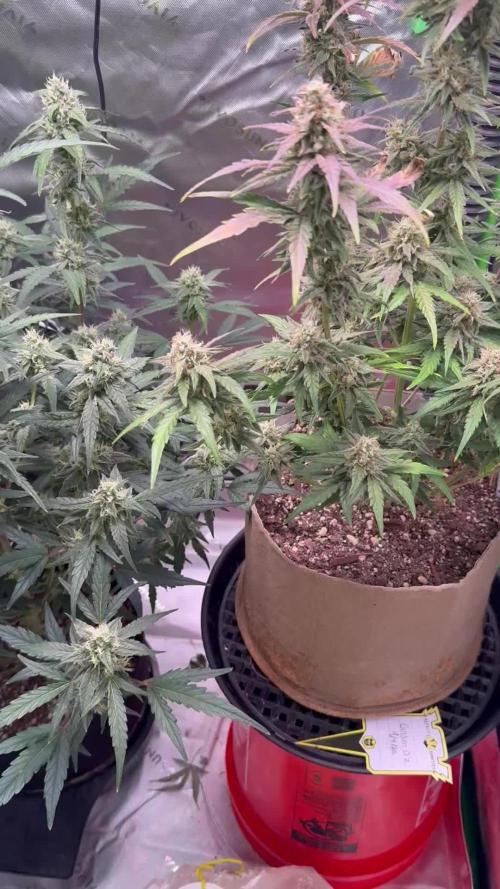
Plants look awesome just keeping the feeds going on both as schedule. Dropped humidity a ton 50-52%
Getting some good stacking on the autopot. Have a great bubblegum smell coming from the tent!
Vpd- 1.3
Ppfd-800



Likes
14
Share

@benmcintosh
Follow
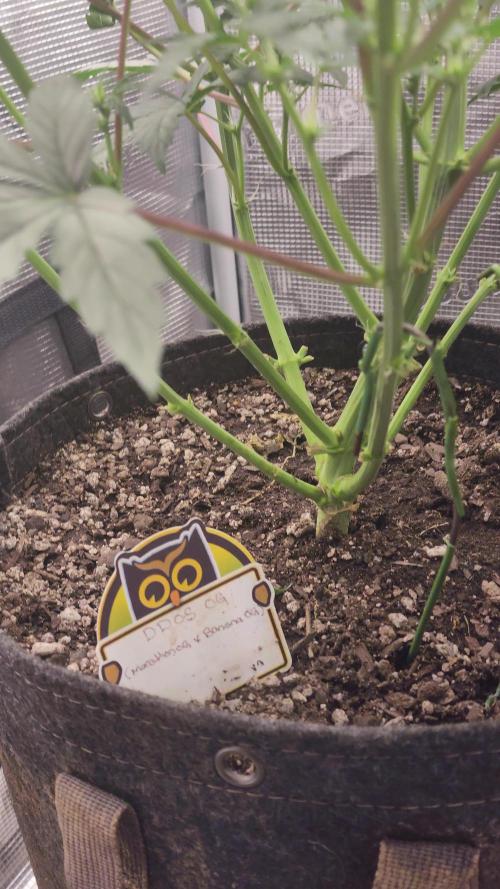
The girls are starting the stretch. Did alot of defoliation, and lst. Got net put up and canopy evened out. The trop pop is on day 35 and other 2 are on day 31. Got my light set at around 650ppfd withba DLI around 40
Likes
27
Share


@Rap_a_cap
Follow
Outdoors........time passes slowly....
Tropical weather here, this week. Hot morning, evening storms , cooler nights, high humidity, wind. What else?
No problems to report, fantastic grow, girls full of life. Lots of work to bend and rearrange plant's shape every day, sometimes twice a day. Defoliation. Plant is responding fantastically.
My Royal Gorilla has one branch with an uncommon mutation. The stem from 4th internode is flat and not circular. From the 7th node, although now plant shows alternate growth, two perfectly identical branches are growing closer to each other, a twin bud mutation. Precisely for this mutation I decided to apply a little supercropping by bending the branch with a flat section at 90 °. I hope it wasn't late and the double buds will recover.
#update August 6, twin buds perfectly recovered from supercropping so I can hope for a monster bud!
Likes
1
Share


@Mastercheef
Follow
They’re hungry and sucked up their second dose of heavy feed. But this time it’s the bloom solution. Sf2000 at full power! One plant has a clear genetics problem and I fear I’ll have to set my controls just to handle the good pheno and hope for the best with tiny Tim.

Likes
45
Share


@Ultraviolet
Follow
2nd net is up. Early bud formations are promising. holding up to the extremes pretty well, some leaves taking minor damage, but overall, she is holding up, gave her 1 night at 50F see how she would react, stressful. Not advised as it messes with her metabolism, but I want to see if it triggers any anthocyanin response. Love to see her purp up but no signs yet.
My homework.
Rubisco regeneration is intrinsically linked to nitrogen supply because Rubisco is a major sink for nitrogen in plants, typically accounting for 15% to over 25% of total leaf nitrogen. The regeneration phase itself consumes nitrogen through the synthesis of the Rubisco enzyme and associated proteins (like Rubisco activase), and overall nitrogen status heavily influences the efficiency of RuBP regeneration.Structural Component: Nitrogen is an essential building block for all proteins, and the sheer abundance of the Rubisco protein makes it the single largest storage of nitrogen in the leaf.
Synthesis and Activity: Adequate nitrogen supply is crucial for the synthesis and maintenance of sufficient Rubisco enzyme and Rubisco activase (Rca), the regulatory protein responsible for maintaining Rubisco's active state. Nitrogen deficiency leads to a decrease in the content and activity of both Rubisco and Rca, which in turn limits the maximum carboxylation rate, Vmax, and the rate of RuBP regeneration Jmax, thus reducing overall photosynthetic capacity.
Nitrogen Storage and Remobilization: Rubisco can act as a temporary nitrogen storage protein, which is degraded to remobilize nitrogen to other growing parts of the plant, especially under conditions of nitrogen deficiency or senescence.
Nitrogen Use Efficiency (NUE): The allocation of nitrogen to Rubisco is a key determinant of a plant's photosynthetic nitrogen use efficiency (PNUE). In high-nitrogen conditions, plants may accumulate a surplus of Rubisco, which may not be fully activated, leading to a lower PNUE. Optimizing the amount and activity of Rubisco relative to nitrogen availability is a target for improving crop NUE.
Photorespiration and Nitrogen Metabolism: Nitrogen metabolism is also linked to the photorespiration pathway (which competes with carboxylation at the Rubisco active site), particularly in the reassimilation of ammonia released during the process.
To increase RuBisCO regeneration, which refers to the process of forming the CO2 acceptor molecule Ribulose-1,5-bisphosphate (RuBP) during photosynthesis, the primary methods involve optimizing the levels and activity of Rubisco activase (Rca) and enhancing the performance of other Calvin-Benson-Bassham (CBB) cycle enzymes.
Biochemical and Environmental Approaches:
Optimize Rubisco Activase (Rca) activity: Rca is a crucial chaperone protein that removes inhibitory sugar phosphates, such as CA1P (2-carboxy-D-arabinitol 1-phosphate), from the Rubisco active site, thus maintaining its catalytic competence.
•Ensure optimal light conditions: Rca is light-activated via the chloroplast's redox status. Adequate light intensity ensures Rca can effectively maintain Rubisco in its active, carbamylated state.
•Maintain optimal temperature: Rca is highly temperature-sensitive and can become unstable at moderately high temperatures (e.g., above 35°C/95F° in many C3 plants), which decreases its ability to activate Rubisco. Maintaining temperatures within the optimal range for a specific plant species is important.
•Optimize Mg2+ concentration: Mg2+ is a key cofactor for both Rubisco carbamylation and Rca activity. In the light, Mg2+ concentration in the chloroplast stroma increases, promoting activation.
•Manage ATP/ADP ratio: Rca activity depends on ATP hydrolysis and is inhibited by ADP. Conditions that maintain a high ATP/ADP ratio in the chloroplast stroma favor Rca activity.
Enhance Calvin-Benson-Bassham (CBB) cycle enzyme activity: The overall rate of RuBP regeneration can be limited by other enzymes in the cycle.
•Increase SBPase activity: Sedoheptulose-1,7-bisphosphatase (SBPase) is a key regulatory enzyme in the regeneration pathway, and increasing its activity can enhance RuBP regeneration and overall photosynthesis.
•Optimize other enzymes: Overexpression of other CBB cycle enzymes such as fructose-1,6-bisphosphate aldolase (FBA) and triose phosphate isomerase (TPI) can also help to balance the metabolic flux and improve RuBP regeneration capacity.
Magnesium ions, Mg2+, are specifically required for Rubisco activation because the cation plays a critical structural and chemical role in forming the active site: A specific lysine residue in the active site must be carbamylated by a CO2 molecule to activate the enzyme. The resulting negatively charged carbamyl group then facilitates the binding of the positively charged Mg2+ion. While other divalent metal ions like Mn2+ can bind to Rubisco, they alter the enzyme's substrate specificity and lead to dramatically lower activity or a higher rate of the non-productive oxygenation reaction compared to Mg2+, making them biologically unfavorable in the context of efficient carbon fixation. The concentration of Mg2+ in the chloroplast stroma naturally increases in the light due to ion potential balancing during ATP synthesis, providing a physiological mechanism to ensure the enzyme is activated when photosynthesis is possible. At the center of the porphyrin ring, nestled within its nitrogen atoms, is a Magnesium ion (Mg2+). This magnesium ion is crucial for the function of chlorophyll, and without it, the pigment cannot effectively capture and transfer light energy.
Mg acts as a cofactor: Mg2+ binds to Rubisco after an activator CO2 molecule, forming a catalytically competent complex (Enzyme-CO2-Mg2+). High light + CO2) increases demand: Under high light (60 DLI is a very high intensity, potentially saturating) and high CO2, the plant's capacity for photosynthesis is high, and thus the demand for activated Rubisco and the necessary Mg2+ cofactor increases. Mg deficiency becomes limiting: If Mg2+ is deficient under these conditions, the higher levels of Rubisco and Rubisco activase produced cannot be fully activated, leading to lower photosynthetic rates and potential photo-oxidative damage.
Optimal range: Studies show that adequate Mg2+ application can enhance Rubisco activation and stabilize net photosynthetic rates under stress conditions, but the required concentration is specific to the experimental setup.
Monitoring is key: The most effective approach in a controlled environment is to monitor the plant's physiological responses e.g., leaf Mg2+ concentration, photosynthetic rate, Rubisco activation state, and adjust the nutrient solution/fertilizer to maintain adequate levels, rather than supplementing a fixed "extra" amount.
In practice, this means ensuring that Mg2+ is not a limiting factor in the plant's standard nutrient solution when pushing the limits with high light and CO2.
Applying Mg2+ through foliar spray is beneficial to Rubisco regeneration, particularly in alleviating the negative effects of magnesium (Mg) deficiency and high-temperature stress (HTS). While Mg can be leached from soil, within the plant it is considered a mobile nutrient, particularly in the phloem. Foliar-applied Mg is quickly absorbed by the leaves and can be translocate to other plant parts, including new growth and sink organs.
Foliar application of: NATURES VERY OWN MgSO4 @ 15.0g L-1 in a spray bottle.
Foliar sprays are often recommended as a rapid rescue measure for existing deficiencies or as a supplement during critical growth stages, when demand for Mg is high. Application in the early morning or late evening can improve absorption and prevent leaf burn.
The starting point [of creativity] is curiosity: pondering why the default exists in the first place. We’re driven to question defaults when we experience vuja de, the opposite of déjà vu. Déjà vu occurs when we encounter something new, but it feels as if we’ve seen it before. Vuja de is the reverse—we face something familiar, but we see it with a fresh perspective that enables us to gain new insights into old problems. Come walk in the enchanted forest.