


Likes
Comments
Share


@Phaleg
Follow
Today was "the day", I had to select some ot them for reason of space and discretion and the selected plants have been moved to bigger pots, as it follows:
Do-Si-Dos (auto), clay pot about 15L = 10cm height (the other one showing already pre-flowering was discarded)
Cookies Gelato, 9,5L pot = 10cm height
White Widow, 9,5L pot = 11cm height
2x ICE, 9,5L pot + 12,5L pot for the second = 11-12cm height (I kept both because they were both amazing!)
The choice of the pot volume was based on the expected height to be discrete, which should be max 80cm and ChatGPT helped me to calculate the pot volume (it suggested me 7,5 to 10L), but I was slightly more generous especially with the auto-flowering.
Last year my Sticky Orange auto got the best yield with the same clay pot, so I tried the same :P

Processing
Likes
16
Share


@iHateSativa
Follow
GSC is basically done, just waiting for 10% amber trichomes
GG4 and Kush look like they'll be while before there ready for harvest


Likes
22
Share


@RDWCGrowing
Follow
12/25/2023-Germination Day 1
Merry X-mas 2023 I decided to start a run of SolFIre Gardens Hoodz Candyz S1. I am going to do a cup filled with RO water a touch of Hydrogen peroxide and let it sit for 24-48 hours until I see tap root then I am going to put it into a rapid rooter.. Tap root Down and put it about 1/4 of the say down the Rapid rooter.
I made some modifications to my basket on this run.. I have taken a few Pods that I use for my cloning machine and decided that I am going to try and use them as sure plants, so that I can take my water right up to the bottom of the basket this time and see if these can make my planting more consistent.
12/26/2023-Germination Day 2
Tap root achieved Planting Commencing
12/27/2023-Germination Day 3
Misted the dome lightly misted the rapid rooter and added a little water to the bottom of the pan to encourage root growth to the pan.
12/28/2023-Germination Day 4
Ground Hogs day
12/29/2023- Germination Day 5
She is up, she has broken surface, I misted the root riot, and around the bottom of the tray to try and entice root growth down rapidly.
12/31/2023- Germination Day 6
Ground Hogs Day
1/1/2024-Germination Day 7
HAPPY NEW YEARS!!.. I did it I planned it out so my planting day would fall on New Years and it worked.. Yay!!!
1/2/2024- Germination Day 8
Since the roots are not to the water yet, I am pouring one cup of water lightly on the hydroton around the lady to try and encourage root growth down to the water..
1/3/2024- Germination Day 9
Ground Hogs day, will continue until roots hit the water.
1/4/2024- Germination Day 10
Ground Hogs day, will continue until roots hit the water. I will just continue to top feed until roots are in the water.. Shouldn't be more than a few more days.
1/5/2024- Germination Day 11
Ground Hogs day, will continue until roots hit the water. I am going to change the water Sunday and kick off Week 1, I will just continue to top feed until roots are in the water.. Shouldn't be more than a few more days.
1/6/2024- Germination Day 12
Ground Hogs day, will continue until roots hit the water. I will just continue to top feed until roots are in the water.. Shouldn't be more than a few more days.
1/6/2024- Germination Day 13
Ground Hogs day, will continue until roots hit the water.
1/7/2024- Germination Day 14
Ground Hogs day, will continue until roots hit the water.

Likes
2
Share

@AsNoriu
Follow
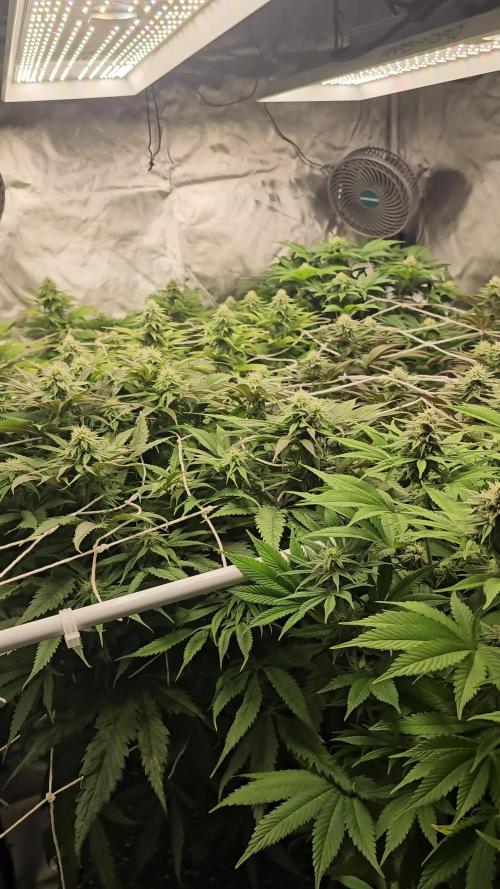
Day 88 since seed touched soil. All is going better, she gets some mass.
Day 89. All oscillating fans are on max, extraction fan on 70 %, always very high RH, but all should be good ! Its hard to grow in basement ... Girl still sheds bottom leaves, colour still more yellow than i would want ...
Happy Growing !!!

Likes
8
Share


@sweetkaya
Follow
Day 57 - Yesterday I noticed that the leaves are darker than they should be, so I re-made the mixing solution lowering the PPM from 750 to 550. I've tried to raise it to see how much nutes that ladies can handle since it's my first time in coco and I like to experiment. Now I'm going to finish this mixing solution and then stabilize the next ones on 650 PPM. Keep learning every day 🙏
Day 60 - Today I added one extra equivalent 75W LED to give the lower nodes more power. Some fan leaves touch it, wish they will not burn. New update in the next days.


Likes
Comments
Share


@IranBudz
Follow
unfortunately I don't have any Content from Veg state.
i will happy if You have any comment or criticism 😍

Likes
2
Share

@JVKdopegrow
Follow
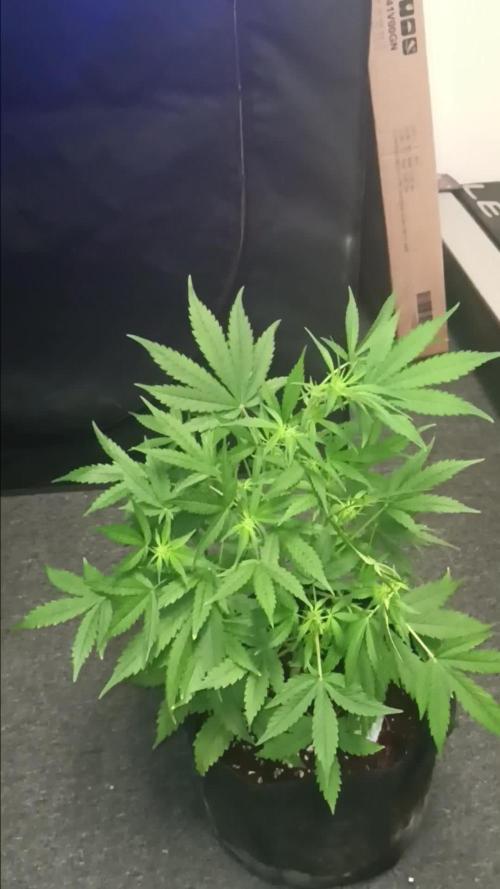
Wow what a stretch! She is now in flower and a real beauty. Very light defoliation of some upper fan leaves and lower flower nodes. I will stake her this week as I am sure buds/colas will tip her branches over.
Likes
4
Share

@Stonerapaisana
Follow
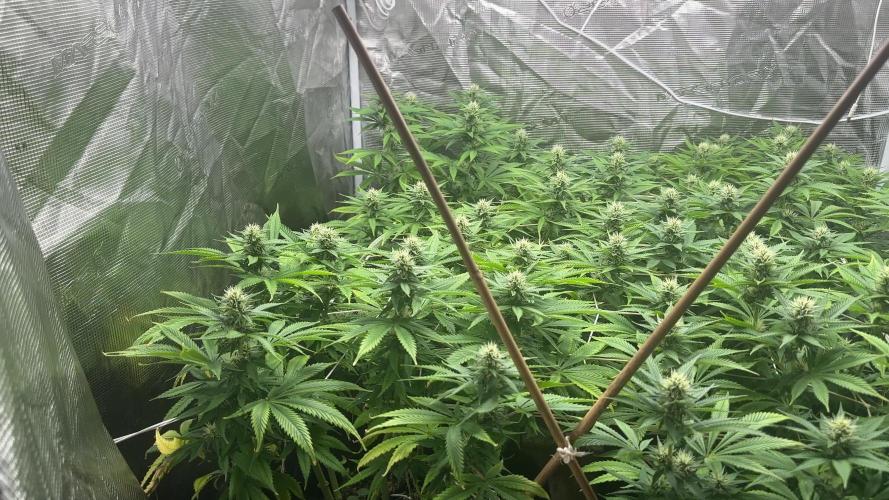
11/08/2025 - Tenho regado apenas com agua mineral com ph 6.2, para não saturar mais com nutrientes. Luz tá a 100%. Agora a ver a acontecer :D
14/08/2025 - Agua e só agua xD

Likes
92
Share


@DogDoctorOfficial
Follow
Week 9 Flower Report: The Countdown to Harvest Begins! 🌼✨
As the ninth week of flower unfolds, the room is a symphony of colors and frosty brilliance—a true gardener’s dream! But as we approach the final stretch, it’s a delicate dance of vigilance and care to ensure a clean and bountiful harvest. Here’s a deep dive into this exciting and educational week:
The “Flush” in Full Swing
The flush continues as we prepare the ladies for their final days. While we’re a week or so away from harvest, the plants are responding beautifully, showcasing stunning fades that highlight their unique genetics. This fading process is a critical part of the journey, helping the plants naturally finish their cycle while preserving those complex terpene profiles we all love.
The Mold Incident: A Teachable Moment
This week brought a challenge—a few buds succumbed to bud rot (Botrytis), particularly on the Papaya Zoap and a single bud from the Gorilla Melon. While disheartening, it’s a reminder that mold can occur even in the most well-maintained gardens, especially with dense colas and a full canopy.
After a thorough inspection, all affected buds were removed and discarded to prevent the spread. A quick note to all growers: defoliation plays a massive role in airflow and prevention of such issues. This is why mid-flower defoliation is a game-changer, and I’m grateful it kept the rest of the garden healthy!
Papaya Zoap’s Unique Quirks
The Papaya Zoap continues to be a star of the show with its frosty buds and… albino tips! These tiny white tips are likely from being too close to the lights. While it’s a cosmetic detail that doesn’t affect quality, it’s a fascinating display of how genetics and environment interact.
A Frost-Filled Wonderland
The room is absolutely glistening with frost. Trichomes are piling up like snow, giving the entire garden a magical wintery appearance. I genuinely believe the ThinkGrow LEDs and TrolMaster spectrum control deserve a shoutout here. Running deep red, far red, and UV at 100%, combined with whites at 50%, is delivering incredible results. The ability to fine-tune the spectrum is a game-changer for resin production and terpene enhancement.
Environmental Mastery
Here’s a peek into the environmental stats keeping the ladies thriving:
• Room Temperature: 26°C
• Relative Humidity (RH): 53.2%
• VPD: 1.57 kPa
• CO2: 1067 ppm
• PPFD: 690 µmol/m²/s
This balance creates the perfect conditions for fattening buds and maximizing quality in the final weeks.
Nutrient & Soil Rundown
On the nutrient side, the solution measures:
• pH: 6.67
• TDS (Reservoir): 65 ppm
• Solution Temp: 18.3°C
Soil stats show a TDS of 695 ppm, indicating there’s still some nutrient reserve left in the medium—a perfect transition into the flush phase. It’s all about ensuring the plants have enough to finish strong without compromising flavor or smoothness.
A Garden of Many Colors
The fades across the room are a sight to behold. Each strain is showcasing its unique hues, with the Green Papaya leading the frost parade, and the Punch Pie taking the crown for bud size. Meanwhile, the Gorilla Melon is dazzling with red reflections, and the Papaya Zoap keeps turning heads with its white crystalline canopy.
Videos with TM+ Pro
This week, I’m also sharing videos straight from the TM+ Pro app. This tool has been a joy to use, offering precise control and insights into my grow environment. It’s simple for beginners and robust for advanced growers, proving once again that the TrolMaster ecosystem is a must-have in any grow room.
P.S. Ecosystem Excellence
I can’t emphasize enough how incredible the TrolMaster ecosystem is for growers of all levels. From intuitive configuration to seamless integration, it’s a system that simplifies growing while delivering professional results. Whether you’re just starting out or refining your craft, TrolMaster has your back.
Thank Yous & Shoutouts
As always, my heartfelt thanks to my sponsors: TrolMaster, ThinkGrow LEDs, Aptus Holland, Pro Mix Soil, Cannakan, and the amazing seed banks for their genetics. Huge love to the community—followers, haters, and everyone in between. And, of course, a special nod to Grow Diaries for being a platform where we can all share and learn together.
Let’s finish this grow strong, and here’s to an exciting harvest week ahead. 🌱✨ Stay tuned, stay positive, and as always, Growers Love! 💚
Discount Codes so you can save big on your next check out 💚💚💚
Kannabia - DOGDOCTOR 30% off
SeedsmanSeeds - DOGDOCTOR 10% off
CannaKan- DOGDOCTOR 15% off
terpyz.eu - DOCTOR 15% off
The Neutralizer - PORKIT5-DOG 15% off
Fast Buds - DOGDOCT 15% off
As always thank you all for stopping by, for the love and for it all , this journey of mine wold just not be the same without you guys, the love and support is very much appreciated and i fell honored and so joyful with you all in my life 🙏
With true love comes happiness 💚🙏 Always believe in your self and always do things expecting nothing and with an open heart , be a giver and the universe will give back to you in ways you could not even imagine so 💚
Friendly reminder all you see here is pure research and for educational purposes only
Growers Love to you all 💚💚💚


Likes
17
Share


@420DeepGrow
Follow
Gracias al equipo de Orinal Sensible Seeds, Marshydro y XpertNutrients sin ellos esto no sería posible.
💐🍁 Slapz:
Los elevados niveles de THC te sumergirán y envolverán cuando cultives nuestra nueva variedad de Cali, Slapz. Nuestro último híbrido americano es un cruce de Greasy Monkey y Runtz, y esta dama de la costa oeste es una verdadera intérprete y extremadamente gratificante para cultivadores de todos los niveles, ya que produce generosas cosechas de potentes cogollos pegajosos cargados de potentes tricomas de THC. El limoneno es el terpeno más dominante y produce un exquisito aroma y sabor a caramelo dulce afrutado con un ligero fondo floral y un toque de diésel.
Estoy usando el FC6500 como luz principal 💡, con su potencia y espectro, espero un crecimiento fuerte y buena floración 🌱✨, también usaré los Adlite UV55 de 55W para complementar las primeras etapas.
En cuanto a nutrientes, he optado por XpertNutrients 💧, que es conocido por su fórmula equilibrada y fácil de usar. Sus productos están diseñados para ofrecer una nutrición completa durante todo el ciclo de cultivo, ayudando a las plantas a alcanzar su máximo potencial.
📆 Semana 5:
Esta semana la Slapz sigue pegando un estirón brutal y empieza a engordar los cogollos con ganas. Los tricomas asoman con fuerza y el olor cada vez es más intenso, tirando a dulce con un fondo terroso que promete.
Los Adlite de Mars Hydro están marcando la diferencia. La penetración lumínica es una locura: hasta las ramas bajas están formando flores densas, cosa que en otros cultivos me costaba más ver. La temperatura y humedad se mantienen estables gracias a su sistema de disipación, lo que me da más margen para apurar sin estrés.
En cuanto a nutrición, sigo con el plan de XpertNutrients, ajustando los niveles de PK para esta fase. Se nota la calidad: las hojas están verdes, sanas, sin señales de carencias ni excesos. El tándem luz + nutrientes está funcionando como un reloj.
Ahora solo queda seguir vigilando tricomas, ajustar algo de riego si hace falta, y dejar que la magia siga su curso.

Likes
8
Share

@GREENPHOENIX6262
Follow
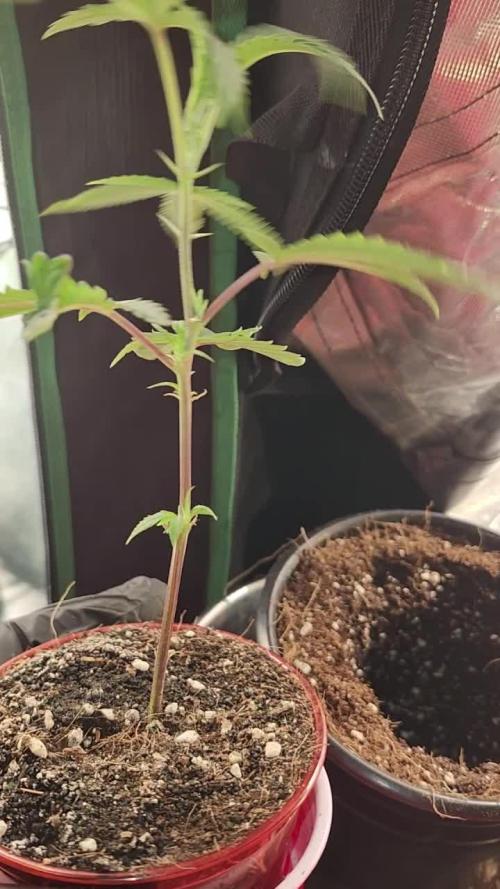
03/01 - (M) - Currently in pre-flower - She is growing amazingly - No deficiencies, wilted leaves or visual que's - I have changed her feeding program to daily micro-dosing between clean water and nute feed alternating days - She will be transferred into the 4x4 flower tent within the week.
03/01 - (C) - The clones are coming along nicely - Transplanted the 7 into 1 gallon pots last night - The substrate is the same as the mother with an added top dressing of worm castings last night - Increased feed formula on some of the nutes (Nitrogen/Silica and Cal-Mag) - High humidity/High heat is the name of the name the game - Specs to follow
Clone specs - Week 2
Height - 13 Inches
Temps - 82°(f)
Feed Temp - 65° (f)
Humidity - 79 - 81%
Watering Vol - 2 cups every 3 days
Nutrient Feed - Nitrogen - Silica - Cal-Mag - Microbes - Kelp - Horti Grow - Myco

Likes
152
Share


@EBxAH
Follow
Went camping so I couldn't start the week right away. June 16th was the start of week 3...going GREAT so far. I'm definitely leaning towards topping and mainline for these ladies!
EDIT: I goofed up, lol. They were born on June 6th. So yesterday, June 20th was the start of week 3.
EDIT: the ladies went in their final pot today, june 22nd to a 6.25 gallon pot. They look dinky now, lol. That'll change pretty quick 😎

Likes
Comments
Share

@LegacyGrow
Follow
Englischversion below
Deutsch:
Tag 36 Veg:
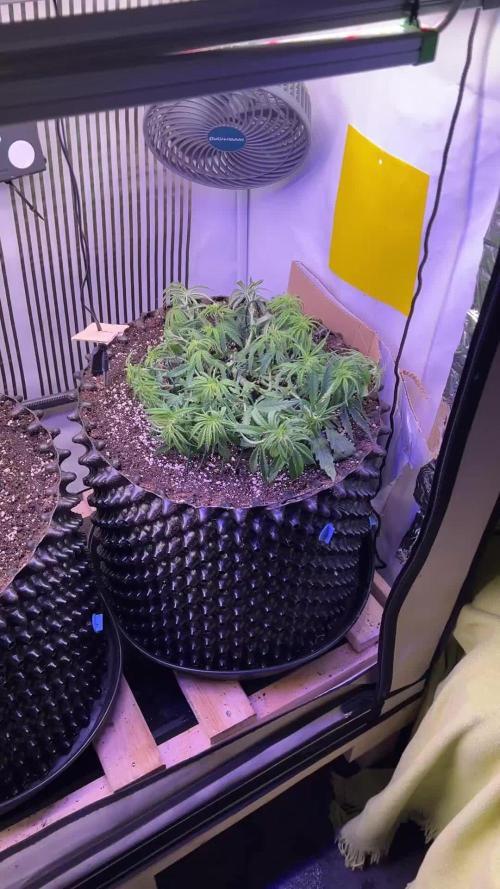
Das Umtopfen bereitet den Damen noch sichtbar Schwierigkeiten. Auch der Temperaturunterschied stresst die Damen sichtbar. Der VPD muss angepasst werden, da sich die Temperatur von im Schnitt 28,5 Grad auf im Schnitt 22,5 Grad gesenkt hat. Die Blattoberflächentemperatur liegt im Schnitt bei 20,5 wodurch die RLF% bei ca 60-65% gehalten wird.
Heute wurden die Damen auch vollständig mit ca 8,5L mit einem PH von 6,3 und 0,5 ml/L CalMag gegossen.
Ein leichtes LST hat die Fürsorge heute abgerundet. Ziel ist es mit einer wider gesunden Pflanze an den Rand des Topes zu kommen.
--------------------------------------------------------------------------------------------------------------------------------------------
Day 36 – Vegetative Phase:
The transplant is still visibly causing stress to the plants. The temperature difference is also clearly stressing them. The VPD needs to be adjusted, as the average air temperature has dropped from around 28.5 °C to approximately 22.5 °C. Leaf surface temperature averages about 20.5 °C, which requires relative humidity to be maintained at roughly 60–65%.
Today, the plants were fully watered with approximately 8.5 liters per pot, adjusted to a pH of 6.3 and supplemented with 0.5 ml/L Cal-Mag.
Light LST was also applied today to round off plant care. The goal is to reach the edge of the pot again with healthy, stable plants.

Likes
14
Share


@Mr_nugs_lover_David
Follow
This lady has been Transplanted on day 39 since she was planted (may 10th) and I've prepared the 15L pot with the complete line of biotabs using 2 spoons of startrex for every 5L, sprinkled a couple of grams of mycotrex on the transplant hole before putting the plant and then I added 3 slow release tabs one biotab for every 5L of soil, so that's why in this case I added 3, after the Transplant was done I immediately watered the plant with 1ml/L of orgatrex and 1g/L of bactrex, I hope you guys enjoy my work this season!!

Likes
16
Share


@Growgus
Follow
The plants seem to be growing well. Some discolouration in the leaves as well as curling. I think the heat might be too much and the soil looks to be hot. Also, might have overwatered. Making some adjustments so that week 2 is better.

Processing
Likes
2
Share


@NewbieLearner
Follow
Been slack with the updates as we are busy buidling a new greenhouse. will make sure I take nice individual photos for harvest though.


Likes
1
Share

@sunshinegroww
Follow
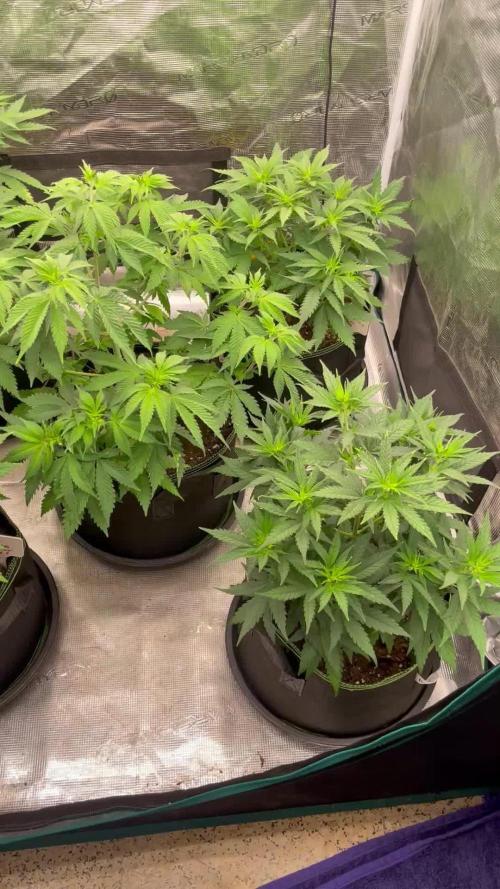
She had small defoliation as to battle humidity but she is very happy looking off to 12/12 now and go from there
