


Likes
Comments
Share


@Kardo
Follow
Es ist die Zeit gekommen und die Lemonberry ist ab ich trockne sie jetzt noch 10 Tage und dann kommt sie in die Gläser sie riecht sehr fruchtig

Likes
6
Share

@Daris_Growmance
Follow
Wintergrow 🌱❄️
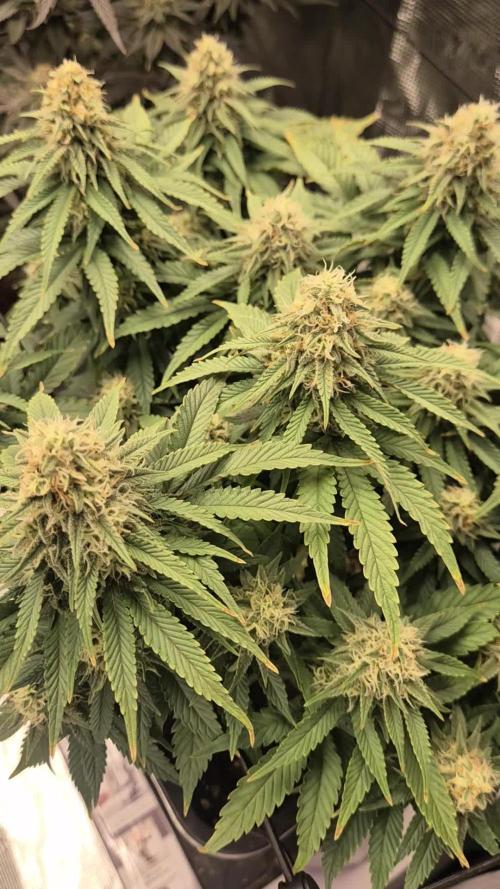
Der Run nähert sich langsam dem Ende.
Die Permanent Chimera im hinteren Bereich steht kurz vor der Ernte und zeigt ein starkes Finish mit dunklen Farben und ordentlich Frost.
Im vorderen Bereich läuft die Roswell Code noch etwas länger und braucht voraussichtlich noch ein bis zwei Wochen, um vollständig auszureifen. Die Buds bauen weiter auf und legen aktuell noch gut an Masse zu.
Der Unterschied zwischen den Strains ist deutlich sichtbar – sowohl im Wuchs als auch im Reifeverhalten.
Jetzt geht es in die finale Phase:
Geduld, sauberes Arbeiten und die letzten Tage optimal nutzen.
Der Winterrun hat definitiv abgeliefert 🔥❄️

Likes
7
Share


@hash_thetics710
Follow
Visual//. underwatering a bit - since flowering could of raised it a bit - I am
still feeding only 3 gal only for ALL eight and a half basically small plants _
genetics looking superb still and health is booming still!!
Casually been trimming couple smaller leafs on bottoms that form- very reserved trimming though -
also Low stress tugging them every night to help lower branches into nicer isolated grow areas - babying them during these phases, watching for pests

Likes
14
Share

@Mrs_Larimar
Follow
2026-06-20
And the update,
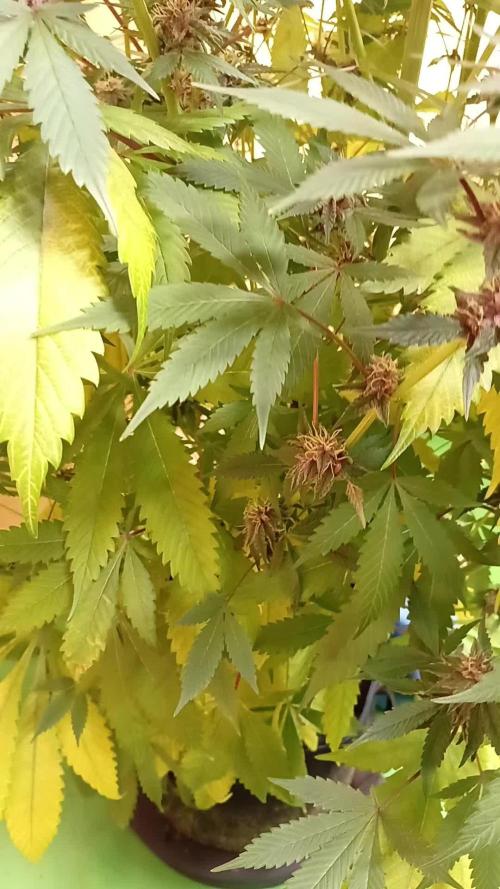
I have been away for more than a Week and the Girls look fantastic, they matured more
you can see leaves fading, Pistils turning orange and wonderful Colors appear
she turned purple!
Buds are stacking and getting frosty- she stopped stretching, and concentrates in Budforming.

Likes
16
Share

@Paying_Customer
Follow
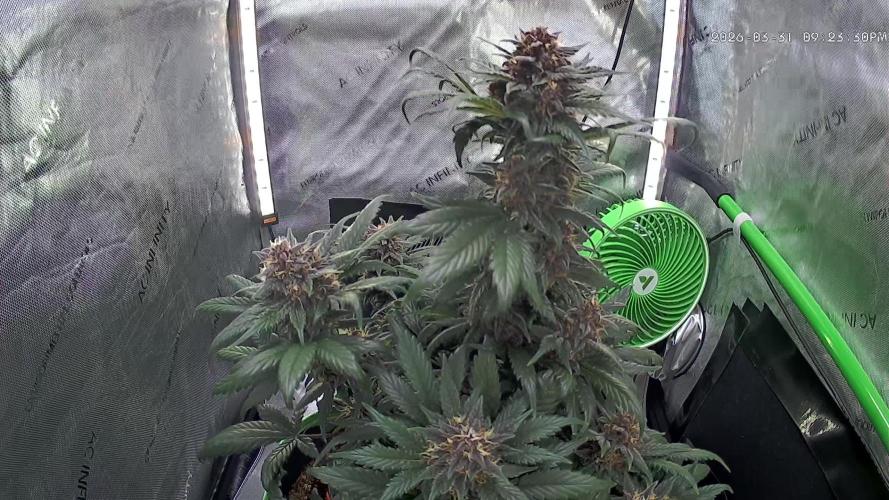
Maybe two more weeks to go buds are filling out nicely and are rock solid.

Likes
10
Share


@Genussmittel420
Follow
sugar leafs starting to get the first trichomes. few days later than the tripple g but the smell is (even when it is more decent than the tripple g) much better for my taste

Likes
2
Share


@rastafarmerc_zzz
Follow
had crazy smell when I opened the glass it smelled like two rooms away
Very good high more indica
Likes
50
Share


@AsNoriu
Follow
Day 50 since seed touched soil. They overgrew everything !!! Bomb is heavily packed, top bleaching. I think i was late with top up, they developed fast and used a lot. I check run off for ppm, but thought 800 still ok, it was not. So big last top up !!!
ALL NUTRITIONS ARE GRAMS TO POT LITRES !!!! Neutralise is in real measurement only.
Great White - 3 g each pot
Biosys - 3g each pot
Charge - 30 g each pot
Life-Cycle - 60 g each pot
Bio-Blend - 100 g each pot
Watered straight after, 3.5 liters went in.
Some girls are almost brushing Mars Hydro TSL2000 and i see no issues if air is moved and temp with humidity allows it. Great light, plants grow very well, too well ;)))) will do new clearing after two waterings, want girls to eat first, make bigger roots, then i will resize again to concentrate more on tops.
MARS HYDRO TSL2000: 300W, Flower 2'x4', Veg 3'x5'
It's recommended for beginners.
Low-budget & high-efficiency.
Took down first time ever LST while still growing. Needed space of pot, for last top up and i think they will breath better without, branches are stiff, i would add silica to feed at such time, to stiff them, but i go with one line only, just full beans ;)))
Happy growing !!!

Likes
59
Share


doing well so far I'm wondering if the one gallon container I have it in is enough

Processing
Likes
Comments
Share


@Scarface8290
Follow
Went light on the nutes. Quarter strength. They responded well. Lowest leaves looking somewhat burnt. Still getting fat though.
Likes
4
Share


@HowtoBubatz
Follow
The stretch phase is officially over, and now the plant is shifting its energy toward trichome production!🌱
I’ve started noticing a light scent developing, though it’s still not very intense yet. I expect that to change in the coming weeks.
I did a light defoliation to improve airflow and light penetration, and I plan to do another round in about two weeks.
Interestingly, the fan leaves are starting to take on a slight reddish hue—curious to see how that develops! 💪😊
So far, everything is looking great, and I’m excited to watch the buds bulk up in the next phase!
Likes
41
Share


@Basementganja
Follow
I (pre-moistened) worked in 2.5 gallons of de-chlorinated tap water, with my fingers into this high-porosity soilless growing medium. This variant is very dry, and seems to reject water, until moistened(3cu ft compressed, Agro a5-hp from local nursery).
Even after the 2.5 gallons of water was worked in (with no runoff), there was still a dry patch at the bottom of the pot.. I figured it would start to absorb from the wet medium on top, over time.
It is now Day 10, and the moistened medium never needed to be watered since day 1. The medium is almost dry enough to be watered (see final picture). Maybe one or two more days. I will poke/scratch the soil daily, to ensure that I wait long enough, to not over-water.
Likes
9
Share


@bigolebuds
Follow
Week 8 12/22-29: Getting close to chop day.. planning to start the “flush” soon.. Trichomes looking cloudyyyy

Likes
34
Share


@rhodes68
Follow
5/24 Week 9 and the state of the grow is stable.
Well Sally and Athena are in flush through the week, trics are white little to no amber so timing seems good.
Baba is on low dose nuets she goes into flush prob in a few days. No rush on her she can stay long as she wants.
5/25
Further reducing nuets on Baba but continuing to feed leaving PK as is
Flushing continues
Finally under the HPS bulb, set to max 600w (tent runs 2F cooler with HPS over MH) , will keep it high as we may with heat keeping things under 83F
Did some leveling work on the canopy, things are not so out of wonk now, grow is looking better
Some natural light pics to show her resin and frosty purple
5/26
Looking at Baba's bud growth think she will be in flush very soon.
Flush proceeding on others some def showing up on Athena primarily, CA mostly which is expected in coco on flush
5/27
All in flush now.
Just fighting heat this week damned new lights were stolen in transit so on HID for the meantime.
Just have to keep downing the power to keep the heat in control and finally increase lights out to 18-6 if that proves insufficient.
Cost yield but hate fox tailing
Pic of an old friend of the girls... Mary the desk plant
Pics of girls defol day
Something you wont see very often at all, healthy twins same pot same seed different phenos as Jane is expressing heavy green color while Sally purple black red.
5/28
Deficiencies showing heavily on Athena not as much on Sally as expected- will harvest ahead of the heat wave Saturday, get as much out of the tent as possible leaving only Baba Cleo and Jane in the tent on lowest HID setting or even just on the LED for that day.
Wanted to run them longer but 20F over normal so I wont play around with heat, it will kill a grow.
Pics later
Reducing light on hours to 18-6 to reduce heat during the afternoon
5/29
Harvesting Sally and Athena tomorrow AM.
5/30
Week ends with a harvest!
Sally Yield - 282 grams wet
Athena Yield - 368 grams wet
Looking at about 4.5 oz dry about 3 months of that medication
Jane back into the tent and on a good dose organic nuets see how this plays out
Baba continues in flush for a few days hoping for a big(ish) payday from her
lot more room now
Likes
10
Share

@Legendaryseedthumb
Follow
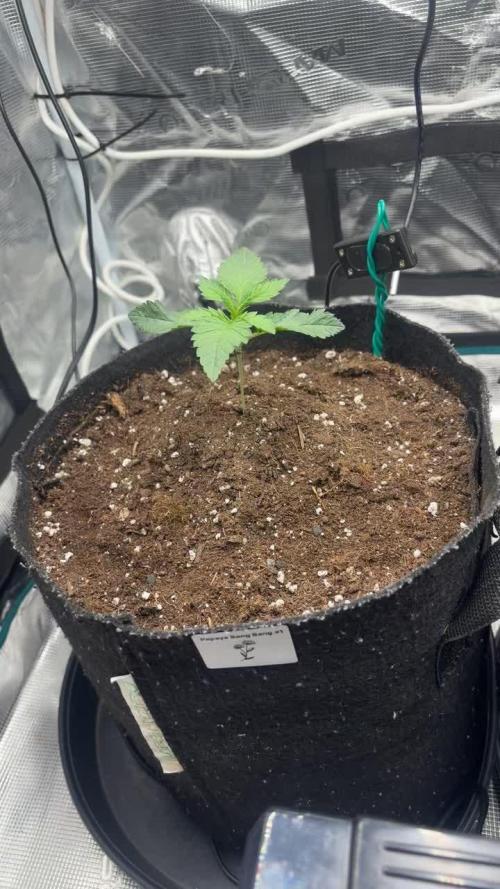
Day 8: i dropped my phone in the bath tub so my photos are very blurry atm :/ besides that she’s doing good.
Day 12: she’s a grower not a shower, you’ll se😎
Day 14: had to put support on the stem because i had too much fan power so she started to lean. Will recover in 24/48hrs!
We are entering week 3 tomorrow! I see forward to it, I will be topping at the 5th node.

Likes
23
Share

@Diips
Follow
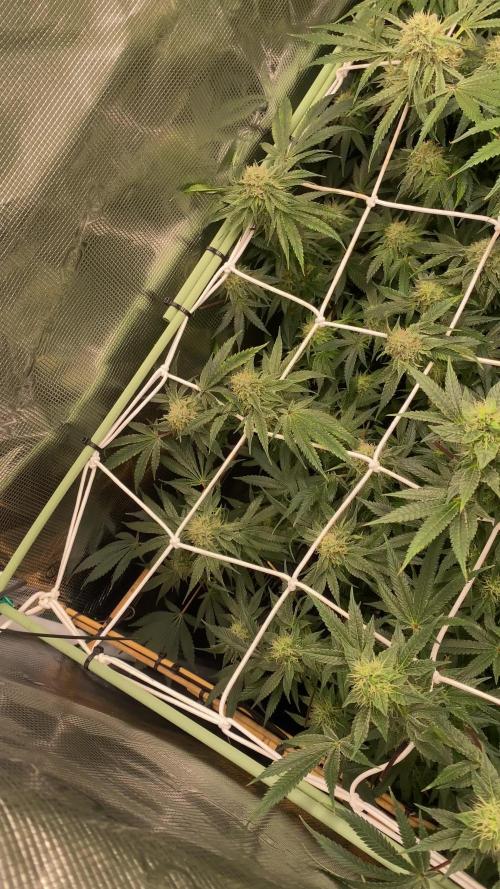
day 43 - 25/12/2025 - Week 7. The canopy is really bulking and becoming fat as hell! gonna be interesting to see how it all turns out in the end. we still have many weeks to go! wanna make sure to build a-lot of rich amber resin, so we can make some good sleep aid. 🌞
had to feedings a little too close to each other, which might have made me burn a few tips.. but well mistakes do happen, looks like all the girls are taking it anyway, but i will be more gentle.
did a little late defoliation at day 44. to help airflow and bulking

Likes
4
Share

@JorgeNitales420
Follow
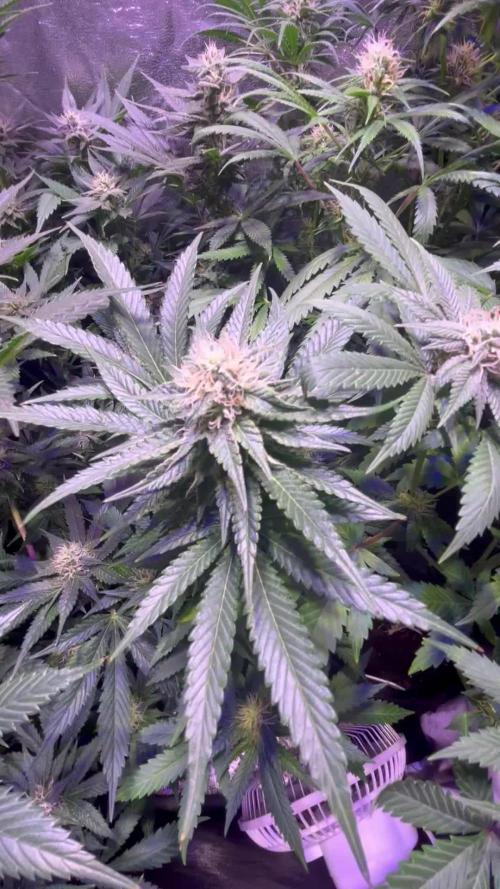
Another week of flower, last water with 700ppm. Since im seeing a little bit of burned tips and claw leaves I decided to do the last water with 700ppm with a 20% runoff. Next water will be no mor than 200ppm with Carboload Tasty terpenes as the week finisher and will be using Flawless Finish on the last week
Processing
Likes
41
Share


@Enki_Weed
Follow
As you can see, all our plants are very well.
Yesterday we gave them fertilizer for the first time.
We add 1ml BioGrow, 1ml BioBloom, 1,5ml Heaven, 1ml Top-Max and 1ml Activera
on 1 Liter water and gave 250ml of these mixture to every plant.
Thanks for your comments 😄

Likes
6
Share


@Pepeu420
Follow
Experiência muito boa, já estou com um clone da mesma florindo novamente
Não percam a oportunidade planta incrível!
Likes
11
Share


@Thigh
Follow
Englisch
- It rained very heavily again. Little sun during the day. She is a real survival artist. I think she's starting to bloom. Not Happy now whit results now.
Deutsch
- Es war sehr regnerisch. Wenig Sonne den Tag über. Sie ist ein wahrer Überlebens Künstler.
Denke sie fängt an in die blüthe zu gehen.
Bin nicht zufrieden mit den jetzigen Ergebnissen.
Likes
8
Share


@Ch33cH
Follow
Now this girl i am so happy to be chopping. This is her final update before she comes down after dark period.
The plant itself has been fantastic. She had great growth from the begining but just far to much for the space i had for her.
Shes not a very pungent strain but does have a mellow sweetness coming from her. If she is as nice as my last dance with Sweettooth i will be over the moon.
