


Likes
Comments
Share


@BenDidKnEe
Follow
Adding the carb is helping boost the resin production. Plants are fading a bit almost time to start the flush! Happy growing!

Likes
53
Share


@Still_Smoq
Follow
This week I’m introducing my plant stands. It is a carousel design. They are lightweight, independent and can be put on/removed during growth with little effort or at the time of setup. I’ve had this idea for years, tried to find anything similar to it on line without success. I designed and assembled it about 2 years ago. It’s very versatile, can be modified for various uses and sizes, allows you 360 degrees access to you plant by rotation, brings you the ability to grow in a sea of green environment. Netting can be any size you desire and rotates with the plant. If you have any questions don’t hesitate to ask. Please take a look at my video this week that explains more. **The one on the plant now is actually designed for a 5 gallon bucket, I’ve simply modified it to work on this 2 gal bucket temporarily.
This week she continues to outperform expectations and needed bracing because the weight of the flowers tipped her over. This was expected and remedied and all branches have now been spaced apart to allow bright lighting to penetrate deep into the plant. This is needed to mature out the lower buds. In another week I will cut back some more of the bigger leafs to allow even more light to get through. She continues to focus her energy on bud and trichome development (girth). The nutrient schedule has been updated as she is headed toward a late bloom cycle. Her smell is intensifying weekly. Maintain light power at 100% and PH at 6.24
I would highly recommend doing your own research on the blooming cycle. The change in nutrients is still controversial, but there is new and relevant studies that show of the main 3 NPK - K potassium was thought to boost flower production, the fact is this need on the plant remains relatively unchanged from vegetation through transition up to ripening. I continue to increase K in my schedule, but have started cutting back over this past year - up to 1/3 - without any noticeable difference. I have more that lends credibility to this theory I’ll explain next week. The case of bigger bud doesn’t mean anything special unless genetics and growth are in synergy.
A quick note: I use General Hydroponics for nutrients and not this other one that is being listed, Terra Aquatica. I have no control over this update within Grow Diaries.

Processing
Likes
3
Share


@ZJRDUDEZ
Follow
Week 6 of flower for these ladies and their pistols are all starting to turn very orange. You can see in the picture of the burn leaf that I messed up on the PH and let it run to high for to long, so my PH level was around 7.2 in my soil. The Ghost OG seems to be a bit behind in development than the other two but that’s fine. I’ll probably still chop her same day as the others because I won’t be running the ghost OG anymore. I have recently been stocking my personal seed vault. So in the near future after I get a strong mother from the Tropic Moon & Dark Plasma by OceanGrownSeeds. I plan on also be running the Dominatrix and the Primal Punch F2 by EmpireBreedingCo. I hope you guys are excited to see these strains grown. If you don’t know of OceanGrownSeeds or EmpireBreedingCo make sure to check them out on Instagram. Thanks for checking out the garden.
Likes
29
Share


@GreenHouseLab
Follow
It’ll take me 30 min to trim this whole plant just the way I like it. Most likely be the first one to come down also need to get her ready.
Likes
28
Share


@Sators
Follow
Hi good fellows!💚
🌱Day 50. Watering with 3L 6.8ph 150ppm clear tap water. Run off water get 115ml and measures is 6.7ph 650ppm.
MP4 included.💚
🌱Day 52. Watering with 2.7L 7ph 150ppm clear tap water. Run off water get 115ml and measures is 6.7ph 550ppm.
Worry about ppm level. Keep watering with clear tap water!💚
🌱Day 54. Watering with 2.5L 7ph 150ppm clear tap water. Run off water get 35ml and measures is 6.7ph 400ppm.💚
🌱Day 56. Watering with 2.7L 6.8ph 150ppm clear tap water. Run off water get 55ml and measures is 6.7ph 400ppm.
Amazing!💚

Likes
Comments
Share


@bigsmoke42069
Follow
Final weight after trim:
(B) pheno (on the right side, 2 plants):
top: 96.97g
mid: 102.96g
small: 32.65g
trim: 54.45g
Total: 287.03g (143.51g each plant)
(A) pheno:
top: 47.44g
mid: 65.65
small: 21.62g
trim: 29.6g
Total: 164.31g
(C) pheno:
top: 37.19g
mid: 60.6g
small: 39.17g
trim: 40.04g
Total: 177g
Total yield 628.34 dried grams.
1.45 grams/watt.
great sucsess!

Likes
20
Share


@eldruida_lamota
Follow
Que pasa familia, ya estamos de vuelta, y traemos la 3 semana de crecimiento, la verdad que pronto toca ya trasplantar, me sorprende los espacios entre nudos, el led no solo hace si función si no que mejora bastante el crecimiento de los ejemplares.
Ph regulado, echamos poca cantidad de nutrientes pero en nada cuando trasplantemos cambiaremos la alimentación.
Temperatura ideal, humedad algo baja pero sin problema alguno, ya va quedando menos para el cambio a floración también.
Www.mars-hydro.com
web: http://bit.ly/2uJAjgy
ts600: http://bit.ly/3cnv0Ev
code: an420
un saludo fumetillas y buenos humos.

Likes
9
Share

@PavementPunk
Follow
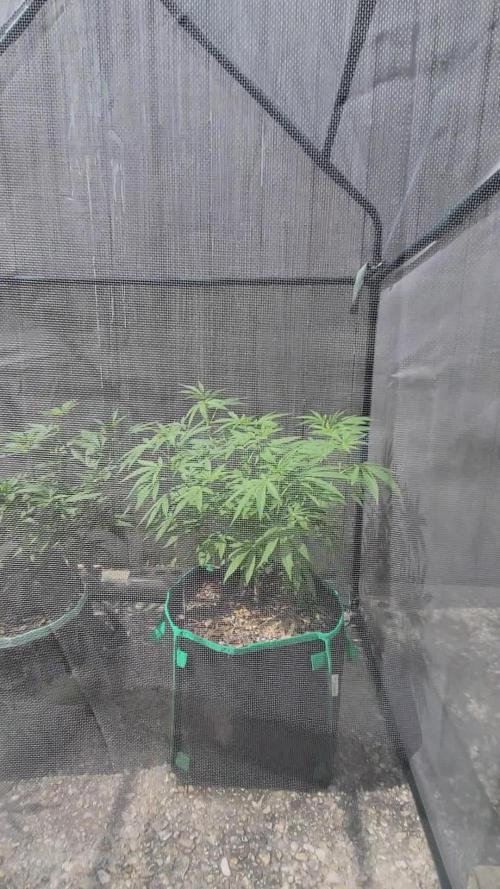
6/30/26 First 50% strength feeding of Strive ph 6.2-500 ppm tds- 1000 ec- 69 degrees Fahrenheit for all 4 plants. approximately. All these outdoor girls are doing lovely and im very pleased with them and with my ph pen and with my indoor tent and plants. Happy with my fungi projects too. Also my physical projects like rearranging and organizing my grow room and my tent and fan setups. Ive really been putting in some good hard through work and i know within about 2 weeks its going to start and continue paying dividends. Happy growing friends ✌️

Likes
38
Share


@kijani
Follow
small things put big things into perspective this week ... it sure feels longer than 7 days this baby plant week ... the new seedling is doing great, and with the new home I don't have to mess with it as much. i have to bring the light very close to the seedling to prevent stretching. unfortunately, the light directly above the seedling prevents me from really enjoying the growth visually and taking lots of pictures, still, the camera and timelapse helps.
i think i should have started the seedling elsewhere then brought it to the pot when the roots were developed more, but it is safer here - even if it seems a little slow growing. i think the growth will sprout once the roots are directly exposed to the pressurized nutrients.
it was fun dosing and using the diy doser, even though I had to prepare and dispose of a 50-gallon nutrient batch when I only really needed 2 gallons for the hpa garden. still, I can't measure things accurately manually so the plant(s) has a better chance this way. also, i get to run the doser commands manually, which is making me learn and understand better the challenges it will take to make multi-zone dosing reliably autonomous
girlfriend and i are looking forward to a second week of grow


Likes
3
Share


Likes
3
Share

@Jessi576
Follow
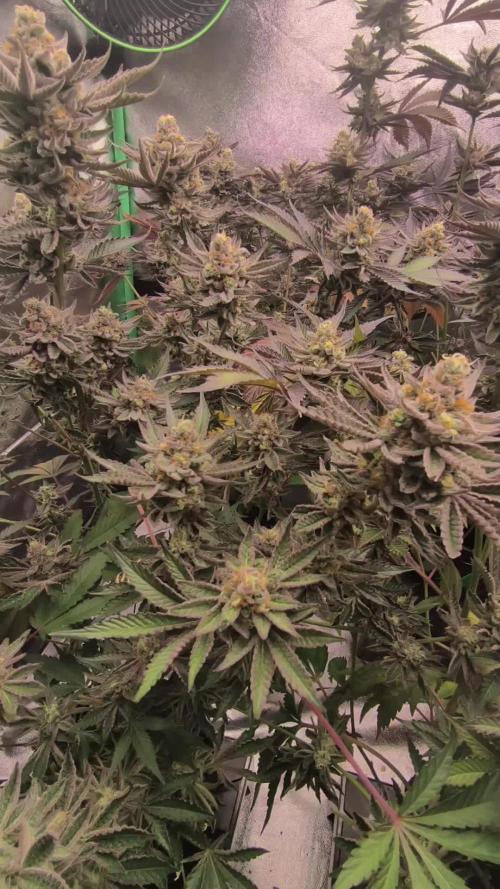
👉 Week 9 Bloom👈
👉01.05.2026 - 07.05.2026👈
👉 Days bloom: 57-63👈
The end is near !
This is my most beautiful grow for me, until now. Very beautiful nuggets and very few leaves.


Likes
6
Share


@MichaelMan
Follow
Switched to 24h light cycle for faster grow.
Added one 25€ 6500k 100w light for better veg. Took the warmer light bulbs away for lower electricity costs.
Started to low stress training few days ago. Thinking about defoliation.
Got the funny humidifier from my granny😆 It doesn’t work that well. Getting the right one soon.You can see it in the video.
I ordered some things: Co2 bag, larger textile pots, clip fan and 50L light soil mix.
I know that pots are getting tight for them and it seems that I have to buy larger pots from the local store bc shipping takes too long.


Likes
25
Share


@BudGardener420
Follow
Currently checking daily and tying away branches/leaves to give the buds more light and watering when the soil is dry. Currently my plants drink exactly 1,5L a day. I have the feeling that the right plant is lacking a bit of potassium. I'll leave everything as it is for now because the left plant (fresh new soil) is growing well. Since the right plant is quite bushy anyway, I'll defoliate it again later and remove any lower shoots. I started adding the Bio PK booster towards the middle of the first week of flowering, 2ml per liter of water; as the pH value drops too much, I correct it upwards with Biobizz pH up - from pH 5.5 to 6.5 for 3L, I add a total of 39 drops. My water is mixed as follows: 3L osmosis water, plus 6ml CalMag, 6ml BioPK 5-8 and 39 drops of pH + BioBizz.

Likes
6
Share


@IamCy
Follow
I'm speechless......... I don't know what to say or think at this point. This strain is amazing!
Likes
15
Share


@XperencdGmanXG
Follow
Again plants are growing very quickly and all I am taking care of is the microbes and the water. Raised rootball temps to 24c plants are liking it.


Likes
21
Share


@TheVillain
Follow
So this marks the end of the 5th week and start of the 6th.
Should I be topping it now or give it another week?
Some of the leaves look a bit sad and droopy, is that from lack nutrients or over/under water?
Over all I'm surprised I've kept it alive so long and that its going well.
I have a new light coming, ViparSpectra p1000 100w and some food as well ADVANCED NUTRIENTS PH PERFECT BLOOM GROW MICRO.
Help and hints always welcome!