


Likes
Comments
Share


@CrackJack
Follow
This week RS11 is progressing nicely in its second week of flowering. Pistils are now appearing in greater numbers, and real blooming has started. A second defoliation was done – removing lower leaves and shaded growth. The plant remains healthy and responds well to LST and higher nutrient levels.
As a bonus, I’m including a short video of the full main grow box. 😱🔥

Likes
15
Share


Likes
151
Share


@CANNASIM
Follow
------GENERAL COMMENT------
Here e go, last week for the final flush. Piece of cake! 👋
Went in with the overdrive. I noticed some buildup in the runoff as the EC is testing high, little overfeed so I will water with, PH water + Recharge, might cut the Sensi and go with big bloom in this last feed week.
Feeding every other day, gave a shoot in constant feeding, alternating the Base+Recharge+PK and the VeloKelp + Natures Candy in the other. Did not need more CalMag.
No deficiencies, or spotting, they are growing nicely.
------SM.BB COMMENT------
This girl has less colas but is more resistant to the "diet" I gave than her cousin. I feel like 60gr+ on this girl.

Likes
98
Share


@OrganicNature420
Follow
Germination date 🌱 28/11/2021
Day 105 16/03/2022
Strain 🍁 Solfire Gardens Bahama Bussdown
(Runtz x Bahama Mama)
THC% • Unknown
💡 Mars Hydro FC-E6500
• Power draw 650W + 5%
• Max coverage 5 x 5
• LED 3978 pcs high quality chips
• Max Yield 2.5g / watt
• Noise level 0 DB
• Removable Driver & Light bars
• Daisy chain
• Fast cool system
https://marshydroled.co.uk/ 🇬🇧
PROMO CODE • (organicnature420) DISCOUNT
https://www.mars-hydro.com/ 🇺🇲
PROMO CODE • (ORG420) DISCOUNT 👍🏻
⛺ Mars Hydro 150 x 150 x 200cm
📤📥 AC infinity 6inch
💧 10lt dehumidifier
❄️ 3.1kw air con system
💉 Nutrients GreenBuzzLiquids 🇩🇪
⭐⭐⭐⭐⭐
Organic Grow Liquid • 1-4ml until 2wk flower
Organic Bloom Liquid • 2-4ml flower stage
Organic More PK • 2-4ml +wk3 of flower
Organic Calmag • 1-2ml/lt whole grow
Fast Plants Spray • first 2wks at night lights off
More Roots • 2-5ml veg +2wks flower
Fast Buds • 5ml 12days before flower until wk1
Humic Acid Plus • 2-5ml whole grow
Growzyme • 2-5ml whole grow
Big Fruits • 2-5ml flower stage
Clean Fruits • 5ml flush 1wk
Ph powder
Root Gel
Living Organics
https://greenbuzzliquids.com/
PROMO CODE • organicnature420 15% off ✌️🏼
🥥 Growing Media • Coco Coir
💡 80%
Notes 📝
Again it's been a very lazy week. Both my partner and boy come down with covid with me. All 3 of us having horrible symptoms. Girls look fine though and all will get a proper feed tomorrow as my GreenBuzzLiquids delivery should be here and I'm now covid free 👍🏻 I could easily pull half the girls in there as the trics are cloudy but I want some Amber this time round. I don't mind them going longer as the mystery is taken ages. My reveg problem wasn't as bad as first thought. It looks like I've lost one girl (Frosted Biscotti soil) to herming from the light leak. It's either a bad case of fox tailing or its packed with seeds. I can't see seeds from looking but it look like it has. So Impressed with solfire I've ordered some more. The v2 Bahama Mama are due out soon so keep an eye out for them. Happy growing fam 💚🌱
✌️🏼 if your thinking of changing nutrient company's please think of GreenBuzzLiquids. They honestly are a game changer and you can thank me later 😉
Discount codes in bio for Mars and GreenBuzzLiquids 👍🏻

Likes
39
Share


@valiotoro
Follow
Hello everyone week 6 of flower has passed for this Cinderella Jack auto 👸🏼
For the feeding schedule i stopped feeding Power Roots and Pure Zym and started feeding Green Sensation 0,7ml/l
Mars hydro FC-E6500 power 100%🔥
have a great day and wish you all happy growing 😎


Likes
7
Share


@vicisdope
Follow
Feb 25
Miss Mia Wallace is growing nicely! See images
Feb 19.
I had a bad day. In general. Whoever is in charge of autocorrect on iOS update is either on GrowDiaries (in which case, bravo and what strain are you growing) or should be auto-canned.
Anyhoo
Miss Mia Wallace. Buds are boomin. Did a NPK treat. *TEST And looks a little low on nutes but otherwise ok. Agree? Comments on this? Would love feedback.
The scrog net - installed by the autocorrect person as it turns out - still sloppy but doing its job.
Turned down the power on the quantum board. Is intensely of the light the same as distance? Help!
More to come after (*later) in the week. Took some vids also.
Have a great day folks!


Likes
3
Share


@CannaBossBizz
Follow
The Moby Dick ist gettin bigger every day. Lovely plant.
Did top her and some LST so every branch's gettin enough light. Stay tuned for more 🤙🏽

Likes
18
Share


@Ageddd
Follow
Another freezing cold week !!
Before having this plant, i thought that a plant would never survive with this temperatures... but this Afghan Kush proved im wrong, whats amazing because this plants strenght is remarkable, the buds i noticed, are not developing as fast as in September/October, basic grower logic but we are having between 8-14 ºC during the day and 2-5ºC at night..
Wider range of colours, i spot like Purple, Deep green, and even shades of Violet and blue, its incredible :D
Last feedings, finished like in the middle of this week and the buds developement degree is telling me, its flush time ...
Spotted a few white aphids, but only on the leaves, so not a problem.. Having in mind the temperatures they are not lasting so much hahaha its the good thing
Last weeks of life, and i suppose she will be yellowing more during the next week.
THe photos are progresive, so the first photos were taken at the beginning of the week and so ...
Have a Nice Week Guys :D


Likes
3
Share


@Unculti_responsable
Follow
Esta semana la dejamos más tranquila a la Jack solo le hicimos un trasplante a 5 litros quedo bien , la dejamos recuperar unos días y después le hacemos las últimas podas y ya va a estar lista para florecer

Likes
7
Share


@stonermamba13
Follow
2nd week of 12-12, last massive defoliations and LST before the bloom.
I’ll attend about 10 days and pre flower for others stress.
Let’s do it, let’s flowering!

Likes
Comments
Share

@Noobmaster
Follow
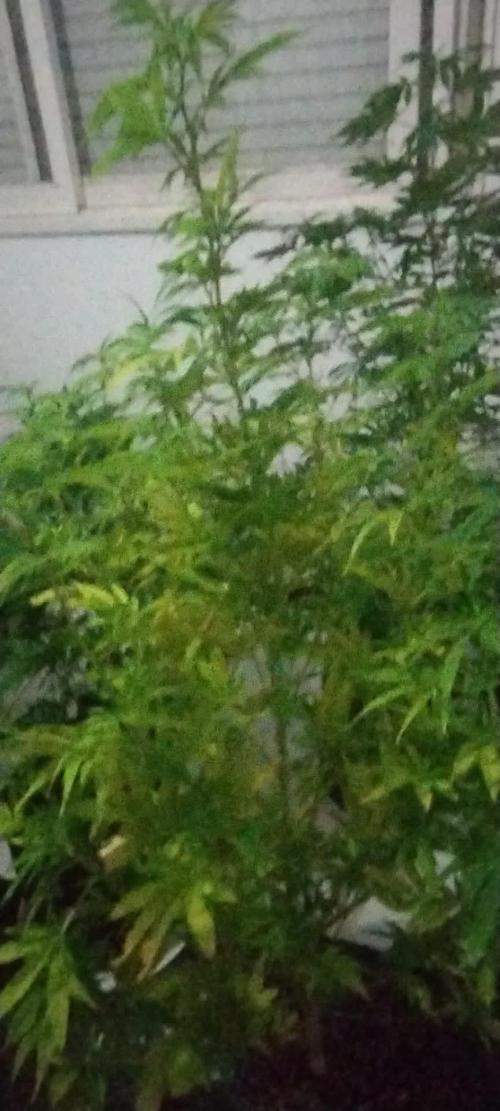
Con inconvenientes para que la planta empiece a generar los cogollos. Se cambió el esquema de luces. Lucen saludables.

Likes
54
Share

Likes
2
Share


@CannaIGrow
Follow
Trop Cherry #8 x BeeJayz hasn’t been topped, I transplanted the girls this week from a 1 gallon pot to a 3 gallon pot. Trop Cherry was in a plastic pot but now in a fabric pot. Plants seem to be growing well.
Likes
15
Share


@TheOtherSide
Follow
This was another fun grow! Lots of people got these seeds as freebies so there were lots of diaries with good information! 👍 The grow went very smooth although they did take several weeks longer than Seedsman's estimated time. Some were able to grow much larger plants in the expected time. 😕 I'll get that down. The plant with Terpenez does seem a little frostier and did grow a little larger so for now, I do recommend Zelda Terpenez. It also tastes good. Not harsh at all. I plan on doing several tests with my grows to determine what products work best. 😁 👉👊 HAPPY GROWING!! 👉👊
Likes
3
Share


@Chubbs
Follow
What up everyone. Weekly update on these ladies. This week they've done good, seeing growth and new leafs. I did see some white spots on a leaf or two so I'll up my ipm to twice a week until I know they're pest free. Over all I'm happy for the weeks to come as the outdoor season is in full swing.
Likes
10
Share

@DogDoctorOfficial
Follow
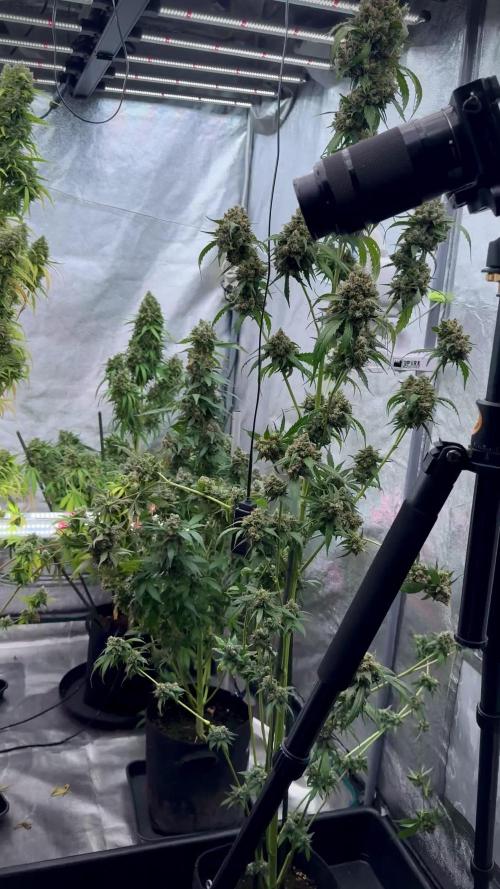
🌸 Week 7 Flower – Crystals, Aromas & Monster Buds
Welcome, friends, to the final pre-harvest chapter for our Mango Kush sisters. Week 7 Flower is where everything comes together: weight, density, aroma, and frost. And let me tell you — these girls are absolute monsters.
⸻
🌱 The State of the Sisters
• Pheno #1 – The trailblazer. Her colas are enormous, dense, and sparkling like snowy peaks under the lights. The macro shots reveal a glittering layer of trichomes, covering buds, sugar leaves, and even little fan leaves near the canopy. She’s showing phenomenal resin production, and her pistils are thick and curling.
• Pheno #2 – The younger sister, but catching up fast. Her buds are dense and sticky, the frost is appearing more heavily, and every macro shot reveals the same dazzling crystal coverage. She’s slightly behind Pheno #1 in maturity, but don’t be fooled — she’s a true powerhouse in her own right.
The smell in the room is so strong that if it weren’t for the carbon filters, we’d probably be calling the fire department thinking someone baked 100 mango pies at once! 😅
I mean the frost on these buds? Looks like Mother Nature had a snow day in the grow tent — pure white crystals everywhere, like the plants are wearing winter coats in July! ❄️
⸻
🔬 Trichome Watch – Macro Details
Week 7 is all about trichomes. Here’s what we’re seeing and monitoring:
• Clear trichomes: Still present, mainly on the lower bud sites, indicating some time left before peak potency.
• Cloudy/milky trichomes: The majority of bud surfaces are now showing full milkiness, a sign of peak THC potential.
• Amber trichomes: Small percentages on the tips of pistils — this is the first sign of cannabinol conversion, giving the slightly more sedative effect.
🌱 Educational takeaway: Trichome inspection is the golden key to deciding harvest timing. Macro photography helps us see nuances invisible to the naked eye. We’re aiming for a balance: mostly milky with a touch of amber for that perfect Mango Kush high.
⸻
💧 Feeding & Nutrition
At this stage, feeding is minimal but precise — we don’t want to push excess nutrients, only support the plant as it finalizes resin and bud density:
• Just water lol the rest they can find in soil and else were
Educational takeaway: Week 7 feeding is about support, not growth. The girls have all the energy stored; now we just help them transform it into resin, aroma, and density.
⸻
🌡️ Environment
• Temps: 28–30°C, slightly warmer in the canopy under heavy buds.
• Humidity: 50–55% — perfect for trichome development.
• CO₂: 620–650 ppm, steady, helping photosynthesis and sugar production.
Observation: Trichome production loves a slightly drier mid-to-late flower environment. Too much humidity can reduce resin and promote mold on dense buds.
⸻
💡 Lighting
The lighting orchestra is still performing beautifully:
• ThinkGrow Model One → penetrating the canopy
• ThinkGrow ICL-300s → mid-canopy perfection
• Future of Grow Black Series 600W → full-spectrum balance
• Lumatek Zeus 465W Compact Pro → evening out footprint
Result: every bud site is kissed by light, maximizing sugar leaves and resin density.
⸻
🔄 Recap – Seed to Here
For anyone joining now, here’s the full journey of our Mango Kush sisters:
1. Seed germination: Smooth, fast, with Aptus Start Booster.
2. Vegetative stage: Strong branching, two phenos selected, transplanted into super soil + Aptus Mycor-Mix.
3. Early Flower (Weeks 1–3): Pistils forming, Power Buds introduced, lighting expanded, TrolMaster ecosystem established.
4. Mid Flower (Weeks 4–6): Bulking, simplified nutrition, aroma starting, trichomes appearing, All-in-One Liquid and CalMag adjustments.
5. Week 7: Buds heavy, frost everywhere, aroma exploding, trichomes mostly milky with hints of amber — the final week before harvest.
⸻
🔮 What to Expect
✅ Expect:
• Buds heavy and dense, needing support
• Aroma extremely potent, filling the tent
• Trichomes mostly milky, some amber
• Sugar leaves sparkling with frost
❌ Don’t expect yet:
• Complete amber conversion (full sedative effect)
• Final cured aroma or flavor (only post-harvest)
Educational takeaway: Week 7 is the climax of flower maturation. Now is the time to inspect, support, and admire — patience will yield the perfect harvest.
⸻
🙏 Gratitude
To the GrowDiaries community: thank you for joining this journey from seed to near-harvest. The sisters have taught us patience, observation, and joy in every stage.
To the gear: TrolMaster, ThinkGrow, Lumatek, Future Of Grow with the Black Series — thank you for letting the plants reach their full potential.
💚 Grower’s Reflection:
These girls are monsters, monsters of beauty, resin, and aroma. Every macro shot shows why we love this process. And yes… if it weren’t for the carbon filters, we’d probably be evacuating the neighborhood from sheer Mango Kush smell! 😅 Frosty, dense, magical — week 7 Flower is everything I hoped for.
📲 Don’t forget to Subscribe and follow me on Instagram and YouTube @DogDoctorOfficial for exclusive content, real-time updates, and behind-the-scenes magic. We’ve got so much more coming, including transplanting and all the amazing techniques that go along with it. You won’t want to miss it.
• GrowDiaries Journal: https://growdiaries.com/grower/dogdoctorofficial
• Instagram: https://www.instagram.com/dogdoctorofficial/
• YouTube: https://www.youtube.com/@dogdoctorofficial
There’s a new series blooming and it’s more than just plants. It’s about process, patience, and paying attention.
⸻
Explore the Gear that Powers My Grow
If you’re curious about the tech I’m using, check out these links:
• Genetics, gear, nutrients, and more – Zamnesia: https://www.zamnesia.com/
• Environmental control & automation – TrolMaster: https://www.trolmaster.eu/
• Advanced LED lighting – Future of Grow: https://www.futureofgrow.com/
• Root and growth nutrition – Aptus Holland: https://aptus-holland.com/
• Nutrient systems & boosters – Plagron: https://plagron.com/en/
• Soil & substrate excellence – PRO-MIX BX: https://www.pthorticulture.com/en-us/products/pro-mix-bx-mycorrhizae
• Curing and storage – Grove Bags: https://grovebags.com/
⸻
We’ve got much more coming as we move through the grow cycles. Trust me, you won’t want to miss the next steps, let’s push the boundaries of indoor horticulture together!
As always, this is shared for educational purposes, aiming to spread understanding and appreciation for this plant. Let’s celebrate it responsibly and continue to learn and grow together.
With true love comes happiness. Always believe in yourself, and always do things expecting nothing and with an open heart. Be a giver, and the universe will give back in ways you could never imagine.
💚 Growers love to all 💚
📌 P.S. – About the Timeline
A quick note for clarity: Mango Kush #1 and Mango Kush #2 are slightly offset in their flowering timeline — there’s about a week difference in their development.
For the purpose of GrowDiaries, this Week 7 Flower report combines both sisters to provide a full picture of the tent and the ongoing bloom. While Mango Kush #1 is slightly ahead, and #2 a bit behind, this report reflects both in their mid-to-late flowering stage.
Why combine them now? GrowDiaries updates are sometimes tricky, and combining the sisters allows us to share their progress together, making it easier for readers to follow the story and observe the similarities and differences.
🌱 Rest assured: When harvest comes, we’ll present a complete follow-up report covering harvest, dry, trim, cure, and smoke review — highlighting each sister’s unique traits and final results.
Honesty is part of the journey, and transparency helps everyone learn and apprecilove the full picture.
💚 Growers love to all 💚

Likes
25
Share


@PrairieFrostGrow
Follow
*****Week 14 growth – March 6 to 12, 2021 – Week 5 flower ******
These girls are certainly different from one another. Pheno 1 has a more bushy appearance and Pheno 2 is lighter in color and more bud swelling at the tops. Expect to see some nice colors come out in #2😃 In the end......it’s about the smoke😂👍🔥
Bud Fusion being introduced this week. Into the last phase of feeding during flower now. Nitrogen is continued to be reduced as its late flower. Keeping up the feeding ppm this week as we are getting to the end. May be pushing them a little more than I should but finding out how they react for next run.
Still continuing to play with the light intensity and seeing how the girls react to my environment conditions when pushed harder. Could have backed off and stayed with 100, 300, 600, 900 PAR levels at the different stages but I have trying to go a little higher in the late stages and going over 1,000 PAR.
Little more detail…..
Mar 6/21, Day 29
- Dry out day
- Changed light cycle to 11/13 today to help with light intensity and reducing DLI.
- Light power reduced to 425 watts
Mar 7/21, Day 30
- Keeping up the feeding but reducing nitrogen.
- feeding with micro – 1.5, bloom – 2.5, ult B – 0.5, carbs – 1, B Storm – 2, S Storm – 2.5, Bud Fusion 0.15gr/l, Terp – 1.5, Jet Fuel – 0.5, Rezin 1
- 1150ppm and 6.0pH
- 4L
Mar 8/21, Day 31
- Watering with 2L feed from yesterday and 16L plain water
- Over shot the pH
- 400ppm and 5.9pH
Mar 9/21, Day 32
- Feeding again with Grow – 0.5, Micro – 1, Bloom – 1.5, Carbs – 1, Magnifical – 1
- Didn’t add many of the supplements
- 875ppm and 6.0pH
- 4L
Mar 10/21, Day 33
- Middle of the week and just giving some enzymes today
- Enzymes – 1.5ml
- 300ppm and 6.1pH
- 4L
Mar 11/21, Day 34
- Microbes again today
- Tap water with Jet Fuel – 1ml, Terpinator – 2ml, Nature’s Candy – 1.5ml, Rezin – 1ml, Ultimate B+ - 0.5ml, Recharge – 1tsp/gal
- 800ppm and 6.0pH
- 4L
Mar 12/21, Day 35
- Dry out day
- Been feed a couple of times this week so work with ¾ strength next week.

Likes
48
Share


@CapybaraProbioticTeam
Follow
Hola!
Esta fue la cuarta semana de floración. La planta avanza lento, pero avanza. En comparación a la semana pasada, se vio un mayor desarrollo (yo creo que esta ligado a que las temperaturas de esta semana fueron superiores a la anterior).
Esta semana no hice riegos foliares ya que de nuevo estamos teniendo una humedad ambiente alta, y no quiero favorecer la presencia de hongos.
Esto fue todo por ahora..
Saludos!