


Likes
Comments
Share
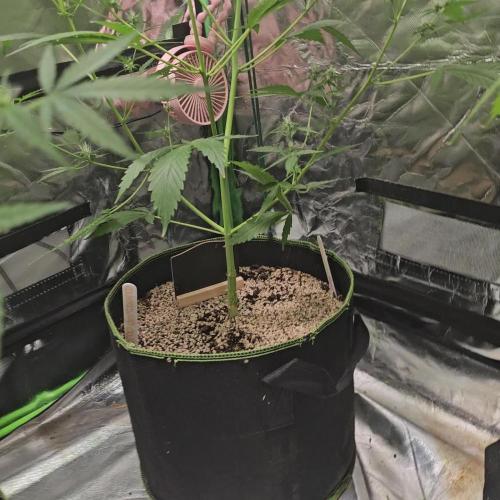

@Kirsten
Follow
Blackberry Moonrocks is really building the buds now, they are looking beautiful! Exciting times with this lady 😁
I am eager to see the buds continue to develop.
17.8.25:
I watered with 3.5L of dechlorinated water PH'd to 6.0 with;
💜 2ml Trace
PH: 6.0
PPM: 391.
Thanks for checking in and hanging out 😁💚✌️🍃🙏

Likes
20
Share


@apmcfly76
Follow
Harvest, one plant no, it’s time to trim done this one was a good lesson.

Likes
19
Share


@ScrogFreak
Follow
I finally broke a pound with a single autoflower! Couldn’t have done it without AGLEX cob led’s, Remo Nutrients, and coco coir. They’ve changed my game completely!
This grow started off as a pretty standard grow. I did absolutely no training until the veg period was winding down, and pre-flower was beginning.
As the SCROG net went in, a little later than planned, numb fingers due to cervical spinal issues, and a poorly time muscle spasm, I snapped the main stalk...disaster right? Apparently not! They’re tough plants! Within a day or so she was perked up and sending up new colas from all the growth nodes now exposed to the 2000w AGLEX cob led’s. These lights have transformed my grow process, and increased my yields by over 300% compared to my old led’s, and only draws 408w from the wall. 1.23g/w is quite satisfactory
I didn’t have much tucking to do this grow after the original SCROG. Due to the fact I was a little late getting the SCROG net in place, she didn’t have too much stretch left in her, she certainly fattened up quite nicely though, almost too much so in places. The front left side of the SCROG net got awfully crowded with huge buds packed tightly together. Lesson learned...keep the branches spaced apart slightly further, and maybe allow slightly more vertical growth of the colas to allow slightly better light, and air flow penetration. My issue is I only have 6 foot ceilings in my tents. The ceiling in my grow room is only a little over 6’2”. I managed, through SCROG techniques, without topping or fimming, to keep the top of my canopy 24” from the floor. This allows plenty of space above for the AGLEX cob, and exhaust fan.
After last feeding I flushed with just Ph’ed water for 5 days, then gave the plant 48 hours of darkness, to rid itself of chlorophyll before harvesting on November 4th and hanging in a drying rack. It’s still curing in jars but after trying a few samples, it’s an awesome strain, and hits hard.
It’s not as hard as it sounds to fill a 4x4 tent with a single autoflower, and still pull 18 ounces (504g) out of that tent. With simple SCROG technique, defoliation, quality grow medium you can achieve the same results. Of course you’ll need an AGLEX 2000w cob, but for an 18 ounce return on a $300CAD light, in 3 months, it’s a no brainer folks! You won’t find a better light under $300 Canadian. You’ll also need a quality nutrient line, and it’s hard to go wrong with the Remo Supercharged Kit. The proof of those 2 products quality are in my harvest.
I hope this has helped improve your own grows somehow :) Head over to YouTube and visit my channel, just search for Scrog Freak, or click the link below. Drop a like and subscribe, more videos and logs to come! Recently entered a Gelato OG Grow Off and will be posting updates and instructional videos there. Check it out! Thanks and good growing!
ScrogFreak
https://www.youtube.com/channel/UCDFY6EjqIMqv2peq1d1eM1Q

Likes
19
Share


@HirdoWeirdo
Follow
Hi everybody!
How is going your summer? I can’t travel unfortunately, so I’m spending my time on one of my favorite hobbies 🔥
This time I’m testing a famous strain: the Girl Scout Cookies Auto! I’ve always heard big things on this plant, so I’m very grateful to Weed Seeds Express to gave me the opportunity to grow this amazing genetic! I really love sweet smoke, I think she could become one of my favorite weed 😏
GSC germinated in 24h, after the transplant I left her at home under led light and I went to my sea home for some days, I came back just for her 7th day of life and she is well (my cat didn’t destroyed her, this is a big goal for me🤣🍾)
Thanks Weed Seed Express, I hope I’ll do a good job!!!


Likes
51
Share


@eldruida_lamota
Follow
Bueno resumiendo cookies gelato es una variedad híbrida muy fácil de cultivar pero ojo, cuidado con los últimos riegos si no queréis perder cosecha por moho. Lo demás de 10 pegada heavy sabor increíble, cogollos duros como rocas y bañados de una gran capa de polen.
El ambiente del secado se mantuvo en 23 grados de media y la humedad estuvo por debajo de los 45% en todo momento.
Poco más la verdad estuve encantado de poder cultivar una genética tan potente .
Un saludazo que paséis un final de año increíble y por supuesto buenos humazooos💨💨💨.

Likes
3
Share


@Ghost17
Follow
Updating two days early but wicked happy with the progress so far. Starting to understand the strain and what it likes to be fed so just trying to adapt to it and really lock in on a smooth feeding schedule.
Have been against pruning in the past but couldn't resist attempting "Nebulas Manifold" and finally topped after the 6th node finally developed this morning. Topped on the 3rd node with leaving a stump for connection and trimmed the remaining nodes below. Was pretty surprised at how much they were reaching when I check in on them tonight but happy to see they're still crankin.
Time to wait for the 4th node and top again.
As always, any questions, comments or suggestions are always welcome! Thanks!


Likes
5
Share


@Mr_nugs_lover_David
Follow
Very happy with how this lady has performed, amazing quality buds, very sticky and dense flower with a concrete smell that I love so much, which is that kind of fruity sweet flavor that this lady is able to produce, it's been a beautiful journey, I'm gonna enjoy a lot this flowers. Very recomended guys!
Likes
3
Share


@KcKush
Follow
*Will be topping them to find out Sex in straight 12/12 cloner hopefully we get more females than males.
* Will update journal later
*Ignore everything untill tomorrow
*So I cut them and put them straight into 12/12 the clones that is to show me Sex.
*You could see the hollow hole in the stem I wonder if that’s gonna cause an issue.
Likes
211
Share

@Growingdaddyo
Follow
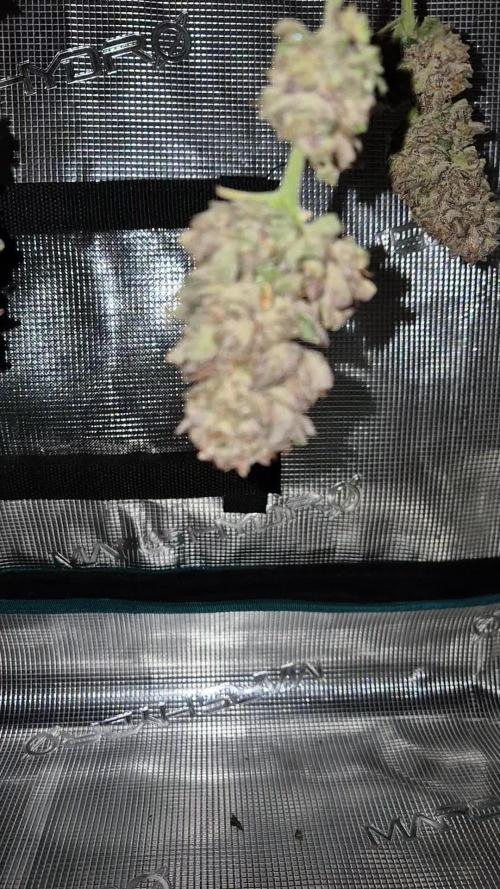
Heute Abend wird die Gute zerlegt und ihrer eigentlichen Bestimmung zugeführt.
Erntedankfest
Updates folgen...
21.06. Direkt an der Lady den Grobtrimm gestartet, ist für mich so angenehmer..
Gleich wird sie geerntet und aufgehängt.
Die Luftfeuchtigkeit ist momentan recht hoch, der Luftentfeuchter läuft..
Hab die Triebe getrimmt und einzeln ins Zelt gehängt, Funzel aus, Abluft volles Rohr und Venti an...jetzt heißt es warten?
Aber der Duft der beim Trimmen entstand, erinnert an diese gelben Lutschbonbons, super lecker👌
25.06. Nach einer Woche im Zelt zur Trocknung nun getrimmt und ins Glas getan
Likes
23
Share

@DutchFarmer
Follow
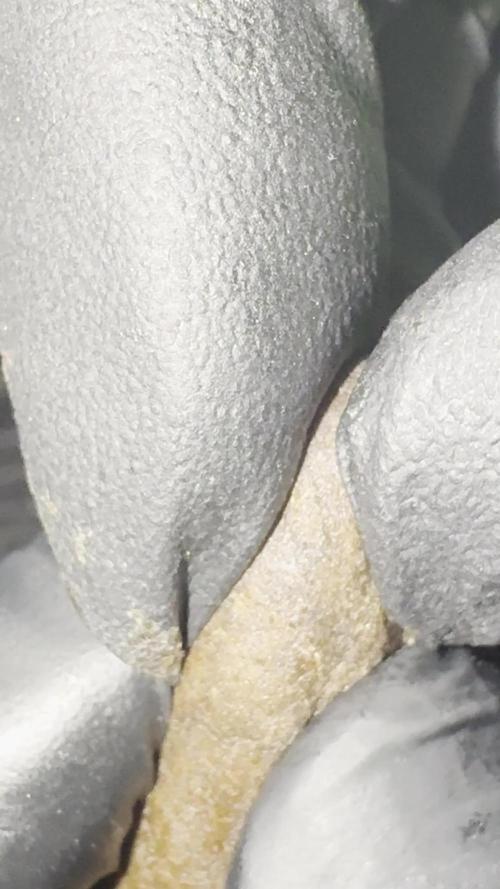
🚬 Test Run Verdict: Did a little taste test and ohhh boy… hittin’ like that 🇲🇦 Moroccan hash smooth, heavy, and straight knockout vibes 😮💨


Likes
39
Share


@GrowWiththeBro
Follow
Fed on Day 39
Up’d the nutes a bit. Added some Superthrive.
Also added (2)3 gallon strains I have from another grow and additional lighting 250w in the tent.
Day 44: Watered with PH’d 6.1 water and a couple pinches of epsom salt.
Both of their ppm’s were a bit high on the R/O around 1700.
I assume this is from the feeding earlier in the week. (I need to start taking better notes) I brought it down considerably to around 900 ppm with a couple gallons of mild flushes.
**Personal note**
I read alot and I mean ALOT of forums and questions from here as I grow. I’m using a combination of techniques I feel are beneficial and learning do’s and do nots as I go. That being said Please feel free to comment, advice is ALWAYS welcomed!
Grow on.


Likes
4
Share


@Crusty_Juggler
Follow
60x60 cm tent in a 1920's peek-in-closet
Oversized vent for silence
High power DIY LED
True SoG 12/12 from seed with 15 plants in 2L pots
Watering all plants in bottom tray with 30% of total pot size (10L)
WEEK 1
DAY 1 - Germinated in paper towel
DAY 3 - Planted into pots + Lights ON at 125w
DAY 5 - All plants have broken soil
DAY 7 - Slight stretch - Light at 185w
WEEK 2
Two of the Iced Out are lagging behind, others are on point - I'm trying to push light and nutes to the max.
Extraction fan (AC infinity Cloudline T6) on level 2.
DAY 13 - First full watering (10L) with 20 ml Canna Terra Vega
DAY 14 - Circulation fan turned on (low) during lights on
WEEK 3
Good growth, two Iced Out still lagging
DAY 18 - Light at 225w, Extraction fan on level 3 during lights on
DAY 20 - 2nd watering, 8L with 30ml Vega + Light at 250w
DAY 21 - On point, mostly :) Could've pushed nutes a bit more from the go
WEEK 4
DAY 24 - So far this week I'm just kicking back and watching them do their thing. The two lagging Iced Outs are trying to catch up.
DAY 26 - Watering 10L with 50 ml Vega (one day too late...) + light on 300w (max)
DAY 28 - 4 weeks from popping the seeds, looking good except for the two Iced Outs, one of them is trying to get with the program, the other... Well, some plants are just pricks.
WEEK 5
I think this is the week we'll see them take off :)
DAY 29 - Plants are starting to show sex, removed 2 Urkle Mints males, the other two are females, the rest are fems so we're down to 13 female plants total with only a single weakling
DAY 29 - Watering 8L with 50ml Vega (shouldn't have been later than today!)
DAY 33 - plants exploded over the last 4 days and most are stretching and starting to flower
DAY 33 - Watering 10L with 60ml Vega (feeding Vega once or twice more then we switch to Flora)
DAY 35 - Just cruisin' 😎
WEEK 6
Lots of stretch the past week, flowers are setting in, the laggy Iced Out was culled, 3 plants are a bit behind the others..
DAY 36 - Watering 10L with 50ml Vega
DAY 39 - Watering 10L with 50ml Vega
DAY 42 - Defoliation
WEEK 7
DAY 44 - Watering 10L with 50ml Vega
DAY 47 - Switching to flowering nutes - Watering 10L with 50ml Flores
WEEK 8
HAa to break the stem on the stretchy Sugar Cane to keep it low enough
DAY 51 - Watering 10L with 60ml Flores
DAY 54 - Watering 10L with 60ml Flores

Likes
6
Share


@Ninjabuds
Follow
Permant marker the one seedling I could not be more happy with. It has a distinct different look to it than any other plant in the tent with strong growth going on. I'm sad about the other seedling thou the 1st set of leaves were kinda deformed and it has like a spiral thing going on where new growth comes from. Hopefully it comes back around, I always like seeing atleast 2 phenos of a strain I feel it gives you a better idea of what a strain is.
It's looking like a good start to a week the plants are strong they are getting to the point I can let the dried dry out completely. I'm thinking by the end of this week the plants will be starting to be sold.
Last week I put all the plants into my bigger 2x4 tent with my medicgrow mini sun 2 the 500w version. Only a few of the plants were ready for that light. Seems like the only plants that really have good resistance and have a strong start are the weedseedsexpress.com seeds. Shout out to weedseedsexpress.com for the strong plants.
I ended up putting all the plants back into my 2x2 tent with the 55w amazon light it has alot more blue light in its spectrum. It's kinda weird b4 I switched the plants to the 2x4 tent they were getting 220umol under my amazon 55w led then when I put them under the 500w light 25% strength about 50in from plants and they were getting only about 195umol in that tent but it was stressing most the plants. I assume a larger light has more side lighting hitting the plants. I think when useing larger lights it's good to measure umols from the top but also coming from the sides. I think durring seedling stage they only need about 50% the umols coming from the side the plants as the top is receiving.
When I put the plants back in the small tent about the same umols as they were getting b4 the switch and they were still a little stressed. So for a few days I put the small light at the top the tent giving them 100umols for a few hrs then 130umols the rest the day.
Likes
17
Share


@BLAZED
Follow
Week 13 (24-4 to 30-4)
24-4
Temperature: 23.8 degrees (lights on) 18.9 degrees (lights off)
Humidity: 66% (highest) 53% (lowest)
No pictures.
Opened the reservoir for a couple of minutes.
25-4
Temperature: 24.7 degrees (lights on) 18.9 degrees (lights off)
Humidity: 66% (highest) 52% (lowest)
Increased the strength of the light from 60% to 65%.
26-4
Temperature: 25.2 degrees (lights on) 19.5 degrees (lights off)
Humidity: 66% (highest) 51% (lowest)
No pictures.
I emptied the reservoir, there was 2750ml left.
I made a 15L new feed and added it to the reservoir.
Opened the reservoir for a couple of minutes.
27-4
Temperature: 26 degrees (lights on) 19.9 degrees (lights off)
Humidity: 65% (highest) 47% (lowest)
28-4
Temperature: 26.4 degrees (lights on) 21.5 degrees (lights off)
Humidity: 64% (highest) 47% (lowest)
Opened the reservoir for a couple of minutes.
29-4
Temperature: 26.4 degrees (lights on) 20.6 degrees (lights off)
Humidity: 64% (highest) 39% (lowest)
Increased the strength of the light from 65% to 70%
Opened the reservoir for a couple of minutes.
30-4
Temperature: 27.4 degrees (lights on) 21.1 degrees (lights off)
Humidity: 62% (highest) 47% (lowest)

Likes
151
Share


@PEAKYPLANTERS
Follow
Respect for all of you, brother farmers! masters and beginners! thank you again for gathering on the pages of my diaries! we carry out our work with dedication and live on ambition! Come on guys....We have almost reached the end of this umpteenth harvest, the colors and aromas are something enchanting, dense flowers and liter glue
Processing
Likes
9
Share

@KcKush
Follow
*Increased PPM from 550 to 650
*Will probably start flowering in a week once I get my tent set up.
*They were looking kinda droopy maybe cold weather and to much water.
*Need to transplant.

Likes
12
Share

@Doofy
Follow
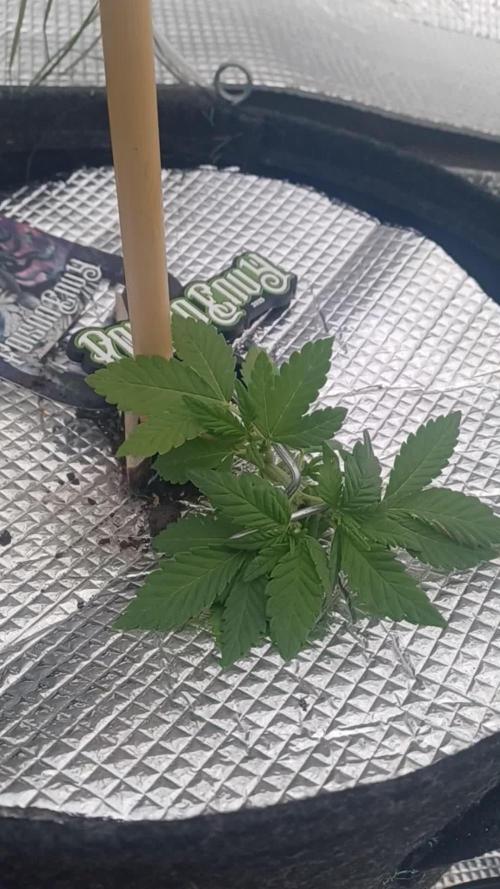
I didn´t expect for her to stay alive. After toppin, she keeps goin 🤭😅
25/08 LST on the main stem
30/08 LST on side node
If she doesn´t get into flowering, I can let her grow this slowly for another few weeks, then I can do her a 12-12 inside the tent. If she has a nice size...