


Likes
Comments
Share

@Timmytooturnt
Follow
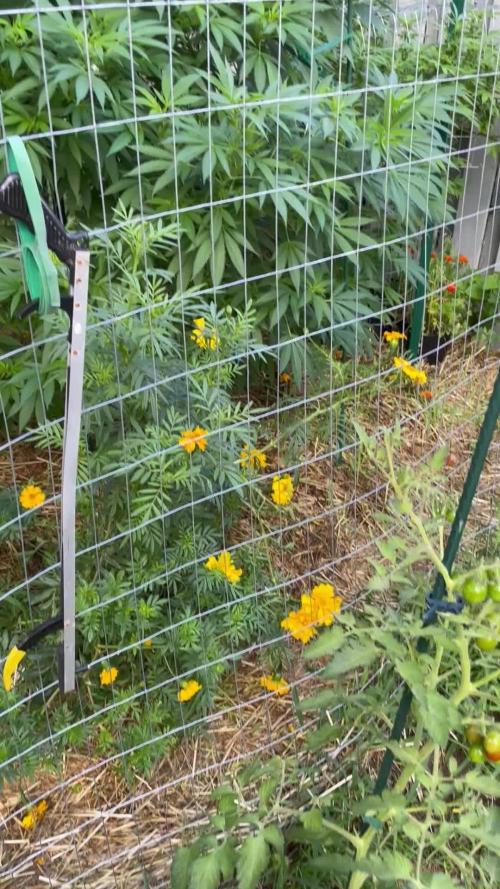
Plants in containers seem to be 2 weeks ahead of plant in ground, marigolds dping great
Likes
11
Share


@GREENPHOENIX6262
Follow
*Week 3 Flower - 09/10*
Blimburn Apple Fritter - Seedsman Genetics Critical+2.0
Healthy - 0 signs on of deficiencies
Most fan leaves have been stripped; - Lighter defoliation - Aggressive LST on main colas
*Week 3 Flower Mid-week update 09/13*
Approximately 3 inch increase in Height on both plants - Critical+2.0 - Seedsman Genetics - Blumburn Apple Fritter
1 Gallon increase on water feed (Nutes included)
Budsite density has increased.
Light defoliation
*End of week recap 09/16* (Week 3 Flower)
BlimBurn - Apple Fritter - 47 Inches - Flowering processing accordingly - 0 deficiencies
Seedsman Genetics - Critical+2.0 - 46 Inches - Flowering processing accordingly - 0 deficiencies
Increased water feed (2.5 gallons every day +Nutes)
*SEE UPDATE END OF WEEK VIDEO RECAP*


Likes
1
Share

@Mo_Powers
Follow
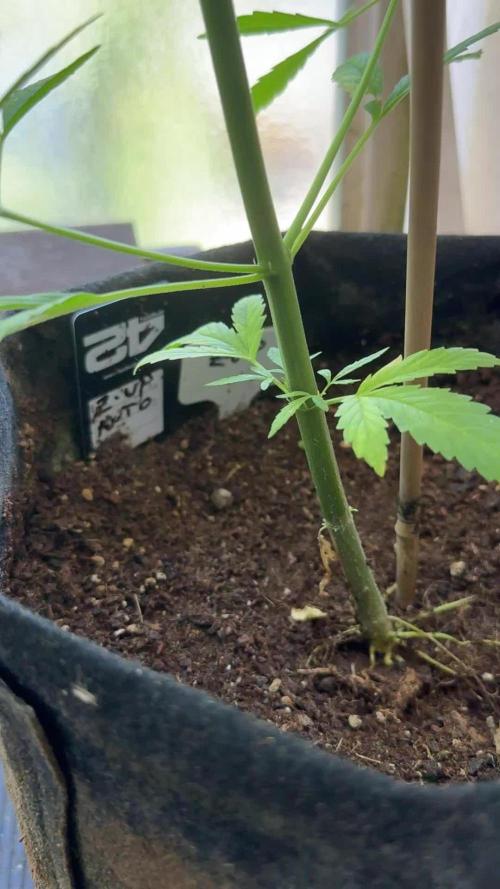
Last week was very hot. I was worried she wouldn’t cope well with it. But I was wrong. She’s doing fine and is slowly starting to produce her buds.

Likes
35
Share


@MS2845
Follow
Day 38 swap her to a bigger pot just hope i did it right.
day 40 she was 29.5cm
day 41.. 32.5cm

Likes
41
Share


@KilgoreTrout
Follow
Danger! Problem. One of my top buds got so big it broke the stem. I tried to duct tape it but it didn't take. So I trimmed and started drying.
Started flushing 9/10. getting close!
Tricome pics everyday now
Likes
66
Share


@Neo09
Follow
This week we solved a problem with high temperature and we had instaled a clima. IT Works perfect! Ladys are Just happy as you can see on videos😎happy growing to all of us😎🙋♂️🙌


Likes
1
Share


@Growing2Give
Follow
I harvested this plant on the same week that I pulled down the 2 B Blunt, so there was no more progress in the garden. Was thinking that it was going to take a bit longer to cut down than it did (I wet trim). Feel free to let me know why that is not the proper way to trim... I have my reasons and it has been working for a while.


Likes
6
Share


@IQuSX
Follow
Results for the past two weeks:
added white scrog for upper levels;
defoliated;
added 140w yellow+white+red led;
doubled watering, so there was not enough 0.8 l.

Likes
7
Share


@Mrg7667
Follow
Decent week, noticed some pregnant buds so i have temoved the little ones that i see and any other hermies i missed but not much. Buds are starting to get unique smells and traits as far as bud structure just added new light today


Likes
30
Share


@SooSan
Follow
12/12 + 54 jours
Vu qu’il y a 16 plantes mais que sur growdiaries on ne peut mettre que 8 variétés j'ai divisé en 2 diaries pour le bas de la tente
1️⃣
🏠 90x60x90
☀️ FC-E 4800 => puissance a 80%
🍁
1x Black Bomb / Philosopher Seed
2x Amnesia Lemon / PEV Seeds
1x Blueberry / PEV Seeds
1x Blueberry / 00 Seeds
1x Wappa / Paradise Seed
1x Dark Phoenix / Green House Seed
1x Quick Sherbet / Exotic Seeds
1x Mango Cream / Exotic Seeds
1x Banana Frosting / Sensi Seed
1x Hindu Kush / Sensi Seed
3x Fast Mix / Sweet Seed
📎 https://growdiaries.com/diaries/122084-grow-journal-by-soosan
📎https://growdiaries.com/diaries/124052-grow-journal-by-soosan
2️⃣
🏠 30x60x50
☀️TS1000 => puissance a 100%
🍁 4x Quick Sherbet - Exotic Seed
📎 https://growdiaries.com/diaries/122080-grow-journal-by-soosan

Likes
28
Share


@crystal_garden_0
Follow
Strong genetics for the colors , started immediately, everything going great, cant wait to see how they turn out
Likes
11
Share


@Hawkbo
Follow
Everything is movin along some will be coming down this week a few need a little longer. I'll get some pics up a little later today. This one was stunted early but has some pretty nice nugs on it. Just started the flush
Likes
106
Share


@Fibro_Witch
Follow
Solid 10 inches of growth this week. Ladies were top dressed with more soil on Thursday night. Also game them a cal-mag boost with some Earth Pods back on Monday. The larger ladies are staying out in the garden, but the more finicky Critical Mass and Charlotte's Angel's are in the small greenhouse.


Processing
Likes
18
Share


@Bluedreaming
Follow
Looks like I have to dial back the nutes a bit. I'm going to give them a day or two cuz I let the reservoir get pretty low and I think that's what caused that one plant to get burnt. Once again thanks for stopping in! ✌️👊
Likes
13
Share


@StannabalLecter
Follow
the plants are using a lot of water. having to top up the res every other day or so. i need a bigger res.
they are in full flower and have gotten very stinky. the smell is amazing. i can’t wait to try it out.
buds are solid and getting fatter. looking good. business as usual.
Likes
127
Share


@DutchFarmer
Follow
Another week done applying some
More training
Put the Ionbeam U4 inside the tent
watch the unboxing video and setup!
https://www.youtube.com/watch?v=B6cT9c1UfSo

Likes
78
Share


@Roberts
Follow
Pure Ice cream great really well under the Spider Farmer lights in the Athena nutrition. She did get too close to the light. I should of hst her. My mistake, they will still smoke. Smells great, and is loaded in trichromes. Has a sweet creamy. Pine smell. Everything looks great. I only had minor ph issues during grow. She was thriving for a lot of it. Thank you Spider Farmer, Athena, and Pure Instinto Seeds. 🤜🏻🤛🏻🌱🌱🌱
Happy new year.
Thank you grow diaries community for the 👇likes👇, follows, comments, and subscriptions on my YouTube channel👇. ❄️🌱🍻
Happy Growing 🌱🌱🌱
https://youtube.com/channel/UCAhN7yRzWLpcaRHhMIQ7X4g
Spider Farmer Official Website Links:
US&Worldwide: https://www.spider-farmer.com
CA: https://spiderfarmer.ca
UK: https://spiderfarmer.co.uk
EU: https://spiderfarmer.eu
AU: https://spiderfarmer.com.au
G5000 Light Amazon Link:
amzn.to/4643esa
UVR 40:
https://www.amazon.com/dp/B0BR7SGTHS
Discount code: saveurcash (Stackable)


Likes
3
Share


@ohcibi
Follow
The plant now covers the entire new pot. One side is still a bit short but it’ll touch walls soon. You can make out many individual colas now and I’m excited of how they will stretch now.
Likes
137
Share


@MrJones
Follow
mrjones - Slurricane #7 S1
🌱Slurricane #7 S1
@inhousegenetics_official
👨🌾🏽GD Grower: MrJones
🔹🔹🔹🔹🔹🔹GOALS🔹🔹🔹🔹🔹🔹
🌞Environment - 75/80℉ and 60% Humidity Good Old Mother Nature
💧 Feeding - The Green Sunshine Company - Earth Dust All-Natural Plant Nutrients
⚗️Soil - 35% ProMix MP / 25% Ocean Forest / 20% Tupur Royal Gold / 10% lobster Compost / 10% Additional Perlite
🍃Training / So this girl was 60 Inches and spread out under a 5x5 Trellis
🕷️ IPM - Will be using Green Cleaner" 1 OZ per Gallon, and CannControl from Mammoth alternating between products each month
🔹🔹🔹🔹🔹🔹🔹🔹🔹🔹🔹🔹🔹🔹🔹
📜 Rambling - So with the end of July on the Horizon, my time is running out to get the 3rd trellis up and do some major defoliation, but work has been so busy, the girl under the trellis has grown a foot above the second trellis! The other plant is almost 7 feet tall as well, just amazing, the Earth Dust is rocking it out!
🔹🔹🔹🔹🔹🔹🔹🔹🔹🔹🔹🔹🔹🔹🔹
▶️ Sunday - 07.25.21 / Just watering daily with Dechlirnated H20 using the BOOGIE BLUE PLUS+ (High-Capacity Filter) to remove the Chlorine and Chloramine out of the water.
▶️ Monday - 07.26.21 / Just watering daily with Dechlirnated H20
▶️ Tuesday - 07.27.21 / Just watering daily with Dechlirnated H20
▶️ Wednesday - 07.28.21/ Just watering daily with Dechlirnated H20
▶️ Thursday - 07.29.21 / Just watering daily with Dechlirnated H20
▶️ Friday - 07.30.21 / Just watering daily with Dechlirnated H20
▶️ Saturday - 07.31.21 / Today the girls got a hair cut, in the form of massive defoliation, adjusted the trellises, then top dressed with Earth Dust, watered it n with Dechlirnated H20.
🔹🔹🔹🔹🔹🔹🔹🔹🔹🔹🔹🔹🔹🔹🔹
Earth Dust - DESCRIPTION
🔹Earth Dust is our all-natural plant nutrient designed for indoor and outdoor flowering plant growers. You can grow easily by “just adding water” to your soil for the entire growth cycle. It creates a “living soil” so your plants thrive from seedling all the way through flower and harvest. Earth Dust represents an organic dry amendment method of gardening, it’s made of a natural powder of ingredients.
🔹Because you only need to water your soil with Earth Dust, you can concentrate on caring for your plants and getting a healthy crop “on autopilot”. Now you can grow without spending hours of your life mixing chemical nutrients, and you can do it naturally. What’s more, is you will enjoy the cleanest, most aromatic, and flavorful harvest you’ve ever experienced when a plant grows in a rich, organic web of living soil.
Product Highlights
🔹All-Natural Ingredients – Mostly plant-based – Safe around children and pets.
🔹Packaged in kraft paper bags that are recyclable and compostable.
🔹Easy to Use – Just mix the powder into the soil 3 separate times – then water only.
🔹Packed full of rich microbe food & contains billions of beneficial fungi and bacteria! Creates a resilient, living soil that defends against pests and diseases.
🔹Rich in trace minerals and nutrients for full plant expression. Sourced from rock dust, sea-farmed kelp, and land-grown crops.
🔹Soil Conditioners help balance pH and make nutrients more available in the soil. Achieved with ingredients like bat guano, worm castings, limestone, molasses, and humic acid.
🔹The correct balance of N-P-K nutrients for each stage of growth:
🔹Earth Dust Base (3-1-2) contains key nutrients for sustained vegetative growth. High nitrogen (N), Low Phosphorous (P), and Medium Potassium (K).
🔹Earth Dust Boost (2-3-6) contains accelerated-release nutrients for powerful flowering growth. Low nitrogen (N), Medium Phosphorous (P), and High
Potassium (K).
🔹Re-use soil harvest after harvest by simply adding more Earth Dust Base to begin again. Create your own living soil that gets better every time it’s used.
🔹Go organic, save time, and get predictable, healthy harvests.
🔹🔹🔹🔹🔹🔹🔹🔹🔹🔹🔹🔹🔹🔹🔹
Compost Tea for Vegetative Stage
Water 4 Gallons
3 Cups Composr (Your Favorite Worm)
4 TBL Molasses
4 TBL Seaweed Extract
4 TBL Fish Fertilizer
Use air Stone o the tea for 24/3 hours 70/75F, use at full strength for establishing plants and a half-strength for younger plants
