


Likes
Comments
Share

@eldruida_lamota
Follow
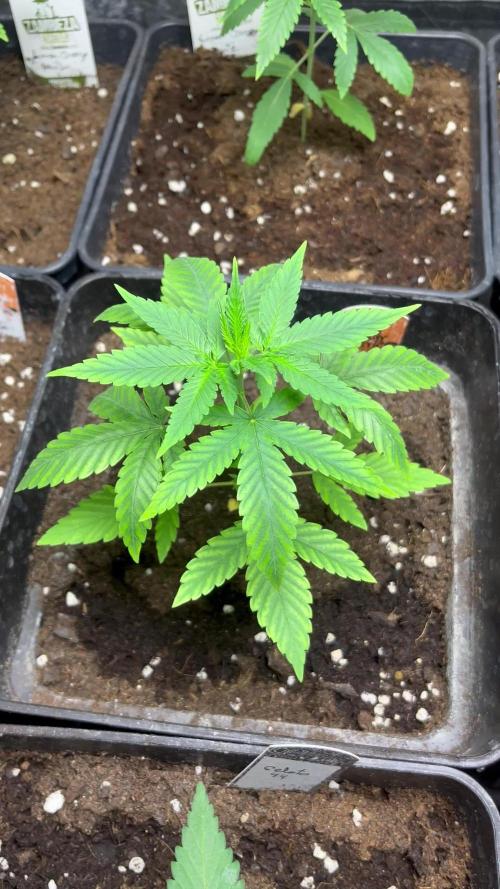
Vamos familia, actualizamos la cuarta semana de vida de estas Runtz Punch de Herbies.
Tuve problemas con la temperatura que estuvo alta 28/26 grados y humedad dentro de los rangos correctos, la única queja es la temperatura, 16 horas luz, 8 oscuridad, estiraron un poco, pero van lentas por el momento, que cojan fuerza.
El trasplante a sido realizado a la maceta definitiva, 7L con sustrato Top crop.
Hasta aquí todo, Buenos humos 💨💨💨


Likes
7
Share


@FrostyB
Follow
Now this baby was a delight to grow and grew real big. I decided to leave this lady to do her own thing and she ended up finishing just short of 6ft! The main cola was huge and juicy and all round the end result was really nice and super strong just the way it should be.

Likes
16
Share


@Canadian_Bud
Follow
1-2-2022
A solution has been found and implemented. A simple quick project that cost little and not much time to make. Works very well. She is responding to her new environment and soon she will be into her new home in true Aeroponic spray only fashion. 😎

Likes
12
Share


@Nxs235
Follow
Previously, I planted two plants on my 0.21 square meters. It was a mistake - I should have mastered the training earlier. This saves one seed, half the soil and fertilizer, half the water used, and works with one plant faster than with two.

Likes
47
Share


@StarLorr
Follow
Helloing 👋🏻 visitors.
The clone stretched out fast.
And little pistils started to come out
😁 it's a GIRL!!!!!

Likes
16
Share


@420TouristguideDWC
Follow
Welcome to grow # 2 👋
Welcome to my 2nd diary & Cannabis grow 📔
With 4 years of active veggie Hydro growing and almost one completed grow.
My Grow Environment:
🏕️ Tent Size: Vivosun 5 X 5 X 8.
💡 Veg: Optic 1 5000 & OPtic 1 3500
🌊 Hydroponic DWC Bubbleponics.
🌊 TaoTronics Humidifiers, 4L Cool Mist Ultrasonic Humidifier
🍯 5 GL Pots Craftsman container bought at Lowes $6.00 with Grodan Delta 4 Rockwool Blocks 3" x 3" x 2.5" With Hole Pack of 8
💨 1-2 Air pumps each pot / Tetra Whisper 100 dual output with Pawfly 4 Inch Air Stone Disc Bubbler for Aquarium Fish Tank Air Pump per container.
💨 PELONIS PFT40A4AGB Electric Oscillating Stand Up Tower Fan, 40-inch & Hurricane HGC736520 Classic Series Clip Fan, 6", 6", White
💨 Afloia Dehumidifier for Home 2000ML(68 oz) Water Tank, Portable Quiet Dehumidifier 2200 Cubic Feet(269 sq.ft)
🌪️ AC Infinity CLOUDLINE S6, Quiet 6” Inline Duct Fan with Speed Controller.
🌪️ iPower GLFILT6M 6 Inch Air Carbon Filter
⏲️ Light Schedule 18/6.
Misc:
PGarden-EZ Green Soft Twist Tie Tomato Plant Tie TPR.
GROWNEER Flexible Net Trellis for Grow Tents, Fits 4x4ft
BN-LINK Heavy Duty Mechanical 24 Hour Timer Dual Outlet 3-Prong
VIVOSUN 1-Pack Gardening Hand Pruner Pruning Shear with Titanium Coated Curved Precision Blades
ThermoPro TP55 Digital Hygrometer Indoor Thermometer Humidity Gauge with Jumbo Touchscreen and Backlight Temperature Humidity Monitor
VIVOSUN 6-Pair 1/8 Inch 8-Feet Long Adjustable Heavy Duty Rope Clip Hanger, Quick Adjust Design, Reinforced Metal Internal Gears,150lb Capacity
Inkbird Humidity Controller Humidistat Pre Wired Plug Digital Sensor Humidifier
11/06 Day 1. Thank you again SunWest Genetics for standing by your word on the seeds! I am following their recommended germination requirements to the letter. From the pictures the 2 seeds with the small tap roots are still on the plate, in a paper towel, in a dark place. I am hoping they make some progress today so that I can get them into their containers!!! My goal is to have 4 active sprouts in the new 5x5 tent, in a ScroG setup. So far only 1 has sprouted. I am finding the sprouting part the most difficult aspect of growing these wonderful plants. I still have 4 seeds in reserve and if the 2 don't continue germination and the other one doesn't sprout up through the flake of rockwool I have over the seed head, I'll get the other 4 into water.

Likes
3
Share


Likes
2
Share


@Chubbs
Follow
420Fastbuds-Week 2
Papaya Cookies Auto
These girls have definitely rooted and started upward. They're about 3in tall and showing daily growth. I stopped watering by spraying the soil and started hand watering 250-500ml daily. I use calmag 5ml/gal every feeding. So far they've responded well and I look forward to the weeks to come.
Happy Growing
Likes
44
Share


@Cogollo_eu
Follow
**Encontrarás la traducción a español al final de la descripción**
From/Desde: 26/04/19 || To/Hasta: 02/05/19
From day/Desde día: 64 || To day/Hasta día: 70
You can find the Money Maker Diary here:
** Podéis encontrar el diario de las Money Maker aquí:**
https://growdiaries.com/diaries/25667-gorillamakingmoney-gorilla-vs-money-m
-----IMAGES & VIDEOS-----
13 & 15 - Plant with symptoms of an overdose of co2 in the roots, this came from the very beggining of growing
20 - Awesome leaf isn't it
22, 23 & 24 - Buds are forming very awesome. Full of crystals with very beauty pistils
25 - Probably one of the best shots i ever take, i'm in love with this one.
-----WEEK SUMMARY-----
After defoliation, the buds have started to release crystals in a very massive way, although the nodes of the tails are not growing enough to join with their upper part, but, they are growing a bit and fattening a lot. II'm very amazed with the amount of crystals present in all the leaves, be they small or large. Just touching the surface of any of them your fingers get too sticky.
-----WATERING CALENDAR-----
I didn't raised the ammount of water this week, i'm watering 1 day and then 2 dry days. This week covers 3 days of watering that's where the increment comes from.
26/04/19 - 1,250 ml with B52, Nirvana, Big Bud, Bud Candy, Rhino Skin & Bud Factor-X @ PH6.4 & 1.2 E.C.
29/04/19 - 1,250 ml with All week nutrients -(Nirvana & Blombastic) also Big Bud half dosed @ PH6.4 & 2.1 E.C.
Note: 2.1 E.C is too high for this week, i should be around 1.6 E.C. (I'm testing a thing)
02/05/19 - 1,250 ml with Rhino Skin, Big Bud, Bud Candy, B52, Bud Factor-x, Blombastic, Sensizym & Nirvana @ PH6.4 & 1.5 E.C.
*****ESPAÑOL*****
-----IMÁGENES Y VÍDEOS-----
13 & 15 - La planta con síntoma de sobredosis de co2 en las raíces, esto viene del principio de la fase de crecimiento
20 - ¿No es una hoja increíble?
22, 23 & 24 - Los cogollos se están formando preciosos, llenos de cristales y con unos pistilos increíbles.
25 - Esta es probablemente una de las mejores fotos que he hecho. A mi me encanta por lo menos.
-----SUMARIO SEMANAL-----
Después de la defoliación, los cogollos han empezado a soltar cristales de manera muy masiva, aunque los nodos de las colas no están creciendo lo suficiente como para unirse con su parte superior, si están creciendo algo y engordando mucho. No me deja de asombrar la cantidad de cristales presentes en todas las hojas, ya sean pequeñas o grandes. Con sólo rozar la superficie de cualquiera de ellas se te quedan los dedos pegados.
-----CALENDARIO DE RIEGO-----
No he incrementado la cantidad de riego esta semana, es sólo que han coincidido 3 días de riego y suelen ser 2. Riego día si, 2 no.
26/04/19 - 1.250 ml con B52, Nirvana, Big Bud, Bud Candy, Rhino Skin y Bud Factor-X @ PH6.4 & 1.2 E.C.
29/04/19 - 1.250 ml con todos los nutrientes semanales -(Nirvana & Blombastic) también el Big Bud sólo en media dosis @ PH6.4 & 2.1 E.C.
Nota: 2.1 E.C. es muy elevado para esta semana, debería estar alrededor de 1.6 (Estoy probando una cosa)
02/05/19 - 1.250 ml con Rhino Skin, Big Bud, Bud Candy, B52, Bud Factor-x, Blombastic, Sensizym y Nirvana @ PH6.4 & 1.5 E.C.


Likes
10
Share


@StonedFarm
Follow
09/21/24 - Purple Punch 👊 & Green Crack 💚
Both these girls got the lollipop 🍭. All the winners stayed 🏆 😂. They got a bump up in the PPM, and we also increased the TPS Signal for the 3gallon dunk to now 3ml. 100% Bloom juice now. Runoffs are in the 6.3-6 4. So they thriving.
09/24/24 - Purple Punch 👊 & Green Crack 💚
Both these girls are drinking heavy, and already starting to see frost on the PP. We have them a top feed of just pH 7.2 water, to hit the 6.4 runoff.

Likes
33
Share


@valiotoro
Follow
Week 7!🎢
She s the biggest one😧
Buds everywhere
For the smell,you open the door in a candy shop delicious 🤤🍭
Processing
Likes
17
Share


@CanadianFillmore
Follow
Flip day! Start of flowering for Divine storm and mandarin dreams. Topped all 4 plants and removed the lowest branches. These ladies look good and I expect them to stretch a fair amount over the next 3 weeks.
Thank you to Kaoritracy from Mars-Hydro for sponsoring this grow with their TSW2000.
Thanks for stopping by 👽🌳💚


Likes
4
Share


@m0use
Follow
***Sponsored Grow*** = Medic || https://medicgrow.com || Grow = ***Sponsored Grow***
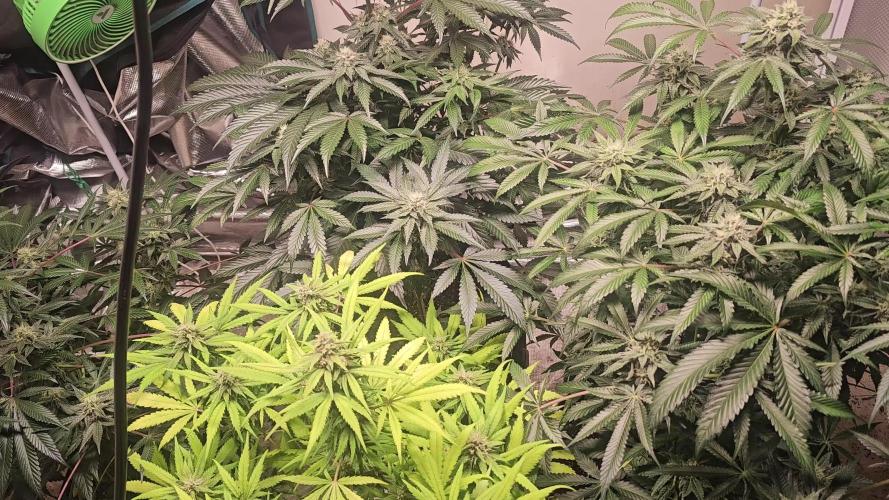
Ok big update this week, I finally edited the footage of the lights and got their unboxing photos processed, this took way longer then expected and should have been done on germination or week 1 entry but better late then never. You can really see how the lights shine in comparison to my older ones. The brightness of the leds is next level and I can use their V1 spectrum from seed to harvest. Its a great balance of red and blue in a full spectrum light. The medic grow mini sun 2 is a all purpose light that I can see myself getting lots of use out of in the future. Plus they fit in my tent just as snug as my last ones and that's a big thing for me, I don't like dim corners. I am using the lights at 80% dim level. this will be raised to 100% when they enter flower :D First time useing lights I can dim. they also have an onboard timer attached to them, I will be playing aorund with this to see if its something I want to use in the coming weeks, I all ready have all the external timers so I can see how this is a useful tool for anyone starting off without them.
On top of all this I also transplanted my plants into their final pots. they went from a .7-.8L to a 2gal or 7.5L, all the root balls on the plants where perfect, nice white roots, maybe a bit compacted for the size and might explain why I am having some issues with them but healthy none the less. I think they will not start to grow a bit better and I will see less issues moving forward. I still have yet to get a new PH pen but I am blindly guessing the PH by adding 2 drops of phosphoric acid ph down per 1gal of feed solution. it seems to be working out just fine.
Till next week.
***Sponsored Grow***
Official Website: https://medicgrow.com/
Facebook:
https://www.facebook.com/medicgrowled
Twitter:
https://twitter.com/medicgrow
Instagram:
https://www.instagram.com/medicgrow420/
YouTube:
https://www.youtube.com/channel/UCNmiY4F9z94u-8eGj7R1CSQ
Growdiaries:
https://growdiaries.com/grower/medicgrowled
https://growdiaries.com/grow-lights/medic-grow

Likes
13
Share


@Bud_Spencer
Follow
SETUP: SPIDERFARMER 2XSF2000
BIOBIZZ LIGHT MIX
7L AirPots
I Love you Mary Jane!!
Not to much Text look Video!
Green Greetings!
Likes
22
Share


@Fatnastyz
Follow
10-18
She hasnt even acted like I bent her top!
Recovered nicely. Her buds have turned upwards to welcome the light! 😁
10-19
Water, noticed some slight burn, will flush her next day or so. She looks pretty good other.
Spaced some branches just just a tad. Cleanin up, while she fattens!
Has a minty smell.
I know Im rough, very grateful for these beans Weedseedsexpress!💚😻
Ill get my shit together! 💪🤘
.

Likes
4
Share


@ObloTheGrower
Follow
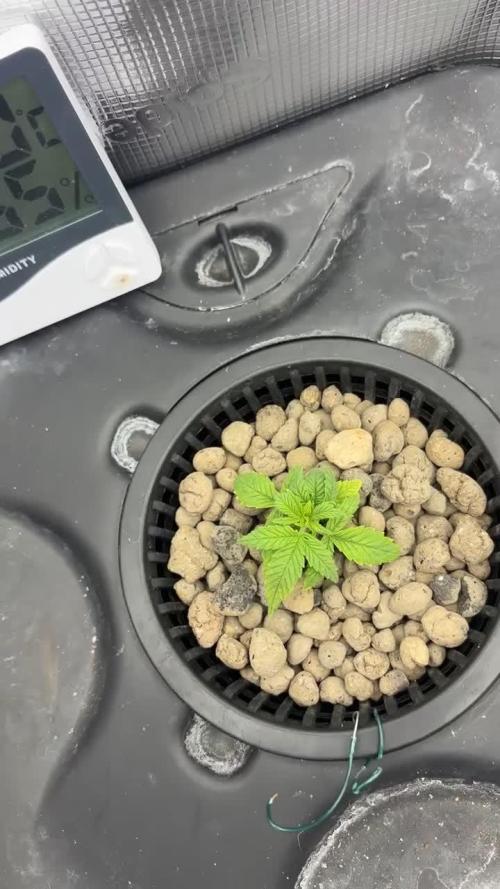
They are growing in my balcony. I have not a grow light so Im supporting them with a 85 watt Cfl at nights and put the ladies in a box to keep level of humudity high
Medya : 40 litre torf, 20 litre perlit, 10 litre solucan kompostu, 10 litre vermikulit, 10 litre yanmış koyun gübresi karışımı ile büyüyecekler. Eksik kalan için daha sonra cocopeat, perlit, vermuculite karışımı hazırlayacağım şimdilik 2.5 litre de köklenmesi yeterli. Büyük saksıda birden fazla bitki ekilecek olan medya ise toprak, supersoil



Likes
16
Share


@GreeneScene
Follow
I had trouble with my humidifier set up so she only took 5 days to hand dry . Fortunately I purchased a programmable humidifier so moving forward it’s all gravy. After everything was cut from branches & weighed she ended up yielding 20gs of some airy foxtaily bud.
I knew this would be a disappointment so we’ll just wait to see what the smoke is like , what the smell is like , & what the taste is like .
