Likes
Comments
Share
@Ninjabuds
Follow
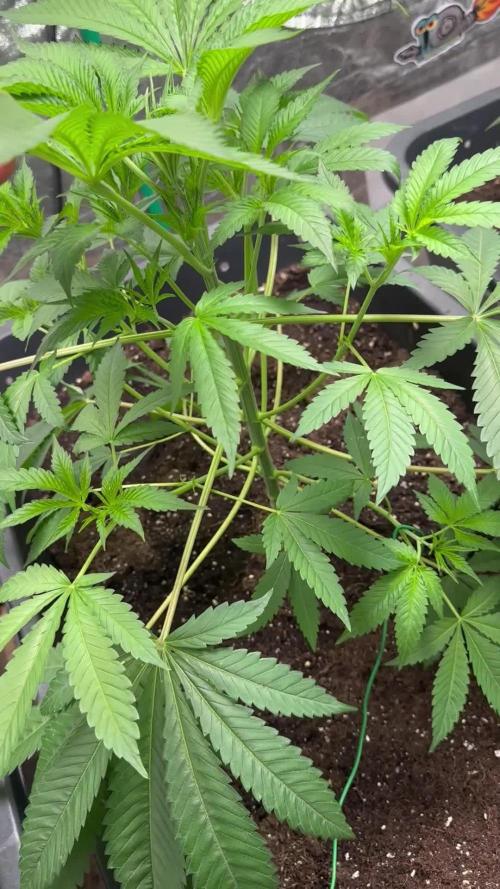
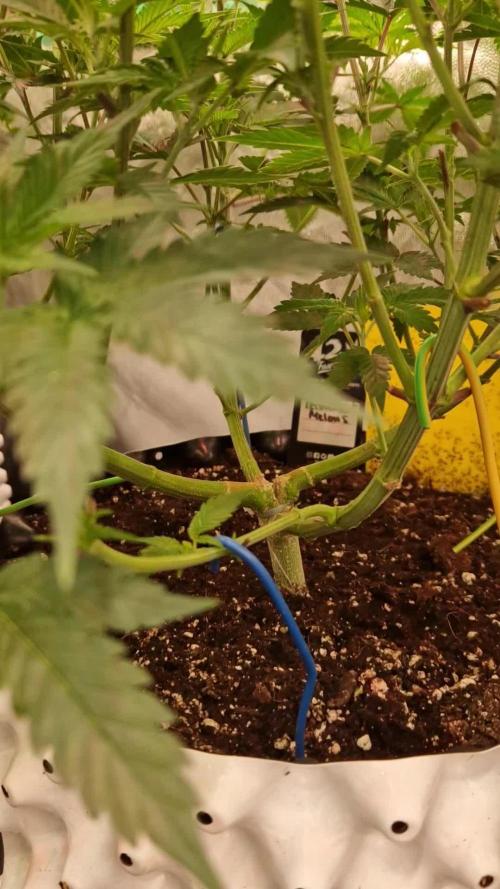
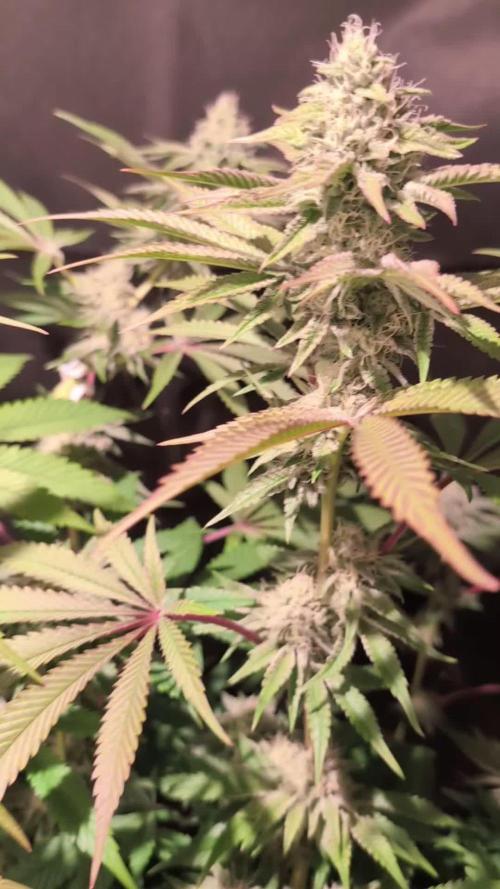
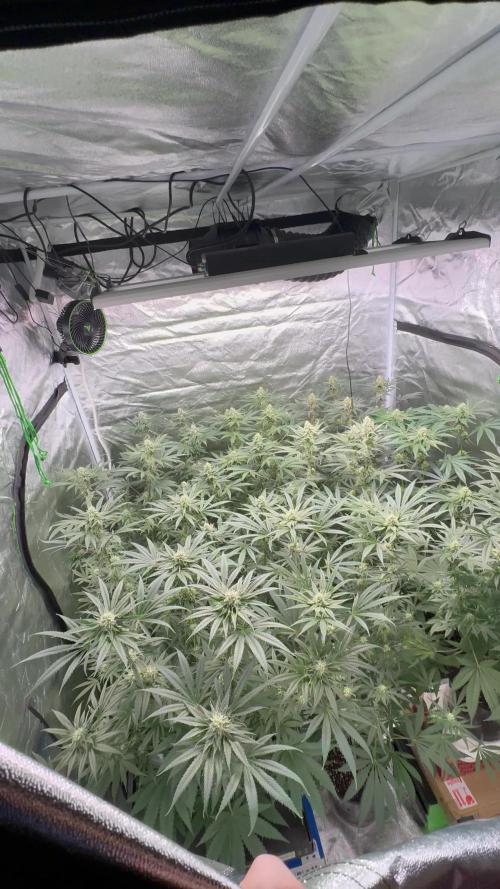
Everything is looking great for now. Busy week. Check back next week for individual photos of he plants will be starting to be pretty fat by then
Likes
9
Share
@WIKETFOLE
Follow
Everything is going great, the plant is absorbing the nutrition well, and the branches are following me well during the LST technique. I am satisfied so far. Please write your review about both the plant and the manufacturer.🙏
Likes
5
Share
@HanzzCZ
Follow
What’s uppp! Week thirteenth (five in bloom) is behind us.✌️🌼 This week, she packed on even more frost. ❄️🍓 I tried increasing the base AN nutrients to 2.5 ml/l, but that seemed to be a bit too much for her and she started showing slight burnt leaf tips. 😅 I adjusted the feeding schedule back to the dosage listed above for the following waterings. Watering volume was reduced to 6L, but frequency was increased to every other day. Overall, she seems very happy, and so is the grower! 👌🌱 Good luck every one! ✌️ Any tips or advice are always welcome 😂🔥 CZ ____________________________________________________________________________________________________________________________________________________ Servus, třináctý týden, pátý týden v květu, máme za sebou. ✌️🌼 Tento týden zase o něco víc obalila cukrem. ❄️🍓 Zkusil jsem zvýšit základ AN na 2,5ml/l, na holku už to bylo asi hrana a chytla trochu špičky listu do černa. 😅 Další zálivky jsem upravil dávkování, které je uvedeno výše. Zálivka snížena na 6l, ale zvýšená četnost na obden. Myslím, že holka je oukland, panícček je spokojeny! 👌 Ať se daří! ✌️kdyby měl někdo nějaký typy/rady uvítám váš komentář. 😂🔥
Likes
6
Share
Aug 29: Amnesia Haze Fast is flowering nicely. Later start than my other three plants so she is smaller, and she was particularly hard hit by hail near the end of veg stage.
Likes
52
Share
Lacewings seemed to have mostly killed themselves by flying into hot light fixtures. I may have left the UV on which was smart of me :) Done very little to combat if anything but make a sea of carcasses, on the bright side its good nutrition for the soil. Made a concoction of ethanol 70%, equal parts water, and cayenne pepper with a couple of squirts of dish soap. Took around an hour of good scrubbing the entire canopy. Worked a lot more effectively and way cheaper. Scorched earth right now, but it seems to have wiped them out almost entirely very pleased. Attempted a "Fudge I Missed" for the topping. So just time to wait and see how it goes. Question? If I attached a plant to two separate pots but it was connected by rootzone, one has a pH of 7.5 ish the other has 4.5. Would the Intelligence of the plant able to dictate each pot separately to uptake the nutrients best suited to pH or would it still try to draw nitrogen from a pot with a pH where nitrogen struggles to uptake? Food for stoner thought experiments! Another was on my mind. What happens when a plant gets too much light? Well, it burns and curls up leaves. That's the heat radiation, let's remove excess heat, now what? I've always read it's just bad, or not good, but when I look for an explanation on a deeper level it's just bad and you shouldn't do it. So I did. How much can a cannabis plant absorb, 40 moles in a day, ok I'll give it 60 moles. 80 nothing bad ever happened. The answer, finally. Oh great........more questions........ Reactive oxygen species (ROS) are molecules capable of independent existence, containing at least one oxygen atom and one or more unpaired electrons. "Sunlight is the essential source of energy for most photosynthetic organisms, yet sunlight in excess of the organism’s photosynthetic capacity can generate reactive oxygen species (ROS) that lead to cellular damage. To avoid damage, plants respond to high light (HL) by activating photophysical pathways that safely convert excess energy to heat, which is known as nonphotochemical quenching (NPQ) (Rochaix, 2014). While NPQ allows for healthy growth, it also limits the overall photosynthetic efficiency under many conditions. If NPQ were optimized for biomass, yields would improve dramatically, potentially by up to 30% (Kromdijk et al., 2016; Zhu et al., 2010). However, critical information to guide optimization is still lacking, including the molecular origin of NPQ and the mechanism of regulation." What I found most interesting was research pointing out that pH is linked to this defense mechanism. The organism can better facilitate "quenching" when oversaturated with light in a low pH. Now I Know during photosynthesis plants naturally produce exudates (chemicals that are secreted through their roots). Do they have the ability to alter pH themselves using these excretions? Or is that done by the beneficial bacteria? If I can prevent reactive oxygen species from causing damage by "too much light". The extra water needed to keep this level of burn cooled though, I must learn to crawl before I can run. Reactive oxygen species (ROS) are key signaling molecules that enable cells to rapidly respond to different stimuli. In plants, ROS plays a crucial role in abiotic and biotic stress sensing, integration of different environmental signals, and activation of stress-response networks, thus contributing to the establishment of defense mechanisms and plant resilience. Recent advances in the study of ROS signaling in plants include the identification of ROS receptors and key regulatory hubs that connect ROS signaling with other important stress-response signal transduction pathways and hormones, as well as new roles for ROS in organelle-to-organelle and cell-to-cell signaling. Our understanding of how ROS are regulated in cells by balancing production, scavenging, and transport has also increased. In this Review, we discuss these promising developments and how they might be used to increase plant resilience to environmental stress. Temperature stress is one of the major abiotic stresses that adversely affect agricultural productivity worldwide. Temperatures beyond a plant's physiological optimum can trigger significant physiological and biochemical perturbations, reducing plant growth and tolerance to stress. Improving a plant's tolerance to these temperature fluctuations requires a deep understanding of its responses to environmental change. To adapt to temperature fluctuations, plants tailor their acclimatory signal transduction events, specifically, cellular redox state, that are governed by plant hormones, reactive oxygen species (ROS) regulatory systems, and other molecular components. The role of ROS in plants as important signaling molecules during stress acclimation has recently been established. Here, hormone-triggered ROS produced by NADPH oxidases, feedback regulation, and integrated signaling events during temperature stress activate stress-response pathways and induce acclimation or defense mechanisms. At the other extreme, excess ROS accumulation, following temperature-induced oxidative stress, can have negative consequences on plant growth and stress acclimation. The excessive ROS is regulated by the ROS scavenging system, which subsequently promotes plant tolerance. All these signaling events, including crosstalk between hormones and ROS, modify the plant's transcriptomic, metabolomic, and biochemical states and promote plant acclimation, tolerance, and survival. Here, we provide a comprehensive review of the ROS, hormones, and their joint role in shaping a plant's responses to high and low temperatures, and we conclude by outlining hormone/ROS-regulated plant-responsive strategies for developing stress-tolerant crops to combat temperature changes. Onward upward for now. Next! Adenosine triphosphate (ATP) is an energy-carrying molecule known as "the energy currency of life" or "the fuel of life," because it's the universal energy source for all living cells.1 Every living organism consists of cells that rely on ATP for their energy needs. ATP is made by converting the food we eat into energy. It's an essential building block for all life forms. Without ATP, cells wouldn't have the fuel or power to perform functions necessary to stay alive, and they would eventually die. All forms of life rely on ATP to do the things they must do to survive.2 ATP is made of a nitrogen base (adenine) and a sugar molecule (ribose), which create adenosine, plus three phosphate molecules. If adenosine only has one phosphate molecule, it’s called adenosine monophosphate (AMP). If it has two phosphates, it’s called adenosine diphosphate (ADP). Although adenosine is a fundamental part of ATP, when it comes to providing energy to a cell and fueling cellular processes, the phosphate molecules are what really matter. The most energy-loaded composition for adenosine is ATP, which has three phosphates.3 ATP was first discovered in the 1920s. In 1929, Karl Lohmann—a German chemist studying muscle contractions—isolated what we now call adenosine triphosphate in a laboratory. At the time, Lohmann called ATP by a different name. It wasn't until a decade later, in 1939, that Nobel Prize–-winner Fritz Lipmann established that ATP is the universal carrier of energy in all living cells and coined the term "energy-rich phosphate bonds."45 Lipmann focused on phosphate bonds as the key to ATP being the universal energy source for all living cells, because adenosine triphosphate releases energy when one of its three phosphate bonds breaks off to form ADP. ATP is a high-energy molecule with three phosphate bonds; ADP is low-energy with only two phosphate bonds. The Twos and Threes of ATP and ADP Adenosine triphosphate (ATP) becomes adenosine diphosphate (ADP) when one of its three phosphate molecules breaks free and releases energy (“tri” means “three,” while “di” means “two”). Conversely, ADP becomes ATP when a phosphate molecule is added. As part of an ongoing energy cycle, ADP is constantly recycled back into ATP.3 Much like a rechargeable battery with a fluctuating state of charge, ATP represents a fully charged battery, and ADP represents a "low-power mode." Every time a fully charged ATP molecule loses a phosphate bond, it becomes ADP; energy is released via the process of ATP becoming ADP. On the flip side, when a phosphate bond is added, ADP becomes ATP. When ADP becomes ATP, what was previously a low-charged energy adenosine molecule (ADP) becomes fully charged ATP. This energy-creation and energy-depletion cycle happens time and time again, much like your smartphone battery can be recharged countless times during its lifespan. The human body uses molecules held in the fats, proteins, and carbohydrates we eat or drink as sources of energy to make ATP. This happens through a process called hydrolysis . After food is digested, it's synthesized into glucose, which is a form of sugar. Glucose is the main source of fuel that our cells' mitochondria use to convert caloric energy from food into ATP, which is an energy form that can be used by cells. ATP is made via a process called cellular respiration that occurs in the mitochondria of a cell. Mitochondria are tiny subunits within a cell that specialize in extracting energy from the foods we eat and converting it into ATP. Mitochondria can convert glucose into ATP via two different types of cellular respiration: Aerobic (with oxygen) Anaerobic (without oxygen) Aerobic cellular respiration transforms glucose into ATP in a three-step process, as follows: Step 1: Glycolysis Step 2: The Krebs cycle (also called the citric acid cycle) Step 3: Electron transport chain During glycolysis, glucose (i.e., sugar) from food sources is broken down into pyruvate molecules. This is followed by the Krebs cycle, which is an aerobic process that uses oxygen to finish breaking down sugar and harnesses energy into electron carriers that fuel the synthesis of ATP. Lastly, the electron transport chain (ETC) pumps positively charged protons that drive ATP production throughout the mitochondria’s inner membrane.2 ATP can also be produced without oxygen (i.e., anaerobic), which is something plants, algae, and some bacteria do by converting the energy held in sunlight into energy that can be used by a cell via photosynthesis. Anaerobic exercise means that your body is working out "without oxygen." Anaerobic glycolysis occurs in human cells when there isn't enough oxygen available during an anaerobic workout. If no oxygen is present during cellular respiration, pyruvate can't enter the Krebs cycle and is oxidized into lactic acid. In the absence of oxygen, lactic acid fermentation makes ATP anaerobically. The burning sensation you feel in your muscles when you're huffing and puffing during anaerobic high-intensity interval training (HIIT) that maxes out your aerobic capacity or during a strenuous weight-lifting workout is lactic acid, which is used to make ATP via anaerobic glycolysis. During aerobic exercise, mitochondria have enough oxygen to make ATP aerobically. However, when you're out of breath and your cells don’t have enough oxygen to perform cellular respiration aerobically, the process can still happen anaerobically, but it creates a temporary burning sensation in your skeletal muscles. Why ATP Is So Important? ATP is essential for life and makes it possible for us to do the things we do. Without ATP, cells wouldn't be able to use the energy held in food to fuel cellular processes, and an organism couldn't stay alive. As a real-world example, when a car runs out of gas and is parked on the side of the road, the only thing that will make the car drivable again is putting some gasoline back in the tank. For all living cells, ATP is like the gas in a car's fuel tank. Without ATP, cells wouldn't have a source of usable energy, and the organism would die. Eating a well-balanced diet and staying hydrated should give your body all the resources it needs to produce plenty of ATP. Although some athletes may slightly improve their performance by taking supplements or ergonomic aids designed to increase ATP production, it's debatable that oral adenosine triphosphate supplementation actually increases energy. An average cell in the human body uses about 10 million ATP molecules per second and can recycle all of its ATP in less than a minute. Over 24 hours, the human body turns over its weight in ATP. You can last weeks without food. You can last days without water. You can last minutes without oxygen. You can last 16 seconds at most without ATP. Food amounts to one-third of ATP production within the human body.
Likes
112
Share
ALRIGHTY THEN 👉THEY ARE READY , BUT IM JUST GONNA GIVE IT MORE TI E TO AMBER UP👈 We just hit week 13 and all is well , have to admit shes just killing it on the resin development 😃 ......the frost is insane 👹...... Just waiting for her to ripen up👈 👉NutriNPK NUTRIENTS USED FOR FEEDING👈 www.nutrinpk.com Lights being readjusted and chart updated .........👍 I GOT MULTIPLE DIARIES ON THE GO 😱 please check them out 😎 👉THANKS FOR TAKING THE TIME TO CHECK OUT MY DIARIES 👈
Likes
1
Share
I seperated them now. The bigger one stays in the 90ltr Pot. The other got in a 13ltr pot. Later in 20ltr. Topping the small on in 1 or 2 weeks. Than LST and 12/12. Its a bit hot the next weeks. Have to look more after the plants.
Likes
10
Share
@agricola
Follow
My good friend convinced me that trimming and training are paramount, so I've started with slowly defoliating the Creme de la Chems to try and get to lollipop status. They're just starting to flower, so I figured I could get away with a more aggressive approach. Because I failed to train these girls early, I'm stuck dealing with a little rain forest. What I've tried to do is trace each flower topped stalk up from the base, and trim away from the bottom up. 1/3 of the way up per day. I've now got a thick canopy, and I've been trying to just use leaf tucking and manual manipulation every few hours in order to keep the different height flowering sites in direct light. These ladies have really been thriving, and it's been such a joy to watch them grow! I like having two plants in one net pot letting them grow wild, but I think in my next grow I'll keep it to one per pot and train better from the start. As for the Super Orange Haze ... not as good. I attempted to pull the main branch over to train her to some empty space, but I was too aggressive and ended up popping her head off :(. First grow, first disaster. I took the head and stripped her/coated in clonex and pushed her into some potting soil just to see what would happen. There hasn't been enough foliage to really make me want to do any trimming, I've just tried to tie the stalks off to train them apart. I'm really sad about my mistake decapitation, but she seems to be doing well still. She's probably week 2 of flower based on others' journals. I changed the water midway through the week (which is when the videos were taken). I drained most of the water out, but roots prevented me from getting the last few gallons. When I refilled the res with RO, I measured the PPM at around 200. I have to assume that remaining nutrient was completely unbalanced leftovers, so feeding will have to just have to be experimental. My approach has been to give around 1:1 Gro vs Bloom and Micro every 2-3 days when I refill with RO. I want to build my PPM up to 1000, but slowly so that I can detect if I hit a ceiling first. It's hard to measure how much food is in the water based on PPM. CalMag is what drives it mostly, so I've been using CalMag as a sort of measuring stick. I keep the CalMag pegged to the Bloom food, but I know it's only good for initial dosing. I can't assume the plants are eating CalMag in the same proportion as anything else :(. If anyone has a line on cheap lab testing ... hit me up. I'd love to be able to test a few hundred samples at a time for NPK and trace so that I can tell (even if post facto) what was going on.
Processing
Likes
17
Share
I don't want to jinx myself, but man this grow is starting great. I haven't been growing long but this has been the best start I have had. This new system is working perfect. I am using 75% RO water & 25% tap. A total of 16 gallons to run this. The tap here is pretty good. It took about a day to stabilize the ph. I am handling the weekly maintenance on this system kind of like my 125g aquarium. Doing this I am able to keep the ph at the optimum level with no worries of any drifting. I was in such a hurry to put in my ac for the tent I didn't think about how dry it's been here. So for now I'm using some wet towels to get the humidity up to an acceptable level for these little plants. The new led lights have been amazing. Maybe another couple weeks and I can put the CMH light in. Please excuse the untidiness. Eventually I will get that all cleaned up. Been so busy with moving into the new house and getting this built and running right. Well let me know how you think everything is coming along. I have been looking into getting a light controller to use with the CMH. Just haven't found one that looks worthy of the price. Update: Well it's been 14 days from seed and 7 days since I put them in the hydroponic system. I'm not sure how well this stuff works for other people, but damn these are looking amazing. I think this weekend I will change out the res and up the nutrients, maybe 500 ppm. I am also going to put my CMH light in. I have been itching to use it since I bought it. I have the 4100k phillips for veg and 3100kr for flowering. Next week I will probably start LST. I don't think I am going to top these, just too worried about stressing them and hermies all over again. I posted some new pictures. Be sure to check them out and give me some thoughts and feedback. I appreciate it all....good or bad. Thanks.
Likes
11
Share
@NONSENSE
Follow
Very nice genetic. I'll do same Jack H from Fastbuds for sure again. Plant was very strong and ready for training. I still did not smoked it, will replay later about the taste and power.
Likes
12
Share
Productive week, finally raised the funds for a 1000w led and a new tent so I've moved my OG indoors to finish her off 👍🏻
Likes
141
Share
@StarLorr
Follow
Welcome to my Gorilla Melon🦍🍉Diary. In this Diary: Seeds: Fast Buds (from contest)thanks ___________________________ Feeding: Wed 09Apr: 2L Remo/Recharge pH'd 6.5 Fri 11Apr: 2L Remo/Recharge pH'd 6.47 Sun 13Apr: 2L Remo/Recharge pH'd 6.47 ___________________________ Entering week 8 FLO. as per fast buds 9-10 weeks of flowering For this lady. ___________________________ I am somewhat surprised that 2 weeks ago she had a smell of diesel and now she's all sweetie fruty😳😋😋 _________________________ Thanks for stopping by, likes and comments are appreciated!👊🏻😎 Keep on growin! Keep on tokin!!! 😙💨💨💨💨💨
Likes
154
Share
@FAST_BUDS, Hi all the happy people here in GrowDiaries. This is my second cultivation ever and it will be fun to try a bigger space than my closet grow. First, I'm just going to say I'm done with the construction of my new growroom. I put some pictures on the construction here in week one. The room is 2.14 meters by 1.7 meters and has a ceiling height of 2 meters. It provides a floor area of ​​3.6 square meters. I use a 54 Watt Lightwawe T5 for germination and 2 Pcs 400 Watt HPS lamps. I have a channel fan that replaces the room air about 40 times an hour to get a comfortable environment in the room, the air enters a fresh air intake from the outside. The air is purified through a carbon filter to then leave the room to the rest of the basement. Then I use that heat to heat the rest of the basement. I will use 8 pcs 15 liter Autopots to grow with and a 100 liter water tank that supplies the pots of water and nutrition. I will grow completely organically in soil and will watercure my buds to get the best possible medicine for me. But there are no cultivation rooms to be displayed here, so I continue with what is most important. Today I have put my seeds in my moisture dome and hope the seeds have germinated within a few days. I am very excited to see how the new growroom will work and how this new secret CBD plant from @FAST_BUDS, will turn out. .............................................................................................................................................................................................................................................................................................................................................. Update 2017-08-15. Both seeds have germinated and planted in small pots inside the humidity dome. I'm so glad it worked so well and now it's just hoping they'll start growing and become 2 big healthy girls :) ............................................................................................................................................................................................................................................................................................................................................... Update 2017-08-16. I have mixed my own soil today. Its 40% sieved peat harrow H2-H4 0-30 mm, 45% sieved peat harrow H4-H6 0-30 mm. 5% sand and 10% of compost soil. And i use 15% of perlite and mix it all together. .................................................................................................................................................................................................................................................................................................................................................... 2017-08-21 The 2 sisters are doing great, Nr2 is a bit after Nr1 . Some new pics.
Likes
36
Share
Keeping her alive this week 🤣 Day 106 16/08/24 Friday Big feed today using de-chlorinated tap water pH 6. Finally flipped her!! Day 107 17/08/24 Saturday Another watering today using de-chlorinated tap water pH 6 only. Picture and video update ✌️ 💚 Day 109 19/08/24 MONDAY Another feed today using de-chlorinated tap water pH 6 with Plagron products. Day 111 21/08/24 Wednesday De-chlorinated tap water today pH 6. Again 5L little run off.
Likes
9
Share
Apliqué superboom compactor,unos 3 gramos,repartidos en 3 riegos.Seguiré un par de semanas más refando con esta mezcla.
Likes
Comments
Share
Week 8: Flower - Tale of Two Phenotypes & Lessons Learned 🌿💜 Currently bumping: Payroll Giovanni - 580 Benz 🎵💰 The Phenotype Reality Check: Same strain, same environment, same nutrients—COMPLETELY different expressions. This is one of the most fascinating (and sometimes frustrating) parts of growing cannabis. Let's break down what's happening in the tent. Lemon Cherry (Left) - The Speed Runner 🏃‍♀️ She's moving FAST! While her purple sister takes her time, this phenotype is racing toward the finish line. Current Status: Bulking nicely with solid density Getting frosty - trichome production is strong Trichomes almost mature - surprisingly ahead of schedule! Harvest window: ~2 weeks out The Lollipopping Regret: Real talk—I lollipopped her early in flower, and now I'm second-guessing that decision. Looking at her sister with almost double the bud sites, it's clear I may have been too aggressive with the lower growth removal. Lesson Learned: Lollipopping can improve airflow and focus energy on top colas BUT removing too much means losing potential yield With autoflowers especially, sometimes it's better to let them do their thing Every bud site is potential weight—be conservative with removal The Silver Lining: The buds she DOES have are dense and frosty. Quality over quantity? We'll see at harvest! Lemon Cherry (Right) - The Purple Princess Takes Her Time 💜👑 She's SUPER purple and absolutely stunning, but she's on her own schedule—no rush, just vibes. Current Status: Progressing at a great rate (just not as fast as her sister) Color expression is PEAK - the purple is deep and vibrant Way more bud sites than Left (thanks to minimal pruning) Harvest window: Likely 3-4 weeks out The Phenotype Difference: This is a textbook example of phenotype variation: Left pheno: Fast-finishing, green, fewer but denser colas Right pheno: Slower maturation, purple expression, more bud sites Same genetics, different expressions. It's like siblings—same parents, totally different personalities. Bag Appeal Winner: The purple coloration combined with frost and more bud sites means this girl is going to be STUNNING in the final product. Worth the wait! Apple Fritter - The Dark Green Giant 🍏 She's doing well overall, though showing some signs of nitrogen excess from the organic feeding program. Current Status: Lower leaves super dark green - classic sign of excess nitrogen Not affecting bud development (thankfully!) Progressing well through flower Harvest window: ~2 weeks out (same timeline as Lemon Cherry Left) The Nitrogen Situation: Dark green, almost waxy-looking lower leaves indicate she got a bit heavy on the N during feedings. Why it's (mostly) okay: It's NOT causing nutrient lockout or deficiencies Buds are still developing normally Just a cosmetic issue at this point Common with organic amendments that release nitrogen over time What I'd do differently: Lighter on the Gaia All Purpose early flower, heavier on the bloom-specific amendments. Live and learn! Key Observations & Growing Wisdom Phenotype variation is REAL and unpredictable: Even from the same seed pack, you can get wildly different plants. This is why breeders hunt through hundreds of seeds to find "the one." Both Lemon Cherry phenotypes are good—just different. Lollipopping: Less can be more (sometimes): Seeing the bud site difference between the two Lemon Cherries is a powerful reminder that aggressive pruning isn't always the answer, especially with autoflowers. They have a limited vegetative phase—every growth site matters. Nitrogen in flower: Easy to overdo with organics: Organic amendments like Gaia All Purpose can release nitrogen longer than expected. During flower, less is more. Focus on P and K, dial back the N. Different finish times = staggered harvests: Having plants ready 2-4 weeks apart actually works out well: Manageable trimming workload (not all at once) Continuous supply of fresh flower More time to dial in drying/curing process Speed ≠ Quality: Lemon Cherry Left finishing faster doesn't make her better. Lemon Cherry Right taking her time might result in bigger yield and better bag appeal. Patience pays. The Growing Lesson Summary Phenotype hunting is real - expect variation even within the same strain Conservative pruning - especially with autos, let them keep bud sites Watch nitrogen in flower - dark green leaves mean dial it back Each plant teaches you something - these "mistakes" are actually valuable data Next Week's Plan Lemon Cherry Left & Apple Fritter (2 weeks out): Start monitoring trichomes closely Begin thinking about flush timing (if flushing) Watch for final swell and fade Prep trimming/drying station Lemon Cherry Right (3-4 weeks out): Continue current feeding program Let her take her time—she'll finish when she's ready Enjoy watching that purple get deeper More time = more weight and resin Post-Harvest Planning: Two harvests coming soon (Left + Apple Fritter) One more to follow (Right) Drying space ready Cure jars prepped Already thinking about the NEXT grow 🌱 Payroll Giovanni voice: "Different phenos, same hustle, purple flowers and that muscle..." 🎵💸 Week 8 wisdom: Every mistake is a lesson. Every difference is data. Every plant is a teacher. Keep the music playing and the garden growing! 📚🌿 Same strain, different personalities. That's the beauty (and chaos) of growing cannabis. Roll with it and learn! 💚✨
Likes
4
Share