


Likes
Comments
Share

@TRPHAUS089
Follow
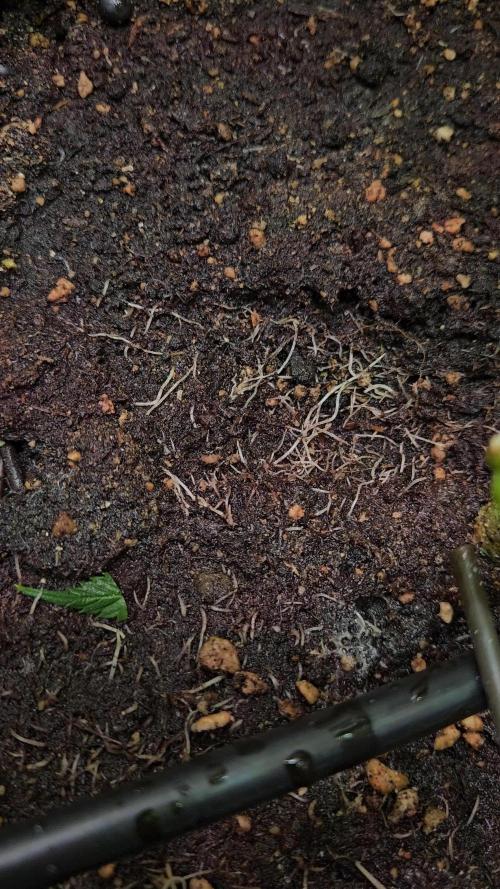
Defoiled, added a second net. Enhancer and npk booster also added every 2 weeks

Likes
119
Share


@Roberts
Follow
Divine indica is growing great, and has been. She has been absorbing a lot of nutrition and water. She is starting to bulk now for sure. She has a nice layer of frost Starting as well. She is super happy, and growing strong. Makes me hesitant to really do anything. I don't want to disturb her harmony she has going right now. Thank you Spider Farmer, and Divine Seeds. 🤜🏻🤛🏻🌱🌱🌱
Thank you grow diaries community for the 👇likes👇, follows, comments, and subscriptions on my YouTube channel👇.
❄️🌱🍻 Happy Growing 🌱🌱🌱
https://youtube.com/channel/UCAhN7yRzWLpcaRHhMIQ7X4g

Likes
15
Share


@Huckleberry39
Follow
This is the start of week 9 and she is doing GREAT!! Pistols are turning nice and pretty 😍! Buds are fattening nicely, and the thing im most proud of, no sighs of defiency!! She is a very good plant to grow. And is going to give me some very nice smoke!!

Likes
21
Share


@Compassionate_Gardener
Follow
The flowering of my TRICHOME WONDERS continues through week 12 and they have grown to an AMAZING size now. The main branches form HUGE colas and some of the plants have started their fade (=the leaves start to get yellow and/or purple), which shows they are getting ripe now and that the BIO-Tabs nutrients in the soil are almost used up. Perfect timing until the end of the cycle. The amount of TRICHOMES on some of my babies is FLABBERGASTING! 😱😍 The topbuds are ENCRUSTED with a WHITE LAYER of trichomes and the plants are GLISTENING now. Especially the Mr. Big Candy from Mr. Hide Seeds is a VERY BEAUTIFUL specimen...she has hues of purple and red in the buds and is FULL OF CRYSTALS! The aroma is a sweet candy like smell, which makes my mouth water every time. The biggest colas are formed on the Mr. Jekyll Kush from Mr. Hide Seeds, she is HUGE! Unfortunately one of the HUGE top-buds has developed bud-rot, therefore I ha to cut off the invested top part of the plant. (see in pics) The SANlight EVO5-150 and Q5W-Gen.2 LED-lamps are doing an OUTSTANDING JOB, they are hanging at appr. 80 cm from the top of the plants and running at 100% (=not dimmed) now. The intensity and spectrum of the LEDs is perfectly designed for the development of Cannabis plants and the results speak for themselves. THOSE LEDs WORK MUCH BETTER THAN HPS-LIGHTS!!! 👍😃 I LOVE THEM!


Likes
11
Share


@Blaze_Quell
Follow
Last week of veg, slowly settling into the new schedule of automated feeding and the warming weather. I am in desperate need of an accurate and efficient temp controller, the ones I have are a simple on/off thermostat and the changes in speed are too dramatic.


Likes
9
Share


@MG2009
Follow
02/18/2020
Look at those fat leaves, definitely does well in cool temps,
ruderalis / indica genes. I can't wait to see her sativa wild side.🙏 turned bloom channel to 100% so blue and red spectrum at 100% full spectrum ir and uv included. Will do more pics latter this week.
02/19/2020
Day #21 and I think that she likes the red spectrum she just looks bigger than yesterday I think she got 2weeks of veg cycle, hope to top midweek,and LST.(if she got her 4th node,that is)
Ps.
Sorry about the red looking pics, I will get some in natural light soon as I can.🙏could not get in natural light but mh light looks good.
Likes
25
Share


@Kikiwindsurf
Follow
I cutted off the main cola of GG accidentally, so we have GG LST, GG LST + topping and LH growing naturally.
Rain days/no sunny days they stay indoors as u can see. (20hours indoors 400HPS and 12 hours outdoors direct sunlight)
Gonna decrease nutrients because of the apparence of the leaves, "plastic leaves effect" let me know what u will do in comments ! DAY 39 AND 40 GORILLAS AND DAY 30 LH
18/04/2020 day 35 of LH and day 44 and 45 of the gorillas. They starting the full bloom and swating crystals. Smell increased considerably. I water more nowadays because she drinks a lot ! enjoy todays vid in the terrace :D
Likes
22
Share


Likes
13
Share


@cookingwithninja
Follow
Week 9 day 1 video pheno.
Gonna chop this week
Week 9 day 7 well chop this weekend so on week 10 Day 1-2. Just waiting on a light to reveg one.
Everything is magic
Likes
5
Share


@GODAXE
Follow
26.06.2024
the 4 seeds have been set to soak in distilled water for 16 hour
27.06.2024
the 4 seeds have been put in scott towel in a dark tupperware
28.06.2024
after 24 hour the seeds shows taps roots, as im leaving for the weekend they have been set in presoaked with distilled water rockwool with few drop of Cyco cyclone rooting gel in germination tray.
special thank to Barry the camping keeper for is help on this grow.
Processing
Likes
29
Share


@Crazydaver
Follow
Bit of a difficult start to these girls seeing as this is my first grow and all, but they’re still growing and overall looking pretty healthy, good colour, springy, but I’m suspecting nute deficiency maybe but I’ve upped the food so we’ll see how we do!
Now, when to start topping 🤔...
Puff, puff, pass ✌️

Likes
7
Share


@spanish420pasiongrow
Follow
Las flores empiezan a rellenarse, la verdad muy contento para estar usando solo tan pocos productos flores densas y bien resinadas, los cogollos satélite igual que mecheros y para ser clones con esas ramitas flores densas, muy contento, pequeña carencia de calcio mg pero ya está cubierta, ya veremos

Likes
92
Share


@DogDoctorOfficial
Follow
Week 7 Veg Report 🌿✨
Hey Grow Fam! 🌱 Week 7 of veg is here, and let me tell you, the grow room is buzzing with life! Each of the girls is showing off her unique personality, and I’m especially stoked about the Papaya Zoap—she’s really coming into her own! The scrog net is nearly filled out just how I wanted it, and I can feel we’re so close to flipping to flower. The anticipation is real! 😁
But before we get to flowering, let’s take a dive into something that makes this grow so smooth—ThinkGrow LED drivers and cables.
ThinkGrow LED Drivers – Plugging Into Success 💡🔗
This week, I had a chance to work deeper with the ThinkGrow LED system, and honestly, it’s like a dream come true for efficiency. I’ve been using the TLD-4 Four Spectrum Control Channels Model One LED Driver, and let me break down how it works. The drivers attach directly to the bars—super sleek and no extra bulk. And, the connections? It’s a matter of matching the male and female connectors on the TDC-2 Daisy Chain Cord. It’s like a simple puzzle that snaps together perfectly. The TDC-4 cord takes it to the next level, connecting the top bars to the ICL-300 Inner-Canopy LED Bar, giving complete control and balance across every layer of my canopy.
Why is this important?
The driver-to-bar connection ensures that each LED bar is operating optimally, and the daisy-chain system makes it effortless to manage multiple bars without a ton of wires everywhere. It’s neat, efficient, and delivers even light distribution, which my plants are loving! 🌞
Are My Girls Ready for Flower? 🌸
When I look at the plants up close, it’s like they’re whispering, “Flip me to flower already!” 😆 Their growth has been so vigorous, each filling out the space with character, and that scrog net is almost fully covered. So, I’m thinking we’re super close to the big switch. Each plant has its own pace, but as a whole, the grow is looking fantastic!
Room Stats – Tuning Into the Environment 🌡️
The TrolMaster system is still killing it with data and control, making it easier for me to keep everything balanced. Here’s a quick breakdown of the week’s environmental numbers, and a few jokes along the way! 😜
• Room Temps: Max 25.5°C | Min 24.4°C (Keeping it cool but not too chill!)
• RH: Max 76.4% | Min 67.1% (Humidity stays right where it needs to be.)
• CO2: Max 832 ppm | Min 420 ppm (Shout out to that magical 420! 🌬️😂)
• VPD: Max 1.06 kPa | Min 0.64 kPa (All dialed in for peak veg mode.)
Light Levels – All in the Details 💡
• Max PPFD: 506 | Min 0 (because, you know, when the lights are off, it’s dark! 🌚😆)
Keeping the light intensity balanced, and using the ThinkGrow LED system to spread that goodness across the entire canopy, I’m seeing explosive growth. Those PPFD levels are perfect for this stage!
Water & Nutrients – The Lifeline 💧
• Solution pH: Max 6.32 | Min 5.78 (Keeping it in the perfect range.)
• TDS: 355 ppm steady (Every drop counts, right?)
• Solution Temp: Max 23.5°C | Min 22.3°C (Keeping things cool, just like the grow!)
And medium moisture? It’s a solid 100% thanks to my AutoPots and the genius of the AquaValve system. No electricity needed—just gravity doing its magic. It makes my life so much easier, and the girls are loving the consistent hydration! No more worrying about under- or over-watering.
Why I’m Obsessed with TrolMaster 📱
I can’t talk about this grow without shouting out the TrolMaster system. Every bit of data—whether it’s temperature, RH, VPD, CO2, light intensity, or pH—gets tracked and displayed in real-time on my app. It’s like having a grow assistant in my pocket, making sure I can monitor and adjust at any moment. The level of control I get with TrolMaster is out of this world, and it’s helping me keep everything dialed in perfectly.
Ready to Flip Soon 🌸
With the Papaya Zoap filling out so nicely and the rest of the plants following suit, I feel like we’re right on the edge of flipping to flower. It’s going to be a smooth transition, and I can’t wait to see these beauties bloom!
Stay tuned for next week, where we might just make that flip! 😉
Environment Stats Recap 📊
• Room Temp: Max 25.5°C | Min 24.4°C
• RH: Max 76.4% | Min 67.1%
• CO2: Max 832 ppm | Min 420 ppm (Seriously, shoutout to 420 again! 😂)
• VPD: Max 1.06 kPa | Min 0.64 kPa
• Light PPFD: Max 506 | Min 0 (obviously, when the lights are off! 😜)
• Solution pH: Max 6.32 | Min 5.78
• Solution Temp: Max 23.5°C | Min 22.3°C
• Medium TDS: Max 430 | Min 420 (I can’t get enough of these 420 jokes! 😆)
Final Thoughts 💚
This week has been a blast! Between the ThinkGrow LED system and the TrolMaster gear, I feel like I’m pushing the limits of what’s possible in indoor horticulture. Everything is dialed in, the plants are healthy, and the data just keeps showing that we’re right on track.
Shout Outs!
As always, huge thanks to TrolMaster and ThinkGrow LED for the amazing gear, to Aptus Holland for their top-notch nutrients and Pro-Mix for the best soil i have used so far. Big love to the seed banks, the amazing Grow Diaries community, and all my followers—you guys make this journey so much more exciting. Don’t forget to catch up on my social media, Instagram, and YouTube for real-time updates and exclusive content!
Stay tuned for more—next week is going to be epic!
DogDoctorOfficial Discount Codes so you can save big on your next check out 💚💚💚
Kannabia - DOGDOCTOR 30% off
SeedsmanSeeds - DOGDOCTOR 10% off
CannaKan- DOGDOCTOR 15% off
terpyz.eu - DOCTOR 15% off
The Neutralizer - PORKIT5-DOG 15% off
As always thank you all for stopping by, for the love and for it all , this journey of mine wold just not be the same without you guys, the love and support is very much appreciated and i fell honored and so joyful with you all in my life 🙏
With true love comes happiness 💚🙏 Always believe in your self and always do things expecting nothing and with an open heart , be a giver and the universe will give back to you in ways you could not even imagine so 💚
Friendly reminder all you see here is pure research and for educational purposes only
Growers Love to you all 💚💚💚


Likes
56
Share


@Prilyfe13
Follow
March 22, 2024 Day 36
This week we are dialing in the light height and power level, as well as nutrient regimen. Training is the top priority during this last week or so of the veg stage. Everything else goes hand in hand.
Banana Purple Punch A is suffering from nitrogen toxicity, so the nutrients need to be dropped from 12 ml to 10 ml after I dilute the current regimen with 8 ml cal/mag water. I have to wait another day or so before diluting the basins as they are nearly full still. She also had some of the top side branches pulled down. The top is pointing down and has been for the last day while the side branches are doing exactly what they are supposed to do. They are growing into an even level canopy with the top being just below them. This is exactly what the plant should be doing. Very happy with this outcome.
The top on Banana Purple Punch B finally stayed down for the most part. It's reaching back up again, so I trained it back down. If the side branches don't start to reach, I'll have to top her. I'll give her a couple more days to see what happens.
What's weird is that she isn't suffering from nitrogen toxicity while having the exact same nutrient regimen as her sister plant. She also seems to be drinking a bit slower than Banana Purple Punch A. I think it has to do with the different phenome. The soil seems to be just as wet, but the bottom of the container isn't as wet as the other plant. The reservoir is also nearly full where the other is about 3/4 full. Not much difference, but enough to notice.
The side branches are all level with each other with the top being about an inch taller. Don't get me wrong, she is beautiful and most likely will have the best structure of the 2 plants.
I'll also be taking off the massive fan leaves on the stem in the next day or so. Even maybe this afternoon. I'm just concerned about the nitrogen toxicity. Is it enough to cause too much stress, or is it fine while I work on diluting the excess nitrogen out? I might just do it anyway and see what happens. As I've said before, I plan to do everything the exact same, but I'm starting to think these two need to be treated slightly differently. Like the possibility of having to top Banana Purple Punch B, or the nutrient intake difference between the two.
The light power is now at 90% with the height staying at 24". I need to measure the height of the plants, but I'm guessing they are about 10" with training underway. I don't really expect them to grow too much taller until the flowering stretch. Until then, I'll continue to train them down.
It's still snowing and freezing out, and the tent is still suffering from it. The temp went all the way down to 66° last night and won't climb over 75° today. I have the heater set to 78° and it's keeping the room at 75°, but the tent is still under 75°. It makes no sense. The humidity is kind of high as well. It is stuck at 57% to 58%. It's not high necessarily, but it's higher than what I want. I might put in my dehumidifier to help with the temp mostly and the humidity should drop just a bit. I'll see how it goes for the day.
Grow System Environment:
Temp: 72.4°
RH: 56.5%
VPD: 1.16 kPa
March 23, 2024
A bit to do today. I was going to water, but the reservoir for Banana Purple Punch B is still half full. However, the reservoir for Banana Purple Punch A is nearly empty. I definitely believe it has to do with the phenotype. Gonna have to focus on each plant separately from now on. I'll refill Banana Purple Punch A tomorrow when the reservoir is almost dry.
Trimming finally happened today as well. I removed all the main stem leaves. That's it and there is tons of open space now to fill in.
Banana Purple Punch A looks awesome now and had a couple adjustments done. A perfectly level canopy.
Banana Purple Punch B looks great as well. She opened up quite nicely. However, she is still a tiny bit bushy. No reason in removing more yet.
The light was adjusted today. The DLI is sitting perfect at 42 mol/m²/d. However the light is at 26" now. To be honest, I'm happy with the footprint. Excellent coverage wall to wall.
The environment looks pretty good today. 75° and climbing up to 76° to 77° by the middle of the day. The humidity is also pretty good hanging out between 57% and 58%. The real concern is still the night temperature. Last night it was down to 64° because it's that cold out.
Other than that, they grew about a half inch last night. Not much upward growth, but that's the goal. Lots of outward growth though.
Grow System Environment:
Temp: 72.6°
RH: 57.0%
VPD: 1.15 kPa
March 24, 2024
What a day.
Both ladies were massively trained. The branches on Banana Purple Punch A were sticking too far out, soni rounded them back in around the rim of the container. Suffice it to say, the tent is completely full.
The training opened up tons of light space. Auxiliary branches were tied down as well.
Banana Purple Punch B didn't need as much training, but I did get the top to pull down again. The side branches are still pretty tight. They are definitely over the container rim, but not as much as her sister plant. So not a ton to do today. It will take off soon during the flowering stretch and then training will be needed.
Speaking of full tents, I'll be adding the trellis in a week. I think I'm gonna need it. I also learned how to super crop, so I can use that technique if need be. However, I'm not much of a fan with the trellis. My last harvest had the trellis stuck inside the plant until after drying and I could cut the plant up. Anyway, we shall see what happens.
Both reservoirs got a half gallon of 8 ml Cal/Mag. That should reset the nutrient intake so I can start the 10 ml dose next watering.
Differences between the two plants are pretty obvious. From the plant structure to even the roots. Banana Purple Punch B has no roots showing while her sister plant is showing roots now. Both plants are super strong and will do quite well. I wonder if the buds will be structured differently as well.
I didn't need to move the light today after I trained the plants down. It's still at 42 mol/m²/d.
Based on their current growth and the health of these plants, I'm expecting them to grow up to 3 ft. At least that is the hope. I'll take 4 ft, but no taller. That's all the tent can handle. I don't expect these to be short based on their growth and hardiness. So at minimum, we can see a couple 2 ft plants.
It's 20° f out today. The tent temp is hanging out at 75°. The humidity is a bit high today. Hanging out around 58%. It should drop a bit later on and the temp should increase by mid day.
Grow System Environment:
Temp: 72.5°
RH: 57.3%
VPD: 1.14 kPa
March 25, 2024
So I know it's the middle of the week, but I forgot to rotate the plants around until today. So I rotated them out. Now Banana Purple Punch A is in the rear quadrant with Banana Purple Punch B back in front.
They are still very different.
While Banana Purple Punch A is stretching with an open canopy, Banana Purple Punch B is
still tight even with the stretch starting. The canopy is already getting dense from the previous light defoliation. I'll definitely have to take more leaves off in the coming weeks.
In fact, both of them have massive leaves that will surely be a nuisance in the near future.
Both plants are in the flowering stretch now. I thought it was pre-flower last week and I was right. Now they are both flowering and I'll be starting the flowering nutrients next week as scheduled.
I didn't move the light again today. The side branches haven't caught up to the very tops yet. The canopy is still level, just need the auxiliary branches and side branches to start stretching. The DLI increased to 43 mol/m²/d, but flowering means a higher DLI. So I'll be increasing that to 45 mol/m²/d at the start of next week. It's only like 3 days, so it should be perfect for the stage the plants are in. I'm still keeping a minimum of 22" to the canopy, but will hold over 24" for as long as I can. As I said yesterday, I believe I can expect 3 ft from these ladies.
They have been stretching, but the top branches are also stretching, so they have to be tied down as they get long enough.
Speaking of branches, I accidentally half snapped one of the top branches on Banana Purple Punch B. No worries though, I'm not concerned with this. Every snap or partial snap I've had always ends in a better plant. Not to mention it's a side branch and not the top, so we're good.
As for watering, both plants are very different. Where Banana Purple Punch A is taking in about a gallon every couple days, Banana Purple Punch B is taking half of that. There still aren't too many roots coming out yet, so that could be the cause of the slow down. As the system works, it only provides water as needed by the soil and plant. So currently , there isn't a reason to flood the soil. According to the plant anyway. The soil is perfectly moist and the plant is perfectly happy. The good part is, when the roots do hit bottom, the plant will really take off. So I can only assume my watering technique worked as I planned.
Back to Banana Purple Punch A. Her water intake is fairly impressive, especially at this age. She's still young and has a lot more growing to do. This may be a gallon a day plant in the upcoming weeks.
The environment is still a bit off. Temps are still low and the humidity is still high. However, the VPD is in range. It will need to increase by next week, but that shouldn't be a problem with this cold front almost over with and spring fast arriving. Currently the temp is hovering at 73° and the humidity is around 59%. Definitely not ideal, but not much I can do at the moment. I may add my small dehumidifier to the tent to see if that helps. The high humidity is definitely not from an external source. The humidity in my room is down to 22%. So it's not that issue. It's the plants. A great sign. The whole tent is filled wall to wall. So there's a lot of release from the plants. Very good. I still need the temp to climb though.
Grow System Environment:
Temp: 71.4°
RH: 57.2%
VPD: 1.10 kPa
March 26, 2024
Both ladies needed watering today with Banana Purple Punch A bring dried out and B having a bit of water on the bottom. Definitely drinking much slower than her sister plant. Again, I believe it's the phenotype, so I'm not worried. If it continues, then I may have some concerns, but when the roots start popping out in earnest, the plant will take off and need lots of water.
I also made a couple minor adjustments to the canopies of both plants. Nothing really Earth shattering, but at least a note of the day. Oh and I attempted to tuck all the lowest leaves under the plant to make more outer rim space. It kinda worked. I might just cut them off.
I removed a few more leaves from Banana Purple Punch B. She's getting super bushy and she definitely needed it. I'll be trimming away as she grows. Very little at a time, but more frequently than normal. Like every 2 days instead of every 4 to 5 days. She's definitely robust enough to handle that technique. I haven't ever actually done a full defoliation before, so I don't know what's better. I hear too much controversy over defoliation on autos, and this seems to work wonders. Hell, I'm pretty sure FastBuds says to trim throughout the grow to keep up with the density of the plant.
I don't have anything for Banana Purple Punch A. She's fine and growing. Not the tallest plant in the tent, but also at the same height as 2 others, so I only have 1 plant that's a bit taller.
Just the couple adjustments to the canopy. However, her buds are already pronounced and fat. I can definitely tell the buds are going to be super dense. Actually, both plants have the same size buds. They are brand new and big already. Granted, the stretch hasn't started yet, so they may be smaller buds loading up the top with multiple nodes. I dunno. They are big for a few days old.
The lighting is still the same. I should also add that I did end up moving the light yesterday. Like an inch up to match 24". I may have to drop the light slightly to keep from going to 100% power. But we shall see. As I've said before, I'll go as low as 22", but that sacrifices the footprint a bit.
The environment is driving me crazy. It's not cold out anymore, but I cannot for the life of me get the temp on my room over 70°. Looks like I need a new heater. To combat this issue, I finally added my dehumidifier. Hopefully it's strong enough to clear out some of the humidity and help increase the temp. The environment has been stuck at like 72° and 60% humidity and flowering has begun. I really want it down to 55% now. No idea why it's still so high with the humidity in my room is around 23%. It's super dry.
I just checked the environment and the dehumidifier is working somewhat. The temp increased to 76°, which is fine. But the humidity is still kinda high at 57%. It's the VPD I'm really focusing on now. Currently it's hovering around 1.2 kPa. It's better, but I'd rather be closer to 1.28 kPa. We'll get there in the end. The dehumidifier just needs to acclimate the environment.
I decided to drop the nutrients back down to 8 ml instead of 10 ml. 8 seems to be fine and I really don't want more nitrogen toxicity. Unfortunately, I ran out of Bud Candy and have to order more, so that will be added next watering. I'll be starting Tasty Terpenes next week. And I start Big Bud next watering as well, I think.
Grow System Environment:
Temp: 71.6°
RH: 57.9%
VPD: 1.09 kPa
March 27, 2024
Today was trimming day. I did a full defoliation on both plants. Banana Purple Punch B especially needed it. They both got about 15% of the leaves off. The massive ones that is. No small ones. So now there is plenty of space for the auxiliary and side branches to grow and spread out unimpeded by excess foliage. I know there is a lot of controversy in this, but they needed it.
Banana Purple Punch A had a little less taken off. Mostly the outer leaves that were pressing in on the other plants in the tent. Some of the inside leaves were blocking precious bud sites. So those had to go. Maybe 4 of those. All in all, I'm quite happy with the outcome. I'll check on them in an hour or so to see how much stress they have undergone. I usually wait for the end or middle of the flowering stretch to start pulling leaves, but this time around I think I got the timing right.
Banana Purple Punch B might be a bit ahead in flowering. At least, her buds are huge already.
Banana Purple Punch A drinking more than the other plants in the tent. Significantly more. While the other plants are about a third of gallon in, this lady has already taking in about 3/4 gallon of the reservoir. I wonder why that is. The plants are all the same height, but by training only though.
The shortest and most matched with canopy height is Banana Purple Punch B. I expect her to take off just like the rest of the plants in the tent. However, she is also the least thirsty. Again, it has to be the phenotype. I just hope this isn't a sign that she will end up short. I might submerge the bottom of the container in the reservoir to better activate the wick system. Theoretically, the container should have already been wet at the bottom before activating. That way the plants and wick system can match up and keep up with each other. I know they can cruise through about 3/4 gallons a day when activated properly. The submersion should help with it. I'll see how things go over the next day or 2. If the rest of the ants in the tent need water by then and she's still slow on the uptake, I'll submerge and reactivate. If not, then we are good to go.
I didn't mess with the light again. No need yet anyway. Although, I will check the DLI and height when I check on the plants for stress. Let's hope they took the defoliation like champs.
The environment is now back to normal. Somehow the main heat in the house was turned way down. I'm guessing a child. Smh. Anyway, now that it's fixed, the temp is around 80° and the humidity is around 54%. A bit warm, but I'll take it over 73°. The humidity is right where it needs to be. I'll take the dehumidifier out today to help drop the temp to a comfortable 77°. The humidity should also increase to around 56%. Exactly where I want to be right now. In a week, I'll try to keep it below 55%. I may try to drop the temp down to 75° in a couple weeks.
Update: I messed with the light. Strangely enough, I had to drop the power down to 80% and ended up with the light being around 25". Now the DLI is at 42 mol/m²/d. I'll look at it again starting next week. I may have to bring the power up again, but I don't think I will for another week at least. Right now, the DLI is perfectly fine. It will help with the ants reaching and spreading those nodes out for the flowering stretch.
Grow System Environment:
Temp: 76.5°
RH: 55.3%
VPD: 1.36 kPa
March 28, 2024
No training today. I was considering pulling a couple branches down a bit, but everything is level and the plants are the same size.
There are some major differences between these two, however. And some notable similarities.
The main difference is the internodal spacing where Banana Purple Punch A has decently spaced internodes, while Banana Purple Punch B has extremely tight internodes. It's stretching now, so maybe the spacing will catch up.
I'd also like to note that these two plants are seriously flowering now. The other major difference I have noticed is water uptake. Banana Purple Punch A is taking double what Banana Purple Punch B drinks. I had to refill the reservoir as it dried out of Banana Purple Punch A. I also cleaned out the reservoir. Tomorrow, I'll do the same thing for Banana Purple Punch B. I was originally going to wait until tomorrow for both, but I can't let the reservoir dry out completely. There should be significantly less water tomorrow. I'll also have B-52 from Advanced Nutrients. I have Sensizym coming as well. I'll be adding a half dose of B-52 starting tomorrow. I'll add it to Banana Purple Punch A next watering.
I didn't move the light at all today. Both plants are happily basking in the light with some perfect praying going on. Nothing to move.
The environment is finally back to normal. The temp is between 76° and 77° with the humidity at 55% to 57%. The VPD is where it's at though. Around 1.33 mol/m²/d give or take a few. Right where I want to be.
So the plants are looking absolutely stunning. Both have the very same massive leaves of a beautiful green. No stress whatsoever from the defoliation and trained to near perfection. I may move a couple branches here and there as they stretch, but I'm happy with what I have right now. Just enough space in each quadrant for each plant to grow without overwhelming any other plants.
As things are looking, I may not need the SCroG net for a bit. The branches are all the same height for now. I may be implementing it if I need to keep the canopy level. Other than that, I'll use it to make sure the branches don't tip over from the buds. I plan on buying some cross bars so I can mount the SCroG net to that. Much more useable training space. Anyway, we shall see how it pans out.
Grow System Environment:
Temp: 73.6°
RH: 54.9%
VPD: 1.25 kPa
Likes
2
Share


@UrbanBoer
Follow
The most difficult strain to grow this cycle, I do not know whether it’s due to the irrigation of the pot she resides in, causes this slow growth, and making matters worse nearly fried her with nutrients, so I flush but it turned out I was overwatering with the flushing, so I have allow it dry up a bit and incrementally flush due to the slow drainage from this pot, though she revegged I will not add nutrients, since she’s this far in her flowering phase, I don’t want to risk not having enough time to flush before harvest.


Likes
5
Share

@Pheno_Minds
Follow
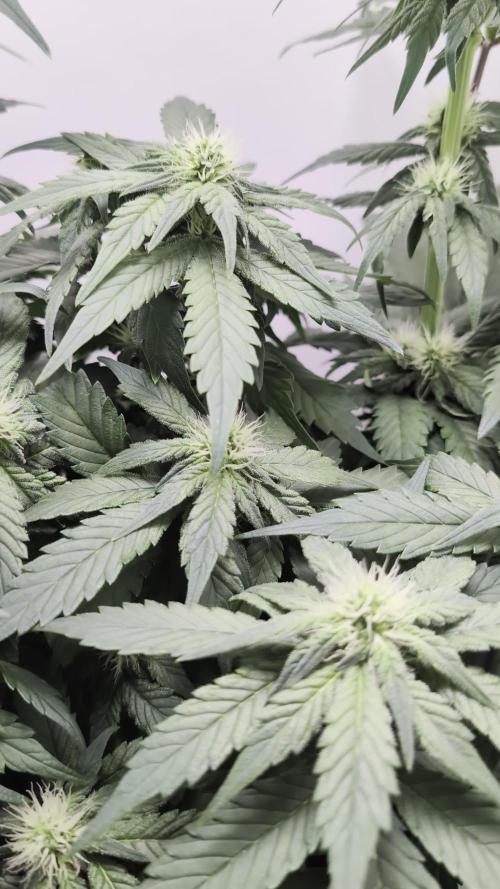
🌿 Grow Diary – Woche 4 Blüte
📅 Datum: 03.03.2026
💡 Lichtplan: 12h/12h
🔆 Avg. Lichtintensität (PPFD): 640 µmol/m²/s
📏 Lampenabstand: 35cm
💦 Bewässerung: 2L pro Gießvorgang
⏱️ Bewässerungsintervall: alle 2- 3Tage
pH (Gießwasser): 6
⚗️ EC (Gießwasser): 1.8 mS/cm
🌊 Wassertemperatur: 20 °C


Likes
13
Share


@Green_Blood
Follow
On the final few days of a 10 day flush.
Will be chopping down this week to harvest and hang dry.
Really excited to try this one. The smells in the room are unreal.
