The Grow Awards 2026 🏆
Likes
Comments
Share
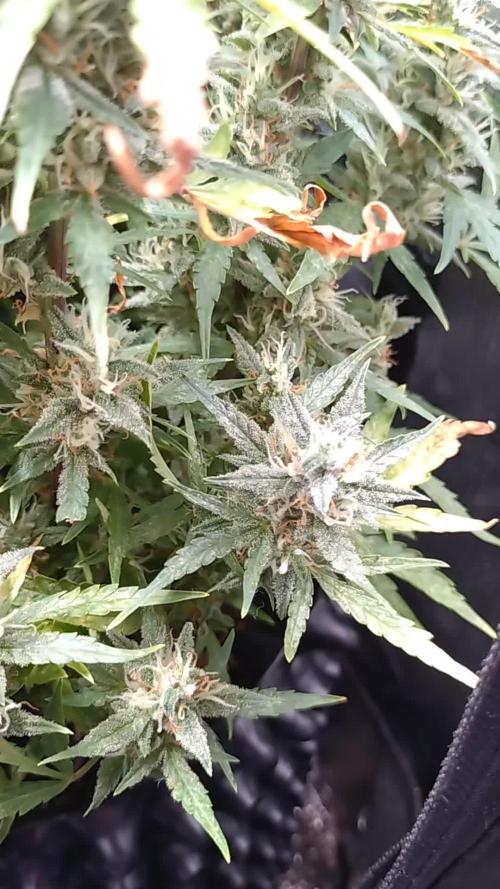
Just in drying but she smells strong, looks drenched in resinous crystals and I just can’t wait to get her dried and cure. Beautiful plant with nice sized buds. The smell is the strongest I’ve grown like an earthy pine smell full of crystals still curing but my tester blunt put me to sleep but not as smooth as I’d like yet so back in the jar! Full smoke report will be up after a full cure. After a 2 week cure the taste is phenomenal and old school flavour that brings back memories, earthy notes with hints of liquorice tastes a lot like a good quality hash. Nice smooth smoke that packs a punch. Definitely can’t beat the OG strains. The high creeps up on you but not to intensely and lasts hours!
Likes
34
Share
Yellow butterfly came to see me the other day; that was nice. Starting to show signs of stress on the odd leaf, localized isolated blips, blemishes, who said growing up was going to be easy! Smaller leaves have less surface area for stomata to occupy, so the stomata are packed more densely to maintain adequate gas exchange. Smaller leaves might have higher stomatal density to compensate for their smaller size, potentially maximizing carbon uptake and minimizing water loss. Environmental conditions like light intensity and water availability can influence stomatal density, and these factors can affect leaf size as well. Leaf development involves cell division and expansion, and stomatal differentiation is sensitive to these processes. In essence, the smaller leaf size can lead to a higher stomatal density due to the constraints of available space and the need to optimize gas exchange for photosynthesis and transpiration. In the long term, UV-B radiation can lead to more complex changes in stomatal morphology, including effects on both stomatal density and size, potentially impacting carbon sequestration and water use. In essence, UV-B can be a double-edged sword for stomata: It can induce stomatal closure and potentially reduce stomatal size, but it may also trigger an increase in stomatal density as a compensatory mechanism. It is generally more efficient for gas exchange to have smaller leaves with a higher stomatal density, rather than large leaves with lower stomatal density. This is because smaller stomata can facilitate faster gas exchange due to shorter diffusion pathways, even though they may have the same total pore area as fewer, larger stomata. Leaf size tends to decrease in colder climates to reduce heat loss, while larger leaves are more common in warmer, humid environments. Plants in arid regions often develop smaller leaves with a thicker cuticle and/or hairs to minimize water loss through transpiration. Conversely, plants in wet environments may have larger leaves and drip tips to facilitate water runoff. Leaf size and shape can vary based on light availability. For example, leaves in shaded areas may be larger and thinner to maximize light absorption. Leaf mass per area (LMA) can be higher in stressful environments with limited nutrients, indicating a greater investment in structural components for protection and critical resource conservation. Wind speed, humidity, and soil conditions can also influence leaf morphology, leading to variations in leaf shape, size, and surface characteristics. Small leaves: Reduce water loss in arid or cold climates. Environmental conditions significantly affect gene expression in plants. Plants are sessile organisms, meaning they cannot move to escape unfavorable conditions, so they rely on gene expression to adapt to their surroundings. Environmental factors like light, temperature, water, and nutrient availability can trigger changes in gene expression, allowing plants to respond to and survive in diverse environments. Depending on the environment a young seedling encounters, the developmental program following seed germination could be skotomorphogenesis in the dark or photomorphogenesis in the light. Light signals are interpreted by a repertoire of photoreceptors followed by sophisticated gene expression networks, eventually resulting in developmental changes. The expression and functions of photoreceptors and key signaling molecules are highly coordinated and regulated at multiple levels of the central dogma in molecular biology. Light activates gene expression through the actions of positive transcriptional regulators and the relaxation of chromatin by histone acetylation. Small regulatory RNAs help attenuate the expression of light-responsive genes. Alternative splicing, protein phosphorylation/dephosphorylation, the formation of diverse transcriptional complexes, and selective protein degradation all contribute to proteome diversity and change the functions of individual proteins. Photomorphogenesis, the light-driven developmental changes in plants, significantly impacts gene expression. It involves a cascade of events where light signals, perceived by photoreceptors, trigger changes in gene expression patterns, ultimately leading to the development of a plant in response to its light environment. Genes are expressed, not dictated! While having the potential to encode proteins, genes are not automatically and constantly active. Instead, their expression (the process of turning them into proteins) is carefully regulated by the cell, responding to internal and external signals. This means that genes can be "turned on" or "turned off," and the level of expression can be adjusted, depending on the cell's needs and the surrounding environment. In plants, genes are not simply "on" or "off" but rather their expression is carefully regulated based on various factors, including the cell type, developmental stage, and environmental conditions. This means that while all cells in a plant contain the same genetic information (the same genes), different cells will express different subsets of those genes at different times. This regulation is crucial for the proper functioning and development of the plant. When a green plant is exposed to red light, much of the red light is absorbed, but some is also reflected back. The reflected red light, along with any blue light reflected from other parts of the plant, can be perceived by our eyes as purple. Carotenoids absorb light in blue-green region of the visible spectrum, complementing chlorophyll's absorption in the red region. They safeguard the photosynthetic machinery from excessive light by activating singlet oxygen, an oxidant formed during photosynthesis. Carotenoids also quench triplet chlorophyll, which can negatively affect photosynthesis, and scavenge reactive oxygen species (ROS) that can damage cellular proteins. Additionally, carotenoid derivatives signal plant development and responses to environmental cues. They serve as precursors for the biosynthesis of phytohormones such as abscisic acid () and strigolactones (SLs). These pigments are responsible for the orange, red, and yellow hues of fruits and vegetables, while acting as free scavengers to protect plants during photosynthesis. Singlet oxygen (¹O₂) is an electronically excited state of molecular oxygen (O₂). Singlet oxygen is produced as a byproduct during photosynthesis, primarily within the photosystem II (PSII) reaction center and light-harvesting antenna complex. This occurs when excess energy from excited chlorophyll molecules is transferred to molecular oxygen. While singlet oxygen can cause oxidative damage, plants have mechanisms to manage its production and mitigate its harmful effects. Singlet oxygen (¹O₂) is considered a reactive oxygen species (ROS). It's a form of oxygen with higher energy and reactivity compared to the more common triplet oxygen found in its ground state. Singlet oxygen is generated both in biological systems, such as during photosynthesis in plants, and in cellular processes, and through chemical and photochemical reactions. While singlet oxygen is a ROS, it's important to note that it differs from other ROS like superoxide (O₂⁻), hydrogen peroxide (H₂O₂), and hydroxyl radicals (OH) in its formation, reactivity, and specific biological roles. Non-photochemical quenching (NPQ) protects plants from damage caused by reactive oxygen species (ROS) by dissipating excess light energy as heat. This process reduces the overexcitation of photosynthetic pigments, which can lead to the production of ROS, thus mitigating the potential for photodamage. Zeaxanthin, a carotenoid pigment, plays a crucial role in photoprotection in plants by both enhancing non-photochemical quenching (NPQ) and scavenging reactive oxygen species (ROS). In high-light conditions, zeaxanthin is synthesized from violaxanthin through the xanthophyll cycle, and this zeaxanthin then facilitates heat dissipation of excess light energy (NPQ) and quenches harmful ROS. The Issue of Singlet Oxygen!! ROS Formation: Blue light, with its higher energy photons, can promote the formation of reactive oxygen species (ROS), including singlet oxygen, within the plant. Potential Damage: High levels of ROS can damage cellular components, including proteins, lipids, and DNA, potentially impacting plant health and productivity. Balancing Act: A balanced spectrum of light, including both blue and red light, is crucial for mitigating the harmful effects of excessive blue light and promoting optimal plant growth and stress tolerance. The Importance of Red Light: Red light (especially far-red) can help to mitigate the negative effects of excessive blue light by: Balancing the Photoreceptor Response: Red light can influence the activity of photoreceptors like phytochrome, which are involved in regulating plant responses to different light wavelengths. Enhancing Antioxidant Production: Red and blue light can stimulate the production of antioxidants, which help to neutralize ROS and protect the plant from oxidative damage. Optimizing Photosynthesis: Red light is efficiently used in photosynthesis, and its combination with blue light can lead to increased photosynthetic efficiency and biomass production. In controlled environments like greenhouses and vertical farms, optimizing the ratio of blue and red light is a key strategy for promoting healthy plant growth and yield. Understanding the interplay between blue light signaling, ROS production, and antioxidant defense mechanisms can inform breeding programs and biotechnological interventions aimed at improving plant stress resistance. In summary, while blue light is essential for plant development and photosynthesis, it's crucial to balance it with other light wavelengths, particularly red light, to prevent excessive ROS formation and promote overall plant health. Oxidative damage in plants occurs when there's an imbalance between the production of reactive oxygen species (ROS) and the plant's ability to neutralize them, leading to cellular damage. This imbalance, known as oxidative stress, can result from various environmental stressors, affecting plant growth, development, and overall productivity. Causes of Oxidative Damage: Abiotic stresses: These include extreme temperatures (heat and cold), drought, salinity, heavy metal toxicity, and excessive light. Biotic stresses: Pathogen attacks and insect infestations can also trigger oxidative stress. Metabolic processes: Normal cellular activities, particularly in chloroplasts, mitochondria, and peroxisomes, can generate ROS as byproducts. Certain chlorophyll biosynthesis intermediates can produce singlet oxygen (1O2), a potent ROS, leading to oxidative damage. ROS can damage lipids (lipid peroxidation), proteins, carbohydrates, and nucleic acids (DNA). Oxidative stress can compromise the integrity of cell membranes, affecting their function and permeability. Oxidative damage can interfere with essential cellular functions, including photosynthesis, respiration, and signal transduction. In severe cases, oxidative stress can trigger programmed cell death (apoptosis). Oxidative damage can lead to stunted growth, reduced biomass, and lower crop yields. Plants have evolved intricate antioxidant defense systems to counteract oxidative stress. These include: Enzymes like superoxide dismutase (SOD), catalase (CAT), and various peroxidases scavenge ROS and neutralize their damaging effects. Antioxidant molecules like glutathione, ascorbic acid (vitamin C), C60 fullerene, and carotenoids directly neutralize ROS. Developing plant varieties with gene expression focused on enhanced antioxidant capacity and stress tolerance is crucial. Optimizing irrigation, fertilization, and other management practices can help minimize stress and oxidative damage. Applying antioxidant compounds or elicitors can help plants cope with oxidative stress. Introducing genes for enhanced antioxidant enzymes or stress-related proteins over generations. Phytohormones, also known as plant hormones, are a group of naturally occurring organic compounds that regulate plant growth, development, and various physiological processes. The five major classes of phytohormones are: auxins, gibberellins, cytokinins, ethylene, and abscisic acid. In addition to these, other phytohormones like brassinosteroids, jasmonates, and salicylates also play significant roles. Here's a breakdown of the key phytohormones: Auxins: Primarily involved in cell elongation, root initiation, and apical dominance. Gibberellins: Promote stem elongation, seed germination, and flowering. Cytokinins: Stimulate cell division and differentiation, and delay leaf senescence. Ethylene: Regulates fruit ripening, leaf abscission, and senescence. Abscisic acid (ABA): Plays a role in seed dormancy, stomatal closure, and stress responses. Brassinosteroids: Involved in cell elongation, division, and stress responses. Jasmonates: Regulate plant defense against pathogens and herbivores, as well as other processes. Salicylic acid: Plays a role in plant defense against pathogens. 1. Red and Far-Red Light (Phytochromes): Red light: Primarily activates the phytochrome system, converting it to its active form (Pfr), which promotes processes like stem elongation and flowering. Far-red light: Inhibits the phytochrome system by converting the active Pfr form back to the inactive Pr form. This can trigger shade avoidance responses and inhibit germination. Phytohormones: Red and far-red light regulate phytohormones like auxin and gibberellins, which are involved in stem elongation and other growth processes. 2. Blue Light (Cryptochromes and Phototropins): Blue light: Activates cryptochromes and phototropins, which are involved in various processes like stomatal opening, seedling de-etiolation, and phototropism (growth towards light). Phytohormones: Blue light affects auxin levels, influencing stem growth, and also impacts other phytohormones involved in these processes. Example: Blue light can promote vegetative growth and can interact with red light to promote flowering. 3. UV-B Light (UV-B Receptors): UV-B light: Perceived by UVR8 receptors, it can affect plant growth and development and has roles in stress responses, like UV protection. Phytohormones: UV-B light can influence phytohormones involved in stress responses, potentially affecting growth and development. 4. Other Colors: Green light: Plants are generally less sensitive to green light, as chlorophyll reflects it. Other wavelengths: While less studied, other wavelengths can also influence plant growth and development through interactions with different photoreceptors and phytohormones. Key Points: Cross-Signaling: Plants often experience a mix of light wavelengths, leading to complex interactions between different photoreceptors and phytohormones. Species Variability: The precise effects of light color on phytohormones can vary between different plant species. Hormonal Interactions: Phytohormones don't act in isolation; their interactions and interplay with other phytohormones and environmental signals are critical for plant responses. The spectral ratio of light (the composition of different colors of light) significantly influences a plant's hormonal balance. Different wavelengths of light are perceived by specific photoreceptors in plants, which in turn regulate the production and activity of various plant hormones (phytohormones). These hormones then control a wide range of developmental processes.
Likes
5
Share
I had the lights at the suggested level from the company we got it for seedlings and it started to burn them. We have a 750W LED light and it was set to 40%. We turned it down to 30% for the first few weeks.
Likes
23
Share
@Swanbergs
Follow
Everything must go!!! Day 66 can’t imagine the cheese, the gift, and straw to last much longer. Trellis was removed and you can really tell how heavy some colas are damn near uproots some of plants without the support. I needed to save my trellis ;). Anyways Skittlez in dark period ready to be chopped, tropical fuel is on day 3 of drying and looks to be retaining that “fuel” smell ( no woody buds here!) made some awesome canna butter from the trim of white widow. Happy growing!
Likes
8
Share
@Oldwied
Follow
Unfortunately I had to take the photos a little earlier this week as I'm traveling. I think the biggest stretch is finished. In the meantime, the little one exudes a pleasant fruity smell. Day 56 Photoshooting Defoliation
Likes
36
Share
Bonne reprise depuis la semaines dernière, du fait que j’ai tailler les feuilles, les secondaires se sont plus développés, il forme une belle canope actuellement Là floraison devrait pas tardé à arriver, on est actuellement à 14h d’ensoleillement quotidien , plus qu’à attendre que le sexe se déclare Pas de problème à déclarer, elle semble en très bonne santé, belle couleur de feuille, pas de tache, structure solide Elle commence à avoir une bonne odeur, j’aime beaucoup le parfum qu’elle dégage. En plus comme j’ai de la menthe marocaine dans le pots si dessous, ça se mélange très bien les deux ensemble. J’ai hâtes de pouvoirs faire un thé mauve mutant marocain avec ses deux beau bébé qui poussent
Likes
15
Share
As I predicted the weather last week guess what?... it was a cold and wet week. My main issue its yellowing of the wedding cake. think i as to do with the cold weather as she is the close to the door. I allso burned then a litle with the foliar. The instruction clearly say it may burn withe heat and light aply at night. Guess what?... it was midday.... Black Cream Its Growing Good. Couckush its a litle bit burned. Growing good. Chubby Litle plant for now. Bomberry its starting to become the beast as is leaves size show. Totally diferent genetics Cheers BrotherHood
Likes
32
Share
And this is it! The last week! 😲 And an early update as well! 😁 This is the last video and last photos of my girls before they were chopped and I'm quite happy right now! Almost everything went how I planned it, which is great 💪 I lowered the lights (5cm) and I did a good chunk of defoliation to allow more light penetration which I believe totally helped! Some of the branches got a lot of weight and could barely hold themselves (good thing they didn't break!) I also think that I should've chopped my girls last week because I got way more amber trichomes than what I originally wanted 😝 but eh, I got more weight in exchange! 😆 Oh, I also gave my girls some ice cold water! Hoping to get some extra purple! There are a lot of stuff this week, so please let me know what you all think about them! :D See you all in the next and final update! 👋
Likes
Comments
Share
Son 2 plantas de esta genetica. Una es mas vigorosa que ptra, pero son muy similares en cuanto a su fenotipo. En esta semana ya notamos el engorde que se viene propiciando luego del overdrive. Tratamos de a poco ir bajando la EC para llegar 0.0 en el corte. La luz sigue baja procurando mantener una buena seleccion de terpenos y resina.
Processing
Likes
6
Share
@kking6321
Follow
Still taking about 3-4 days to dry out. Most likely due to my lack of adding extra perlite when starting. I think this is causing some pretty big fluctuations in humidity. Going to get a dehumidifier this week with a controller to try and stabilize the grow tent and possibly dry the smart pots faster. Im watering 2 times between each feeding, trying to take it slow with nutes to ensure no issues during flower. All in all I'm feeling pretty good about the progress, as I'm really starting to see the buds coming in and growing in size.
Likes
16
Share
@DreamIT
Follow
Sponsored by: 💫PARADISE SEEDS💫-💡VIPARSPECTRA💡-💐GREEN BUZZ LIQUIDS💐-🛠️WEDRYER🛠️ 15/8 Today I moved it into flowering in the small box that I haven't used in a while. 17/8 water 19/8 water __________________________________________ Personal advertising (contains affiliate links) __________________________________________ 🦄 winners and holders of the most prestigious awards, since 1994 they offer genetics of the highest quality! Anonymous shipping! ✅https: //bit.ly/Paradiseseeds_ __________________________________________ Did you know that Green Buzz Liquids fertilizers are 100% vegan? A complete line of products ready to give the best to each of your plants! Visit the site and see my journals to see how they work 🦄 🤯 And with the code "dreami t" you will immediately receive a 15% discount on your purchases ✅https: //bit.ly/GreenBuzzLiquidsPro __________________________________________ 👀 Are you looking for a good lamp to start with? 👀 🌞Viparspectra has something more than the others, take a look at their site. ⏩ Use "GDVIP" for an extra discount or "DREMIT3" for an extra 5 %% discount 👀 Search for it on Amazon ✅Amazon USA: https://amzn.to/30xSTVq ✅Amazon Canada: https://amzn.to/38udUVe ✅Viparspectra UE: bit.ly/ViparspectraUE ✅Viparspectra USA: bit.ly/ViparspectraUS ______________________________________________ 🌈 Tired of blowing on your weed hoping it dries quickly? Check out the Wedryer website! You will find a well-made accessory that will help your weed dry in just 8-10 days without the annoying risk of finding mold or other annoyances! (no affiliate links) ✅https: //bit.ly/Wedryer_ ______________________________________________ 📷🥇Follow the best photos on Instagram 🥇📷 https://www.instagram.com/dreamit420/ Backup https://www.instagram.com/dreamit4200/ 🔻🔻Leave a comment with your opinion if you pass by here🔻🔻 🤟🦄💚 Thank you and good growth 💚🦄🤟
Likes
5
Share
La pandemia kush es la más avanzada y se le empezará a regar solo con agua al igual q la Trimosa x mimosa_1 La Trimosa x mimosa tiene un problema con absorción de agua, pero ya está siendo solucionado
Likes
12
Share
Madonna ragazzi come cresce bene la Critical Lemon ⚡🍋 sotto il controllo di TENT-X 🤖 Direi che siamo al 🔝😋
Likes
26
Share
Hello Diary. The second week of flowering is behind us. I did a little defoliation this week, I honestly didn’t dare remove more leaves and branches, I didn’t know how they would react to it. Maybe I needed more? The temperature is still high, sometimes rising to 29, 30 degrees, but mostly around 28. Humidity in the air is an average of about 55% but sometimes rises to 60%. The problem is frequent rains this summer which creates high humidity in the air and this affects the humidity in the box as well. The flowers are developing nicely, and they have started to smell as well, but let the pictures speak for themselves. The plants are big for my conditions, the 120 x 60 box size is perhaps too small for three plants (two Hulkberries and one Green Gelato), so the real jungle is in the box. It’s already a challenge to take them out every week for a photo shoot, but I try to be as careful with them as possible. The Hulkberry has reached a height of 113 cm which is on the verge of acceptability. If it continues another ten cm, I’ll be in trouble because the lights can’t lift more than this. 18/07/2020. - Day 30. Defoliation. I removed the leaves at the very bottom of the plant to make it easier for me to water them, after that I watered the plants but this time I didn’t put BioBizz, I just watered them with clean water. 21/07/2020. - Day 33. Watering. This time I gave them BioBizz, on schedule for the second week of flowering. I also added CalMag 1.5ml / L, preventively. While they don’t show they’re missing anything, I’ll keep adding CalMag. 23/07/2020. - Day 35. Photography and height measurement. Hulkberry Auto # 1 - Day 35. - 97cm Hulkberry Auto # 2 - Day 35. - 113cm That’s all for this week, see you soon.
Likes
25
Share
Major issues with calcium def for no reason and a weird re veg, and the utter lack of mould resistance. Plant was tall and buds are huge and dense, let's hope the taste is phenomenal.
Likes
4
Share
on day 18 of flower the lady have got a new Haircut. Also some composttea on day 19 of flower. Light hits the plants with around 950-1000 PPFD. She grows healthy stretchy with the smallest buds yet.
Likes
11
Share
👑Actualización Jardin 21-22 días . Llenamos pan de raíz en 7 días. ⌛️Videos : 🎥pretransplante 21 días , con preventivo diatomeas espolvoreo. 🎥6 transplantes con su pan de raíz , great white premium@y granular , orca , mycochum , tierra de algas , phoskaya, kodama . 8 Litros : mycochum 3,5 ml , orca 1,5 para activar los microorganismos y riego post transplante en 2 litros . 🎥 22 días despertándose post aplicación de knactive + proactive. 🌱Solución foleo 2 litros : knactive + proactive (4,0 ml ) y ( 0,8 de proactive ( melazas , quitina , etc ) Y sumamos foleo, antes que se de despertaran . Ec : 0,5 Ph: 6,2 🌱metimos más amarres al y full lst .
Likes
14
Share
last 3 days no watering and last 48 no light. drying conditions are RH 50% and temp 14°C.