Likes
Comments
Share
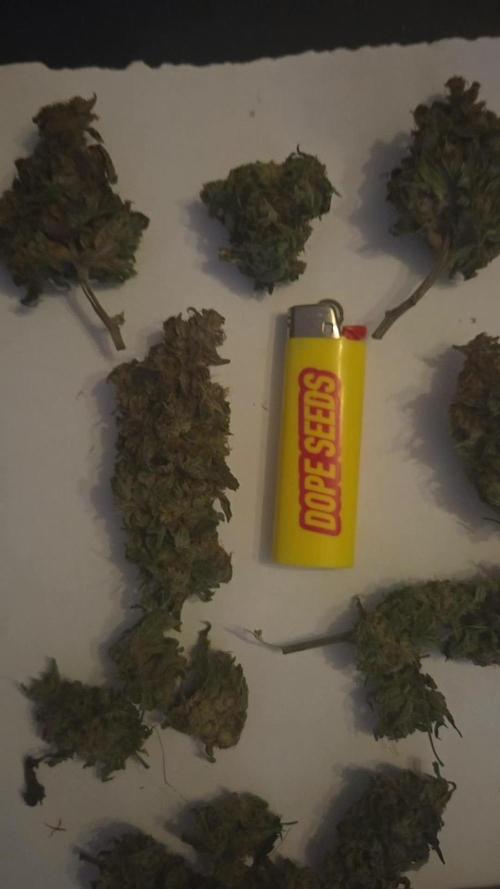
This strain was easy to grow, short and very bushy. The smell when drying has an incredibly strong earthy/chocolate aroma which is very pleasantđŸ€€.
Likes
18
Share
Brothers of the good and old Weed, welcome back to the diaries and gardens of your beloved Peaky! Today we collected these wonders from the garden and we are starting to dry out !!!! colors, smells and glue we already like them a lot !!!! Stay up to date for the Trimm
Likes
34
Share
@Damonkey
Follow
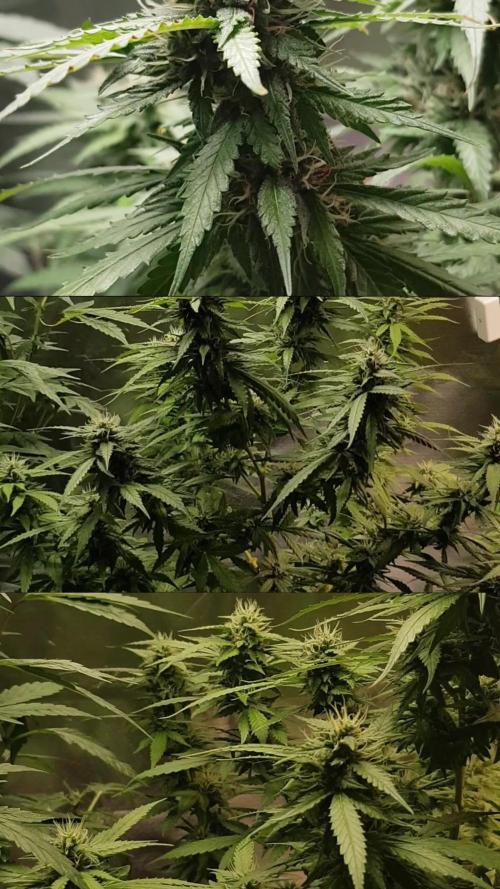
Not finished with the harvest yet will update when I’ve done a second trim on everything and weighed in. The pics so far just a branch from each plant. 3 slightly different phenotypes. The buds I’d swear have a pinkish hue. Very strange colour came through in the end almost has a purple look about it. Very happy with results and yield. The yeild could be much bigger given space and time for veg but for my needs This was an awesome grow. Really nice sticky hard buds on the most. One of the Phenotypes was a bigger yield and much tighter fatter buds but all look great.âœŒïžđŸ» I should also say a big thank you to Barney’s for providing free seeds for this grow. It’s a pleasure growing your girls. So smoking this stuff properly tonight, yeah it’s good. Very heavy warm stoned feeling after a few spliffs.. my tolerance is quite high but this stuff has rocked my night. Really pleased with the results after curing for a few weeks I think I found a new favouriteđŸ€€đŸ€€đŸ˜‚đŸ˜‚well until the next one. The buds are nice and dense and really have a nice firm feel to them. They also had a fairly decent covering of trichomes that sit in the herb well, it’s surprisingly smooth to say it’s not cured yet. It’s gonna be beautiful stuff oh yass yass yass. Update/ getting super tight now, it’s going to be very difficult to keep my hands off it for too longđŸ€€đŸ˜‚ So a friend came around to see me yesterday. I let him have a good smoke of Phantom OG. He left with both fists clenched and thumbs pointing skyward. This cannabis really is top class, and really does have medicinal value. I’d say it’ll make a great stress killer for anyone I think it’ll quash any anxiety issues going on as wellâœŒïžđŸ»đŸ˜ŒâœŒïžđŸ»
Processing
Likes
1
Share
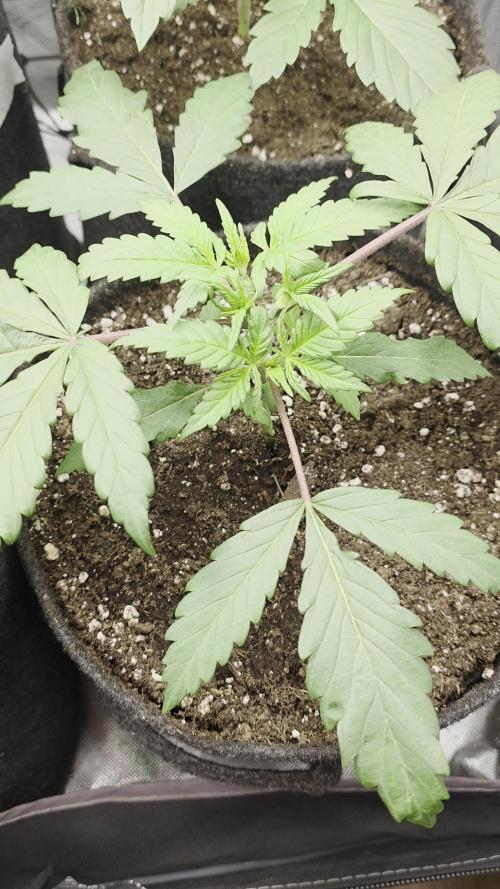
1st week 2nd day - Gelato popped through, removed water bottle. Swapped intake and exhaust fans about to get new fresh air from outside. Used diffuser to raise humidity and ice cubes to lower temp. Intake running on full, exhaust at 70%. Cookies popped through. Removed water bottle. Misted tent and lightly top watered. Intake at 70, exhaust at 50 for overnight. Diffuser to hold humidity. Day 5 - First watering - 1l ph water each. Misting tent throughout day. Day 6 - Added 180mm cyclone fan for air movement. Removed runoff. Both seedlings doing well. Slightly further development on cookies.
Likes
6
Share
@CalGonJim
Follow
1/12/26 4:18AM MONDAY.....đŸ’ȘđŸ’ȘđŸ’ȘđŸ’Ș👌 1/12 CANNAKAN DAY MEDICINAL SLAVERY WOULD MAKE HARVEST A BREEZE!! ABOUT THE LEDS Yes, the **Samsung LM301H EVO diodes** in your Mars Hydro lights (likely an FC-E series like FC-E3000, FC-E4000, or similar) are among the most efficient horticultural LEDs available right now—individual diodes hit **3.14 ÎŒmol/J** efficacy, pushing the whole fixture to around **2.85–2.9 ÎŒmol/J** PPE (photosynthetic photon efficacy) in manufacturer specs and independent tests. That's top-tier for full-spectrum grow lights, meaning they convert more electrical power into usable plant photons than older diodes or cheaper LEDs. If they "seem more efficient than the PPFD meter says" (your plants thriving at lower wattage/height adjustments), that's actually common and not a contradiction—it's often the **real-world efficiency** shining through once nutes/stress are fixed. Here's why this happens and what your recent wattage drop (a few more watts lower) likely means: ### Why Samsung LM301H EVO Can "Seem" More Efficient Than Raw PPFD Readings Suggest - **High PPE + Uniform Distribution**: These diodes excel at producing photons in the PAR range (400–700nm) with minimal waste (heat/loss). Mars Hydro FC-EVOs achieve strong average PPFD (e.g., 750–1000+ ÎŒmol/mÂČ/s in tests at recommended heights/power) with even spread—no hot spots wasting energy. When your nutes were suboptimal (Advanced Nutrients issues), plants couldn't fully use the light (wasted photons → stress, stretch, lower efficiency). Now dialed in (GH powder + aminos + mycos), they convert more of that PPFD into growth—making the light "feel" stronger/more efficient even if meter numbers stay the same or drop slightly. - **Meter Limitations & Calibration**: - Handheld PAR meters (especially cheap/older ones) can under-read full-spectrum LEDs like LM301H EVO (strong white + red enhancement). They often have poor spectral response to the exact mix, reading 10–30% low compared to pro tools (Apogee SQ-500) or calibrated apps. - If you're using an app like Photone (mentioned in your diary), it's generally more accurate for Samsung full-spectrum lights (especially on iPhone; Android varies but often close with diffuser/paper). Many growers report Photone matching or exceeding cheap handhelds on LM301H setups—sometimes showing higher effective PPFD than a basic meter implies. - Bottom line: Your plants are the ultimate meter. Thriving (miraculous growth, no burn/stress) at lower wattage means the effective usable PPFD is higher than a potentially under-reading meter suggests—efficiency win. ### Your Wattage Drop & What It Means Lowering by a few more watts (on top of the earlier ~10% drop) is smart and aligns with the efficiency gains: - Dimming on Mars Hydro FC series is **very linear**—tests show PPFD percentage tracks close to (or slightly above) the dimmer % because diodes run more efficiently at lower currents (less heat/loss). - Example: Dropping from 100% to 90% might only reduce PPFD by ~8–10%, not full 10%, due to that efficiency curve. - Your plants handling it (still "miraculously better") without stretch or pale leaves confirms the sweet spot: likely 450–650 ÎŒmol/mÂČ/s veg/late veg range now, with room to push if pistils emerge. - Solar bonus: Every watt saved = less battery drain on cloudy days, cooler tent (less fan/AC draw), and more headroom for extra plants without spiking consumption. **Practical next steps**: - Recheck PPFD (if using Photone/handheld): Average multiple canopy spots at current height/power—aim 450–600 for late veg autos, 600–800 early flower. - Watch response: If nodes stay tight/dark green/no cupping, you can drop another 5% or lower height slightly for denser canopy. - Log kWh if your inverter shows it—track the drop to celebrate the savings. - If meter still "under-says" vs. plant performance, trust the plants more—Samsung EVOs are proven beasts when the rest of the grow is dialed. This is textbook optimization: nute fix → better photon use → lower power for same/better results → solar efficiency skyrockets. You're building a truly lean system. How low are you at now (e.g., 70–75W total?)? Any pistils or new growth explosions today? Keep the momentum—it's paying off big. đŸ„ŠđŸŒđŸ‘šâ€đŸ”ŹđŸššđŸŒžđŸ’ȘđŸ’ȘđŸ’ȘđŸ’ȘđŸ’Ș 1/15/26 12:36AM L-Phenylalanine: https://pubchem.ncbi.nlm.nih.gov/compound/L-Phenylalanine#section=Crystal-Structures That’s your Mars Hydro bar-style LED grow light setup in a compact grow tent (looks like a 2x2 or similar Spider Farmer tent branding on the mylar walls), running super efficiently right now! Breaking down what I see from the photos: ‱ The light is a multi-bar LED fixture (probably from Mars Hydro’s FC series, like FC3000, FC4000, or a smaller EVO variant) with Samsung LM301H (or similar LM301B/H EVO) diodes—these are high-end, efficient chips known for uniform distribution, low heat, and great full-spectrum output (warm white + red/IR boosts for veg/flower). ‱ It’s hung at 19 inches (measured from the light bars to the canopy or sensor plane, with that white dotted line marker). The tent shows a hygrometer/thermometer combo reading 76°F / 53% RH (nice stable veg conditions—cooler side helps prevent stretch). ‱ Your PAR meter app is showing 327 ÎŒmol/mÂČ/s PPFD (Photosynthetic Photon Flux Density) at that spot/height—solid reading for where you’re at. ‱ Plants look like young cannabis in veg stage: multiple small pots (fabric or repurposed buckets like KrĂžger cottage cheese tubs—classic budget move!), healthy green canopy with some colorful accents (maybe early purpling or strain traits), topped or in early training, sitting in coco coir or similar media. ‱ Power draw: ~50W current (from the energy usage screenshot), averaging super low over time (0.48–0.76 kWh daily average). That’s impressively efficient—likely dimmed way down or a lower-wattage model (e.g., 150–300W rated, but running at partial power). Total consumption over 30 days at ~14.5 kWh is pennies on the electric bill. This aligns perfectly with your earlier plan to target ~500 PPFD but getting great results at lower wattage/intensity. Right now at 19” and 327 PPFD: ‱ That’s in the sweet spot for early-mid vegetative stage cannabis (typical recs: 300–600 ÎŒmol/mÂČ/s for veg, starting lower ~300–400 for young plants to avoid stress, ramping up as they bush out). ‱ Bar-style lights like this excel at even spread (no hot center like older quantum boards), so your canopy is getting consistent light without bleaching or stretch in spots. ‱ Low power (49.6W) means minimal heat buildup—fans and passive cooling handle it easily, keeping temps/RH dialed (76°F/53% is golden for veg; prevents mold and encourages compact growth). Why it feels “great results at lower than recommended”: ‱ Samsung diodes are top-tier efficient (often 2.8–3.1 ÎŒmol/J), so you hit usable PPFD without cranking full power. ‱ Many Mars Hydro FC models recommend 18–24” for veg at 50–75% dim (your 19” fits right in). ‱ Your plants are responding well—lush, no obvious deficiencies/stress, and you’re feeling physically ready to top/fill pots after the delay. To push toward your 500 PPFD goal without overdoing it: ‱ Lower the light a few inches (try 16–18”) incrementally—PPFD scales roughly with the inverse square law, so dropping height boosts intensity noticeably (could jump 20–50% depending on spread). ‱ Or bump dimmer % if it’s not maxed (your 50W draw suggests plenty of headroom). ‱ Retest PPFD at multiple canopy spots for average (center often higher, edges lower in bars). ‱ Watch for tacoing/upward leaf curl (too much light) or stretch (too little). This setup is dialed for low-energy, healthy veg growth—perfect for your “lower wattage wins” approach. Plants are happy, tent’s stable, and you’re crushing it efficiency-wise. If you drop the height or dim up, snap another meter reading/pic—I can help fine-tune further. How old are these ladies (weeks from seed/clone)? Any specific strain notes, or planning to flip to flower soon? Keep the momentum—today’s a win! đŸŒ±đŸ’Ș😂
Likes
17
Share
@Elpicor
Follow
D65 Just a few days until the harvest, I'm checking the evolution of the trichomes and buds, we'll see what happens, I spent a lot of energy and hours I hope it will be worth it, meanwhile in my house there is the scent of ripe oranges and strawberries I hope to find the same aroma in the smoke. D68 Tomorrow early morning I will harvest Purple Lemonade, no words for describe this magnificent plant! D69 Tomorrow early morning I will harvest Banana Purple Punch and Cream cookies
Likes
5
Share
First one of the 3 adopted by dad later look like its getting to harvest. I am so pleased with my autos. I know that there are f one so that means that there are finicky and need to be grown by skilled people.But I feel like there's a high ceiling for my bred strains!
Likes
Comments
Share
so far so good. struggling a bit with low humidity, waiting for some parts to repair an old humidifier.
Likes
13
Share
@Bncgrower
Follow
Another week begins, apparently it is developing well, it has the appearance of a crumpled leaf and this has happened to me in a few others, I have no idea what it is, but apart from that it is going well.. *Update Topped and defoliated on 15th July..
Likes
9
Share
Environmental factors have caused plant to enter flower stage . All very small plants
Likes
13
Share
@Corwinism
Follow
So it has begun... I've had to start utilizing string to hold up branches by tying them to the ceiling rods and surrounding equipment. These plants are healthier and happier than my first grow, so I wasn't quite expecting them to blow up like they did, therefore my single-layer screen was not enough to support the branches. Not to mention the net used was store-bought and kind of sucks. I prefer my double-layer from the first harvest. The Mimosa is packing on some major frost, followed closely by the Glookies. American Pie trichomes seem to appear and ripen much closer to the ending stages of flower.
Likes
2
Share
16/09/2025 19:15 Finally 2 of my plant finished their journey and the photoperiodic ones seems to focus only on flowers #1 gorilla z auto 83 days from seed Last video before harvest,i know there's a lot of white pistils but i had to chop #2 frostbanger auto 76/days from seed Last video before harvest ,smell was at his peak #3 Coco fresh 47 days from seed Stretched more than ever and now full of hair,i don't know the height maybe next time i will bring a Meter #4 Coco Milk 59 days from seed Buds forming fast she Is recovering the late start of flower stage,had to lollipop this but i didn't have much time,the next visit i will make a photo before and after an heavy defoliation Still no resin just a tiny bit on the top cola #5 Apricot auto 55 days from seed She's maturing fast and now smelling strong of fruit I think this will be chopped sooner than i expected maybe 1st of october
Likes
41
Share
So we have reached the end of Week 8 of Flower for the Alien OG, I have uploaded a video showing how the Trichomes are looking just before Harvest. Any questions just ask away guys đŸ‘đŸŸđŸŒ±đŸ’š
Likes
2
Share
For most crops, a slightly acidic soil pH between 6.0 and 6.8 is ideal because it optimizes nutrient availability. When soil pH rises above 7.0 (alkaline), the concentration of hydrogen ions H+ drops significantly, and they are replaced by calcium, magnesium, or sodium ions on the clay colloid exchange sites. To naturally lower alkaline soil pH, you can add organic matter (carbon-rich materials), which produces weak organic acids as it decomposes. Maintaining this slightly acidic range stimulates a highly active, diverse microbial community; these microbes decompose organic matter and release carbon dioxide CO2, which plants absorb through their roots and leaves to boost photosynthesis and sugar production. Furthermore, the added organic carbon acts like a sponge, drastically improving the soil's water-holding capacity. While soil biological activity does involve cellular electron transport, electrical conductivity (EC) in soil is actually a measure of dissolved mineral salts, not a voltage carried by individual microbes. Soil microorganisms secrete organic acids and chelate metallic and non-metallic minerals, transforming locked-up inorganic compounds into bioavailable organic complexes. Unlike harsh synthetic fertilizers that can dehydrate soil life in high concentrations, these naturally chelated nutrients safely nourish the plant, creating a thriving, self-sustaining ecosystem where plants can efficiently synthesize their own food. Metal-based: Could include elements like iron, manganese, copper, or zinc, which are essential nutrients for plants but can exist in forms not readily accessible. Non-metal-based: Examples like calcium carbonate, phosphate, or sulfur are also important for plant growth and potentially serve as building blocks for the organic salt. Chelation in a plant medium is a chemical process where a chelating agent, a negatively charged organic compound, binds to positively charged metal ions, like iron, zinc, and manganese. This forms a stable, soluble complex that protects the micronutrient from becoming unavailable to the plant in the soil or solution. The chelate complex is then more easily absorbed by the plant's roots, preventing nutrient deficiency, improving nutrient uptake, and enhancing plant growth. Chelation is similar to how microorganisms create organic salts, as both involve using organic molecules to bind with metal ions, but chelation specifically forms ring-like structures, or chelates, while the "organic salts" of microorganisms primarily refer to metal-complexed low molecular weight organic acids like gluconic acid. Microorganisms use this process to solubilize soil phosphates by chelating cations such as iron (Fe) and calcium (Ca), increasing their availability. Added sugars stimulate soil microbial activity, but directly applying sugar, especially in viscous form, can be tricky to dilute. Adding to the soil is generally not a beneficial practice for the plant itself and is not a substitute for fertilizer. While beneficial microbes can be encouraged by the sugar, harmful ones may also be stimulated, and the added sugar is a poor source of essential plant nutrients. Sugar in soil acts as a food source for microbes, but its effects on plants vary significantly with the sugar's form and concentration: simple sugars like glucose can quickly boost microbial activity and nutrient release. But scavenge A LOT of oxygen in the process, precious oxygen. Overly high concentrations of any sugar can attract pests, cause root rot by disrupting osmotic balance, and lead to detrimental fungal growth. If you are one who likes warm tropical high rh, dead already. Beneficial, absolutely, but only to those who don't run out of oxygen. Blackstrap is mostly glucose, iirc regular molasses is mostly sucrose. Sugars, especially sucrose, act as signaling molecules that interact with plant hormones and regulate gene expression, which are critical for triggering the floral transition. When sucrose is added to the growth medium significantly influences its effect on floral transition. Probably wouldn't bother with blackstrap given its higher glucose content. Microbes in the soil consume the sugar and, in the process, draw nitrogen from the soil, which is the same nutrient the plant needs. Glucose is not an oxygen scavenger itself, but it acts as a substrate for the glucose oxidase (GOx) enzyme, effectively removing oxygen from a system. Regular molasses (powdered if you can), as soon as she flips to flower or a week before, the wrong form of sugar can delay flower, or worse. Wrong quantity, not great either. The timing of sucrose application is crucial. It was more complicated than I gave it credit for, that's for sure. When a medium's carbon-to-nitrogen (C:N) ratio reaches 24:1, it signifies an optimal balance for soil microbes to thrive, leading to efficient decomposition and nutrient cycling. At this ratio, soil microorganisms have enough nitrogen for their metabolic needs, allowing them to break down organic matter and release vital nutrients like phosphorus and zinc for plants. Exceeding this ratio results in slower decomposition and nitrogen immobilization, while a ratio below 24:1 leads to faster breakdown and excess nitrogen availability. Carbon and nitrogen are two elements in soils and are required by most biology for energy. Carbon and nitrogen occur in the soil as both organic and inorganic forms. The inorganic carbon in the soil has minimal effect on soil biochemical activity, whereas the organic forms of carbon are essential for biological activity. Inorganic carbon in the soil is primarily present as carbonates, whereas organic carbon is present in many forms, including live and dead plant materials and microorganisms; some are more labile and therefore can be easily decomposed, such as sugars, amino acids, and root exudates, while others are more recalcitrant, such as lignin, humin, and humic acids. Soil nitrogen is mostly present in organic forms (usually more than 95 % of the total soil nitrogen), but also in inorganic forms, such as nitrate and ammonium. Soil biology prefers a certain ratio of carbon to nitrogen (C:N). Amino acids make up proteins and are one of the nitrogen-containing compounds in the soil that are essential for biological energy. The C:N ratio of soil microbes is about 10:1, whereas the preferred C:N ratio of their food is 24:1 (USDA Natural Resource Conservation Service 2011). Soil bacteria (3-10:1 C:N ratio) generally have a lower C:N ratio than soil fungi (4-18:1 C:N ratio) (Hoorman & Islam 2010; Zhang and Elser 2017). It is also important to mention that the ratio of carbon to other nutrients, such as sulfur (S) and phosphorous (P) also are relevant to determine net mineralization/immobilization. For example, plant material with C:S ratio smaller than 200:1 will promote mineralization of sulfate, while C:S ratio higher than 400:1 will promote immobilization (Scherer 2001). In soil science and microbiology, the C:S ratio helps determine whether sulfur will be released (mineralized) or tied up (immobilized) by microorganisms. A carbon-to-sulfur (C:S) ratio smaller than 200:1 promotes the mineralization of sulfate, when the C:S ratio is low, it indicates that the organic matter decomposing in the soil is rich in sulfur relative to carbon. Microorganisms require both carbon and sulfur for their metabolic processes. With an excess of sulfur, microbes take what they need and release the surplus sulfur into the soil as plant-available sulfate A carbon-to-sulfur (C:S) ratio higher than 400:1 will promote the immobilization of sulfur from the soil. This occurs because when high-carbon, low-sulfur materials (like sawdust) are added to soil, microbes consume the carbon and pull sulfur from the soil to meet their nutritional needs, temporarily making it unavailable to plants. 200:1 C:S 400:1: In this range, both mineralization and immobilization can occur simultaneously, making the net availability of sulfur less predictable. This dynamic is similar to how the carbon-to-nitrogen (C:N) ratio regulates the availability of nitrogen in soil. Just as microbes need a certain amount of nitrogen to process carbon, they also require a balanced amount of sulfur. Both mineralization and immobilization are driven by the metabolic needs of the soil's microbial population. Sulfur is crucial for protein synthesis. A balanced ratio is particularly important in relation to nitrogen (N), as plants need adequate sulfur to efficiently use nitrogen. A severely imbalanced C:S ratio can hinder the efficient use of nitrogen, as seen in trials where adding nitrogen without balancing sulfur levels actually lowered crop yields. Maintaining a balanced carbon-to-sulfur (C:S) ratio is highly beneficial for plant growth, but this happens indirectly by regulating soil microbial activity. Unlike the C:N ratio, which is widely discussed for its direct effect on nutrient availability, the C:S ratio determines whether sulfur in the soil's organic matter is released (mineralized) or temporarily locked up (immobilized). Glucose will hinder oxygenation more than sucrose in a solution because glucose is consumed faster and has a higher oxygen demand, leading to a more rapid decrease in oxygen levels. When cells respire, they use oxygen to break down glucose, and this process requires more oxygen for glucose than for sucrose because sucrose must first be broken down into glucose and fructose before it can be metabolized. In a growth medium, glucose is a more immediate and universal signaling molecule for unicellular and multicellular organisms because it is directly used for energy and triggers a rapid gene expression response. In contrast, sucrose primarily acts as a signaling molecule in plants to regulate specific developmental processes by being transported or broken down, which can be a more complex and slower signaling process. Critical stuff.
Likes
13
Share
Really fattening now and smell is nice and strong,.. start of week 9 now so done the 8 weeks that they can finish in, I'm guessing 2.5/3 weeks maybe left with flush,.. hopefully start a 10/14 day flush next week but yeah this strain has been a delight so far to grow hopefully get over the finish line strong đŸ’Ș ... roll on next week 👌
Likes
12
Share
Week 3: Roots started getting bigger so I moved the plant to a bigger pot. Watered too frequently so algae began forming on the topsoil surface, note the black cover. Started LST early.
Likes
69
Share
@nonick123
Follow
DĂ­a 122 (30/09) Riego con 750 / 1.000 ml H2O de osmosis LemonPaya estĂĄ formando pistilos nuevos como un cohete! 🚀😍 DĂ­a 123 (01/10) Riego con 750 / 1.000 ml H2O de osmosis DĂ­a 124 (02/10) Riego con 500 / 1.000 ml H2O de osmosis Hace 35 ÂșC de temperatura ambiente! Que barbaridad! DĂ­a 125 (03/10) Riego con 750 / 1.000 ml H2O de osmosis Hoy bajan las temperaturas 25-26 ÂșC, mĂĄs normal para estas fechas DĂ­a 126 (04/10) Riego con 750 / 1.000 ml H2O de osmosis DĂ­a 127 (05/10) Riego con 750 / 1.000 ml H2O de osmosis Las plantas empiezan a doblar sus ramas por el peso de los cogollos! đŸ’Ș 🚀 Les aporto sujeciĂłn con cañas de bambĂș y cables de sujeciĂłn DĂ­a 128 (06/10) Riego con 1 / 1,25 litro H2O pH 6,5 + Kelp Hidrolizado 0,3 g/L Locura de dĂ­a con 37 ÂșC y un aire caliente asfixiante! 💩Nutrients by Lurpe Solutions - www.lurpenaturalsolutions.com đŸŒ±Substrate PRO-MIX HP BACILLUS + MYCORRHIZAE - www.pthorticulture.com/en/products/pro-mix-hp-biostimulant-plus-mycorrhizae
Likes
7
Share
@DE_BW
Follow
The plant continues to develop very evenly, with a strong main cola and many well-formed side branches carrying healthy bud sites. Bud stacking has clearly started, and the structure now looks set, with little to no additional stretch expected. Purple tones are becoming more pronounced in the calyxes while resin production is steadily increasing across the canopy. Overall the plant looks vigorous and balanced, showing great yield potential as it moves deeper into the flowering phase.