


Likes
17
Share


@BLAZED
Follow
W18 (29-5 to 4-6)
29-5
Temperature: 26.7 degrees (lights on) 21.3 degrees (lights off)
Humidity: 56% (highest) 46% (lowest)
Watering: Both 750 ml.
30-5
Temperature: 24.7 degrees (lights on) 21.8 degrees (lights off)
Humidity: 57% (highest) 46% (lowest)
No pictures.
31-5
Temperature: 26.5 degrees (lights on) 22.1 degrees (lights off)
Humidity: 57% (highest) 49% (lowest)
Watering: Chemdog #1: 500 ml. Chemdog #2: 1500 ml.
1-6
Temperature: 25.8 degrees (lights on) 21.4 degrees (lights off)
Humidity: 58% (highest) 50% (lowest)
No pictures.
2-6
Temperature: 22.1 degrees (lights on) 18.2 degrees (lights off)
Humidity: 57% (highest) 45% (lowest)
Watering: Both 1000 ml.
3-6
Temperature: 25.5 degrees (lights on) 18.8 degrees (lights off)
Humidity: 56% (highest) 47% (lowest)
No pictures.
4-6
Temperature: 25.9 degrees (lights on) 18.8 degrees (lights off)
Humidity: 56% (highest) 45% (lowest)
No pictures with the lights off for this week, i will harvest them in about 2 days, so the last day i will shoot some nice pictures.

Likes
52
Share


@HazeyBobby
Follow
The week starts Monday, Jan-13 in flowering stage.
The plant is growing fast, stretching long and I'm constantly tying down branches to maintain an even canopy. There's also a stronger scent of lemon already in the tent.
Carried out substantial defoliation of almost all the big fan leaves and a few little stems that were not likely to make it above the canopy. Avoided defoliating the major cola branches. This encourages the plant not to waste resources on a node which is only going to produce “popcorn” buds.
The plants reacted well to the defoliation and were looking good by the end of the light cycle for the day.
The net is completely full and this will be the last week of applying any LST as part of the ScrOG setup. Light is maintained at 30cm distance from canopy, with daily fertigation at lights on - watering almost 3L per day. Lowered the average RH in the space to 50%.
----prior 4 weeks updates -------------------------------------------------------------------------------------------------------------------------------------------------------------------------------------------
-----------------------------------------------------------------------------------------------------------------------------------------------------------------------------------------------------------------------
The week starts Monday, Jan-06 in flowering stage.
The net is filling up nicely with the ScrOG process being enjoyable - just tucking branches nicely under squares once stretched enough. Lost a branch end with 3 nodes accidentally whilst tucking away so now I'm super careful. The Sativa dominant strain is stretching nicely and bends easily.
Minor defoliation of lower branches and fan leaves continues daily.
Light is maintained at 30cm distance from canopy.
-----------------------------------------------------------------------------------------------------------------------------------------------------------------------------------------------------------------------
The week starts Monday, Dec-30 in vegetative stage - switching the light regime to flowering.
Initiated flowering with an extended dark period prior to switching light regime - this practice is supposed to promote a faster initiation of flowering by the plant. Maintain lights off from Dec-31, 10:00 until Jan 1 - 18:45 allowing a 32hr darkness period prior to switching the light regime. Light regime is set for 12.5/11.5 on/off allowing me a better maintenance window for my living situation.
Both plants are growing fast and strong, showing their genetic traits. Some shoots are going through the net already. Have started to tuck branches as they grow to fill up any gaps. Did minor defoliation on both plants near their stem base and centres.
Some green algae on roots/coco medium on the surface of the pot. Have defoliated some more which hopefully helps with air circulation at the area. Will monitor over the week - may need to decrease watering frequency, although they seem to be keeping up drinking.
Lowered the High Humidity setting of the extraction fan to 60% - which effectively keeps it running at least 75% of the time, and removed the humidifier. Will monitor and adjust as necessary lowering the setting to 50% in a few weeks whilst flowering.
-----------------------------------------------------------------------------------------------------------------------------------------------------------------------------------------------------------------------
The week starts Monday, Dec-23 in vegetative stage.
Installed the ScrOG net - Set at 20cm from the base of the plants, being 55cm from ground.
The plant is showing great growth, lots of branching and new growth sprouts. A few branches are beginning to come through the net and almost all main branches are now tied down horizontally after the two recent toppings. Applied more LST and will wait for the branches to reach the net and start tucking.
The AC Infinity fan is currently only running intermittently with its current settings. This seems to impact the utilisation and effectiveness of the carbon filter in use. The desired outcome is for the fan to be running for longer periods whilst in Auto config.
Lowered the High Level Humidity from 70% to 60%, and more importantly, lowered the Max Speed from 4 to 2 with the intent that a lower fan speed will result in longer periods where the extraction fan is operated to remain below threshold targets for the grow space.
Plant growth continues to be strong at the end of the week. Big fan leaves near the top are beginning to look a little serrated and dark, similar to the start of this grow. This may be due to the extra CalMag being added which was the issue at the start of the grow. Will keep monitoring and half the CalMag dosage on next feed. Importantly, I have learnt nutrient mixing of the CalMag should be done prior to the Canna Coco A & B. To date I have done the opposite which may explain my earlier issues.
Fertigating daily at the start of the light cycle. One more week of vegetative growth before switching to flowering although I may need to switch earlier due to the vigorous growth and considering the stretch yet to come.
-----------------------------------------------------------------------------------------------------------------------------------------------------------------------------------------------------------------------
.................................
-----------------------------------------------------------------------------------------------------------------------------------------------------------------------------------------------------------------------
My grow setup includes;
- Secret Jardin DS120W tent (120cm x 60cm x 180cm) placed inside the bedroom. Passive intake of air is from a closed off section of the room where the central heating boiler sits - the intake is warm air (20 degC.) and fairly dry (40% RH) during the winter months.
- Mars Hydro SP250 LED light
- extraction fan - AC Infinity Cloudline T6
- ventilation fans
- aquarium heater
- small oil heater
- small dehumidifier
- 20L Airpots and 3.5L general pots for seedling stage
- Canna Coco substrate and nutrients
- pH and EC/TDS meters
- Thermo/Hygro meter

Likes
4
Share


@Kynareth
Follow
en lineas generales bien el cultivo. la genetica es buena aunque no esta muy estabilizada. no es resistente a los hongos, la cola mas grande que estaba vencida sobre otras plantas tiene botritis ne la parte baja de cada cogollo con lo que se habran perdido facil 30g en seco.


Likes
11
Share


@Black_Venom
Follow
Harvest in week 12. But I screwed up, I didn't have enough room to separate each variety, so I would put an average weight when everything was dry... I had done everything well, I had to mistake on the place of the drying bag
Last pictures, mixed buds

Likes
26
Share


@Jsammy09
Follow
This was a fairly smooth week. Right now there is not a whole lot to do. I mainly just try to ensure that my environment stays in check and kind of just sit back and watch the growth take place. I did have one pretty major issue this week with some of my equipment. I want to share incase anyone else comes across this issue, but if you are running AC infinity setup and using their humidifier, it could mess with your AC infinity controller. I woke up this week to find my temps were high and humidity was way down. I went to check what was going on and my conrtoller 69 was going crazy. I couldn't figure it out. I called and there is a known issue somehow when the humidifier is plugged in with other ports being used it may cause the other ports to not work. After a few hours of trying to get everything working, I finally got it resolved. I had to unplug humidifier, reset the controller to default, delete and redownload the app, and somehow everything started working again thankfully. I have my humidifier on a spare controller for the time being as I cant send for a replacement right now, but that seems to be working fine. Other than that though, everything is going great. Going to continue to monitor and keep an eye on things.
As always tips and recommendations always appreciated. You guys rock and I have learned a ton from everyone, so thanks!


Likes
31
Share


@Mr_ZAF_Budz
Follow
Hello Canna Fam,
So week 11 has come to end and the ladies are smelling great! I did a partial harvest to the Gorilla Cookies, LSD-25 and the Girl Scout Cookies as the trichomes were ready to the top half of the buds.
I raised the pots slightly and will leave the rest of the buds to mature a bit more before I do the final harvest.
I must say the trichome product on these FastBuds is just amazing! Great genetics 🔥
I hope you enjoy the diary entry and happy growing to you all✌️🏼
Likes
6
Share


@AlpineGoat
Follow
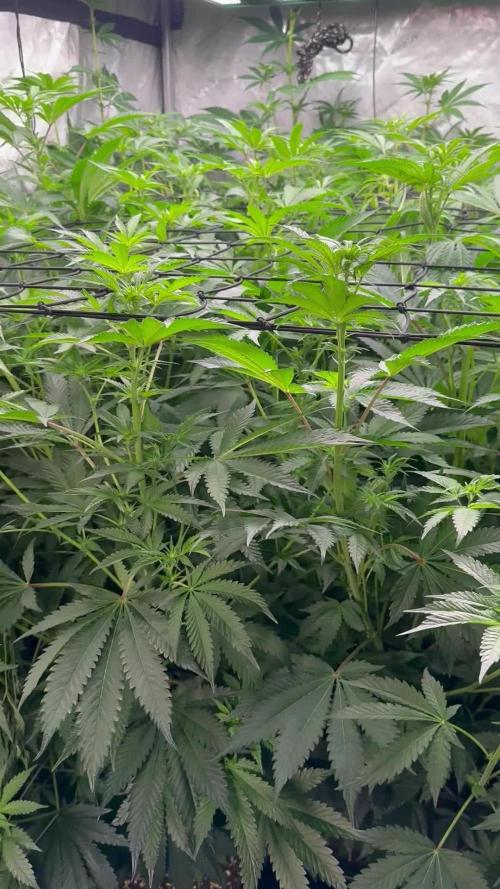
Now that I finally removed the other plants i have total control of the space! I moved the light diagonally so the girls can take max benefit from it..
I think i fucked the ph once since I saw a little deficit on the plant after the last watering... I dont know if ifs ph or something else :/



Likes
14
Share

@Stork
Follow
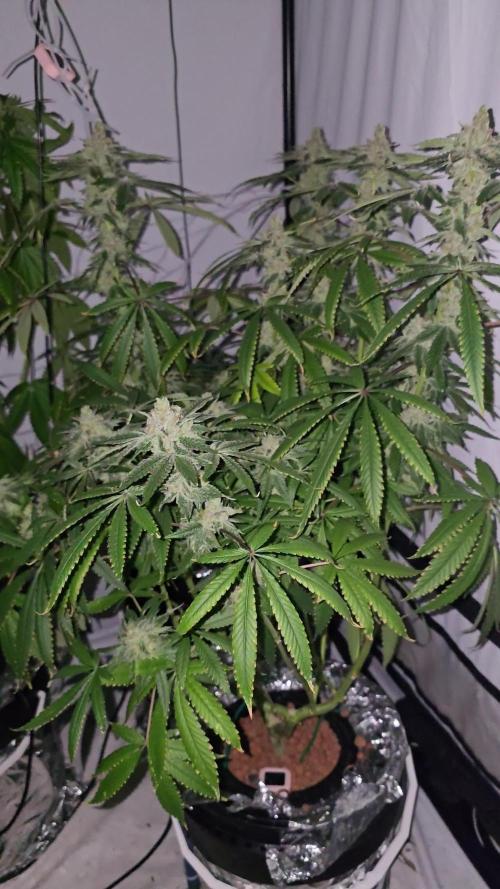
Day 104 Mon
PH 5.8
EC 0.0
DLI 12h
PPFD
Water 16-24c
Day 106 Wed
Add ph up
PH 5.6 - 5.8
EC 0.0
DLI 12h
PPFD
Water 16-24c
Day 107 Thu
PH 5.6- 5.8
EC 0.0
DLI 12h
PPFD
Water 16-24c
Day 109 Sat
PH 5.8
EC 0.1
DLI 12h
PPFD
Water 16-24c

Likes
16
Share


@CannaReaper
Follow
11-05
Looking great, smelling great, and a putting on the weight like a good girl! I think I'll hit them(or maybe just one) with a light dose of powder Kool Bloom this week to prepare for the full dose the 7th and 8th week of bloom.
11-08
So I believe I messed up 😣😕😔. At some point when I was writing down my recipe for my feedings so I didn't forget, I accidentally wrote the wrong number down for the Jack's Hydro, I put a 16 when it should've been a 12,and I just realized it a few days ago. That would account for the some of the minor issues I've been seeing. I should have seen it sooner! All I can do now is feed them right, and hope it doesn't have any negative effects.
11-11
Going into week 7 of flower and things are great. The 2 girls are coming along nice, smell great and looking through a magnifier are almost done, about a week or so left.

Likes
17
Share

@eldruida_lamota
Follow
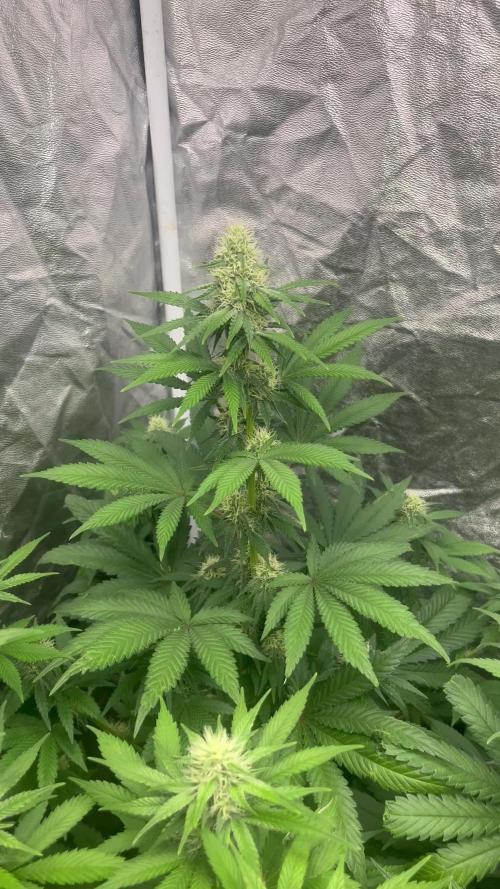
Actualizamos familia, con la cuarta semana de floración de estas Zoap Rose de Kannabia seeds.
Gracias al LST ensancharon bien los satélites y va pareciéndose a un arbusto, tienen un color bien verde sin carencias por el momento y se ve que están sanas, las plantas están en macetas de 7 Litros definitivamente, con tierra top crop, con una altura similar a 60/70cms.
añadí también tiras de color azul / amarillo para prevenir y controlar mejor el tema plagas.
El riego que aplicamos son 800ml de agua cada 48 horas y el ph se controla en 6.5, la temperatura la tenemos entre 22/25 grados y la humedad ronda el 55% gracias al humidificador.
El mismo día que escribo esto el foco está al 100% de potencia. Me gusta subirlo muy progresivamente, las manías.
Los olores están empezando a llenar la sala ya al finalizar esta cuarta semana.
- os dejo por aquí un CÓDIGO: Eldruida
Descuento para la tienda de MARS HYDRO.
https://www.mars-hydro.com
- los nutrientes directamente desde https://agrobeta.com/agrobetatiendaonline/36-abonos-canamo
Hasta aquí todo, Buenos humos 💨💨💨

Likes
16
Share


@Love420bluedream
Follow
I dried it for 8 days and got me 42 grams and 2 grams of hash and if you think about a small one it was pretty full.


Likes
8
Share


@sativa_thc
Follow
hoy lunes actulizo solo he regado ayer con bloom de atami. voy a estar regando solo con agua nada mas durante unos dias hasta q vuelva actualizar, como vemos ya esta comenzando a sacar resina poco a poco y ese engorde ya va dando sus frutos.
Processing
Likes
31
Share


@The_Bearded_Grower
Follow
welcome to day 5 of veg and i must say she looks very good and strong. still upset i cant get voodoo juice but vitathrive is as good a replacement as i have.
any questions shoot me a comment
like my work hit that like button and maybe check out my other diary's
stay safe and keep your stick on the ice
Day 9 of veg 10/07 man she is growing fast. did the transplant today

Processing
Likes
10
Share


@Familytrees19
Follow
Great week!! Amazing growth and I topped them as well as started to lst some of them! Only issues I seem to have with this strain is that the stems aren’t so strong as well sometimes leafs seem to be yellowing sometimes.. but other than that blueberry cookies are look good! Kind led K5 XL1000 Wifi is just crushing it inside my tent! I just love how I can change my spectrum to any colour I want, I mean any colour the plants want. I’m debating when to put these babies into flower maybe a week or two we will see... the mother of these plants have yellowing going on. I will up her nitrogen and see if she goes back to normal I also think she needs to be transplanted but I want to hold off till her clones are ready to flower! Happy Sunday and be safe!

Likes
11
Share

@squalino
Follow
observation gorilla cookies
plante 1
mis en rincage depuis 3 jours .
terpene majoritairement laiteux
grosse tête ferme
temps de vie restant 10 jours
plante 2
commence a peine a changer quelques pistils blanc en brun
grossi encore
les tête commence a peine sortir en popcorn hate de voir la tête final
17/01
1,5 litres d'eau Ph 6,3
19/01
1,5 litres d'eau Ph 6,3
21/01
1,5 litres d'eau PH 6,3
22/01 plante 2
4ml pk 5-8 biotabs 1l d'eau PH 6,4
Likes
9
Share


@WolverineGreens
Follow
Looking good so far...liking the dry amendment/ organic method. I havent tried any of the same strains with this method vs regular nutes feeding so i cant say for sure but i think i may have given a little of the yield away and cant say if the quality and taste went up to offset it just yet. Still plan to stick with it atleast until fall to get a good sample size. Will b going into week 6 on Thursday so we in the home stretch.😁😁😁....
Got blumats coming to free up time and water this style a little better. And a cam for better pics and so i dont have to b in the room as much. Should have more time to betted document everything. Damn i cant wait til outdoor season.

