


Likes
Comments
Share

@PigBearMan
Follow
Hey there,
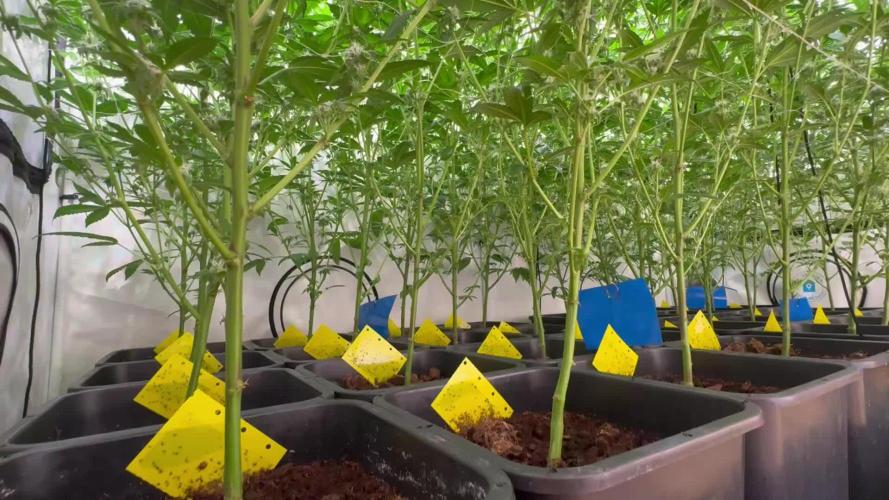
Everything‘s fine so far.
EC is 1.6, pH is ~6.
SanLights are now at 100% and ~40cm above the plants.
Since Flower Day 25 I give Green Sensation.
How do you like the field?
See you.

Processing
Likes
7
Share


@BAMA_251
Follow
I just wished I planted this in a bigger pot but hey this was my first auto and it’s turning out great




Likes
8
Share


@Shadowpup369
Follow
These two did great even through a lil stress they still came out on top. I almost want to run it back but I think it's time for something fruity maybe, maybe having a terpene profile that helps initiate a more stone heavy affect and be indica heavy.

Likes
18
Share


@rhodes68
Follow
Adjusted the nuet list to reflect reality at this point dont see need for anything else.
8/31 Still building and looking well so will keep doing what we are, just keep her happy for a few more weeks ;)
9/1 Still not feeding till tomorrow thinking last use of Recharge and Bio-Bloom
9/4 Day 61 Looks good this morning pics later
9/7 Re-adding Big Bloom (Fox Farms) to nuet mix, plants seem to be missing it and I agree. Once a week at 3 tps/gal

Likes
Comments
Share

@MyLittleGarden
Follow
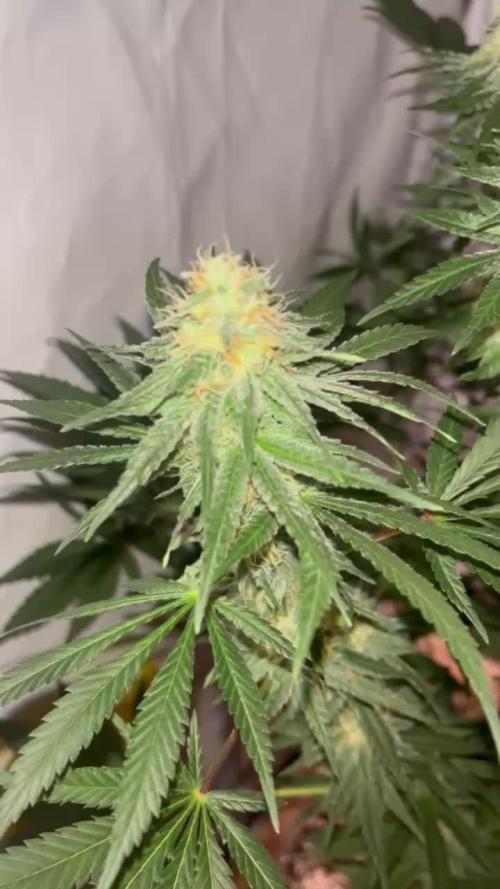
Blütewoche 5 - 13.07. – 20.07.2026
Bis auf eine leichte Entlaubung und etwa 9 Liter Wasser wurde nichts weiter gemacht.
Die Buds haben in dieser Woche deutlich an Größe und Struktur gewonnen. An den Trieben bilden sich immer mehr zusammenhängende Blütenstände, wodurch sich langsam längere Colas entwickeln. Die Harzproduktion hat spürbar zugenommen. Die Zuckerblätter sind bereits stark mit Trichomen überzogen und fühlen sich deutlich klebrig an.
Auch der Duft wird intensiver. Mittlerweile verströmt die Blue Sunset Sherbert einen angenehmen, kräftigen Zitrusgeruch. Die ersten weißen Blütenfäden beginnen sich zudem langsam orange zu verfärben .
Insgesamt zeigt sie sich weiterhin sehr vital, mit dunkelgrünem Blättern und einer gleichmäßigen Blütenentwicklung. Bisher verläuft die Blüte genau nach Wunsch und ich bin gespannt, wie groß und fest die Buds in den kommenden Wochen noch werden.

Likes
9
Share


@DaddyPrime2
Follow
1/19/25
checked trichomes again.
we are at the end of the grow, will be setting up my drying area. the conditions are not prime right now in my house. its cold and dry. humidity is 30-40%
will be harvesting soon.
#1 is about 30 amber and 70 cloudy trichomesv
#5 is about 10 amber and 75 cloudy and 15 clear
will update with harvest date and pictures
1/21/25
#1 chopped and hung
1/23/25
#5 chopped and hung
1/25/25
been able to keep the humidity around 60% but not above. i have a hygrometer hanging next to the plants around the height of the buds. its quite a ghetto set up considering i couldve just used my aci humidifier with the sensor probe.
coming to the end of these plants feels bitter sweet. i feel like ive been growing these plants for a year lmao. i may try to reveg plant #5. even tho shes the most visually stunning she also seems to have very minimal

Likes
1
Share

@Danger_Mouse
Follow
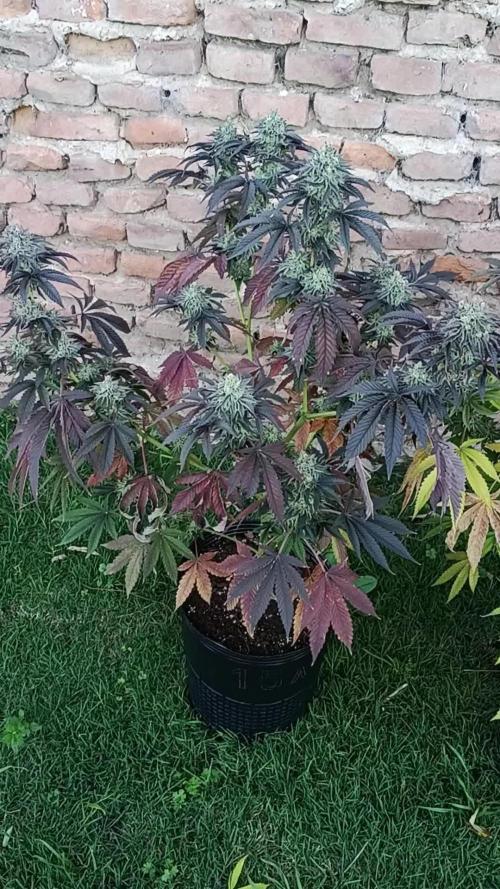
Plantas super faciles de cultivar y muy resistente a Botritis (las 3 Radical Juice fueron las unicas que no tuvieron ni el mas minimo sintoma a pesar de que 6ta y 7ma semana de floración fueron dias de muchisima humedad ambiente). Hare la reseña final cuando este secos los cogollos. El olor en verde recuerda un poco a Tangilope, Clementine, NYC Diesel.


Likes
14
Share


@BruWeed
Follow
🍀Estuvo bien en toda su etapa, no tuve ningún problema. Los resultados fueron muy buenos, se encuentra muy resinosa y con aroma a dulce.
🍀En total saque 143g de una sola planta.
🍀En total estuvo 105 días de vida desde su germinación.
🍀Recomiendo esta genética, por el momento son cocos Premium, ya quiero probarlo para saber que sabor tiene.
🍀Ahora se encuentra en etapa de secado, cuando ya estén para la etapa de curado subiré más imágenes.
🍀🇦🇷Podes seguirme en Instagram como @bruweed_arg🍀🇦🇷


Likes
3
Share


@Gram_Solo
Follow
All 3 apple strudle popped up and looking good and healthy. May need to add support soon to the stem if they get any taller , lowered the light to help this also.
I have now moved the seedlings into a 3x3 tent with a 650w philzon LED light
Just until late veg early flower then they are going back under the Spider Farmer for the Full MOT and Output lol
Humidity has been easy to deal with luckily . I have been spraying around the solo cups and near the stem with plain water to keep it moist and Humid. Seem to be loving it so far 👌
Next step is wait til these are reaching edge of solo cup and transplant into bigger pots.
Germination was a success 🙌
Party time now
❤️👌
Likes
10
Share


@Roscio99
Follow
hello beautiful ones, they managed to enter flowering!! everything is going smoothly apart from a few insects... I think it's normal when you do them outdoors. They have been flowering for a week and continue to grow every day! DAJE ROMA DAJE
Likes
77
Share


@BipolarHellas
Follow
Hello world,
🇬🇷
The previous week had a lot of growth and stretching...Angie is almost 50 cm while the other two girls have stretched their side shoots...Two days ago Lucy and Michelle started to stay in the dark for 13 hours...I put them inside a closet during the night...Angie is too tall for the closet so she will just stay outside and follow nature's schedule...
=====================================
WEEK 7:"BIPOLAR DISORDER"
☠️Day 43...when I took them out of the closet their leaves were a bit clawing...I think because of temperature and humidity...anyway after a few hours in the sun they came back to normal..I have to LST Lucy more as her shoots are getting taller every day... The new growth in all girls is a bit yellowish, so I am thinking of top dressing them with some Bio Grow from GHF...
☠️Day 44...Lucy is too tall for the closet...I will just have Michelle to flower in there...her LST is keeping her short enough to stretch and flower in the small kitchen closet..finally the weather is sunny and warm here,summer has come...I top dressed them with Bio Grow,as from the colour of the new growth I can tell they need Nitrogen...From tonight on Angie and Lucy will be sleeping outdoors,no more Leds during the night...they will be there until their end...
☠️Day 45...💧first night on the balcony...everything is OK...Michelle is under 12/12 and waiting for those first pistils to show up...I watered today...they seem to be thirsty more often as the temps outside rise...I give them 2 L instead of 1,5 L...
☠️Day 46...Angie has reached 55 cm...Michelle has started showing sex and Lucy is just growing...
☠️Day 47...Angie is becoming a beast...I love her natural shape...Michelle on the other hand has not shown any flowers yet...I hope there is no light leak in the closet she is spending 12 hours...probably needs her time...
☠️Day 48...Michelle shows tiny pistils...I am not sure yet though if they are flower pistils or sex ones...Angie has reached 65 cm...their soil gets dry fast due to the otdoor temps which are at 32°-34° C...
☠️Day 49..💧had to water again...this time I gave them 3 L each...with less than that there is no runoff... I think I see pistils on Michelle,real ones...it's kind of windy and I have to be careful with them...I have a safe spot but its not sunny throughout the day,so I am moving them around...
Another week is over,we head on to the 8th...thank you all for watching,stay safe and happy growing☠️
Likes
7
Share


@Fresco_Grower
Follow
La altura de las plantas ronda entre los 45 y 60cm. Durante esta semana se realizara una poda, todavia no realizada al momento de hacer este seguimiento. Se prosigue el riego 3 veces por semana, lunes, miercoles y sabados. Aparecen los primeros pistilos que dan comienzo a la flora.

Likes
5
Share


@OnlyTomatoes
Follow
[ Information ]
For all information on this grow, including strain and room details, please see the first week of veg.
[ Updates ]
Day 10 - Watered today, 1.2ec feeding of mainly organics (Fulvic/Humic, Kelp, Molasses, Big Bloom) with runoff. 6.8ph. Group one is stretching much harder due to plant density, I will be adding a net soon.
Day 13 - Watered today with the nutrients listed for this week. 2.2ec at 6.5ph. 80gals total. Added a small dose of Open Sesame for the first time today as bud sites are starting to form on all plants. Added a net to Group 1 yesterday, I will add the nets for Group 2 in a couple days. Group 1 plants are 38-40 inches, group 2 plants are 32-34 inches. I may adjust net height, this isn't normally how I run a cycle; I'm trying a few different things side-by-side. The "one plant per square foot of canopy" group has consistently shown that even with a short veg period there is far too many wasted growth nodes on the sides of the canopy. The plants around the edge tend to branch out instead of up, as they're naturally trying to find sunlight. My last attempt at using these side branches with heavy topping of the middle nodes resulted in a higher yield, as expected as the light footprint was 5x5 instead of 4x4, which defeats the purpose of "one plant per square foot of canopy" anyways. A better test would have been to stunt the growth of all middle nodes enough to weave the side branches into the main canopy, though this seems to be a waste of time without much gain. I'm much happier with Group 2 which has 1 plant per 2 square feet of canopy space. While it also has side branching, the difference in height at the canopy level of the sides and middles are not nearly as different as Group 1, which means a more even light distribution without the need of a net. As overgrown as the room is getting, they still have 7-8 days before they're defoliated a final time.

Likes
Comments
Share


Likes
7
Share


@UrbanBoer
Follow
Though I have not used any new grow techniques of yet, I was taken aback when I found out that, my LST turned Main-Lining, when I twirled one of the stems around the protruding twig. Loving how she has taken shape, I thought they would never grow but look at her maturing at Godspeed alike her 5 friends. This coming week, I’ll be increasing my nutrient dosage from 125ml to 250ml however keeping my daily watering at 1lt.
Likes
5
Share

@AlpenZilla
Follow
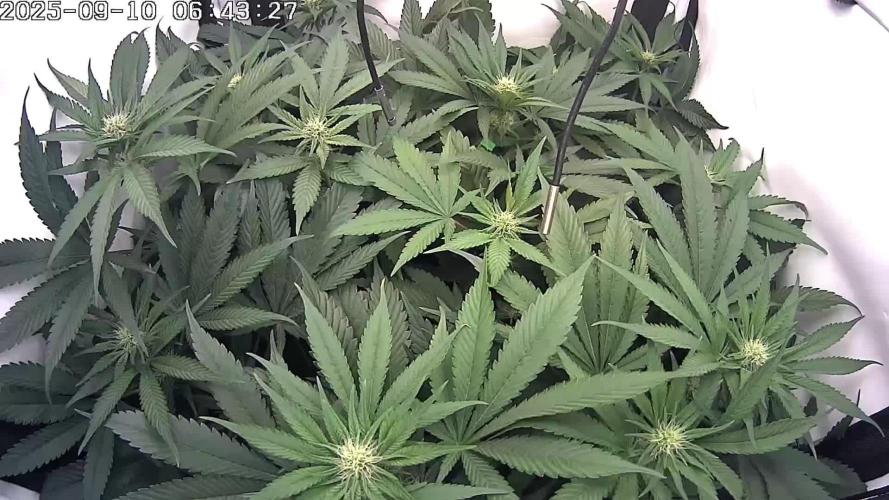
🗓️ Week 8 complete – 4th week of flowering
A few days late with the update – been a busy week –
but Seriotica is doing just fine 🌱
I managed to bring the drain EC down from 2.4 to 1.8.
A couple of leaves showed minor signs of overfeeding,
but overall she handled it really well 👍
📏 Current height – Seriotica: 78 cm
Stretch is definitely over now – holding steady.
And the best part:
Frost is coming ❄️✨
Seriotica is starting to develop a promising trichome layer already –
looking like she’s gearing up for a strong finish!

Likes
15
Share


@Chubbs
Follow
420Fastbuds
FBT2313/ Week 7
These two beautiful girls are growing amazing. Starting to smell super strong and frosty. I noticed some fade so I upped the nitrogen for one feeding and it seemed help. Over all super exciting times in the weeks to come. Happy Growing
Likes
11
Share


@CannaBix
Follow
Take a look at my home forest.
Ladies are growing very well.
FB1 & FB2 will be ready to crop in a week.Their trichomes began to turn into milky cloudy color.


