


Likes
Comments
Share

@Space_kydebt
Follow
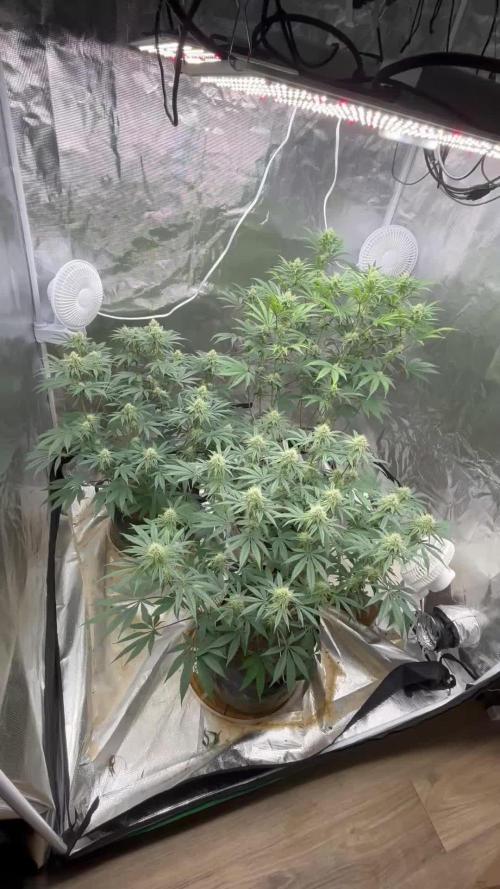
Well this week has been interesting the smalls are all there they all varied but they don’t stink which is a good think but at night my room definitely smell like cake batter lol crazy usually I tell ppl they over do it like my plants smell like this .. they need a lot but they smell wonderful and there bbm crosses are small..

Likes
17
Share

@tsf_homegrow
Follow
🇩🇪
23.-25.10. der grow läuft gut diese Seite hier läuft behindert über eine Woche könnte ich nichts updaten.(alles geht jede Seite etc. nur das updaten des diaries nicht.) deswegen auch kein Bock das jetzt alles nachzutragen. Fuck you verantwortlicher dafür das diese Seite läuft wie sie läuft und genauso den Server Betreiber!!! Update das ganze mal so das es auch funktioniert. Ich hab die letzten Wochen so oft lessen dürfen. Ooops something Broke! Wollt ihr größer werden muss das laufen sonst kann man niemanden überzeugen diese Seite zu nutzen. Weil es einfach keinen Spaß macht.
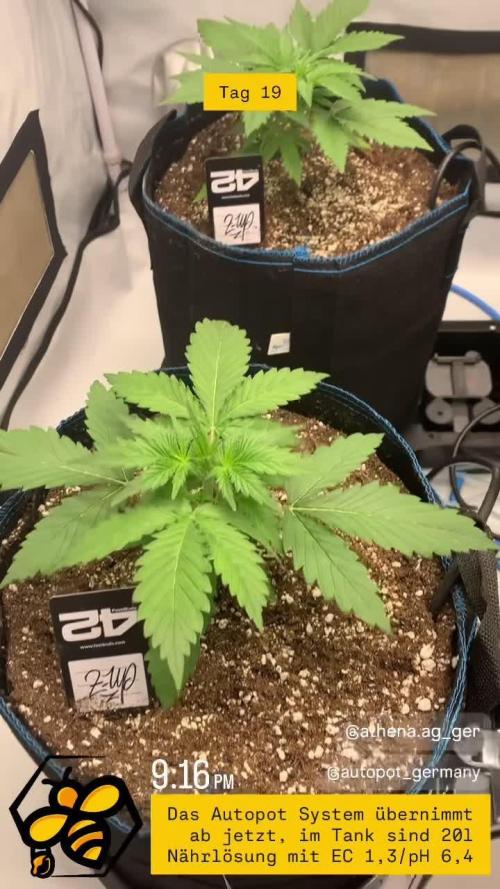
22.10. - das autopotsystem ist wieder eingeschaltet die schalen unter den Töpfen waren wieder leer. Die Töpfe haben zwar noch gut Gewicht gehabt aber da sie inzwischen immer schneller wachsen hab ich entscheiden es jetzt eingeschaltet zu lassen. Im Tank der EC ist 1,3 und pH 5,8 (für den Fall das es mit der Zeit leicht nach oben geht)
Ansonsten hab ich die Triebe da wo es ging unter den Blättern hervorgeholt und die Blätter darunter geklemmt.
21.10. - die Pflanzen fangen an Gas zu geben. Die autopot Schalen sind fast leer die Töpfe sind nach wie vor schwer genug so das ich das System vermutlich erst morgen/übermorgen wieder einschalten werde. Sie sollen erstmal das verbrauchen was sie beim ersten einschalten bekommen haben und nicht dauerhaft feucht stehen.
20.10. - die Hälfte der Tank Füllung ist einfach im Topf über Nacht verschwunden am Abend waren nur noch ein paar Liter drin so das gerade so die Pumpe für die Umwälzung unten bedeckt war, dementsprechend den Tank mit 30l neu aufgefüllt. Aber erstmal abgeschaltet die Töpfe sind schwer genug.
19.10. - der Tank ist mit 20l gefüllt. Athena Nährstoffe hinzugefügt in folgender Reihenfolge Balance (10ml), Grow B (26ml), Grow A (26ml), CaMg (8ml), Cleanse (10ml), Canna pH- (7ml). Eingeschaltet und die Schalen sind voll gelaufen hoffentlich danken die Ladys es mir die kommende Woche über. Happy Growing💛🏼
.
🇬🇧
October 23-25: The grow is going well, but this site is a mess. For over a week, I haven't been able to update anything. (Everything else works, every page, etc., except updating the diary.) That's why I don't feel like adding all that now. Fuck you, whoever's responsible for this site running, and the server operator too!!! Update everything so it actually works. I've had to read so many times in the last few weeks. Oops, something's broken! If you want to grow, this has to work, otherwise you can't convince anyone to use this site. Because it's no fun.
10/22 - The Autopot system is back on. The trays under the pots were empty again. The pots still have a good weight, but since they're growing faster and faster, I decided to leave it on for now. The EC in the tank is 1.3 and the pH is 5.8 (in case it rises slightly over time). Otherwise, I've plucked the shoots out from under the leaves where possible and tucked the leaves underneath.
10/21 - The plants are starting to thrive. The Autopot trays are almost empty, and the pots are still heavy enough that I probably won't turn the system on again until tomorrow or the day after. They should use up what they received the first time i turned the System on, and not be left standing in a permanently damp place.
10/20 - Half of the tank's contents simply disappeared into the pot overnight. By evening, only a few liters remained, just enough to cover the circulation pump at the bottom. I refilled the tank with 30 liters accordingly. But I'll turn it off for now; the pots are heavy enough.
10/19 - The tank is filled to 20 liters. I added Athena nutrients in the following order: Balance (10 ml), Grow B (26 ml), Grow A (26 ml), CaMg (8 ml), Cleanse (10 ml), and Canna pH- (7 ml). I turned it on and the trays are full. I hope the ladies will thank me for this over the next week. Happy Growing💛🏼

Processing
Likes
3
Share


@Green_Dream
Follow
Things are looking great, I've put them under the LED this week so they can get used to it... and to get a better video quality :D
I'm mostly hand watering at the moment one time a day.



Likes
22
Share


@Lerome
Follow
Unfortunately ive managed to overwater my young plants when experimenting with a new substrate. They looked really droopy with grey edges and yellowing already, so i decided to restart this post for a second try germinating directly into my living soil, like im used to do it.
📆 [23rd of August]
Ive put the 2 remaining seeds directly into my homemade living soil. Exactly 72 hours later, on the 26th, one has popped up and showed their germination leafs.
I am planning to repot the plants into their "real" home after about 14 days of vegetation. That is gonna consist of 2 substrate levels in a 40l container. The bottom 2/3 is going to be a mix of peat, pumice, sand & vermiculite, the top third is gonna be a layer of my homemade living soil, which is made of 1/3 peat, 1/3 compost and 1/3 pumice 4-12mm & Spelt Husk 50%/50% (measured by volume) amended with kelp meal, sproutet bean meal, basalt rock dust, microbial mushroom biomass (chitin), oyster grit, gypsum, charcoal, bentonite and tiny amounts of bone meal & horn meal.
It is my first time growing in a (partly) nutrient poor substrate. I want to do some kind of Experiment this time, as i have not seen many growers use "hydroponic" /nutrient poor substrate paired with the "living soil" approach & organic feeding. I'm trying to boost the growth by providing plenty of oxygen and water like hydroponics does, without needing to use those mineral salt based fertilizers or frequently having to discard "old" substrate.
In my mind this idea would work similar to an "Autopot" system, where you prodive water and oxygen mainly in the bottom with some small amounts of nutrients, but feed mainly from the top by amending. Ive seen this in the "Build a soil" youtube channel.
I've set their homes up already a couple weeks ago and moistened it to let it cook together, so the living organisms could colonize the bottom subtrate before transplanting.
(Edit: Change of plans, those "homes" are gonna go to my Red Hot Cookies instead, ive just transplanted her right into an 8l pot to become a mother. Its made the same way, without the cooking together in prior part.)
The plants are going to be fed purely organic/natural material by top dressing with different amendments like fish hydrolysate, basalt, kelp, gypsum, guano and this "living soil - grow" fertilizer i've showed in the pictures.
Furthermore i am going to be using homemade nutrient ferments on cannabis for the first time. Ive already tested those on roses, tomatoes and some houseplants. (made from fish, insect, kelp, aloe vera, guano, kitchen scraps, plants etc). My goal is to additionally boost the plant growth by watering these quickly available nutrients. It should contain all the essential minerals plants need, as well as phytohormones, amino acids, vitamins, humic and fulvic acid, beneficial bacteria and fungi.
Stay hyped with me!
[Edit Week 4]
I am not as happy with the results as ive expected it. The plants are looking pretty fine and growing nicely, but i dont see any benefit compared to pure living soil yet. It almost seems like the plant is growing a little bit slower than usual and just needs to be fed more with this method, i dont see any "hydro like" boost happening... Maybe i needed to fertigate her more often and topdress more, i didnt want to try out too much though as i want to keep this plant as a mother. I dont have much time to do experiments with clones, so im probably just going to go for it as planned and hope that they will like the system in the big 40l pots. Probably going to amend the soil heavier then by topdressing more and fertilize with every watering later in veg - until mid/late flower.

Likes
6
Share


@DonEspas
Follow
2 phénotypes sont partis en fleurs
1 phénotype se comporte de manière différente pour le moment... Attendons de voir ce que ça donnera
Likes
46
Share


@eldruida_lamota
Follow
Que hay familia, vamos con la séptima semana de vida de estas Candy Rain de Zamnesia, para el concurso POWER BUDS Plagron x Zamnesia CONTEST.
Vaya color verde que se están marcando, se ven bien sanas, ya se aprecia.
Las flores van formándose y produciendo pelitos.
Esta vez regué con una aplicación de Sugar Royal, 0.8 ml x litro de agua, Alga Bloom 2 ml x litro y Power Bud 0.5 ml x litro, Green Sensation 0.5 x litro, por supuesto controlando siempre el Ph, que ahora mismo lo dejamos en 6.
Tragan alrededor de 1 litro por planta cada 48 horas.(3 riegos semanales).
La temperatura máxima está en 23.5 grados y la humedad está entorno al 55%.
Hasta aquí es todo, vamos viendo estas semanas como se forman y progresan nuestras flores.
Os comento que tengo un descuento y para que compréis en la web de Zamnesia de un 20%, el código es ZAMMIGD2023
The discount 20% and the code is ZAMMIGD2023
https://www.zamnesia.com/
Hasta aquí todo, buenos humos 💨💨💨


Likes
21
Share


@buddhi_coop
Follow
This week they climbed about 7 inches. I’m in love with these girls. They’re a lot of fun to watch. They’re so uniform and wholesome I can’t stop staring at them. I just watered yesterday with just 6.3 ph water. I realized I was using too much veg fert. so I kept that out of my feeding for this week. I thought it said tbs instead of tsp so I was using way too much. They seem happy though so I think I’m ok. Other than that, I’m excited to see how much they grow this week.
Likes
7
Share


@Lazuli
Follow
Final weeks, i think 2 more
So next week
(in 4 days after this update) i will flush her again and start ripen feed
I flushed her yesterday and fed her again with a lower dose of the same nutes as i was starting to get calcium lockout due to the medium being too accidic
Likes
18
Share


@TheGreenLeopard
Follow
Looking strong looking healthy. No complaints. As expected flying along. The conditions above are the tent conditions roughly. But there’s not tent available lol. So these puppies all live under a desk for now with those spider leg LED stations. They’re really cool. Gréât from rotation. As you all know the rules by now here. Parc stays open 24/7. This bud ain’t gonna grow itself. People out there planting trees all day everyday 😂🙏🏼💚

Likes
25
Share


@pifflestikkz
Follow
Day 99
09/10/24 Wednesday
De-chlorinated tap water pH 6 with Plagron PK13-14 today to give her the extra boost they need. I will continue flush at end of week and next week.
Day 101
11/10/24 Friday
De-chlorinated tap water pH 6 only today.
Day 103
13/10/24 Sunday
De-chlorinated tap water pH 6 only today again.
Day 104
14/10/24 Monday
Picture update 😎💚
Day 105
15/10/24 Tuesday (End of week)
Gave them all another 0.5L of de-chlorinated tap water with Plagron PK13-14 PhD to 6.3.
Update on strains:
DS- Auto Kabul is a robust, hardy little plant. Not many lateral sides bud it has bid sites climbing throughout main colar and it has a heavy top 🙌💚
Light green in colour and smelling like a zesty gas.
DG/GF- Auto XXL Ammo -
She is such a tall, stretchy plant, with alot of leaf to bud ratio! I won't do this one again as she requires alot of height space I don't have. She has a garlic, ammonia pungent smell to her.
DG/GF- Auto lemon zkittles 🍋-
This is A typical Christmas 🎄 tree shape plant, beautiful strong structure, resilient to pest. And has nice lateral sides with a bit of LST it would Unlock her true potential. She has a heavy main colar. Light green in colour dripping in trichomes, and smells like candy/ Z terps.


Likes
16
Share


@Mudballs
Follow
Bring the heat. Seed sprout tea every weekend. LST 6/19/21. Splayed them out like busted watermelons.

Processing
Likes
4
Share


@RobinHoodGrows
Follow
Nothing new to report, plants are growing well.
I'm giving the plants filtered water at ph 6.0. I don't know the PH of my soil or my run off etc.
This is my first grow so I'm not too far into the weeds (pun intended) on the PPM and those particular factors.

Likes
6
Share


@valiotoro
Follow
Super easy trim✂️
The buds are super dense & sticky🤩
For the smell it’s cherry & blackcurrant with a gassy touch the Cherry Cola Diesel ⛽️🍒
Processing
Likes
2
Share


@MephodMan
Follow
Just notice that one of the fan leaves that I put a small LST clip on has snapped off. Thinking that I may be better off sticking to the large clips
removed a few of the LST clips and tied down branches with garden wire. I think this may be the better solution.
Accidentally used 1 tsp for Bloom instead of 1/2 tsp. 5ml should be fine for a large plant, hopefully no nute burn as a result. So far she seems to be loving the extra nutes.
Plants appear to have loved the 5ml of Bloom. No signs of burn this morning.
Did some defoliation today to try and remove large leaves that were blocking light to bud sites


Likes
28
Share


@TeamQuality420
Follow
So this week is the start of flower !! Woooohooo finally get to show what I'm made of !
Step one ) take all the big fan leaves
Step two ) establish a "light line" and take all small shoots that are unable to get the proper amount of light due to their distance from the top of the canopy. * These are the places we all wish would grow ! These are also the places that are at risk of
- hermaphroditism
- mold
- waste of energy for the plant.
** These are also some of the best places to take clones **
Continue to tie and secure everything in preparation of massize buds !
I hope some people looked at this like
" This took way too much off "
I took ALOT. Yes I push , I push hard to know how much they can take . Yes I would say 60% of plants DO NOT like a massive defoliating.
But, the ones who do , you will unlock a yeild like never seen .
It's the risk we take .
One thing I have noticed is when I'm gonna defoli , I don't combone high stress or toping + a bunch of other techniques .
Should have some pretty huge plants by two months !
Thanks for stopping by more notes and pictures to follow .
First week of flower was a great success!!! Unfortunately I did have covid this week so my pictures weren't exactly where I would want them .
For these genetics, it's crazy , they haven't been topped or LST'd and yet they are growing flat at the top !
*** I did have covid this week so my pictures weren't exactly up to par.
So I'll do my.best to make it up with notes ,
- this week very little flower stretch that is definitely a plus for people who want medium sized bushy plants . Not saying that this one won't stretch but so far there has been very little stretching .
- there are ALOT of nice shoots throughout the canopy, plenty of places to take clones *** this genetic clones very well so that is another thing to note ! So great clonability .
The end of week one I have seen very little stretching , in my opinion these could all be considered S1 . It interesting, even with no topping or training these plants NATURALLY grow FLAT! so for all you Screeners out there this is a primal genetic for that !!!
In to week two !!! Here
We
Go !!!
--------------------------
Find these world class genetics at :
https://www.exoticseed.eu/products/exotic-animal#:~:text=What%20is%20Exotic%20Seed's%20Exotic,be%20cultivated%20indoors%20and%20outdoors.
Or
https://www.seedsman.com/eu_en/exotic-animal-feminised-seeds
Find all about the nutrients that fuel this grow on here:.
https://diablonutrients.com/
Absolutely a life-changing nutrient company for me really brought my game to the next level.

Likes
17
Share


@GreenHouseLab
Follow
This stuff packs a nice punch, one pheno showing off those cherry terps its 🔥🔥
Likes
4
Share

@Borberad
Follow
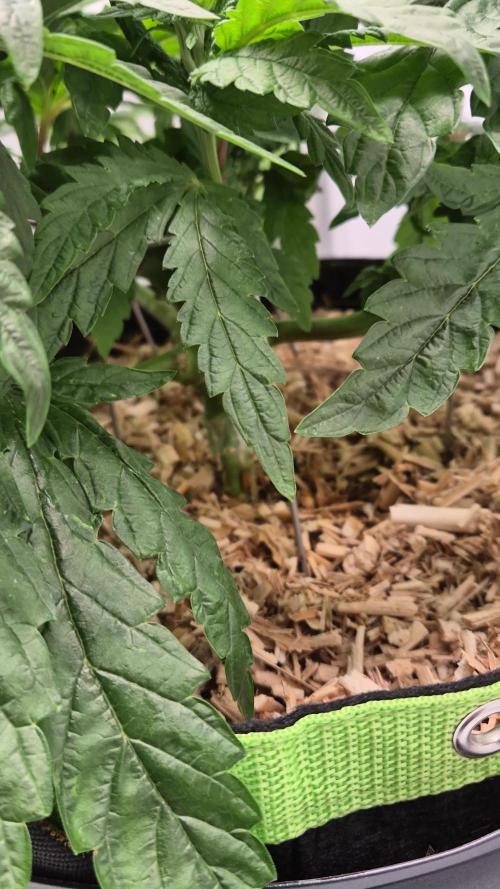
Ihre Symmetrie macht sie zu einem echten Hingucker. Sie wächst sehr weiterhin extrem kompakt.
Tag 55: Es sind ein paar der inneren Blätter entfernt worden.
Tag 56: Wir haben das Blümchen mal etwas geöffnet.