


Likes
Comments
Share

@Hren_Morjovii
Follow
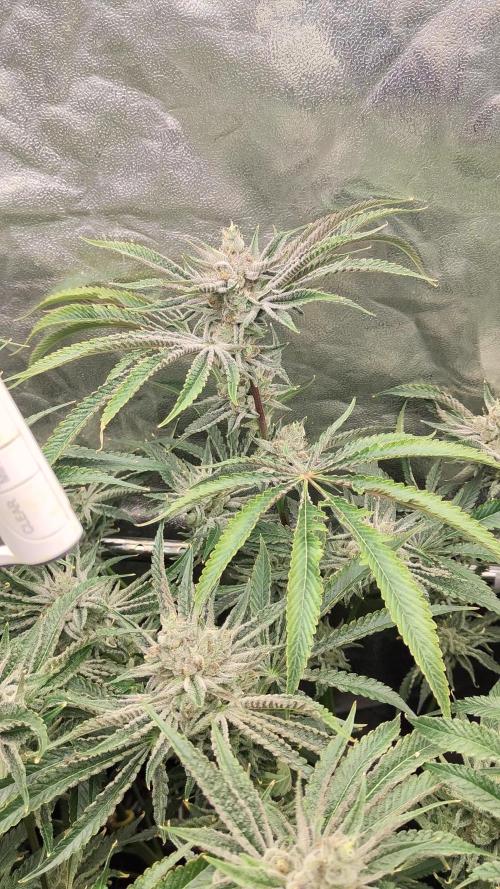
43 день.
Угольный фильтр не справляется с запахом. Вокруг бокса запах сладкого молока, а внутри бокса запах приобретает еще и ягодно фруктовый аромат.
ЕС стока периодически поднимается до 1.8-2. Стараюсь держать около 1.6. Растиха стала заметно меньше пить.
43-49 день


Likes
93
Share


@Natrona
Follow
FBA2502 Plants 1-6
Week 7 May 11– 17
FLOWER 3
Nutrients :
Micro 25 ml
Gro 10 ml
Bloom 30ml
CalMag 30 ml
Recharge 10ml
Green sensation 16.5ml
Power buds 7.5 ml
5/11 PH 6.56, PPM 1560, temp 69
2ltr each
5/12 PH 6.31, PPM 1120, temp 68
1 ltr each
5/14 PH 6.66, PPM 1280, temp 70 1 ltr each
5/15 PH 6.66, PPM 850, temp 72 1 ltr each
5/11 Defoliation, feed, pics & videos
I made 4 gallons, used 3 to water then poured the runoff back into the rest in the bucket. The next feeding, I added a gallon of tap water to residual and ph to 6,31 temp 69 & PPm 1120. Did the same on 5/14 and 15 using up the remainder of the feed solution.
I must monitor and control the tent environment manually. For the past month, the humidifier has been an issue putting out way too much humidity; often leaving water in the bottom of the tent. In addition, the temperatures are also out of control. I added an AC last week to keep the temperature below 80. I finally determined the exhaust vent is also broken and has been for some time.
I have been giving good reviews on the AC infinity system. However, during the time I’ve owned this tent (2 yrs), I had to replace the lights twice, fans, humidifier and now the vent twice also. Everything but the tent containment has been replaced. AC infinity does stand by their products, but they are in California, and it takes at least 2 weeks to receive the replacement. This is extremely frustrating at the critical transition to flower for my equipment to fail again. For the time being until a replacement arrives, I pulled the 4” exhaust vent from my 3x3 and hooked it up. I have the AC pushing air in and the exhaust pulling air out. This should create a neutral pressure tent environment-neither positive nor negative. I do have 3 circulating fans in the tent to move air around the plants.
It looks like growth spurts have slowed and plant height has been reached. Now is the time for buds to fatten and frost up. All of them (6) are short remaining less than 3 ft. They range from 15 to 31 inches. The tallest #4 &5 and #6 have very light leaves and appear nutrient deficient compared to the shorter phenotypes. Pictures taken later in the week show fading on a few the older leaves. All are receiving the same solution and are in the same soil blend. Moving the gals in and out of the tent for their glamor shots, I bent one limb and snapped another. The bent one I taped with a splint and the snapped one I medicated manuka honey and wired it back to the main stalk.
Leaves look like sativa leaning. I hope FBA2502-2 is a good daytime. I’m getting excited to see what develops in the next month or so. News Break: I’ve been informed that 2502 is FastBuds New Frostbanger and is indica for nighttime. I’m disappointed that I didn’t get a sativa to test because I really need a daytime strain. The 2 Blue Cheese plants I just grew are also nighttime.
Upon opening the tent, a faint odor was detected, and some stickiness was observed during the process of defoliation. Pictures of the puffy buds even show differences. #4 &5 buds hairs are different from the others being crinklier and the others are straighter. Some like #2 &5 are showing frost on the leaves. Wow at the beginning of flower to have that much frost. They are living up to the new strain’s name.
I’ve noticed that when I water, sometimes water shoots out of the side holes I the air pots. I will pack the soil firmly into the sides for future runs.
Measurements:
#1 15”
#2 20”
#3 17”
#4 30”
#5 31”
#6 24”
Your likes and comments are appreciated. Thanks for stopping by.
Growers love 💚🌿
💫Natrona💫


Likes
5
Share


Likes
105
Share


@Hipichic
Follow
My experience overall can be best described as an interesting enlightening process. Since it was my first time growing it was definitely a learning experience. From the height being as tall as it was to the high winds in the area making it difficult to keep them from toppling when the buds were reaching full maturity. Thinking it would have benefited from more topping than just the once. The terps that this strain has are exquisite!! I am going to miss walking by them towering over me and just breathing in their berry cream aroma, taking in the sweetness like I had just had some dessert. Really enjoyed this strain and hope to grow it again sometime. Thanks for checking out my first grow 🌼💚✌️

Likes
229
Share


@Crashoverite
Follow
Week 10
Hi everyone,
Everything going brilliantly. Girls are gaining weight, trichomes development it's amazing. As for now some buds up to 10-20% amber and some are still almost 100% clear and milky. Leaves are still pretty green and I may keep nutrients for this week but all will depend of trichomes palette before switching just to water.
Please stay tuned for daily updates
Have a great week everyone
Peace and love ✌️💚
25/09 Day 64
Watering approximately 2.5l per pot. runoff 50-100ml. This lasting on avarage for 2-2,5 day.
27/09 Day 66
All going smooth. Girls are covered with frost. Noticing some more amber trichomes. Will keep watering them with nutrients tonight and will keep observing closely their development before cutting off nutes completely.
30/09 Day 69
We are approaching final days of this amazing journey😁After closer look decided to flush this morning. Only water and Fish Shit on ratio 0.4ml per 1 ltr. Flushed with approx 3 ltr per pot. Runoff 50-100ml. Runoff ph 6.4.
01/10 day 70
It's the end of week10
Currently trichomes at some buds up to 20-30% amber 😍 and on the rest milky with small groups of amber 5% As its a soli grow we have a good few days for development. Not sure about harvest day yet but I would say 6-14 days at most.
Thank you so much for all support, likes and comments 😊✌️💚
Stay tuned as best still to come 😁
Peace and love brothers and sisters

Likes
29
Share


@Omisan
Follow
OOOOOH at this time i love all of you, growmie 😍
200gr of pure happiness, never before! 🙌
Buds are compact like rock, shine like diamond...it's unbelivable, looks perfect!
At last, mold take me about 20g of buds 😩
But it is ok, the jar is overfull and i'm so happy XD
Now let's wait for the right taste......for now is greatful! 😜
Thanks to Dutch Passion for this opportunity, i'm really proud!! 🙏
Thanks to all of you growmie, for your support 🙏
to the next adventure!

Likes
37
Share


@Smoking_Joe_Frasier
Follow
I had to harvest my Blue Dream plant early due to some larger mold spots I found on the buds. To prevent the mold from spreading to my other plants, I acted quickly and made the cut. Unfortunately, this meant I couldn't give her a proper flush.
Despite the abrupt end, the aroma of the buds is fantastic, and I'm optimistic about the taste. During trimming, the scissors became sticky with resin, which is a good sign of potency.
I carefully harvested bud by bud to ensure I didn't miss any mold-affected areas. Unfortunately, the main bud had the worst mold spot, so I had to take it apart. It's puzzling since they were never outside during rain and only had to contend with morning dew.
Overall, I'm pleased with this grow and feel humble. It was an incredible journey filled with challenges and triumphs. I'm looking forward to enjoying the fruits of my labor and learning from the experience.
Thank you to all my growmies for following along and being part of this learning experience. Your support means a lot.
Stay tuned to see how my remaining two trained ladies turn out. One love, one community. ❤️
Harvest Report: Blue Dream (Update 09.08.)
After 9 days of drying, I brought the Blue Dream buds into my apartment for the final trim before jarring. The initial yield was 40 grams, but during my last inspection, I discovered more mold spots, this time buried deep within the buds.
Unfortunately, all the larger colas were affected, forcing me to take the buds almost completely apart. In the end, I managed to salvage 21 grams of pure, healthy buds without any mildew. I also set aside 6 grams of “quarantine” buds, which I’ll dry separately. Sadly, I lost 13 grams to mildew—a tough blow, but one of the harsh realities of outdoor growing.
It’s disheartening, especially since three other friends experienced similar losses this season. Honestly, I’m not sure what I could have done differently, aside from discarding the plant earlier. But even with these setbacks, if the cured buds taste as good as they smell, I’ll still consider this grow a success.
The genetics from Fastbuds proved to be solid, and I recognize that the challenges I faced were largely due to environmental factors and my own decisions. This was a learning experience, and despite the issues, I'm happy with what I've achieved.
Likes
2
Share


@Organic473
Follow
Finally decided to sow these seeds from the diary "Sensi Seeds Durban V1" crossed with Sensi Skunk Regular Male. I will be vegging these girls hopefully until the dry seasons starts here late January 2025 Jah will.
Likes
7
Share


@LoganatorDude
Follow
Looks like I missed a week…
It’s been horribly hot, and they only have access to the light outside.
…In the heat.
So I have been keeping them in filtered sun, sometimes shade or a brief moment in the sun. They soak up all the morning sun when it’s cooler at least. I’ve noticed what would most likely be a subtle potassium deficiency. The heat is bad. Not too hot, but unfortunately there were multiple occasions where they had more hot sun than necessary. I didn’t notice any signs of stress at the time, other than leaf tips and edges folding and pointing up a lil bit. But later in the evening I could see subtle discoloration. I’m pretty sure these young un-established plants are just running a little short on potassium. I’ve been giving them potassium as well. It’s just a matter of keeping them cool.
Overall I’d say they haven’t gotten too hot! Just hot enough multiple times to put a higher demand on water and potassium than necessary, all while having slowed growth. I positive they are all still good and no one has been stunted. I hope!
But yeah I think we are doing good. Just going slower than usual with the excessive heat. We are averaging a high of 90 Fahrenheit with some days getting 94!
Also, they are growing slowly not only because of the heat, but the lack of direct light for the second half of the day. I’d rather grow slowly than risk stunting any. I’m feeling positive about this bunch. They are young and bursting with life!! ….slowly.
Likes
11
Share


@AvoidantGrower
Follow
Day 35 - 710 Diesel Auto
This girl nearly doubled in size this past week and is getting super bushy - I'm not sure what to do with all the undergrowth being that it's an autoflower I worry about stripping her - I think I'm just going to let her do her thing for now and try to control her as best I can with the trellis net and some leaf tucking.
Light: Platinum LED P300 set to bloom+veg mode @ 18" above plant providing about ~50,000 LUX at the top.
Watering/Nutrients: RO water w/ Advanced Nutrients pH perfect line up, Real Growers Recharge and Terpinator.
Environment: 4x2 Grow Tent. Temps low of 66 - high of 80 with RH of ~50%
Soil: ~6 gallons of Foxfarm Ocean Forest w/ 4 extra quarts of perlite added.
If you see anywhere that you think I can improve please drop a comment – thanks for reading

Processing
Likes
3
Share


@camo420
Follow
NEW BOX: 130x60x120
DIY: storage shelf, solid sheet metal
ELECTRO ################################
thermometer top
thermometer bottom
hydrometer
wlan ip cam (+ir filter)
----------------------------------------------------------------
input: x2 USB PC fan
exhaust: x2 USB PC fan
circulation: x2 USB fan
----------------------------------------------------------------
led panel 1: 300W ASUNDOM LED (Veg/Bloom/Full)
led panel 2: 300W XHGrow Reflector-Series LED (Full)
----------------------------------------------------------------
studio light 1 (vegetation): 36W TaoTronics LED Gold
studio light 1 (vegetation): 50W Balai LED full
studio light 2 (vegetation): 8W VINGO LED blue ligh
studio light 2 (vegetation): 50W Balai LED full
----------------------------------------------------------------
studio light 1 (bloom): 36W TaoTronics LED Green
studio light 1 (bloom): 36W TaoTronics LED Gold
studio light 1 (bloom): 50W JADIDIS LED IR full
studio light 2 (bloom): 36W TaoTronics LED Green
studio light 2 (bloom): 36W TaoTronics LED Green
studio light 2 (bloom): 36W KINGBO LED Deep red 660nm
3x PLANTS ###############################
FastBuds Girl Scout Cookies
pots: 14L
soil: plagron grow mix
Likes
6
Share


@Shellshocked
Follow
Just noticed as I was putting the gsc away that its got 3 branches coming out at every node ive heard of it but never had it so I'm looking forward to seeing her flower as I assume she will have more/bigger flowers will show in the video next week

Likes
11
Share


@hannabis420
Follow
fast growing auto, overloaded on nutes with this one but she still produced beautiful buds

Likes
25
Share


@m0use
Follow
This week has been good for these little ones, the runoff was a bit high for my liking so I gave them more water before feeding to help flush out their medium and introduced the bloom nutrients as they are now entering flower. Got one purple looking ones, one green ones and one mixed that is leaning more towards green in terms of colour profile. I remember before when growing these strains I was disappointed in the fact they where not all purple. Now I know and don't care to much. Nothing crazy on the smells so far, hoping they get real juicy and tasty in the next coming weeks.
The PH has been harder to lower when the nutrient solution is mixed, it takes more PH down to get ti to the 5.8 that I''m aiming for. Hopefully they explode in growth in the next few weeks.
Likes
127
Share


@DreamIT
Follow
🎃👹👽MONSTERCROPPING RED MANDARINE 👽👹🎃
____________________________________________________________________________________
💀 19.2
💀 20.2
💀 21.2
💀 22.2
💀 23.2 vacation week
💀 24.2
💀 25.2 ...
____________________________________________________________________________________________
📜👀 A look at the details of what I'm growing 👀📜
🍊💚 Red Mandarine F1 🍊💚 by 🌱🍭 Sweet Seeds 🍭🌱
📋 Details
⚧ Gender
▪️ Feminised
➰ Genes
▪️ 55% Indica / 45% Sativa
🎄 Genetics
▪️ Red Poison Auto (SWS39) хCalifornia Orange x Skunk hybrid)
🚜Harvest
▪️ 400 - 500 g / m²
🌷Flowering
▪️ 49 - 63 days
✨THC
▪️ 16%
✅CBD
▪️ 0,2%
🏡Room Type
▪️ Indoor
🌄Room Type
▪️ Outdoor
🕋Room Type
▪️ N/D
🎂Release Year
▪️ 2019
__________________________________________________________________________
👀📷🥇 Follow the best photos on Instagram 🥇📷👀
https://www.instagram.com/dreamit420/
🔻🔻🔻Leave a comment with your opinions if you pass by here🔻🔻🔻
🤟🤗💚Thanks and Enjoy growth 💚🤗🤟
Likes
12
Share


@BrMarijuana
Follow
Plantas saudáveis, ótima qualidade, estão reagindo muito bem a alimentação, regas todos os dias e alimentação todos os dias,.cheiro doce

Likes
1
Share

@Black_Magic
Follow
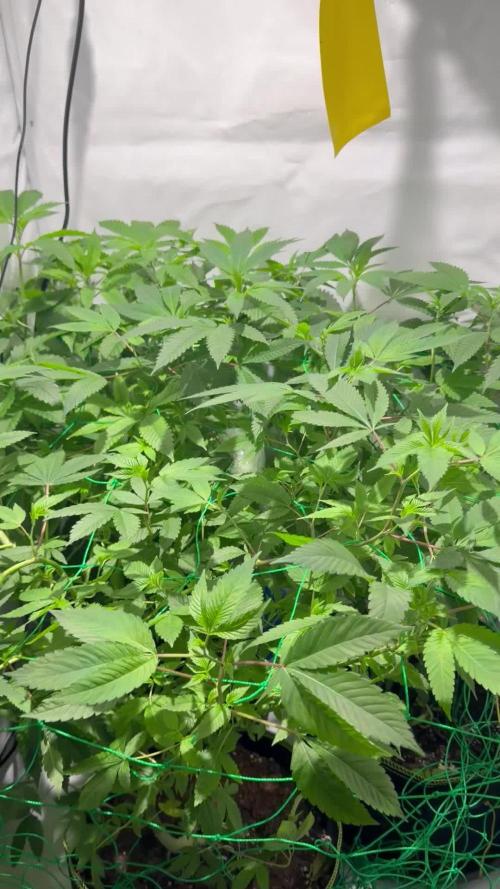
They are looking good
Feeding with Hesi Newts and dirty water from the fish tank
Will switch soon to 12/12
450 LED DIY mix of 3k and 2k I think, can’t remember
That one outdoor ist not doing well

Likes
3
Share

@Ninjabuds
Follow
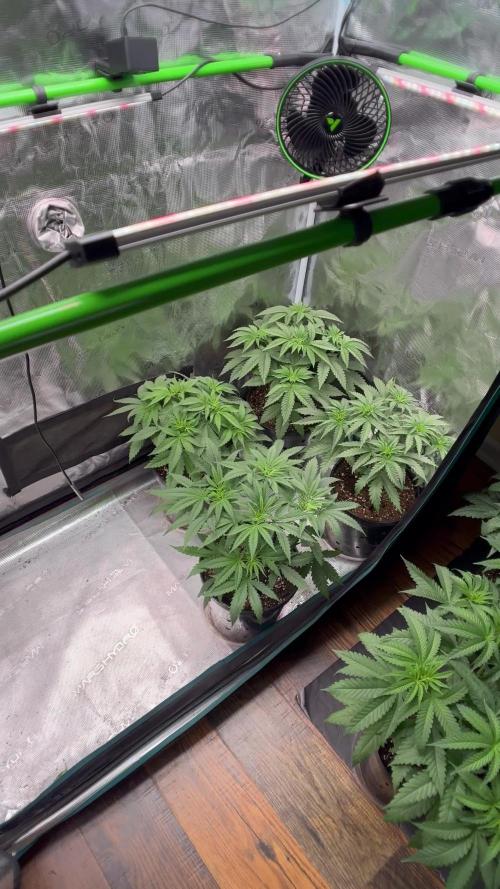
My white Runtz plant is definitely the fastest growing plant in the tent. Usually when a plant grows this fast they grow really large and sturdy this plant will most likely be strong enough to be an outdoor plant
It’s day 41 from seed and all of the plants are really thriving

Likes
8
Share


@Monkeyboy
Follow
OK so we are at day 57 and wer flowering. Looking nice and tall and green. Can't wait for the buds to come.
Not bad just tap water and watered down coffee grounds once a week.
https://home.howstuffworks.com/green-living/use-diluted-coffee-to-fertilize-plants.htm#:~:text=A%20weak%20solution%20of%20coffee,on%20the%20left%2C%20is%20perfect.&text=Don't%20just%20pour%20it,green%20growth%20and%20strong%20stems.
