Likes
Comments
Share
@GrowerGaz
Follow
Day 24 they did show their sex this week and the initial stretch has just started. I have only top dressed the plants with 5 g of Greenhouse biofeed and gave them PhD water . The Cheesy Auto is a week or so behind.
Likes
1
Share
Turned off IR @ nights Red wigglers (Eisenia fetida) are highly beneficial. They are considered an ideal choice for "no-till" or container-based organic growing because they live in the upper layers of soil, feeding on organic mulch rather than the plant's root system. Red wigglers accelerate the breakdown of organic amendments and produce high-quality, nutrient-dense worm castings directly in the root zone. Clover is another exceptional component of an organic rhizosphere, offering a sustainable, self-sustaining alternative to synthetic nitrogen fertilizers produced via the energy-intensive Haber-Bosch process. By forming a symbiotic relationship with Rhizobia bacteria, clover converts atmospheric nitrogen N2 into ammonium NH4, providing a steady, slow-release nutrient source that enhances soil health and reduces environmental impacts. Red clover offers superior nitrogen fixation and biomass production compared to white or yellow clover, making it the premier choice for maximum soil vitality, particularly for improving soil structure and providing a high-volume nitrogen credit for subsequent crops. If it is fully functional and efficient soil, the rhizophagy cycle is far superior long-term than any synthetic delivery when it comes to preventing deficiencies, not because it's "better," per se. The medium will require a very high CEC to make it to harvest without re-fertilization. The rhizosphere acts as a dynamic, interactive exchange where plants and soil microbes trade resources based on immediate needs. When a plant lacks a specific nutrient, it changes its physiology and releases specialized chemical cocktails—root exudates—into the surrounding soil. These exudates, which include sugars, amino acids, and organic acids, serve as a "shopping list" to attract specific microorganisms, which in turn return higher levels of desired nutrients. There is nothing in comparison to synthetic delivery, which causes plants to stop producing exudates, effectively "starving" the beneficial soil life, over time turning the soil barren and void of microbial life. Responsible use, applying the right amount at the right time, can minimize these negative effects. Relying solely on synthetic fertilizers without replenishing organic matter is what typically leads to exhausted soil. The use of synthetic fertilizers can utilize the Cation Exchange Capacity (CEC) of the soil, but without a robust rhizosphere and active microorganisms, the efficiency of this process is significantly reduced. This makes synthetic growing more difficult to prevent deficiencies overall compared to an efficient organic living soil with a robust rhizophagy cycle, as there is no "one size, fits all" when it comes to different nutrient profiles of strains/genetics, making it trickier to "guess" and prevent creeping deficiencies. CEC does not contribute towards EC. Add more CEC using biochar, problem solved. If you keep pH between 6.3 and 6.7, hydrogen is exudated to cycle the medium's CEC for its needs. Keeping the pH between 6.3 and 6.7 creates an environment where plants release H+ to displace positively charged nutrients (like Ca2+, Mg2+, K+ held on soil particles or within artificial media this cycle through nutrients via the medium's Cation Exchange Capacity (CEC) Microorganisms generate a stable potential of approximately 0.5 V EC. The rhizosphere creates its own food, similarly to chelation, using 1000's of varying combinations to create its own food. Start to finish, just add water. Eventually, more materials will need to be added at the beginning of each new grow, but very attainable to go from seed to harvest without ever fertilizing, regenerative cultivation. ATP is king above all else when it comes to biomass accumulation. Cellular root respiration and cellular respiration are essentially the same biological process, the breakdown of glucose to create usable energy (ATP) in the presence of oxygen, just taking place in different parts of the plant. Synthetic (salt-based) grows have significantly lower levels of total rhizosphere respiration, often referred to as root-zone activity, compared to organic living soil grows. While the plant roots themselves may respire in both systems, the surrounding soil ecosystem in a living soil setup is vastly more active, teeming with bacteria, fungi, and beneficial microorganisms. 2 pools of ATP, it won't double in growth buuuut, but improving root respiration by ensuring high oxygen in the soil is crucial. Good aeration ensures roots can fully utilize glucose to generate the ATP necessary for nutrient uptake, leading to healthier and more productive plants, even if growth isn't exactly doubled. The ATP created using root respiration is dedicated to rootzone growth; the ATP created using regular cellular respiration in a synthetic system would have to dedicate a lot of ATP to the roots when there is little or no root respiration. It's true that there is less of an initial ATP cost in breakdown when nutrients are already in their final form (synthetic), but you lose a solid chunk of ATP when the entire plant is reliant on cellular respiration alone; a large portion of ATP is dedicated to root zones for "forced" (active) nutrient uptake. Making it overall less efficient, even if the initial cost of breakdown is higher. If that makes sense. Oxygen is of critical importance when growing in living soil compared to synthetic methods because it supports the metabolic needs of the microbial, fungal, and insect ecosystem, rather than just the root respiration required by the plant itself. While synthetic grows can survive in lower-oxygen environments with precise mineral feeding, living soil systems rely on aerobic microbes to decompose organic matter (microbial mineralization) to create plant-available nutrients, which is an oxygen-intensive process. While a specific fair percentage is difficult to guess, my experience points to a massive, compound difference between the two methods and the amount of oxygen required. All the ATP spared is used on more biomass, not only that, but the extra root respiration can achieve a much higher CO2 compensation point naturally than you could with synthetic and atmospheric CO2 alone. As a plant grows faster and increases in size, its demand for nutrients to support that growth increases, requiring a higher rate of nutrient uptake. As plants enter phases of rapid vegetative/floral growth, their metabolic demand for nutrients increases exponentially. Without a robust buffer zone—whether in the soil (cation exchange capacity) or in a hydroponic reservoir—deficiencies will occur rapidly because the instantaneous demand for specific nutrients can quickly exceed the rate of supply. A growing body of evidence suggests that organic living soil provides superior long-term soil health and environmental benefits compared to synthetic fertilizers, which are often criticized for promoting a cycle of dependency and degradation. While synthetic fertilizers offer short-term convenience and high yields, they often come at the expense of long-term soil health, sustainability, and increased corporate control over growers/ farmers. Organic living soil, while slower and requiring more care to establish, creates a sustainable, resilient, and, ultimately, more fertile environment. We don't grow; we facilitate energy conversions. Once all water is removed, approximately 95% to 97% of a plant’s dry matter consists of carbon, oxygen, and hydrogen. These three elements form the structural backbone of all plants. Corporate interest sells you the other 3-5% NPK & all the rest in RATIOS! Why not throw the 3-5% in a pot, and focus your energy on the other 95-97%? Indigenous Amazonians created, or at least significantly enhanced, the fertile, dark soil known as Terra Preta de Índio (Portuguese for "Indian Black Earth") by incorporating biochar and other organic materials into the soil. This anthropogenic (human-made) soil technique, which dates back roughly 2,500 to 8,000 years, allowed ancient civilizations to flourish in regions with naturally poor, acidic, and nutrient-poor tropical soils.
Likes
22
Share
Die letzte Woche ist angebrochen. Sie reift wunderschön weiter und hat nochmal kräftig an Farbe und Volumen zugelegt. Nachdem nun ca. 20% braune Trichome zu sehen sind, werden wir Sie in den nächsten Tagen ernten. Bis zur Ernte gibts noch ein paar Bilder der schönen Buds :) Sex-Bud-Porn 😇😇😇
Likes
Comments
Share
Likes
4
Share
@Ageddd
Follow
Last week of life, she is yellowing the leaves rippening faster than the week before, and Bad weather is here, during the middle of this week, so it rained hard dirung a couple of days, high RH and even more bugs are trying to eat the plant.... Aphids, flies, ants... They attract each other so what a jungle hahaha Im giving the plant a H202 bath to get rid of that bugs, they are really annoying hahaha damn fuckers, but they know whats a good therpene profile hahaha, really, if you could smell this plant would intstantly know that is a piece of cake for the bugs :) Hairs are like 90-100% orange Buds are covered by a nice layer of resin and THC ^^ Im happy, as my second auto, ended like an homogeneous bush, all buds at the same level, but now i think i should had removed more lower leaves to increase airflow... Take care boyzzz and girlzzz, and remember, smoke at least one joint a day if its possible hahaha :D
Likes
5
Share
Next week i will add some more bat mix to the textile bags and a week later the first bloom nutrients because if flipped the time to 12-12 from Sunday 26-2.
Likes
97
Share
JungleBoys Gelato33 x ZkittlezCake (clone) THC: 30+% Terp: 45% Nutrients • GreenBuzzNutrients (DISCOUNT CODE • (GD42025) %25 off I use the whole product range and this stuff is a game changer. I've not had one bad grow with this company and it hasn't let me down once. Terps and taste are through the roof. No need for run off in coco only during flush week (i use a 0ppm distilled water) Hands down the best nutrients on the market GREEN BUZZ OUR NOW GIVING YOU GUYS A SUPER DISCOUNT OF %25 WHEN USING THE NEW CODE ABOVE. JUMP ON BOARD THE GREEN BUZZ TRAIN AND GIVE YOUR PLANTS WHAT THEY DESERVE 💚🌱 LIGHT/TENT • Mars Hydro FC-E6500 5x5 tent This clone is massive. Hoping to hit 200gs in dense smelly nugs. Buds are rock solid. If you haven't already please give GreenBuzzNutrients a follow and have a serious think about switching. This stuff is just on another level and Organic. Not salts or silicon to ruin the taste and super easy to use 🌱💚 Bubble hash review : most probably 3oz of trim and all the sugar leaves. Easily oz if not 1half. It smells amazing and will be a great smoke 👍🏻 dry weight in a couple of days
Likes
78
Share
@squalino
Follow
🌿 Journal de Culture : Mac 1 – "Spirit" (Plante #2) – Floraison Avancée / Explosion de Résine ​#Dryrocket Date du jour : 23/06/2026 Âge de la plante : J+73 (Semaine 11 - Fin / Début Semaine 12) Taille actuelle : 136 cm Évolution : Hauteur stabilisée, mais volume floral démultiplié ​On bascule dans une autre dimension cette semaine. Spirit ne grandit plus en hauteur, mais ce qu'elle développe sur ses branches est tout simplement irréel. Elle me fait complètement rêver. ​👽 Descriptif des Fleurs : L'Alien de la Tente ​Des structures hors normes : Je n’ai pas de mots pour la décrire... Cette plante est une véritable alien. Les têtes sont devenues énormes, s’étirant sur de longues structures aussi massives et épaisses que des bouteilles d’eau. ​Une compacité extraterrestre : L'allure Sativa de ses longs bras contraste avec la dureté des buds, qui continuent de se densifier de manière spectaculaire. Les calices s'empilent pour former des tours massives recouvertes d'un givre de trichomes brillant et collant. Elle semble venue d'une autre planète. ​Vigueur du feuillage : La structure reste d'une beauté magnifique. Bien qu'elle continue de dominer l'espace et de faire de l'ombre à sa sœur Bee Apee, sa santé reste de fer. Elle a l'air de vouloir encore et encore se développer, sans montrer le moindre signe de fatigue ou de fin de cycle précoce. ​Profil aromatique : L'arôme sucré et divin se complexifie, enveloppant l'espace d'un parfum riche et enivrant dès qu'on s'en approche. ​⚙️ Paramètres Environnementaux ​Climat & Tente : Toujours parfaitement stables (24°C jour / 21°C nuit, humidité gérée de près avec le déshumidificateur pour protéger ces têtes gigantesques de toute moisissure). ​Lumière : Intensité à 75%. La cime principale flirte toujours à 15 cm du panneau, tandis que le reste profite des 35 cm de pénétration. ​Arrosage : Le système Autopot tourne en continu à l'eau claire, maintenant le substrat parfaitement hydraté en arrière-plan. ​ Nutrition & Entretien (Aujourd'hui) ​Le repas : Face à cette poussée de fin de vie qui n'en finit pas, j'ai légèrement ajusté le tir aujourd'hui en lui donnant 4 ml de Bio PK 5-8 de Biotabs dans mon arrosage manuel. ​Réaction : Cette gourmande insatiable convertit instantanément chaque apport en résine pure et en gonflement floral. ​📝 Résumé de la situation ​Spirit offre un spectacle hallucinant. Ses buds en forme de bouteilles d'eau défient les lois de l'espace restreint de mon local. Elle est massive, résineuse à souhait, dure comme la pierre et continue de pousser ses calices vers l'extérieur. La fin de session s'annonce dantesque et la planification de la récolte commence doucement à se dessiner à l'horizon. ​🙏 Remerciements ​Un immense merci à @mia_biotabs et à @Mrs_Larimar _Larimar pour m'avoir guidé jusqu'à l'obtention de ce monstre sacré. Un grand merci également à @Dryrocket pour me donner l'opportunité d'essayer leur appareil Dryrocket pour le futur séchage ; j'espère de tout cœur que j'aurai assez de silice pour le faire tourner à plein régime le moment venu ! Enfin, merci à vous tous qui suivez l'évolution de cette alien depuis le premier jour. ​Le show de Spirit continue, restez branchés pour la suite !❤️❤️
Likes
10
Share
@Ferenc
Follow
Day 72: 600W LED, 18 hours on 6 hours off the same with ventilation. Ferilization is the same. Water intake also remains the same 200ml per day. Humidity approx 35 percent. Day 74: She needs a bit more time to be done like 2 weeks from now.
Likes
8
Share
She took off like a rocket. This week she’s definitely growing day by day. I bought a cctv to monitor my plants while I’m not at home. She loves the nutrients I’m giving her. I’ll probably grow her for about 1.5 feet in height and flip her until she can cover the entire 2x2 tent. We’ll see in the next weeks
Likes
11
Share
@VicFor
Follow
7eme semaine, it’s tiiiime to fluuuuuuuuuush
Likes
17
Share
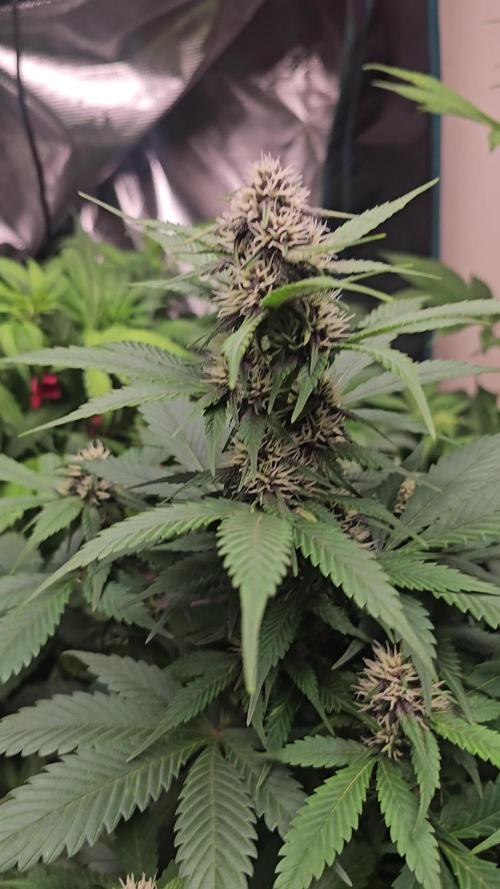
It’s the eighth week of flowering, and the plant is looking absolutely gorgeous! The buds and leaves have turned a deep purple with rich autumn hues, giving the plant such a unique, almost magical appearance. The sweet smell has become even stronger and fills the whole grow space with a powerful, sugary aroma. 🍬🌿 I’ve noticed the trichomes starting to turn an amber color—just the sign I’ve been waiting for! Most of them are still milky, but the amber hints show we’re getting close. This week, I’ve started the flushing process to clear out any remaining nutrients and prepare for harvest. 💧 Everything’s on track, and I couldn’t be more excited for the final steps! 😁✨
Likes
5
Share
Veo que las plantas avanzan lentamente pero seguro, tengo buenas sensaciones. Hay 8 puntas por cada planta.
Likes
8
Share
@Bdizzle
Follow
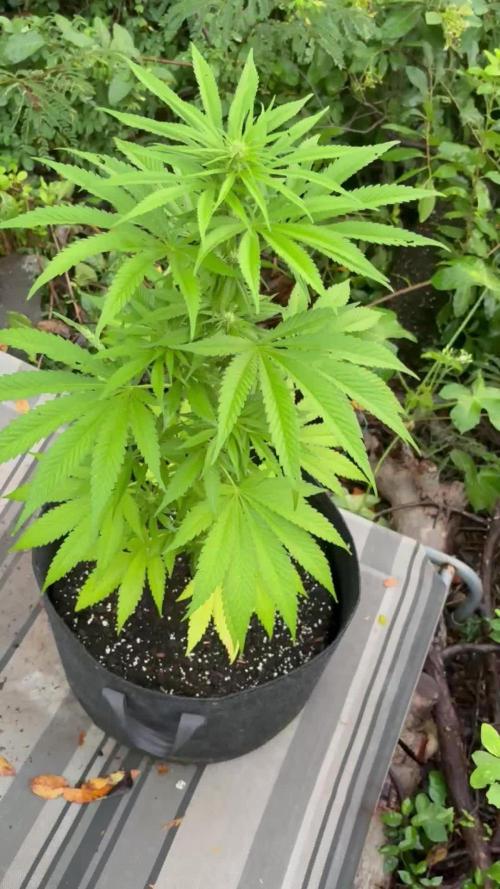
Growing strong and healthy!! Baby buds are coming in all over :) Can’t wait to watch them grow!! She has doubled in size over the past few weeks & has started to slow down to focus on flowering. Stems/stalks are growing strong & thick ready to support some good bud growth :)
Likes
12
Share
Temps have been good and RH has been steady between 60-65%. I have good airflow all around and don’t worry too much about it the higher RH at this point in the grow. Transplanted the ladies from their starter pots to their 2 gallon pots. They did not seem to have any transplant shock. A few more weeks and we will go to their 4 gallon final pots.
Likes
66
Share
It's going well, I think the plant will be topped next week.
Processing
Likes
3
Share
Likes
4
Share
@DE_BW
Follow
The plant continues to develop beautifully and is clearly hitting its stride now. Buds are visibly stacking and gaining density with every passing day. The fruit aroma is absolutely incredible, smelling intensely like fresh apricot jam and filling the room instantly. A real highlight is the stunning pink coloration, which is now spreading steadily from the top buds downward. Overall, this run is shaping up to be something very special.