


Likes
Comments
Share

@Rangaku
Follow
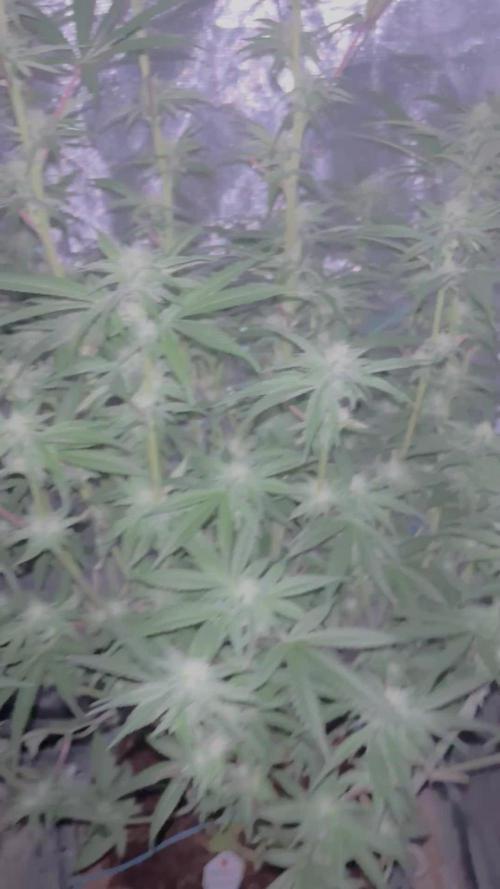
Runtz Stuntz stacking on the flower weight now , already pumping out the frost with another month to go you can tell she’s gonna be a THC machine. Dutchfem genetics are so solid she’s only asked for a bit of defol and training and it’s on auto pilot flying us to stickiness

Likes
5
Share

@PapaTerps
Follow
ZodaZa - Umami Seed Co.
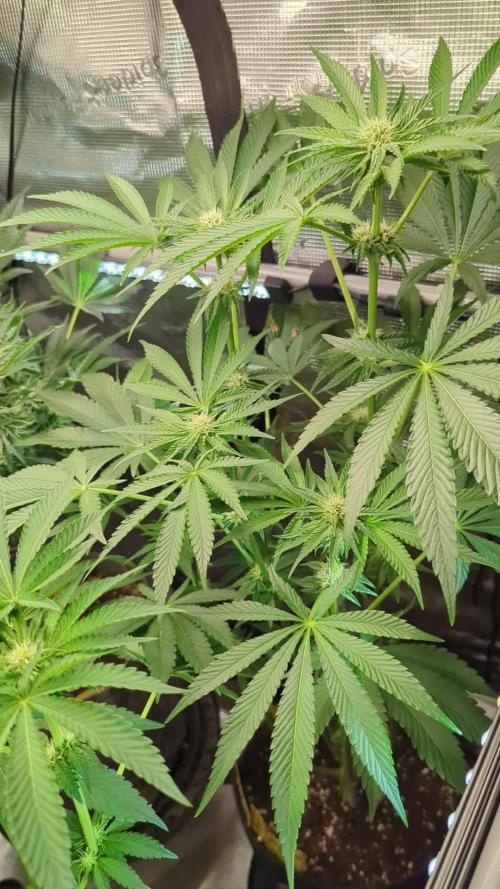
Day 66 - watered with 2L of RO tap water with nutrients mixed individually in order and then pH'd to 6.3. She's has finished her stretch phase and is now focusing on developing her bud sites! I've lollipopped her to about four nodes from the canopy, as the lower nodes would never receive enough light to develop in time, it will also give the canopy all that extra energy 🙏🏻 Her aroma is just about to come through, but it's a little too early to fully decipher it. She's had a good amount of stress now, so I'm going to leave her alone for the next couple weeks and just allow her to grow 💪🏻

Likes
27
Share


@w33dhawk
Follow
Leider bin ich unzufrieden aber nicht mit Anesia oder der Sorte sondern mit mir selber habe erst zu spät bemerkt das ich Trauer mücken im Zelt hatte 😢 diese scheiß fliege hatte das erste mal mit den Biestern zu tun ich sag euch der name passt zu den fliegen wenn sie erstmal da sind Dann Fängst du an um deine Ladys zu trauern 😂 naja wieder ne erfahrung reicher nur gelb sticker haben nicht geholfen werde die Sorte sicher noch einmal growen da ich gerne den Durchgang mit gesunden Pflanzen als Bericht erstellen möchte

Likes
17
Share


@Drtomb
Follow
Week 1 complete and on to week 2. Some sort of issue has occurred. There is a some dark green on the vains of the leaves. Not sure what it could be. Otherwise everything is going well.

Likes
109
Share


@Prototype0181
Follow
The Ethos cookies Rbx are going as expected of them:)
The Barney's farm Runtz muffin is gone, gave this little fella to a friend. Hope he has more luck with Barney's then me:(
The Humboldt seeds Gorilla Breath is almost the size of the cookies. Even though she sprouted 3 days later.
And last but not least, the Aficionado French Connection Rosso Corsa. She sprouted 5 Days later then the Cookies but she's catching up. i'm really curious about this strain:) i'll keep you guy's updated

Likes
7
Share


@Rompilator
Follow
So sad I'll never see this plant again but if i get a baby clone to live this won't be the end
Likes
48
Share


@AsNoriu
Follow
Day 29. Garden is just perfect. Will update more after first feed, monday - most likely !!!
Day 30. Its Jungle officially !!! ;)))
Size of some leaves impress and gives big hopes for me a lot ! Girls are super strong and healthy, thinking to do defoliation session at the end of the week.
First feed done ! Next watering they will get silica acid.
Day 31. Plan change in feed, they got Great White Mycorrhizar tea, next watering will be without aditives and then Silica acid. Girls are very healthy, so healthy that powdery mildew not far away ;))))) had to take down loads of leaves to improve air circulation. Heavy defoliation for most big girls, all bottoms cleaned from weak branches, HST to all toped plants too...
But size of leaves!!@!! All girls are very strong plants, really nice genetics from Zamnesia !
Happy Growing !

Likes
13
Share


@HeavyHead
Follow
3 healthy young ones :) off to a good start. Fitting right in with my orange sherbet lot ;p no nutrients or anything yet just fresh PH’d tap water lol

Processing
Likes
26
Share


@GrowGuy97
Follow
Starting to see a lot of white hairs think they are getting ready for flower, extremely excited to see how these ladies do! Thanks for checking in & happy growing friends!✌️🏼🌱
Day 23 - Everything seems to be going ok can’t see any issues other than the one plant with spots on the leaves but that is from spilling nutrient water on them!
Day 24 - started LST on 1 Orange Sherbet & 1 White Widow to compare the differences at harvest!
Day 25 - they are looking great! Can’t wait to see how the buds look😍✌️🏼
Day 26 - stretching out a lot!
Day 27 - Last day of week 4 everything is going great!✌️🏼🌱


Likes
16
Share


@JBONE218
Follow
These clones turned out to be beautiful and easy to please little ladies. They did possibly go a few days longer than other growers may have allowed, but in my opinion Id rather a little longer than prematurely cut. I cannot wait for them to be ready to enjoy after some drying and curing. Thanks for letting me share and also gather info about growing some fine flower on this site PEACE and good luck to all growers

Likes
12
Share


@NONSENSE
Follow
Good day, friends!
My Nevilles Skunk is growing nice and easy.
I am using Hesi nutrients for the grow and I see the plant loves it. Nice PPM level.
Like always I water plant EVERY DAY when growing in COCO.
The PH 6.3-6.5 always.
2 week more for VEG will be enough to slowly start the Flowering.

Likes
16
Share


@DaddyPrime2
Follow
6/24 this may be the last week. The screen recordings are of both plants (purple octane and rs11) they're both close. I also went back and did some math and the last week of veg, should've been first week of flower. I may let her go for 10 weeks. We will see how she looks throughout this week(trichs)
6/25 looking super close. All cloudy besides maybe 10%
6/29 will get in there with a microscope again. just waiting on her to ripen. can't tell if she's done, or at rhat point where she looks so good that she's done but then that last week the plant explodes. well see and yall will definitely hear about it.


Likes
23
Share


@MaltaHerbman
Follow
3rd week i see the first signs of pre flower its time for last veg feed before change to Bloom..
I had try multiply FIM on this plant and happy with her.🇲🇹❤️
Finally had buy the Marshydro Drip Irrigation kit and will use for this 2 plants.
So far tryed it with a digital timer it looks working very good


Likes
26
Share

@DogDoctorOfficial
Follow
Week 16 From Seed | Lemon Cherry Gelato 🍋🍒 | Cure, Smoke Report & Closing Chapter
Well…
Here we are.
Final chapter.
And honestly, this one feels strange to write because somewhere along the way this stopped becoming “just another grow” and became one of those runs you genuinely remember afterward.
First of all, as always lately, apologies again for dividing the reports into several parts. But honestly, with the amount of photos, macros, trimming sessions, drying observations, resin collection, curing experiments, root inspections, smoke notes, and documentation collected during this run… there was simply no realistic way to compress everything into one single update without losing important parts of the journey.
And this final report deserves the full respect of the process.
So for everyone arriving only now and jumping directly into the final week, quick recap:
These Lemon Cherry Gelato girls were grown completely under 12/12 from seed.
No long vegetative period.
No giant training sessions.
No extreme manipulation.
Just allowing the genetics to express themselves naturally while documenting the entire process from seed to cure.
And honestly?
These girls delivered beautifully.
Compact structure.
Heavy flower stacking.
Massive density.
Ridiculous resin production.
Loud terpene expression.
Strong roots.
Strong stems.
And some genuinely beautiful medicine in the end.
Across the previous reports we covered:
- growth structure,
- flowering behavior,
- fading,
- harvest,
- drying,
- trimming,
- finger hash,
- temple balls,
- curing setup,
- and storage methods.
This final report becomes the real conclusion:
The cure.
The smoke.
The chemistry.
The experience.
And the final transformation from plant into finished medicine.
And honestly…
This is where cannabis truly becomes complete.
Because harvest is not the finish line.
Drying and curing are not “extra steps.”
They ARE part of cultivation.
And I genuinely think many growers underestimate how much chemistry is still actively happening after harvest.
Fresh flowers are biologically active material.
They are still full of:
- moisture,
- chlorophyll,
- sugars,
- starches,
- enzymes,
- unstable volatile compounds,
- and rapidly changing terpene structures.
Drying removes free moisture slowly enough to preserve structure and prevent mold.
But curing?
Curing is where the flower actually matures.
Where harshness softens.
Where chlorophyll breaks down.
Where terpene profiles settle.
Where moisture equalizes internally.
Where aromas stop smelling “green” and start smelling like the cultivar itself.
Fresh flower smells like plant.
Cured flower smells like genetics.
And honestly…
these girls cured BEAUTIFULLY.
The smoke became incredibly smooth.
Soft on inhale.
Soft on exhale.
Almost creamy sometimes.
No harshness.
No aggressive throat hit.
No weird grassy notes.
Just properly finished medicine.
The terpene profile evolved into something honestly difficult to describe perfectly because it keeps shifting depending on the jar, humidity, breakdown, and even time of day.
But if I had to describe the core experience:
Sweet tropical woods.
Fruits.
Warm resin.
Soft creamy backend.
And this very specific pine-nut-like aroma.
Not pine tree.
Pine seeds.
That soft oily nutty aroma you get when opening pine nuts mixed with tropical sweetness and woody resin.
And honestly?
If someone added pineapple to this profile, I would probably believe I was sitting somewhere in Hawaii or the Bahamas 😄
The aroma genuinely feels warm-weather tropical.
Bright.
Happy.
Comfortable.
And the effects follow that same direction perfectly.
This is NOT sleepy medicine.
Not couch-lock.
Not knockout smoke.
This is uplifting medicine.
Euphoric.
Social.
Creative.
Functional.
Happy.
The kind of flower that makes conversations easier.
Music sound better.
Nature feel more alive.
Walks become longer.
And random laughing suddenly happens for no reason 😄
Beautiful daytime or social medicine.
Perfect for:
- beach walks,
- dinners with friends,
- creative sessions,
- gaming,
- movies,
- long conversations,
- music,
- and honestly just enjoying life a little slower.
But definitely not the best choice if your goal is immediate sleep 😄
This one keeps the brain alive.
Now let’s talk curing and storage properly because this became a huge part of the experiment too.
We cured using both:
- traditional glass jars,
- and Grove Bags.
And honestly, both systems worked beautifully when used correctly.
Glass jars remain timeless for a reason:
- reliable,
- reusable,
- visually satisfying,
- easy for long-term inspection,
- and perfect for manual burping routines.
Meanwhile Grove Bags genuinely simplify moisture management dramatically by helping stabilize internal humidity exchange automatically when flowers are dried properly beforehand.
And this is important:
No storage system fixes bad drying.
Curing starts during dry.
That’s why environment matters so much:
- stable temperature,
- gentle airflow,
- humidity control,
- patience,
- and avoiding overdrying early.
Because once flowers overdry aggressively, you cannot truly reverse that damage completely.
And yes…
we went deep into the chemistry too 😄
Because the transformation happening during cure is honestly fascinating:
- chlorophyll degrading,
- harsh compounds softening,
- volatile terpenes stabilizing,
- cannabinoids slowly evolving,
- oxidation pathways beginning,
- moisture redistributing through the flower itself.
Even THC slowly evolves over time depending on oxygen, heat, UV exposure, and storage conditions.
Everything is chemistry.
Everything keeps moving.
And good curing is essentially controlled aging.
Not old weed.
Finished weed.
That difference matters.
The roots deserve a huge mention too because once the root balls finally came out after harvest, the entire watering behavior suddenly made complete sense.
Beautiful root development.
Healthy structure.
Excellent substrate colonization.
And honestly?
You can usually understand the story of the plant better after harvest than during growth itself sometimes.
The roots explain everything:
- feeding behavior,
- drinking behavior,
- vigor,
- recovery,
- structure,
- and overall plant energy.
Massive respect to these girls.
We also fully cleaned and reset the room afterward because post-harvest cleaning matters enormously too:
- fans disassembled,
- dust removed,
- oils checked,
- equipment cleaned,
- surfaces sanitized,
- UVC treatment,
- airflow reset,
- and the environment prepared for the next chapter.
A clean room is part of prevention.
And prevention is always easier than solving problems later.
The finger hash and temple balls turned out beautiful too.
Soft.
Greasy.
Easy to work.
Extremely aromatic.
The kind of resin that almost melts itself with body heat alone.
And honestly, the photos documenting the curing stages of the resin are some of my favorite images from this entire series because you can literally SEE the transformation happening:
- oxidation,
- terpene movement,
- grease development,
- crystal structure changes,
- texture evolution,
- and the beginning of long-term curing.
Living chemistry.
And that’s probably the best way to describe this entire run honestly:
Living chemistry.
From seed…
to roots…
to flowers…
to resin…
to cure…
to smoke.
Everything connected.
Final dry numbers also made me extremely happy:
Plant 1:
304.5 grams dry trimmed flower.
Plant 2:
163.5 grams dry trimmed flower.
Final total:
468 grams dry manicured cured flower.
And for a 12/12-from-seed run?
Absolutely fantastic.
Especially considering the compact size these plants actually occupied physically.
Small footprint.
Big output.
Beautiful quality.
Exactly the kind of run that teaches you not to underestimate genetics.
And finally…
Thank you.
To Zamnesia for the genetics.
To Plagron.
To the LEDs.
The gear.
The jars.
The environment.
The tools.
The platform.
The community.
To the old followers.
The new people arriving now.
The silent supporters.
The lurkers.
The growers learning quietly in the background.
The skeptics.
The lovers.
Even the haters 😄
If somebody spent even a few moments following this journey, then they became part of it too.
And of course…
Thank you Mr. Baggy 💙😄
Still surviving somehow after another full season.
This chapter closes here.
But honestly…
the cure keeps evolving.
The hash keeps aging.
The jars keep changing.
And the medicine will probably keep surprising us for months.
So maybe…
this is not really the end after all 🌱
📡 DELETED @ 1K Please stay tuned.we never quit https://www.youtube.com/@TheDogDoctorOfficial NEW 🙏 Thank you for your patience and continued support.
FOR DISCOUNT CODES AND MORE JUST FOLLOW THE LINK https://website.beacons.ai/dogdoctorofficial
📲 Don’t forget to Subscribe and follow me on Instagram and YouTube @DogDoctorOfficial for exclusive content, real-time updates, and behind-the-scenes magic. We’ve got so much more coming, including transplanting and all the amazing techniques that go along with it. You won’t want to miss it.
GrowDiaries Journal: https://growdiaries.com/grower/dogdoctorofficial
Instagram: https://www.instagram.com/dogdoctorofficial/
YouTube: https://www.youtube.com/@dogdoctorofficial Deleted by Youtube - https://www.youtube.com/@TheDogDoctorOfficial NEW
Vimeo : https://vimeo.com/dogdoctorofficial Under construction stay tuned ⸻
Explore the Gear that Powers My Grow
If you’re curious about the tech I’m using, check out these links:
🔆 Lighting & Environmental Control
• Future of Grow — Advanced LED lighting technology
https://www.futureofgrow.com/
DISCOUNT CODE: DOG20
• Lumiflora — Under-canopy LED lighting
https://lumiflorade.com/
• TrollMaster — Environmental controllers and automation gear (past collaboration)
⸻
Genetics
• Zamnesia Seeds — Genetics used in this project
https://www.zamnesia.com/
⸻
🌱 Soil, Substrates, Boosters & Root Support
• Plagron — Substrates, bio mixes, and supportive products
https://plagron.com/en/
⸻
🎒 Storage, Curing & Preservation
• Grove Bags — Curing and storage solutions
https://grovebags.com/
⸻
📸 Photography Equipment & Tools
(Not sponsors, but part of my creative toolkit)
• Sony A6700
• Sony full-frame macro lens + few more
• Stacking photography workflow - learning
• iPhone (for behind-the-scenes shots)
We’ve got much more coming as we move through the grow cycles. Trust me, you won’t want to miss the next steps, let’s push the boundaries of indoor horticulture together!
As always, this is shared for educational purposes, aiming to spread understanding and appreciation for this plant. Let’s celebrate it responsibly and continue to learn and grow together.
With true love comes happiness. Always believe in yourself, and always do things expecting nothing and with an open heart. Be a giver, and the universe will give back in ways you could never imagine.
💚 Growers love to all 💚
📸 P.S. – The Eye Behind the Lens
All photos in this diary (for now — except for the ones showing the camera, which I took with an iPhone) are taken with a Sony A6700 paired with a Sony full-frame macro lens and a few more.
Photography is part of the story — it’s how we share the fine textures, the glow, and the quiet details that words can’t always capture.
I’ve also started experimenting with photo stacking — a technique where multiple images, each taken at a slightly different focus point, are layered together to create one perfectly sharp image from front to back.
It’s not digital enhancement or AI; it’s pure photography — a way to reveal the plant’s beauty in microscopic depth, from trichome to petal.
You’ll even see a few shots of "ghost me" capturing the shots — camera, lens, setup — because every grow deserves not just to be cultivated, but documented like art.
FOR DISCOUNT CODES AND MORE JUST FOLLOW THE LINK https://website.beacons.ai/dogdoctorofficial
NEW DISCORD - Official Server Invite Link : https://discord.gg/ksjAkA5T74


Likes
88
Share


@NAS_Garden
Follow
🌸🌿 Week 3: Blooms Unleashed! 😁
The stretch has gracefully come to an end, and now, the buds are making their grand entrance! 😁 Standing tall, our Lemon Orange proves to be a formidable presence, prompting the need for some strategic topping and ScrOG to keep its height in check.
Growth Management:
Given its impressive stature, a little intervention with topping and ScrOG is in order to ensure the plant stays within bounds. It's all about orchestrating the dance of growth.
Aromas in Bloom:
As the buds unfurl, so do the enchanting aromas. A symphony of citrus notes fills the air, signaling the flourishing flower stage. The pace is exhilarating, promising a delightful harvest in the making.
Nutrient Nurturing:
In the spirit of balance, I've opted for a mindful approach, utilizing only 80% of the recommended nutrients by Terra Aquatica. It's a careful dance to provide just what our Lemon Oranges needs for optimal growth and flavor development.
The stage is set, and our Lemon Orange beauties are gearing up for a floral spectacle. With each passing week, the anticipation for the harvest grows, and the journey unfolds in a crescendo of green and citrusy bliss! 🌼🍊🌿




Likes
7
Share

@Caertner
Follow
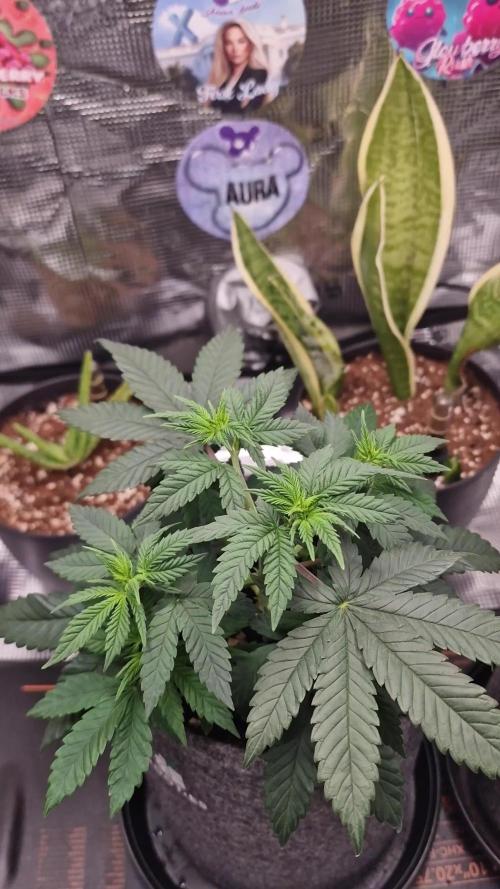
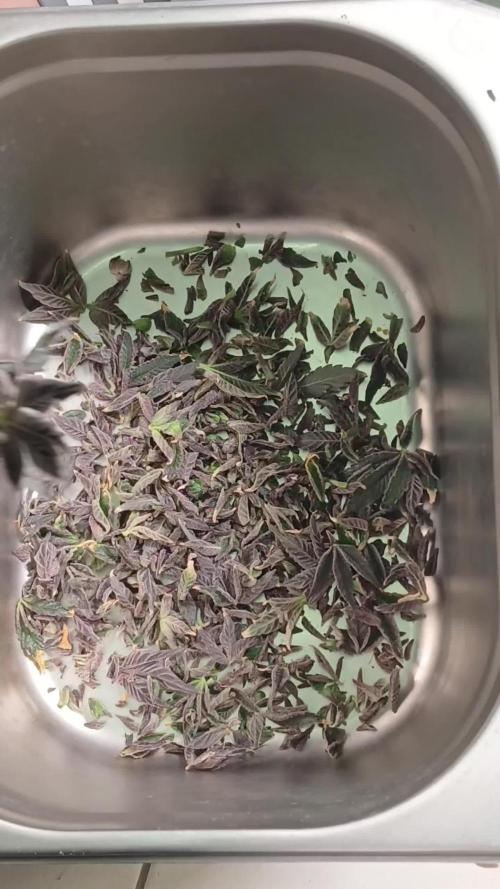
Warten war mir jetzt zu blöd.
Hab eh schon 6 Tage mehr als beim letzten Stecki. Irgendwie werden die dieses Jahr im Sommr alle etwas später fertig. 2 Kollegen berichten ähnliches.
