


Likes
Comments
Share


@Blazeman
Follow
Auto looks done.
Pakistan Valleys look almost done.
Candy may need another couple weeks.
What do u think i should do guys? Should i wait and harvest all together? Or harvest the auto now, then the kush and lastly the Candy? What's the best way.
Also i had been planning to dry them all in my tent. If I do a staggered harvest, i have to build a box or empty out a closet to try and dry them in 😫


Likes
15
Share


@BruWeed
Follow
Desde el momento uno fue fácil de cultivar, no tuve ningún problema en todo su desarrolló.
Como planta supero todas mis expectativas, se encuentran densos y muy pegajosos los cocos. En algunos hay partes de color violeta/lila.
Y por ultimo recomiendo mucho cultivar esta genética por lo sencillo que fue cultivarla y sus resultados finales, todo de diez.

Likes
6
Share


@Beanz2Budz
Follow
From what I've learnt since, by defoliating and not ensuring sufficient reserves in the Substrate after taking their reserves from the bigger fan leaves at strip, this left 1 pheno more hungry than the others, but still all 4 suffered to some degree which was really disappointing. I was too busy enjoying the festive period with family so its a good enough excuse! ;)

Likes
73
Share


@LazLow
Follow
Halfway through week 3. Both the girls have been transplanted to their final 5 gallon smart pot home. Soil medium is no longer a Light Warrior/Ocean Forest blend; it’s just Ocean Forest now. I don’t think that soil will be too hot at this point. Both plants are on their 4th node, I want to top at the 6th node so hopefully next week. Plant 2 has far more internode spacing even though both plants the same distance from the light. Plant 1 is developing 4 leaves so the fan isn’t symmetrical. Otherwise healthy. Leaves were droopier than usual today which might be transplant shock or I might have overwatered their new homes. Will add more to this week at the end. Love feedback!

Likes
57
Share


@SmokieMcPot
Follow
***UPDATE***
ITS CHOPPIN DAY!! Late in day 87 I was going for macros. Made the decision while seeing MANY yellow trichomes that Wedding Glue from FastBuds is DONE! Attaching pics to the beginning of the weeks uploads. She sure turned out pretty asf didn't she? Lights out occurs in like 30min, and I'm going to work through the dark period stripping the large fans off. Utilizing my green Christmas lights hung up above lol. May turn light on low for a quick pic before chopping/hanging. Next update will be harvest!
2 Girls 1 Cup week 12? Hopefully the finish is this week... My my my how WG has fattened up the last 2 weeks. Trying to get some good macros since it's too hard to hold the scope to my phone and focus everything. Probably better for the existing trics too since they're not being touched.
Day 84- these trics are taking their sweet time to ripen. Was considering picking up some GHE Ripen to speed the process up.. especially because a local shop is closing and everything is 40% off. Let's keep it simple this run. I'll get some additives for the next grow to enhance GHE's perfected formulas of macro/micros in the Flora series. An update on the "sample" I clipped from WG the other day. It's not dried/cured proper. Actually been sitting in a brown bag with the outlet of the tent blowing on it lol. Can taste some vanilla in it through the chlorophyll and shit still in the flowers. VERY heady effect that hits me like a friggin wave. Creativity and energy uplifted for sure. Looking for the bodies in there too to help with pain, so we shall wait even longer for those ambers to show.
====================================================
==========================
==========================
Day 85- stepped up our hole a size or two.. lol. May bring home the step bit to drill again before a dark period at the end. The girls STINK! Getting VERY close to chopping day. Ooooh I can't wait (but I gotta). Headies lasting between 2-3hrs which is great.
====================================================
==========================
==========================
Day 86- yellowing more as the days pass. no more ambers showing yet.. wasn't able to score anything good from the local shop today since it was almost empty already. Picked up a grove bag to give it a whirl with curing. May put some in glass to compare side by side with the bags. Figured I'd give their roots an ice bath since I've done other bro science. Shit, GK still hasn't popped a nanner after all I've put her through 🤣.
*edit* added some late day WG only pics to show her fall colors coming in. Moving in fast now. Gotta get back up in WG's guts now and scope the progress daily.
====================================================
==========================
==========================
Day 87- the smell in the tent has become so powerful, I next day air'd a new charcoal filter 🤣. This one was reaching the end of its lifespan anyway.. but oh boy has the aroma increased. May be starting the 48hr lights out within the next day or two from the smells of it.
====================================================
==========================
==========================
As always, thanks for stopping by and checking out my current grow. If it's your first time, check previous weeks for these girls progress throughout their lives. days 27-70 timelapse @ https://youtu.be/8JdUkR36Wfc

Likes
109
Share


@ButtersStotch
Follow
So, Nitrogen deficiency SEEMS to have slowed down or stopped (hopefully). I've upped the FloraMicro as well as the frequency of feedings, from once a week to 2-3 times. Next year I will plant in soil as I'm going to fly through nutes, and the Midget that's planted in my flower bed has received nothing but water and has shown ZERO deficiencies.
The girls have now also began to show a Calcium deficiency as can be seen in the pics on new growth, as a result I've upped the amount of CaliMagic as well. Weird as I see many people feeding 1/2 the dose as recommended by GHE while i'm feeding the recommended and then some. I'm guessing it may be because the girls are big, not sure. Oh well I ordered a gallon of each of the nutes and a gallon of KoolBloom from WEGROWBUDS.ca Highly Recommended.
As soon as my prize comes in from @HumboltSeeds I will be planting 4 girls indoors!
And FYI I may break this diary up into the Blue Cookies and White Widow individually, we'll see.

Processing
Likes
15
Share


@AK1210
Follow
The tricombe production on this strain is ridiculous! It looks amazing under my microscope. The heads are mostly milky coloured so this may be finishing sooner than expected.
The space in the tent is getting a bit tight so I'll be glad to have more room when this lady has done her thing.
Likes
17
Share


@Naujas
Follow
She is much prettier than she was a week ago :) I remembered that I have my first grow light, which is more compact and it will give me more space, so I changed my light, now the girl's side branches get light too:) I add a lot of video memes, because I really want to win Iphone16 pro ;) and those who don't take risks don't drink champagne:) good luck to everyone.
Likes
3
Share


@High_Grade_Dadli
Follow
Quick update I know I been MIA..diary label xmas tree got deleted after losing the mother tree(die back)and about 80 cutting(weather)
1 of the cutting which I took before from the mother that died is the mother to set 1 and 2 (29)...took some cutting off of set 1 (30) jus waiting to see how rooting goes...mother tree jus hit the 2nd week of flowering will update with pic in week 2

Likes
11
Share


@DeepRootsGrowTrees
Follow
FORBIDDEN 🚫 RUNTZ by FASTBUDS
Week #15 Overall
Week #14 Veg
This week she's still in veg switched the light to 12 hopefully she'll start to flower.
FASTBUDS FORBIDDEN 🚫 RUNTZ
Likes
11
Share


@MrGoonai
Follow
10/17/24 Short facts:
- Continued with LST
- Watered: 1 x 1.2L, 1 x 0.3L
- VPD @ 0.9 — raised by 0.1
- Light @ 50% ~580 - 620 PPFD
- Removed 5 leaves
---------------------------------------------------------------------------------
As promised last week, i made a video and explained the progress so far, and did show you the plant.
Not much to report. I continued LST, though I’ve stopped for a few days now since the branches are well spread out, and that should be enough for the time being.
The AvT was in Preflower since last week and switched to flower on day 28.
Really good plant. No problems at all.

Likes
44
Share


@BudsBanditUK
Follow
The buds are really starting to get fat. The pictures do not do it justice.They are also now very smelly in a nice way! As mentioned last week the buds have the most amazing structure. Very happy with these. No issues this week and still only had 3 feeds.

Likes
3
Share

@JeyGanesha
Follow
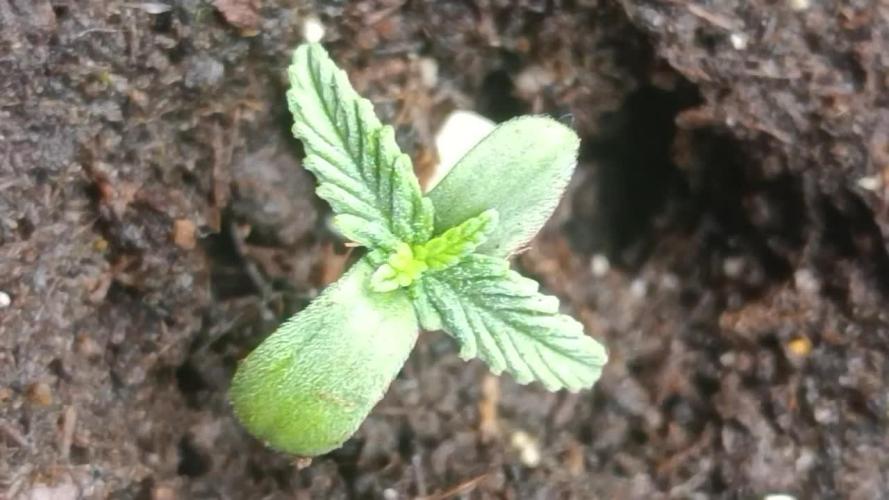
È sbucata ...inizio del suo ciclo..
Domani inizierò la conta dei giorni e settimane....forza bella mia
.......sebra che si e bloccata.......
Sta iniziando a crescere ma molto lentamente..deve essersi stressata dall'inizio
Likes
12
Share


@Ganjagrandaddy
Follow
Update day 14 flowering: The Gelato jas been no problem so far in flowering. She is building some nice sized colas along her lanky stems. I dont think she is going to stack up lime the others will but should give some decent sized nugs at the end i hope. Node spacing is a it long but copable. I will have to keep her in a good position to fill out the lowers for final yield i think. Lets see what rhe 32°c hearwaves does with her !!

Likes
20
Share

@valiotoro
Follow
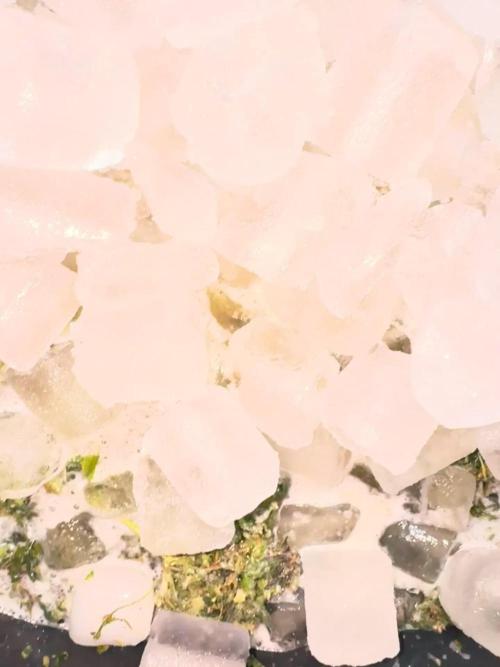
If you’ve got a bit of time and some ice, it’s really a fun thing to do. It’s also a great way to make use of every part of the plant
Processing
Likes
32
Share


@Hawkbo
Follow
I still have to go thru all the photos but wanted to get the video up for all of them first. If your interested in the pics come back at the end of today and they will be up it just takes a while. Noticing more seeds poppin thru, I hope it's from the moonshine cookies pollen cuz the female turned out bomb and the male wasnt too bad either so they might be decent seeds. Started the flush on the citradellic and the other ones might have got their last feed yesterday. Should be finishing up next week and the week after.
These are interesting growing plants. I took cuts but the one I like disappeared somehow or got its name tag mixed up I'm not sure but I'm kinda pissed about it. I honestly cant describe the smell it just smells like dank bud. The pistils are so dark but the lowers look like the could fill in a little more so I gave it one more feed yesterday and I think I'll start the flush on all of them when they dry out.
Likes
45
Share

@Ultraviolet
Follow
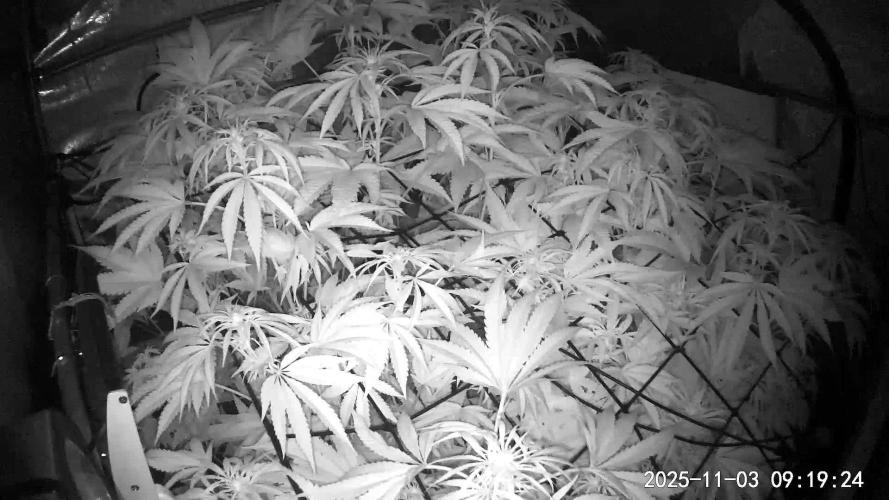
New week. 55-65 DLi. Been smoking some Pakistani Landrace this week, must say, its exceptional.
The plant shifts its energy entirely from vegetative growth to flower production. Small blemishes are creeping in, but expected, holding up remarkably well given the circumstances.
A high CEC acts as a nutrient "storehouse", preventing essential cations from being washed away by water (leaching) and making them available for gradual plant uptake. Soils with high CEC can store larger quantities of nutrients, allowing for less frequent, potentially larger, fertilizer applications compared to low-CEC (sandy) soils which require smaller, more frequent doses. By providing a steady and dependable supply of nutrients, high-CEC soils support healthier plant growth and potentially higher crop yields. High CEC is typically associated with soils rich in clay and organic matter, which also generally have a greater water-holding capacity, benefiting crops during dry periods.
While high-buffer soils require larger amounts of amendments (like lime) to change their pH initially, they need to be limed or amended less frequently, simplifying long-term management. High CEC and buffering capacity work together to create a stable, nutrient-rich, and resilient soil environment that is highly conducive to healthy plant growth.
Likes
125
Share


@Regenwurm
Follow
Die vierte Blütewoche ist erfolgreich ohne Mängel abgeschlossen.
Tage der Wachstumsphase = 32 Tage.
Tage der Blütephase = 28 Tage
Wachstum h in Blütewoche 4 = 11 cm
Die Blattfarbe zeigt das genug Nährstoffe verabreicht werden/ worden sind. Lichtstärke wird jetzt immer Schrittweise mehr erhöht.
2 mal in dieser Woche mit Purolyt Mischung 1:25 besprüht
Probleme mit der Höhe der Pflanze, daher nächste Woche Austausch Aktivkohlefilter mit ec Lüfter da ich den korrekten lichtabstand nicht mehr gewährleisten kann.
Lichtstärke: 80 %
Lichtabstand: 30 cm
Std Tag/Nacht: 12/12
Temperatur Tag: 23-24,0 Grad
RLF Tag: 50%
Temperatur Nacht: 20-21 grad
RLF Nacht: 50 %
VPD Wert: ca. 0,9-1,1
PH Wert Wasser/Düngelösung: 6,4
EC Wert: nicht gemessen
Ventilator Oszillation: Stufe 1
Befeuchter: aus
Entfeuchter: mit Steuerung an
Zusätzlicher Entfeuchter: 1 Stk außerhalb vom Zelt im Raum
Bewässerung: 1* Regenwasser/ 3 * mit o.g. Nährstoffmengen
Purolyt Besprühung: 2 mal
Controlling: Grow Control
Dünger: Greenbuzz Nutrients
Licht: Pro Emit Vollspektrum
Abluft: EC Carbon Active 750 m3 gesteuert
https://greenbuzznutrients.com/de/
Danke an meinen Sponsor Greenbuzz
Ihr bekommt 25 % Rabatt bei der Nutzung des Codes auf der GB Homepage
https://greenbuzzliquids.com/de/shop/
Code: GD42025
Likes
Comments
Share


Likes
87
Share


@squalino
Follow
voilà les vacances sont malheureusement fini.
toutes les bonnes choses ont une fin 😥😥
voici les dernières vidéo
dimanche ont sera à la maison
je vais pouvoir retrouver ma plante et observer comment elle aura évolué pendant le mois d'absence. ❤️❤️
PS: n'oubliez surtout pas de suivre nos aventures avec THC-HUNTER VS SQUALINO SUR LES GRAINES AUTO SEED
DÉBUT EN SEPTEMBRE
ON VOUS ATTENDS NOMBREUX.
DE NOMBREUX CADEAUX À VENIR POUR L'OUVERTURE DE NOTRE FUTURE CHAÎNE YOU TUBE ET NOTRE CHAÎNE INSTAGRAME
PLUS D'INFORMATIONS TRÈS BIENTÔT
ALORS SUIVEZ NOUS ❤️❤️😍😍