


Likes
Comments
Share


@MadeInGermany
Follow
Hi everyone :-) .
This week the Orange Sherbert, Blue Gelato # 41 and Sour Diesel were harvested 😍.
The Her Majesty F1 was in the darkroom and stays there for 48 hours before it is harvested.
The gelato will be placed in the darkroom in the next few days.
As soon as the gelato has been dried for about 14 days, and comes into the glass for fermentation, I will put all the harvest pictures of all plants in it 👍😎.
Happy new week to everyone neue Let it grow 👍🌱


Likes
51
Share


@MadeInGermany
Follow
Harvest day 70
since the time
change to 12/12 hrs.
Hey guys :-)
Finally the time has come .
The lady was harvested.
After the trichomes have been checked (70% milky 30% amber) as always, it was left in complete darkness for 48 hours before it was neatly trimmed by hand.
After trimming, she was put back in the drying tent on nets.
There they are allowed to dry for the next 8-12 days at 62% humidity before they are put into the jar to ferment with 62% boveda packs.
After about 4-6 weeks in the jar I will swap the 62% boveda pack for a 58% boveda pack where it can be ready for another 4-6 weeks to enjoy :-).
As always, the remains of the leaves are used to make Ice o Lator and oil.
Of course, as always, there is a final update during the fermentation process.
Until then, I wish you all a lot of fun with this update.
Stay healthy 🙏🏻 and let it grow 👍.
👇🏼👇🏼👇🏼👇🏼👇🏼👇🏼👇🏼👇🏼👇🏼👇🏼👇🏼👇🏼
A thank you for this wonderful strain goes out to
Herzog
https://instagram.com/herzog030?utm_medium=copy_link
and the Exotic Seeds team
You can buy this Nutrients at :
https://greenbuzzliquids.com/en/shop/
With the discount code: Made_in_Germany you get a discount of 15% on all products from an order value of 100 euros.
You can buy this Strain at :
https://www.exoticseed.eu/
Water: Osmosis water mixed with normal water (24 hours stale that the chlorine evaporates) to 0.2 EC. Add Cal / Mag to 0.4 Ec Ph with Organic Ph - to 5.8 - 6.4
👆🏼👆🏼👆🏼👆🏼👆🏼👆🏼👆🏼👆🏼👆🏼👆🏼👆🏼👆🏼



Likes
11
Share


@4_Pro2Bono_0
Follow
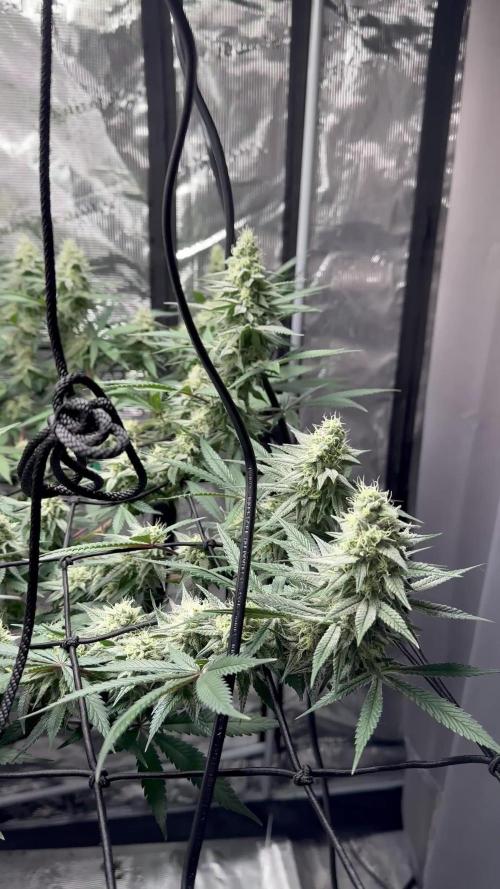
Decided to let these ladies get one more week before I flip, wish me luck 🤞

Likes
11
Share


@CityFarmer
Follow
Hello everyone,
I've had a busy week, so this is what I have for you guys
See y'all next week 🤘🤘


Processing
Likes
3
Share


@Ogbangbang2981
Follow
right now I'm just waiting on some pollen sacks and some pollen but other than that plant looks healthy as we can see and I also changed my lights and my schedule to 12/12 . Feeding big bloom and tiger bloom with a lil secret ingredient and lots of bat poo noticed a seed think we talked about that before looks like imma plant this seed if my pollen sacks don't kick in on time which time is almost up.al I'm also waiting on my crystal to start forming I see it coming In but has a few weeks to fully brighten up the night recording

Likes
31
Share


@KitaKush
Follow
78 grams roughly 2.8 oz! Pretty happy with that as I’m looking for quality and potency and no longer quantity and quickness.
She has a good amount of frost and super pungent stank radiating off her.
Unfortunately for me I had issues with drying and at one point a few hours of 70% humidity which led to a few areas of mold…I threw away those buds and the rest are top notch..probably my most resinous plant harvested so far and strongest smelling. I also grew a runt which will give me less than an ounce now I know it’s just best to call quits on those stumpy odd growing plants and start fresh.
Lastly my humidity stayed at 52-56% and I should’ve harvested 1-2 days earlier so the buds are much drier/crispier than I’d like. I’m still trying to find a good drying location..one room had that low humidity and my grow room had way too high at 70..will figure it out eventually.
Also 200watt for lighting I can’t go back and change it.


Likes
25
Share


@Sators
Follow
Day 61 watering with 2.5L nutrients mix.
Day 63 watering with 2.5L nutrients mix.


Likes
12
Share

@All_our_small_plants
Follow
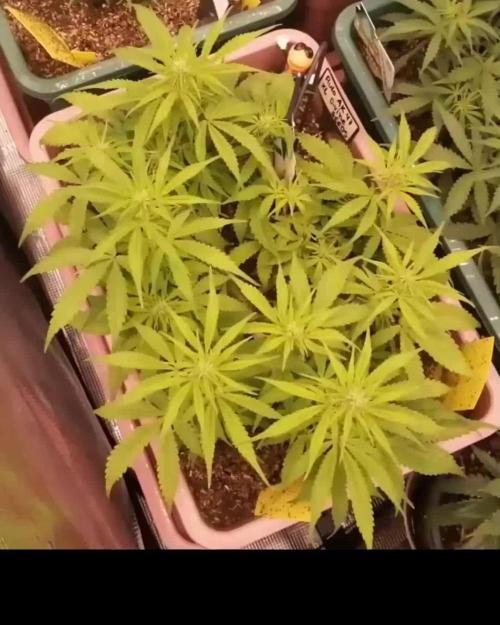
Bewässerung: 700ml
pH-Wert: 6,1
EC-Wert: 1,2
Temperatur: 22ºC
Luftfeuchtigkeit 62%
Schädlingsbekämpfung:
PPFD: 500 µmol/m²/s
DLI: 33
Düngemittel: Mineralischer Dünger 3.5-6-6
Besonderheiten: Wurden direkt in die erde gepflanzt in einer Kokos-Quelltabletten.
-Tag 43 Heute haben wir sie wieder gegossen und ihr Dünger gegeben. Sie ist sehr schön im Stretch und bildet so langsam ihre ersten Buds😎
-Tag 45 heute wurde sie wieder gegossen und hat Dünger bekommen😍
-Tag 47 Heute haben wir mit effektiven Mikroorganismen, mit Nematoden und mit Plagron Power Buds gegossen
-Tag 49 Heute haben wir sie mit etwas Dünger gegossen, sie sieht sehr gut aus, hat das Stretching abgeschlossen und beginnt jetzt mit dem Bulking 😍

Likes
4
Share


@Wescoas
Follow
Let the girls do their thing for the most part this last week. Started to stack up real nice, started to notice white pistils coming in. After 2-3 days there were more popping up and some beginning to flush to orange. Decided to LST and defol one last time, watered without any nutes. Today marks week 5 with the ladies, and I will officially say they are ending their veg cycle and transitioning into flower. Cranked the fans up tonight to circulate more air, tapering humidity down. Been pretty easy going so far

Likes
16
Share

@IberianRootcraft
Follow
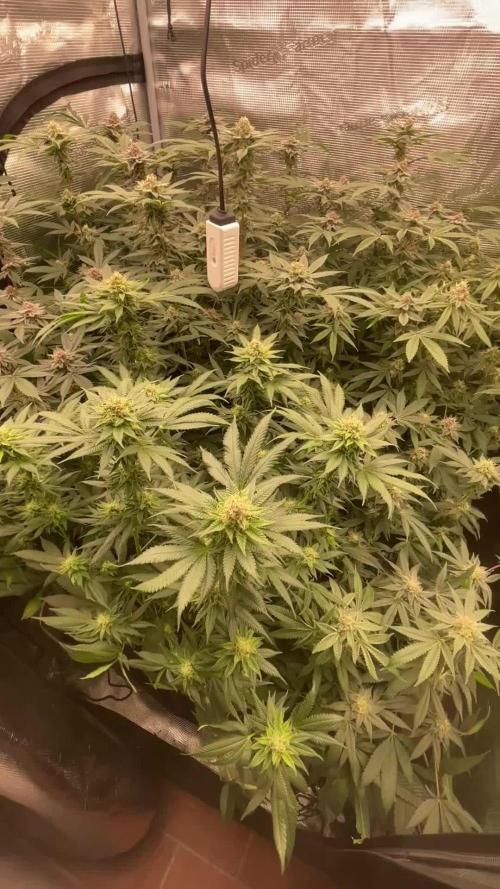
Another week passed, 4 more to taste these beautiful flowers!
The girls from HiHolyHigh are working amazing, full of trichomes, fighting the heat of this summer.
Lineup:
Superbuff cherry 26 | Strawberry Guava | Animal Tsunami
Rainbow Chip | RS11 | Colorado Nightshifter
Carbon Fiber | Studio 54 | Runtz HHH





Likes
376
Share


@Metatronix
Follow
Hello to you all.
As a true visionary I decided to go FULL HYDRO this week, that means water in buckets and outside the buckets /s
This grow turns out to be an uphill battle but i already decided to bring it to completion no matter what...Icy weather, floods, alien invasions what's coming next a big bank crash?!
I bring this grow to the end , who needs banks anyways when you got #coins
On 22.02. added nutrients to the 140 liters of solution.
That's it, I hope to see y'all next week growmies.

Likes
67
Share


@GanjaReaper
Follow
Day 21:
From day 10 to 21 I couldn't take care of the plants because of private reasons,
I asked my friend to take care of the plants and he didn't do a good job!
He should had asked me or alerted me when he saw mayor problems, not just saying a little bit of light green or yellow.
As you can see, we have alot of yellowing beneeth the plants, different sizes and even got some burnt leafs indicate that he didn't water on time.
Did some run-off checks and saw many various values😓
Ph between 6.8-7.5 and EC between 1 to 2.
The PH should had been 5.8-6 and EC at this stage 1.8+ since they need alot of nutrients because cocos soil doesn't have any.
Because of this shit, they have been underfed, burnt, stress and more. Not ideal for autoflowers.
Even the reservoir from humidifier was empty, indicating that it hasn't been filled for days!!
Also it didn't got sorted out, there are always spots that get dryer faster or stay more wet. Get more light or less.
Therefore it is wise to change spots of your plants all the time, I call it dancing.
Your plants will grow more equally.
If you look at the bigger plants, this should had been the size of all the plants sadly.
They now look like they are in end of week 2 instead of week 3 and the bad plants end of week 1 😕
I did some defolation on some plants on the lower area.
Roots start to show underneeth the pots, which is really good.
I putted the bad plants in left under corner, Lets hope I can still nurse them.
I still have 1-2 weeks to fix this before it goes into flowering, lets hope they will still grow double in size, otherwise this will be a lower rewarding grow.
Likes
35
Share

@DE_BW
Follow
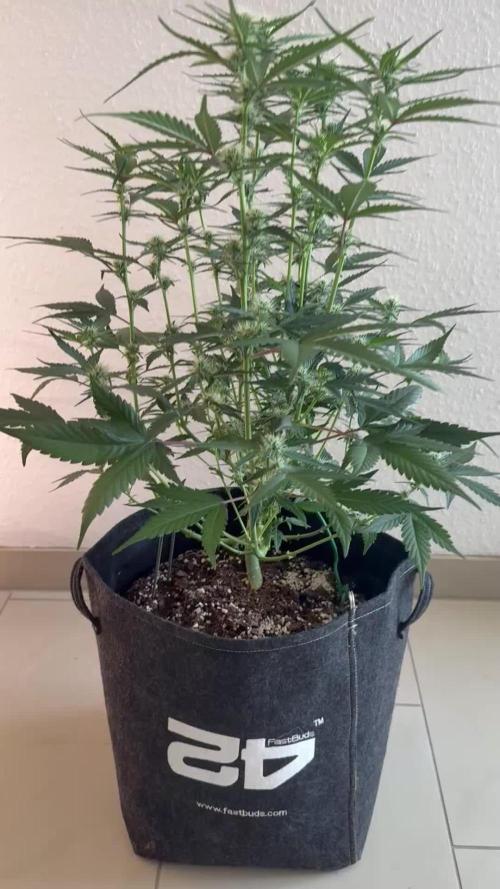
The plant is looking extremely healthy and vigorous, with explosive branching and a very open structure after some selective cleanup. Stretch is still ongoing, but she has already formed a large number of bud sites across the entire canopy.
The overall structure developed beautifully with LST only, creating many evenly exposed tops and strong light penetration throughout the plant. Bud formation is now clearly accelerating, and the plant is transitioning fully into productive flower growth.
Likes
11
Share


@Emperor
Follow
Growing like they should grow. Started with plagron alga grow. And weekly fish force.
Waiting with topping till next week.


Processing
Likes
15
Share


@DudeGrowsWeed
Follow
July 13, 2020 update.
The outdoor girls are smaller, but starting to put out much more trichome development. The indoor girls are larger and have more nodes and bud sites, but not as much trichome development, although the bud sites look super healthy. You will also notice some bug damage on the outdoor ladies. I posted a question here on GD and liked the advice I received from @Nor_Cal_Kannabliss and have ordered some Doctor Zymes Eliminator to see if that helps. I did previously spray with Safer End-All and do notice the damage getting worse since then. By the way, Doctor Zymes Eliminator is supposed to be effective against spider mites and spider mite eggs (wish I knew about this stuff a few months ago).
Still feeding at 75% strength from the Fox Farm schedule. Also, I defoliated this week to allow better light penetration.
Likes
34
Share


@TheSloth
Follow
Hy guys welcome in the 14 week 😊 i post some pictures so you can see 👍🏻 this week is really troblesome because i have 34/35 c°, in fact the girl for this stress make some foxtayling 😅 but she is in very good condition, she's really strong 😉 she make some weight, but now i only wait the maturation of buds 🤙🏻 this week i give her the last shot of enhancer, i think this is the last week or two at most 🤔 i give her 3/4 litres ad day split in 12 hours, The smell now is pungent and gassy but the background is very sweet like a banana and some bitter like lime 😉 for now it's all, see you soon in this week for news!!!
Day 92: Hello guys we have news today 🤣 today i have in Mind to contro the trichs so i noticed that she is close to final 🤔 probably this is the last week or the last days 😉 like i told to you yesterday she make some foxtayl for the heat stress but under the surface she mature well, You can see some pistols with Purple and violet color 😍 the other are most milky but we have some pistols clear, i keep an eye to her every day about the pistols we are very close to harvest 🍾👍🏻 for today it's all mate 😉 see you soon!
Day 93: Hello guys, i post another pics because you can see the weight she take in this one day 😅 when i see her I'm disappointed 🤣 the fox tayls enlarge a small too 🤔 we have another two weeks to reach the schedule 56 days of flowering, but nothing tell this isn't impossibile she's fast 🤔🤔🤔 i continue to take control to the pistils so I'm really sure, all other brunches start to curling a little 😅 if i see at the finish of this week she's matured i chop her but if not i take another 5 or 6 days 👍🏻
Day 94: some pics from the dark 😱 she continue to make mass 😅 i dimmer my light down in power to 75/80% to see if the foxtayl stop and if she mature more fast because i bend all brunches and i fear they snap 😅😅😅 i give her 3,5/4 litres of only water a day, she's beautiful i think only this 😍
Day 97: today i think we are close to the finish 🤔 major trichomes ar cloudy and milky, some other 3 or 4 days to go 😉 if i can see the trichs are ready i put her in dark 36 hours and chopping time 🤣🤣🤣 this time i have made a clean girl so for me it's heasy to trim wet i hope 🤔 because she have big buds and i don't wanna have mold 🗿 ( i need to tell you a secret, last week i accidentaly snap one little bud from the lower good for only one joint so after a week is dry and i wanna test the level of THC, obviously the taste have some Green but the banana flavor i don't have words to describe, awesome 🤣🤣🤣, in any case the high and stone are balanced but heavy like a mountain 😍 i love this!!! It's good for day and night, The best effect i noticed, is she can take away istantly my panic attack and axiety very very good for cure your hillness 👍🏻😉)