


Likes
Comments
Share

@Seabass
Follow
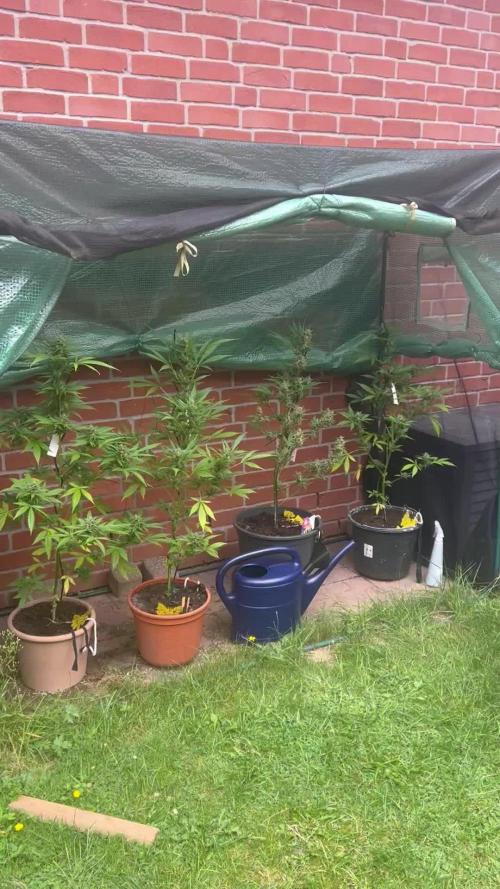
3.8. Weiterhin Schimmelprobleme.
Eine Pflanze notgeerntet und 1/3 der Blüten verloren. Schimmel auch unterhalb der Töpfe gefunden. Jetzt zum Glück wieder trockenes Wetter angesagt.

Likes
13
Share


@Growyourownathome2x2
Follow
Friday the 19th of May Day 23 of 12/12 recently started with the new nutrients mills part A and mills part B ppm 870 all in full flower now still not impressed with the front left plant but what can you do il be happy with a small yield from that one hopefully the quality is as good as my last grow 🍁😎 also need to upgrade my light been using cheap lights for awhile now and the grow is better each time so I’d like to see what I can do with a well known light from a good company


Likes
228
Share

@yan420
Follow
This two were part of another diary and got moved out due to space reasons at VW8 and moved back indoors at VW20
https://growdiaries.com/diaries/218151-auto-god-s-glue-grow-journal-by-yan402
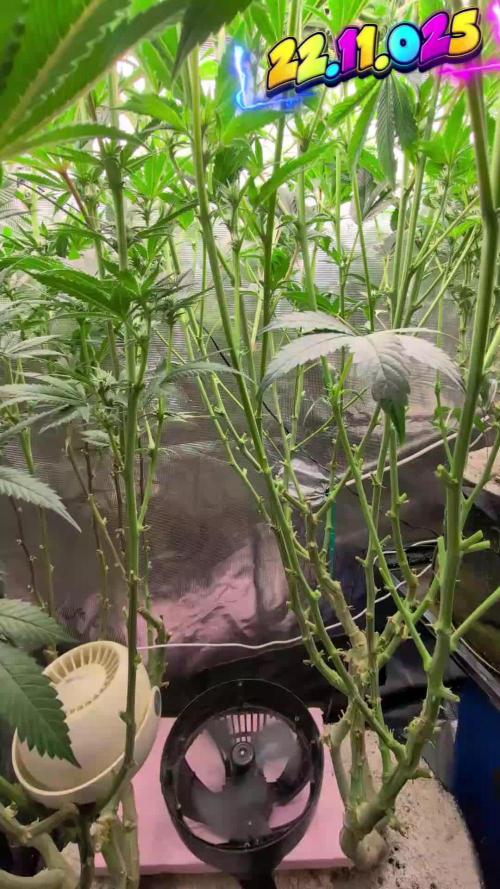
13.09.25 VW21 Both are looking good and are developing tighter nodes than when they were outside, I'm going to have to keep cutting them back every once and a while I also applied nematodes against thrips and fungus gnats.
20.09.25 VW22 some spots and some yellow leafs, I think it's a root problem, probably root bound, but both seem healthy and are getting thicker so maybe just top up with Coco coir and give a slight different nutrient schedule less Tri Part Bloom could do the trick MAYBE lol.
27.09.25 VW23 Topped up the pots with extra coco coir and trimmed the side roots a bit, both plants were root bound 📹
03.10.25 VW23 did a HST/LST session 📹
12.10.25 VW25 Done a major HST session to try and keep them in line with the Sunset Sherbet GF I have going in the same tent, rest in the video 📹
17.10.25 VW25 ffj/fpj/fish 30 → 60 ml
19.10.25 VW26 it just became a one plant diary, keeping #5, #6 gets it's own diary for testing nutrients.
20.10.25 VW26(?) Feed tweak: added 3 g Calcium Nitrate/ 30 L (≈ 15 ppm N + 10 ppm Ca)
24.10.25 VW26 did a defoliation and trimming session 📹
25.10.25 VW26 I'll be repoting tomorrow, 26.10.25 VW27 rest in the video📹
27.10.25 VW27 Epsom Salt 0 → 2.5, Calcium Nitrate 3 → 9 g
01.11.25 VW28 CalMag 60 → 30ml, TriPartBloom 20 → 30ml, Magnesium 2.5 → 3.5g
04.11.25 VW28 no more yellowing between the veins and no new spots, the changes to the schedule worked, rest in the video 📸
09.11.25 VW29 Did what I'm hoping is a last cleanup 🎥
12.11.25 VW13 Did another cleanup in the tent 🎥, also switched to the FERMAKOR PK Micro schedule, (10.11.25) added Phosphoric acid as a pH down in preparation for flowering
14.11.25 FW1 FERMAKOR PK Micros 40 → 50 ml
22.11.25 FW2 Calcium Nitrate 40 g → 35 g
🌱💦🌱💦🌱💦🌱💦🌱💦🌱
Day to day tasks & actions 🌿
🌱💦🌱💦🌱💦🌱💦🌱💦🌱
22.11.25 FW1 – Fed 5l of #1 → 2l runoff
23.11.25 FW2 – Fed 5l of #1 → 2l runoff
(*RUNOFF reused for indoor house plants)
🍶💧🍶💧🍶💧🍶💧🍶
💧 Nutrients in 30 L #1 Veg — FERMAKOR
🍶💧🍶💧🍶💧🍶💧🍶
💧 Calcium Nitrate (Calcinit / Nitcal):
45 g → 40 g → 35 g
= 1.33 g/L → 207 ppm N + 253 ppm Ca
= 1.17 g/L → 183 ppm N + 224 ppm Ca (current)
💧 PK Concentrate (FERMAKOR Base):
30 ml → 40 ml → 50 ml
= 1.00 → 1.33 → 1.66 ml/L
→ balanced 1:1 P:K + light micros (from extract)
💧 Home-made FFJ/FPJ (Fish + Veg):
30 ml
= 1.00 ml/L
Epsom Salt (MgSO₄·7H₂O):
8 g
= 0.27 g/L → 26 ppm Mg + 35 ppm S
💧 Fetrilon Combi 1 (Micros):
0.5 g
= 0.017 g/L
→ Fe 0.7 ppm • Mn 0.7 ppm • Zn 0.3 ppm • Cu 0.3 ppm • B 0.1 ppm • Mo 0.02 ppm
Phosphoric Acid (pH down) + Citric Acid (chelation):
→ First set pH with phosphoric acid
→ Add a little citric only if extra chelation is needed
💧 Target pH: 5.8 – 6.0 (drop test yellow-green)
📦 TOTAL Inputs:
60 ml → 70 ml → 80 ml / 48.5 g per 30 L
= 2.00 → 2.33 → 2.66 ml/L + 1.62 g/L (current)
⚙️✂️⚙️✂️⚙️✂️⚙️✂️⚙️
✂️ Tools & equipment ✂️
⚙️✂️⚙️✂️⚙️✂️⚙️✂️⚙️
✂️ 2× MarsHydro SP3000
⚙️ MarsHydro 150mm ACF Ventilator
✂️ Trotec dehumidifier (big unit)
⚙️ Mini no-name dehumidifier
✂️ Kebab skewers (LST – stainless)
⚙️ Wire + roast skewers (LST assist)
✂️ Scissors (HST)
⚙️ Vacuum (for spills & cleanup)
✂️⚙️✂️⚙️✂️⚙️⚙️✂️⚙️✂️⚙️✂️⚙️
🍒🍭🍬🌈🍒🍭🍬🌈🍒🍭🍬🌈🍒
🦄Fantasy Feast ( Seeds)🦄
🌈🍒🍭🍬🌈🍒🍭🍬🌈🍒🍭🍬🌈🍒
Species: Hybrid (Regular)
Genetics: The mother is Unicorn Whip by Dirty Bird Genetics. The father is Charcuterie by Cannarado Genetics.
Effect: Unknown Mixed effect body and head high
Flavor: Some phenos are Skunky gassy fruity, some are fruity sour citrus with a chemical touch and a touch of skunk
Flowering: Estimated 8–10 weeks
Resistance: Strong — Testing phase done
YouTube Link: https://youtube.com/-m8h?si=A7x4Zlr2kj-_ga31
Likes
1
Share


@Growfather2
Follow
Hello everyone,
Another week has passed by and the 3 Afghan skunk plants are doing wonderful especially the one in the 39 liter airpot.
I gonna transplant the other 2 within a week still thinking about in which airpot i going to put them in 21 or 39 liter.
So I removed the internodes and some leaves did some lst.
For now I wish you all a wonderful week ahead.
Best regards,
Growfather

Likes
45
Share


@Bud_Spencer
Follow
Hi Grower!
Day 107Complete
Day 48 Flower
This strain just keeps getting better and better. It's amazing how it smells. Like cherry gelato !! Next week I'll get my Purple Pro, which means I can measure the THC / CBD ratio at the end of the grow and I'm more than excited about that !! A very educational and super grow, maybe even the reason that I will switch to photoperiodic plants.
follow me on Instagram for the best Shoots of all my Strains: bud_spencer_of_herbs
Grown under Spiderfarmer SF-1000
When you want to grow with the same professional Equipment then Checkout this Link
https://www.spider-farmer.com/?ref=budspencer
Discount Code: Budspencer420


Likes
6
Share


@LoganatorDude
Follow
Firstly, the video of the popcorn bud from the mother plant, is showing what’s known as xylem sap from a process known as guttation. I never new that until this.
Additionally, I am sorry to have missed out on so much documentation.
I can talk forever about my plants so this will be short and to the point.
Fast vigorous growth. Very resilient and hardy strain able to shrug of cold damp conditions, and freezing nights down to 32 Fahrenheit. The immune system seemed to be very strong. Never did I find any pathogens or even pests! A few but those little ghost spiders really helped out. During harvest, a thorough inspection resulting in surprisingly clean product!
Finishing with large “airy” buds with fat bracts covered in trichomes. A rich musky cheese smell that surprisingly tastes of berries! I suppose I’m getting ahead of myself. But I was able to finish cure and smoke test the mom before harvesting the clone.
Finally: this fast 50-60 day pheno will continue popping new bracts up to 90 days!!!! Or at least the mother in the tent did.
Also, the dry weight is an approximation as I’m not finished with trim.

Processing
Likes
37
Share


@Chunkmasta1
Follow
Started one seed of Cherry Bomb popped in 48 hours. The seedling took off from there. I just used tap water and paper towel to germinate. We are at 7 days today, and she is looking good. Picked up a 32x32x63 tent for this grow. Currently I have her in my aero garden which has done wonders for me, and my hydro set up. As she grows I will move her into a 5 gal bucket for hydro. We will use a 450w viparspectra LED for this grow. I am using a small amount of nutes in the reservoir, as always I am using general hrdroponics flora trio cal mag, and silica.

Likes
Comments
Share


@KannaGrowing
Follow
Esta semana, poca cosa a añadir, tan solo que continuamos como la semana pasada.
Riegos alternos entre abono y agua, según tabla de fertilización de JUJU Royal by BioBizz.
Hemos aumentado la potencia de extracción para evitar olores.
Likes
5
Share


@pzwags420
Follow
Cantaloupe haze needed a good flush brought runoff from 2000 ppm to 1100ppm will continue to monitor.


Likes
2
Share

@Altitonans_Fulmen
Follow
The thoughts shared in this journal are my own—a snapshot of personal understanding at the exact moment of writing. It is not intended as a reference of absolute fact, but rather as an exercise in ἐπίνοια (epinoia): an exploration of thought, intuition, and creative insight.
Epinoia(ἐπίνοια) is a Greek term meaning thought, intention, purpose, or conception, stemming from "mind" (nous) and "upon" (epi), representing the mind's reflective or creative process, used in philosophy (Aristotle, Gnosticism) and theology to discuss understanding and divine names, appearing once in the New Testament for the "intent of your heart" (Acts 8:22). It signifies the mind's operation to form ideas or designs, contrasting with raw data or innate perception, and in Gnosticism, it's an emanation of divine wisdom (Sophia).
"Φsis" is a stylized spelling of the Ancient Greek word φύσις (physis), which translates directly to "nature" or the intrinsic essence of a living thing.
Exploring the deep intersection of science, intuition, and creative insight often leads to breakthroughs that challenge our understanding of what is possible. When we approach high-performance cultivation not just as a hobby, but as an exercise in pushing a biological system to its absolute genetic ceiling, the results can transform from simple data points into profound proof of concept. Achieving a highly optimized environment requires a shift in mindset away from empty promises and directly toward verifiable proof, building true confidence through a detailed archive of past lessons and strategic adjustments.
This philosophy turns a standard space into a precise mass and energy balance equation, where every variable is managed to eliminate biological bottlenecks entirely. In a recent project four individual plants produced 344 grams, 280 grams, 445 grams, and 255 grams respectively, resulting in a total harvest of 1,324 grams, or 47.2 ounces, of dry product. Operating with a 600-watt light source inside a four-by-four footprint, this brings the final efficiency to an exceptional 2.21 grams per watt.
To put this in perspective, the standard traditional indoor benchmark has long been established at 1.0 grams per watt, while expert commercial operations target 1.5 grams per watt, and elite commercial systems push the envelope between 1.8 and 2.0 grams per watt. Reaching 2.21 grams per watt places the outcome squarely within the top 0.1 percent of global benchmarks, acting as a true statistical outlier that demonstrates what happens when flawless environmental parameters meet a cultivar pushed to its maximum potential. Reaching this level of mastery demands that we move past the common trap of the mirror fallacy, where the ego mistakes its own limited perspective for universal truth and views different ideas as personal threats. True progress requires curiosity and dismantling the illusion that our immediate viewpoint is the objective standard, shifting the focus instead toward how a system actually operates under the absolute laws of physics. In a high-performance setup, maximizing output is never about adding random additives or forcing growth, but rather about systematically removing the limitations that hold the organism back. By maintaining a perfect vapor pressure deficit, ideal root-zone oxygenation, and precise structural canopy training every single minute of the cycle, the plant is freed to express 100 percent of its DNA potential without any lingering genetic latency.
Managing a dense canopy inside a tight footprint presents the ultimate challenge of mitigating stagnant air and preventing moisture issues. Overcoming this bottleneck relies on a sophisticated synganic approach, which seamlessly marries the precise control of synthetic mineral inputs with the natural resilience of active organic living soil. This method transforms the room into a closed-loop system where the internal microclimate is entirely isolated from external weather fluctuations and pests. Rather than openly exhausting the atmosphere, the air is continuously recirculated, enriched, and scrubbed using 264-nanometer ultraviolet light.
The foundation of this thriving ecosystem is a comprehensive substrate composition designed to provide perfect aeration, structural integrity, and biological buffering. The primary media base integrates expanded clay aggregates, coir chunks, premium coco coir, sphagnum peat moss, horticultural perlite, vermiculite, pumice, and volcanic basalt rock. To continuously condition the soil and fine-tune mineral availability, the mixture is amended with agricultural gypsum, wollastonite, dolomitic limestone, basalt rock dust, micronutrient-rich volcanic ash, greensand, crushed seashells, biochar, and shungite. This mineral architecture creates an incredibly stable environment where active soil biology naturally prevents salt toxicity and ensures steady, reliable nutrition throughout the entire life cycle.
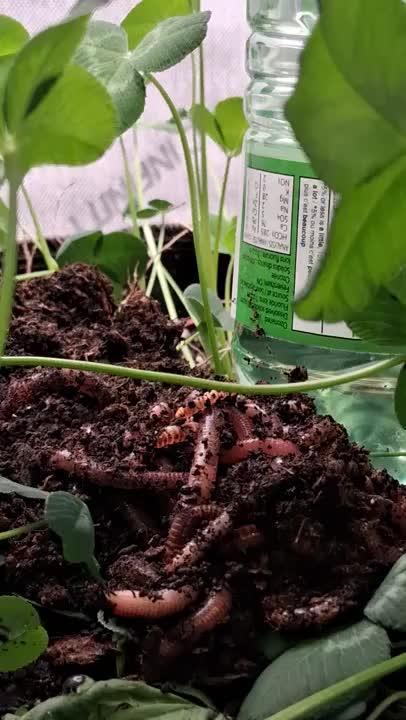
Living organisms within the substrate play a vital role in maintaining this delicate biological balance and breaking down organic material. Red wigglers continuously process organic matter into easily accessible plant nutrients while aerating the media; specialized predatory mites offer excellent biological control against common soil pests, and pillbugs excel at breaking down tough, woody elements. These biological components are further supported by a rich layer of organic amendments including high-phosphorus steamed bone meal, high-nitrogen dehydrated blood meal, fish bone meal, cold-processed kelp meal, dehydrated moringa powder, spirulina powder, and marine crustacean biomass rich in chitin. Combined with biological inoculants like mycorrhizal fungi, premium worm castings, and concentrated humic and fulvic acids, the entire system operates as a flawless biological transducer of light and energy.
Ultimately, shifting our perspective to view a grow space as a complete mass and energy balance equation changes the entire nature of agriculture. Success ceases to be a matter of luck or anecdotal habits and instead becomes the predictable result of meticulous design, patience, and the strategic elimination of failure. When science, biology, and engineering converge so harmoniously, we gain a deeper appreciation for the intricate natural systems that sustain life and growth. By sharing these detailed insights and refining our techniques, we can continue to unlock the absolute maximum potential hidden within the living world around us.
Comprehensive Substrate Composition:
1. Substrate Base & Aeration Media
Expanded Clay Aggregates (Hydroton Pebbles)
Coir Chunks & Horticultural Coco Coir
Sphagnum Peat Moss
Horticultural Perlite
Horticultural Vermiculite
Horticultural Pumice
Volcanic Basalt Rock
2. Mineral Amendments & Soil Conditioners
Agricultural Gypsum (Calcium Sulfate)
Wollastonite (Calcium Silicate)
Dolomitic Limestone (Calcium Magnesium Carbonate)
Basalt Rock Dust (Trace Mineralizer)
Azomite (Micronutrient-Rich Volcanic Ash)
Glauconite (Greensand)
Crushed Seashells (Calcium Carbonate Source)
Pyrolyzed Carbon Feedstocks (Biochar & Horticultural Charcoal)
Elite Shungite (Carbonaceous Mineraloid)
3. Organic Nutrient Amendments
Steamed Bone Meal (High Phosphorus)
Dehydrated Blood Meal (High Nitrogen)
Fish Bone Meal (Phosphorus & Trace Calcium)
Cold-Processed Kelp Meal (Ascophyllum nodosum)
Dehydrated Moringa Oleifera Powder (Botanical Nutrient)
Spirulina Powder (Arthrospira platensis / Cyanobacteria Nutrient)
Marine Crustacean Biomass (Shrimp & Crab Chitin)
4. Biological Inoculants & Organic Acids
Mycorrhizal Fungi Inoculant (Endomycorrhizae / Ectomycorrhizae)
Vermicompost (Premium Worm Castings)
Humic & Fulvic Acids (Concentrated Humates)
Human Body
65% Oxygen (in all liquids and tissues, bones, and proteins)
18% Carbon (everywhere)
10% Hydrogen (in all liquids and tissues, bones, proteins
3% Nitrogen (in all liquids and tissues, proteins
1,5% Calcium (lungs, kidney, liver, thyroid, brain, muscles, heart, bones)
1% Phosphorus (urine, bones, DNA)
0,35% Potassium (enzymes)
0,25% Sulphur (proteins)
0,15% Sodium (in all liquids and tissues) (in terms of salt)
0,05% Magnesium (lungs, kidney, liver, thyroid, brain, muscles, heart)
Plant
Mother-nutrients: Carbon 47%, Oxygen 43%, Hydrogen 4%.
Macro-nutrients: Nitrogen 3%, Phosphorus1%, Potassium1%, Calcium1%, Magnesium0.5%, Sulfur0.5%.
Micro-nutrients: All the rest combined 1%
More energy, more blueprint.
Although CO2 is a naturally occurring gas that both humans and plants use, it is invisible and odorless and can be fatal at high-levels. If you’re supplementing carbon dioxide in your grow room, ensure there are no leaks in any CO2 devices and always use a CO2 monitor and alarm.
0.02% Life unsustainable
0.03% Life OK
0.04% Current ambient atmospheric co2
0.04%-0.1% =400-1000ppm standard indoor co2.
0.1%-0.2% = 1000- 2000 ppm (prolonged exposure: drowsiness).
0.2%-0.4% = 2000-4000ppm (Headaches, fatigue, stagnation, stuffiness, poor concentration, loss of focus, increased heart rate, nausea).
1% is toxic
5% is quick death.
"Dabo vobis quod oculus non vidit, nec auris audivit, nec manus tetigit, quod in cor hominis non ascendit."
Likes
92
Share


@DogDoctorOfficial
Follow
Week 4 Veg Report - TrolMaster Chronicles 🌱
What a week it’s been in the garden! We finally transplanted the Papaya Zoap into its final Autopot, and let me tell you, this plant is something special. Though her roots weren’t quite where I wanted them to be yet, the move was needed to help her catch up with the rest of the crew. She’s already looking fantastic in her new home, and I have no doubt she’s about to explode with growth in the coming days. Sometimes, you just have to trust the process, and I’m feeling like this is one of those moments. It’s almost as if the room itself is taking on a life of its own. 🌿
In fact, I’m starting to believe that what we’re building here is something greater than ourselves—there’s this energy in the room, a feeling of everything coming together perfectly. I can’t wait to see how this journey unfolds!
Dialing in the VPD with TrolMaster’s Tech
Now, let’s talk VPD (Vapor Pressure Deficit) and how I’ve been keeping everything in check with the Tend-X and the incredible (DSH-2U) Humidity Station. VPD is crucial to plant health—it’s all about finding that perfect balance between humidity and temperature to optimize transpiration and nutrient uptake. The (DSH-2U) Humidity Station, connected directly to my humidifier, has been an absolute game-changer in this regard. With its real-time data and automation, it allows me to monitor and adjust the RH with pinpoint accuracy.
Simple yet brilliant, the (DSH-2U) Humidity Station is keeping my room at the sweet spot I need. Whether I’m tweaking the settings from my phone while I’m out and about or just fine-tuning things while relaxing at home, this machine does it all. It’s like having an extra pair of hands in the grow room—and when you’re managing something as complex as VPD, that’s invaluable!
And yes, the TM+ Pro App—let’s not forget how awesome it is. I’m adjusting my grow room from the couch, the car, or even the bathroom 😜. I’ve said it before, but this app is making growing easier than ever.
Feeding the Girls: The Perfect Blend 🌱
We’ve upped the game by adding CaMg-Boost at 0.25 ml/L to the feeding schedule. Along with the 1 ml/L of the all-in-one liquid, this brings the TDS up to 320 ppm, with a pH of 5.99 and solution temperature of 24.8°C. In the soil, readings are around 415 ppm, with temperatures hovering around 25°C The plants are absolutely thriving, and I can already see the difference this new feed is making.
I can’t help but have a bit of fun with this process—it feels like I’m spoiling them with the best of the best. And they’re rewarding me with beautiful growth and vibrant green color. You know how it is, with the right care and attention, these plants are truly becoming a masterpiece in the making. 🌱
Shoutouts 💚
Big shoutout to TrolMaster and ThinkGrow LED for the phenomenal gear that’s making this grow smoother than ever. Also, massive thanks to Aptus Holland for their top-notch nutrition, and of course, to the community here on GrowDiaries—you guys keep the energy alive! 🌱
Last but definitely not least, shoutout to all the seed banks supporting this journey. You’ve been a huge part of this process, and I couldn’t do it without you!
Remember, for exclusive behind-the-scenes content and updates in real time, head over to my Instagram and YouTube channels @DogDoctorOfficial. We’ve got tons of epic content lined up, and you won’t want to miss it!
P.S.
Let’s talk about the new Model One LED Bars—these beauties are not only powerful but super efficient. I’ve been able to dim them down, save on electricity costs, and still maintain an incredible PAR and spectrum. It’s all about fine-tuning the balance of power and performance, and these lights make it easy to get the best results while being eco-friendly. Whether you’re running them full throttle or dialing it back, you’re still getting optimal growth conditions for your plants. That’s the kind of innovation that takes your grow to the next level. 💡
Growers Love to all 🌿💚


Likes
8
Share


@GoodTimesOrganics
Follow
Hi liebe Community and Welcome Back! 🌿💚
Die kleinen Äffchen gehen Steil! 🌄🐒
Hier im gesponserten Bio Tabs NL Grow, erreichen wir aktuell eine höhe von 50 CM.
Nach der Geschlechtsbestimmung, war es nun Zeit, die mädels in ihr neuen Topf zu verpflanzen.
In das neue Substrat (Canna Bioterra Plus) wurden nun die Startkomponenten von Bio Tabs NL eingepflegt.
Bio Tabs NL: Startrex, mit 5g pro Liter Substrat als Nahrung und Langzeitdünger für die Pflanze.
Bio Tabs NL: Dünge Tabletten, 2 Stück für bis zu 10l Substrat als Langzeit und Slowrelease Dünger.
Bio Tabs NL: Mycotrex, enthält diverse Mykhoriza Stämme um das Bodennahrungsnetz aufzubauen und schützt die Pflanze vor Stress und dass Wurzelsystem vor Austrocknung und stabilisiert insgesamt die Pflanzengesundheit.
Bio Tabs NL: Bactrex, enthält vielerlei Bodenbakterien die für die Umwandlungsprozesse organischer Stoffe zuständig sind. Diese werden somit Pflanzenverfügbar gemacht.
Bio Tabs NL: Orgatrex, Melasse mit Pflanzenfermenten für die Wachstumsphase, dient als Futter und actuvator für die oben beschriebenen Komponenten und fungiert zusätzlich auch als Dünger.
Für den ultimativen Vergleich kommen bald noch zwei neue Diaries mit zwei identischen Stecklingen um genau zu beobachten wie was performed.
Die Pflanzen entwickeln sich super gut und sind sehr robust.
Die Seitentriebe bilden sich immer weiter aus. Die Blattform ist schön Breit und Buschig.
Die Umgebungsgegebenheiten sind aktuell gut:
—————
🌞 Temp: 24
🌚 Temp: 18°C bis 19°C
💨 RH: 58%
VPD: 0,91 kPa
💡ppfd: 330 mpm
—————
Viele Grüße 👋
Likes
9
Share

@Mannirumpel420
Follow
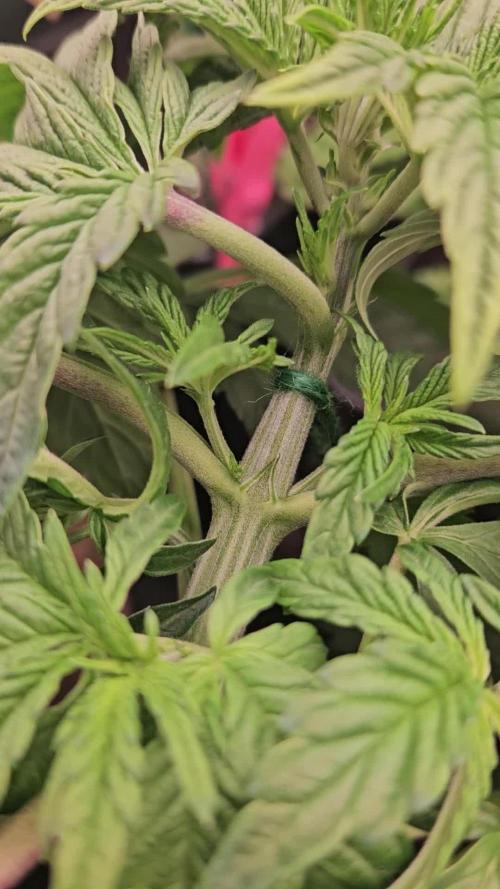
Ihr Stamm ist sehr schnell fest geworden,was das LST des Haupt triebes etwas erschwert.Ansonsten macht sie gute Fortschritte,wenn man bedenkt dass es momentan noch max 17 Grad celsius und 80 Prozent Luftfeuchte sind.Dies sollte sich jedoch in der nächsten Woche regeln,da es dann wärmer wird und ich die schlitze des Zeltes dann aufmachen kann,ohne dass es darin zu kalt wird.
Ihr Topf ist schon gut durchwurzelt und wahrscheinlich benötigt sie bald einen größeren,jedoch lasse ich sie ersteinmal wachsen und nehme in einer Woche ein paar stecklinge.
Diese Genetik ist echt der Hammer,sie hat einen Ultra dicken stamm für ihre größe und bildet an einem Seitentriebe noch einen zusätzlichen Mini Trieb aus.Aus diesem Grund nehme ich mir von ihr einige Stecklinge und versuche die Genetik als Mutterpflanze zu halten.
Likes
44
Share


@I_and_I
Follow
About to go on holiday for two weeks, my mate looks after them like a boss,
By now I know a lot more About light and realise I need another light especially for flowering, the plan is to order a 240w quantum board, 301b Samsung chips just as I go on holiday to take delivery on return, this takes a bit longer than expected to order light, I leave for holiday around end of week 5 veg
Likes
4
Share


@GrapevineGrower2
Follow
NOTE 1: Afgooey Auto pheno #3 turns out it's a MALE. Resembled nothing like her two sisters ran at the same time. In fact, I had to move her to the 12/12 tent to initiate flowering. Little did I know or expect She would be a He. Lola by the Kinks is rattling round my brain about now ;)
FEEL FREE TO HIT THE LIKE BUTTON IF YOU LIKE WHAT YOU SEE ;)
2x4 French Macaron - at the time of this posting, FM is heading into week 8 flower. Second extensive flushing w/fresh rain water due to acidic conditions (ph >5). Been struggling with ph the entire flowering. I speculate ph issues due to over feeding. Ph is roughly 5.8 to 6.0 after flushing. At this point, flushing with plain RO water until harvest.
NOTE 2: I've introduced two 5 gallon bubble buckets into the 2x4 grow tent. Both buckets have medium air stones running from a 125 gph air pump. Given French Macaron isn't scheduled for harvest until mid-January, I might not have cutting ready. First grow may have to be from seed. Update later.
3x3 Afgooey Autos and clones from previous grow - Afgooey #1 and #2 are firing on all cylinders. #2 running a bit acidic (>5), so flushed back to neutral with roughly 7-8 gallons of fresh rain water ph at 7.0 to 7.2. Same with clones (i.e., ph very low). Flushed with fresh rain water too. A couple days later plants look so much better. Wait till plants nearly dry before next watering. Trimmed and cleaned up three of the clones growing weird. Felt a bit like trimming a bonzai tree. Let's see how they respond.



Likes
5
Share


@Ninjabuds
Follow
My Rainbow Melon plant has been a powerhouse from day one! It's always been one of the fastest and strongest growers in the tent. For a while, it was the undisputed champion in terms of size, and it's still neck and neck for second place. This plant is just bursting with vigor, and I'm super excited to see what kind of yield I get from it. It's got that classic Rainbow Melon aroma – sweet and fruity with a hint of earthiness. It's gonna be a good one!
This past week has been a whirlwind of work, leaving little time for anything else. My phone's camera roll is sadly neglected, with only a few snapshots to show for it. But finally, I'm finding a moment to catch up on my grow diaries. It's been exciting to see the progress, even if it's just through photos. I'm looking forward to documenting the next stage!
Likes
13
Share


@WeedWacker
Follow
Didn't do much training to CS #1 and #2. and I had the best yield from these. CS #3 I LST'd which produced more top but the buds were much smaller. I also think #3 plant requires more notes near the end and my water i only organic soil mix ran out.
The pics will illustrate the difference between CS #3 and the others. I enjoyed growing these. The smell near the end of flower was awesome. Very strong, diesel fuel, turpentine, with a little piney hops.
Likes
30
Share


@SAC87
Follow
Day 35 Flower
Hey Growers.
Things are going well here, other than the delicious funk that is emanating from my house. The carbon filter is not able to keep up with these beauties and the FastBuds flowering at the same time. It’s also about 5 years old so…..time for a new one. It also doesn’t help that the 4 ft of snow around the house is melting and I have to have the grow room door open for the sump line, but whatever.
These girls are just cruising along. I watered with 950 ppm and 1650 was the runoff. I’m noticing a bit of tip burn but I hear that normalish for full spectrum leds. They make the plants draw extra mag, seems like the Epsom is helping with that. I’m getting to a point where I may need to water twice a day to achieve denser quality buds, the next couple weeks will dictate that. Hand watering hydro is a terrible idea!!!!!!!!!! Too late to turn back.
I am running the Vipar Spectra XS2000 at the recommended 16” at 100%. I’m also alternating from the right to left side of the tent each day like a poor man’s light mover. I’m noticing leaf edge curl (tacoing) but it’s nothing major and they pointing upwards. They seem happy.
All in all I’m happy with how it’s going, just gonna keep it on cruise control and tuck or remove leaves causing problems.
Happy Growing 🌱

Likes
7
Share


@CHOFO
Follow
Dejo dos VIDEOS del primer mes en las dos carpas!!!
Desfrán Auto se ve que no le gusta el ferti, por las hojas dobladas hacia arriba. Solamente las automáticas parece... Cada vez que las riego las hojas se ponen en forma de garra como estresada, asi que voy a utilizar agua solamente. Por cierto el agua que utilizo es agua purificada sin cloro y metales pesados. Ahora me prestaron un medidor de Ph que empiezo a utilizarlo en el segundo mes. También compraré un termohigrometro y voy añadir un ventilador extra. Las demás Red Dragon, Amnesia Lemon #1 y #2, Bubba's Gift y Desfrán Fotoperiódica estoy aplicando Aptus Pro y se ve que les encanta. Le hice poda apical a la Defrán Foto y quiero intentar hacer un Main Lining, porque crecen muy rápido. La voy a tratar de dejar lo más bajo posible. La Bubba's ya va creciendo más, pero en versión "mini". A ver qué onda como les va el segundo mes de vege. La idea es vegetarlas hasta que las Desfrán Auto (3) estén listas para cosechar que supuestamente son 14/15 semanas. Así que tienen tiempo para crecer las demás, sobretodo las Bubba's #1 y #2

