


Processing
Likes
Comments
Share


@organically
Follow
Week 5 - Day 2 - 11.12.2017
-
Hay lovers of Green, i will give you a big update.
While trying to fix the PH and Humidity issues last week, i've already found some nice root developments and decided to transplant to support the regeneration - 6.12.2017 -.
The Plants were unhealthy and shocked.
After 2 Days they started to reviltalize and stable - 08.12.2017 - and i found a suprise, the adjoining Auto Dinamex's start to Preflower.
-
Today the sweetys are healthy,vital,bushy and got nice stems, in height arround 18 cm
The BCC'S internod distances are longer and the stems are thinner as the ICED G's.
-
■ Blueberry Cheesecake [ Cheese x Blueberry Multiple Hybrid ]
■ ICED Grapefruit [ ICE [Skunk Special x White Widow x Blueberry] X Grapefruit [ C99 x Cinderella x Sativa ]
-
■ Timeline ■
Germination start [ 04.11.2017 - 17:15]
Germinated / into Coir Pellets [ 06.11.2017 ]
PreVegetative start [ 07.11.2017 ]
Transplanted into 1L Airpots [ 19.11.2017 ]
Vegetative start [ 26.11.2017 ]
Transplanted into 7L TeKu [ 06.12.2017 ]
-
PreFlowering start [ xx.xx.xxxx ]
-
Flowering start [ xx.xx.xxxx ]
Harvesting Part 1 [ xx.xx.xxxx ]
Harvesting Part 2 [ xx.xx.xxxx ]
-
■ Growroom ■
Size » 90x90x170 ~ 0,8 m²
-
PreVegetative Lightning
» 24 ▪️ LED ~ 33W - daylight - 3700lm
Vegetative Lightning
» 24 - 20/4 ▪️ HID ~ 250W - 5600K - 18.000lm
Flowering Lightning
» 12/12 ▪️ HID ~ 400W - 2100K - 56.500lm
-
Supply air ▪️ mesh window - negative pressure
Exhaust air fan ~ max.420m³/h ]
Circulating air fans ~ 3x16W max.2250 rpm
-
Pots ▪️ Coir Pellets --> 1 L Airpots --> 7 Liter TeKu.
Medium ▪️ Organic Soils!
Composition ▪️ bark humus,wood fibers,coconut fibers,coconut husks,compost,guano,hornmeal,clay minerals,trace elements,calcium carbonate,perlite.
-
■ Supported by ■
» Female Seeds - so easy !
» Cellmax - Organic Growing.
//////////////////////////////////////////////////////////////////
👋 Greetings your organically
» tried and true, since simple is the best! 👍

Likes
19
Share


@BB_US
Follow
Wonder are being made here. These ladies are doing amazing things. Did lots of defoilation of them this week, making some new light depth for the lower branches. 🌿💚 Comment and like my grows, need to get to master stage

Processing
Likes
10
Share

@CrackinBeans
Follow
If you come across something Im doing wrong or some faults or got any tips or useful tricks. Feel free to let me know. I can use all the info and pointers. Fyi this is my first op if you cant tell by the plant conditions lmfao


Likes
7
Share


@eldruida_lamota
Follow
Que pasa familia, vamos con la cosecha de estas Black Muffin F1 de Sweetseeds.
Esta variedad me resultó bastante sencilla de cultivary es bastante resistente, si no la maltratáis crece mucho y bien sana, la flor se ve increíble, tiene una cantidad de resina considerable y unos tonos rojos oscuros muy peculiares, se ven genial.
El olor que desprende es bastante frutal con toques cítricos, no pinta nada mal, las flores están prietas.
No da mayores problemas, el ciclo no es largo, cuiden con la altura ya que se desmadran un poco.
IMPORTANTE destacar: En las fotos comprobaréis que ya no hay botes de cristal con sobres de bóveda, ahora hay Grovebags.
Que son una especie de sobres o bolsas que retienen el peso, previene la aparición de moho y mantiene intacto el terpeno, para que el curado sea más óptimo.
Hasta aquí todo, Buenos humos 💨💨💨

Likes
11
Share


@Cortez_The_Konqueror
Follow
One of the shorter phenos but I got a feeling she's going to be a bush!
Likes
5
Share

@Grow4ever
Follow
Ein paar Tage nicht da und dann solche Büsche im Zelt. Das hieß heute gehts ran ans defolieren und Scrognetz einspannen. Zudem haben Sie leider einen ganzschönen VPD Schock erlitten. Habe heute morgen also erstmal eine Ladung Wasser mit Cal/Mag und etwas algamic gegossen und die Lampe höher gehängt. Heute abend ging es dann direkt ans defolieren, da ich ehrlich gesagt, die Woche sonst wenig Zeit finden werde. Jetzt sollen Sie sich erholen und ins Scrog einfügen. Achja mein Sorgenkind, die Sfv Og Kush, hat immer noch deutliche Blattvervorfungen. Werde Sie in der Blüte, wohl um meine Paranoia zu beruhigen, täglich nach Hermaphroditmus untersuchen.

Likes
1
Share

@Danger_Mouse
Follow
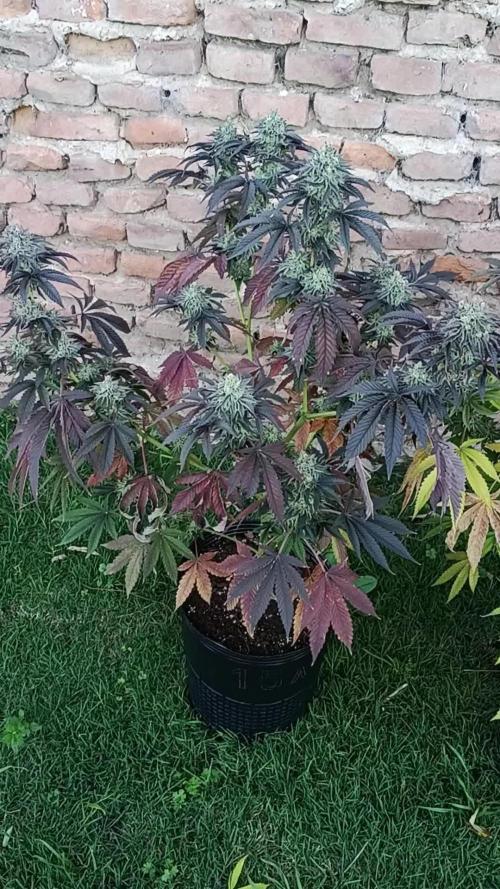
Plantas super faciles de cultivar y muy resistente a Botritis (las 3 Radical Juice fueron las unicas que no tuvieron ni el mas minimo sintoma a pesar de que 6ta y 7ma semana de floración fueron dias de muchisima humedad ambiente). Hare la reseña final cuando este secos los cogollos. El olor en verde recuerda un poco a Tangilope, Clementine, NYC Diesel.
Likes
13
Share


@NO_DRAMA
Follow
If we look closer we can see bored leaves , i think we have little stress, but this plant is Perfect !!! Bravo Inseedious 💪
Likes
11
Share

@HanzzCZ
Follow
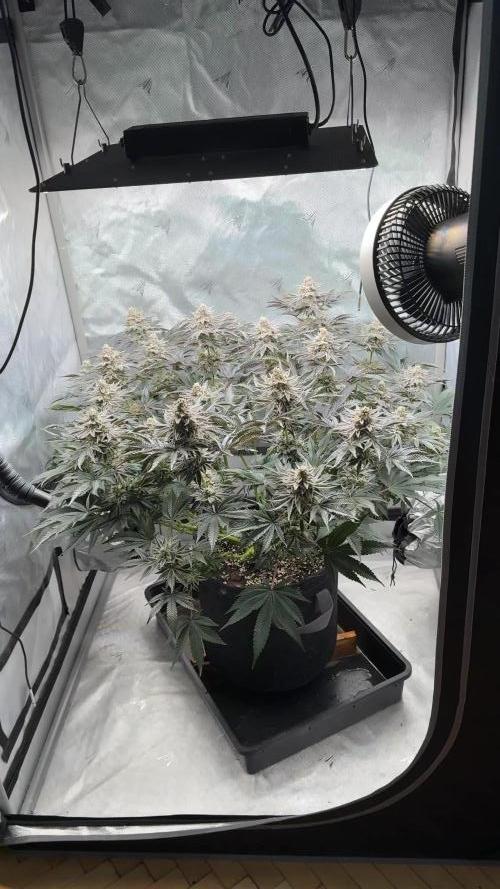
Servus, patnáctý týden, sedmý týden v květu, máme za sebou. ✌️🌼
Tento týden holka pořádně rozjela barvičku ?🦄. Šišky stackujou do sebe, jsou větší, hutnější a začíná silnější vůně. Trichomi najíždějí na cloud. Místy už je amber, ale převážně tam, kde není mlíko… 🥛
Myslím, že se blížíme do finishe. Odhaduju ještě tak 14 dni a bude sekec! ?
Ať se daří! ✌️kdyby měl někdo nějaký typy/rady uvítám váš komentář. 😂🔥
EN
____________________________________________________________________________________________________________________________________________________What’s uppp! Week fifteenth (seven in bloom) is behind us.✌️🌼
This week she really started showing her colors ?🦄
The buds are stacking nicely, getting bigger, denser, and the smell is getting much stronger. Trichomes are turning cloudy now, with some amber showing up here and there — mostly in spots that still aren’t fully milky yet… 🥛
I think we’re getting close to the finish line. My guess is around 14 more days and then it’s chop time! ?
Good luck every one! ✌️
Any tips or advice are always welcome 😂🔥

Processing
Likes
Comments
Share


@UK420
Follow
Strong bud growth this week. Stable temps and humidity. The green gelato is a strong grower but slightly behind the others in terms of bud development.


Likes
49
Share


@masterofsmeagol
Follow
9/5 Beautiful weather. The smell is amazing. Much stronger than previous years. I watered everything 2 gallons yesterday with the exception of the 10 and the tub. Found a few moth larvae but I found many more lady bug larvae. Flowers are EXPLODING! I've got one pheno that I think will be done in two weeks. I'm close to the flowering time on that strain anyway amd I labeled flower late. I need to bring my loup and check trichs. Such an exciting time of year! Leaf blower started and I was able to blow off the entire garden.
UPDATE: WENT OVER WITH THE TRICH SCOPE AND LOOKED AT THE 10TH PLANETS. VERY FROSTY! THEY HAVE SOME PLUMPING UP TO DO AND THE PISTLES NEED TO RETRACT A BIT MORE ON SOME OF THE FLOWERS. WE'RE GETTING CLOSE THOUGH. PISTLES ARE CHANGING IRANGE AND RED AND STRARTING TO RETRACT. BUDS ARE SWELLING (ON EVERYTHING). I DID NOTICE THAT THE PLANT WITH THOSE MARKINGS HAD SOME APHIDS ON IT. I HAVE A SHIT TON OF LADY BUGS/BEETLES AND THERE LARVAE. THEYVE BEEN DOING A GOOD JOB KEEPING THINGS IN CHECK. THAT AND MY CAGE IS BETWEEN TWO BIRD FEEDERS SO BIRDS ARE ALWAYS DARTING IN AND OUT SO I ASSUME THEYRE EATING SOMETHING. THIS IS BY FAR MY BEST YEAR SO FAR. PURPLE PUNCH HAS DENSE COLAS BIT LOTS OF PISTOLS STILL YELLOW REACHING UO TO FORM WHAT WILL BE MASSIVE COLAS. I THINK IM GOING TO HAVE TWO LITER COLA BOTTLE SIZED COLAS ON ONE PLANT. ILL BE SURPRISED IF I DIDNT. THERE ARE TWO PHENOMES OF THE BLUEBERRY CHEESE IT SEEMS. THREE ARE MUCH FURTHER ALONG THEN THE OTHER TWO. THOSE TOTHER TWO LOOK FAR MORE SATIVAISH. I'M SUPER EXCITED FOR THE NEXT COUPLE WEEKS!
9/6 Brought the trich scope over last night. Things are getting frosty and coming along quite nicely. The smell when I walk in the cage now is overwhelming. It's like getting hit in the face with a wet bud. I've been noticing more and more lady bug larvae. I noticed a bud worm and tried to find it again after I entered the cage and one if the large lady bug larvae was eating it! Debating whether or not to apply BT. Still have what looks like a calcium deficiency on that one plant but I lose less and less leaves each day. It soesnt have MANY more big fan leaves to keep dropping. Oh well. I'm keeping an eye on it and as long as it's not pests or fungal than whatever. That plant is flowering rapidly to catch up with her sisters. Since my return at growing cannabis I would say rhis has been my best yet. I am super proud with how things are going. If I can keep poo this up for another month I'll be golden. I plan to harvest the 10th planet's in stages (when ready). At least with the two up front and MAYBE the other. That way it would give a chance for the bottom that disnt get as much sun as the top to "catch up". I've do s rhis before with monster crops and it worked good. I plan on watering tonight. Leaves are turning yell8w and dieing on tje big cheese and the two purple punches in the back. I think that I've used most nutrients from my soil and what I'm putting back in isn't enough to cover their needs. When I fed the p.p. in the tub I could notice that it's leaves started greening right up. I'll check last feed and if I need to ill up the dosage. 10th planet doesn't really like a lot of nutes so I have to be careful. This is something lots have discovered. Exciting time! Had a stranger last night but nobody can get past the dog or the motion sensors or the cacophony of measures I've taken to secure my medicine. Not even sure it was a person but still. The fence is electrified at night so they can have fun trying.
UPDATE: Sunny and like 85 all day. Went over around two and noticed a 10th planet slightly drooping. Everything was super light. I gave all the 20's 2 gallons the 30 on the grow bag got 2.5 the 30 in the tub got 1, the 10 got 1 and the 50 got 2. I then fed. Since the 10th planet's are a little further ahead I fed them a little different. I just removed the grow big since they are really green anyway and I also upped the liquid kool bloom to 1 tsp per gallon and fed a quart to everything. A little more for the 10th planet 30gal in the bag and the blueberry cheese in the fifty. The rest of the feed was the same as listed above. Seeing TONS of lady big larvae. Have to he careful when defoliating as I want them to stick around.
9/7 FED and watered yesterday. We've had some super hot weather lately. Hottest all summer. In the 80s-90s. Got a ladder and inspected buds. Found some bud rot on the purple punch. Sucks having to cut off the top of a cola but if I don't it will just spread. This purple punch still has long stigmas reaching up to form a solid cola on the branch. I know it's got a little ways to go. One of the 10th planet phenos on the other hand is looking close to done. Trichs are frosty and milky not much amber. Stigmas turned red and have retracted into the bud. I'm going to wait for this tester to dry and take it from there. We are supposed to get a few days of rain coming up. I don't want to risk all those beautiful ALMOST finished buds to bud rot. I may move it into the garage if we get a lot if rain. Let it have a few days of darkness. Or I could just open the door and it would still get sun and remain dry. This strain smells and looks SOOO good. I can't wait to try it. I'm going backbover to check all the tops. The blue cheese plants are HUGE! With HUGE buds. The trichs just aren't developed enough. It is super frosty but the flowers haven't taken on that swell. It's happening ob one plant and its looking like the colas will he like two liter soda bottles. The thing is that's an awful lot of room for mold. Oh well. That's how I grew them. One thing is for certain. After seeing what the pillars can do I can't rely on the lady bugs to get rid of them all. I'll be spraying BT tonight on everything but that early 10th planet phenome.
UPDATE: INSTALLED MORE CAMS. I HAVE ONE 10TH PLANET THAT IS LOOKING PRETTY GOOD. REAL CLOSE. IM GOING TO SMOKE THE TESTER BUD FIRST BUT I THINK IM GOING TO HARVEST THE EARLY PHENOME IN PARTS. LOOKING AT THE WEATHER IT APPEARS WE ARE GOING TO HAVE SEVERAL DAYS OF RAIN. IF SO ILL TAKE THE TOP AND LET THE UNDER CANOPY DEVELOP MORE. ILL LEAVE THE OTHER TWO 10TH PLANETS THAT WERE MONSTER CROPPED AS THEY STILL HAVE SOME SWELLING TO DO. I LOOKED AT TRICHS WITH A JEWLERS LOUPE. I REALL MISS MY USB SCOPE. PURPLE PUNCH HAS THE BIGGEST FLOWERS BUT THE ARENY AS DEVELOPED. I NEED TO GET ANOTHER. ITS WORTJ EVERY PENNY. I GOT ON A LADDER AND CHECKED THE TOP COLAS FOR DAMAGE OR ROT. NOTHING SO FAR KNOCK ON WOOD. EACH PLANT HAS A UNIQUE SMELL BUT WHEN YOU ENTER THE GARDEN THE BLEND TOGETHER AND ITS LIKE GETTING HIT WITH A WET BUD IN TGE FACE. I SHOULD GO SPRAY EVERYTHING ELSE WITH BT TONIGHT. LADY BUGS CAN ONLY DO SO MUCH.
9/8 Cut some bud rot off a 10th planet and a purple punch. Definitely from pillars. Doesn't hurt that it's been 90 with 90rh. Thunderstorms are coming and it's gonna rain a few days. Plants will need water I'm sure. I tried some of the purple punch bud I cut off (after I dug all the rot out) and it was good! That plant still has white stigmas as and can go a lot longer. Trich scope says the 10th planet's are done. I'm taking the tops off two before the rain starts. I'll leave the one that's a LITTLE further behind and see what comes of it. Even the more sativa dominant blue cheese plants are frosting up quit nicely. I haven't been able to put up videos as my phone has been full and it wouldn't let me even TAKE a video. I need to spray bt tonight. I went through the garden this morning and despite all the lady bugs I found two more bud worms. I think taking the stuff that's done off those two plants is the smart thing to do. I should take all three and just leave the bottoms but I'll just go with the two. I'll update later after I figure out what I'm going to do.
UPDATE: TOOK MOST OF THE 10TH PLANET AS IT WAS DONE. I WOULD'VE TAKEN ONE OF THE OTHER 10TH PLANETS BUT IT TOOK WAAAY TO LONG. WATERED EVERYTHING 2 GALLONS EXCEPT 1 FOR THE 10 AND TuB AND 2.5 FOR MY 10TH P IN THE 30. ILL HAVE TO FINISH AND UPLOAD THIS SHIT LATER. I DID A VIDEO.
9/9 Most of one 10th planet is hanging. Big yield. Looking at the trichs I think Im going to take the other one that looks done. If i did id do the same thing. I did with the other. Take the tops and allow the bottom to develop a little more. Smoked the tester bud and was pleasantl u surprised. Im not using that for acsmoke report. Purple punch and blue cheese both need more time bit are swelling like crazy. Colas should be two liter bottles. Worried about bud rot with buds that big. Thos morning four birds were perched on my cage. I see them dart in and out grabbing a snack. I have let my 'leafing' and general upkeep slip. My wife has been sick and I've been in the hospital with her. So I need to defoliate some things and I'd like to chop that other 10th planet and leave the biggest one a little longer. This one i think has reached diminishing returns or damb close. I don't know if the video uploaded. Havent been doing many because my phone was full and it wouldn't even open the camera. I never said I wad tech savvy. I'll keep this updated. Fucking video keeps resizing but won't fully upload and I've got 5g right now so it must be the site. Been at the hospital all day with 5g and can't upload videos. It's the site.
9/10 Wife was rushed to emergency surgery. Was in hospital all day yesterday. Was able to take the top half of the krber 10th planet that was done. I need to water but it's 100% chance of rain. If i don't make it out dadxwill have to do it. Boy this strain is pungent. BUDS are getting way bigger and trichs are piling on. It's been a great finishing season so far. This will be one of my best years. I'll take more pictures qnd videos as soon as I'm not in an emergency situation. I tried uploading the video again but it loads and then won't resize. It's super annoying and I'm now unable to upload videos. Great.
UPDATE: GOT HOME AT LIKE 8. NOW I REALLY NEED AN ATTORNEY. NINE HOURS AT THE ER. FOUR OUT OF 7 DAYS. I DEFOLIATED DEAD LEAVES BUT IM WAY BEHIND. IVE GOT SOME TRIMMIMG TO DO. IM GLAD I PULLED THAT 10TH PLANET TOPS OFF THOSE 2 PLANTS BEFORE THIS RAIN. THE TRICHSCARE AMBER. ITS SO STICKY BUGS WILL LAND AND CANT TAKE OFF LOL. ILL GET SOME PICTURES OF SOME STUFF DRIED TOMORROW. PICS UPLOAD VIDEOS WONT. THEY WONT RESIZE.
9/11 Finally got some rain yesterday. Still need to apply BT. I've found some rot and just removed the whole bud. Also seeing some septoria on one plant. It's everywhere though and I don't change my clothes like I should. Having been in the ER for 9hrs 4 out of 7 days my plants were neglected. I defoliated dead and dieing leaves. Still don't know what that deficiency on the one plant is but it's still there. Doesn't effect the flowers though. I watered everything a gallon today since it's "supposed to rain." I fed everything lightly with a powerase bottle.
TRIED UPLOADING A BUNCH OF PICTURES BUT WHEN IT GETS TO RESIZE IT DISAPPEARS.
I smoked my tester 10th planet bud and WOW. Everything I could ask for in a cannabis strain. I'll wait to do a smoke report after I smoke the fully finished product and the other plants come down but I am super impressed! Looking at it through a scope is amazing as well. After i smoked that joint i had my dab ready but i didnt want to change how i was feeling so I held off. Granted tolerance is down due to all the hosputal visits but normally very high. Once this site is fixed I'll upload some points of things dry. I have more work to do
9/12 I've tried adding pictures and videos probably 50 times and as soon as they get uploaded they won't resize so I can't start a new week. I'll try uploading them here. Nope. I'll use another platform if you guys can't fix this. This is my best year and I can't upload shit! Raining like hell. Watered and fec yesterday. Everything got a piwerade bottle. Got a new electric Milwaukee leaf blower. Defoliated what needed it and came over to soaked buds. Purple punchvis the only one experiencing botrytis and i just cur the whole thing off. The other purple punches dont have any rot. Boy this is the strongest smelling cannabis ive grown and i cant even put up a picture. Washed 36 quart jars amd a few bigger one. Im looking into getting the bucket conversion fir storage. As soon as tge site is fixed ill put up my pictures and videos. Rain is expected for a few days. My other tenth planet looks ficking done too. Its not getting bud rot so im going to leave it. Its fucking huge. I had to tie up even the secondary or tertiary branches on some plants. Still no breaks though. Vertical trellis literally saved the day.
9/13 This site must be down. I can't upload any pictures or videos. I can't even start a new week. They upload but then they 'fail to load' or some message. This is the most important part. Anyway I shook everything then used the new electric leaf blower. I'm getting some bud rot on the purple punch in the 20. The biggest one. With this rain and the pillars I'm having to cut off more everyday. Rain today but after this rain lmore stuff will be coming down. That 10th planet is done done. I need to wait for the rain to stop and I'll chop the tops off that monster cropped plant. The blueberry cheese will be the last one done but the flowers are huge and covered in crystals. The BIG cheese is going to be a huge yield. I wish I coukd show you guys. Once they get this fixed ill update. Everything is going good though despite this rain. We have a hurricane coming but I could literally take everything NOW amd still have a BANGING harvest. All I've taken is the top of two 10th planet's and it's already the best I've ever done. Some of that plant is left to see if it improves but thats doubtful. I need to keep am eye on that one plant and I'm gonna ride this shit out. The electric leafblower works great. Of and I found some manners in a bud I removed from a purple punch due to bud rot. These plants are close though. Very close. STILL UNABLE TO POST PICTURES OR VIDEOS AS OF 2:30
9/14 Apparently this problem uploading pictures and videos is not just me. Its universal. I defol8at3d what needed it and checked in between the buds of cola for rot. I FOUND A bumblebee STUCK inside a big putmrple punch cola. He had broken a leg it looked like though amd he ended up falling. Those huge purple punch buds are rotting more everyday with this rain. It's only effecting one plant though. We are suppised to be getting a hurricane coming through. My tenth planet is DONE DONE but that purple punch plant needs to come down. No problems with the other purple punches or 10th planet which has nugs just as tight. Blue cheese has even BIGGER buds (had to stake THEM ALL) but since they aren't as dense I'm not getting any bud rot. Colas are tye size of a baseball batvor bigger and there is a lot of them. Best year ive ever had. I hope this site fixes soon. This is tge strongest smelling cannabis I have ever grown. Realistically i should take the other 10th planet's before the hurricane. As soon as shit dries out I'll be taking some more stiff before the hurricane. Those blue cheese have been through hell and are very resilient. I'm gonna let them ride the hurricane out I think. So sad I can't share my pictures or videos. Orrrrr my harvest report. COME ON GROW DIARIES


Likes
Comments
Share

@Mars8_8
Follow
Been MIA for awhile but here’s the update on these girls.
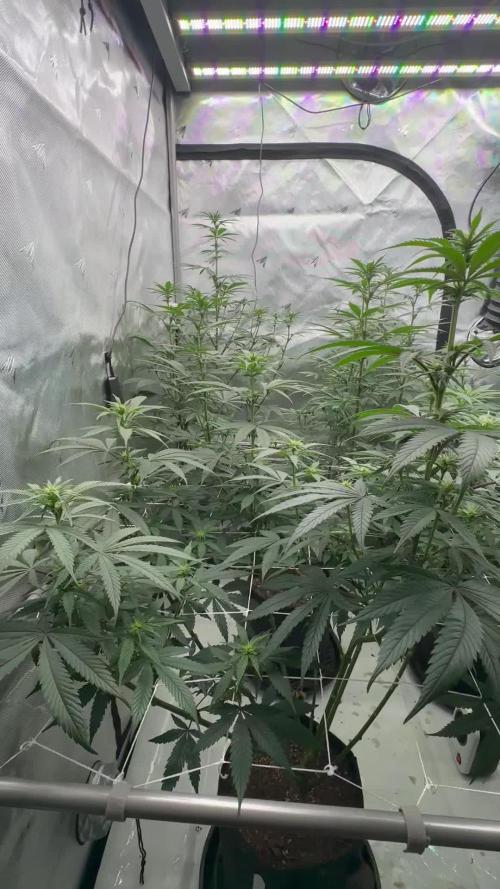
Two chem brulee, one northern lights, and one 5150 made it into the flower tent. I gave the spice cut and Runtz to a buddy.
The chem brulee is on the left and northern lights is the front right of the picture.
Duuude this chem is a crazy grower. I took some cuts and got 3 clones ready to go for the next run.
The stem on one of them is a quarter thick.
3 gallon pots, used a lot more silica this run and it’s showing. Think I ran out of nitrogen last harvest so adding bay guano to the tea this flower. Wish me luck 🤙🏻


Likes
7
Share

@DeepRootsGrowTrees
Follow
STICKY BROCCOLI 🥦 / ZAMNESIA & PLAGRON
WEEK #13 OVERALL
WEEK #7 FLOWER
This week we lost some leaves 🍃 😪 had to make some adjustments. Turned the light down just a bit and just have her H2O with a little GREEN SENSATION. As always there's a leaning curve when growing a new strain, however that's the fun 😁 of growing. Leaning what the plant wants and when it wants it. She's stacking nicely though starting to get some weight to her buds. Buds are dense and sticky covered in trichomes. She's got a nice aroma going on also. Doing great for some of the issues she's had. STAY GROWING MY FRIENDS!!
THANK YOU FOR TAKING A LOOK IT'S MUCH APPRECIATED!!
THANK YOU ZAMNESIA AND PLAGRON!!!
STICKY BROCCOLI 🥦 / ZAMNESIA SEEDS


Likes
144
Share


@1Right_Angle
Follow
July 4th
- safely into week 7. Solid growth and development to this point. Lets see how she stands up now that the pattern is laid-out
- last fed on the 30th; 1gal
- next meal is from the Water part of the food cycle; nute - nute - water
- amended the soil with 2” Worm Castings, scratched it in to the soils surface
- pulled a set of leaves off of each branch, exposing the middle nodes. New growth on each branch. Here we go!
July 5th
- rain has fallen, and the plant was partially protected. Wait and see if it has affected tonights Dinner. We are in the water portion of the Meal cycle; Nute-Nute-Water. Posted above
- compost is ready after months. Leaf / Soil mix added to the pot at dark.
July 7
- fed 1 gal of a Grow Microbe, Enzyme and Molasses-based dinner. Full list of ingredients Posted above
- this week is proving to be instrumental in Establishing the shape and kicking the growth into Gear !!! Chunky dinner had to be diluted… lol grow buddy grow
- someone asked about the LST techniques I use: wire, branch bending etc. Inposted 2 quik videos on how the Cali Crasher had acquired and held those curves
9th
- I saw an opportunity to make one more similar move on the plant, with the same style of LST training. Once again I extended the 6 upward facing branches, straight outward; first thing this morning.
10th
- fed 2.5 Litres of Nute cycle. With Grow Microbes oops, looks like we make the water-meal, Next

Likes
21
Share


@Growing_healTHCare
Follow
A day early on the update.
The girls keep packing on weight and frost making me tie up more of them as they lean over. Job security....
The sister crop BBOG is closer to finishing up and really dominating the room and house with sweet terpenes. LSD is just a bit behind as far as smell but certainly has bigger colas.
Click that like button, you know you want to 😉

Likes
7
Share


@HowieMcHowie
Follow
Aus dem Gewächshaus habe ich die 2 Auto Orange ausgenommen und auf den Balkon gestellt. So haben die restlichen Pflanzen mehr Platz und ich kann besser an sie ran. An den heißen Tagen sind es über 40 Grad bei 25% Luftfeuchtigkeit. Oft gieße ich 2x täglich.

Likes
32
Share


@LSnake
Follow
During this first week of vegetative growth, the seedling has slightly stretched more than expected, but this is not a problem since when I transfer it into the larger pot, I will bury the stem. 🌱
I haven't started giving nutrients yet because, as already mentioned, the substrate I use has them for the first few weeks, in fact the leaves seem to me to be a nice bright green. ✔️
I proceeded to mount a small fan on the side of the tent to create recirculation of air and make the stems of the seedlings take some strength. 💨
For now the main tent is occupied by the flowering phase of other plants so for the first few weeks I will leave the seedlings in the closet with smallest led light. 💡
(link below) ⬇️⬇️⬇️
https://www.amazon.it/gp/product/B08P2G1VQW/ref=ppx_yo_dt_b_asin_title_o05_s02?ie=UTF8&th=1

Likes
10
Share


@Bread_n_Buds
Follow
Going into flowering is always a special moment and we prepare to do it in the best way to make the plant understand that it is time to become a woman and speed up the start of the formation of buds.
We start with 24 hours of darkness this to give a strong break and sign of change to the plant that understands the change of time and prepares to go into flowering.
Our Slurricane was worked with a topping x16 buds that worked really well, we have well aligned branches, here nothing escapes upwards. The small growing bruches are perfectly aligned and it is another fantastic characteristic of plants with low internodal distance.
Another thing that gives the plant the signal of the start of flowering are the flowering stimulators we friends of Plagron use Power Buds.
The start of the flowering program includes the same additives as the vegetative phase Power Roots, Sugar Royal, Pure Zym and adds the flowering stimulant Power Buds. Now the basic fertilizer is Alga Bloom specific for flowering. The shape is very very beautiful as the structure of this plant, I definitely love plants with short internodal distance. Elegant, to see, to photograph, to grow.
Green Sensation will arrive as the hero of the end of flowering and at the same time it will be time to remove Power Roots and a week later the Pure Zym enzymes. It is recommended from the 4th week, if the plants flower fast I start at the 3rd depending on the size of the bud.
Try a seed of this strain that drives us crazy... It's a super News!
---- https://www.zamnesia.io/it/11177-zamnesia-seeds-slurricane.html
Zamnesia Description // Do you want to add a prestigious genetics to your grow room? Slurricane is a premium US strain created by In House Genetics and now available to growers thanks to the breeding processes implemented by Zamnesia. Born from the fusion of Purple Punch and Do-Si-Dos, Slurricane is 60% indica and incredibly vigorous. Whether grown indoors, outdoors or in a greenhouse, this strain can produce large quantities of dense and aromatic buds. Add Slurricane to your assortment and enjoy growing one of the most beloved hybrids in the United States.
All the best that mother nature can offer is on ---- www.zamnesia.com
Likes
4
Share


@Mr_nugs_lover_David
Follow
This lady looks absolutely gorgeous, she's got big beautiful leaves, I cannot wait to transplant this lady and make her become a beautiful fat bush! Let's do this! I'm very glad to be working with this strain this 2021 outdoor season, this lady has been Transplanted after 34 days since planted to her definitive 30L texpot, let's see how this lady performs!!