Processing
Likes
Comments
Share


@GIJOSE
Follow
Week 11 VEG! In today's video we do the second transplant to the girls final pot. In two weeks I'll be sending the Clones to flower cutting the veg time short. I got some new beans that I'm wanting to pop and try out. Hope everybody's doing well what's a lockdown. Cheers!-G.I.JOSE


Likes
37
Share


@TheIceCreamParlour
Follow
Day 63 - 28 of Flower
Changes this week include adding a 4th Maxibright 315w lamp and Agro bulb. I wanted to run 4 but originally could only afford to buy 3. These retail at £250 each per kit so theres now £1000 just in lighting. A huge improvement to overall light spread around the plants and more light penetrating the canopy to the lower bud sights. I've also spent the weekend insulating my space for 2 reasons. Obviously temperature fluctuations being one. I found the temps were anywhere between 17 and 31 degrees throughout a 24 hour cycle and wanted to get a more consistent day and night temperature. With the extra light it needs to be cooler too. 2nd reason was humidity. With the great British weather being as damp as it is the night time humidity has been over 75% some days which now we are deep into flower could quickly lead to bud rot. Insulating the space and running my exterior AC unit has now got that figure to below 56% at all times. I'm very happy with that.
Feeding ratio remains unchanged this week. I'm going to continue running the PK13/14 for at least another 7 days or untill the buds finish fattening out. Still feeding 6 litres every other day.
No further training at this point just pulling a few colas out of the way of the fan and one main cola from directly under a lamp as it was burning. Also stretch has now finished which is a massive relief as I've no headspace left in the tent at all.
I didn't have time to take many photos of the buds in the dark but the ones I have put on show just how frosty these stardawgs get! Really living up to their name considering they are only half way through predicted flower time.
The only further upgrade I would like at this point is a proper co2 with digital regulator. I have however read that they dont benefit much from extra co2 from this point onwards?? What is everyone's thoughts on that? Obviously I have my natural co2 generator and will leave it in untill the end of the grow.
I realise I really underestimated the size of these plants and 6 sativa dominant species is a stupid idea. The tent is just too packed so on the next run I'll opt for less and go with a scrog.
Thanks for checking in! I cant wait to see how the next week plays out.

Likes
19
Share


@HisHope
Follow
She is so heavy had to lay the plant on its side to cut and remove trellis so her branches and even main stem did not split.
Sticky as she can be, had to clean hands and trimmers (eyes once lol) many times for just a light trim.
Easy trim
Excellent plant Fast Buds
Dried quickly, humidity has been low and we kept plenty of air flowing around and through her did not want to take chances with that big bud.
She is real dry we can rehydrate any buds that go into cure, not a priority as this girl is set for edibles..
485 grams final weight
Weight modified down to 451 due to waste of 34 grams

Likes
17
Share


@BLAZED
Follow
W19 (Harvest)
6-6
Last day before harvest.
7-6
Harvest day!
Installed a humidifier outside the tent, set to 55% aiming for a 60% humidity inside the dry tent.
17-6
After 10 days of drying she is ready to be trimmed.
While posting this a couple of months later i found out that i totally forgot to make pictures and video's of the trimmed buds 😅
End result #1:
37 Grams of dried buds.
35.84 Grams of dried trim and very small buds, into the freezer.
I would describe pheno 1 as normal frosty, almost stone like buds, smells chemical with hints of dish soap (i really like it!)
I cant describe the taste but it was very tasty out of the box, before the cure, very sad i only had 37 grams of it haha.
End result #2:
Around 70 grams of dried buds.
43.23 Grams of dried trim and small buds, into the freezer for bubble hash.
I would describe pheno 2 as very frosty buds, little bit fluffy, smells very gassy, with a nice sour taste after curing a couple of months.
Very interesting strain, i will definitely grow it again!
I have some trim and small buds saved up from different strains and i will be posting a diary of the full process making hash of them!
If you are interested in me making bubble hash feel free to follow me as i will make some in the next month, this way you keep notified!

Processing
Likes
30
Share


@CBD_Sweden
Follow
2018-04-03 Week 14 Day 1
Not much to say, there isn't much drama going on in growroom 2, the only things I do is giving them water and nutes 2 - 3 times/week and making sure that the lamp don't burn the girls.
I gave them 4 liters today, and since they live in smartpots I can see when the pot gets wet when watering the girls, but you could hardly notice that. They are getting thirsty 😛
The flowers are developing very good, they look really healthy and their colors are fine.
Crazy Cookies nr 1 is 66 cm
Crazy Cookies nr2 is 52 cm
2018-04-04
Raised the lamp to it’s highest level and turned all girls 1/4 turn, it’s really hard to get in to the ladies in the back, I need to push the girls up against the walls on each side and crawl on the floor to be able to turn them and give them water/nutes.
Damn these plants, why do they have to grow and become so BIG?! 😆💪
Added a new video, enjoy my SoG 😄
-----------------------------------------------------------------------------------------------------------------------------------
Strain information:
The word synergy is a business term first quoted in the early eighties to describe mutual enhancement through interaction or cooperation, where the end result gained is greater than the sum of the parts used. What do synergy and the Crazy Cookies cannabis strain have to do with each other you may well ask?
The parents of the forthrightly indica Crazy Cookies are marijuana royalty. OG Kush and Girl Scout Cookies. These strains of contemporary legend have been combined to cerebrum shattering effect. The cured flowers deliver a mouth-watering and couchlocking 24% THC. The initial delectable spacey upbeat onrush compliments of the Durban Poison coursing through the genes of the Cookies soon becomes a lush and rich, inescapably delicious body flux.
There should be a picture of a Crazy Cookie nugget in the dictionary next to the word synergy. Crossing the OG back into the Cookies has amplified the psychoactive effects of the notorious lineage of both parents. This is an indica with a capital I.
As a breeder it would be fair to assume that injecting more OG into the Cookies would result in an OG-dominant Cookie, or even close to a pure OG, but something else has happened. Some long dormant genetic switch has been flipped and a standalone indica has emerged whose spicy notes and earthy tones, hints of grape and horny pheromone are an absolute pleasure.
Paying this breed some careful attention as it grows will reward you substantially, indoors or out. Typical hybrid vigour is shown throughout each grow phase. Stout plants to 80cm can be expected indoors and muscular examples with fluted stalks growing to two metres can be easily achieved outdoors. Good bracing is necessary as the flowers mature. With more than 500g at harvest per robust plant, colas can easily snap and twist branches.
--------------------------------------------------------------------------------------------------------------

Likes
2
Share


Likes
5
Share


@RastaRick
Follow
Starting to see some real good growth. Everyone is looking real gree. I think next week calls for a session of LST. Still only using water with BioTabs. Not issues. Tenet is pretty hot at 27C and dry at 27%rh... Ruff but it's what I got

Likes
9
Share


@masterofsmeagol
Follow
6/15 Everything was dry this morning but the bags STILL had some heft. Much lighter though so I decided to water. I didn't realize how cold the hose is so I'll have to usecthe water inside or premix it. I watered everything at least a half gallon. Things are going great. I'll update as I go.
UPDATE: IM GLAD I WATERED. ITS 73° OUT AND NICE AND SUNNY.
6/16 Foggy morning has turned into a sunny day! Plants are doing amazing. So glad I watered. I took a shit ton of pictures but they don't seem to be uploading. VERY FRUSTRATING TO TAKE THE TIME TO TAKE PICS AND VIDEO ONLY TO HAVE IT NOT UPLOAD. It's working now. I canceled out after I uploaded everything. Trying to upload again now.
EDIT: EVERYTHING IS FIXED. I UPLOADED A BUNCH OF STUFF. PLANTS IN THE BACK AND THE FRONT SEEMED DRY AND LIGHT. I GAVE THE TWO 10'S AT LEAST A HALF GALLON. I GAVE THE THIRTY A GALLON AND SPLIT THE REMAINDER WITH THE 20'S. I MIXED UP 5 GALLONS. EVEN THOUGH THE PLANTS IN THE MIDDLE WERE DRY THEY STILL WERE FAIRLY HEAVY. IT IS SUNNY AND 80° WITH STRONG WIND. I'LL WATER THE OTHERS IF NEEDED BEFORE WE GET SOME RAIN. WE HAVE RAIN IN THE FORECAST SO ILL KEEP AN EYE OUT. IM VERY IMPRESSED WITH THE GROWTH IM SEEING. I NEED TO DO SOME MORE LST SOON AND PUT UP A TRELLIS.
6/17 I'm glad I watered those plants. Everything is looking GREAT! I didn't get pictures as I was in a hurry. The 3 plants in tje middle are dry on top bit about as heavy as the others. The wind doesn't go through them like the others. I would've watered but they looked happy and we are supposed to be getting rain. I'll be back over later and re-evaluate.
EDIT: I GAVE THE THREE IN THE MIDDLE ABOUT A HALF GALLON EACH. EVERUTHING IS LOOKING FANTASTIC. I LSTED SOME. ITS SUPPOSED TO RAIN TONIGHT AND A LITTLE BIT WITHIN THE DEW DAYS BUT NOT WHAT THEY NEED. IM JUST TRYING TO NOT OVER WATER. IM REALLY HAPPY WITH WHAT IM SEEING.
6/18 It's overcast with showers. Rained hard last night and it's been raining off and on this morning. I probably could've made it without watering the three in the middle but I didn't want to chance it. Plus the rain doesn't add up to much anyway. Plants were soaked this morning. Soaked me just shaking them off. I'll update later. This year has been really good so far.
6/19 Overcast and Maineing out (tiny sprinkles tuat appear intermittently). Plants love it. Apparently I've reached my photo limit. At least that's what the app says. AT least I got SOME of these pictures and the video up. I can't belueve the increase in size both vertically, laterally and width. Branches are long and thick. This rain, sun, rain, sun type weather is creating some monsters. Can't wait to see the result. Still on the fence about light depoing. One thing I DO need to do is put up trellises. It sucks if I can't upload anymore pictures or videos. If I see something great I'll just delete a dfferent picture.
6/20 Not raining but still overcast. 71° at 9:15. Plants are still doing amazing. I've dedoliated some damaged old leaves. I can see some plants have shot a few pistols but I don't think reveg will be a big problem. Some have no signs of reveg. A couple spit out a few three finger leaves but that could be from the environmental stressor. I kept my second mk ultra without topping or fimmed. It's stalk is enormous and just the LEAFLETS are bigger than my wrist. ENORMOUS fan leaves. I think this is going to be a great year.
6/21 It's about 80° and clear skies. Bags are a little warm. They still have some heft to them and it's going to rain tonight with showers tomorrow. Those 10's dry out quick so I split a gallon between the two as they were light as fuck. The rest of the front row was a LITTLE lighter than the rest (the big mk ultra in the 30 looked like it wanted some water) so I gave the other three in the front about a half gallon each. It's noontime. I know it's not the best time for watering but sometimes you need to do things when "you're" able to. Plants are looking amazing. Tried to stick a 10th planet branch under a support buf I took it back out. It wad way to kuchvof an angle and the plants will stretch during flower. I pulled it out and there's still a little bend in the stem but nothing that won't return to normal on its own.


Likes
9
Share


@TheBulldozerSicily
Follow
Giovedì 21 novembre 2024
Inizio controllo ec 1332 ph
Cambiamo acqua e partiamo da 75 lt acqua osmosi inversa ec 173 ph 6.7
Aggiungo tutti I nutrienti e ottengo ec 791 ph 6.1

Likes
21
Share


@Indicate
Follow
Day 97 and the grow box is battling to stay at 16 degrees as the garage drops to -2 degrees. I made my first ever compost tea for a batch of homemade super soil that I’m feeding. I gave the girls a drink of that yesterday, although stopped with the biobizz nutrients a few days ago. Will stick to water and slowly flushing from now on. It’s finally started to smell a wee bit like weed but it’s not noticeable in amongst all my fermenting jars of the various homemade KNF nutrients. I’d highly recommend getting into making your own KNF nutrients….lots of good fun. I started making Fish Amino Acid tonight so the whole garage is looking a bit like I rented storage space to Jeffrey Dahmer.
In the video, the first plant on screen is the Skywalker and the smaller one is the. Orange bud. Both have not grown much in last few days (16 degrees or end of life territory?). I’m looking out for the clear to milky but I can’t really tell with my shitty magnifying glass. I’m fed up smoking ‘session weed’ and got Skywalker on the go in the hope I can tap into that 26% thc they boast about. So don’t want to chop it too early. The second I see one amber trichome, auld Luke is getting the chop. May then leave the orange bud for a bit longer to see if less competition causes it to bulk a bit.

Likes
3
Share


@spacetimeman
Follow
Mildew was detected in the beginning if the week, the plant sprayed with solution of hydro peroxide to kill spores and then solution of apple vinegar to stop prevent new mold. It worked.
I decreased the concentration of the watering solution and reduced light. A couple of daye left before harvest.

Likes
2
Share

@russrahl
Follow
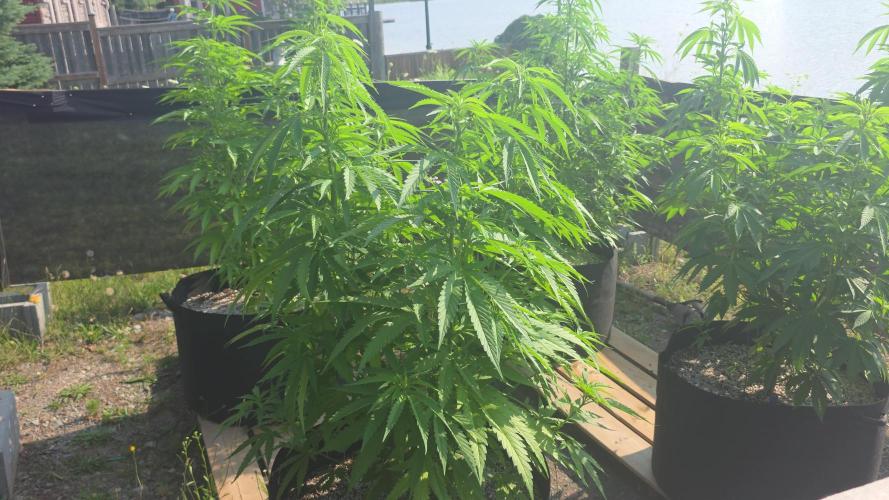
Girls are coming along nicely, a little over 3 months of veg now on them and everythings looking good! Still feeding half strength Remo nutrients, upped the watering to 4 gals every few days when needed, but I've had alot of rain lately so nature has been taking over a bit for me. Lol The 2 critical killer strains are showing different traits it seems, one is staying short and bushy and the other is stretching a bit more, the pure kush is just a big bush as expected and the sex bud is getting big as well but it's sativa dominant so I expect it to get alot bigger in the coming weeks. One of the critical killers and the sex bud have now grown taller then me in the 30 gal pots. I'm getting ready to trim the lower 1/4 or so this week and start adding support stakes to support these monsters into flowering. I'm expecting them all to be 6-10ft tall come September. Lol Cheers everyone and happy growing!


Likes
16
Share


Processing
Likes
21
Share


@LittleBigTrees
Follow
Gave water at 6.5ph will feed on week 3.
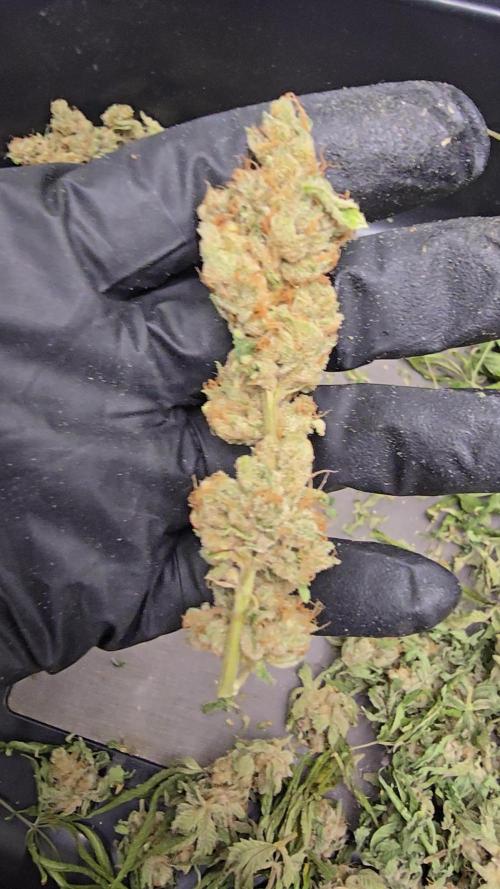
I think I've had the light to close. On day 10 pictures you can see the leaves look like there burnt 🤔 or that's what I'm guessing it is. I've raised the light to 1meter it's only at around half power at the moment and showing 21000 lux.
Likes
1
Share


Likes
73
Share


@Roberts
Follow
Lilly x White Widow is doing great. She is bulking nicely with a frosty coating. She really loves the Spider Farmer G5000/UVR40 lights. She is due for a solution change soon. I may try to stretch it out till bulking is over. I want her to be juiced to fill in good, and dense. Thank you Spider Farmer, Athena, and Ripper Seeds. 🤜🏻🤛🏻🌱🌱🌱
Thank you grow diaries community for the 👇likes👇, follows, comments, and subscriptions on my YouTube channel👇. ❄️🌱🍻
Happy Growing 🌱🌱🌱
https://youtube.com/channel/UCAhN7yRzWLpcaRHhMIQ7X4g
Spider Farmer Official Website Links:
US&Worldwide: https://www.spider-farmer.com
CA: https://spiderfarmer.ca
UK: https://spiderfarmer.co.uk
EU: https://spiderfarmer.eu
AU: https://spiderfarmer.com.au
G5000 Light Amazon Link:
amzn.to/4643esa
UVR 40:
https://www.amazon.com/dp/B0BR7SGTHS
Discount code: saveurcash (Stackable)

Likes
4
Share


@XxDetermined100
Follow
The plant was easy to grow overall .. it grew fast and a little on the tall side which had me nervous but I was able to raise the lights up just enough to finish, so it all worked out in the end. buds came out hard and frosty no complaints . This was a freebie seed too! didn’t expect it to come out as fire as it did man was i wrong. Straight fire 🔥
Ran into root rot in the beginning of veg but the great white and hydroguard saved my ass.🙏

Likes
100
Share


@DogDoctorOfficial
Follow
🌾 Harvest Day — The Grand Finale of the Eternity Grow Cup 🌾
Days 72–73 | Trimmed on May 25 | Posted May 27
What a journey this has been — and what a finish. These five incredible Runtz phenos have now completed their cycle, and today, we celebrate the final stage of their flowering life: the Harvest.
We sent the girls into darkness on Day 70, allowing them a full 48+ hours of rest and reset. The dark period was just a bit longer, truth be told, because time… it flows as it must. This extended dark time helps increase resin production, allowing the trichomes to mature just that final bit more.
On Days 72 and 73, we harvested them with care and reverence.
Each plant was hung upside down, whole, in a perfectly controlled 60% humidity environment for 13 full days. Before hanging, we gently removed only the fan leaves, leaving all trichome-rich sugar leaves in place — a natural armor for the delicate resin glands during drying. Why do we do this? Because those sugar leaves help protect the essential oils and terpenes, preserving potency, flavor, and aroma for the smoothest experience later on.
🌿 The Dry Room & The Trichome Guardians
Throughout the drying, we used a moisture meter to monitor the moisture content in the stems. Once it dropped to around 12–13%, we knew it was time. This tool is a simple but game-changing ally in ensuring a perfect dry — not too fast, not too slow.
We then trimmed everything by hand over a 6.5-hour focused session. Armed with trim bins and good energy, we collected an abundance of glistening trichome heads in the process — a golden bonus from these resin-packed beauties. The leaves themselves told a story: deep purples, near-black shades, autumn fades and metallic tones — just stunning.
Each girl was trimmed in order:
#5 → #4 → #3 → #2 → #1,
revealing dense, chunky buds all the way from top to bottom. Not a single pop-corn bud among them — only rock-solid nugs, heavyweight champions in every sense.
📦 Cure Begins – Grove Bags & Glass Jars
Once trimmed, the buds were tucked carefully into Grove Bags and glass jars, each stabilized at around 61% RH. The Grove Bags handle the microclimate beautifully, keeping humidity between 58–61%, perfect for preserving all that hard-earned quality.
We’re now opening the jars daily, monitoring aroma and feel. This part of the process — the cure — is where the soul of the flower truly comes to life.
☀️ UV, Reds & The Perfect Run
Part of what made this run so special was the precision in light spectrum. 40% whites, full reds, UV and IR, and the girls responded like royalty. The UV pushed trichome development to the max. The deep reds gave us thickness, color, and weight. All of it under ThinkGrow Model Ones powered through the Trolmaster ecosystem — everything syncing in harmony.
This run was stable, lush, expressive — a grower’s dream. To my eyes, this was a perfect run.
⚖️ Final Yield: 1,302 Grams (1.3 kg)
In a 4x4 tent — that’s just 1.2m x 1.2m for metric friends — we pulled in 1,302 grams of flower, not even counting the buds that were taken for filming, photos, or “quality control testing” along the way. 😉
Dense. Loud. Sticky. Resinous.
🌿 The Hidden Half: A Tribute to the Roots
In every grow, there’s a part we don’t always see — a part that lives underground, quietly holding everything together. The roots. And this time, I wanted to honor them too.
When we unpotted the plants after harvest, we were met with massive, dense root systems, completely filling the Autopot trays. These roots were vibrant, white and healthy, looking like noodles in a thick herbal soup — a true sign of vitality. The Autopots system, combined with the Aptus Holland Clean Program and Plagron Green Sensation, made sure they had the perfect environment to expand, absorb, and thrive. The PRO-MIX soil was the perfect foundation — light, fluffy, with excellent aeration. It all worked in harmony.
After unpotting, I carefully washed every root system, removing all soil to prepare them for the next chapter of their story. Now, they’re hanging and drying — and will be left to cure for at least one month, possibly more, in a dry, dark, and well-ventilated space.
But why keep the roots?
Because cannabis roots hold ancient value — both medicinal and ritualistic. Though they don’t contain cannabinoids like THC or CBD, they are rich in alkaloids, triterpenoids, sterols, and other therapeutic compounds that can be anti-inflammatory, analgesic, antifungal, and calming.
Medicinal Benefits of Cannabis Roots:
• Friedelin – known for liver protection and anti-inflammatory effects
• Pentacyclic triterpenoids – believed to support immune and anti-tumor functions
• Alkaloids – some studies suggest pain-relief and muscle-soothing properties
• High levels of fiber and tannins – excellent for digestive and skin applications
🍵 Root Medicine — Ways to Use Dried Roots:
Once fully dried (they should snap like twigs, not bend), they can be gently crushed, powdered, or infused:
🌿 Cannabis Root Tea
Soothing & Detoxifying
• 1 tablespoon of dried, ground roots
• 3 cups of filtered water
• Simmer gently (do not boil) for 20–30 minutes
• Add a bit of ginger or lemon for taste
• Sip warm, especially good for menstrual discomfort, inflammation, and general relaxation
🍲 Healing Root Soup Base
Brothy & Nourishing
• Add a handful of dried roots into a veggie broth or bone broth
• Simmer for 2+ hours
• Strain before serving
• This adds a subtle earthy tone and allows the healing properties to infuse your meal
Topical Root Cream or Balm
Great for sore muscles or irritated skin
• Infuse roots in olive oil or coconut oil (low heat, 2–3 hours)
• Strain and mix with beeswax to form a balm
• Add essential oils like lavender or eucalyptus
• Apply to temples, joints, or sore areas
🛁 Root Soak Bath
Perfect for grounding and full-body relief
• Bundle dried roots in muslin or cheesecloth
• Steep in hot bathwater for 15 minutes before entering
• Let the soak draw out toxins and ease tension
⸻
The roots are more than just the anchor of the plant. They are its memory, its foundation, its quiet miracle. By using them, we honor the entire lifecycle — nothing is wasted, and everything has a purpose.
This part of the process is new for many growers, and I truly encourage anyone reading this to try saving and reusing the roots. Dry them, process them gently, and let them offer you one final gift.
Much love to Aptus Holland, Plagron, Autopots, and PRO-MIX — this wouldn’t have been possible without their harmony working underground while the beauty bloomed above.
🌱 The Gift That Keeps Giving: Reusing the Soil
As we say goodbye to one incredible season, we begin quietly preparing for the next. But not everything gets thrown away. In this garden, nothing is wasted. Just like the roots, the soil gets another life.
After each harvest, I carefully remove the remaining roots and break up the soil. I inspect it, rejuvenate it with compost and beneficial microbes when needed, and most importantly, I repurpose it — giving it a second life in my outdoor veggie garden.
Why do I do it?
Because this soil has already done something extraordinary. It has supported life, held moisture, breathed air, balanced nutrients, and fed plants that became medicine. It’s not just dirt — it’s a living ecosystem. And to throw it away would be to ignore its potential.
In my veggie garden, this recycled soil now nurtures cucumbers, tomatoes, courgettes, and so many other little miracles waiting to unfold. It’s a beautiful way of continuing the cycle, taking all the energy and intention that was once used to grow cannabis and transferring it into growing food. 🌞🍅🥒
🌾 The Benefits of Reusing Soil:
• Sustainability — less waste, less environmental impact
• Cost-effective — no need to constantly buy fresh medium
• Soil memory — rich in organic material, microbial life, and structure
• Nutrient potential — amended soil still holds value for many plants
• A deeper connection — a way to honor the entire cycle of growth
When we reuse our soil, we’re not just being resourceful — we’re believing in tomorrow. We’re trusting that what we’ve built can be rebuilt. That what has been used can become useful again. That from what seems like an ending, something new can always emerge.
And maybe that’s the most powerful message of all in this journey:
Planting is believing in tomorrow. 🌍🌱
Every seed in the ground is a little act of faith.
So as this season comes to a close, the first tomatoes have been planted. The cucumbers are reaching for the sun. The courgettes are settling in. And the same soil that once gave us dense, resinous flowers is now feeding the vegetables that will grace the table.
From harvest to hope — the cycle continues. And it’s beautiful.
🎉 The Final Touches
Fun fact:
• Trimmed on May 25
• Photo shoot on May 26
• This report: May 27
• Dry Bud Exclusive Photo Set: Coming soon
Stay tuned — the next upload will be something special, just in time before the Eternity Grow Cup closes on May 31st.
⸻
💚 Thank You
To Zamnesia — your genetics were nothing short of extraordinary.
To GrowDiaries, for hosting such a powerful space for community.
To everyone following this journey, your support, love, and kind words fuel this project and keep the spirit alive.
Let’s keep pushing boundaries, together.
With roots deep in the earth and eyes on the stars — the next chapter begins soon.
Much Growers love always,
🌱 Dog Doctor Official 🌱
Genetics - Runtz https://www.zamnesia.com/6000-zamnesia-seeds-runtz-feminized.html
Nutrients - Plagron https://plagron.com/en/hobby
- Aptus Holland https://aptus-holland.com/
Controls - Trol Master https://www.trolmaster.eu/
LED - https://www.futureofgrow.com/en
LED - https://www.thinkgrowled.com
Soil - https://www.promixgardening.com/en
Germination - Cannakan https://cannakan.com/?srsltid=AfmBOopXr-inLXajXu3QFgKXCXXos4F1oEvScjMKIB5MR5dk8-GJ-F49
DOGDOCTOR 15% off
Smoking Papers - https://ziggioriginal.com/
Terpene saver - https://grovebags.com/
As always thank you all for stopping by, for the love and for it all , this journey of mine wold just not be the same without you guys, the love and support is very much appreciloved and i fell honored with you all in my life
With true love comes happiness Always believe in your self and always do things expecting nothing and with an open heart , be a giver and the universe will give back to you in ways you could not even imagine so
As always, this is shared for educational purposes, aiming to spread understanding and appreciation for this plant. The journey with nature is one of discovery, creativity, and respect. Let’s celebrate it responsibly and continue to learn and grow together!
Growers Love To you All 💚
#EternityGrowCup #RuntzHunt #GrowersLove #CannabisCommunity #AptusHolland #ProMixSoil #TrolMaster #Zamnesia #Plagron #ZiggiPapers #Grovebags


Likes
7
Share


@Horizon_Grow
Follow
Due to construction and revamping of our space, we had to leave all seedlings in their germination dome for approximately a month before getting them into veg. In order to not run into any space issues within the small dome, these young plants were kept under a low-wattage fluorescent tube to avoid any growth which may have been "too vigorous."
VEG WEEK 1:
03/09/2021: (Image 1)
Each plant was potted into, and fed with the following nutrients during transplant:
1. 5l FF F1 medium
2. GHF: Biogrow - 15g worked into medium
3. Wormcastings (workd into medium and astop dress)
4. Organics Matter Mycoroot Supreme -placed at the bottom of the planting hole.
5. Watered each plant with a Silicon Plus feed solution .
07/09/2021: (Image 2)
- All plants are now in 5l pos with Freedom Farms F1 medium, and are in their new veg home under a 3500K 320W Quantum Board.
- The 3 weakest seedlings of the total 19 seeds (1x Crit and 2x PC) were placed on the left side of the tent, and in different pots, as they are obviously struggling and may not even make it into our final flower room.