The Grow Awards 2026 🏆 









Processing
Likes
Comments
Share
@Cannibalgardens
Follow
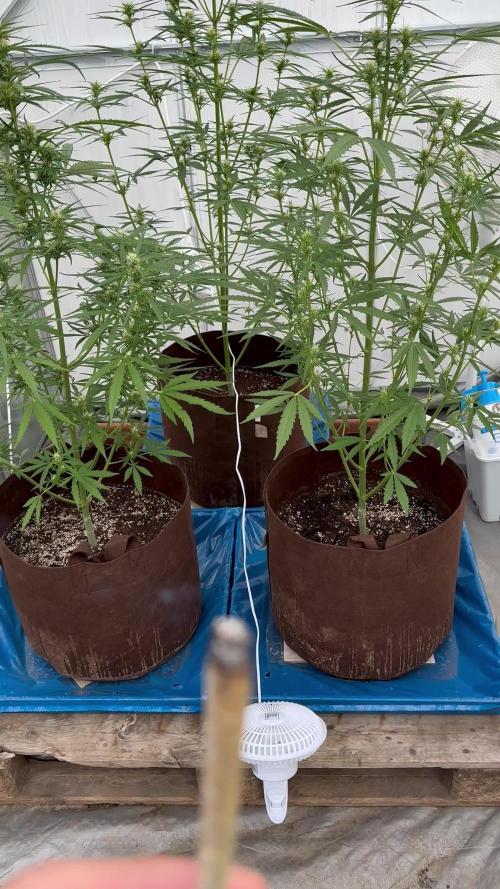
This is the tester strain sent to me by @toon_town it's a #saskatoonberry x #afghani mystery .. She has been great since day one very good growth rate excellent structure and lots of bud sites formed and filling out .. she has 7 friends to start but we down to three two females and a male plant .. The selected male show resistance to cold, humidity, lack of water .. the male had lots of growth and will make a suitable plant for some pollen ...
Processing
Likes
30
Share
@Canadian
Follow
Day 36 Moby Dick it's at 28inches in height and Blue amnesia is at 32. and because the smell has become too strong to contain in the tent I turn on the carbon filter fan 24/7 instead of intervals of every 2 hours on for 30 minutes so now my tent it's not so hot and my plans drink less water every 3-days.
I will keep updating .
day 38 the plants are stretching very fast I'm forced to raise the light everyday the blue amnesia is 39 in tall and the Moby Dick it at 32 inches tall I resumed regular feeding schedules on the plants and they seem to be growing even faster after each watering.
Thank you for reading and have a happy grow.
Day 42 They continue stretching pretty fast blue amnesia it's at 42 inches and Moby Dick it's at 33 3/4 inches. I only have noticed some lower fan leaves turning yellow and drying up I'm going to stop nutrients for the next one to watering sections because I think I've been pushing the plant too hard but it could be normal I just don't know. I posted two Fan leaf pictures to see if somebody has an idea what it could be but I think is probably too much nutrients
I will continue updating thank you for reading happy growing.
Day 44 definitely the issue is my fault pushing it too hard. They have nitrogen toxicity they have all the symptoms the claw leaf the weakness of the leave the yellowing and purple color of some branches the Deep shiny green on the leaf. the fact that I've been pushing that pretty hard I already have water them twice with clean water ph 6.0 hoping to use up all the extra in the pot and I will do it one more time from two days from now and then trying new nutrients at 1/3 full strength. .they seem to be responding well but if they start losing to many leafs i well flosh them in the shawer.
Day 46 because I saw my plans going downhill pretty quick I decide to test Runner run-off it was incredibly High / 4000 + PPM so yeah to the showers they went until runoff was 1000 or below PH was at 6.2 and for the next watering in 3 days from now approximately depending on temperature and thirst of the plans I will resume flowering nutrients only and maybe only at 600 PPM the plant took a beating as well since I have to remove the scrog net and they were being support only buy it but I had no choice it was to see then die and then start over again or giving a flush so they can recuperate and take it slow for a few days until they can handle more nutrients.
My hands end up being very sticky handling the buds even though I did it as gently as humanly possible so they were packed with sticki Racine even though they were stressed out what incredibly robust genetics. I will continue updating thank you for reading and have a happy grow.
Day 48 the plants seems to be bouncing back they lost a lot of fan leaf at the bottom and some of the ones that were turning yellow at the top develop marks . One off the blue amnesia was more affected than the other three plants I will probably hold nutrients for it only for this plant. They stop stretching as much the blue amnesia are measures 44 inches and the Moby Dick is at 40 inch after the flush the buds are getting fatter and bigger every day .
thank you for reading and have a happy growing

Likes
9
Share
@GrowPassionItalyChris
Follow
Settimana meravigliosa, caldo estivo arrivato! Crescono tutte in maniera impeccabile e molte sono di tipo XXL ! Resinose e appiccicose e molto profumate ormai si riempiono di infiorescenze dure e spettacolari! Resistono e sembrano soddisfare ogni esigenza. Molto abbondanti e facili da gestire non manca molto alla fine! Complimenti ai creatori di queste varietà! Sono felice! Un abbraccio a tutti!


Likes
25
Share
@Aleks555
Follow
Anesia Seeds - Chimera Cut💚
100 days from seed and 52 days into flowering. Everything is going well, but of course, we always strive for better! The main cola has split into three massive buds, all covered in sugar and looking incredibly beautiful. However, the lower branches don’t look as impressive, but we’re holding out hope that they’ll bulk up a bit more.
I’m considering increasing the nutrient dosage, as our girl has quite the appetite. We’re almost out of nutrients, but luckily, our favorite fertilizers from Xpert Nutrients are already on their way to us. A huge thank you to Xpert Nutrients 💚for always having our back!
Also, a big thanks to Anesia Seeds – we love your genetics! For our next grow, we’ll definitely be growing another strain from your collection.

Processing
Likes
6
Share
@CzAlmighty
Follow
Čau growři,🤠
Vůbec nehnojim. Zkouším je chvilku nechat na vodě. Cca 10 dni. Začnu hnojit až bude přeplá a připravena na květ. Trosku mám obavy. Ale snad to bude mít ještě Happy end .😀😇

Likes
9
Share
@Gardenergrower
Follow
hola colegas , 6 semanas desde el cambio a 12/12 , las nena siguen bien amarillando algunas hojas por falta de nitrigeno me imagino , instale los tutores que me faltaban a las 5 nenas que no lo tenian , EXHALE CO2 es una bomba 100% recomendado.
tienen un olor muy rico que al empezar a subir la escalera del segundo piso se siente el buquetazo , segun yo voy bien , cada vez queda menos para la cosecha y eso me deja muy feliz ,
ya quiero que llegue ese dia , el ultimo riego con fertilizantes que hice no use la base (top bloom ) y la verdad respondieron bastante bien las plantitas , saludos a tod@s de esta gran comunidad y pagina , grow diaries ,me encanta. pueden ver el avanze de mis nenas por instagram tambien , abrazos y que esto no pare .


Likes
37
Share
@GrownwithLED
Follow
After germinating the seeds are transplanted into small pots with soil (see tutorial in VIDEO above). The soil is prepared with water mixed with a little bit of BIO NOVA Roots (0,5 ml/l), which aids the development of the seedling. Transplanting is very easy now, because they have grown a STRAIGHT tap-root while hanging during the SERIOUS' WAY of germination. This straight root allows for easy potting of the seeds. Simply make a little hole in the center of the soil with your pinky finger and carefully place the germinated seed with the white root pointing DOWNWARDS into the hole. Best is to lay it onto one side-wall of the hole with the seed shell right at the surface. Then I push the other side inwards and enclose the whole root with soil. At the end only the top of the seed-shell peeks out of the soil. IT IS VERY IMPORTANT to plant the seeds NOT TO DEEP into the soil. The seedling only needs extra strength to work itself upwards thru the soil and you run the risk of the soil drying out and the seed dying off. When you PLANT THE SEED VERY SHALLOW into the soil (=with the top of the seed-shell still peeking out) your seedling can grow out right away and you have a small plant already 24 hours after putting the seed into the soil.
The small seedling sometimes still has the seed-shell on its 'head', it normally falls off by itself, but sometimes you have to carefully help and take it off with your finger nails. Be careful to NOT clip of the seedling accidentally when you do this!
The seed-shall has an inner lining, which feeds the small seedling when it germinates. This inner lining sometimes gets tangled around the stem of the small seedling after the shell has fallen off. This little skin MUST be taken off the stem right away! Once it dries up, it gets hard and can strangulate the seedling around the stem. In order to avoid this, the skin must be taken off as soon as possible! I show it in the pics above and also made a video about taking off the inner lining of the seed.


Likes
4
Share
@JayKane33
Follow
The girls are looking good, vibrant and healthy. I'm watering every other day now, up from every three days because they're up taking more liquids. Top dressing as I see fit, once every 4 waterings. Water mixture always has SuperThrive, Molasses and Potassium within it though.


Likes
27
Share
@ohserp
Follow
Everything is looking good so far, gonna do start some LST this week and continue feeding 1 time per week at .5 tsp to a gallon. Gonna take pictures when I can but will be doing weekly for sure.

Likes
17
Share
@MasterKush714
Follow
Was a great experience hopefully my fruits of labor haven't gotten destroyed by bud rot so scary for real lol


Likes
13
Share
@StickyFingah420
Follow
Día 48 y van tomando mucho más volumen las flores, el LST ayudó a un fuerte y vigoroso desarrollo de la estructura de la planta, los cogollos están repletos de tricomas brillantes que huelen genial, sin duda una planta muy bella que cualquiera quisiera tener en su jardín, ya entrando en recta final 💯✨
Likes
19
Share
@Chunkmasta1
Follow
I believe the plants still have a little stretch in them. They have not grown much since the bud production picked up last week. The berry bomb still seems to work well off lite nutrients. The smell has started to choose days that it stinks, and days it is invisible. I live in a legal state; I am allowed up to 12 plants. Smell is not a issue for me. I do not need to hide my grows. I had to set up a wire tie on the plant in the videos. She started to lean right. While setting it up the smell that stuck to my gloves was very fruity. I cannot wait to smoke the final out come. The berry bomb auto has been super resilient to most common grow issues. She also bounces back insanely quick fro stress. This is not something I have seen in many auto flowers due to the limited time they have to grow, and bud. I am so impressed by the genetics of this plant. I'm just blown away with this grow.

Likes
3
Share
@Seeds_growforgreen
Follow
Nice start flowering time. Need sunny weather now. Left flower has bigger blooms, it is nice.
Edit: The left flower goes faster..
Start nutrients Plagron Green Sensation and Royal Sugar for maximum blooming now.
Likes
5
Share
@Godsgrace
Follow
💫The week went great. After the first stress, growth seemed to slow down, but it worked out, the plant began to expand.
I water it every 3 days.
I continue to bend the stem along the axis of the pot.
I bend the branch that will pass through the fastest.
💚I started giving supplements late. Only on the 33rd day I gave him fish and everything else.
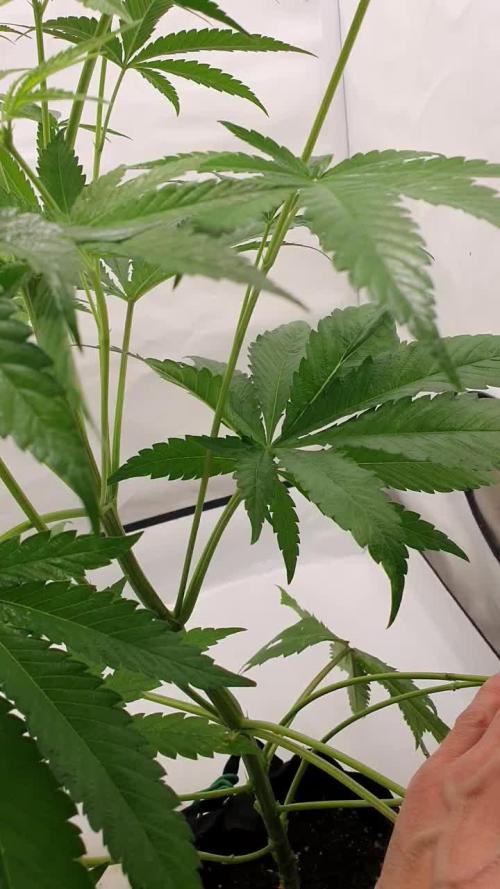
🍀 Week showed good growth, but it could have been better, let's see what happens with the additives. I continue to twist the stem in a circle (I don't know where to twist it). And I also cut off the leaves a little bit, about once a week, as they block the light (a friend says not to overdo it with defoliation, let's see what happens).🍀



Likes
1
Share
@kdifiori_
Follow
This girl is now six weeks old and hasn't stopped growing! She has slowly started to cover herself with trichomes, which smell delicious! Despite my obvious mistake with the nutrients, she is still a considerable size. This week she drank 3.5 L, of which 2 L were nutrients and 1 L was just water with a pH of 6.3. The lamp is now fixed at 30 cm at 100%, and despite this I still have to raise it daily, as the plant continues to grow and get closer. Now comes the fun part! Over the next 4-6 weeks, this girl will kick into high gear to flower and mature by the end of the year. How will it turn out? Find out in the next episode!
Likes
4
Share
@adam_pawloski87
Follow
At a total of 79 days this Sangria is a beautiful one! A cross between The GOGO and Ogreberry she is super delightful, Dense resiny heavy covers trichome buds , with the smell of Gassy rotten fruit funk on the nose! She a stanky one ! Other then that she was a pretty easy grow , y’all don’t sleep on it an better get your hands on it , at @Twenty20Mendocino they got you covered


