


Likes
Comments
Share


@DogDoctorOfficial
Follow
🍮 8×8 Adventure – Week 14 🌸
Chem Brûlée – Pheno B 🔥
👑 The Beast Keeps Evolving — Her Own Story, Her Own Finish Line
Hello everyone, and welcome back to another chapter of the 8×8 Adventure! 🌱💚
And here she is again...
Our beautiful Chem Brûlée Pheno B! 🍮🔥
My friends...
WE STILL HAVE A BEAST! 😂🔥
Look at this girl.
Look at her flowers.
Look at that main cola.
Look at the way she's continuing to evolve.
And look at how different she is from her sister!
She's amazing.
She's peculiar.
She's got her own character, her own structure, and her own way of expressing herself.
And the further we go into this adventure, the more I appreciate having the opportunity to follow these plants individually.
Because this girl isn't simply another Chem Brûlée.
She's Chem Brûlée Pheno B.
And she's doing a fantastic job of reminding us why individual phenotype diaries are worth the effort.
This week, we're not doing anything spectacular to her.
We're not introducing some dramatic new technique.
We're not trying to force her into a different shape or make her follow somebody else's schedule.
We're providing what she needs, observing her development, taking photographs, and letting her continue toward her own finish line.
And honestly?
She's doing enough work for all of us. 😂🍮🔥
So let's give this beautiful beast her own spotlight!
────────────────────────
🔥 STILL A BEAST — AND STILL COMPLETELY HERSELF
Last week, I described this girl as a different kind of beast.
And I'm sticking with that description.
😂🔥🍮
She's fascinating.
The flowers have their own expression, and that structure is part of what makes her so interesting to follow.
She's continuing to evolve, and the overall plant is giving us plenty to appreciate.
That main cola deserves attention, of course, but I don't want this report to become a story about just one flower.
Because there's more to this girl than her main event.
The surrounding flowers have their own character.
The overall structure deserves a closer look.
And the plant as a whole is what makes this phenotype so interesting.
One of the best things about documenting plants week after week is that we get to follow the complete journey rather than judging everything from a single photograph.
We saw her developing.
We saw her establish her own personality.
And now we're continuing to watch that expression unfold.
She's a beast.
She's beautiful.
And she's still writing her own story.
🍮🌸🔥
────────────────────────
👑 THAT MAIN COLA DESERVES HER OWN FAN CLUB
Come on...
We have to talk about that main cola!
😂🔥🌸
Every time I look at this girl, that impressive central flower catches my attention.
It's one of those features that makes you stop for a moment and appreciate the structure the plant has developed.
But the best part is that the main cola isn't the only thing worth looking at.
The other flowers deserve their share of the spotlight, too.
This is why I enjoy taking photographs from different angles.
A full-plant photograph tells one story.
A closer photograph tells another.
And when you start looking at the individual flowers, you notice details that can easily disappear when you're looking at the plant from across the room.
Different shapes.
Different structures.
Different little details.
And all of them contribute to the identity of this particular phenotype.
So yes, the main cola gets its moment.
But the rest of the girl gets to shine as well.
😂🍮💚
────────────────────────
🌸 THE FLOWERS ARE TELLING THEIR OWN STORY
At this stage, I'm particularly interested in watching how the whole plant continues to develop.
We're not trying to force a specific appearance.
We're not trying to make every flower look identical.
And we're certainly not expecting every phenotype in this room to reach the same stage at exactly the same time.
We're observing what is actually happening.
The flowers.
The overall structure.
The changing appearance of the plant.
The differences between this girl and her sister.
And the progression from one weekly update to the next.
That's the beauty of the 8×8 Adventure.
We have a shared environment, but the plants aren't carbon copies of one another.
And Chem Brûlée Pheno B has given us plenty of reasons to keep looking closely.
She's developing in her own way.
And that's precisely what we're here to document.
────────────────────────
🌿 SAME ROOM, DIFFERENT PERSONALITIES
For anyone discovering this diary for the first time, welcome to the 8×8 Adventure!
Twelve plants.
Different genetics and phenotypes.
One shared room.
One general environmental strategy.
One 12/12 lighting schedule.
One nutritional program.
One lighting ecosystem.
And twelve individual stories.
That's the experiment.
We provide the plants with a shared environment and observe how their different genetics express themselves.
Some plants stretch.
Some remain compact.
Some develop unusual structures.
Some progress faster than others.
And even plants from the same genetic line can show differences that make following them individually worthwhile.
Chem Brûlée Pheno A has her own expression.
Chem Brûlée Pheno B has hers.
They're related, but they're not identical.
And I don't want to lose that individuality by treating them as one generic plant.
That's why we're giving this girl her own report again.
Same room.
Same general conditions.
Same photons.
Different phenotype.
Different expression.
Different story.
💚🌱
────────────────────────
💡 THE ARTIFICIAL SUN — FUTURE OF GROW BLACK SERIES
The upgraded lighting setup remains part of the 8×8 Adventure.
Our Future of Grow Black Series LEDs continue to provide the main lighting, with the two additional Black Series 600W fixtures supplied for this experiment remaining part of the setup.
Following their installation, the output was reduced to approximately 59% from the plug.
Our previous working reference was around 1,500 PPFD across the upper canopy, with actual intensity varying according to plant height and position.
The interesting part isn't simply having more lighting capacity.
It's having that capacity available while being able to control the output.
We're not running everything at maximum just because we can.
And across this room, we're getting to observe how different plants develop under the same general lighting environment.
Chem Brûlée Pheno B is giving us her own answer.
Same artificial sun.
Same room.
Different genetic expression.
☀️💚
A massive thank you to Future of Grow for supplying the two additional Black Series 600W fixtures and allowing us to explore this upgraded setup.
It's been a great addition to the project, and having the opportunity to document the plants throughout the experiment makes the whole experience even more interesting.
────────────────────────
🔴 THE RED-LIGHT UPDATE — LET'S TALK SCIENCE
As promised, we're continuing the discussion about the additional 15-minute red-light period after the main lighting period.
And since these are individual reports from the same room, I want to keep the explanation consistent across the diaries.
Plants respond to more than just the total amount of light they receive.
They also respond to wavelength and timing.
One important group of plant photoreceptors is the phytochrome system, which responds to red and far-red light and helps plants interpret changes in their light environment.
These responses can influence plant development, but the outcome depends on several factors, including the spectrum, intensity, duration, timing, and the plant's physiological state.
Our additional 15-minute red-light period is part of the lighting routine we're documenting.
However, I want to be clear about something.
We're not claiming that this short period automatically improves flowering, increases yield, or guarantees a better finish.
Those are specific outcomes that require evidence.
We're documenting the routine and exploring the science behind it, rather than promising results we haven't established.
That's an important distinction.
There's nothing wrong with experimenting or being curious about different lighting approaches.
But we should always separate what we know from what we're investigating.
And that's exactly what we're doing here.
🔴🌱💡
────────────────────────
🔬 THE EMERSON EFFECT — WHY TWO PHOTOSYSTEMS MATTER
While we're talking about light, let's revisit the Emerson effect.
This is a well-established phenomenon in photosynthesis, and it's a fascinating example of how plants use different wavelengths of light.
In simplified terms, the Emerson effect describes an increase in photosynthetic activity when certain red and far-red wavelengths are supplied together, producing a response greater than expected from their individual effects under the relevant experimental conditions.
The explanation involves two cooperating photosystems:
🌿 Photosystem II (PSII)
🌿 Photosystem I (PSI)
Both are essential parts of the light-dependent reactions of photosynthesis.
They work together to convert light energy into chemical energy that the plant can use.
Their light-absorption characteristics differ, and under suitable conditions, combining particular wavelengths can improve the balance between their activity.
That's the basic principle behind the Emerson effect.
But here's where we need to be careful.
The Emerson effect doesn't mean that any red-light treatment will automatically increase photosynthesis.
And it doesn't mean that our additional 15-minute red-light period after the main lighting period is necessarily reproducing the classic Emerson effect.
The classic phenomenon involves the combined effects of particular red and far-red wavelengths under specific illumination conditions.
Our lighting routine is a different situation.
To establish a measurable benefit, we would need to know the actual spectrum and intensity and use suitable comparisons to determine whether the treatment produces a meaningful difference.
So, the Emerson effect is real.
The underlying science is fascinating.
But we shouldn't automatically attribute a benefit to our particular routine without evidence.
That's how we keep the educational side of this adventure honest.
We can explore.
We can question.
We can observe.
And we can keep learning.
🔬💡🌱
────────────────────────
🌙 RED LIGHT AND THE END OF THE LIGHTING PERIOD
One final distinction is worth mentioning.
Red light and far-red light are not interchangeable.
They interact with plant photoreceptors differently, and their effects depend on the conditions in which they're used.
A short red-light period after the main lighting period isn't automatically equivalent to a far-red treatment, and neither guarantees a particular outcome.
For this project, we're documenting our additional 15-minute red-light period as part of the lighting routine.
We're not presenting it as a proven yield-enhancing treatment or claiming that it necessarily improves the plant's transition into darkness.
If we want to determine whether it makes a measurable difference, we need suitable comparisons and measurements.
Until then, we can discuss the science, document our observations, and remain open to what the evidence shows.
That's what I enjoy about these projects.
There's always something new to learn, and we don't need to pretend we have every answer.
💚🔬
────────────────────────
🌱 NUTRITION — PROVIDING WHAT SHE NEEDS
As with the rest of the room, the general nutritional program remains consistent with our previous update.
Our last recorded recipe reference was:
🌱 Plagron Pure Zym — 1 ml/L
⚗️ Plagron pH Plus — 0.03 ml/L
🍋 Plagron Lemon Kick — 0.03 ml/L
🌸 Plagron Terra Bloom — 2 ml/L
🌿 Plagron Power Buds — 1 ml/L
🍯 Plagron Sugar Royal — 1 ml/L
🌱 Plagron Green Sensation — 1 ml/L
The previous solution readings were approximately pH 6.04 and EC 2.05 mS/cm.
We're not introducing a dramatic new nutritional change simply to make this week's report sound more exciting.
We're continuing to observe the plants and maintain the shared approach.
As each plant progresses, we can assess whether anything actually needs to change rather than making decisions based solely on the calendar.
Consistency is part of the experiment.
And individual observation is what helps us understand the differences between the girls.
────────────────────────
🌡️ WEEK 14 — ROOM CONDITIONS
The previous room reference readings remain:
🌸 Flowering — Week 14
💡 Light schedule — 12/12
💡 Lighting — Future of Grow Black Series, upgraded setup
🔌 Approximate lighting output — 59% from the plug
☀️ Upper-canopy PPFD reference — ~1,500
🌡️ Day temperature — ~27°C
🌙 Night temperature — ~26°C
💧 Relative humidity — ~61%
⚗️ Previous pH reading — ~6.04
⚡ Previous EC reading — ~2.05 mS/cm
🌡️ Nutrient solution temperature — ~25°C
🌱 Substrate temperature — ~25°C
🌬️ CO₂ — ~693 ppm
🌱 Pot size — 15 L
💦 Previous irrigation reference — ~1.45 L per plant / 24h
These are the previous shared room readings, rather than a claim that every parameter has been remeasured this week.
The overall approach remains consistent, and we're continuing to observe how each individual plant develops within that environment.
Same room.
Same general setup.
Same lighting ecosystem.
And Chem Brûlée Pheno B continues giving us her own expression.
────────────────────────
📸 WE'RE OBSERVING, NOT INVENTING WORK
I think this deserves its own little section because it reflects where we are in the adventure.
We're doing very little physical work with this girl right now.
And that's intentional.
We're not looking for something to change simply because another week has passed.
We're not trying to force a new technique into the diary.
We're not trying to make the plant follow a schedule we've invented for her.
We're observing.
We're documenting.
We're providing what she needs.
And we're letting the plant continue her journey.
Sometimes a grower needs to intervene.
Sometimes a grower needs to investigate a problem.
And sometimes a grower simply needs to step back, look at the plant, and appreciate what's happening.
This week is very much about that last part.
😂🍮💚
The plant is the main character.
We're here to document her story.
────────────────────────
💬 COME JOIN THE DOG DOCTOR COMMUNITY!
If you're enjoying the 8×8 Adventure and want to talk about growing, genetics, lighting, equipment, experiments, or your own growing journey, come and join us on Discord!
We love a good discussion.
Questions are welcome.
Different experiences are welcome.
And respectful debates about techniques and equipment are part of how we all learn.
Whether you want to share your progress, ask questions, exchange ideas, or simply hang out with fellow growers, come say hello.
💚🌱
🔗 https://discord.gg/dogdoctorofficial
Bring your questions.
Bring your experience.
Bring your curiosity.
And let's keep learning from one another.
Growers helping growers.
That's what it's all about!
────────────────────────
❤️ FINAL THOUGHTS — THE BEAST IS STILL SHINING
Week 14.
Chem Brûlée Pheno B.
And yes, my friends...
we still have a beast! 😂🍮🔥
She's beautiful.
She's peculiar.
She's continuing to evolve.
And she's doing it in her own way.
That main cola deserves its attention, but the entire plant deserves appreciation.
We're watching the flowers.
We're watching the overall development.
We're documenting her progress.
And we're allowing her to continue toward her own finish line.
No unnecessary interventions.
No invented harvest dates.
No dramatic changes just for the sake of having something new to report.
We're simply providing what she needs and observing the journey.
We've also revisited our red-light routine and the Emerson effect because these reports are an opportunity to share knowledge, not just photographs.
The Emerson effect is an established photosynthetic phenomenon involving the cooperation of two photosystems under particular illumination conditions.
Our additional 15-minute red-light period is something we're documenting, but we shouldn't claim that it reproduces the Emerson effect or guarantees a particular benefit.
We can experiment without overpromising.
We can be enthusiastic without abandoning scientific accuracy.
And we can appreciate a beautiful plant while remaining curious about the science behind the environment she's growing in.
That's what makes this adventure worthwhile.
💚🔬🌱
So, Chem Brûlée Pheno B...
Keep doing your thing, beautiful beast.
Keep evolving.
Keep showing us your personality.
We're not going to rush you.
We're not going to make unnecessary changes.
We're simply going to keep observing, keep documenting, and enjoy the journey toward your own finish line.
Same room.
Same photons.
Different phenotype.
Your own expression.
Your own story.
🍮🌸🔥💚
And when you're ready for the next chapter, we'll be here with the camera.
────────────────────────
🙏 THANK YOU
A huge thank you to Zamnesia for the Chem Brûlée genetics and for giving us the opportunity to follow these individual phenotypes throughout the 8×8 Adventure. 🌸🙏
Thank you to Plagron for supporting the nutritional side of the journey and helping us maintain consistency throughout the project. 🌱
A massive thank you to Future of Grow for the Black Series lighting and especially for supplying the two additional Black Series 600W fixtures we're testing in this room. 💡🔥
Thank you to LumiFlora for adding another lighting dimension deeper into the canopy.
Thank you to TrolMaster for helping us monitor and maintain the environment behind the scenes.
And, of course, thank you to everyone following these reports on GrowDiaries.
Every comment.
Every question.
Every observation.
Every photograph.
Every week spent following these twelve different plant stories.
It all becomes part of the adventure.
And Chem Brûlée Pheno B?
She's still giving us plenty to appreciate.
A beautiful phenotype.
A peculiar expression.
An impressive main cola.
And a personality that makes her stand out in her own way.
🍮🌸🔥💚
If you'd like to join the conversation, come and find us on Discord:
🔗 https://discord.gg/dogdoctorofficial
Let's keep sharing experiences, asking questions, and learning together.
Until next week, keep shining, beautiful beast.
We're watching, we're learning, and we're enjoying every chapter.
Growers Love & Happy Growing! 🌱💚🍮🔥

Likes
9
Share


@stone2345
Follow
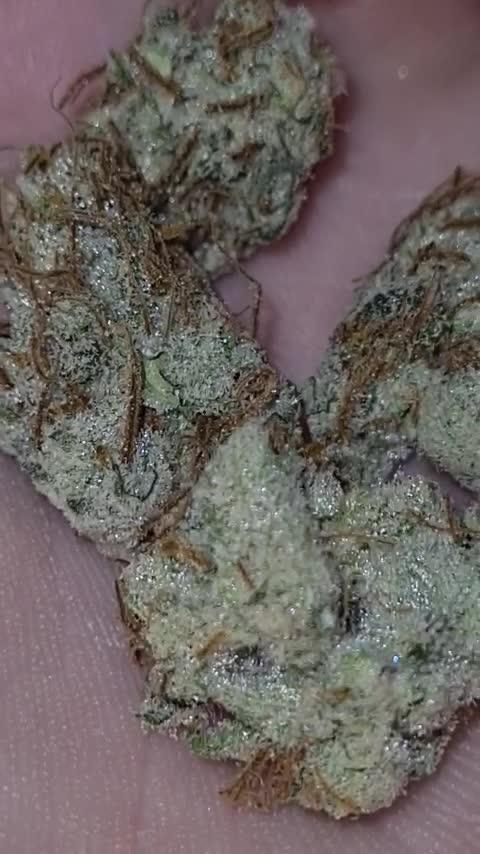
Went with only the bloom360 nutrients this week. One gallon of water to start the week. Plants seem happy and healthy with a few little bud site hairs starting to show up. We’re looking to make a leap in some vertical growth and more bud sites this week. Many colas on both Plants at same level. So, we seem to have broken any dominance there.

Likes
1
Share


Likes
14
Share


@MG2009
Follow
04/14/2022
Getting rid of a grape skunk she just isn't doing anything
Biscotti Skunk looking good but lemon OG is coming along nicely
Been watering by pot weight
(by feel)
No feeding just water they should all be finished soon

Likes
3
Share


@Growerxm00
Follow
This week they stopped the stretch and started focusing on the buds, all lower part is removed


Processing
Likes
27
Share


@Reaper
Follow
DAY 15 of flower, start of week 3.
Flowers show up on the critical
The coockies had only 3 weeks veg so they might need another week under 12/12 before they make bud
Nutrients on day 17


Likes
12
Share


@NONSENSE
Follow
Good afternoon everyone!
One more week is gone of the flowering.
the plant looks beautiful, the buds become heavier every day.
I still only use Hesi sponsored nutrients with every watering.
I don't overdose on nutrients and follow the weekchart I got from Hesi.
genetics is good old school from Neville's seed bank.
It is also a normal seed, not femenized.
The light schedule is 12/12 ,
feeding every day( I try to handle the cocos always wet)
next week is the last flowering, after that I will clean the plant and will harvest it.
Good luck, everyone

Likes
6
Share


@Ferftsl07
Follow
Empiezan a engordar los cogollos creo que he cometido un pequeño error con el LST los amarres se soltaron y se volvieron completamente locas, mucha resina mucho olor parecen bollos buena estructura buen olor y a ver engordar estas preciosas cepas sigo sin cambiar nada todo sigue igual temperatura humedad lo único que queda es apretar bien esos cogollos, y intentar sacar el máximo provecho! 😋 Que os parecen dejarme en los comentarios vuestras opiniones!! Nos vemos la próxima semana

Likes
10
Share


@Papastroumf
Follow
Day 51 : Watered with 2.5L each lady. I added as always 1 co2 tab per 4.5L . Also i added nutrients. The next one will be pure water. As i predicted she wake and stretched 4cm in main cola and many points the side branches. Also her buds started to fatten.
Edit (Day 56) : Watered 1.5L pure tap water of 7.5ph and 360ppm. No co2 today. Just pure water with 0.5/L Cal-Mag. Buds are fattening nothing else.

Likes
2
Share


@DTHGenetics
Follow
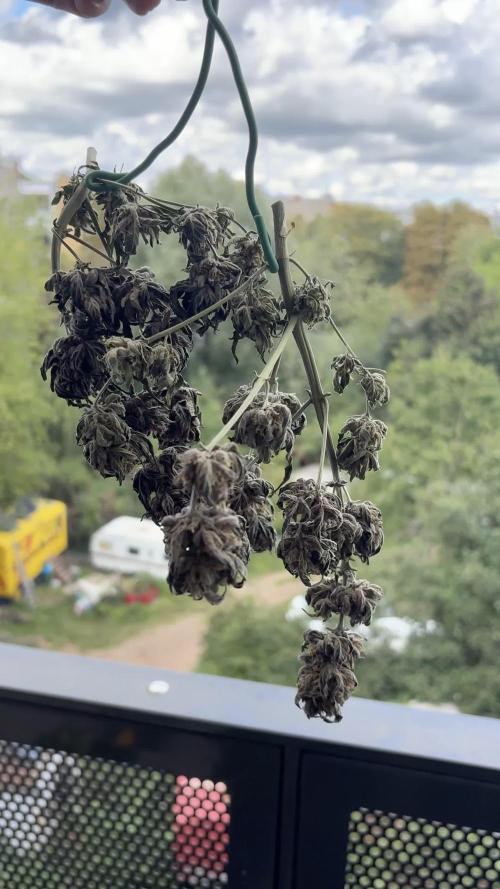
New tops looking great and healthy the second nodes are coming in good also week 7 the black moonflower is next to the small autoflowers



Likes
2
Share


@Kirsten
Follow
16.2.25:
I decided to check out the lower canopies of all plants to see if I need to get rid of any foliage.
I did get rid of a few small branches and leaves.
However, whilst I was doing this, I saw more garden pegs from my LST remaining.
There were about 6 or more in Pink Mist alone. Additionally, on Watermelon, there were some left in, too.
I'm so annoyed to see that because the plants are really stretching, and I could've potentially disrupted this by leaving the pegs in for all this time without realising it.
🤞 that I haven't compromised things too much. We'll see.
I watered today with 2ltrs of dechlorinated water PH'd to 6.3 containing the following nutrients;
♡ .8g Green Leaf Nutrients PK booster
♡ .5g Ecothrive Biosys
I ordered quite a few things for the garden. I got Greenleaf Nutrients Sea K(elp) and Mega Crop Parts A+B. To go with their PK Booster I got last month. I'm excited to try it all together. Next run, maybe just using these. We'll see how it goes.
18.2.25:
The plants are going crazy for water! Everything is getting used right up so fast!
Today, I decided to add some more Black Strap Molasses to add some carbs and other micronutrients. I'll add the jar with the label in the photos section above.
I watered a very small amount to each plant.
What I put in:
♡ Black strap molasses 150g
♡ 2g Sea K(elp) Greenleaf nutrients.
I dissolved everything in 4ltrs of dechlorinated water PH'd to 6.4.
19.2.25:
I received the majority of the garden purchases that I made. I'm still waiting for the Ecothrive Life Cycle. I wanted to top dress, but it's been delayed unfortunately.
I am using my Greenleaf nutrients products which I bought on Amazon. I got the Mega Crop 2 part system Part A and Part B. I have the Sea K(elp), and the bud explosion PK booster.
I really wanted to get some of their sweet candy asking read many positive reviews. Unfortunately, for me, this is unavailable to buy currently. So that's a little disappointing.
I needed to do a good watering so when my nutes were delivered today, I got excited 🤗
I watered 2ltrs of dechlorinated water per plant, PH'd to 6.4, containing the following nutrients:
♡ 1g Mega Crop Part A
♡ 1g Mega Crop Part B
♡ .5g Sea K(elp).
The plants drank this up within a few hours.
I'm going to try and hold off on watering in hopes that my Ecothrive Life Cycle will arrive so I can top dress and water it in then.
20.2.25:
My Ecothrive Life Cycle arrived yesterday, and the plants are ready for their top dress and a good watering in.
I have some Biobizz Light Mix, Canna Coco,and perlite. I'm going to use this as a base to mix my amendments in.
I'm going to fill my 5 gallon bucket with about 4.5 gallons of my top dress mix. I will distribute this across 6, 4-5 gallon pots. Then I will water in well with Greenleaf nutrients Mega Crop Parts A+B and Sea K(elp).
I've made a crude attempt to video mixing my top dress. Don't listen to the audio. lol, my YouTube didn't stop playing whilst I recorded this 😂
So anyway, I added the following amendments to the above base mix of 4.5 gallons;
♡ 3 TBSP Ecothrive Life Cycle
♡ 3 TBSP Vitalink Bat Guano
♡ 3 TBSP Ecothrive Charge
♡ 1 TBSP RHS Mycorrhizal Fungi granules
♡ 6 TBSP Ground Cinnamon.
Processing
Likes
18
Share


@TheItalianGrower
Follow
Hi guys, this week has been great for plant growth..they are 85cm tall and I think they will grow a little longer. You can see the future buds that will be covered with flowers.
From this growth I am learning that the FIM technique is better because the buds will all be at the same height and look much more (as you can see in plant number 4). Pistils begin to appear and in the next week I hope to see more pistils.
Stay Tuned 🦍

Likes
8
Share

@Commander_Keen
Follow
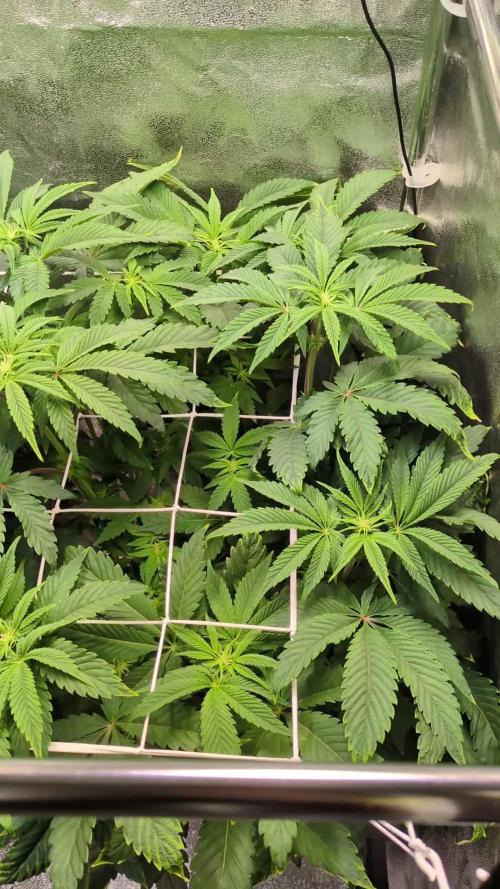
Tag 10 der Blüte
Dass ich nochmal leicht entlaubt habe sieht man gar nicht. Ich wollte eigentlich keine weiteren Blätter entfernen bis Tag 21 ..aber es ist einfach zu viel, ..immer noch,...seht selbst 😆

Likes
8
Share


@eldruida_lamota
Follow
Vamos familia que ya actualizamos la cosecha de estas zkittelz de Mafia seeds.
Vaya flores que se han marcado repletas de tricomas, parecen escarcha y las flores se marcan aromas bien dulces.
Es una variedad bastante fácil de cultivar pero al tener un periodo de floración algo más largo, hay que estar pendiente de alimentarlas bien, gracias Agrobeta en mi sala es posible.
Temperaturas máximas en 24 y mínimas en 20 y una humedad estable en torno al 36%.
Las mantuve 10 semanas, ya las vi bien maduras y ya tenía tricomas ambar así que les di matarile.
Agrobeta:
https://www.agrobeta.com/agrobetatiendaonline/36-abonos-canamo
Mars hydro:
Code discount: EL420
https://www.mars-hydro.com/
Espero que disfruteis este diario, buenos humos 💨💨💨.

Likes
9
Share


@therealgrowmie
Follow
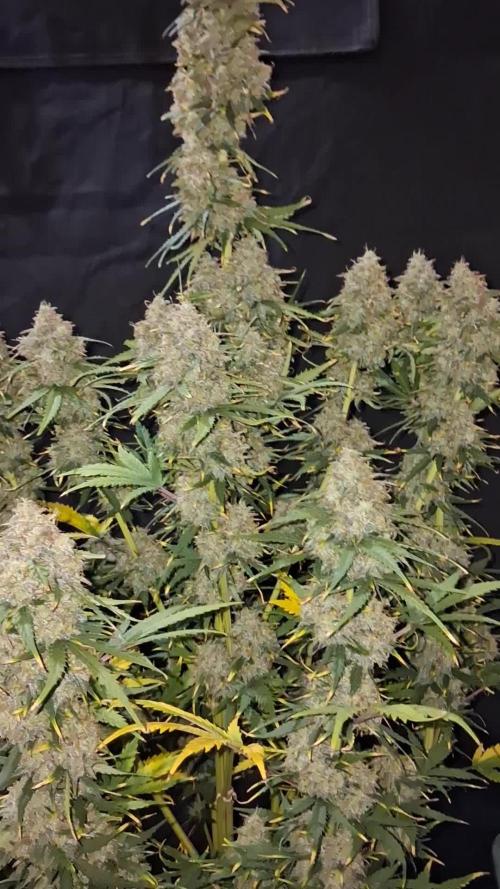
We got to the topping just 4 days ago, and the plants took it quite well. There’s some minor drooping going on right now, but the new tops are already coming along nicely. 🌱✂️
I slightly overwatered them just now, so I’ll let the pots dry out and give them at least 4 days before the next watering. Next stop: transplant number two. 💪
Lesson learned: after topping, less is more. Give them air, time, and a bit of dryness - they bounce back faster than you think. 😉
Stats so far:
💧 Watering: Every third day
🌡️ Temp: 24–26°C
💦 Humidity: 75% RH (ideal for early growth)
📈 VPD: ~0.75 kPa
💡 Light: ~400 PPFD

Likes
67
Share


@AsNoriu
Follow
Day 63. She is going down, my fastest ever big healthy plant. Looking at first waves 3 numbers, I think it's not even 2 ounces plant, it's f@cking THREE !!! ;))))))))))))
Day 71. One to jars another for trim jail. Busy day ...
Day 72. After small delay, she went down ;)
Day 82. Straight to vacuum sacs, but she was really great !
Happy Growing !!!


