


Likes
Comments
Share


Likes
39
Share


@MrSpooky882
Follow
Wie man sieht kommt ziemlich viel Farbe ins Spiel ich liebe diese Sorte jetzt schon 😬😁👌
Alles bestens habe gedüngt aber weniger angegeben...😏


Likes
2
Share


@Ultraviolet_
Follow
Remember that, however you are played, or by whom, your soul is in your keeping alone. Even though those who presume to play you be kings or men of power, when you stand before God, you cannot say, 'But I was told by others to do thus,' or that virtue was not convenient at the time. This will not suffice. Remember that.
Day:18
84°F and 65% RH (VPD) for the vegetative stage. Approximately 1.15kPa(assuming leaf temperature is about 2°F cooler than the air), which falls right into the ideal vegetative sweet spot (0.8kPa to 1.2kPa). At 1.15kPa, plants can draw water and nutrients efficiently without risking stress or wilting. It keeps the leaf pores (stomata) open, allowing for ideal carbon dioxide intake and maximizing vegetative growth. VPD is determined by the leaf's temperature, not just the ambient air. Because leaves usually run 1° to 3°F cooler than room air under bright grow lights, my actual VPD will be slightly lower, closer to the 1.0kPa mark. As she transitions from vegetative growth to flowering, one can gradually lower the humidity (to around 45–60%) and drop temperatures slightly to prevent disease from settling inside dense buds when they appear.
Night:6
At 70°F and 60% relative humidity, Vapor Pressure Deficit (VPD) is 0.86 kPa. This is right on the cusp of whats optimal for the vegetative stage. During the nighttime, plants generally close their stomata and undergo cellular respiration rather than photosynthesis. Transpiration slows to a near stop, making VPD less critical at night than during the day. However, maintaining a nighttime VPD between 0.8 and 1.0 kPa is highly beneficial in that it ensures the air is dry enough to prevent powdery mildew or bud rot, but moist enough to keep the plant from undergoing unnecessary stress. This range keeps the environment comfortable for cellular processes and prevents large atmospheric swings. Keeping it all flowing.
(Not pushing them yet, these are photoperiods)
The optimal soil (root zone) temperature for cellular root respiration and nutrient uptake in cannabis is between 68F & 72F This narrow range balances biological energy production (cellular respiration) with the dissolved oxygen levels in the soil, maximizing plant growth and health. Warmer soils hold significantly less dissolved oxygen. When soil temperature exceeds 74F oxygen depletion occurs, inhibiting cellular respiration almost entirely, At 68-72F root cells generate optimal adenosine triphosphate (ATP) via respiration to power root-tip elongation and the active transport of water and nutrients.
Too Hot (Above 78F) Root respiration increases, demanding more oxygen, while the water's oxygen-carrying capacity drops. This creates a prime environment for anaerobic pathogens and Pythium (root rot).
Too Cold (Below 60F) Root metabolism and cellular respiration slow to a crawl. This severely impairs nutrient and water absorption, leading to yellowing, wilting, and phosphorus deficiencies.
A lot depends on whether it's automatic or photoperiod; with photoperiod, there is not as much of a need to push "hard" as the real countdown only begins once the flower is initiated. Automatics, on the other hand, the chronological "clock" begins ticking the moment the seed germinates. It is of critical importance that the seedling growth gets off to the races, understanding that early growth is like compound interest, which will pay off come harvest. This reality is why getting autoflowers "off to the races" early on yields such exponential benefits. The "compound interest" is directly related to the surface area of the leaves. Larger, faster-growing seedlings process more light and build bigger root networks early on, which translates into an explosion of vertical and lateral growth during their short vegetative window.
The margins for error are so thin with autoflowers; this early-stage momentum depends on several critical practices. Seedlings exposed to increased atmospheric CO2 levels early in life will develop at an increased rate. To effectively "extend" or optimize the capacity of Photosystem II (PSII) for increased photosynthetic efficiency. In standard oxygenic photosynthesis, Photosystem II (PSII) is naturally limited to the red-light spectrum, peaking at 680nm. Extending its light-harvesting capacity past 700nm into the far-red region requires bypassing the natural limits of standard chlorophyll a. Adding 730 nm (far-red) LEDs alongside standard red/blue lights has been shown to increase canopy photosynthesis by 20–30% in several crops by acting synergistically with shorter wavelengths. However, the limitation is that excessive, pure IR/Far-red light (without accompanying red light) can trigger the "shade avoidance response," causing plants to grow tall, weak, and spindly rather than robust. Utilizing infrared light (specifically the 700-750 nm far-red range) is a viable method to boost photosynthetic efficiency. It acts as a bridge to allow PSII to utilize a broader spectrum of light, breaking the traditional 700 nm barrier. UVR8-mediated signaling (often in conjunction with CRY proteins) triggers protective mechanisms that maintain the stability of the photosynthetic apparatus (including LHCII and reaction center proteins), thus ensuring that the efficiency of Photosystem II remains higher in UV-B-exposed plants compared to plants lacking this receptor. ΦPSII indictates the rate of electron transfer from water to plastoquinone, which drives the production of ATP and NADPH. There is a close link between ΦPSII and the true rate of CO2 fixation (Φ*co2).
ETR stands for Electron Transport Rate. It measures the speed at which electrons are moved through the thylakoid membranes in a plant's chloroplasts during the light-dependent reactions of photosynthesis. Infrared light (particularly Near-Infrared or NIR) improves cellular energy by interacting directly with the electron transport chain (ETC) in mitochondria. This process boosts adenosine triphosphate production, which acts as a metabolic coefficient multiplier by accelerating enzyme activity dramatically.
Extend then multiply.
Far-Red photons interact with plant photoreceptors to accelerate the plant’s biological "clock" or trigger a shade-avoidance response. Autoflowers don't use the plant's biological clock, although the IR will initiate a shade avoidance and make them stretchy. You can just add equal measures of 660nm-680nm to negate the shade avoidance effect. Replacing nights' "darkness" with a combination of IR+ and 660nm. Because autoflowers don't require a dark period to flower, many growers just blast them with light. 18/6 24/0. However, this ignores the plant's metabolic rhythms, where daytime photosynthesis (light reactions) must be perfectly balanced with nighttime carbon fixation and assimilation (Calvin cycle) to avoid bottlenecking plant development. Cellular respiration is a 24/7 process, but it can only function while the plant has the free oxidative capacity to do so. A 100% photosynthetically active leaf cannot perform cellular respiration. The viral trend of defoliation of every leaf that isn't "getting enough light" is of great detriment overall, putting 100% of the cellular respiratory "workload" and responsibility on the 0/4/6 hours of darkness in sub-optimal conditions for enzymatic activity. Photosynthesis captures nearly 100% of the initial energy as carbon, while cellular respiration is the process that unlocks 90% of that captured energy into usable ATP so the plant can use it. Respiration is considered only roughly 30% to 40% efficient. It captures enough of the potential energy in glucose to synthesize around 30 to 38 ATP molecules per glucose molecule. The remaining 60% to 70% of the energy in the sugar is not captured in ATP; instead, it naturally escapes into the environment as heat, which helps regulate plant temperature. In plants, the primary enzymes of the Electron Transport Chain (ETC) and the ATP synthase complexes are typically adapted to function optimally in warmer temperatures (roughly 77°F to 95°F, depending on the specific plant strain). As temperatures rise within this physiological range, molecular collisions increase, speeding up respiration and ATP production. The cannabis plant has a branched respiratory pathway. During heat or cold stress, plants activate Alternative Oxidase (AOX). AOX burns sugars to dissipate energy as heat rather than coupling it to ATP production. This pathway actually functions optimally at elevated temperatures to help protect the cell from the damaging build-up of Reactive Oxygen Species (ROS) during heat stress. Enzyme activity generally scales with heat; there is a strict biological limit. If canopy temperatures in a grow room exceed 104°F, the enzymes and their supporting lipid membranes lose stability. Not saying you need to go crazy, just optimize nights the same as we optimize days.
Phosphorus is the driving force behind early seedling development. It acts as the "energy hub" of the plant, directly driving cell division, robust root growth, and the creation of DNA. Without an adequate, easily accessible supply early on, the plant's overall growth potential and final yield can suffer permanently.
Likes
2
Share


@MG2009
Follow
07/09/2019
Start of week 6 flower topped off the reservoir two days ago with 4 liters of nutes so will do reservoir change in a couple of days thanks to Advanced Nutrients
technology i don't have to rush to get it done. The buds are getting heavy and super dense,stems are leaning from the weight.
(Get a fan for future grow). Did light defoiliating as needed,and leaves are sticky as hell I could make finger hash if I had more plants I've used gloves and freeze them after trimming and peeled off the resin. Very flavorful!

Likes
13
Share


@GrandmasBoy2021
Follow
Week 10,
Week 10 has been fun. The buds are becoming denser and starting to almost look like a finished product. I am planning on harvesting the plant the first week of next month, so three weeks or so and counting!
I am adjusting the tie downs twice a week trying to get the buds as much sunlight as possible.
I am watering every 3 days with 6.0 ph water. I have been putting a teaspoon of FloraNova in the water with a tablespoon of molasses mixed in but it appears she received a little nutrient burn. I'm not to worried about it because I wanted to make sure the flower sites received enough nutrients to make some dense dank buds. It isn't a huge burn but a little. As a result I started mixing only half a teaspoon of FloraNova in the water to make sure any future burn doesn't happen.
I am excited about the plant, she is starting to look like a thiccy ha I am probably going to starting flushing in three weeks.
Let me know if you have any questions/concerns/comments. Happy growing Growmies 🙌

Likes
25
Share


@Kakui
Follow
Veg15, han crecido como 2 centímetros desde el transplante, aún no necesitan riego, desde ahora regaré cada 3~4 días, cuando el sustrato este un 80~90% seco, han estirado un poco desde que subí la distancia del LED y bajé su intensidad, mañana haré Main Lining.
Veg16, hoy se torturaron las plantas con Main Lining, se cortó arriba del segundo nodo y se cortaron también las hojas de un dedo bajo el primer nodo, las plantas que tenían suficiente crecimiento de les hizo LST también, cuando se apague la luz se efectuará un spray foliar con B-52, y mañana un nuevo riego.
Veg17, riego con 5.5 pH y EC 1.8~1.9, se regaron con 1.5 litros y no se obtuvo drenaje, próximo riego tendrá que ser con más cantidad de agua para obtener drenaje, el agua se calentó a 23 grados y se oxigenó antes de regar, mañana se ajustará el LST ya que siguen creciendo muy bien.
Veg18, hoy solo se ajusto el LST, siguen creciendo bien.
Veg19, ajuste de LST, nada más que anotar.
Veg20, siguen creciendo, talvez hay que ajustar la cantidad de luz DLI.
Veg21, tuve que poner una estufa para aumentar la temperatura en el indoor y bajar la intensidad del LED a un 50% para alcanzar un DLI óptimo. Hoy haré ajuste de LST y revisar la humedad del sustrato.

Likes
21
Share


@Bluemels
Follow
Seit ein paar Tagen duftet die Cookie Gelato, der Geruch ändert sich von Tag zu Tag.
Sie entlaubt sich sogar selbst, ich hatte das eh nicht mehr vor😁

Processing
Likes
5
Share


@Mr_nugs_lover_David
Follow
Looking supe healthy and strong in her first week of life, this is gonna be a good one, I love every strain from Gea seeds and I know this amnesia Pro is gonna be a number 1. It's my first time growing amnedia Pro by gea seeds, I'm growing 3 plants and I just can't wait what's coming up! 💚💎 Let's see

Processing
Likes
2
Share


@HappyStoney
Follow
Instagram:happy_stoney ~~ 2nd week for
Guava Dawg x Tangie aka *Clifford*
By DNA Genetics and Crockett Family Farms.
They are enjoying life. Even if my humidity levels have been a bit low I've managed to keep them moist by giving a couple mists a day.


Likes
3
Share


@Saskbud7
Follow
Started the new week off with a feeding. The girls are looking healthy.
Week has gone good. Not sure where to continue tying down some branches that are already overhanging the pot... but I shall figure something out. Fed them again on day 6 of the week.
Gonna try and let then get wider in the tent before I flower!

Likes
51
Share

@Hologram
Follow
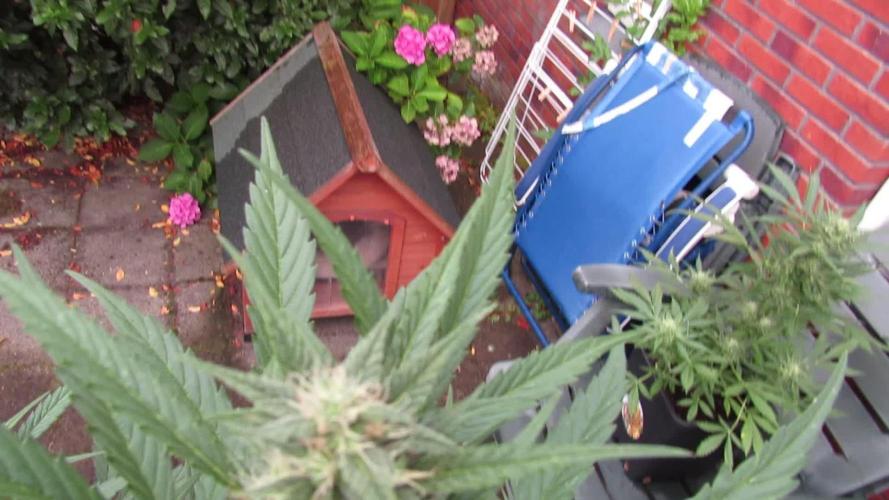
mogge :)
zoals ik zei in de video,het zou kunnen dat ik de Rapier en de black opium door elkaar heb gehaald ..
want ik heb nog vage herinneringen dat ik het niet zo goed meer wist...(natuurlijk 😉)
maar zeker weten doen we het nooit dus ach..
ze bloeit iig lekker👊
@)@}@}}@)]}-}}--}}}
Happy growing 4 all✊
PS:Ik heb toch de namen van de dagboeken omgewisseld.. het is duidelijk dat dit Rapier is.. en niet black Opium.. #justsaying
PS: i changed the names of the diaries..its very clearthat this is Rapier and not blackopium!
PPS: i changed them back!! 😁👊
**KISS! growingtechnique: keepItSimple, Stupid!
**how 2make thcoil: https://growdiaries.com/diaries/179107-grow-journal-by-hologram

Likes
35
Share


@The_Bearded_Grower
Follow
welcome to Day 22 not a whole lot to tell I increase the light schedule to 20 hours of light for the remainder of flower so far everything is healthy no signs of any deficiency whatsoever

Likes
55
Share


@w33dhawk
Follow
10.05.21 Anfang der 7. Woche alles läuft ganz gut hab heute wieder gegossen für jede Lady 4,5 l wasser mit Zusätzen bis auf lady #2 die hat nur green sensation bekommen da sie den anderen voraus rennt mal schauen was diese Woche so bringt......
11.05.21..................................................
12.05.21 hab es gestern leider nicht geschafft den Bericht zu aktualisieren hab aber auch gestern nix an den Pflänzchen gemacht hab heute mal ein paar buds fotografiert und das erste mal geprüft wie fest die buds sind also gelato 41#2 ist wie ein Felsen die anderen 3 Ladys sind eher fleischig aber dennoch fest (fast wie ein Hüft steak Medium rare) sieht auf jeden fall viel Versprechend aus und der Duft an den fingern nach dem prüfen, ein hauch von zitrone trifft auf leichte Minze mit cremiger Dunst note schon ziemlich geil muss ich sagen freue mich schon drauf wie ein kleiner junge auf sein Eis......
13.05.21..................................................
14.05.21 hab mich dazu entschieden nur noch alle 2 Tage was zu posten ab jetzt passiert nicht mehr viel sie wird nach und nach fetter und die trichome sind zum größten Teil milchig werde Sonntag die Spülung beginnen das währe dann Tag 57 nach flip und somit tag 49 der blüte, demnach sollte ich an Tag 63 fertig sein plus 1 bis 2 Tage dann hat sie 9 Wochen blüte hinter sich und 10 Wochen 12/12 der breeder selbst gibt an 7 bis 9 Wochen flower sollte also hin hauen die Angabe bin gespannt wie sie am Ende aus sieht. Werde Sonntag mal versuchen die trichome zu fotografieren aber mein kleines Taschen mikroskop zu fotografieren während ich es an die Blüten halte is etwas kompliziert für mich hab einen ruhe tremor fehler sprich ich zitter sobald ich etwas mache was mit fein Arbeit zu tuen hat, nicht stark,aber ein Bild machen is da schon schwer, werde es Sonntag versuchen an meine Kamera vom Handy zu kleben mit Maler crepp und dann mal schauen ob es einiger maßen klappt.....
15.05.21.................................................
16.05.21 so liebe growmies und canna begeisterte heute war der Tag der Spülung hab jeder Pflanze 22,5 Liter Wasser verpasst so das eigendlich fast alles an Dünger und Zusätzen raus sein sollte die Suppe die am Ende unten raus kam war fast komplett klar wie wasser sein sollte. bitte schimpft jetzt nicht mit mir das ich so hart flushe, ich hab mir gefühlt 1000 blogs durch gelesen von Zamnesia bis royal queen über Humboldt usw. Zum Thema flush und da gibt es ja echt viele Möglichkeiten wie man das ganze angeht der eine giesst normal weiter halt nur mit Wasser der nächste spült mit doppelter Menge von gewohntem giessen und wiederum andere stellen die Pflanzen in die Dusche und spülen da eine ganze Badewannen durch die Erde. War mir da einfach nicht mehr sicher wie ich das am besten an gehe und bin halt am ende auf die idee gekommen wenn das wasser gut klar ist Dann Sollte doch gut gespült sein hoffe ich zumindest in ca 14 tagen hack ich die Ladys Dann ab ihr könnt euch gar nicht vorstellen wie ich mich auf den Tag freue wenn ich schneiden darf ist wie Geburtstag und Weihnachten auf einem Tag........

Likes
5
Share


Likes
1
Share


@Chubbs
Follow
What up fam, weekly update on these gorgeous ladies. Starting week 3 of veg, wow does time fly. They've progressed beautifully, and probably doubled in size the last week. This will be the last week of veg before that preflower stretch stage appears but over all I couldn't be happier with how they're doing. All in all Happy Growing


